






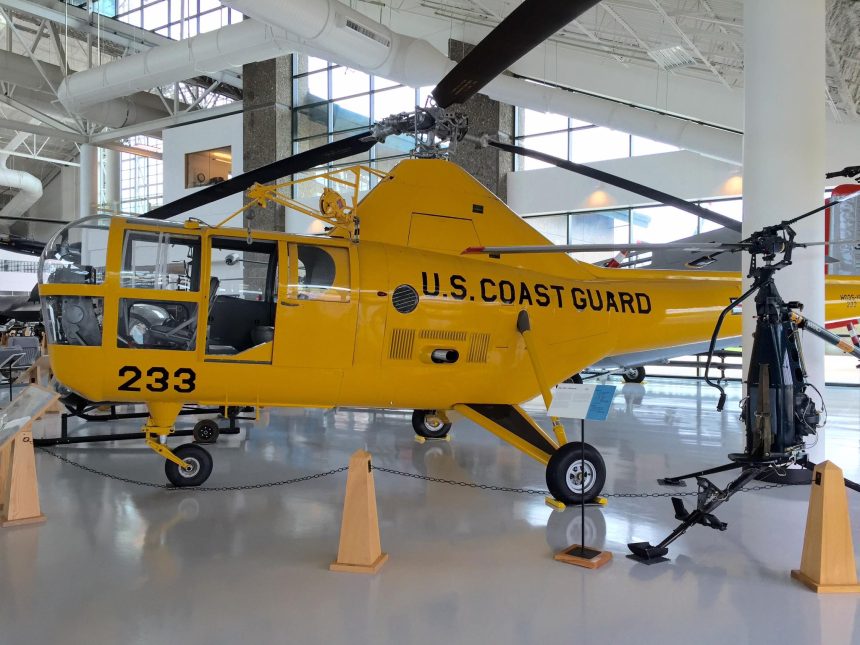

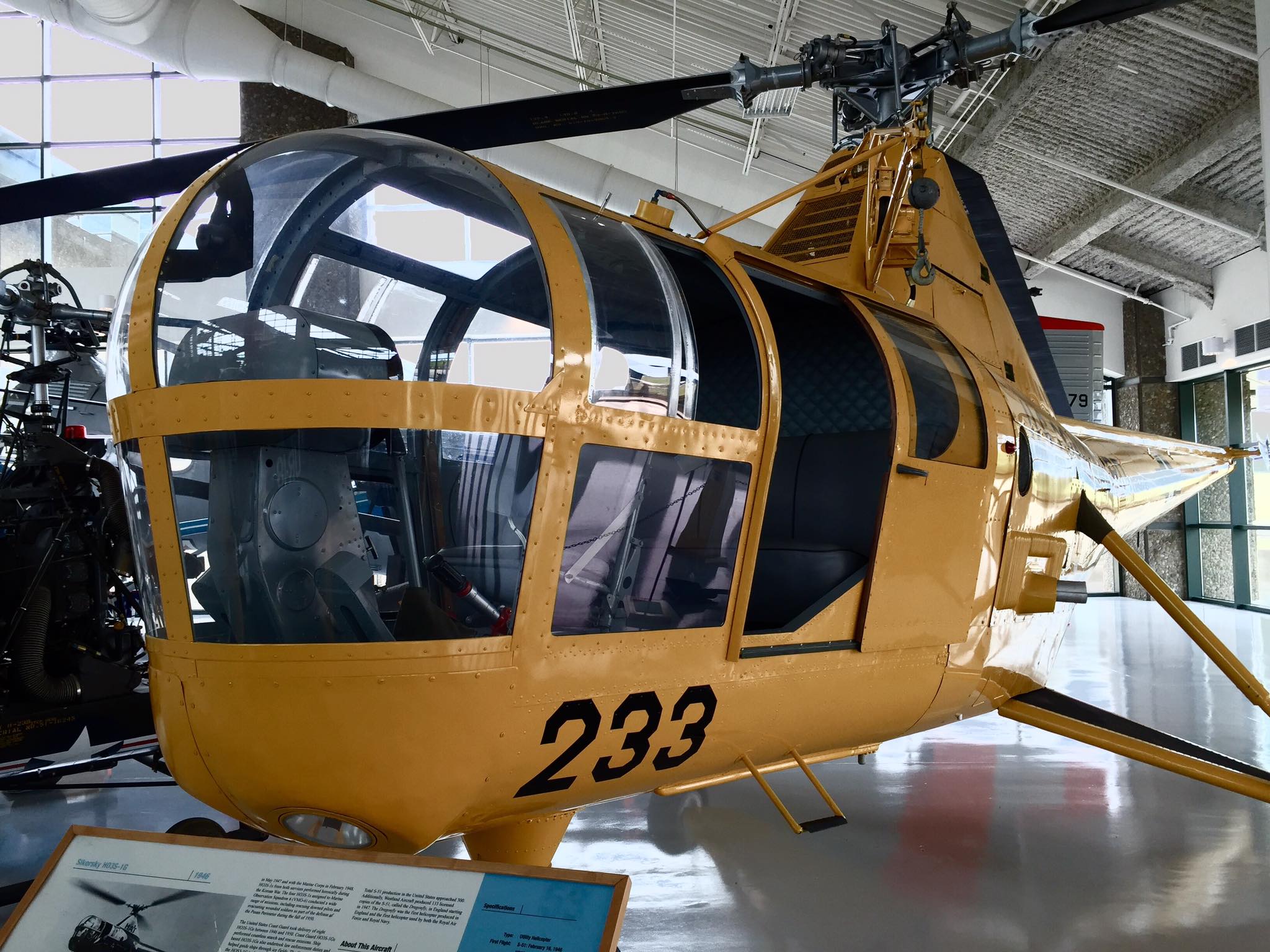
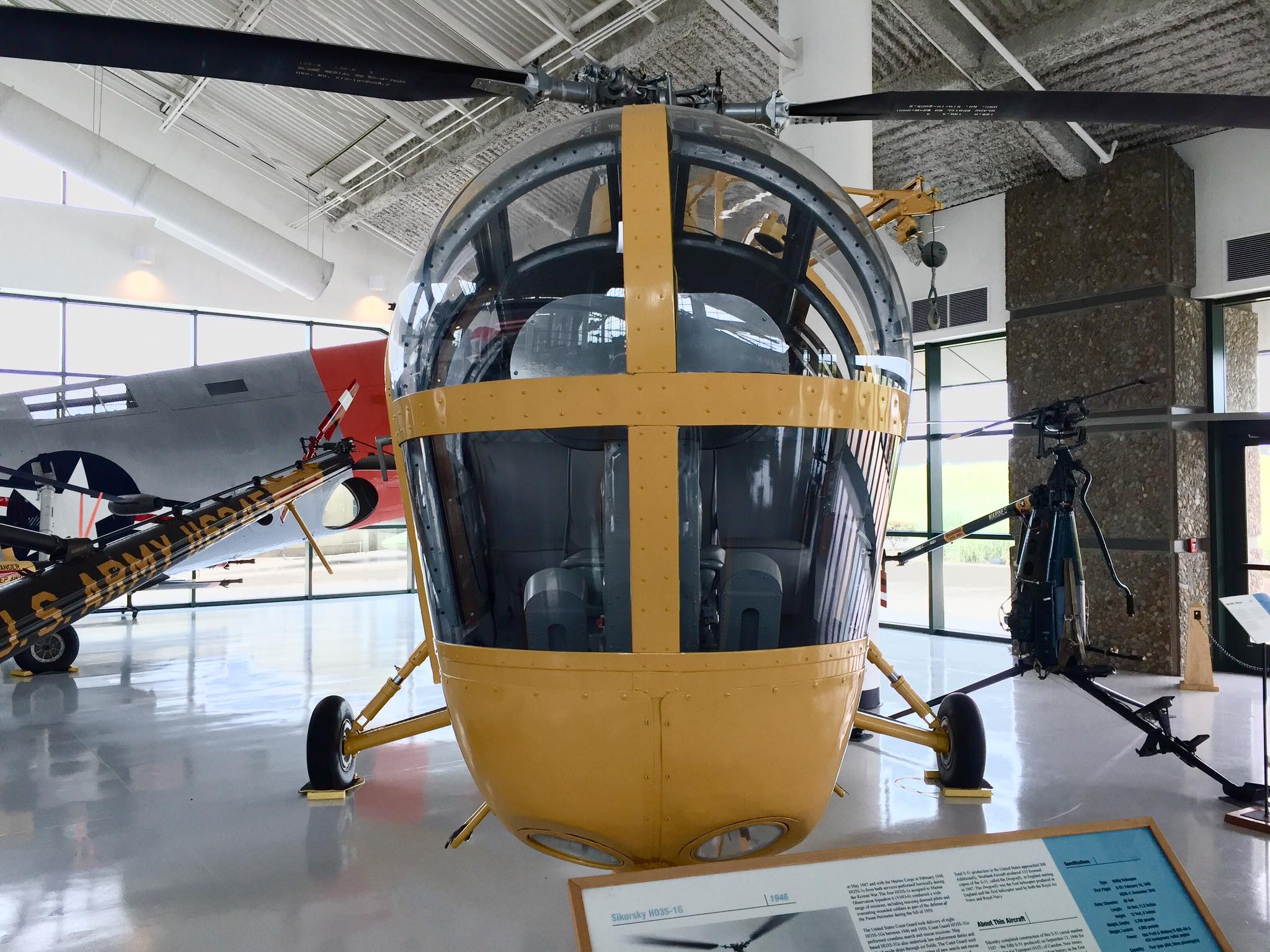
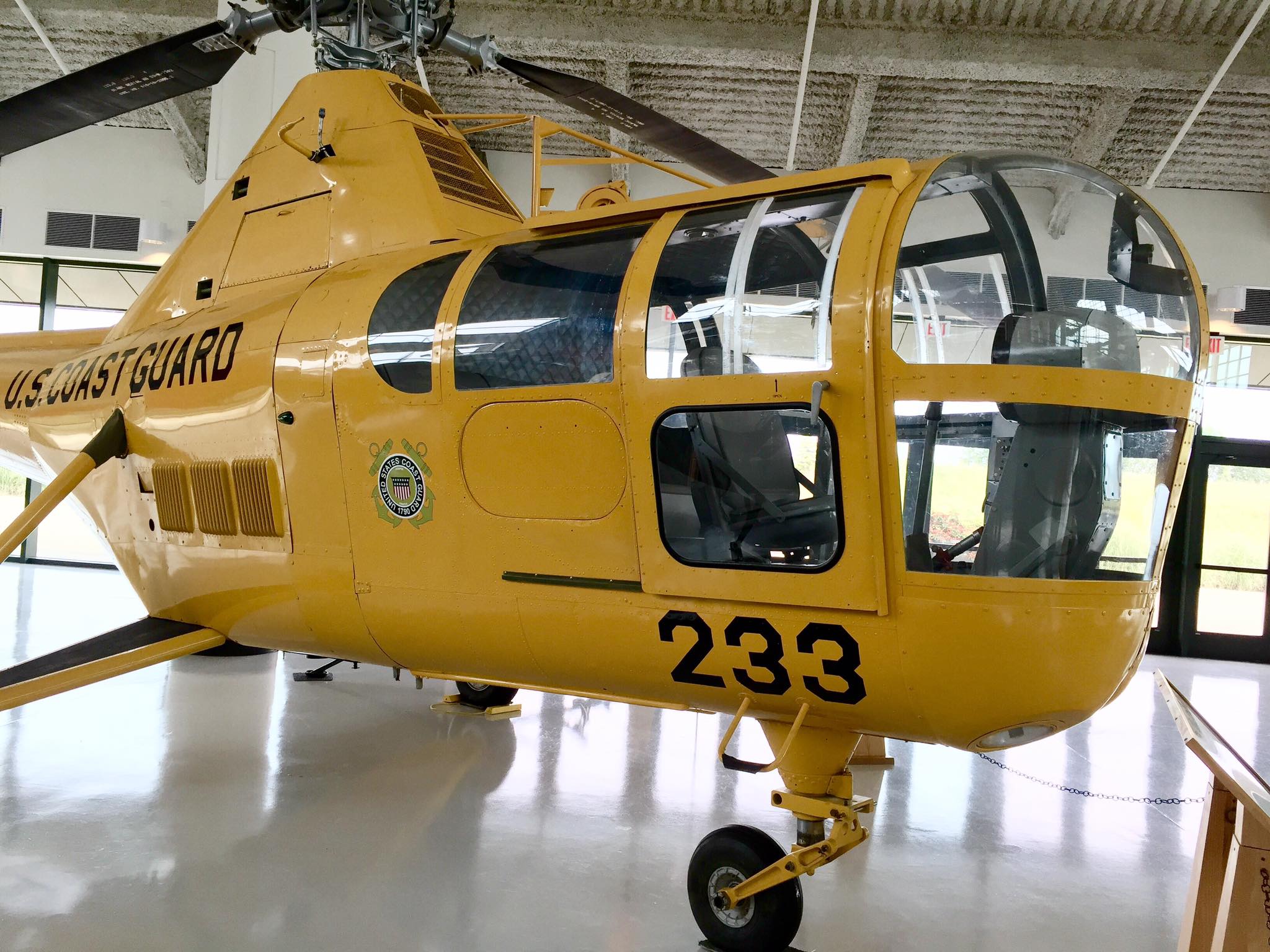
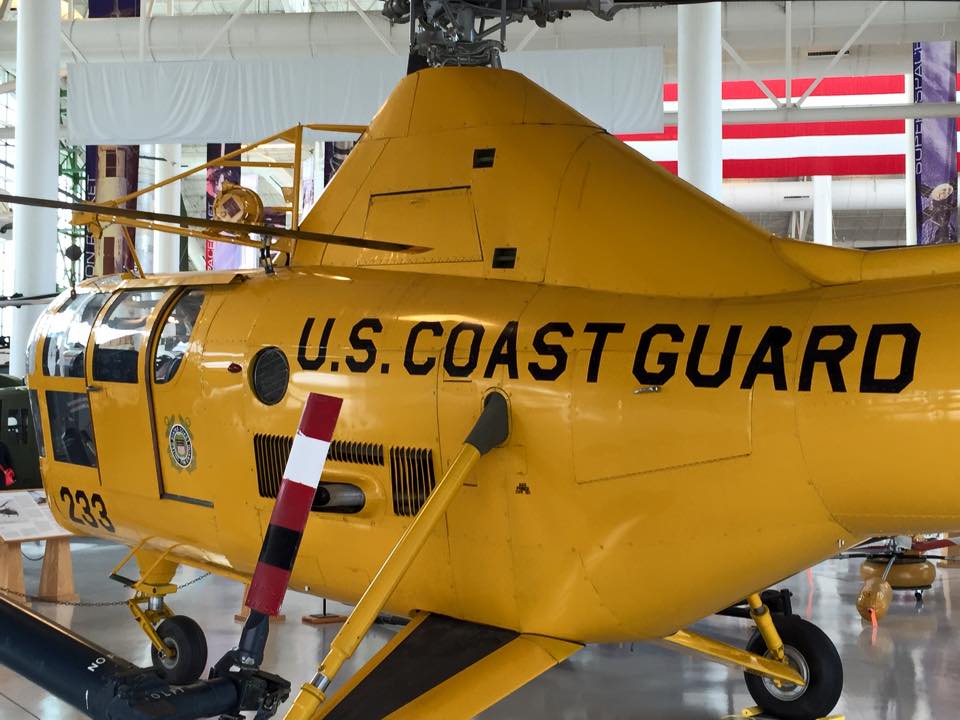
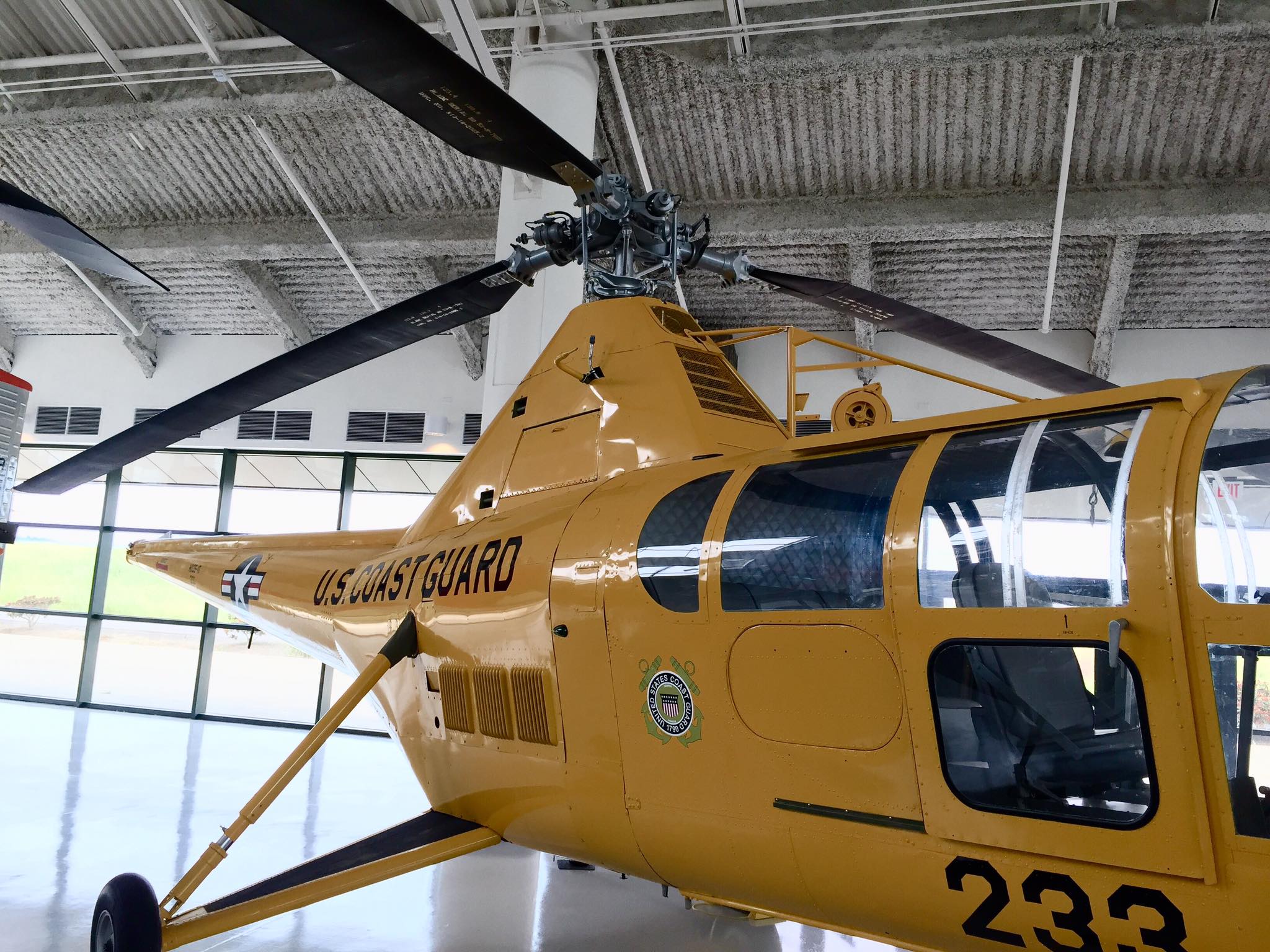
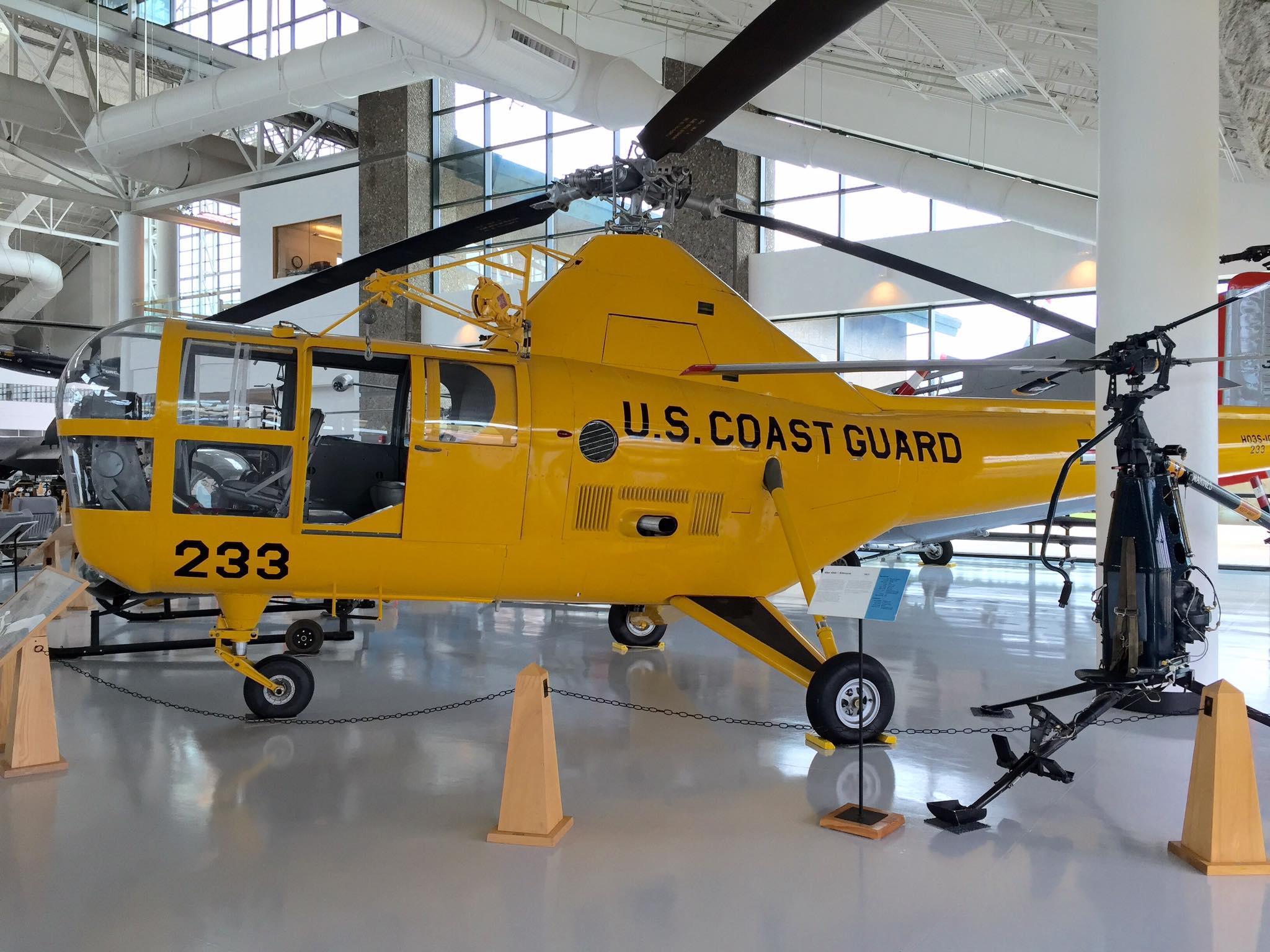
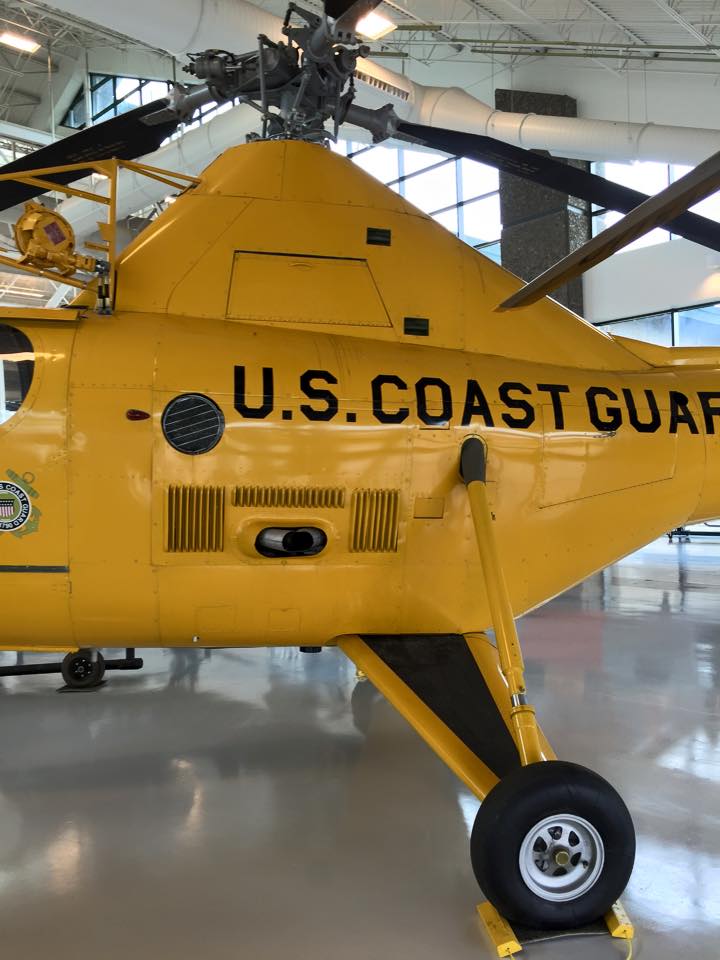
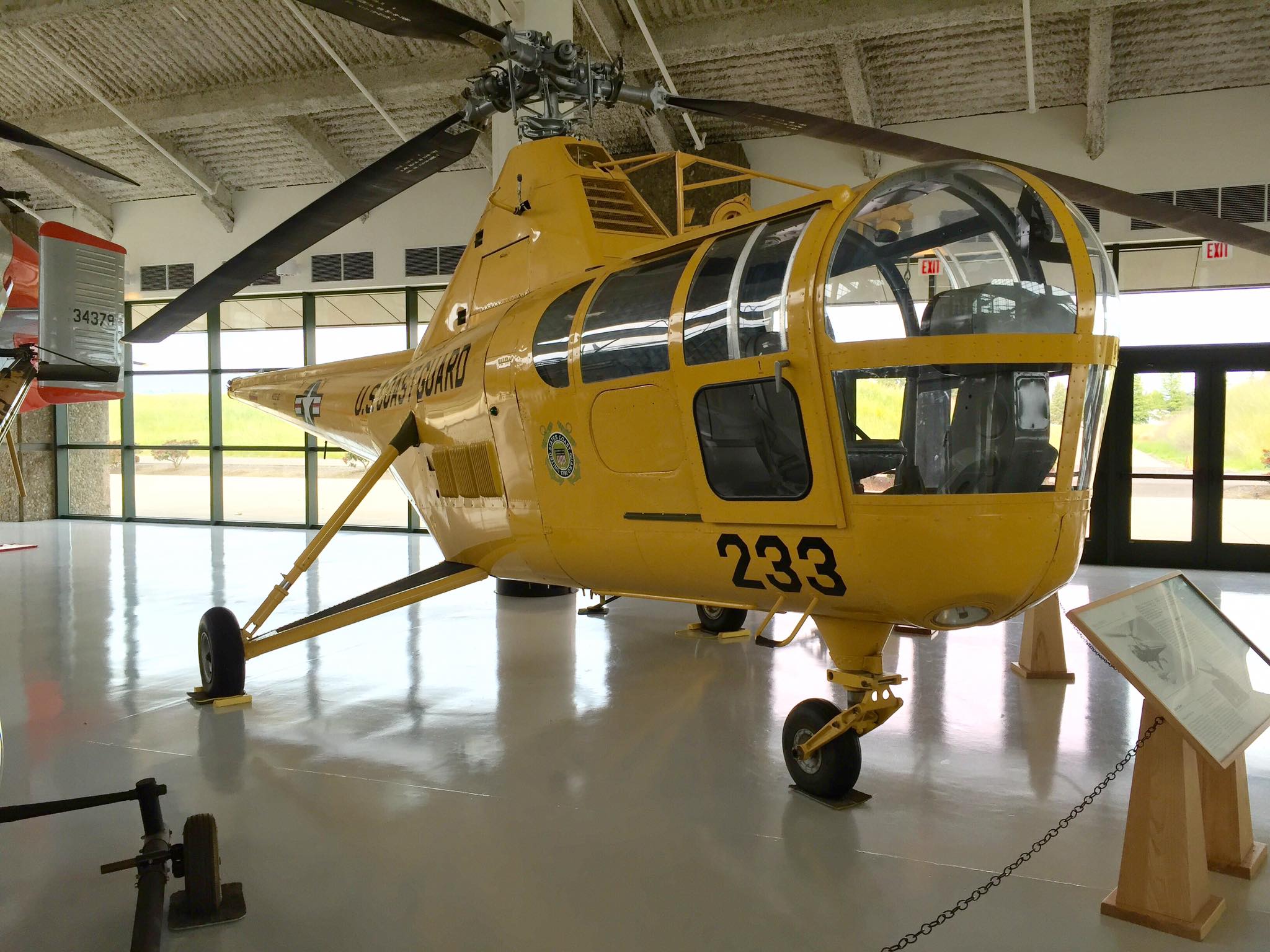
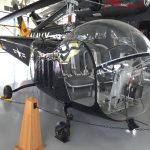
Sikorsky HO3S-1G (S-51), s/n 1233 (USCG aircraft had a “1” added to the serial number beginning January 1, 1951), on display at the Evergreen Aviation and Space Museum, McMinnville, Oregon. From what I have determined, this particular aircraft was built by Sikorsky Aircraft Corporation and was one of three S-51 aircraft delivered to Helicopter Air Transport (HAT) in Camden, New Jersey. Beginning in the fall of 1946, HAT flew its S-51 and Bell Model 47B aircraft to ferry passengers between airports and downtown Philadelphia, and became the first helicopter airline. It was also one of the first companies to carry U.S. mail by helicopter and (is reportedly) the first company to operate helicopters in New York City. (HAT began delivering Santa Clauses to department stores for the 1946 Christmas season, reaching six department stores that year using parking lots and improvised rooftop landing pads.
By the mid-1940’s, major department stores began looking to helicopters as a way to keep their customer base year-round as the migration to the suburbs was in progress. One idea promulgated at a 1943 helicopter convention was to fly suburban residents to a local Park-O-Port and then bus them to the stores until such time as a rooftop helipad could be constructed. But consumer goods and civilian aircraft were in short supply during WWII for such an endeavor. HAT also offered flight instruction as well as some charter and passenger service until it ceased operations in 1947. So in 1948, Sikorsky reclaimed this aircraft and sold it to the U.S. Coast Guard, and it was fitted with a rescue hoist and operated as an HO3S-1G until it was sold to a private collector in January of 1960 (I have not yet found the history during that time period).
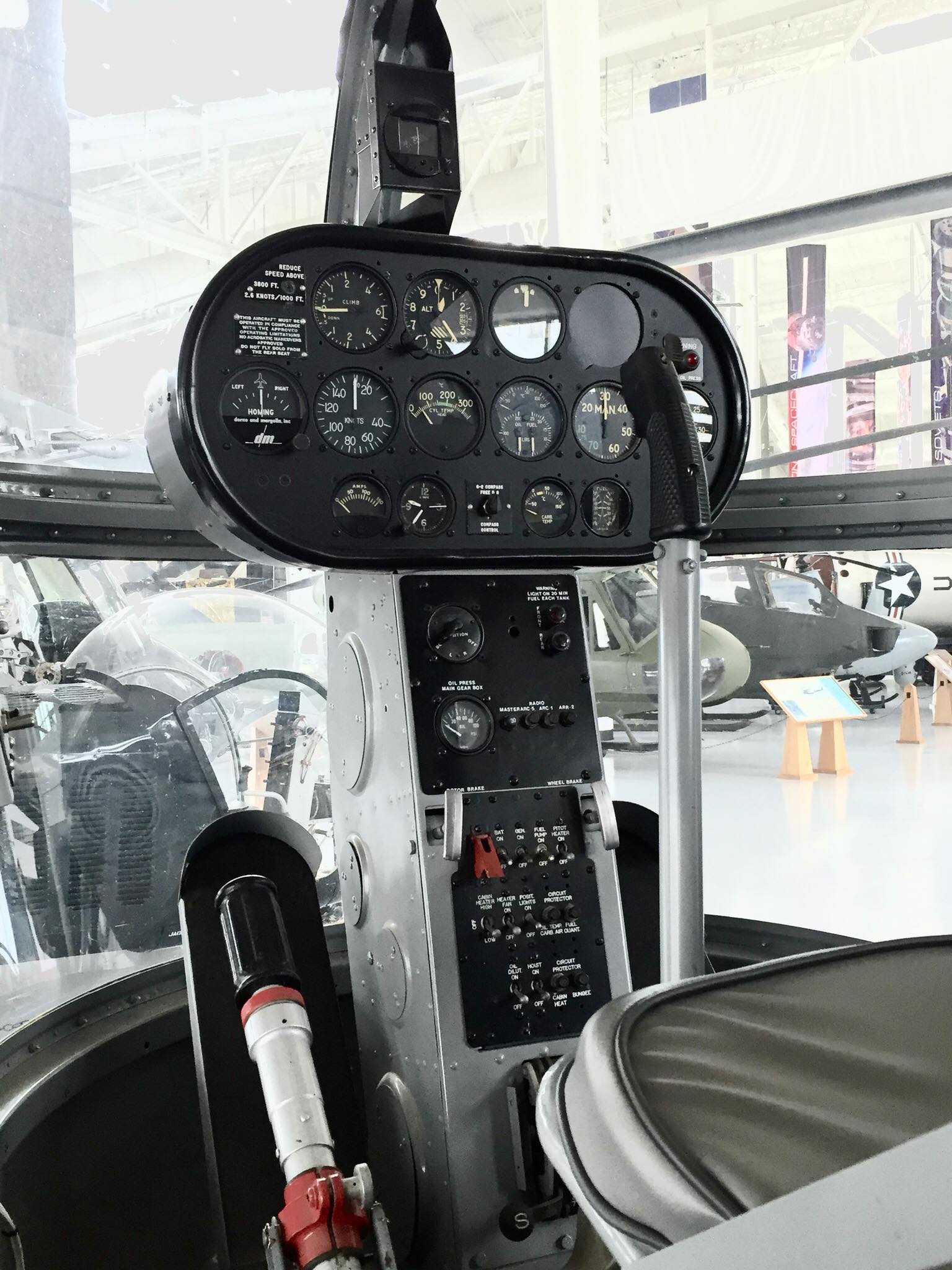
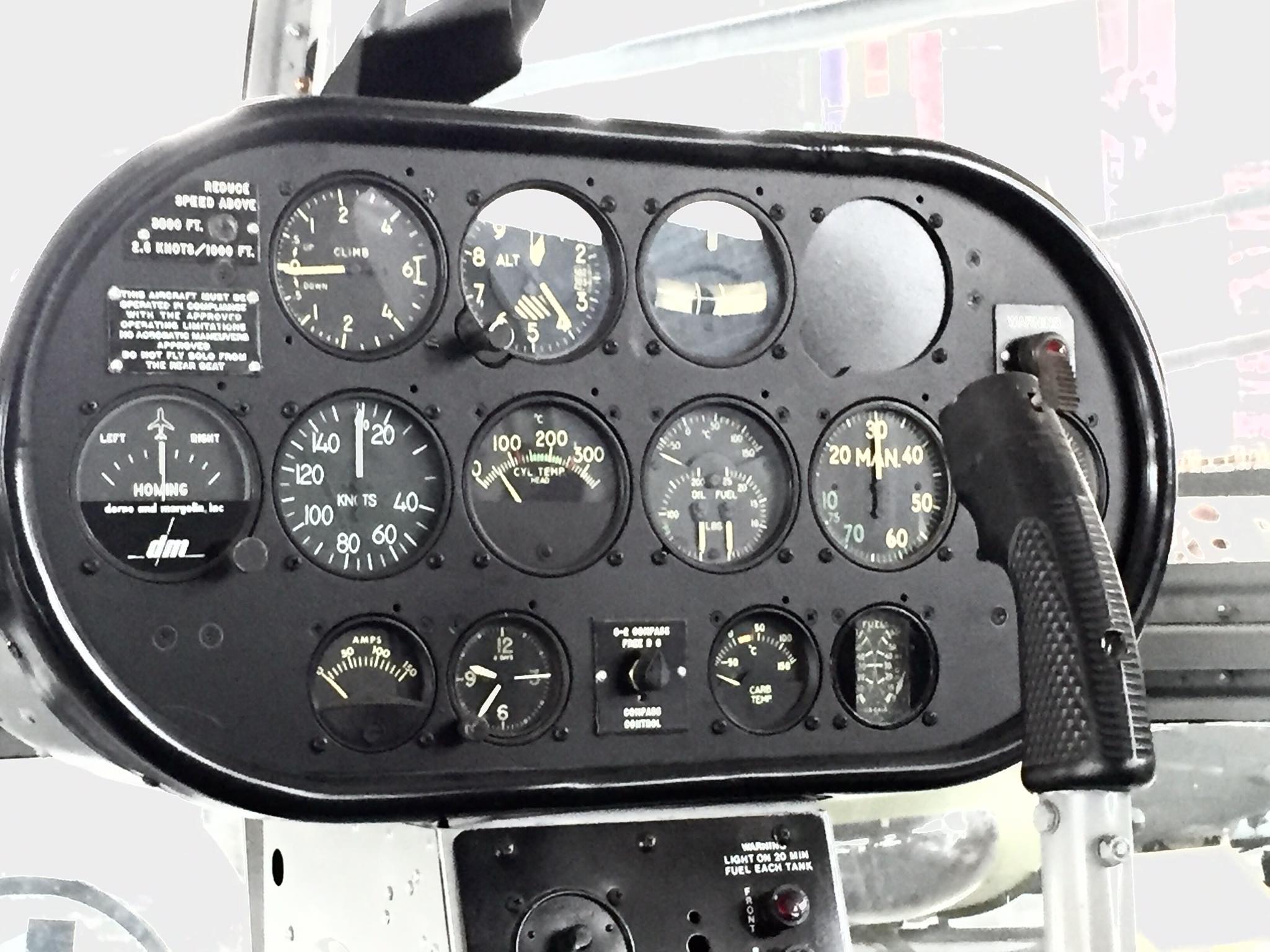
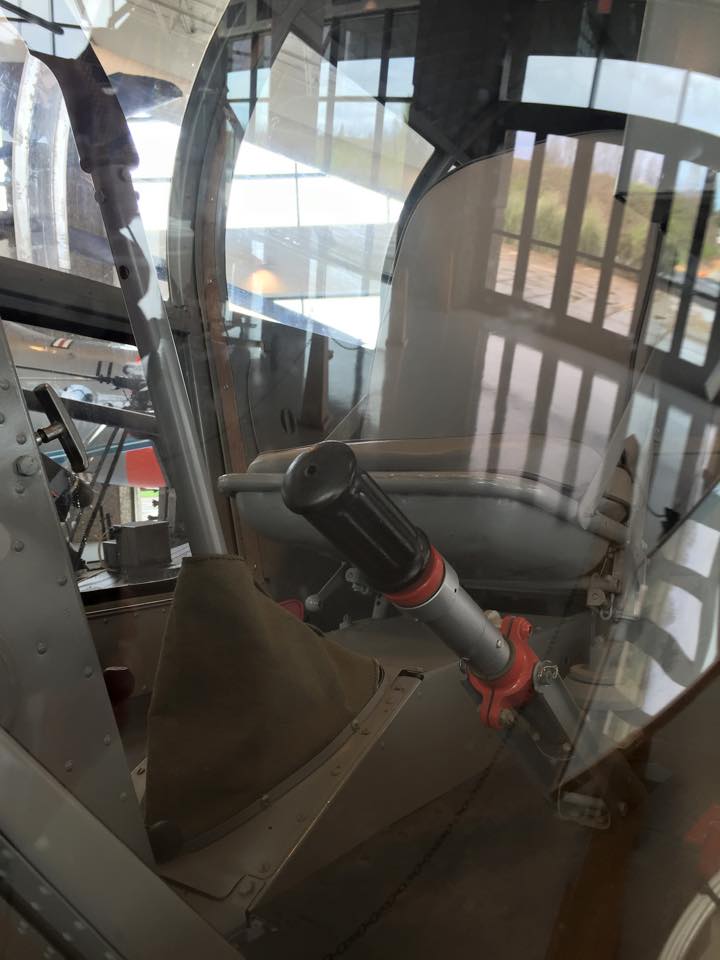
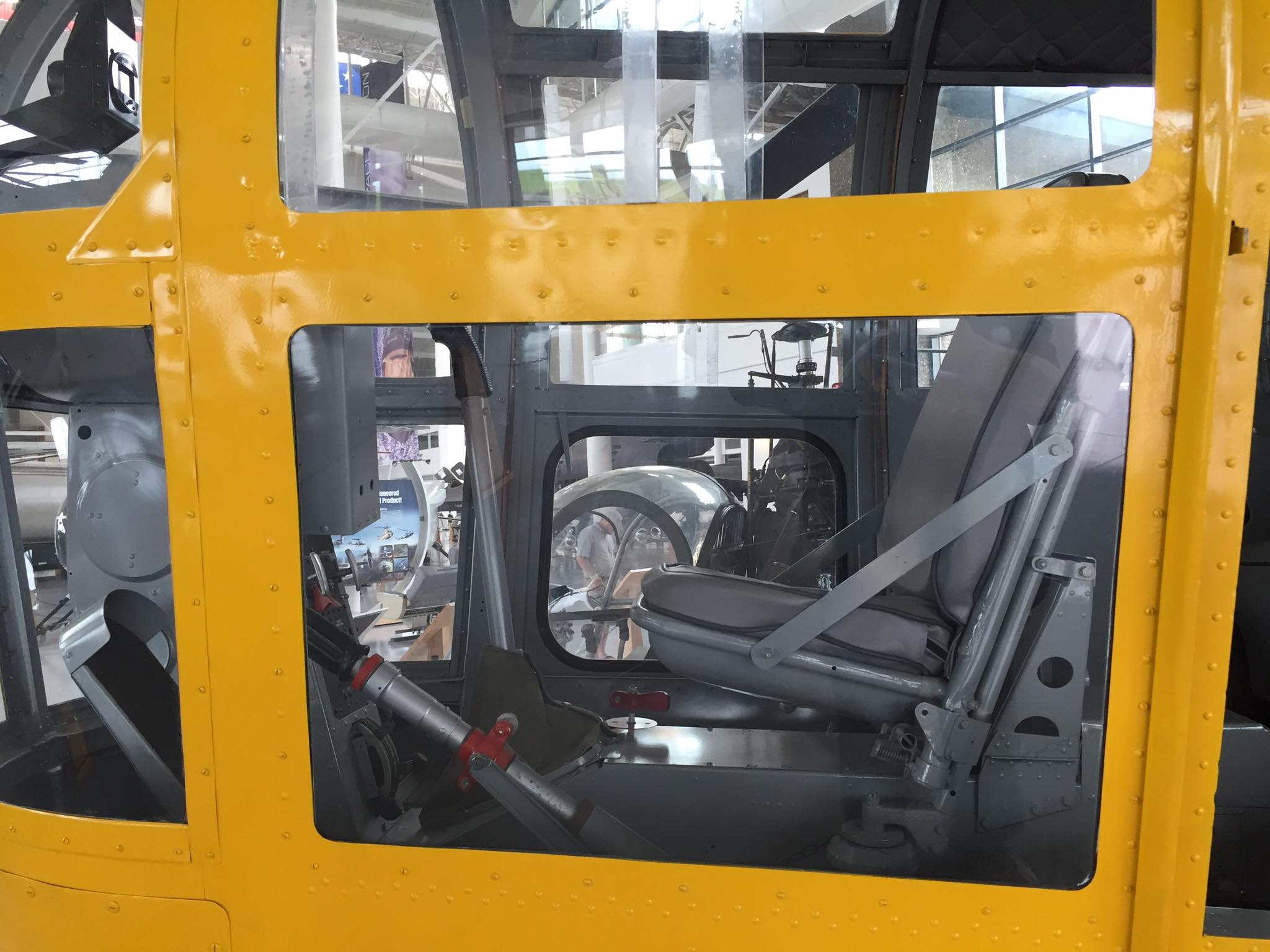
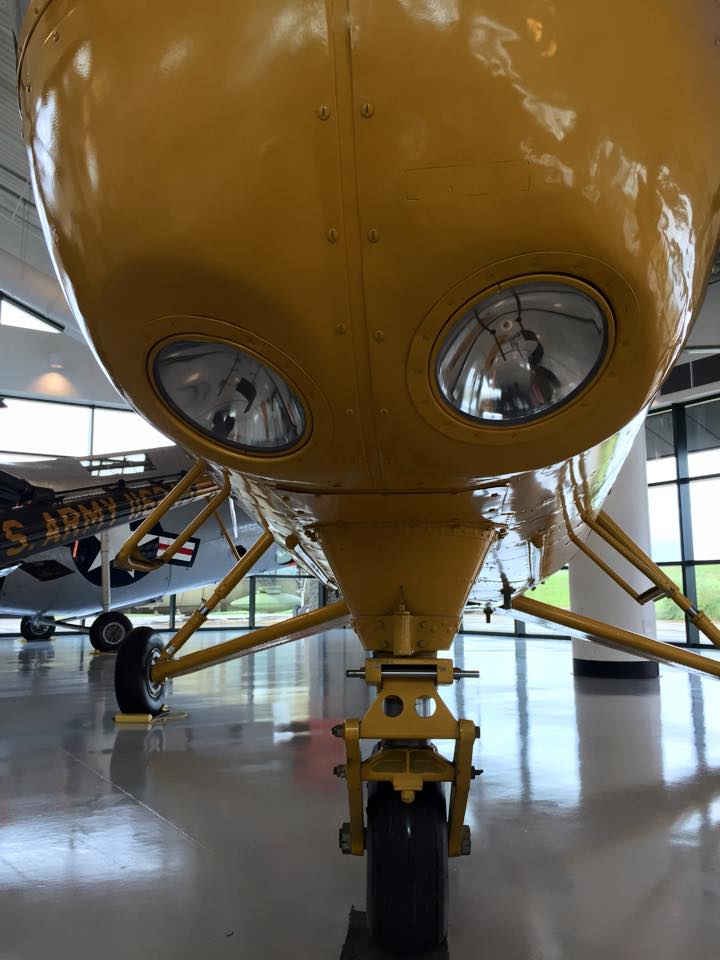
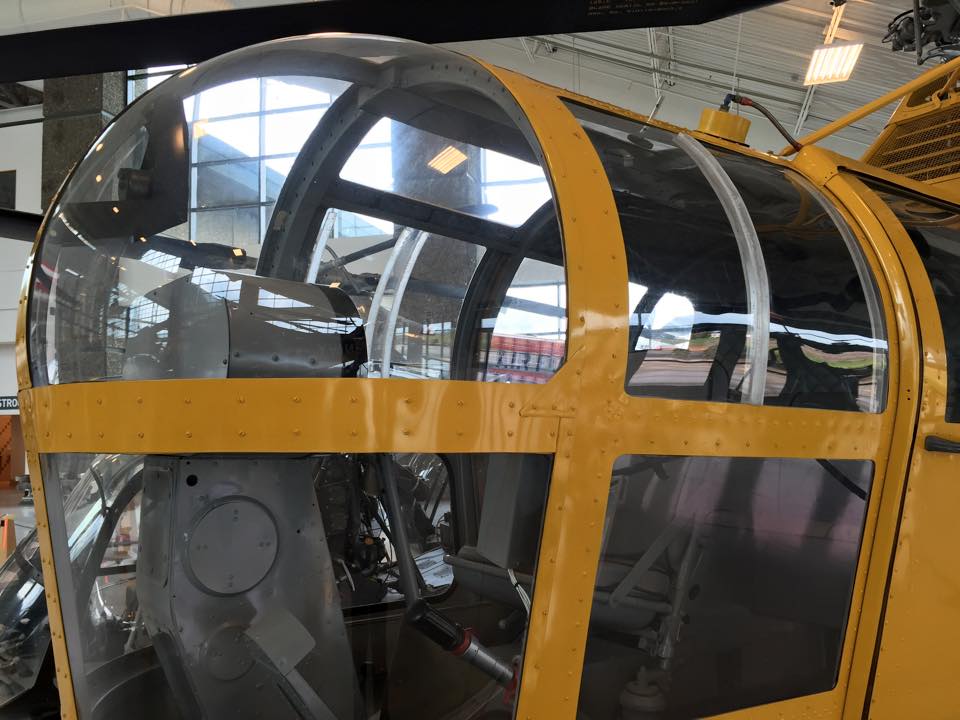
According to museum records, it exchanged hands a number of times until Hubbard, Oregon resident and collector Jack Lenhardt acquired it in 1993, and spent nearly 10 years restoring it to its HO3S-1G configuration and livery. Del Smith (or one of his companies, for whom my father worked for a time), founder of Evergreen International Aviation, acquired it in 2003, and it is now on static display at Evergreen Aviation & Space Museum in McMinnville, Oregon. My photos. With the end of WWII, the Sikorsky Aircraft Corporation felt that demand for military helicopters did not look promising, so the S-51 became a company-funded civilian aircraft project. The first flight took place on February 16, 1946. By August of 1946, Helicopter Air Transport of Camden, New Jersey, was ferrying passengers between airports and downtown Philadelphia, flying its S-51 and Bell Model 47D helicopters.
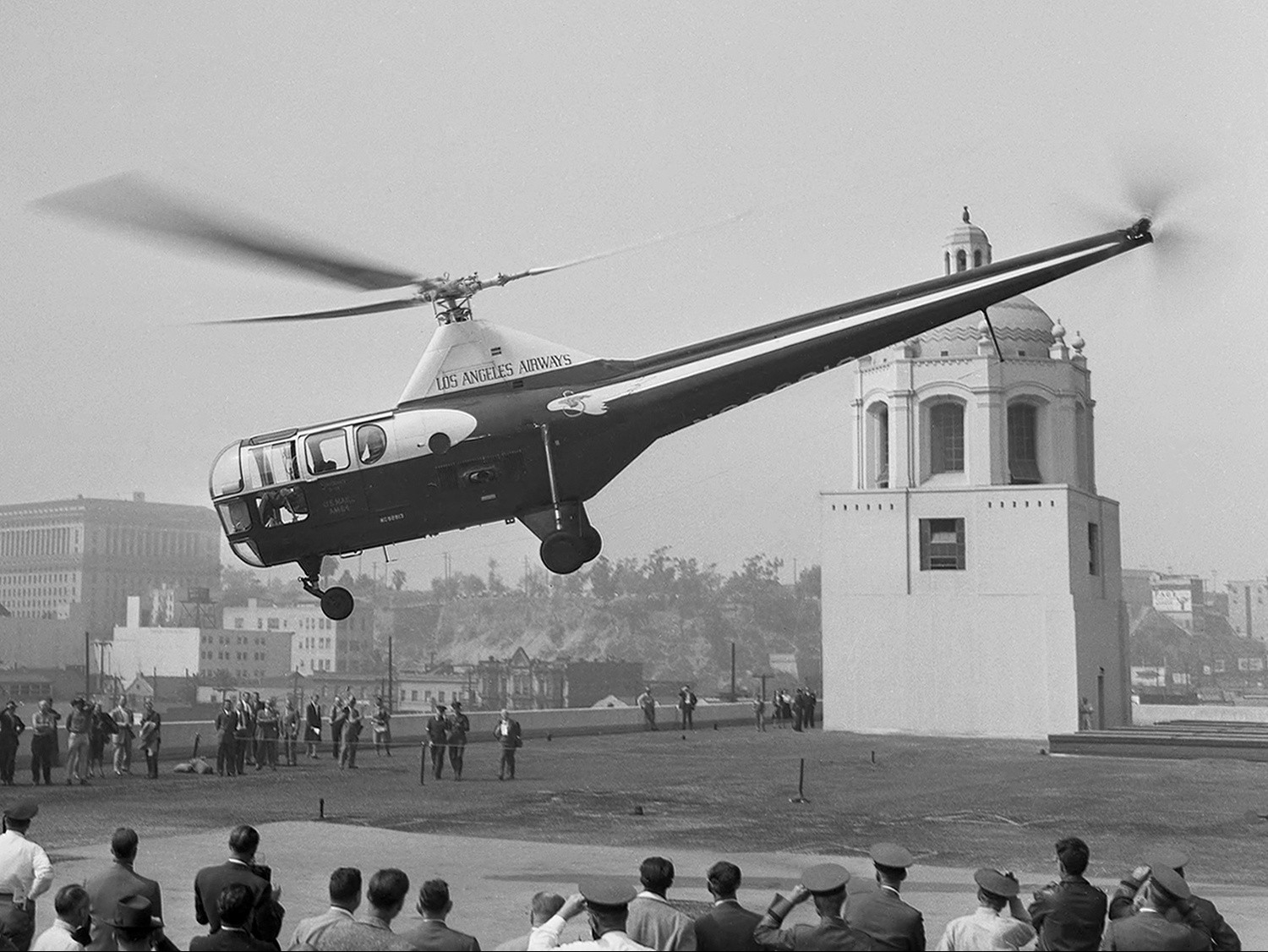
Also in 1946, the U.S. Post Office Department awarded Contract #AM-84 to Los Angeles Airways (LAA), and with LAA’s purchase of five S-51 aircraft, by October of that year, it commenced the first regular mail transport by helicopter and also operated a passenger service in the Los Angeles basin area. LAA also fitted their helicopters with landing, position, and navigation lights for night flying, and were equipped for instrument flying (LAA pilots were only allowed 15 minutes of instrument flight, so were limited to takeoffs and landings on instruments).
To prove the usefulness of the aircraft to the U.S. Navy, Sikorsky sent an S-51 demonstrator (in civilian markings) with two pilots and two crew chiefs to Task Force 2 aboard the carrier USS Franklin D. Roosevelt (CV-42). The aircraft carried several hundred passengers during the course of trials and maneuvers, and Vice-Admiral William H. Blandy became convinced of the aircraft’s possibilities, particularly for rescue, submarine reconnaissance and detection, light transport, and crew exchange among ships at sea. The U.S. Navy then acquired four, designated HO3S-1 (and nicknamed the “Horse” by Navy personnel), and deployed one to Navy Experimental Squadron 3 (VX-3) in support of Operation Highjump Antarctic operations aboard the seaplane tender USS Pine Island (AV-12) beginning in late December 1946 (United States Navy Antarctic Developments Program designed to establish a research base).
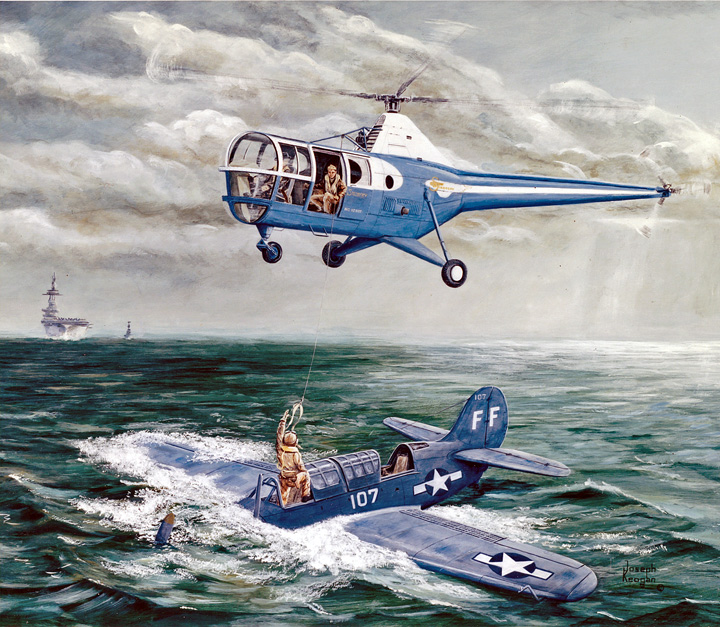
On February 8, 1947, it was the S-51 aboard CV-42 that made the first military rescue by a helicopter when the S-51, flown by Sikorsky chief test pilot D.D. “Jimmy” Viner with Lt. Joe Rullo, USN, a naval aviator assigned as observer on all helicopter flights. The aircraft was serving as a “plane guard” when the carrier recovered aircraft from the sea. A Curtiss SB2C Helldiver piloted by Lt. Robert Shields with Aviation Radioman Don K. Little encountered engine failure and crashed into the sea; the S-51 successfully recovered both crewmen. On December 1, 1947, Marines HMX-1, the U.S. Marine Corps operational test and development squadron, was formed, and during an amphibious operation with forces from Camp Lejeune (Jacksonville, North Carolina), five HO3S-1 helicopters transported 66 troops from ship to shore, thereby avoiding the hazards of a beach landing.
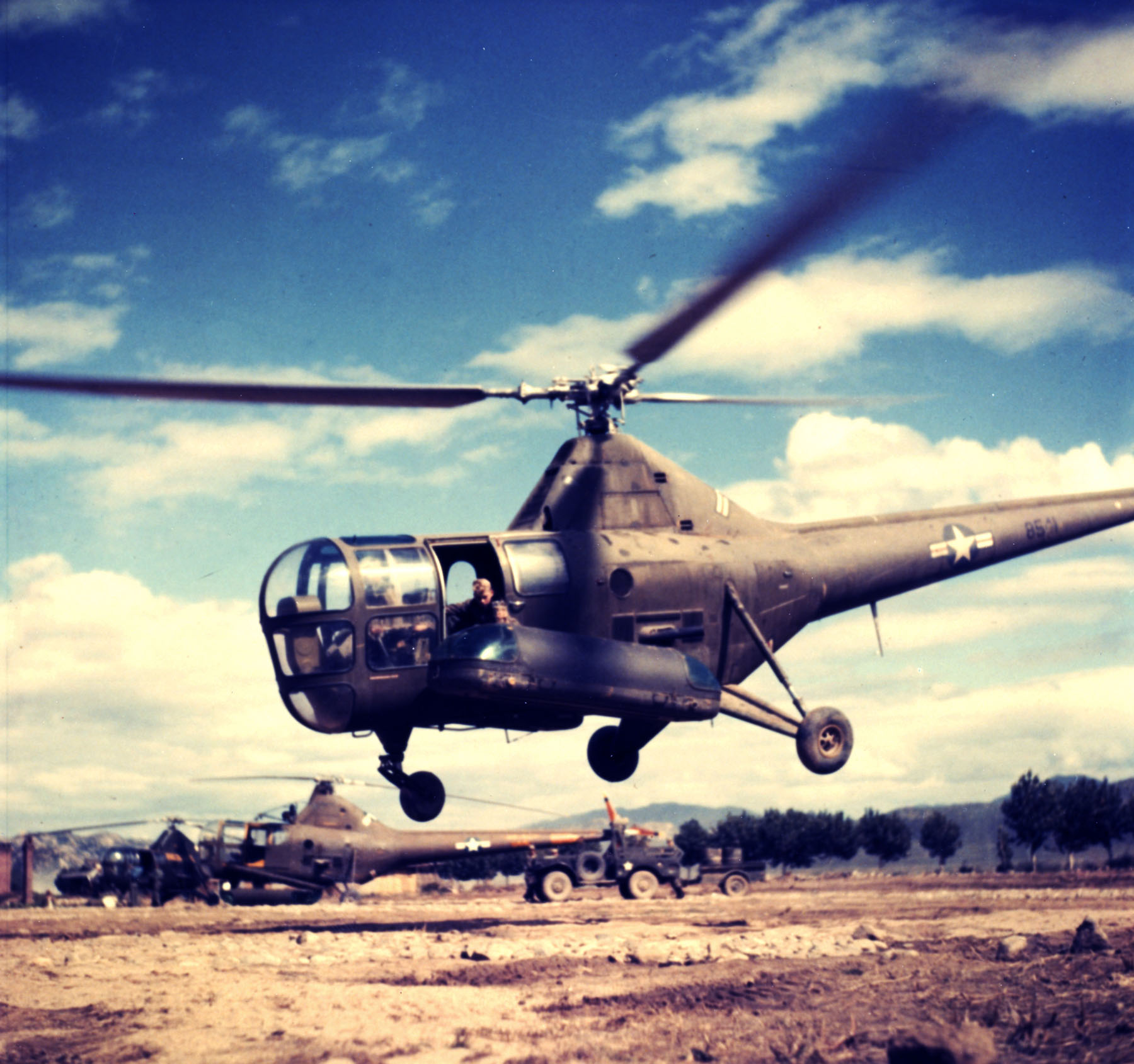
Following the outbreak of the Korean War on June 25, 1950, personnel from HMX-1 were assigned to U.S. Marine Observation Squadron 6 (VMO-6), and four HO3S-1 aircraft carried out numerous observation/liaison and rescue/evacuation missions of downed pilots and wounded soldiers, and during the Battle of Pusan Perimeter in 1950, 23 air crewmen were rescued from behind enemy lines in VMO-6 HO3S -1 aircraft. The U.S. Navy arrived in Korea with HO3S-1 helicopters attached to Helicopter Utility Squadrons HU-1 and HU-2, and were assigned to aircraft carriers and a few other large warships. They flew aircrew sea rescue operations as well as inland rescues, carried supplies and mail from ship to ship, and used as artillery spotters and for locating sea mines for demolition. The U.S. Air Force had nine helicopters (designated H-5) stationed in Japan at the outbreak of the Korean War, and they were deployed to Korea, where they flew aircrew rescue missions and transported wounded to MASH (Mobile Army Surgical Hospital) units and transferred seriously wounded to hospitals and offshore hospital ships.
In total, the U.S. Coast Guard took delivery of eight HO3S-1G aircraft between 1946 and 1950, carrying out a great many search and rescue missions; they developed new search and rescue tools such as improved rescue baskets and flotation bags. In 1946, a Coast Guard HO2S-1G participated in joint tests between the Coast Guard and U.S. Navy for a dipping sonar system that proved the viability of helicopter anti-submarine operations. The Coast Guard also developed an emergency flotation system consisting of floats that inflated around the landing gear within 30 seconds. As a shipboard aircraft, the Coast Guard also carried out law enforcement activities and served to guide ships through ice fields. In addition to U.S. military and civilian operators, the aircraft type and its variants were operated in as many as 15 nations; the British and Canadian versions were called the “Dragonfly.” Following the Korean War, military surplus S-51 aircraft were sold on the civilian market, and some were bought back by Sikorsky, which reverted them to commercial helicopters with zero-time airframes and logbooks, and also sold civilian conversion kits and instructions.
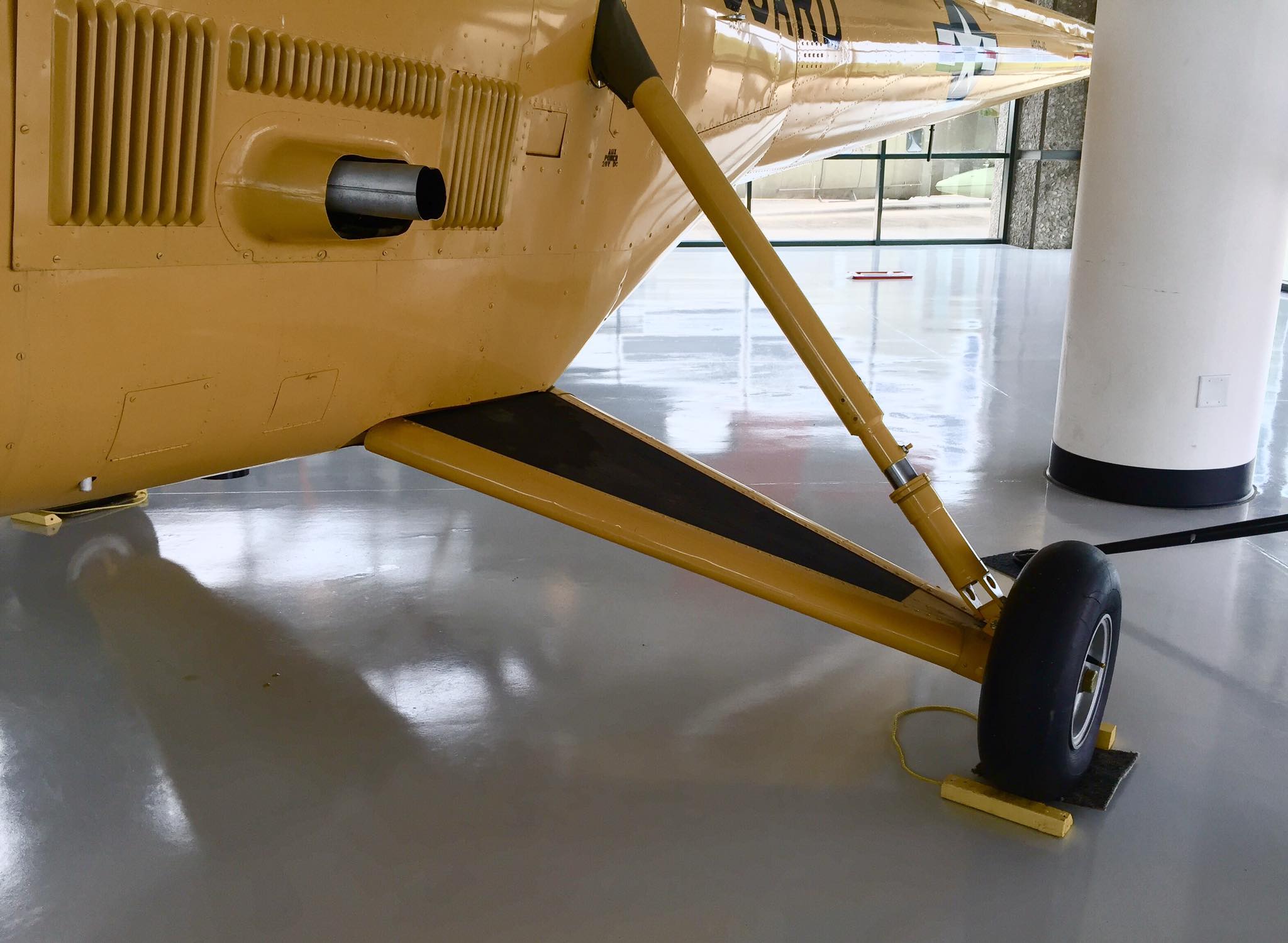
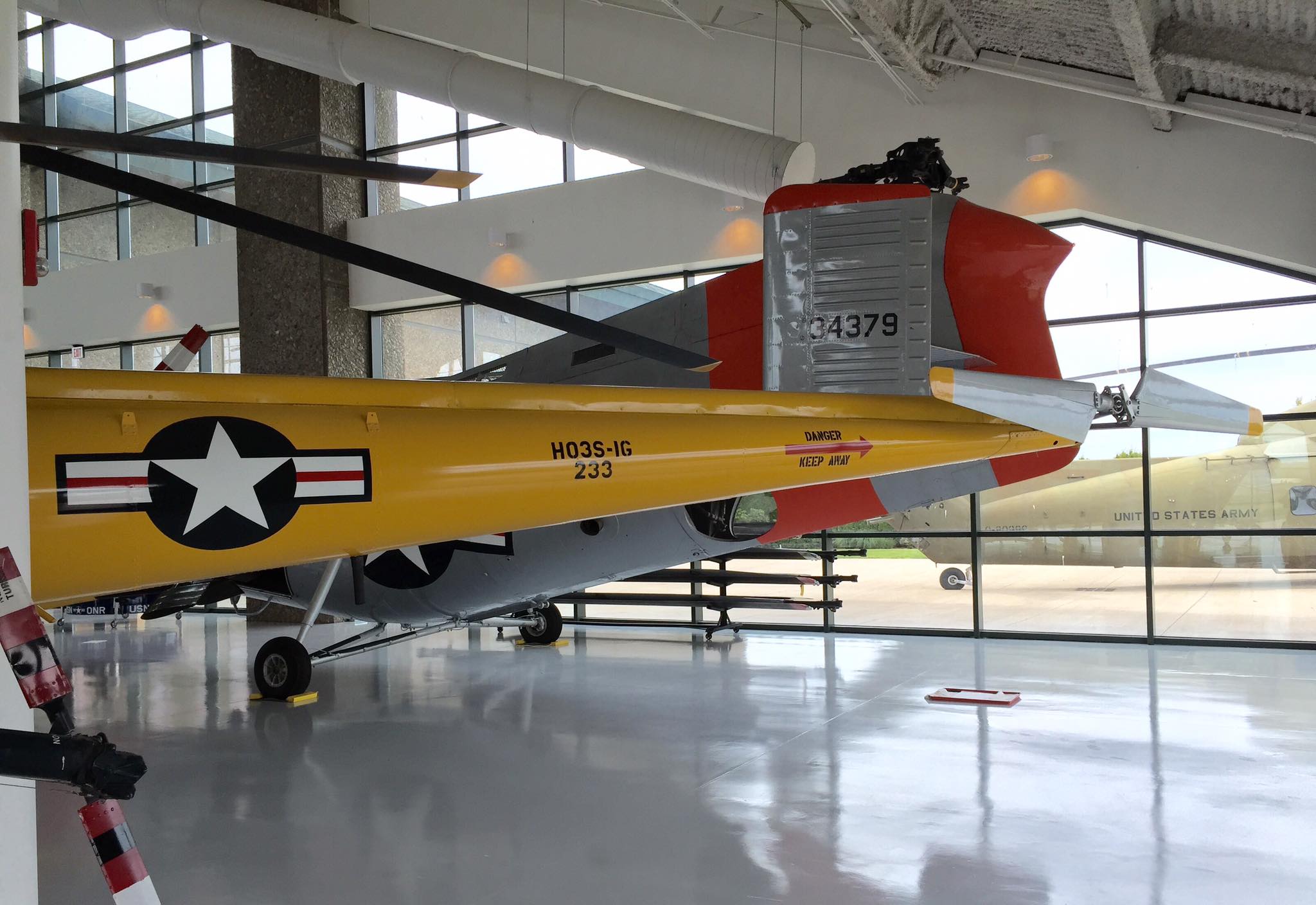
The S-51 fuselage was designed with 3 sections: an aluminum-framed cabin with Plexiglas windows, a steel-framed center section with removable panels, and a monocoque-design tail cone covered in magnesium. The design featured the pilot’s seat in a very forward position in the cockpit with a 3-place bench seat across the back of the cabin. The powerplant was a 450-hp Pratt & Whitney Wasp Jr. R985-AN5 or AN-7 engine mounted horizontally under the center section with a cooling fan//flywheel assembly above it. It was fitted with a 48-foot 3-bladed main rotor (with a fully articulated rotor head and constructed of metal spars, plywood ribs, and plywood pockets, with the entire blade covered with 2 layers of fabric) and a 3-bladed tail rotor. Later production aircraft were built with all-metal blades, and a retrofit kit was offered for earlier aircraft.
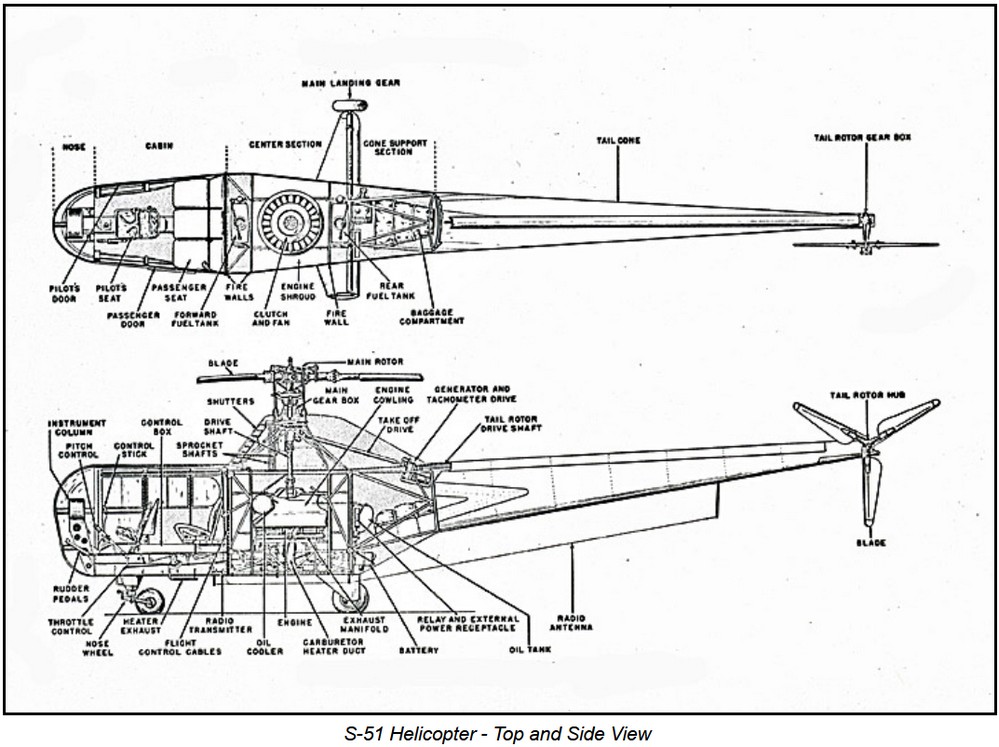
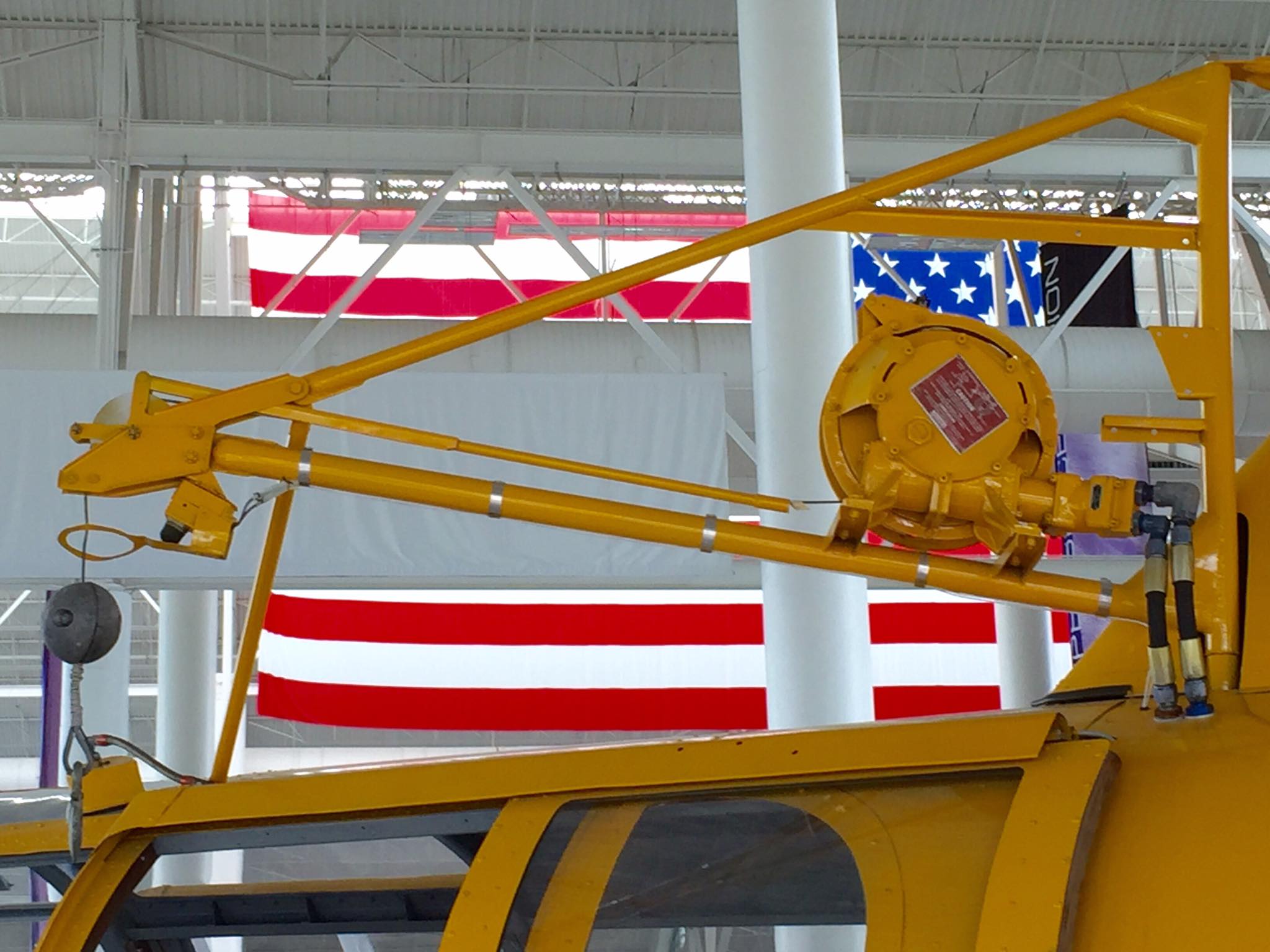
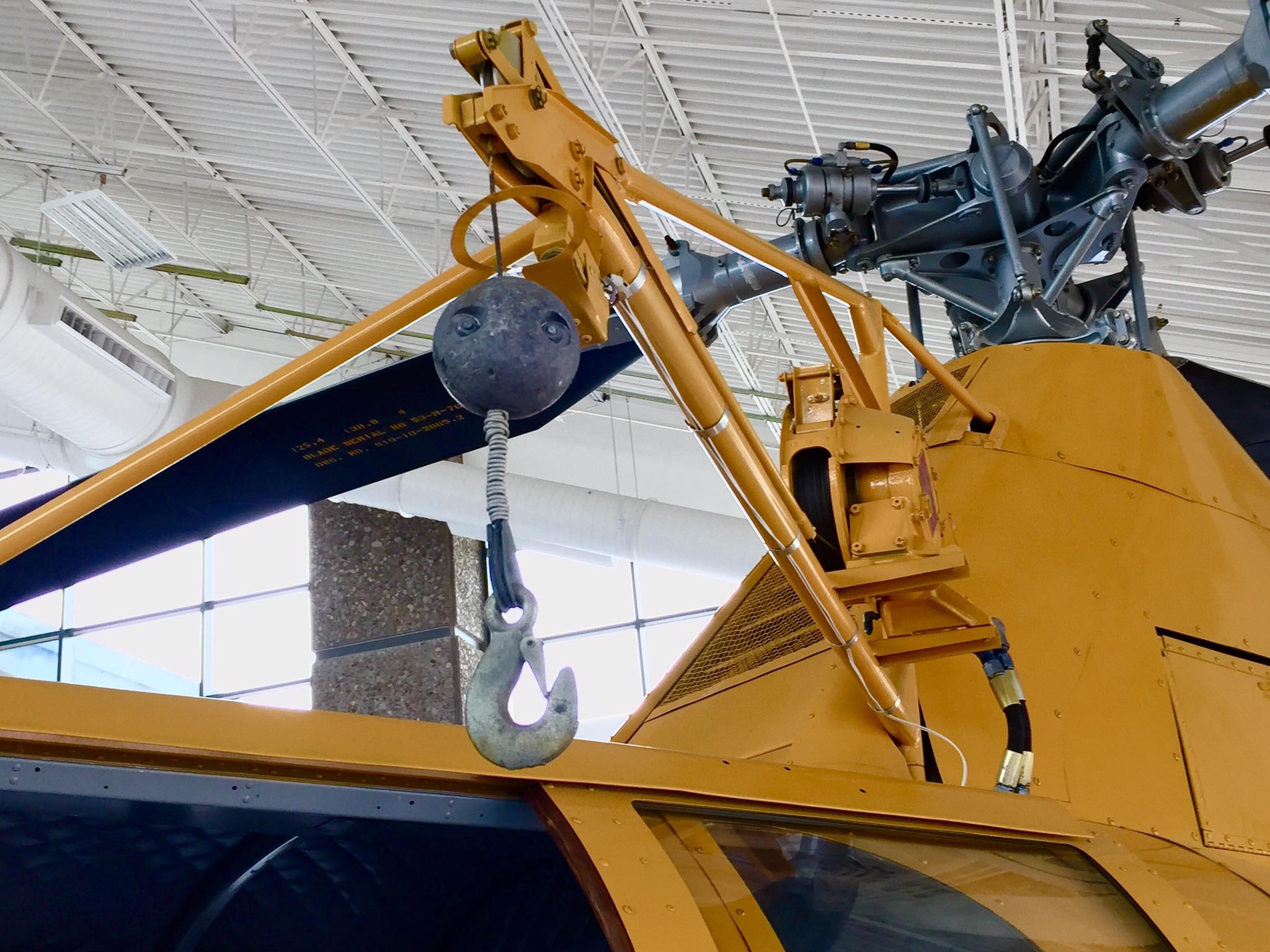
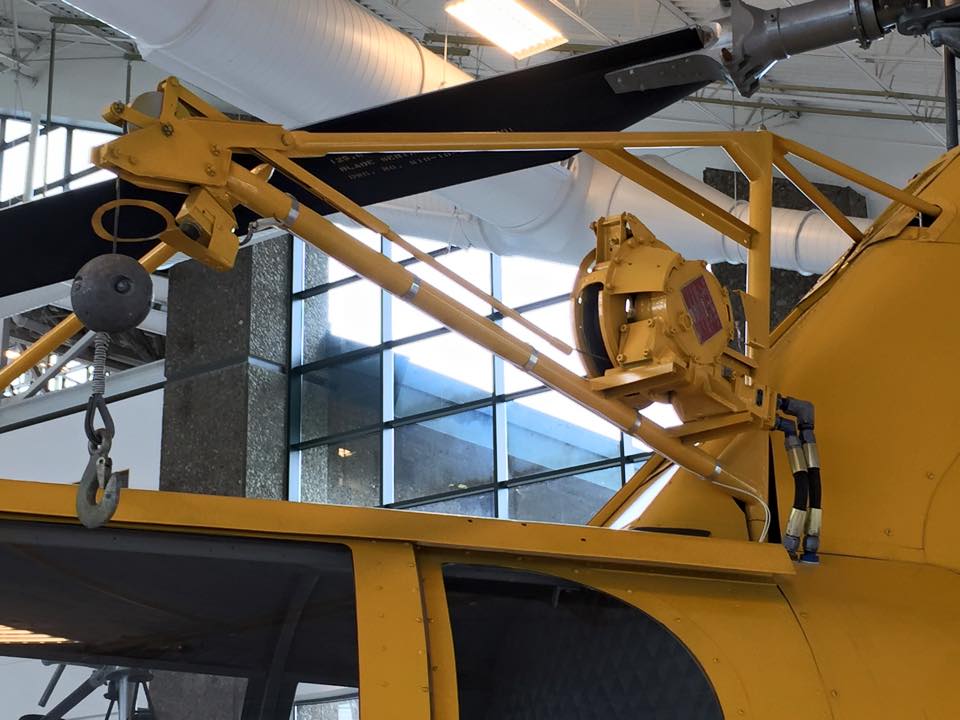
The blades had a mechanical control system with a bungee-cord trim system to help reduce pilot fatigue. A hydraulic servo system was fitted to late production aircraft and was offered as a retrofit for earlier aircraft. Hydraulic power for the servo came from a hydraulic pump, belt-driven by the tail rotor driveshaft. The military versions were equipped with a rescue hoist (external lifters could be attached to the sides of the fuselage that kept the enclosed stretchers level) and could have an auxiliary fuel tank.
About the author  Randy Malmstrom grew up in a family steeped in aviation culture. His father, Bob, was still a cadet in training with the USAAF at the end of WWII, but did serve in Germany during the U.S. occupation in the immediate post-war period, where he had the opportunity to fly in a wide variety of types that flew in WWII. After returning to the States, Bob became a multi-engine aircraft sales manager and, as such, flew a wide variety of aircraft; Randy frequently accompanied him on these flights. Furthermore, Randy’s cousin, Einar Axel Malmstrom, flew P-47 Thunderbolts with the 356th FG from RAF Martlesham Heath. He was commanding this unit at the time he was shot down over France on April 24th, 1944, spending the rest of the war as a prisoner of war. Following his repatriation at war’s end, Einar continued his military service, attaining the rank of Colonel. He was serving as Deputy Wing Commander of the 407th Strategic Fighter Wing at Great Falls AFB, MT at the time of his death in a T-33 training accident on August 21, 1954. The base was renamed in his honor in October 1955 and continues to serve in the present USAF as home to the 341st Missile Wing. Randy’s innate interest in history in general, and aviation history in particular, plus his educational background and passion for WWII warbirds, led him down his current path of capturing detailed aircraft walk-around photos and in-depth airframe histories, recording a precise description of a particular aircraft in all aspects.




The movie The Bridges of Toko Ri had Mickey Rooney piloting one of these to rescue downed pilots. His name in the movie was Nestor, I believe and he wore a top hat and a scarf when flying.
In the period 1947to1952 I was apprenticed to Westland Aircraft, Yeovil, England!. For the last two years I was a member of the final assembly team building the S-51 Dragonfly helicopters built under licence from Sikorsky and an A.I.B. Inspector for the tail cone assembly! Happy Days!
Thank you for the excellent and comprehensive history of the old bird!
Regards, Don Goddard
Camp Lejeune is in North Carrolina, not Florida, and VMO-6 stands for “Marine Observation Squadron SIX”, not”Marine Squadron SIX”. Also, H-5s, and HO3S-1s were fitted with pallets for two streachers, one per side, those were not ” lifters”.