






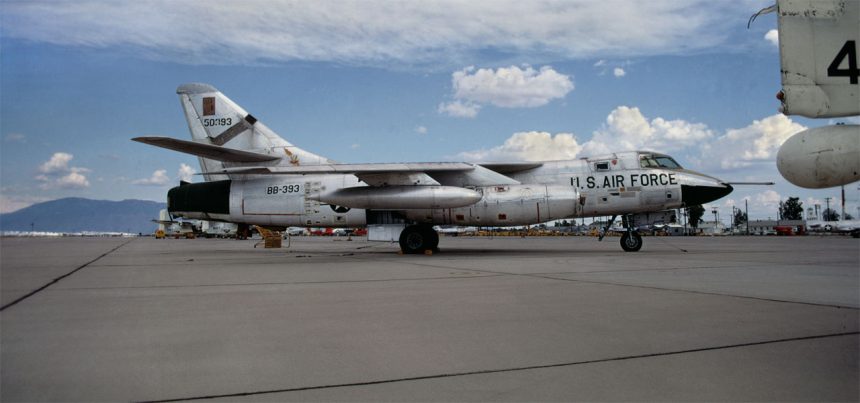

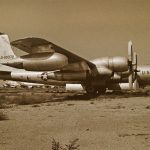
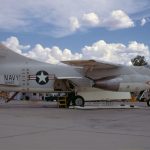
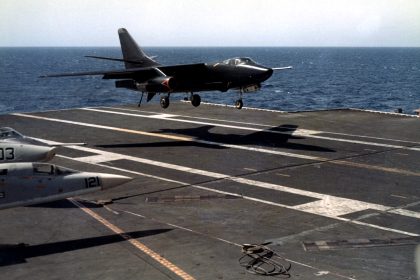
As we continue the Boneyard Files series, which showcases some of the retired aircraft resting at Davis-Monthan Air Force Base in Tucson, Arizona, in the late 1960s, today’s story features the Douglas B-66 Destroyer through the lens of Neil Aird’s “Monthan Memories” photos. The Douglas B-66 Destroyer was developed for the US Air Force, derived from the US Navy’s A-3 Skywarrior, to serve as a light bomber and photo reconnaissance aircraft. When the US Navy was developing the A-3 Skywarrior, some senior US Air Force officers were skeptical of the aircraft’s claimed takeoff weight of 68,000 pounds. The criticism likely came from competition between the services, especially because the Navy planned to use the A-3 on supercarriers. Although the supercarrier project was canceled, flight tests showed that the A-3 was capable and could perform missions like the much larger B-47 Stratojet, with an unrefueled combat radius of nearly 1,000 miles. Since the Navy had already funded the A-3’s development and the Korean War increased the need for strike and reconnaissance aircraft, the Air Force became interested in a land-based version in the early 1950s, and designated it Douglas B-66 Destroyer.
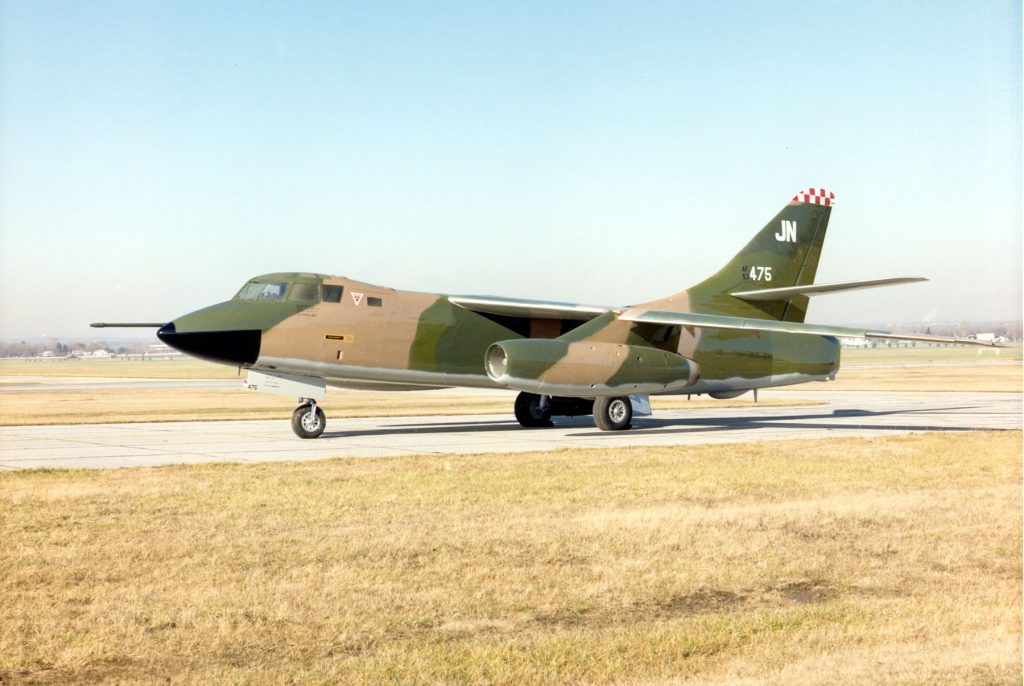
The Air Force initially thought it would be an easy task to convert the A-3 aircraft; however, the changes were so extensive that the aircraft became almost completely new. In June 1952, the Air Force ordered five pre-production RB-66A aircraft, the reconnaissance version, rather than prototypes. The service later revised the contract several times to add new versions. The first RB-66A flew on June 28, 1954; the first production B-66B flew on January 4, 1955, and deliveries began on March 16, 1956. The RB-66B was the first production version of the B-66, with 145 out of a total of 294 built. The US Air Force also developed a version for weather reconnaissance and several versions for electronic countermeasures (ECM). The ECM B-66s played an important role in missions against North Vietnam. They could detect enemy radar signals and jam them, confusing enemy defenses. In addition, some B-66s served as pathfinders, helping guide F-105 and F-4 bombing missions through bad weather.
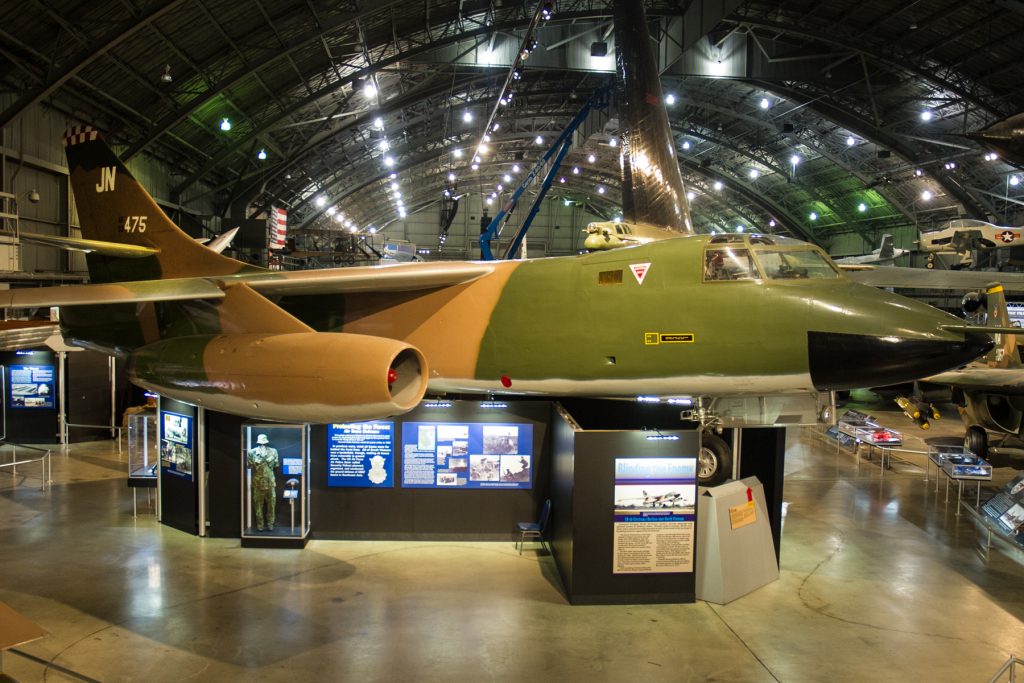
The RB-66B was 75.2 feet long, 23.7 feet high, with a wingspan of 72.6 feet. The aircraft was powered by two Allison J71 engines, each producing 10,200 pounds of thrust. The maximum speed of the aircraft was 585 mph, and its cruise speed was 525 mph. The aircraft was armed with two 20 mm cannons in the tail and 8,044 pounds of photo flash bombs. During the Vietnam War, the EB-66B, EB-66C, and EB-66E aircraft helped collect electronic intelligence. After one was shot down by a MiG, flights were limited to just outside North Vietnamese airspace. On March 10, 1964, an RB-66C from the 19th Tactical Reconnaissance Squadron was shot down over East Germany after flying across the border due to a compass error. The crew survived, was detained, and later returned to the United States. The last version, the WB-66D, was built for weather reconnaissance, with 36 units made. By 1975, the last EB-66C and EB-66E aircraft had left the US Air Force, and most were scrapped. In the early 1960s, the US Air Force began prioritizing intercontinental ballistic missiles and retired some of the Douglas B-66 Destroyer serving as tactical bomber variants, which were seen at the Davis-Monthan Air Force Base, known as “The Boneyard.” Read more Boneyard Files Articles HERE.
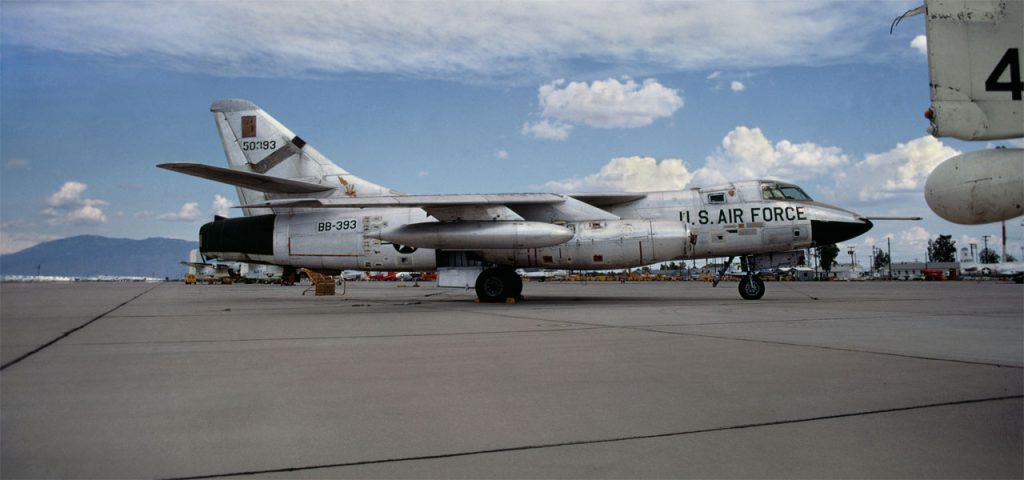










I flew in many B66 aircraft in England and France from 1960 to 1964. Electronic, photo, and radio relay. Was involved with Royal Flush 1961 and 1962 (England and Belgium). All of this gives me many fond memories.