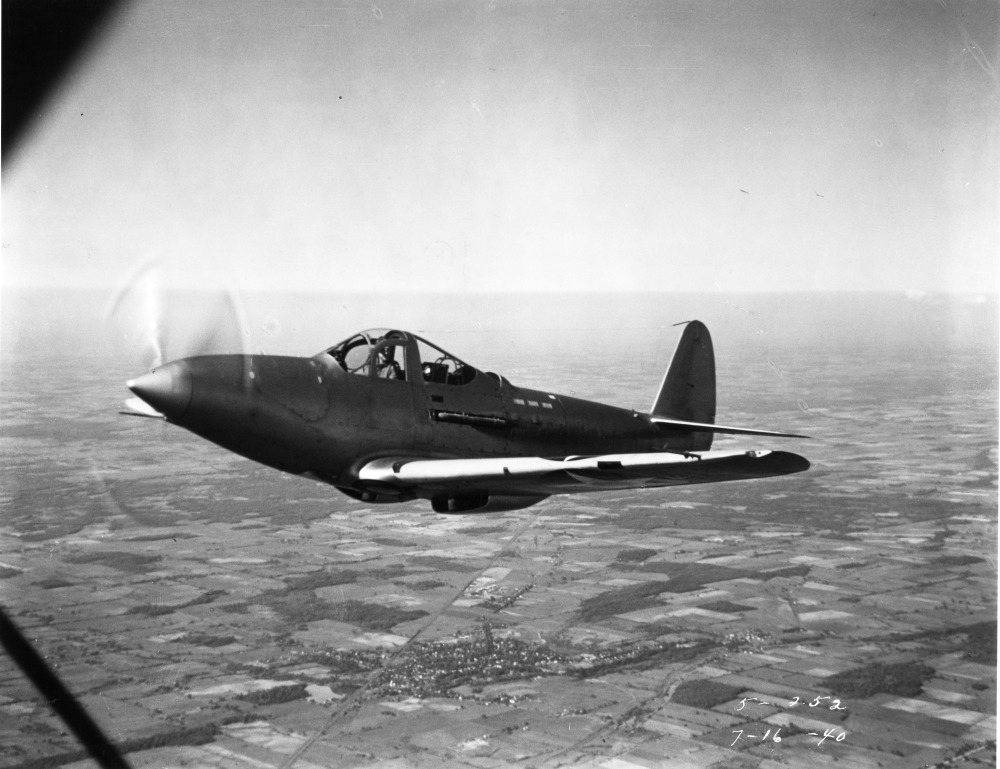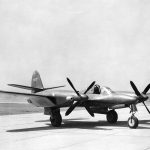
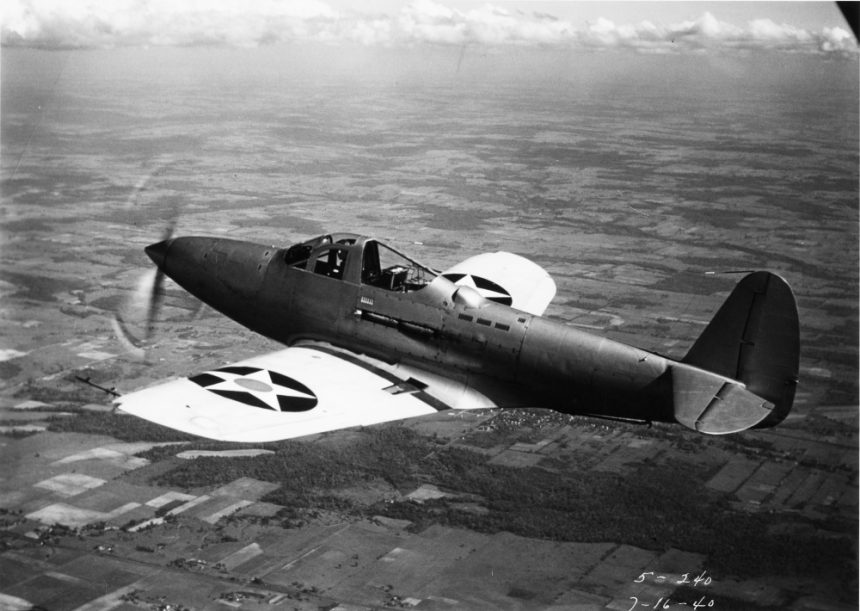


In January 1938, the US Navy wanted a new light carrier-based fighter to replace obsolete biplanes. As a result, the service asked the industry to submit proposals. On April 11, 1938, five companies, including Bell, Brewster, Curtiss, Grumman, and Vought-Sikorsky, submitted proposals for their carrier-based fighters. The Navy awarded contracts for prototypes to three of these companies. On June 30, 1938, Grumman received a contract for the XF5F-1 Skyrocket, and Vought got one for the XF4U-1 Corsair. Bell Aircraft received the third contract for the Bell XFL-1 Airabonita on November 8. All three planes flew for the first time in 1940. The Bell XFL-1 Airabonita was similar to the US Army Air Corps’ P-39 Airacobra, which was designed for land use. The main difference was that the Airabonita used a tailwheel undercarriage, while the P-39 had a tricycle landing gear. The single-seat aircraft was 29.9 feet long, 12.9 feet high, with a wingspan of 35 feet and a wing area of 232 square feet. The empty weight of the aircraft was 5,161 pounds, the gross weight was 6,651 pounds, and the maximum takeoff weight was 7,212 pounds. It was powered by an Allison XV-1710-6 V-12 piston engine, producing 1,150 horsepower.
Design of Bell XFL-1 Airabonita
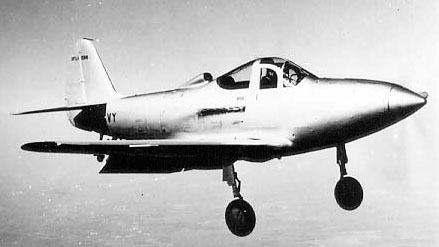
The maximum speed of Bell XFL-1 Airabonita was 336 mph, with a range of 1,072 miles, a service ceiling of 30,900 feet, and a rate of climb of 2,630 feet per minute. The aircraft was armed with two 7.62 mm machine guns and a single 37 mm (1.46 in) Oldsmobile T9 cannon, which could be replaced by a 12.7 mm machine gun. It was equipped with a three-bladed Curtiss Electric propeller. The coolant radiators were located outside in the fairings under the wings rather than inside the wing center section. The Allison engine that powered the aircraft was the first of its type tested by the Navy, and it did not have the turbosupercharger used in the XP-39. The Bell XFL-1 Airabonita trials took longer than expected due to issues with the Allison engine and the aircraft’s center of gravity. Official evaluations began in July 1940, but the XFL-1 was not certified for carrier operations due to problems with its main landing gear. In December 1940, the prototype was sent back to Bell for modifications. It returned to the Navy on February 27, 1941, at Naval Air Station Anacostia in Washington, DC. After reviewing the test results, the Navy decided not to order production of the aircraft because it did not meet the US Navy’s performance requirements.
The Cancellation
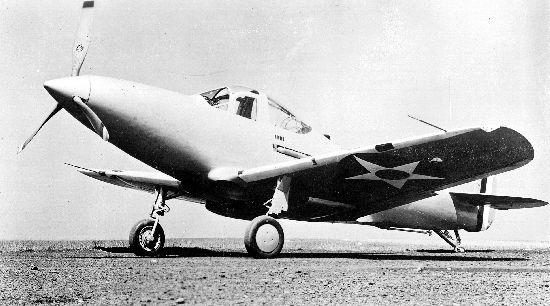
In February 1942, the Bell XFL-1 Airabonita was transferred to the Aircraft Armament Unit at Naval Air Station Patuxent River, Maryland. It was eventually grounded, used for armament tests, and later destroyed. For many years, people could see its remains at the dump at NAS Patuxent River. Some believe the Navy rejected the Bell XFL-1 Airabonita because the service wanted its aircraft equipped with air-cooled engines, whereas the Allison engine was liquid-cooled. However, this reasoning might be just speculation, as the US Navy stated that it would consider using a liquid-cooled engine only if it offered a significant performance advantage over air-cooled engines. Moreover, the Allison engine of the Bell XFL-1 Airabonita had only a single-speed supercharger, which made its performance at high altitudes much worse than other naval fighters of the time, like the Grumman F4F Wildcat. Additionally, the Airabonita faced competition from the faster Vought F4U Corsair, which could reach speeds of 390 mph at 24,000 feet at the time. In the Grounded Dreams series, poor engine performance led to the cancellation of the Bell XFL-1 Airabonita, and only one prototype was ever built. If Bell had solved the engine problems, the XFL-1 could have had a different history. Read more Grounded Dreams articles HERE.