
By Randy Malmstrom
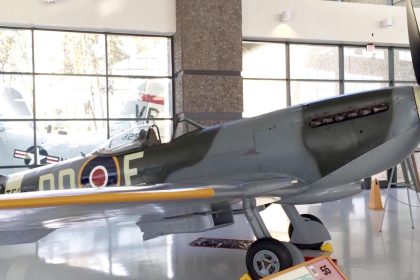
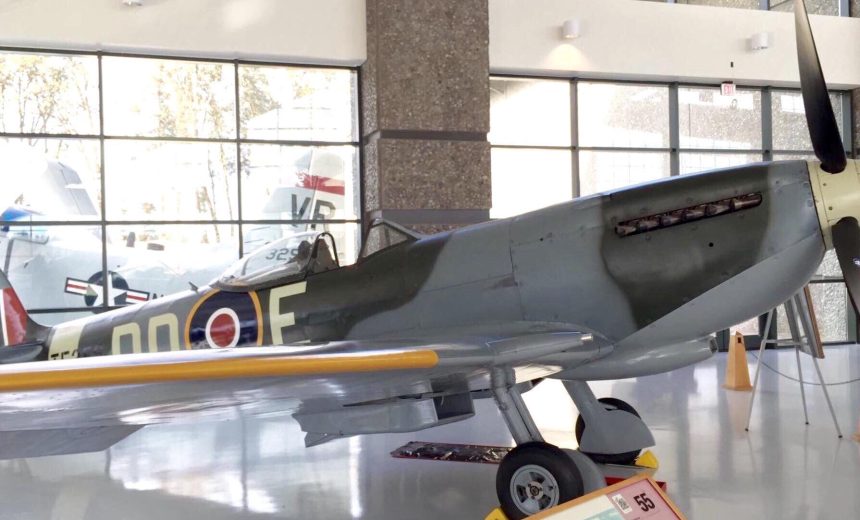
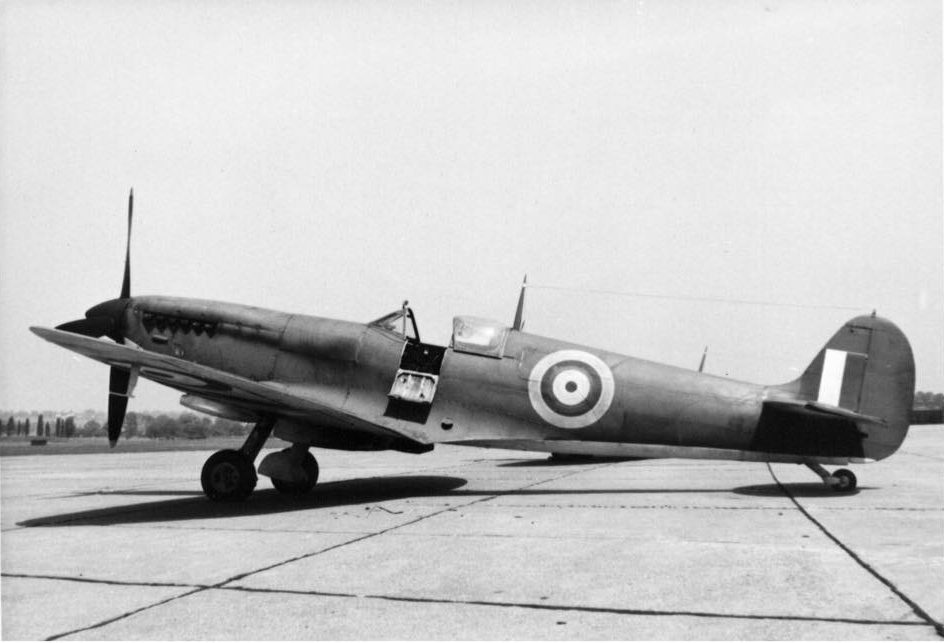
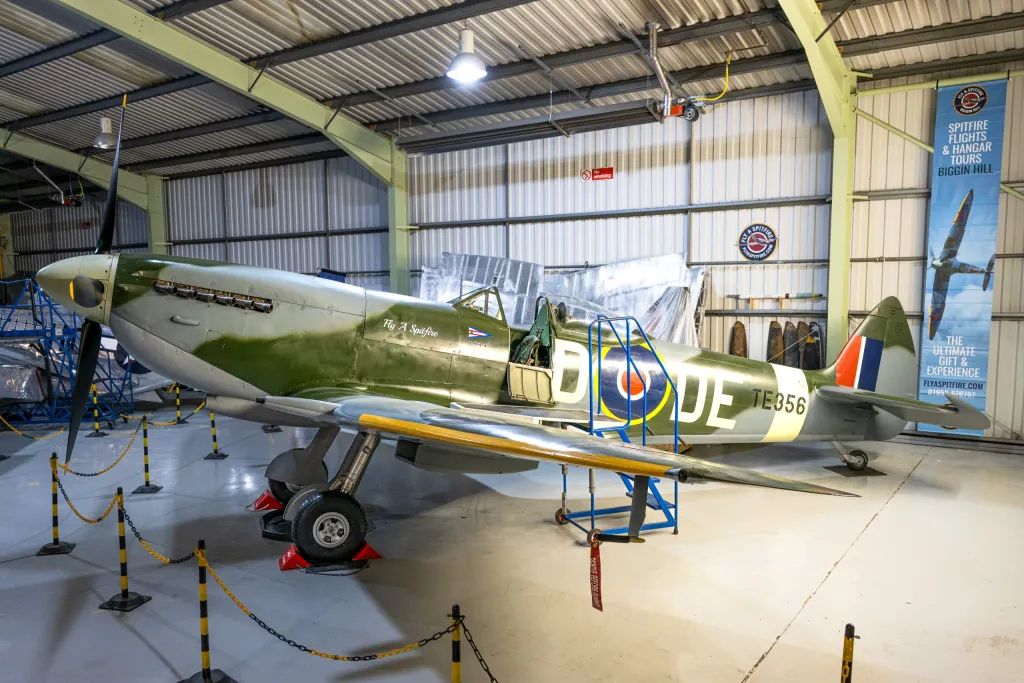
Supermarine Spitfire LF Mk. XVIe, s/n TE356 (“LF” is the designation for “Low Altitude Fighter”), N356TE. This particular aircraft was built at the Supermarine division of Vickers-Armstrong Limited in C Block at Castle Bromwich, Birmingham, England (now a Jaguar car factory) and delivered to No. 29 MU High Ercall (Maintenance Unit) on June 23, 1945, and on July 11, 1945, was issued No. 695 of the Royal Air Force. While serving with that squadron, including up through February 14, 1949, when the squadron was renumbered as No. 34 Squadron, it bore the codes 4M-M (4M being the 695th squadron code) and 8Q-Z (8Q being the 34th Squadron code), and then, along with several other Mk. XVI’s served between August 20, 1951 and September 1, 1952, with No. 2 CAACU (Civilian Anti-Aircraft Co-Operation Unit) at RAF Little Snoring as a ground instructional trainer. It then stood on the parade ground at RAF Bicester until 1967, then at RAF Henlow, where it was repaired to taxiing status with a built-up rear fuselage (and some other modifications of which I cannot specify) to make it appear as an earlier mark and appeared as a taxiing aircraft in the 1969 film “Battle of Britain.”
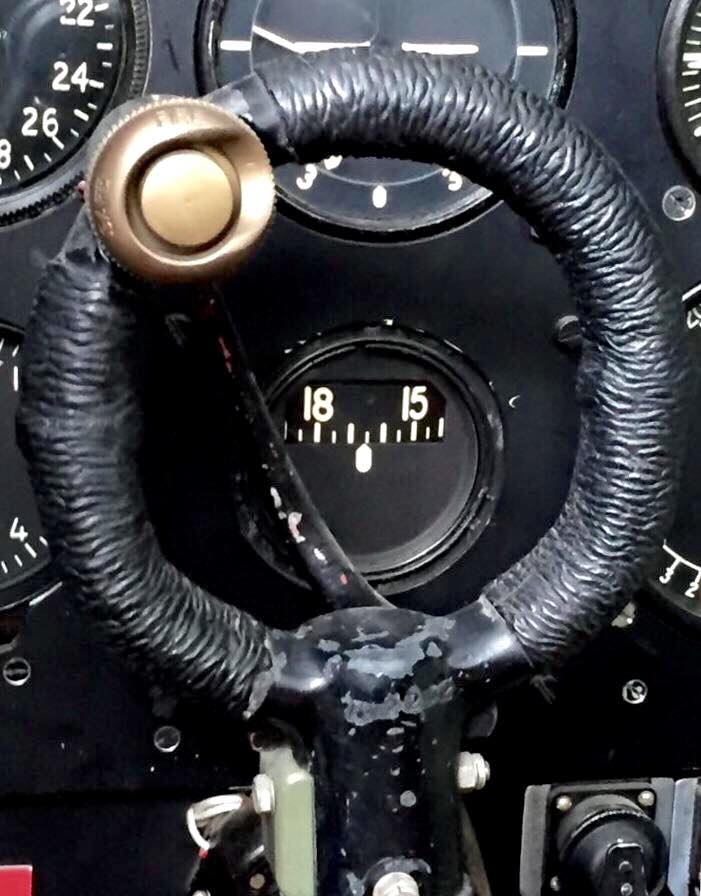
After the filming, it was restored to its standard configuration and assigned to No. 4 Squadron at RAF Kemble, where restoration to flying condition was discontinued. In December 1970, it was mounted on a concrete plinth at CFS (Central Flying School) Headquarters, Little Rissington, then to CFS Cranwell in 1976 and then Leeming in 1978. In 1986 it was exchanged for a P-47 Thunderbolt from the collection of Doug Arnold and Warbirds of GB Ltd. and shipped to RAF Bitteswell and put into storage. It was rebuilt by Trent Aero Engineering in the East Midlands and had its first flight on December 16, 1987 (at the time of these photos, at least, the aircraft was fitted with a single electrical-firing button on the spade grip of earlier Spitfire versions rather than the 3-way rocker button). In January 1990, it was acquired by Evergreen Ventures, Inc., to be part of the collection at Evergreen Aviation & Space Museum (now the North American Aerospace Museum) in McMinnville, Oregon. On April 26, 1996, it was damaged when the landing gear collapsed on landing during the El Toro airshow in California and was repaired. It remained part of the Evergreen collection during the 1990’s through 2017, when it was flown until essentially all flights of Evergreen aircraft were suspended following the 1995 death of Captain Michael K. Smith (son of Delbert Smith, founder of the Evergreen companies and this museum). While at Evergreen, it was painted with the nose art “Carolyn” in honor of the widow of Captain Smith. Smith flew this and other aircraft in the Evergreen collection. In 2019, it was shipped to Biggin Hill for further restoration work. My photos while it was at Evergreen.
This is by no means intended to be a survey of the history of the Spitfire and its 24 marks. The Supermarine Spitfire was designed by Reginald J Mitchell, initially on a private venture basis from work he had carried out on a series of seaplanes to compete for the Schneider Trophy air race in the 1920s and 1930s (after his initial cancer diagnosis in 1933 and against all medical advice, Mitchell continued to work and even gained his pilot’s license in July 1934, and although he was unable to attend the maiden flight, Mitchell was often seen watching the Spitfire fly. He succumbed to the illness on June 11, 1937, and responsibility for the aircraft was passed on to English aircraft designer Joseph (Joe) Smith, CBE. The prototype Spitfire first flew on March 5, 1936, and the last Spitfire was built in 1948; it was produced in 24 marks, with total production thought to be between 20,300 and 20,400 aircraft. As to how the aircraft received its name, a British Air Ministry Certificate of Design was issued for the prototype Type 300, K5054, on March 6, 1936, with no name being specified. An official of Supermarine wrote to the Air Ministry on March 10: “We refer to our conversation of this morning with A.E. Slater. Would you be good enough to reserve the name ‘Spitfire’ for our fighter to Specn: F7/30 (modified).” On June 10, a letter arrived at Supermarine confirming that the name “Spitfire” was now approved for the F7/30 (F37/34 modified). The Mk. XVI prototype was built at the Supermarine division of Vickers-Armstrong Limited plant at Castle Bromwich and was first flown in December 1943.
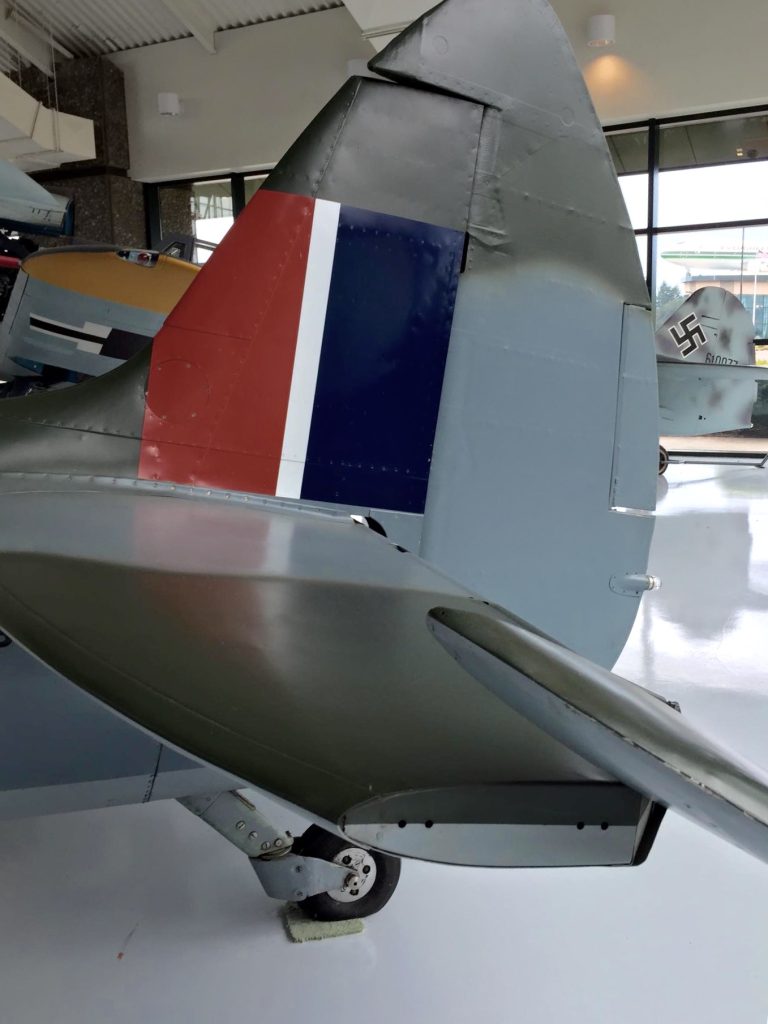
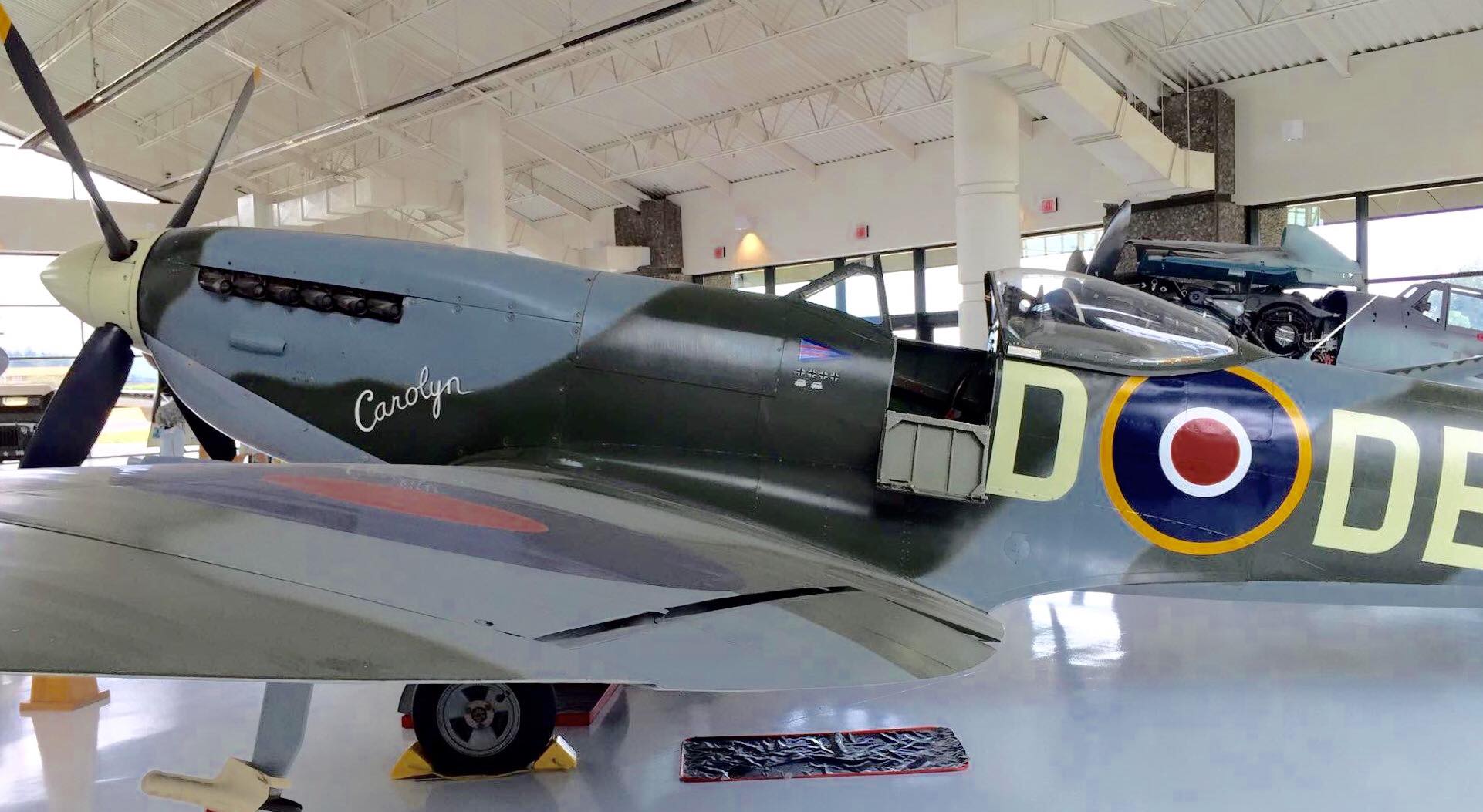
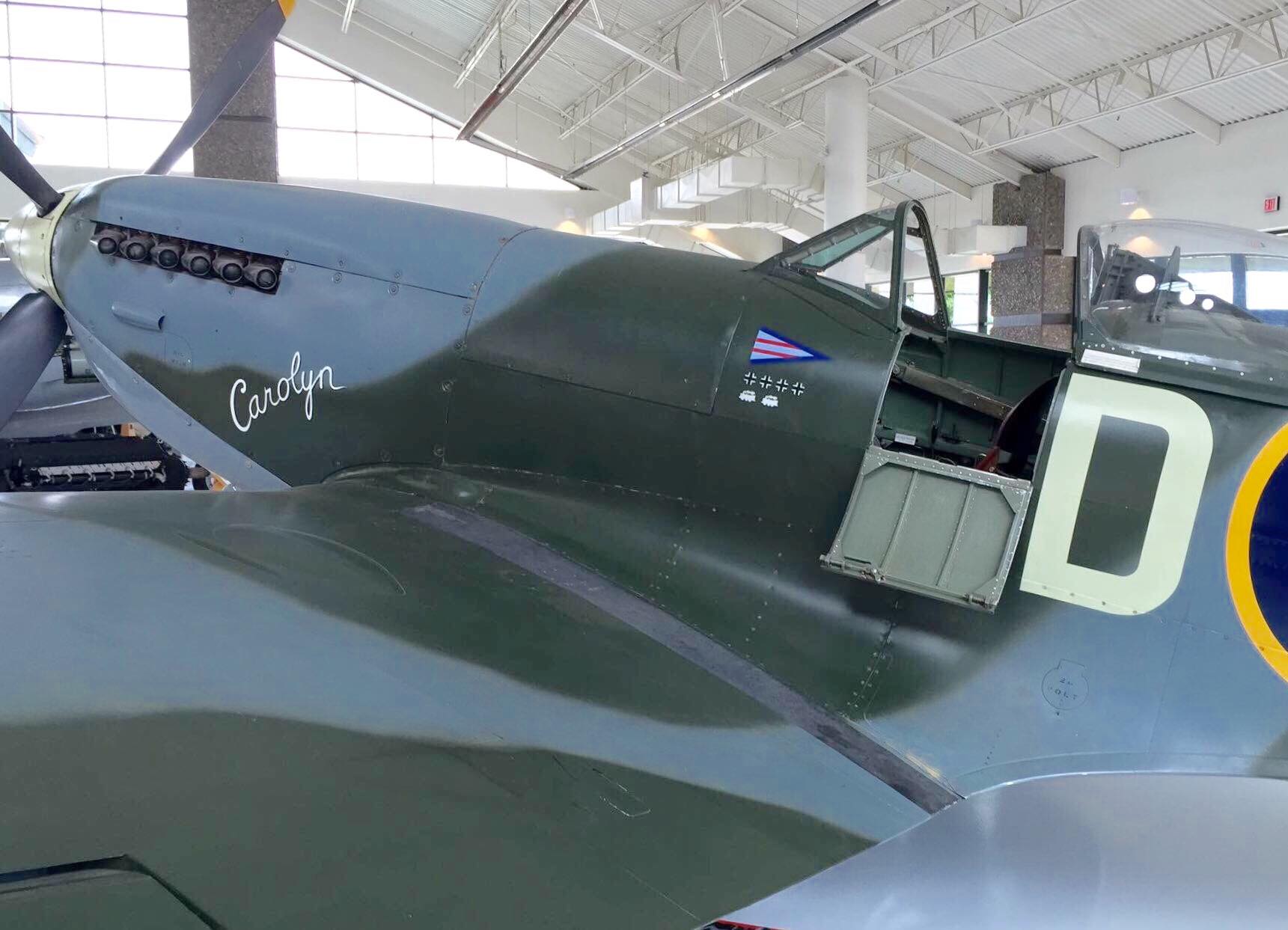
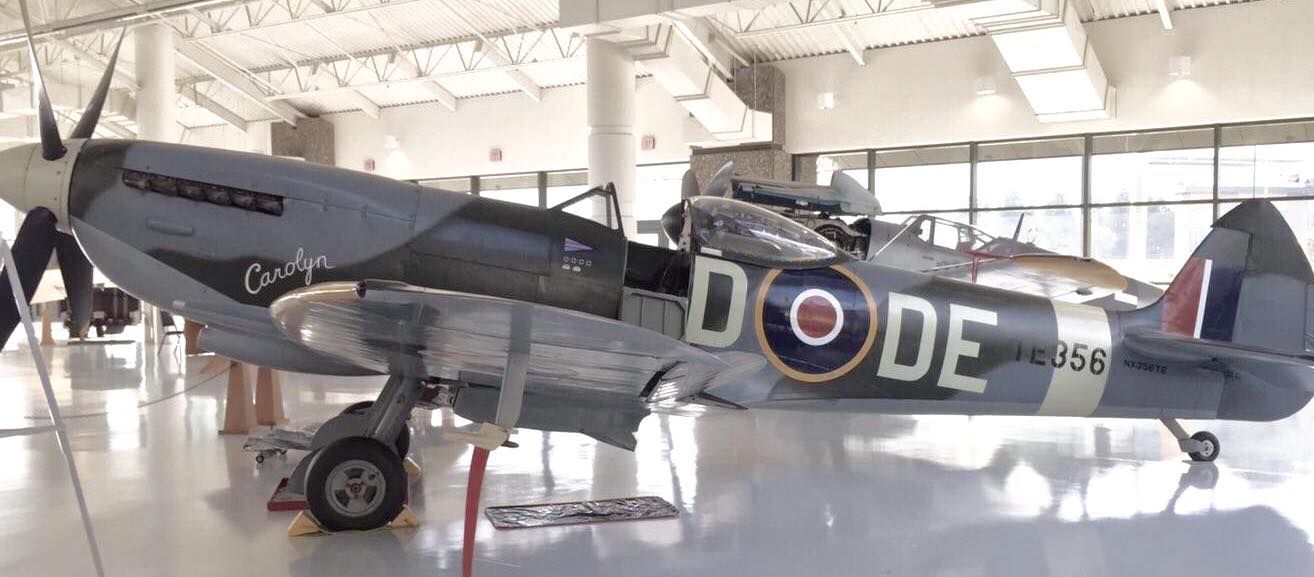
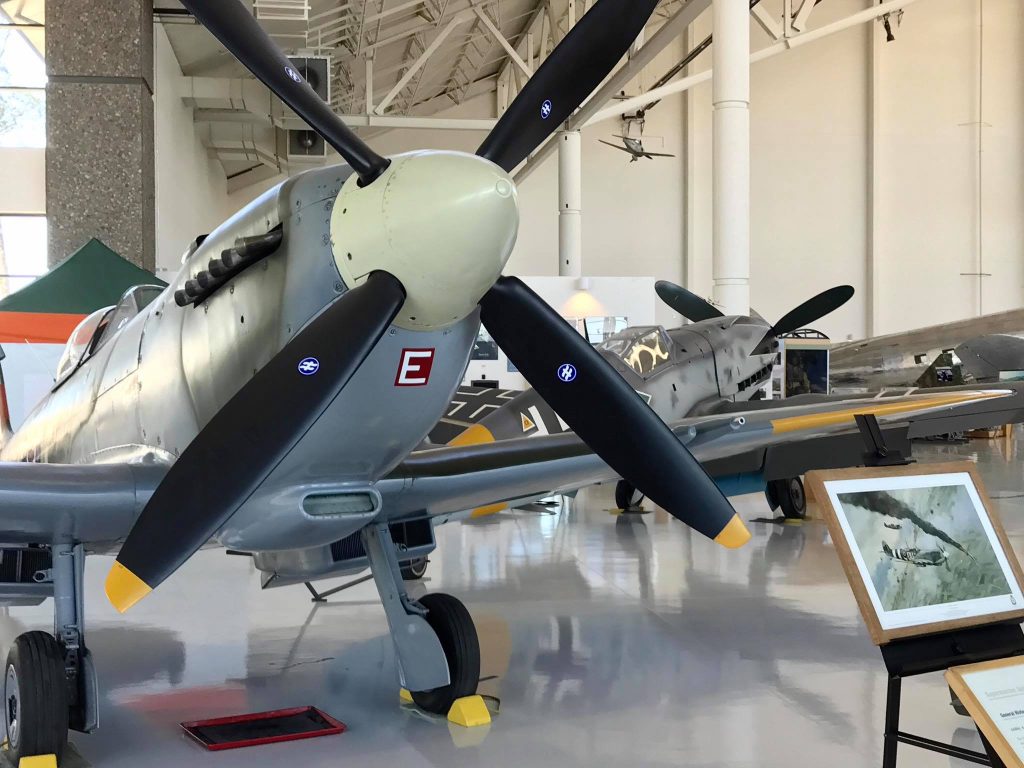
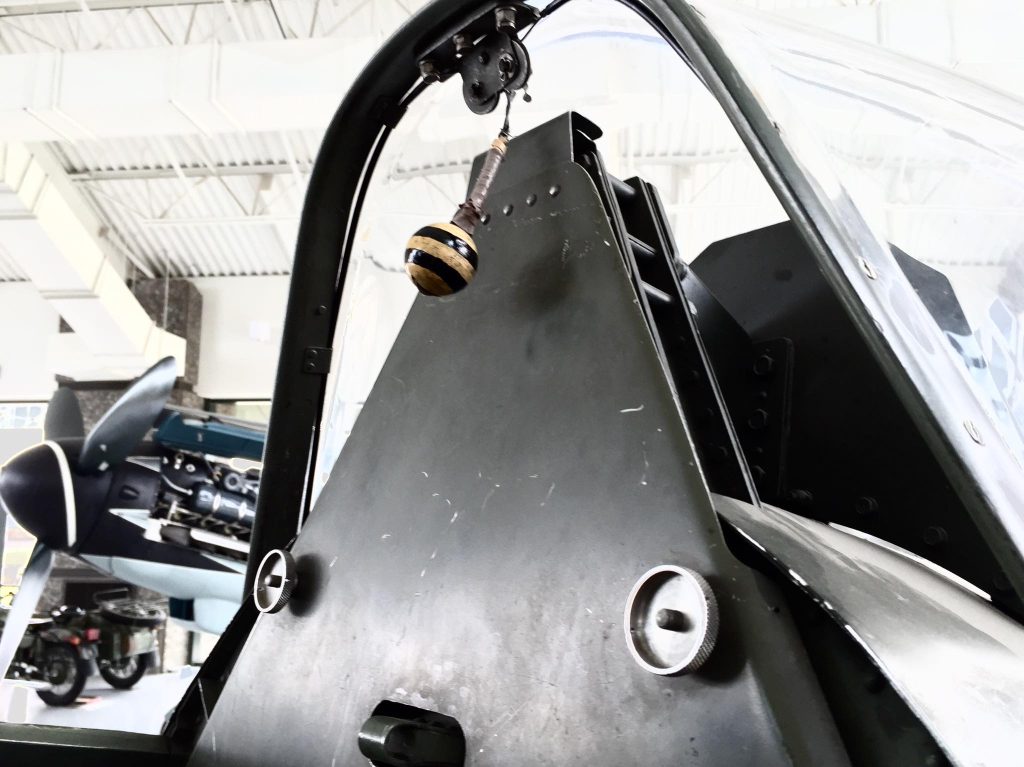
At the height of production, the Castle Bromwich works were producing 320 aircraft per month, with the last of the 12,291 Spitfires produced emerging off the production line in June 1949. It was of all-metal construction, featuring metal-covered ailerons in place of the earlier fabric-covered versions. The Mk. XVI version had the Merlin 266 engine built in the U.S. under license to the Packard Motor Car Company, and it had a two-stage supercharger and was rated at 1,390–1,600 hp; it was fitted with a four-bladed, variable-pitch propeller. The wings of the “e” variant were clipped (increased roll rate and top speed but reduced rate of climb) and housed a pair of British-Hispano 20mm cannon and a pair of Colt-Browning M2 12.7mm heavy machine guns. The variant had the teardrop canopy for better visibility and a cut-down rear fuselage. Spitfires were fitted (and retrofitted) with an emergency canopy jettison handle in the form of a (red) ball. This was attached to the locking bars on either side of the canopy by means of steel cables which run down the sides of the hood in the piping. Pulling the ball would disengage the bars and thus release the canopy.
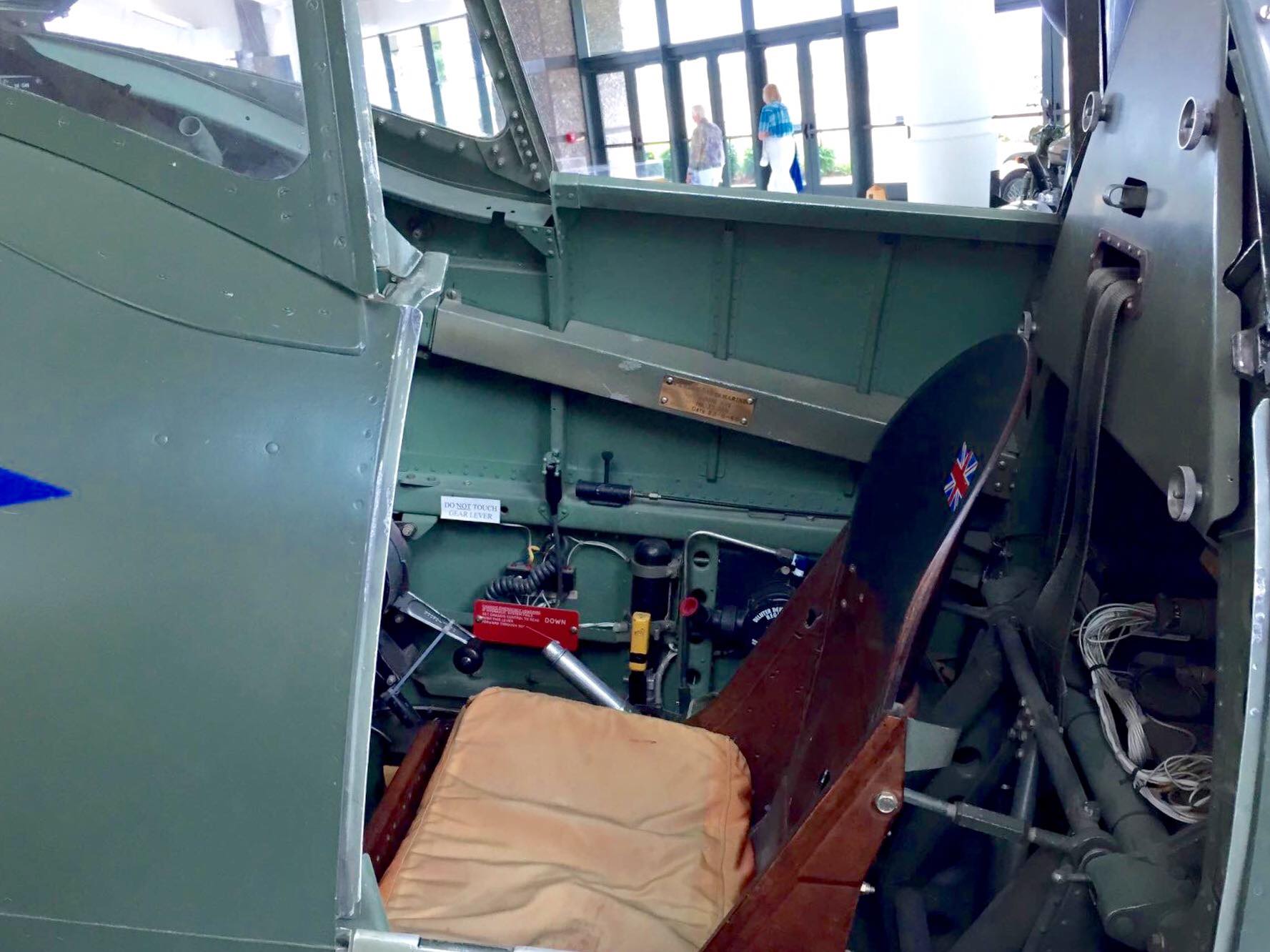
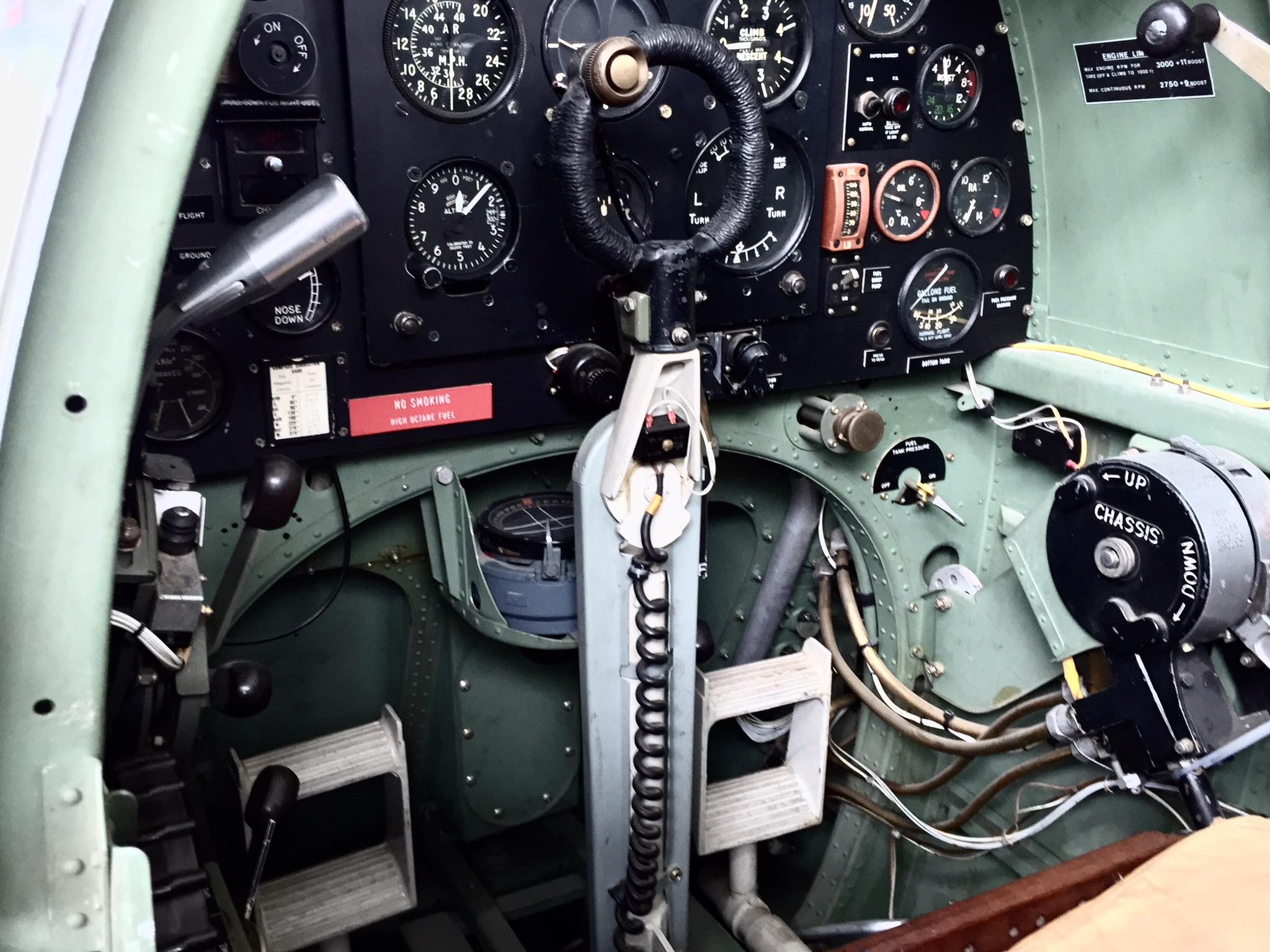
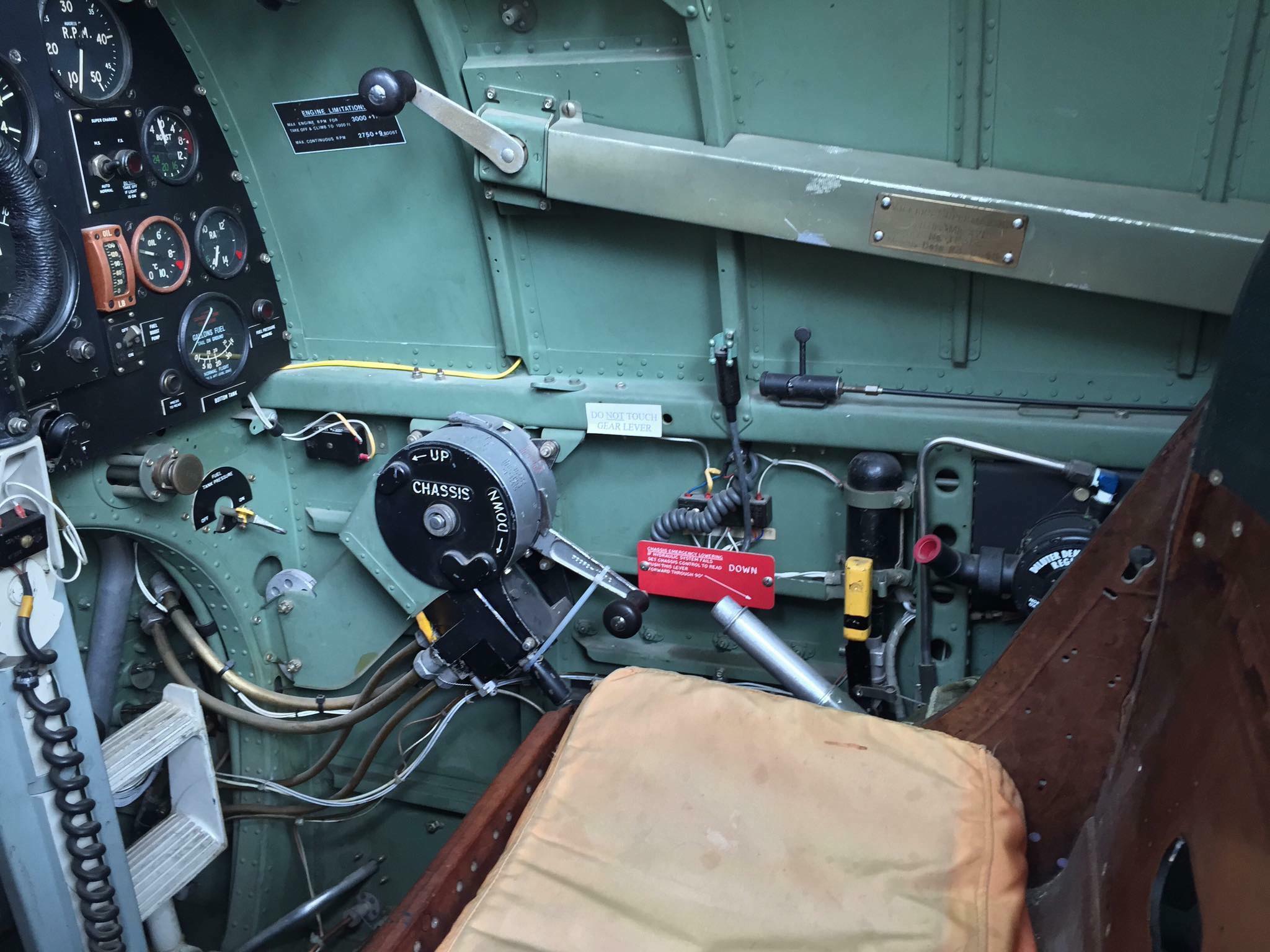
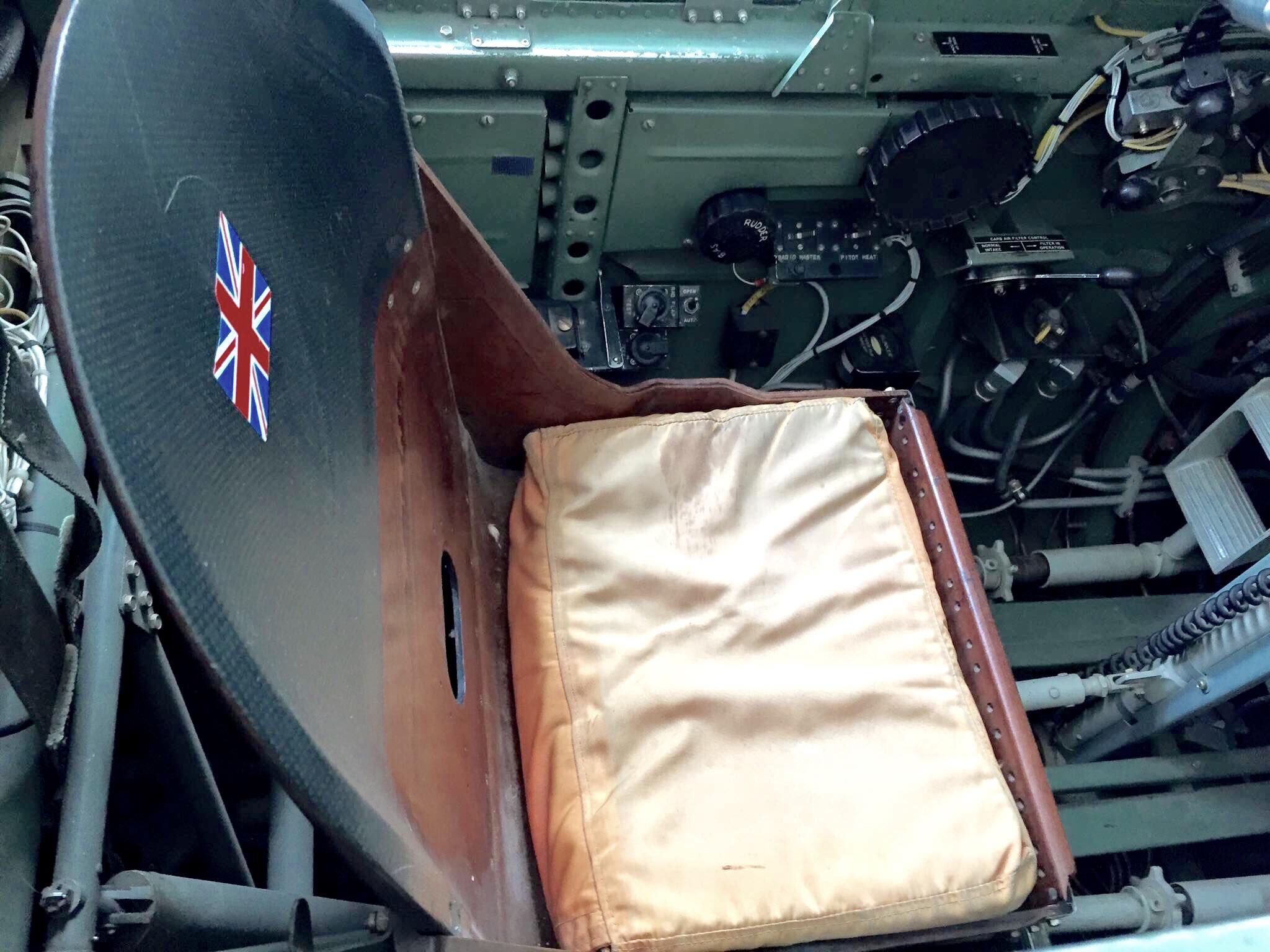
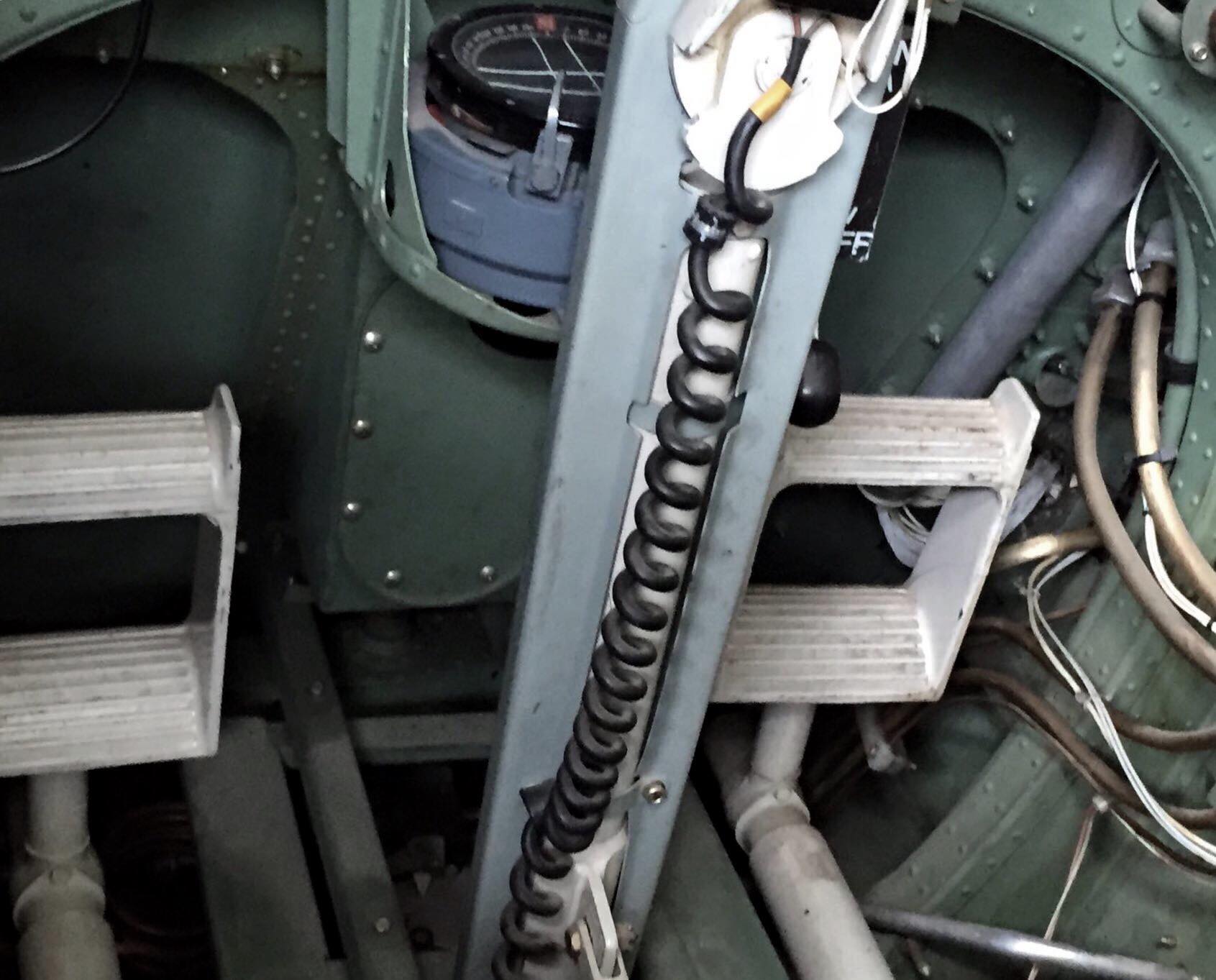
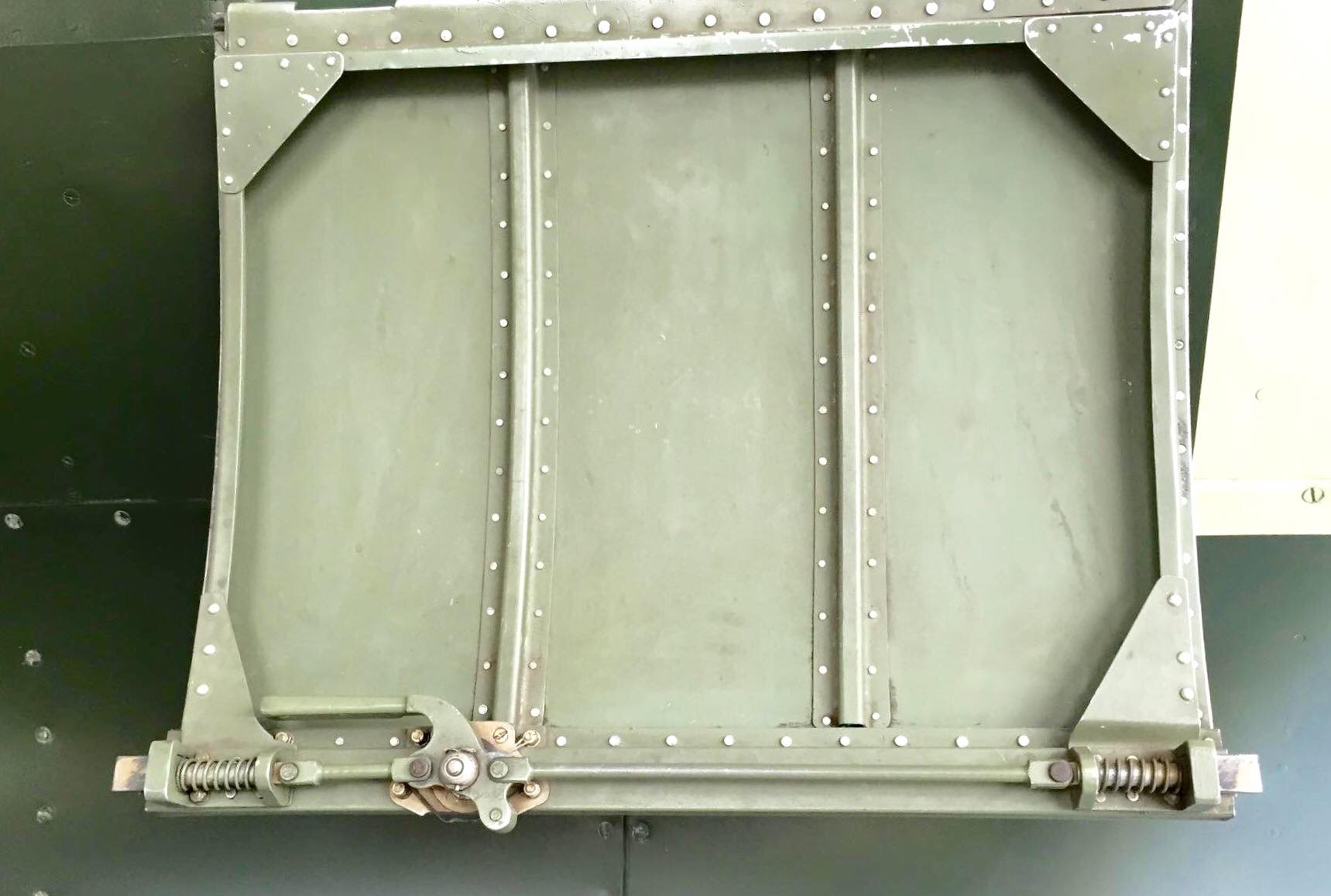
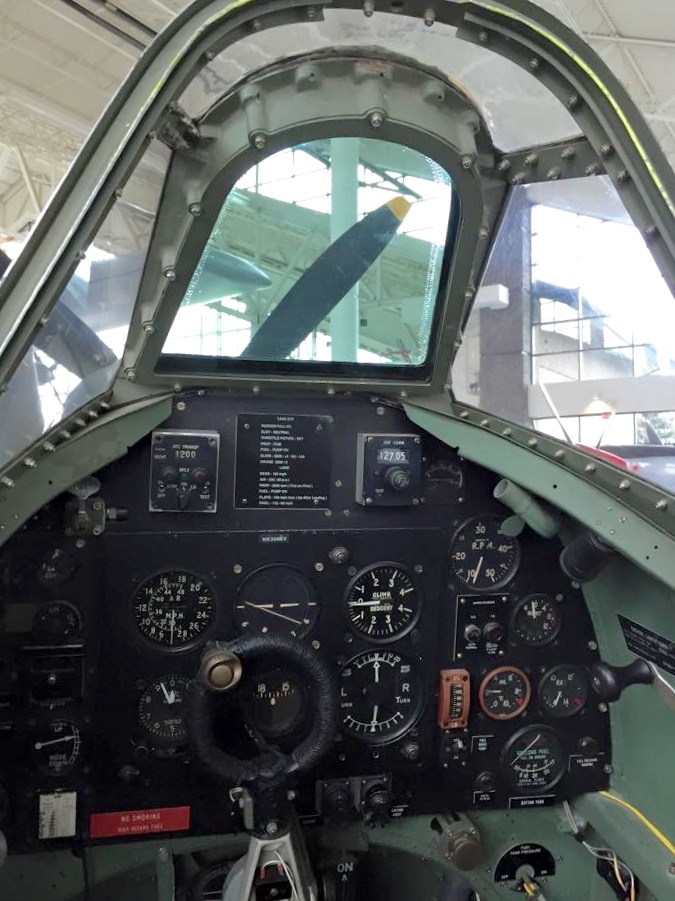
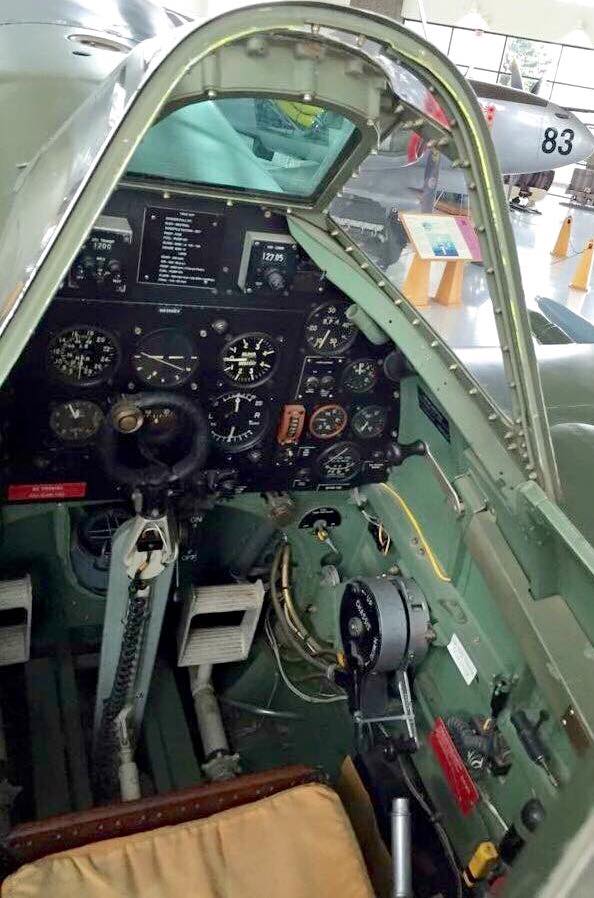
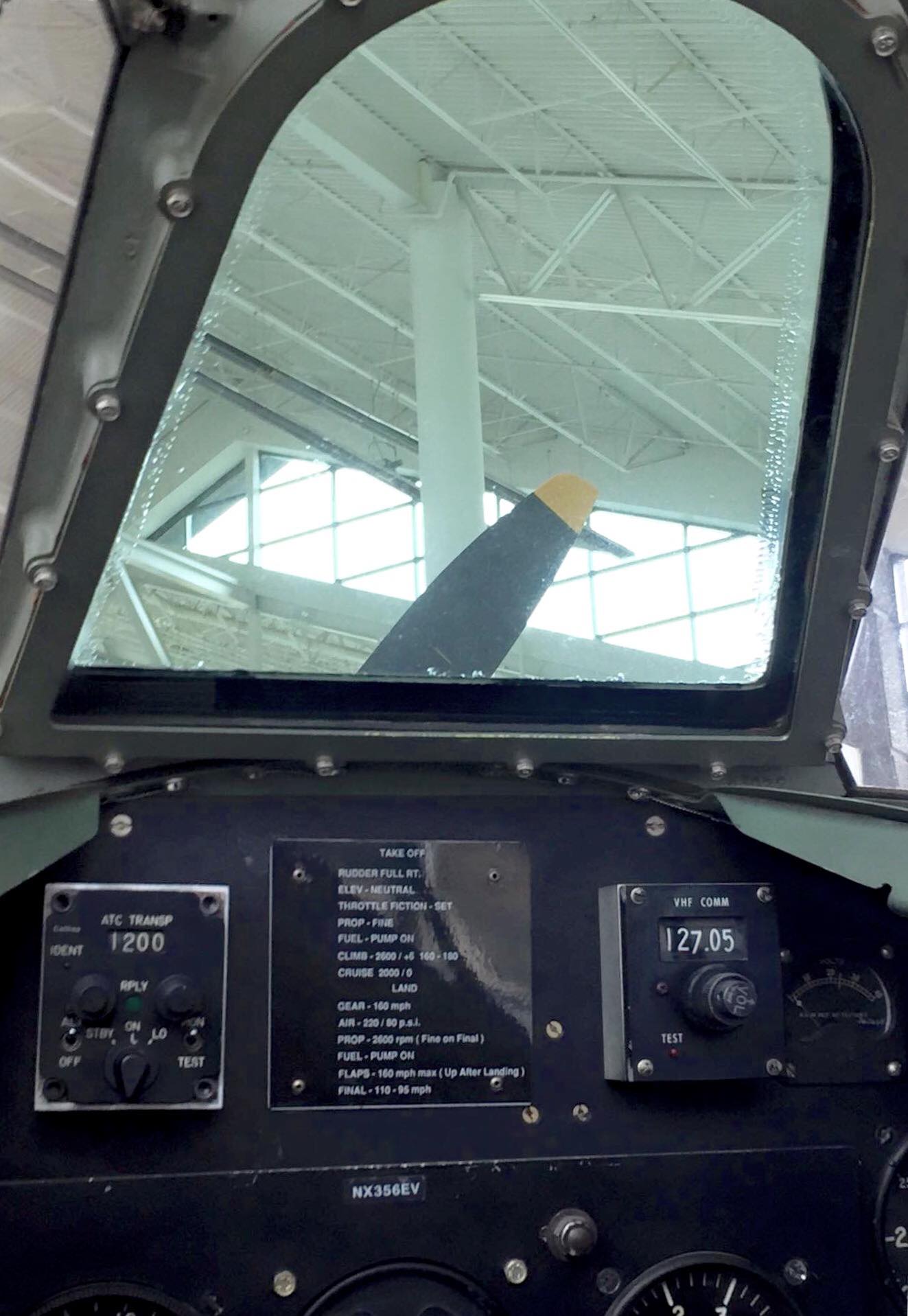
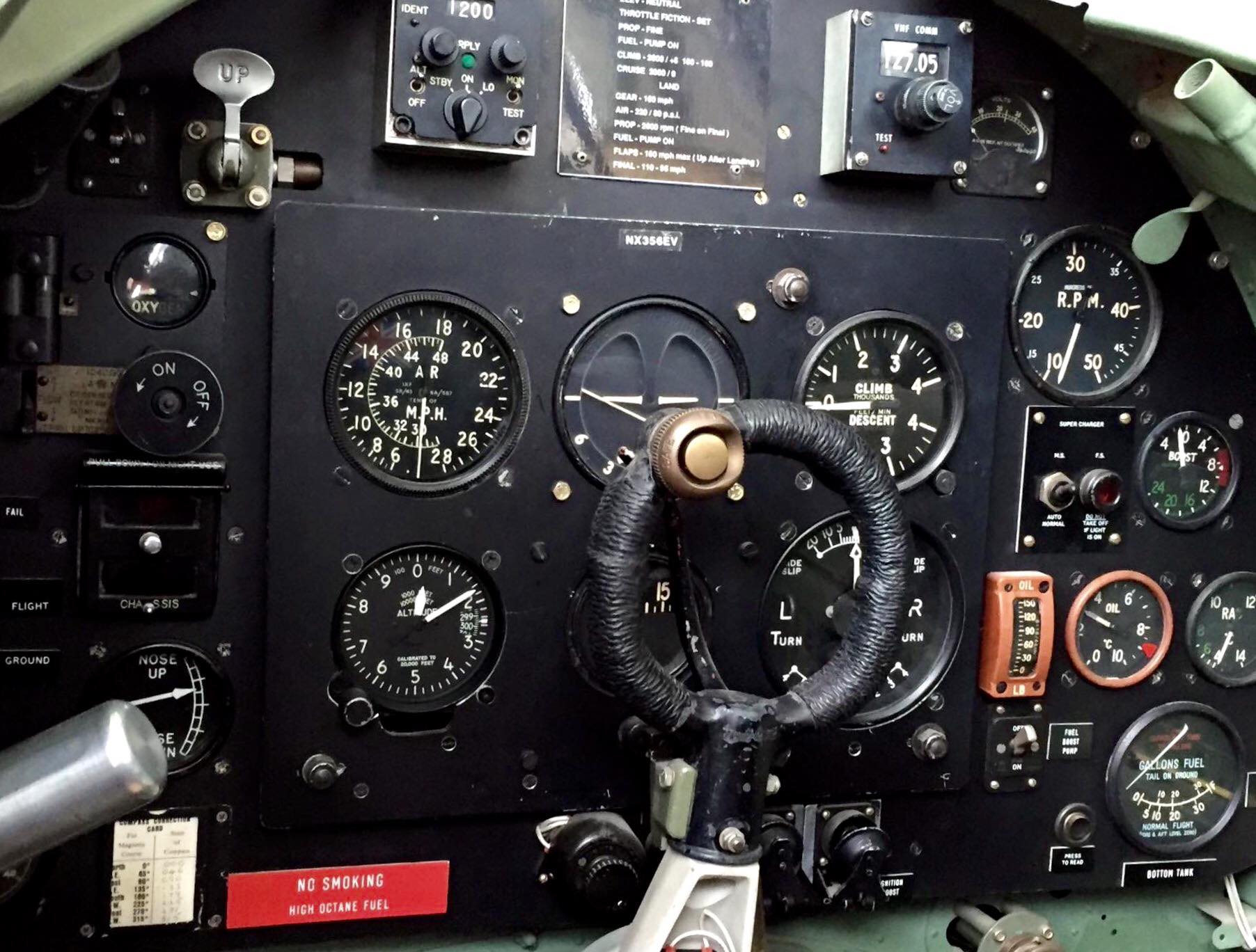
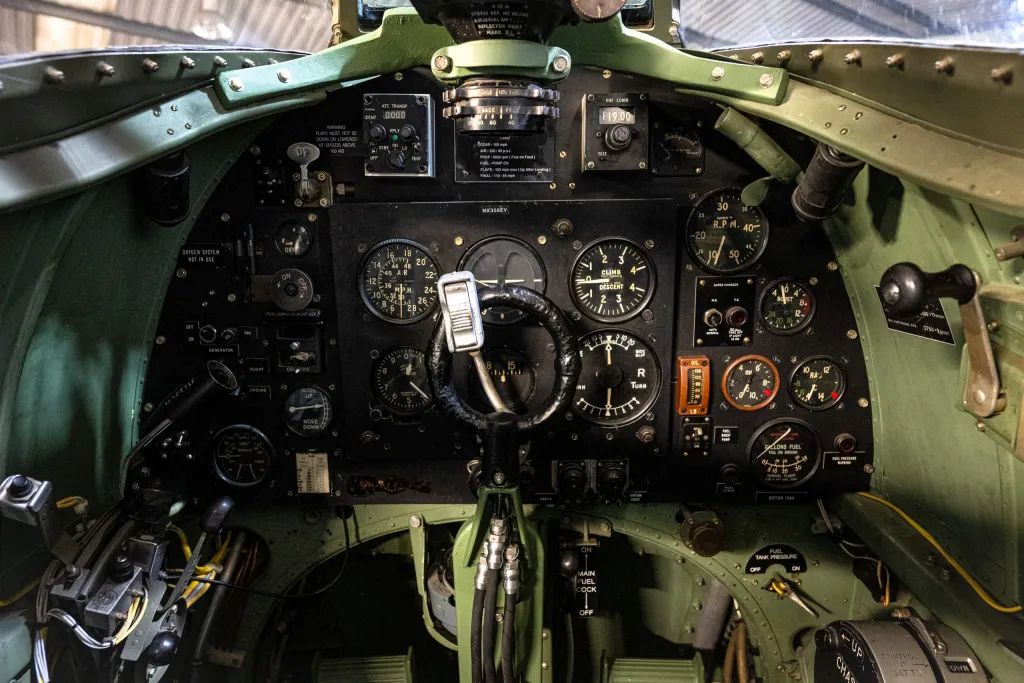
The control column was pivoted about a foot from the top and was topped with a circular spade grip. Within the spade grip was a bicycle-type brake lever which controlled pressure to the air brakes, with differential application by movement of the rudder pedals. A Spitfire with cannon and machine guns typically had a 3-way rocker button on the spade grip with three positions. The letters “BBC” were taught as a reminder to the pilot: B for Brownings (top), B for both (middle), and C for cannon (bottom). At the time of these photos, at least, this aircraft is restored with a single electrical-firing button on the spade grip of earlier Spitfire versions rather than the 3-way rocker button. Ordnance included a center-mounted 500 lb. bomb and a 250 lb. bomb on hardpoints under each wing. During and after WWII, Spitfires were operated by many nationalities and specifically, the Mk. XVI (and Mk. IX) variants were flown until the very end of the war by many Polish fighter squadrons, including the Polski Zespół Myśliwski (Polish Fighting Team), also known as “Skalski’s Circus,” as well as the 308, 316, 303, 317, 315 and 302 Squadrons, and flying both the Mk. IX and Mk. XVI versions shot down over 100 enemy aircraft at the loss of 89 of their pilots.
Editor’s notes: In November 2019, the aircraft was imported back to the UK and is currently being kept at the Biggin Hill Heritage Hangar at London Biggin Hill Airport. Following several years of being in storage, TE356 has been reassembled for use in the Heritage Hangar’s ‘Sit in a Spitfire’ experiences for visitors.
About the author:
 Randy Malmstrom grew up in a family steeped in aviation culture. His father, Bob, was still a cadet in training with the USAAF at the end of WWII but did serve in Germany during the U.S. occupation in the immediate post-war period, where he had the opportunity to fly in a wide variety of types that flew in WWII. After returning to the States, Bob became a multi-engine aircraft sales manager and, as such, flew a wide variety of aircraft; Randy frequently accompanied him on these flights. Furthermore, Randy’s cousin, Einar Axel Malmstrom, flew P-47 Thunderbolts with the 356th FG from RAF Martlesham Heath. He was commanding this unit at the time he was shot down over France on April 24th, 1944, and spent the rest of the war as a prisoner of war. Following his repatriation at war’s end, Einar continued his military service, attaining the rank of Colonel. He was serving as Deputy Wing Commander of the 407th Strategic Fighter Wing at Great Falls AFB, MT, at the time of his death in a T-33 training accident on August 21, 1954. The base was renamed in his honor in October 1955 and continues to serve in the present USAF as home to the 341st Missile Wing. Randy’s innate interest in history in general, and aviation history in particular, plus his educational background and passion for WWII warbirds, led him down his current path of capturing detailed aircraft walk-around photos and in-depth airframe histories, recording a precise description of a particular aircraft in all aspects.