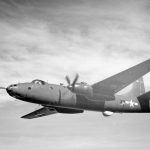

Heavy Attack Squadron Sixteen (VAH-16), also called the “White Blades,” was a US Navy squadron located at NAS North Island in California. It formed on January 15, 1958, and was the first squadron to use the Heavy Attack Squadron Sixteen designation. The squadron used the North American AJ-2 Savage, a large plane meant for nuclear strike missions from aircraft carriers. By the time VAH-16 was created, the AJ-2 was nearing the end of its heavy-attack role. Starting in 1957, the newer Douglas A3D Skywarrior began to replace the Savage in Navy squadrons. The AJ-2 then took on a new job as an aerial tanker. VAH-16 formed during a period of change, as its aircraft shifted from nuclear strike missions to aerial refueling. Heavy Attack Squadron Sixteen supported the fleet by sending detachments. Its AJ-2 aircraft worked with Air Task Groups 3 and 4 on Pacific Fleet carriers, such as the USS Kearsarge (CVA-33) and USS Hornet (CVA-12). The official Navy history notes that the deployment dates for these carriers do not always reflect when VAH-16 detachments were active, since the squadron was formed in January 1958. However, photos show VAH-16 AJ-2s on the Kearsarge during its Western Pacific deployment, including aircraft like BuNo. 134049. On June 13, 1958, the squadron set up Detachment A in Hawaii. The detachment later moved to NAS Agana, Guam, with four AJ-2 aircraft, providing VAH-16 a forward base in the western Pacific while its carrier detachments continued to support fleet operations.

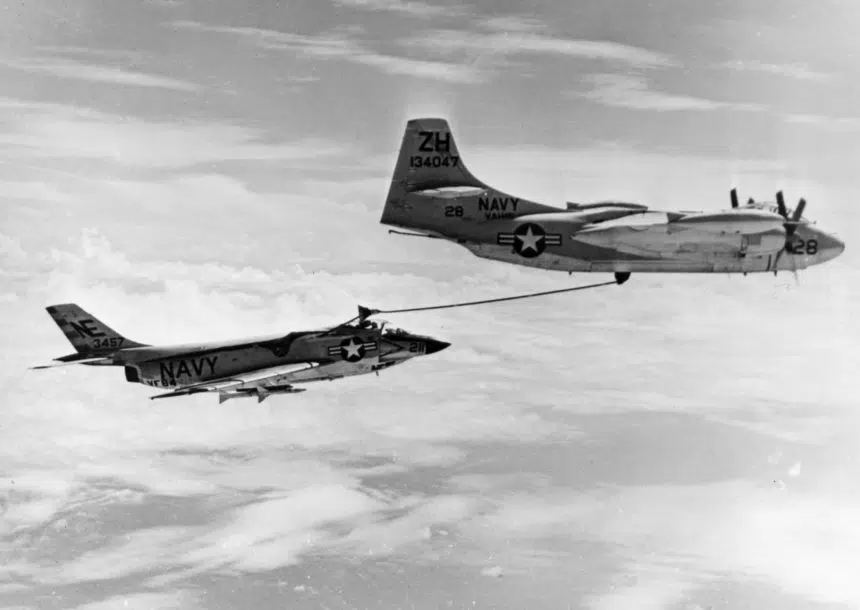
On July 1, 1958, the Navy changed Heavy Attack Squadron Sixteen’s main mission from heavy bombing to aerial refueling. The A3D Skywarrior took over the heavy-attack and nuclear-strike roles, while the Savage’s ability to carry a lot of fuel and support carrier aircraft made it a useful tanker. VAH-16 and its East Coast counterpart, VAH-15, were created to continue the AJ’s tanker role during this transition. The squadron’s refueling mission was shown in fleet operations. A US Navy photograph from around 1958 captures a VAH-16 AJ-2, BuNo. 134047, refueling an F3H-2 Demon from VF-64. The image illustrates the squadron performing its new role only months after its formation, using the Savage as an aerial fuel truck for Navy fighters. The squadron received its own insignia during its short time in service. The Chief of Naval Operations approved the design on July 25, 1958. It featured alternating white and blue quadrants, a light-blue lightning bolt outlined in gold, a white sword with a gold handle, and a blue scroll outlined in gold with red lettering. The official Dictionary of American Naval Aviation Squadrons lists the squadron’s nickname as unknown, even though other historical records call it the “White Blades.” Heavy Attack Squadron Sixteen was active for just over a year. As the Navy transitioned to newer jet-powered aircraft and reorganized its heavy-attack and tanker forces, it disbanded the squadron at NAS North Island on January 30, 1959.