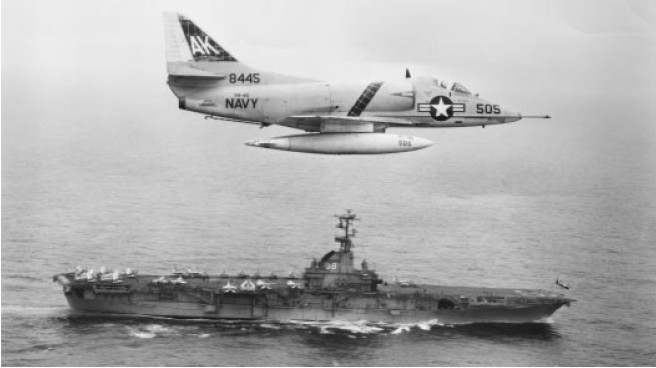
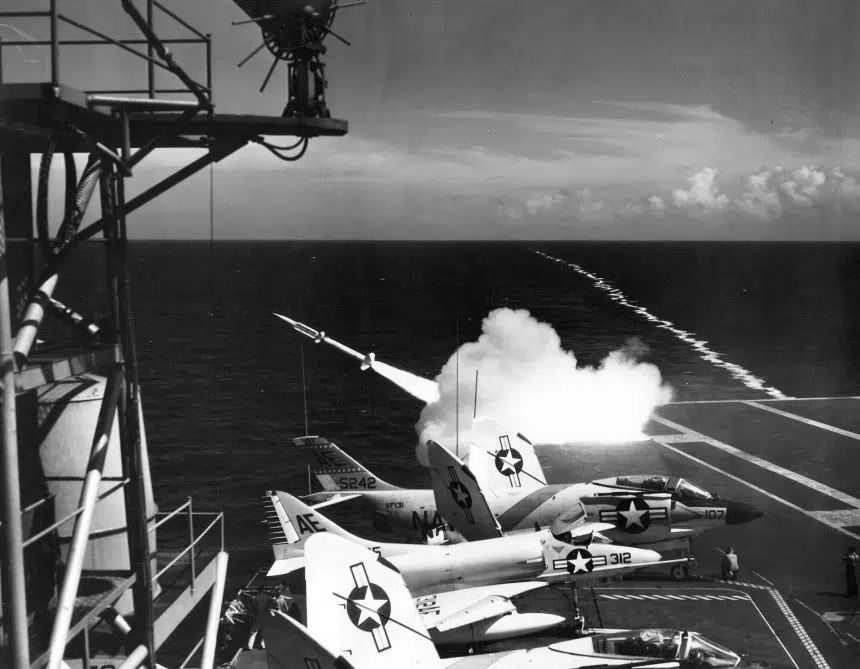

Attack Squadron 133 (VA-133), also called the “Blue Knights,” was one of the shortest-lived attack squadrons in US Navy history. It was formed at NAS Cecil Field in Florida on August 21, 1961, to support the fleet during the Berlin Crisis. VA-133 flew the Douglas A4D-2 Skyhawk and was active for just over a year before disbanding on October 1, 1962. The Douglas A-4 Skyhawk was a single-seat, subsonic, light-attack aircraft that could operate from aircraft carriers. It was designed and built by the Douglas Aircraft Company. The aircraft was originally called A4D under the United States Navy’s naming system before 1962.

Despite the Attack Squadron 133’s short life, the squadron took part in several important naval operations. In February 1962, a VA-133 detachment went aboard USS Constellation for carrier trials. It stood by to support Project Mercury, which was preparing for Marine Corps Lieutenant Colonel John Glenn’s launch aboard the Friendship 7 spacecraft. From March to May 1962, the squadron joined Constellation’s shakedown cruise in the Caribbean. The creation of Attack Squadron 133 was linked to rising tensions in the early 1960s. The Berlin Crisis of 1961 led the Navy to expand its strength, and Attack Squadron 133 was one of the new units formed during this time.
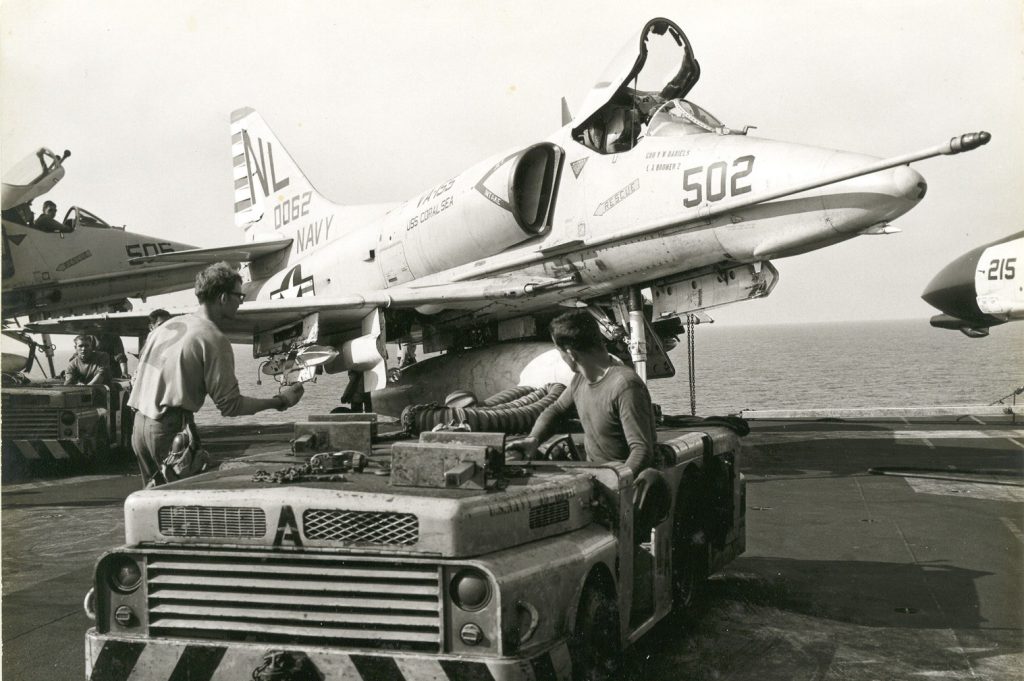
Its Skyhawks were modern light attack aircraft that joined the carrier fleet. In its final months, Attack Squadron 133 operated during another time of increased Cold War tensions. In 1962, Navy aircraft from the squadron were photographed aboard Constellation while the carrier conducted operations, as the Navy remained ready for action. On October 1, 1962, only 14 months after it formed, Attack Squadron 133 was disbanded. The Blue Knights had a very short history. Unlike many US Navy attack squadrons that fought in wars like Korea and Vietnam, Attack Squadron 133 disbanded before it could see any combat. Its brief existence shows how fast the Navy grew and changed its carrier forces during the early years of the Cold War.