






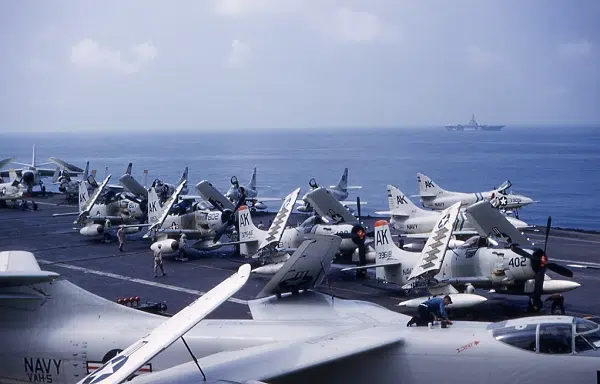

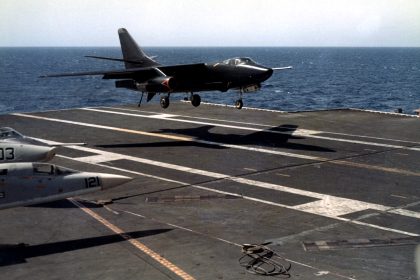
Attack Squadron 104 (VA-104) was a US Navy attack squadron that operated during the early Cold War. The squadron was first formed as Fighter Squadron VF-104 on May 1, 1952. It was renamed VA-104 in December 1953 and was known as “Hell’s Archers.” VA-104 started its service at NAS Cecil Field in Florida, flying the FG-1D Corsair. Later in 1952, it upgraded to the F4U-5 Corsair before switching to the AD-6 Skyraider in January 1954. The squadron was at the forefront of the Navy’s move from piston-engine fighters to jet-powered aircraft. The Skyraider provided VA-104 with a strong platform for attack missions.

Attack Squadron 104 did not fight in any major wars but was often deployed during Cold War events. One of its important missions was during the Suez War in November 1956. The squadron operated from the USS Coral Sea off the coast of Egypt, ready to provide air support for the evacuation of American citizens and other foreigners as fighting intensified around the Suez Canal. In July 1958, Attack Squadron 104 was put on alert again when Lebanon faced political unrest, leading the US to send Marines to Beirut. While aboard the USS Forrestal in the eastern Atlantic, the squadron stood ready to support American intervention in the Mediterranean if necessary.
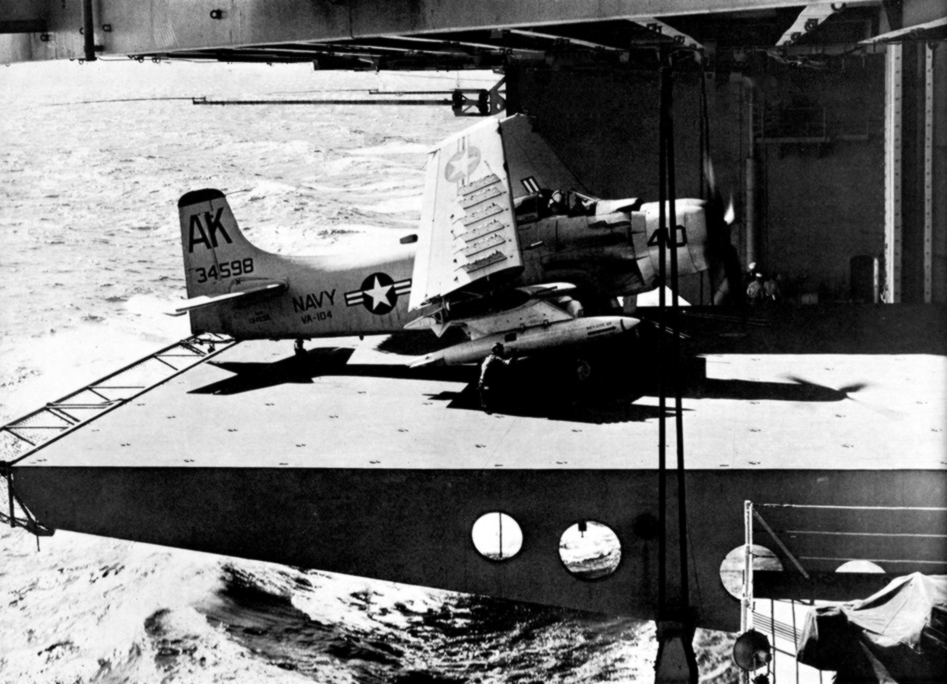
The deployments showed how important carrier aviation was becoming in responding to crises far from the United States. Instead of being used only for combat during wars, squadrons like VA-104 stayed ready at sea to provide air support, protect American forces, and help with evacuations whenever international conflicts threatened to escalate. Attack Squadron 104 ended its service on March 31, 1959, just under seven years after its creation. The Hell’s Angels were a short-lived group, but they were active during an important period when the US Navy was transitioning from piston-powered aircraft to jets, as American carriers became a more significant tool for Cold War diplomacy and military responses.








I don’t know where some of y’all get your info from, but my Dad flew the Skyraider in the 104 for 2 years. He said their training and their entire reason for existence was low level delivery of nuclear weapons. I can’t see that mentioned anywhere online. I’m sure it was classified at the time, and because of the short lived nature of the squadron, never really became known except to those that did it