
The Texas Engineering & Manufacturing Company (TEMCO), also known as TEMCO Aircraft Corporation, was founded in Dallas by Robert McCulloch. He began his aviation career at the Aircraft Division of William Beardmore and Company in Scotland. McCulloch moved to the US in 1927 and worked for a small machining company before joining Atlantic Aircraft Corporation. During the Great Depression, the company changed hands several times. It became Fokker Aircraft of America, then General Aviation, and finally North American Aviation (NAA). McCulloch became the factory manager at NAA in 1941. That same year, he took a job as the general manager at Convair’s factory in Nashville, Tennessee. However, he returned to NAA in 1943, and by the end of WWII, he was managing their new plant in Grand Prairie, Texas. After the war ended, Convair closed its plant in Dallas. McCulloch teamed up with H. L. “Bert” Howard, another executive from North American Aviation (NAA), to create the Texas Engineering and Manufacturing Corporation, later known as TEMCO. It was reorganized as the TEMCO Aircraft Corp. in 1952. McCulloch served as president and general manager, while Howard was executive vice president and treasurer. The initial management team included several former NAA employees. Their plan was to keep the plant open and find contract work with other aviation companies on a rental basis. Bankers did not like the idea, but they eventually got funding from several sources, especially Col. D. Harold Byrd, who would later work with the company.

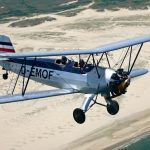
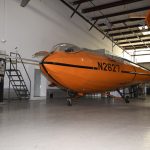
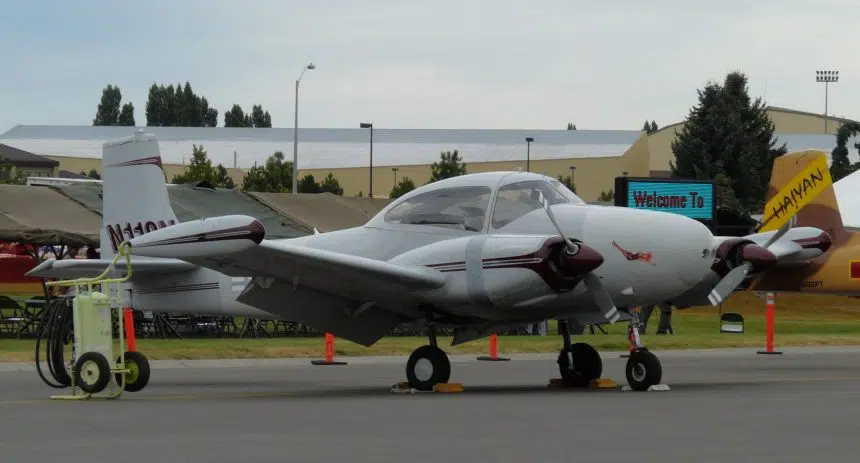
The company secured contracts to produce parts for several major aircraft, including the C-82, Fairchild F-28, Lockheed F-104 Starfighter, P2V Neptune, McDonnell F-101 Voodoo, and Boeing B-47 Stratojet, among others. The company also began subcontracting production of the Globe Swift, a two-seat general aviation aircraft. In 1947, TEMCO kept the design rights and built a small number of Swift aircraft over the next four years. It improved the Swift by adding a more powerful engine and a tandem two-seat cockpit, turning it into the T-35 Buckaroo trainer aircraft. However, it lost the competition to the Beechcraft T-34 Mentor. Eventually, TEMCO sold ten T-35s to Saudi Arabia. The company also developed another design, the Model 33 Plebe, but it never entered production. Work increased at the original Grand Prairie site, leading to the establishment of a new plant at Majors Field in Greenville. The new plant mainly handled US Air Force jobs, allowing Grand Prairie to focus on Navy work. TEMCO shifted its focus to overhaul services at the Greenville plants and secured a contract to repair C-54s coming back from the Berlin Airlift. The company also bought Luscombe Aircraft, another Dallas-area company doing similar work. In 1953, TEMCO partnered with Riley Aircraft Sales to convert existing North American Navions into a twin-engine version called the Twin Navion. It eventually bought the rights to this conversion and modified 138 aircraft over the next four years. However, by 1954, contracts decreased, and the company had only 500 employees left, laying off over 2,000 in a town of just 15,000.

TEMCO focused on aviation electronics and missile guidance systems. In 1955, the company won a contract to create “quick reaction kits” for the Air Force’s B-29 Superfortress fleet. That same year, TEMCO also secured a similar contract for the B-50, which increased its employee count to 1,700 by the end of 1956. By 1958, electronics made up half of the company’s income. The company continued to receive overhaul contracts, including for the C-121 and C-97. TEMCO developed a light attack aircraft called Model 58, based on the earlier Model 33, but it did not attract buyers. In 1952, it began working on the Model 51 Pinto to compete for an Air Force contract, which ultimately went to the Cessna T-37. The Navy took in 14 Pinto aircraft in 1956 and used them as TT-1s. Some of these planes later went to civilians, who modified them with the J85 engine and renamed them the Super Pinto. From 1957 to 1960, TEMCO worked on the ASM-N-8 Corvus anti-radiation missile for the US Navy, but the project was canceled in 1960 when the US Air Force took over. By 1960, electronics had become the company’s main product. It merged with another electronics firm in Dallas, Ling-Altec, which had formed from the merger of Ling Electronics and Altec. Together, they raised money from different sources and, in 1961, merged with Chance Vought, which had moved to the area in 1948. This merger created Ling-Temco-Vought, or LTV. McCulloch served as chairman of the board and chief executive officer. He remained chairman of the board and later became chairman of the executive committee until he retired in April 1970. In the 1970s, LTV began selling off its aviation business. The former Temco Aircraft electronics plant in Greenville became LTV Electrosystems, later renamed E-Systems. Eventually, Raytheon bought E-Systems, and today it is part of L3Harris. Read more Forgotten Factories articles HERE.