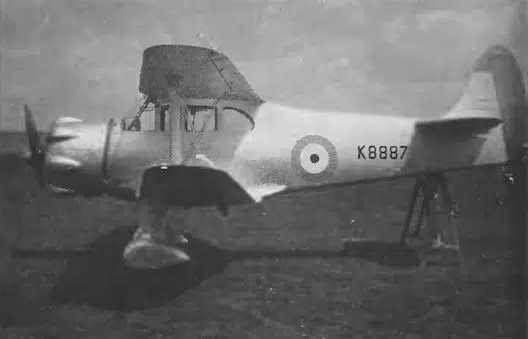

On this day in aviation history, 89 years ago (October 19, 1937), the floatplane prototype of the Airspeed A.S.30 Queen Wasp took flight for the first time. Developed as a pilotless target aircraft, the British biplane was intended to replace the de Havilland Queen Bee and provide the Royal Navy with a radio-controlled target for anti-aircraft and air-to-air gunnery training. Development of the Queen Wasp began in response to Air Ministry Specification Q.32/35. Two prototypes were ordered in 1936: landplane K8887 for the Royal Air Force and floatplane K8888 for the Royal Navy. Although designed to operate by radio control, the aircraft incorporated an enclosed cockpit and conventional controls, allowing a pilot to fly it manually when required. The landplane first flew on June 11, 1937, followed by the floatplane on October 19.

The Queen Wasp’s radio-control system incorporated several backup features intended to maintain reliable control of the aircraft. Testing of the floatplane revealed difficulties with its handling on the water, requiring modifications to its floats. Despite successfully being catapulted from HMS Pegasus, the Queen Wasp failed to meet expectations. A production order was placed, but only a handful of aircraft were completed before the program was abandoned. The Queen Wasp measured 24 feet 4 inches in length with a wingspan of 31 feet and was powered by a 350-hp Armstrong Siddeley Cheetah 7-cylinder radial engine. The landplane could reach approximately 172 mph, cruise at 151 mph, and had a service ceiling of 20,000 feet.