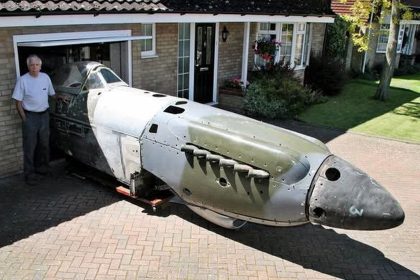
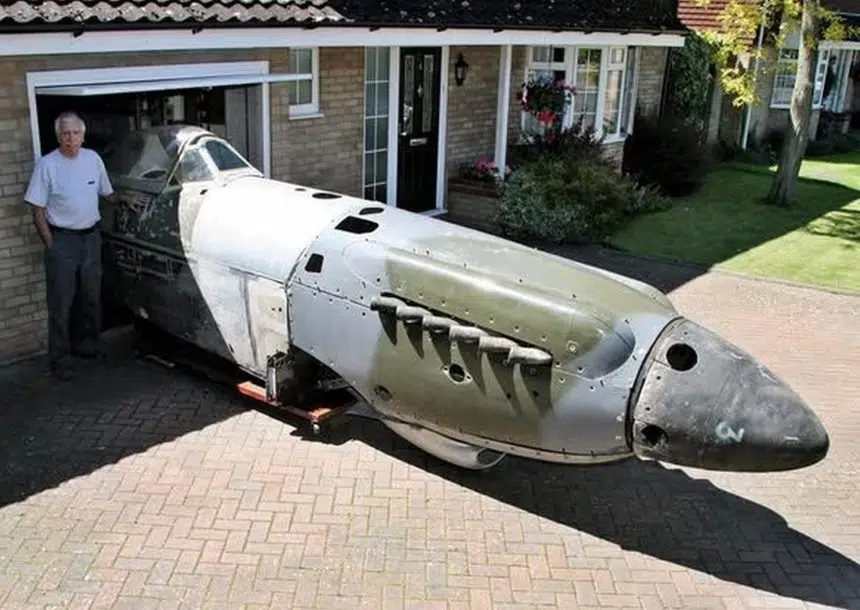

The partially reconstructed fuselage of Supermarine Spitfire F Mk 22 PK519, the final restoration project of collector Peter Arnold, sold for £18,000 at Dominic Winter Auctioneers’ military and aviation auction on October 8. Known among fellow enthusiasts as “Mr. Spitfire,” Arnold spent approximately five decades locating and documenting more than 350 crash sites, assembling a collection that reflected his lifelong dedication to the aircraft.
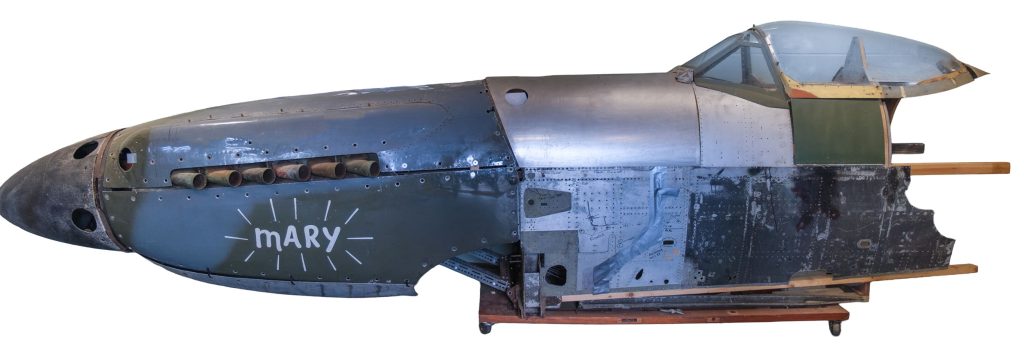
Registered as G-SPXX, PK519 was offered with surviving wreckage and components from the aircraft, alongside original panels from other Spitfires that Arnold had used to reconstruct the fuselage. The project represented another chapter in the history of an aircraft that went from postwar RAF service to a target range before its remains were recovered by aviation historians and collectors. Originally ordered from Vickers-Armstrongs on June 2, 1943, as a Mk IX, PK519 was ultimately completed at Castle Bromwich as a Griffon 61-powered Mk 22. It was delivered to No. 39 Maintenance Unit at Colerne, Wiltshire, on September 21, 1945, shortly after the end of WWII. The aircraft remained in storage until October 1947, when it was transferred to Vickers-Armstrongs at Keevil for modifications. Following that work, it was delivered to No. 6 Maintenance Unit at Brize Norton in September 1948. On August 12, 1949, PK519 joined No. 615 (County of Surrey) Squadron, Royal Auxiliary Air Force, at Biggin Hill. It initially carried the code RAV-A, subsequently changed to V6-A. As the squadron re-equipped with Gloster Meteors, the Spitfire was withdrawn and transferred to storage at RAF Old Sarum, near Salisbury, in 1954. PK519 and another Spitfire, PK518, subsequently became ground targets on the Salisbury Plain ranges. Both were used for demonstration attacks involving aircraft including the Hawker Sea Fury, de Havilland Venom, Republic F-84 Thunderjet and English Electric Canberra.
(Image credit: Dominic Winter Auctioneers)
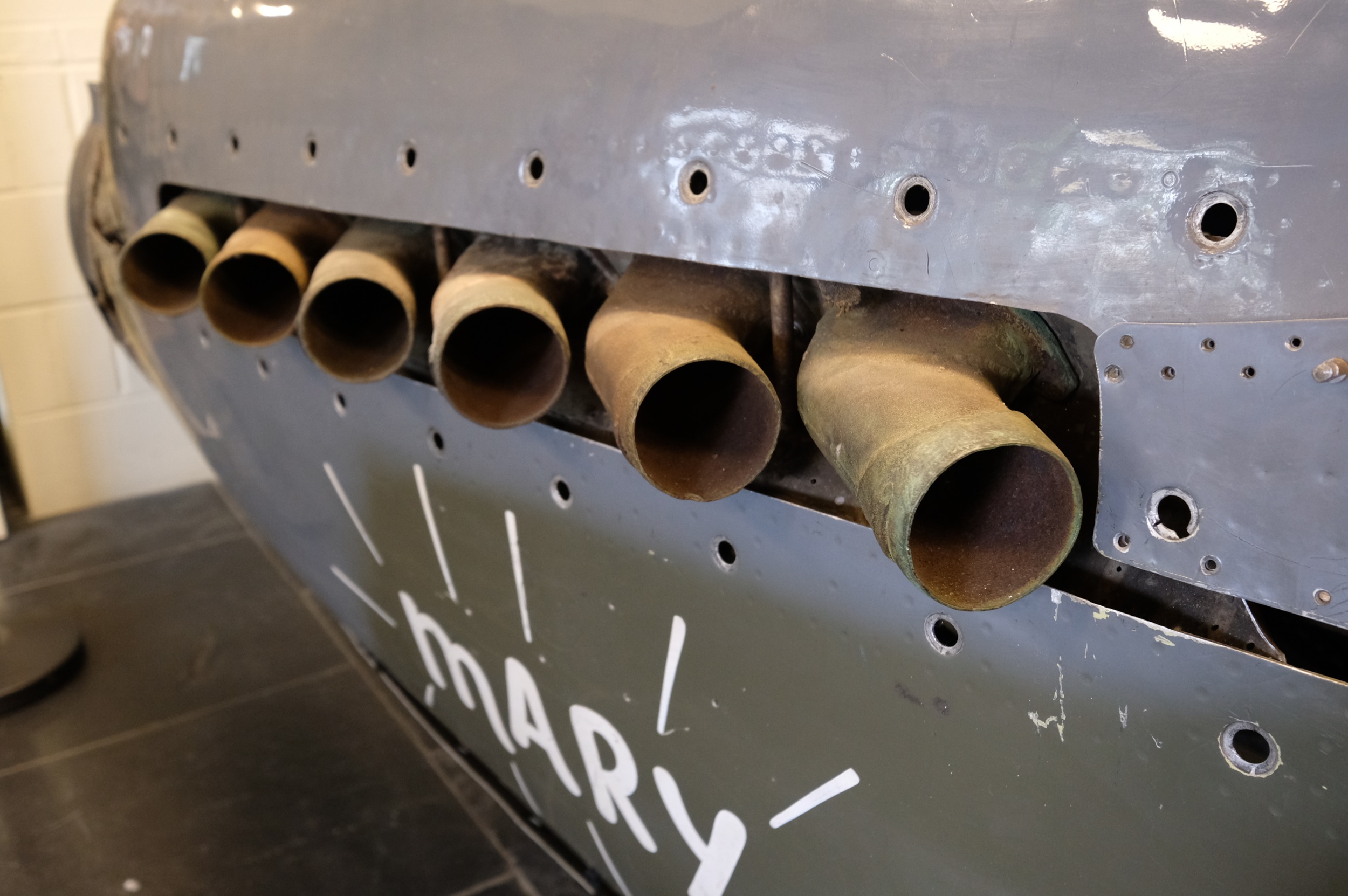
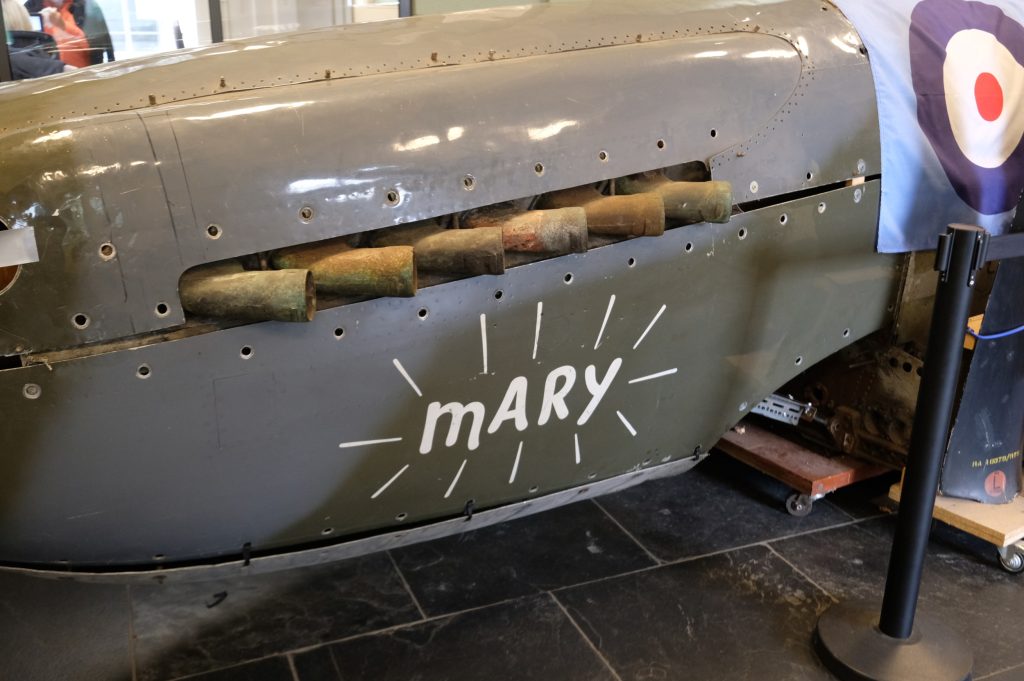
Aviation historian Peter Foote discovered PK519’s remains in 1966. By the time Arnold gained access to the range in the summer of 1977, the surviving wreckage had been considerably depleted. Searching for castings and forgings for his Seafire LA564 project, Arnold recovered portions of PK519’s firewalls, including a machined mounting section along the upper edge. Following Foote’s death in 2001, his collection of historical artifacts was distributed among friends and family. Significant pieces of PK519 went to Steve Vizard and Craig Charleston, with many subsequently passing to Arnold. These components formed part of the material offered with the fuselage. Because of the condition of the recovered pieces, Arnold incorporated original panels from other Spitfires into the reconstruction, assembling them on wooden formers. He registered PK519 with the Civil Aviation Authority as G-SPXX on May 18, 2012.
(Image credit: Dominic Winter Auctioneers)

(Image credit: Dominic Winter Auctioneers)
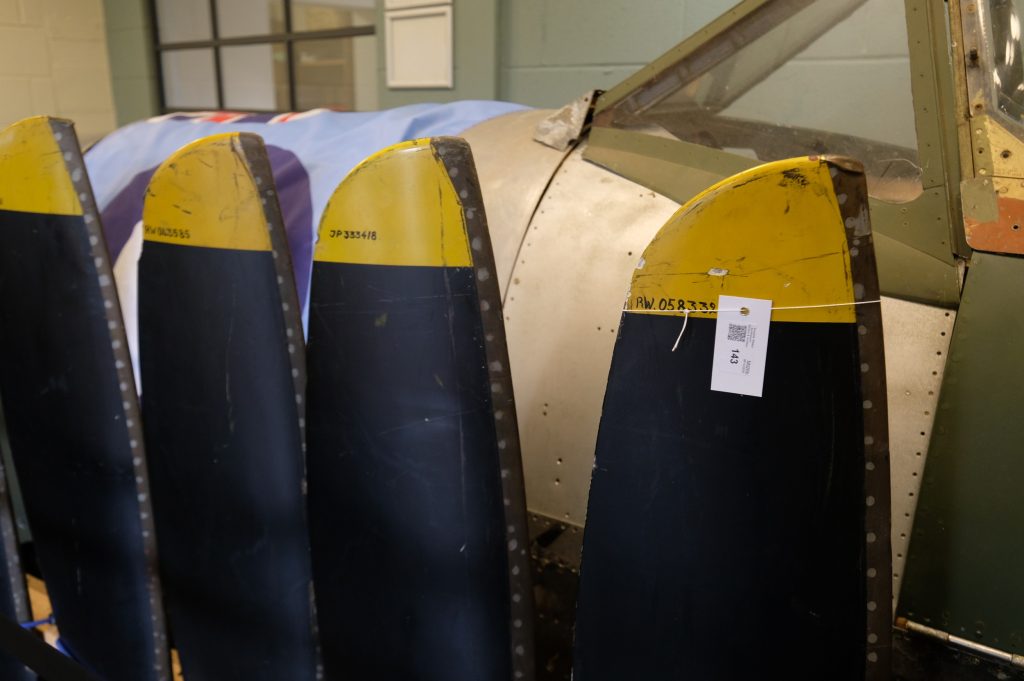
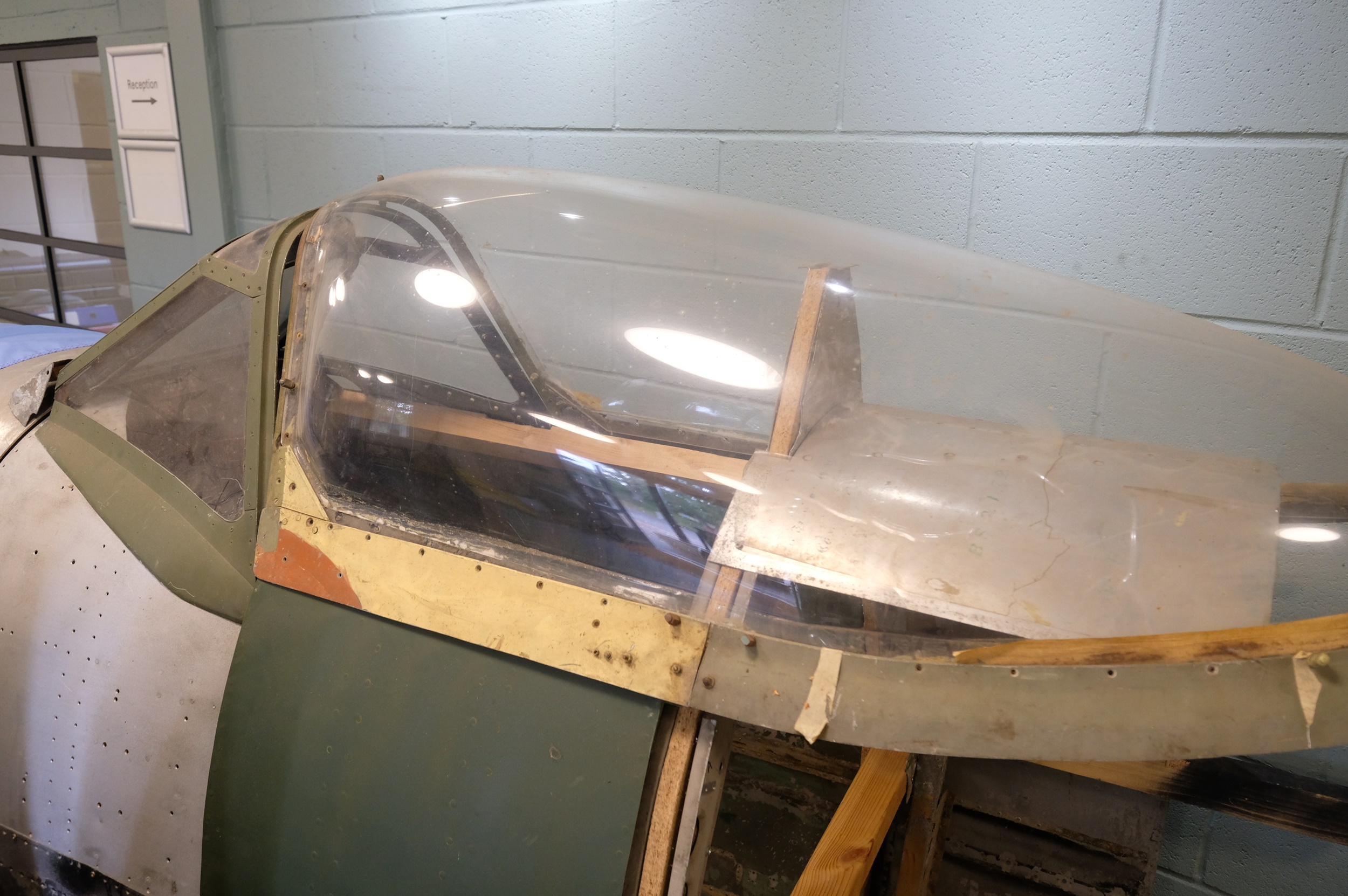
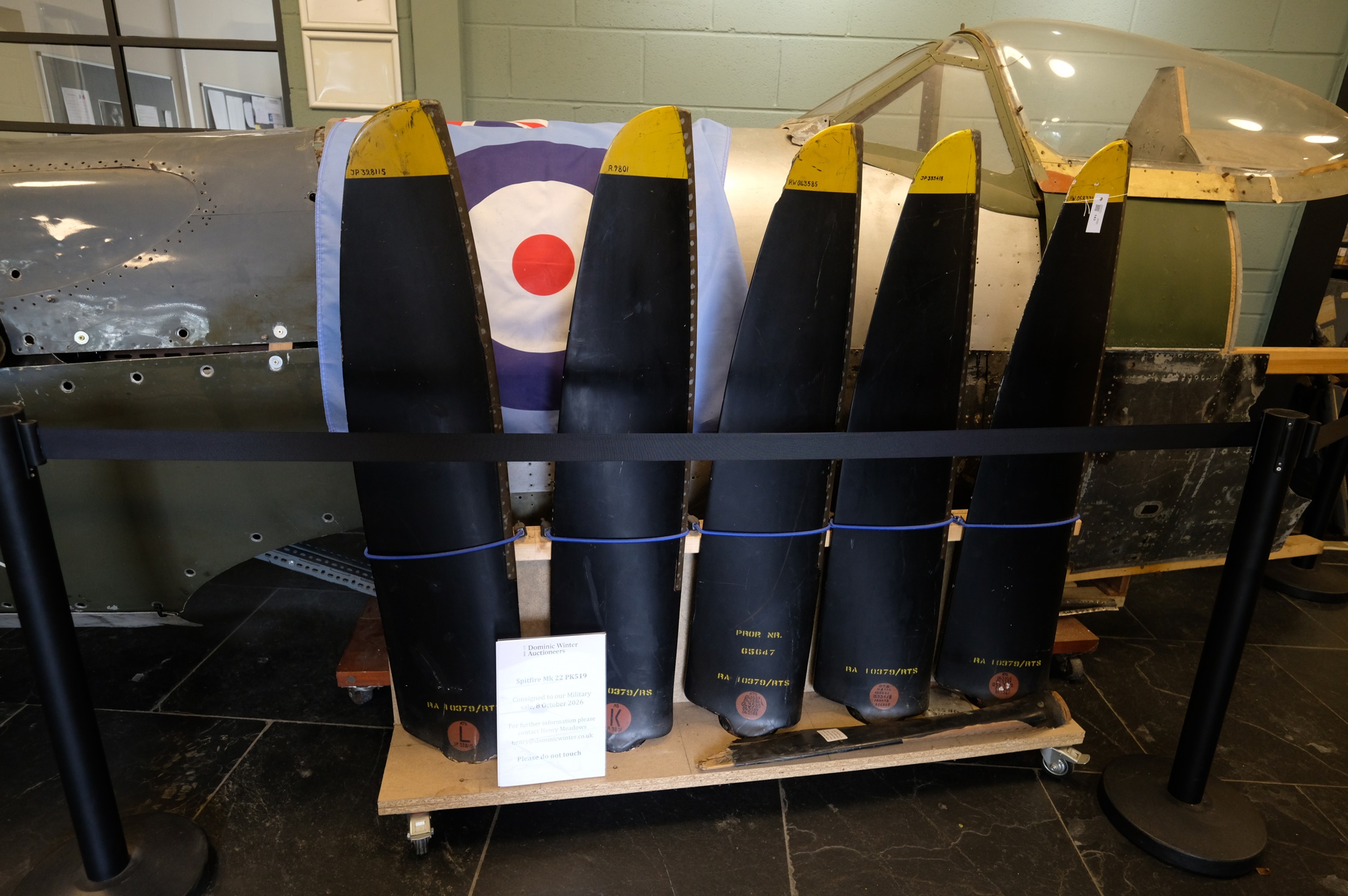
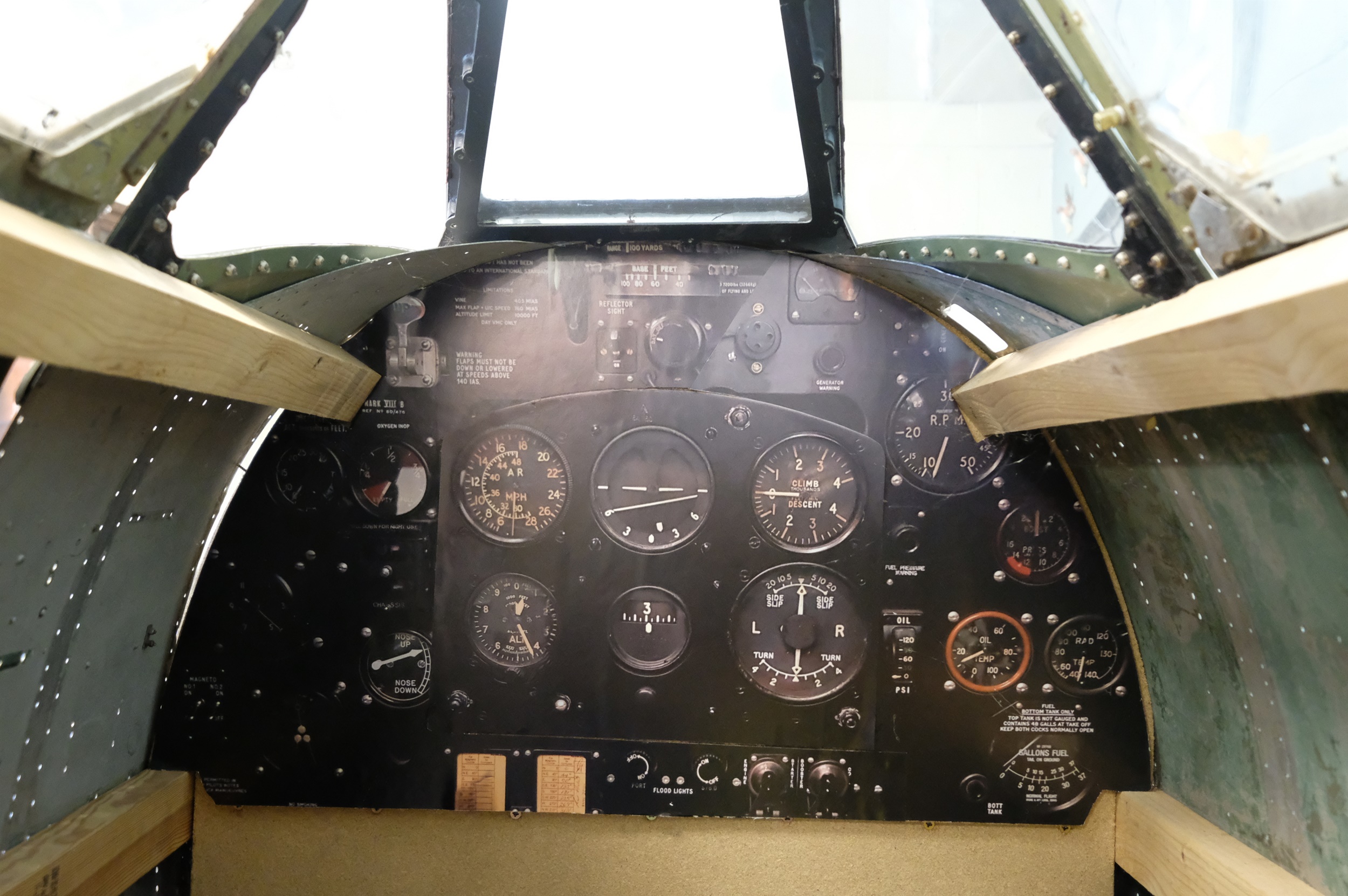
The auction lot included the fuselage, a cockpit window assembly, a Perspex canopy and five original Griffon propeller blades, finished in black with yellow tips. Surviving sheet metal, undercarriage legs and other wreckage from PK519 accompanied the project. The instrument panel installed in the fuselage was a paper representation for display purposes. Arnold’s interest in Spitfires began during his school years, when he would cycle to crash sites and document his discoveries. He later worked for Aston Martin, developing his engineering skills while broadening his search for surviving aircraft material. His research and collecting earned him widespread respect within the Spitfire community.
Introducing the collection, auctioneer Henry Meadows described the sale as a tribute to a man who was widely liked among fellow enthusiasts. Other items in Arnold’s collection included a separate instrument panel fitted with original instruments and an RAF sector clock dated 1941. The £18,000 sale marked the latest chapter for PK519 and the unfinished project Arnold left behind—a tangible part of the preservation work that earned him the name “Mr. Spitfire.” For more information about Dominic Winter Auctioneers, visit www.dominicwinter.co.uk
(Image credit: Dominic Winter Auctioneers)