

(Image credit: VAN)
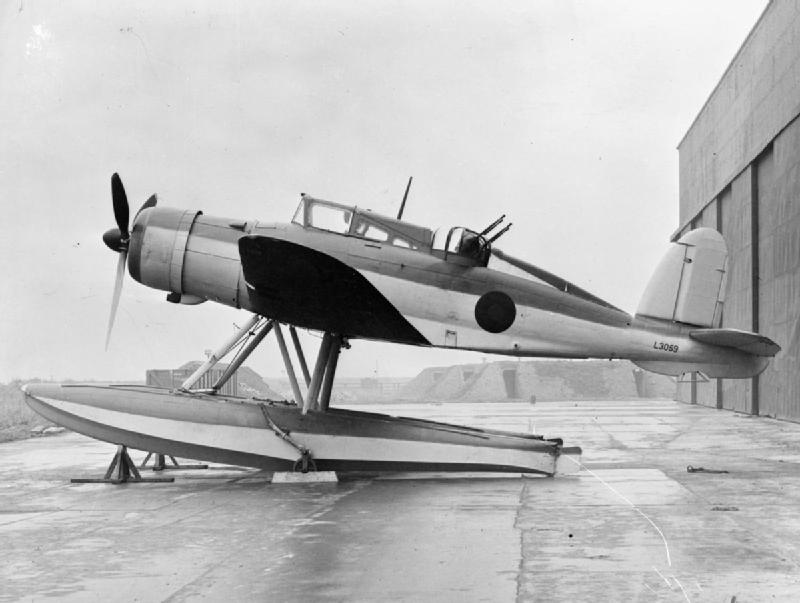
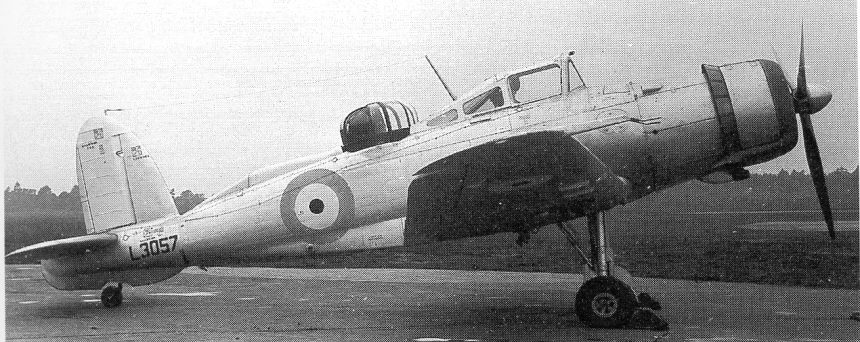
On this day in aviation history, 87 years ago (December 23, 1938), the first flight of the Blackburn Roc took place. Designed and built by the British aviation company Blackburn Aircraft, the Roc was a naval fighter plane. Blackburn designated the Roc as the B-25 internally, so it’s not to be confused with the North American Mitchell medium bomber. The name Roc refers to the mythical bird from the Arabian Nights. Blackburn began to develop the Roc after the British Air Ministry released Specification O.30/35, which called for a two-seat, carrier-based, turret-armed fighter for the Fleet Air Arm (FAA). Having already designed a successful two-seat, low-wing carrier-based aircraft called the Skua, Blackburn decided to further develop that airframe into a fighter. The main difference between the Skua and the Roc was the armament, with the Roc housing its guns in a turret.
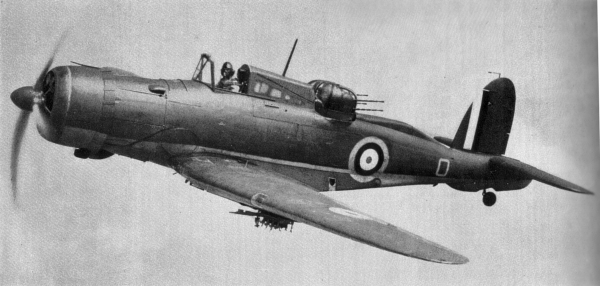
During World War II, the Roc served as a platform for combat air patrols. The aircraft saw action during the Allied campaign in Norway, Operation Dynamo and Operation Aerial, the evacuation of Dunkirk. 806 Naval Air Squadron Pilot Midshipman A. G. Daya is credited with destroying a Junkers Ju 88 near Ostend, Belgium, with his Roc’s turret guns. Beyond combat patrol, the Blackburn Roc was often used for air-sea rescue and target-towing duties. The Blackburn Roc had a crew of 2 and was powered by a Bristol Perseus XII nine-cylinder radial engine of 890 horsepower. The Roc could cruise at 135 mph, but also attain a maximum airspeed of 223. With long-range tanks, the Roc could fly within a 700 nautical mile range and reach a service ceiling of 18,000 feet. Four 0.303-inch Browning machine guns, in a power-operated dorsal turret, provided armament for the Roc. Additionally, eight 30-pound bombs could be loaded on the aircraft’s wings. Blackburn built 136 Rocs during the Second World War, and none are known to survive today.