

(Image credit: VAN)
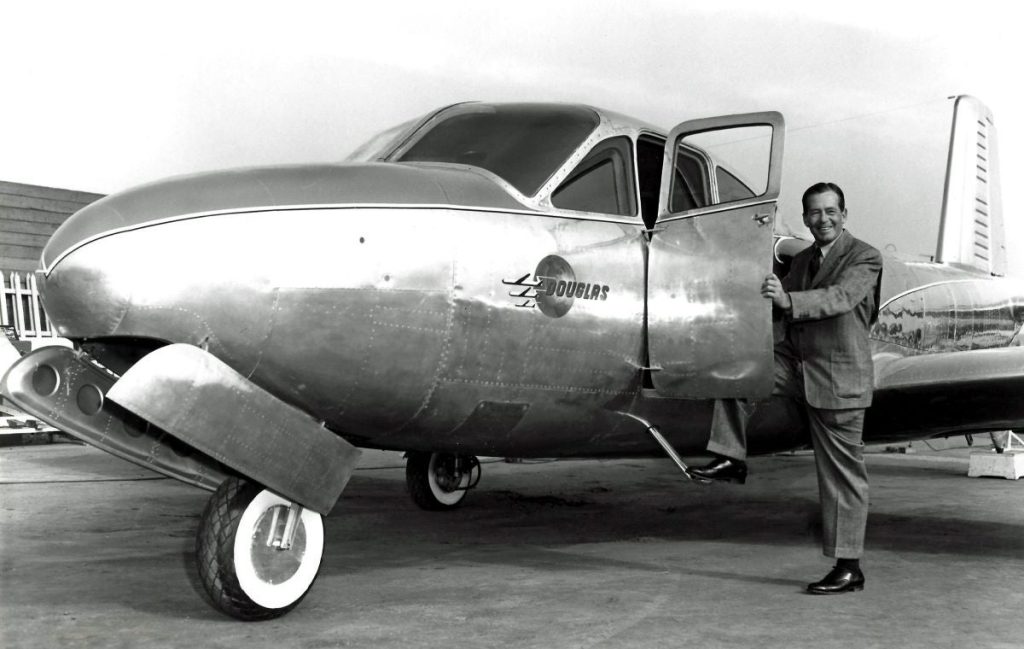
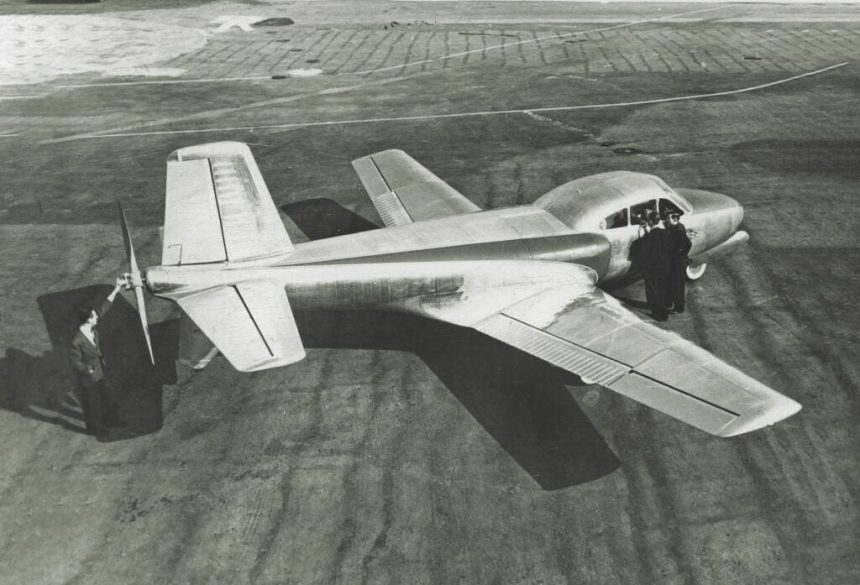
On this day in aviation history, 79 years ago (March 12, 1947), the first flight of the Douglas Cloudster II took place. An unusual design, the Cloudster II was a prototype low-wing, twin-engine light aircraft. Douglas developed this aircraft with an unconventional layout. The engines were placed inside the fuselage, and they drove a single pusher propeller at the rear of the aircraft. The Cloudster II was a furtherance of Douglas Aircraft’s earlier 1940s designs, such as the XB-42 Mixmaster prototype bomber. Douglas was experimenting to reduce the overall drag of their multi-engined aircraft. They believed that by eliminating engines protruding from the wings and integrating them into the fuselage instead, drag would be greatly reduced. Their theory was proven correct by the XB-42, which saw a 30% decrease in drag, compared to conventional multi-engine aircraft, during flight testing. Additionally, the Mixmaster showed improved handling with an engine out, meaning asymmetric thrust had also been reduced.
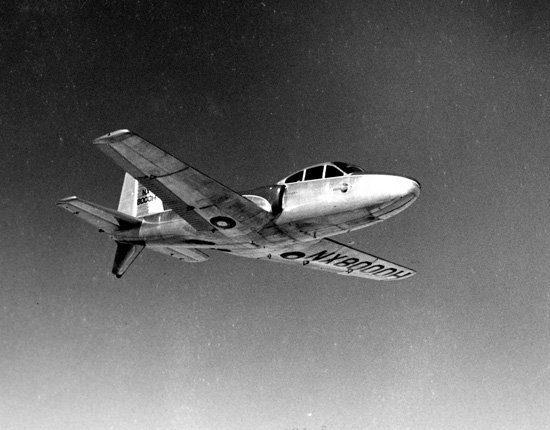
Douglas Aircraft hoped to carry over the success of the XB-42’s flight characteristics into a new medium-range airliner design, the DC-8. In parallel to the DC-8 prototype, Douglas also began development of the Model 1015, Cloudster II, as an executive aircraft. The Cloudster II had a single pilot and a capacity for four passengers. Douglas opted for an unswept laminar-flow wing in their design. The twin 250-horsepower Continental E250 6-cylinder engines were installed in the rear fuselage, driving a single 8-foot-diameter twin-bladed propeller. This prop was mounted aft of the empennage and connected to the E250s via driveshafts, which were taken from the Bell P-39 Airacobra.
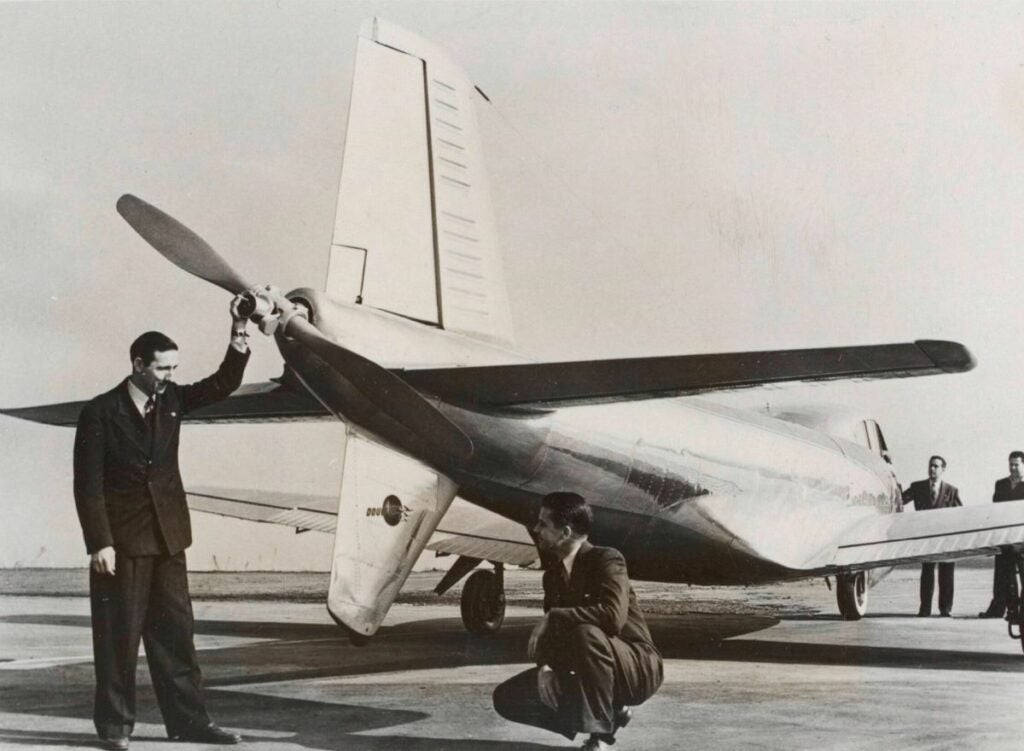
The Cloudster II had good performance and handling during initial flight testing. The aircraft could cruise at 200 mph and attain a maximum airspeed of 229 mph. A range of 830 nautical miles, a service ceiling of 22,200 feet, and a 1,500 feet per minute rate of climb made the Cloudster II a competitive executive aircraft design. As flight testing progressed, the aircraft was found to suffer from excessive vibration and was also prone to overheating on the ground. The sole prototype only flew twice, and the Cloudster II was abandoned in late 1947. The aircraft’s performance aside, the civilian aircraft market had not proven as fruitful as hoped. An originally planned selling price of $30,000 USD had jumped to $68,000, thus making the Cloudster II an impractical option.