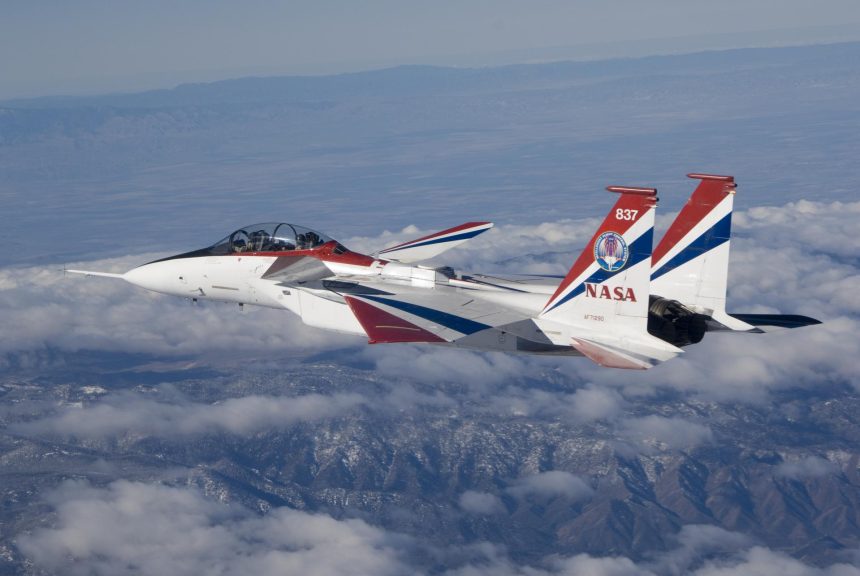

In the early 1990s, NASA began a new project to determine how engines and flight controls could work together to improve airplane performance. The program, called Advanced Controls Technology for Integrated Vehicles (ACTIVE), aimed to develop and test new engine and flight control systems that would improve how future high-performance aircraft operate. The program took place at NASA’s Dryden Flight Research Center at Edwards Air Force Base, California, and used technology from earlier projects that had already looked at ways to coordinate engines with flight controls. The aircraft used for the ACTIVE program was a modified NASA F-15B, USAF serial number 71-0290 and tail number 837, which had already been used in other research projects. On June 15, 1993, the F-15B Short Takeoff and Landing/Maneuver Technology Demonstrator (STOL/MTD) arrived at NASA Dryden. The STOL/MTD configuration already included several unusual features, such as small canards mounted ahead of the wings, and the aircraft used multi-axis thrust-vectoring exhaust nozzles. These systems allowed engineers to study aircraft control at high angles of attack and during short-takeoff and landing experiments. Because of these modifications, the aircraft was deemed suitable for further research and became the platform for the new ACTIVE program. The first phase of the program began later in 1993, when researchers focused on identifying aircraft parameters and exploring ways to optimize aircraft and engine performance. The research was conducted jointly by NASA, the US Air Force, F-15 manufacturer McDonnell Douglas, and engine builder Pratt and Whitney.
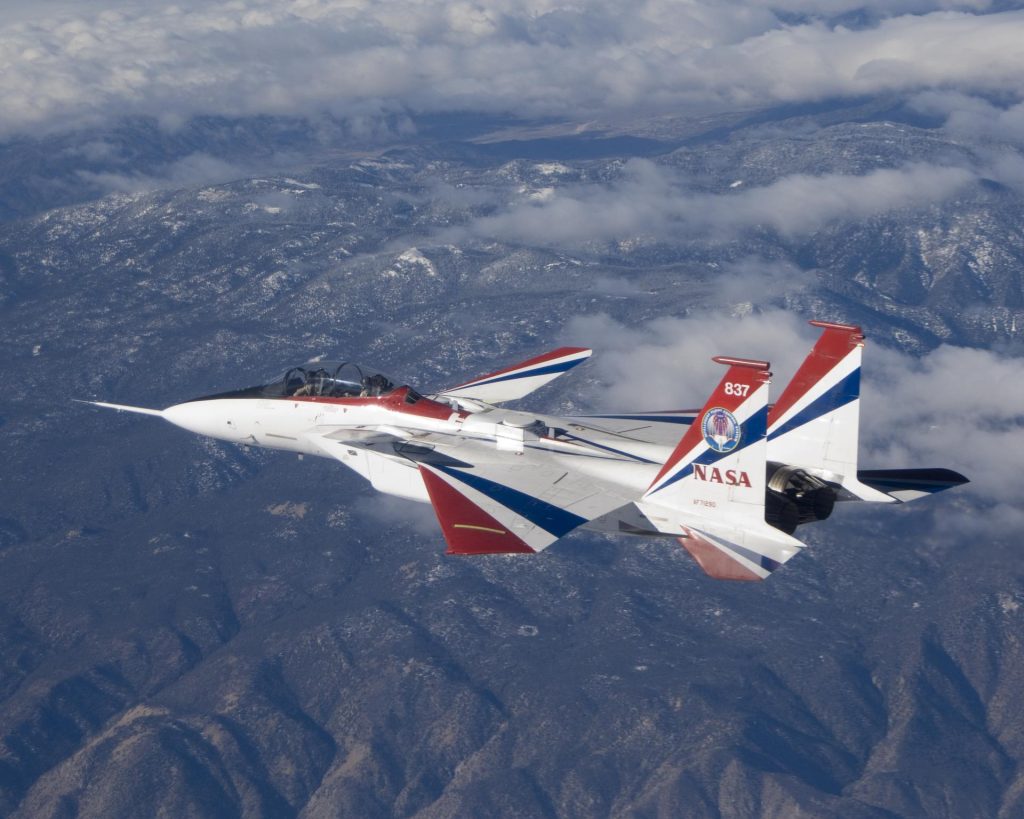
The research had several goals. The first goal was to see if engine thrust could be used directly to control the plane. Another goal was to lower air resistance during cruising and turning. Engineers also wanted to create control systems that could automatically adjust the plane’s systems to improve performance. Flight demonstration of a generic measurement-based performance optimization algorithm was another primary objective of the ACTIVE program using AdAPT, Adaptive Aircraft Performance Technology. The algorithm was meant to optimize aircraft and engine controls to maximize a performance index such as specific excess power or range factor. Testing of the AdAPT algorithm was designed to demonstrate its adaptability or generic quality, providing evidence that the algorithm could be taken as a whole and applied to different aircraft or to an entirely different class of aircraft. Another major goal of the ACTIVE program was the successful flight demonstration of the Pratt & Whitney pitch-yaw balance beam nozzles (PYBBN), which were installed on F100-PW-229 engines. The twin-engine F-15B with new Pratt & Whitney nozzles could turn up to 20 degrees in any direction. The nozzles provided thrust control in the pitch (up and down) and yaw (left and right) directions, reducing drag and increasing fuel economy or range compared with conventional aerodynamic controls, which increase the retarding forces (drag) acting on the aircraft. Before flying with the new parts, engineers conducted extensive ground tests. On September 18, 1995, the plane was put in the Integrated Test Facility at Dryden. There, engineers checked that the flight-control system and new equipment worked properly. The tests showed that the control system, sensors, and nozzle parts were working as they should.
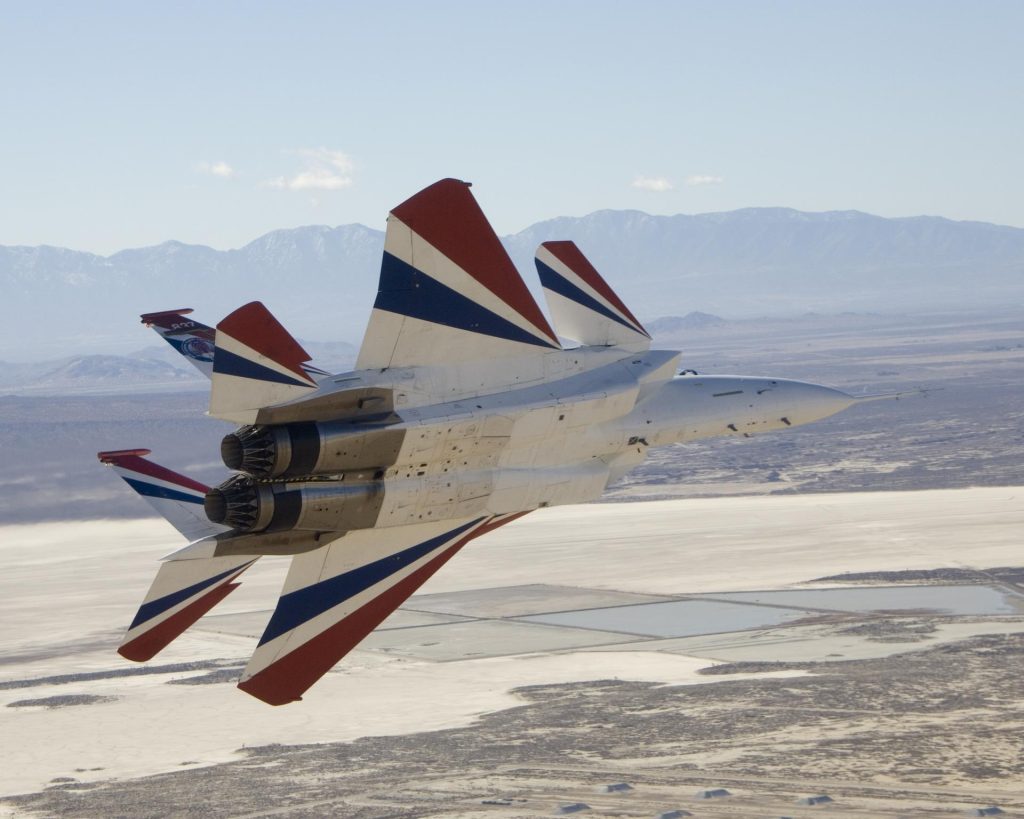
Ground testing of a new thrust-vectoring concept employing nozzles took place during the first two weeks of November 1995 and went well. The flight tests began in March 1996, with NASA pilot Jim Smolka and McDonnell Douglas test pilot Larry Walker flying the aircraft. The flights were meant to test the new thrust-vectoring concept on the F-15B research aircraft to improve performance and aircraft control. Engineers studied how the nozzles affected maneuvering performance, stability, and aircraft control. A major part of the research involved measuring the plane’s performance during specific flight maneuvers. Standard flight maneuvers were used to see how thrust vectoring changed the plane’s performance. These maneuvers are often used in flight tests to measure how quickly the plane can accelerate, climb, and turn. In the ACTIVE program, the thrust-vectoring system was not completely built into the plane’s main control system. Because of this, some tests were limited to steady flight maneuvers, in which the plane was kept stable while measurements were taken. These tests let engineers compare how the plane performed with and without thrust vectoring. The results were also used as a starting point for subsequent tests with adaptive control systems such as AdAPT. The goal was to show that the software could work across different planes without requiring major changes.
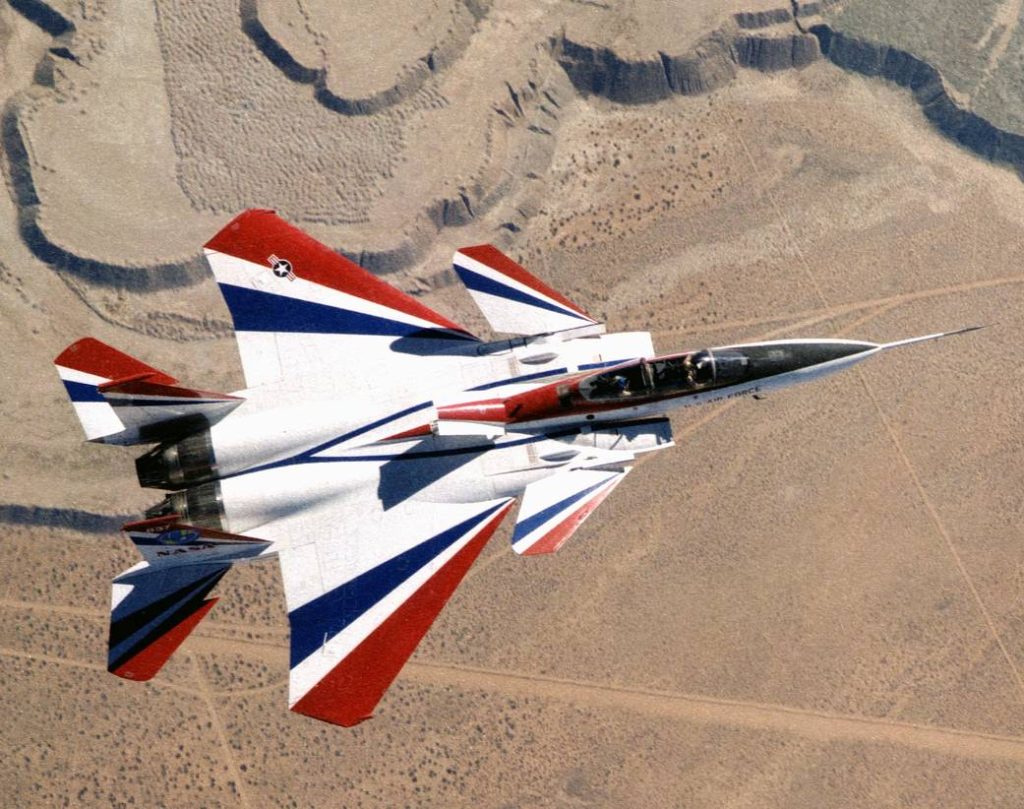
The ACTIVE program continued Dryden’s long tradition of experimental research. The modified F-15B, with its extra wings and thrust-vectoring nozzles, provided engineers with a good way to test new control technologies. The plane allowed engineers to test how engines, flight controls, and computer systems could work together. In the Flight Test Files series, studies on the F-15B helped develop new technologies that shaped the future of aviation for both the military and the public. Read more Flight Test Files stories HERE.