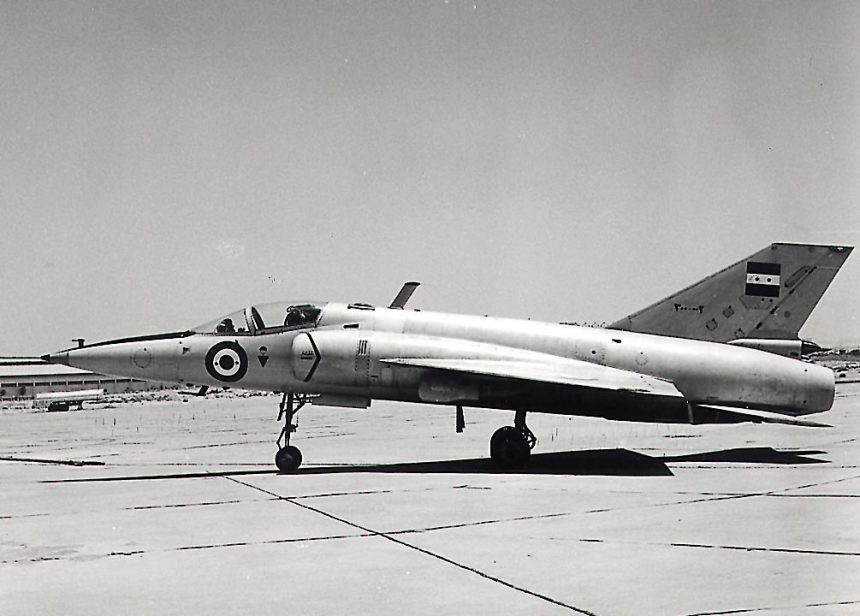


After World War II, German aircraft designer Willy Messerschmitt was detained by Allied forces for collaborating with the Nazi regime. He was convicted of using forced labor for aircraft production in 1948 and served two years in prison. Because Germany was banned from manufacturing aircraft until the mid-1950s, Messerschmitt turned his company to producing other goods, including sewing machines, prefabricated housing, and the famous Messerschmitt Kabinenroller. While banned from building planes in Germany, he moved to Spain in the early 1950s to work as an adviser to the Spanish government. In 1951, he initiated the design of the HA-300 supersonic interceptor aircraft for Hispano Aviación. His design initially followed a tailless delta-winged glider approach, calling the aircraft the Hispano HA P-300. The aircraft was a mix of wood and metal, with a light alloy forward fuselage and a wooden rear section. It had a thin delta wing with a span of nearly 20 feet and an area of 215 square feet. The aircraft was powered by a Bristol Orpheus 703-S-10 turbojet engine with 8,200 lbf thrust with afterburner. However, instability during testing, engine problems, and funding issues led to the cancellation of the project, and Spain shut it down in 1960.
The Birth of HA-300
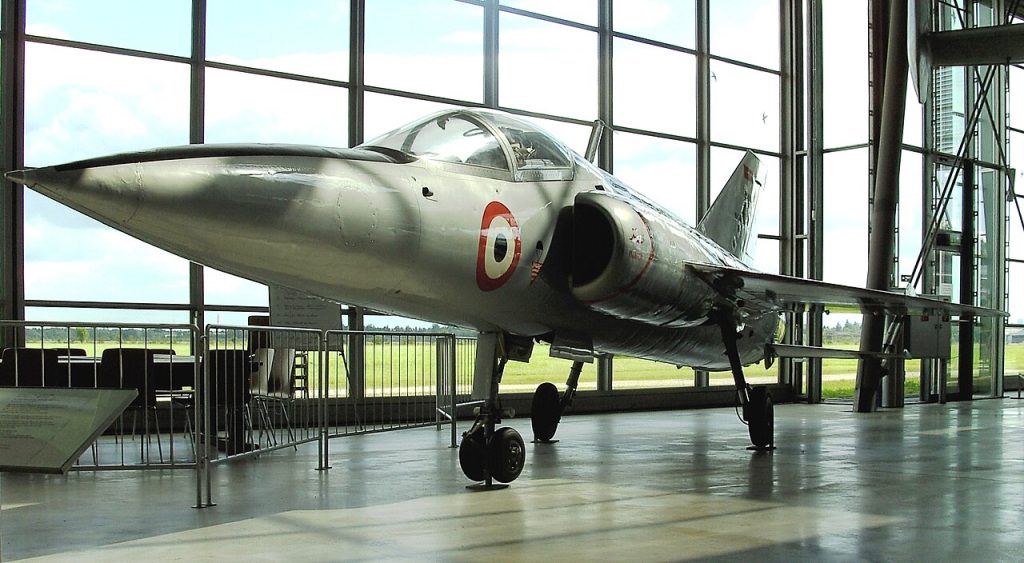
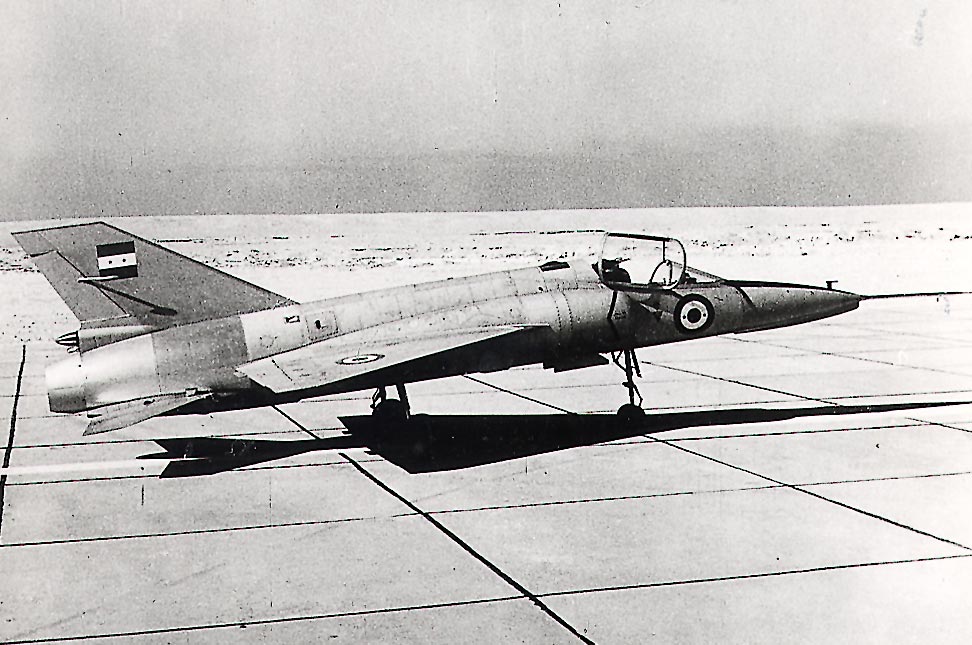
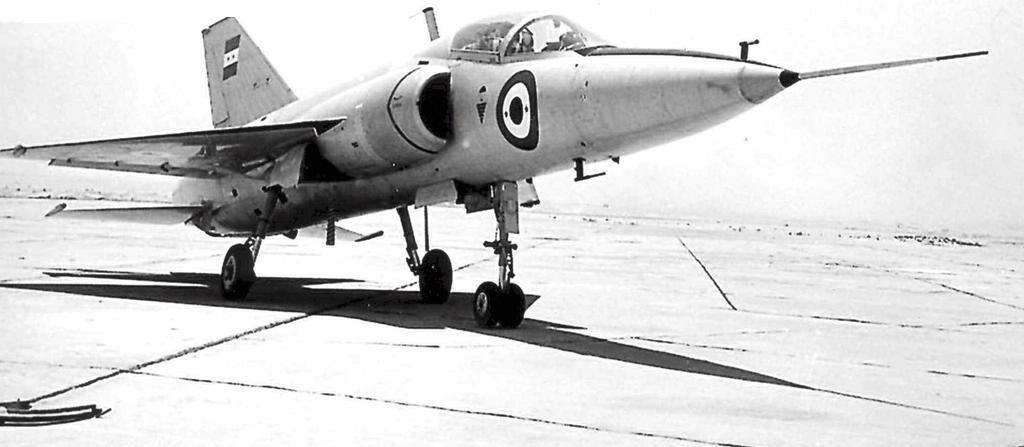
At the same time, the Egyptian Air Force was seeking a lightweight, supersonic, single-seat interceptor. As a result, Egypt acquired the project design from Spain, and further development of HA-300 continued in Helwan, with the entire design team, including Messerschmitt, shifting to Egypt. To replace the Bristol Orpheus engine, Austrian engine expert Ferdinand Brandner was invited to design a new turbojet. Work on the development of the first two prototypes began soon after, with the first prototype of the HA-300, still powered, making its debut flight on March 7, 1964, achieving Mach 1.13. Since the new engine was not yet complete, the prototype flew with a Bristol Orpheus 703-S-10 turbojet. However, the fighter now has a jet engine with semicircular side intakes and one exhaust nozzle. It features a smaller wing and an extra-low-mounted, fully movable tail stabilizer. Most of the avionics were sourced from Europe. The aircraft was nearly 41 feet long, 10.4 feet tall, with a wingspan of 19 feet and an area of 180 square feet. The empty weight was 4,630 pounds, and the maximum takeoff weight was 7,055 pounds. With its new engine, the aircraft was envisaged to achieve Mach 1.98 to Mach 2.1. Its range was 870 miles with a service ceiling of 59,000 feet. The aircraft had provisions for either two 20 mm Hispano cannons or four 23 mm Nudelman-Rikhter NR-23 cannons. It could also be equipped with four K-13 infrared-homing air-to-air missiles.
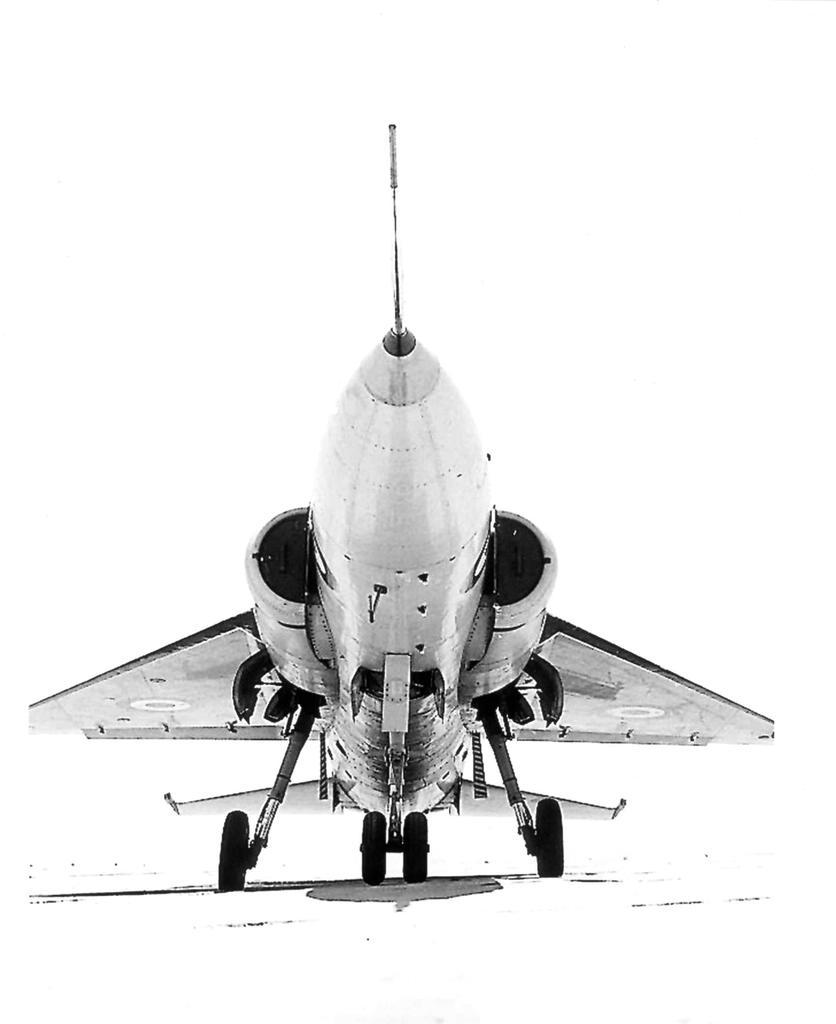
As new engine development was costly, Egypt learned about India’s interest in the E-300 for its HF-24 Marut aircraft. In March 1963, Brandner led a delegation to India and negotiated a deal under which India would share E-300 costs, donate a modified HF-24 capable of carrying the E-300, train Egyptians as test pilots, and contribute a senior Indian test pilot to assist in HA-300 development. The second prototype of the HA-300 flew in July 1965 with the old Bristol Orpheus engine. By the time the third prototype was built, the new engine had already been developed and was called the Brandner E-300. The engine produced 10,600 lbf of thrust with afterburner, and it was jointly developed with India. The jet was meant to reach Mach 2.0 at nearly 40,000 feet with the new engine, but there were initial minor issues. While those problems were still being rectified, the jet was canceled, and the engine and the third prototype never flew. A total of 135 test flights with the first and second prototypes were completed before the program was halted in May 1969. The cancellation of the HA-300 was due to the political and financial problems that were prominent in the region in the late 1960s.
Reasons for Failure
None of the indigenous military projects during Gamal Abdel Nasser’s regime, who was the president of Egypt then, ever achieved military success. During the 1960s, Egypt was undertaking costly ballistic missile programs, including the development of at least two surface-to-surface ballistic missile projects, and the 1967 Arab–Israeli War meant the end of the road for the HA-300. According to the Air University, “Naser did not view the HA-300 as a military priority but rather as a useful (if costly) symbol that buttressed his regime’s claims to legitimacy.” Later, due to funding shortages, Messerschmitt had to lay off some staff because Egypt did not pay salaries on time. The German aviation experts’ cultural differences with Argentinian colleagues, and Messerschmitt’s problems with Egyptian and Indian teams, were also among the issues listed by the Air University as deal-breakers for this program. It was followed by the Indian team learning that Egypt had no intention of buying HF-24 Marut aircraft with E-300 engines, which derailed the E-300 project and led to its end. In addition, the aircraft, which was presented as an “Egyptian-made” fighter, had German designers, first a British engine and then an Argentine-designed engine, and couldn’t serve the regime’s purpose.
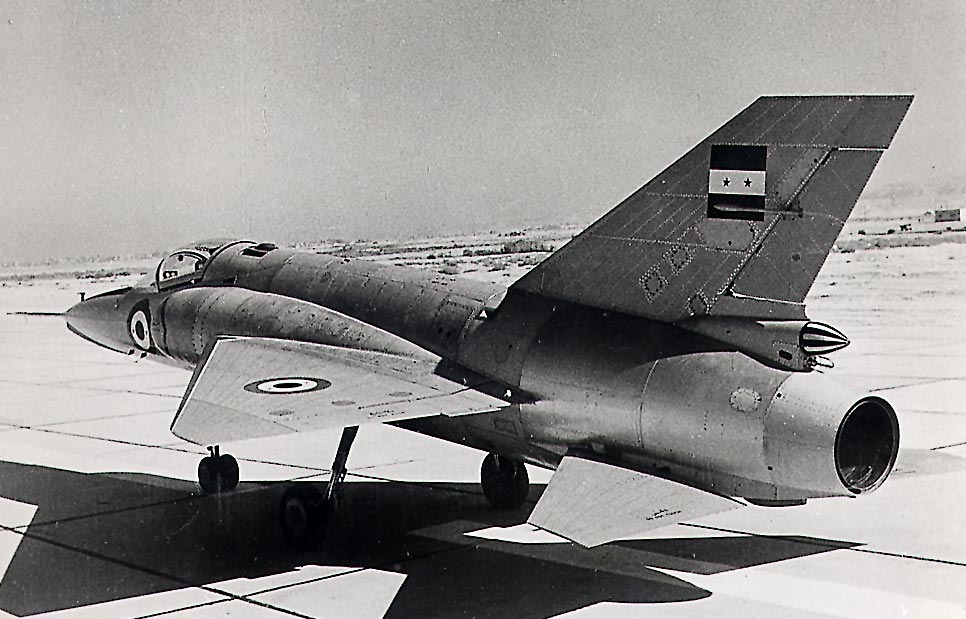
The HA-300 was always a costly affair for Egypt. According to an estimate, the HA-300 program cost over 100 million Egyptian pounds, or the equivalent of Egypt’s total investment in its civilian industry throughout the 1960s. Moreover, the 1967 air raid by Israel destroyed the Egyptian Air Force completely, and the priority had shifted to buying rather than developing. The Soviets later addressed the immediate needs of the Egyptian Air Force, leading to the cancellation of the HA-300 in exchange for procuring the MiG-21 at favorable prices. India also turned to the Soviets to meet their jet needs. As a result, Egypt never designed and produced an indigenous jet fighter, and the Helwan aviation plants were forced to lay off 5,000 workers; hundreds of skilled experts fled to aviation programs in North America; and Helwan resorted to producing parts for Egypt’s Soviet-built fighters. The HA-300 was a good fighter, but was plagued by poor planning, a war, a lack of funds, and a regime that treated it more as a publicity stunt than a weapon. In the Grounded Dreams series, the HA-300 stands more as an untreated, unchallenged, and undeveloped jet than a failed aircraft.
Read more Grounded Dreams articles HERE.