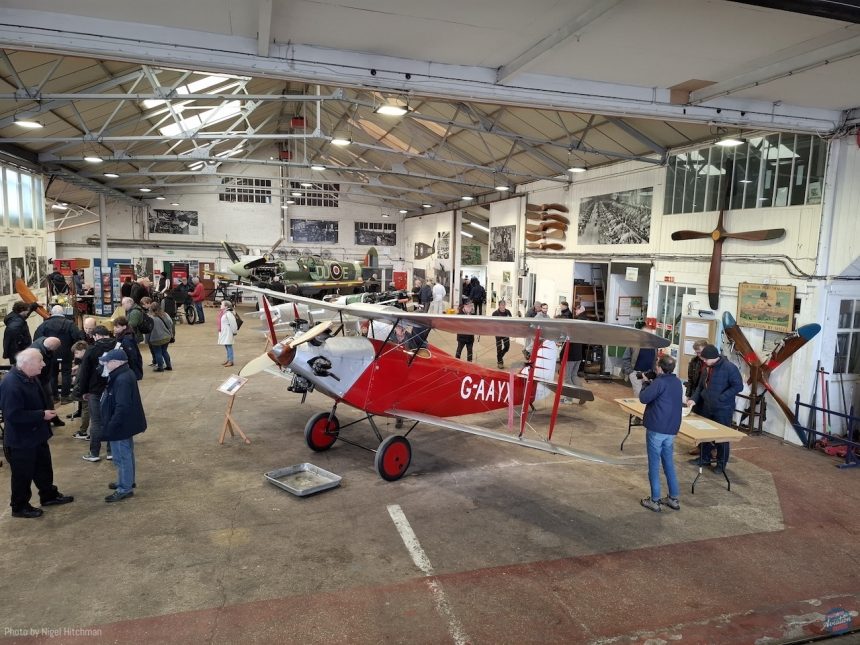

The Shuttleworth Collection held its annual Engineering Open Weekend on 21/22 February, this time with a much expanded format. Not only was the workshop open with many displays, but so was the new Sopwith/Hawker temporary display in Hangar 4 (which will remain until 12 April). There were additional vehicle and traction engine displays outside, the Sopwith Camel carried out an engine run, and the Hucks starter was demonstrated with the newly restored Hawker Hind. It was an excellent winter day out, with lots to see, very much appreciated by the many people present.
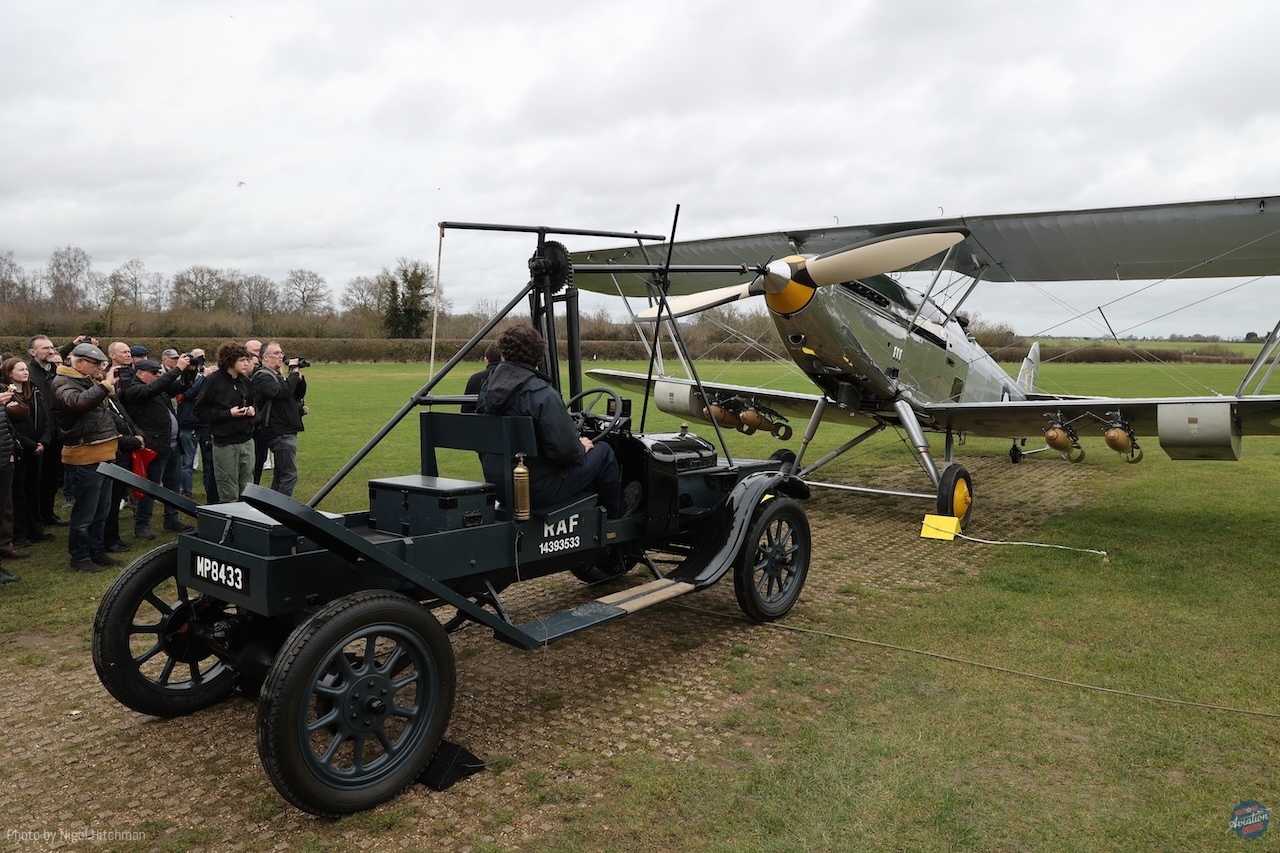
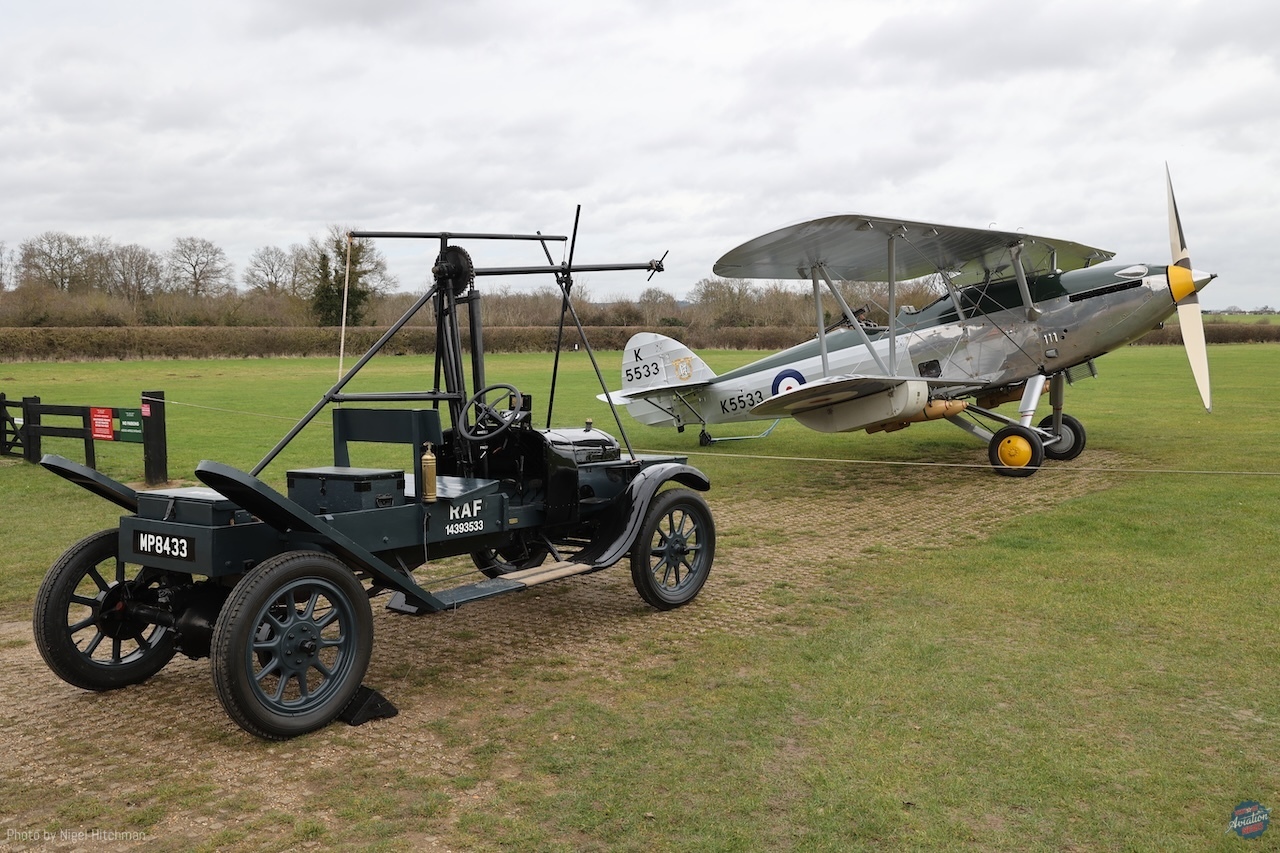
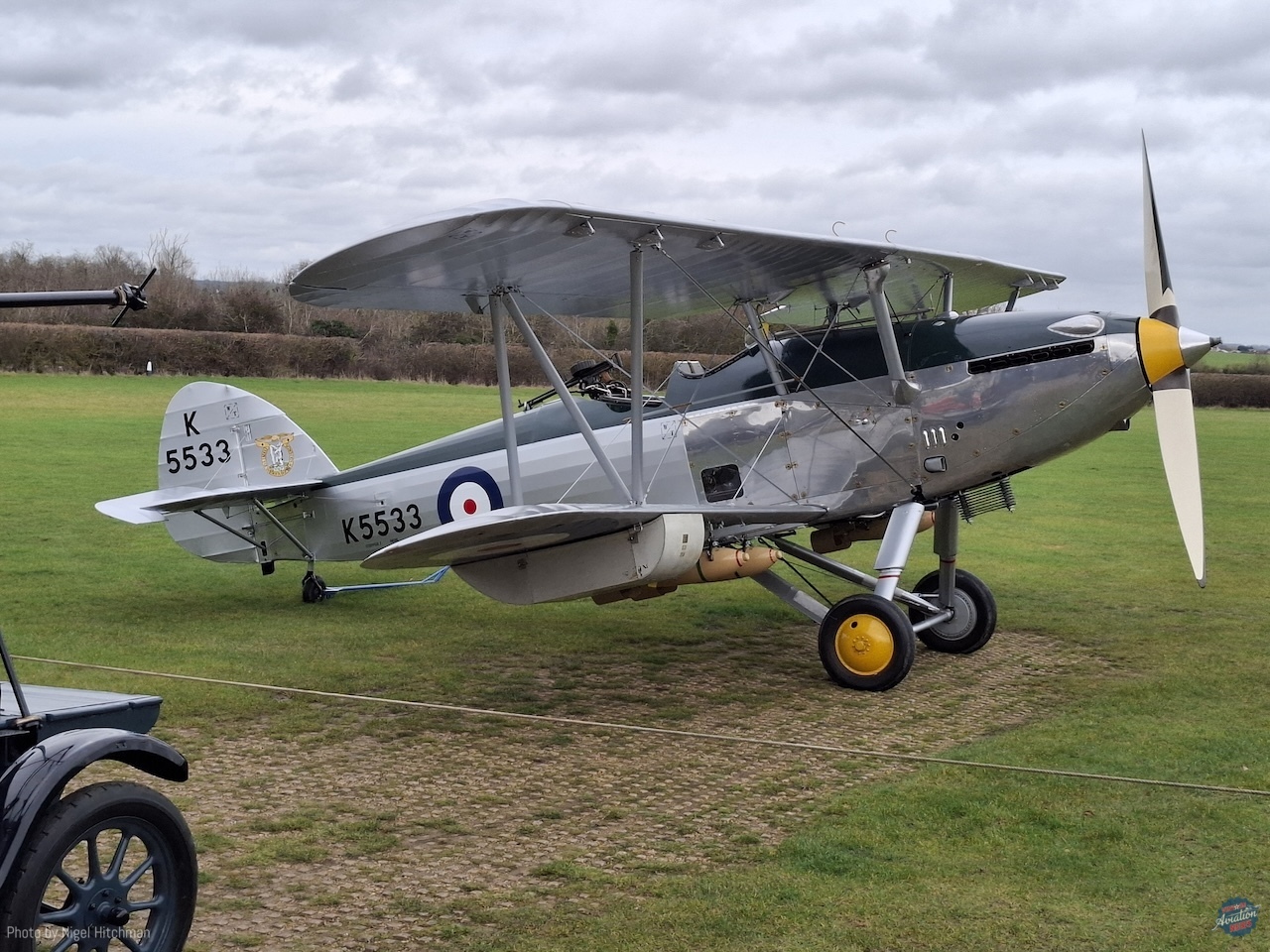
The Hawker Hind G-AENP was built in 1937 and delivered to the Afghan Air Force in 1938, remaining in service until around 1956. In 1967, it was one of four Afghan Hinds donated by the Afghan Government: one went to the RAF Museum, two to the Canadian National Aviation Museum (one of which was restored and displayed; the other, now G-CBLK, was sold to Aero Vintage in England for eventual restoration), and the fourth to Shuttleworth. It was collected by truck in an epic journey back to England in 1970. Restored, it flew again in 1981, initially in Afghan colours and then in RAF XV Squadron markings. It last flew in 2015 when engine issues grounded it. With the rare Rolls-Royce Kestrel engine requiring overhaul and expected to take a long time, it was decided to fully restore the aircraft while work was underway. It is now fully completed, looking fabulous in its No. 605 “County of Warwick Bomber Squadron” markings as K5533.
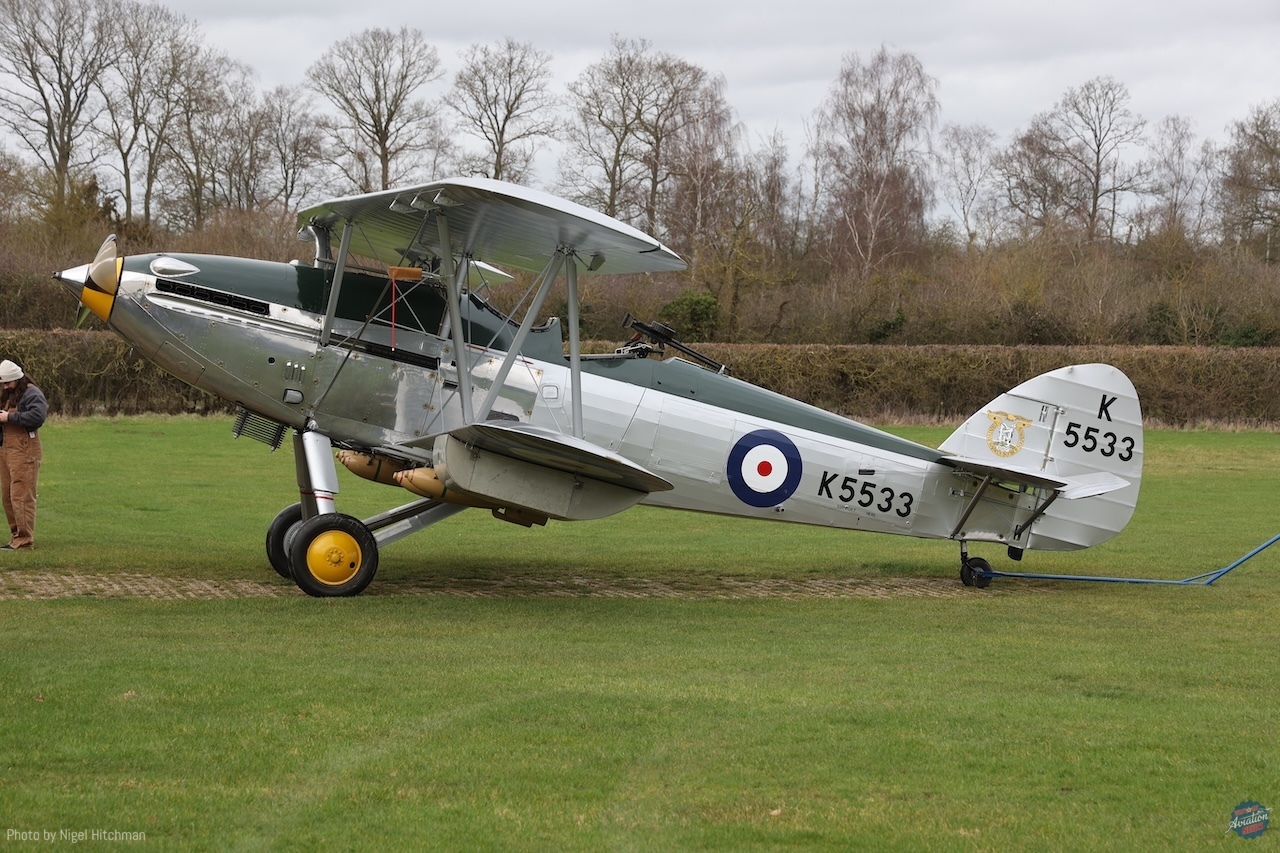
Unfortunately, after installation, it was found that the coolant radiator, which had been fully serviceable when removed, now had major leaks. It has therefore been removed for refurbishment by a specialist company. It is hoped that it will be returned in time to enable engine runs and test flying ahead of the first airshow in May. Although it has been on display in the hangars for several months since completion, this was the first major event and the first time it has been displayed outside. It was demonstrated with the Hucks Starter, which is based on a modified Ford Model T and is used to turn over the propeller, with a system that automatically disengages once the engine has started.
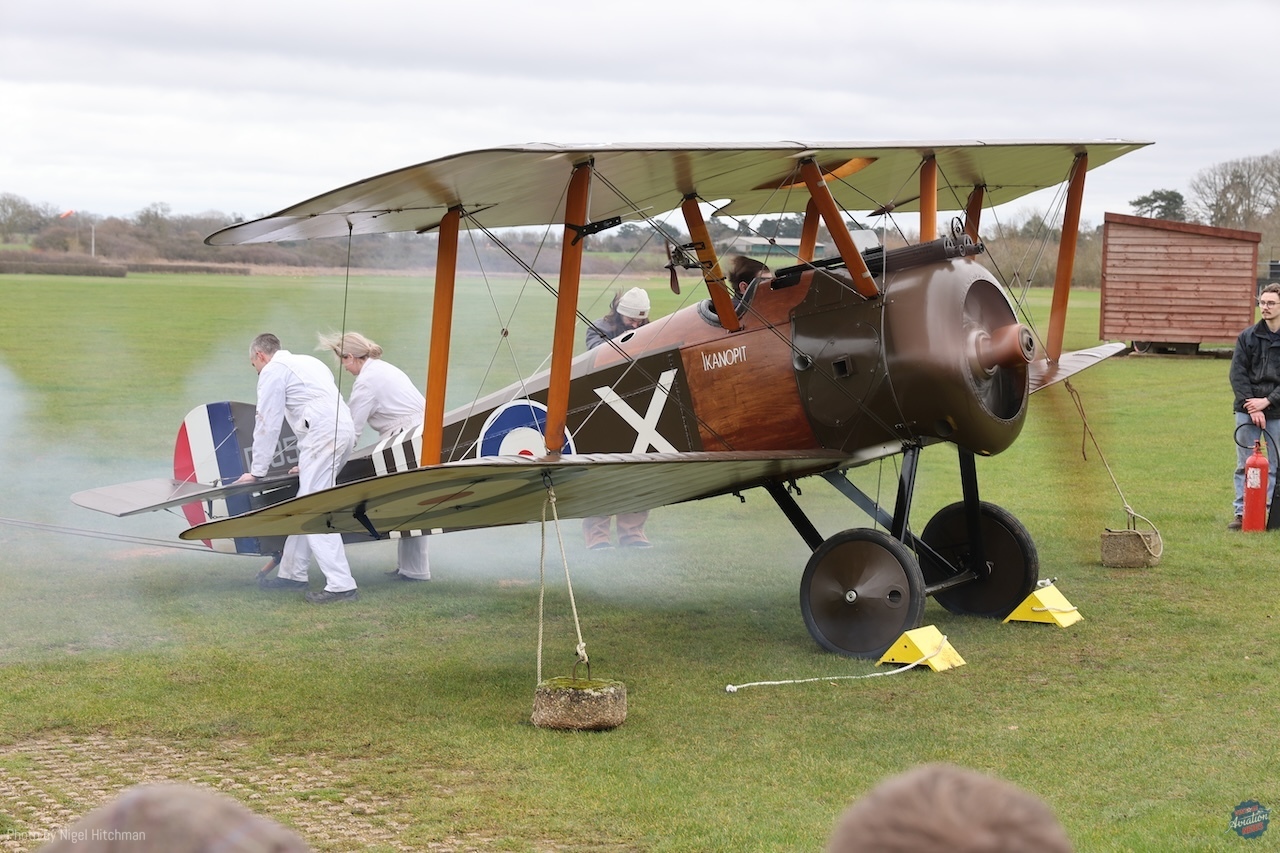
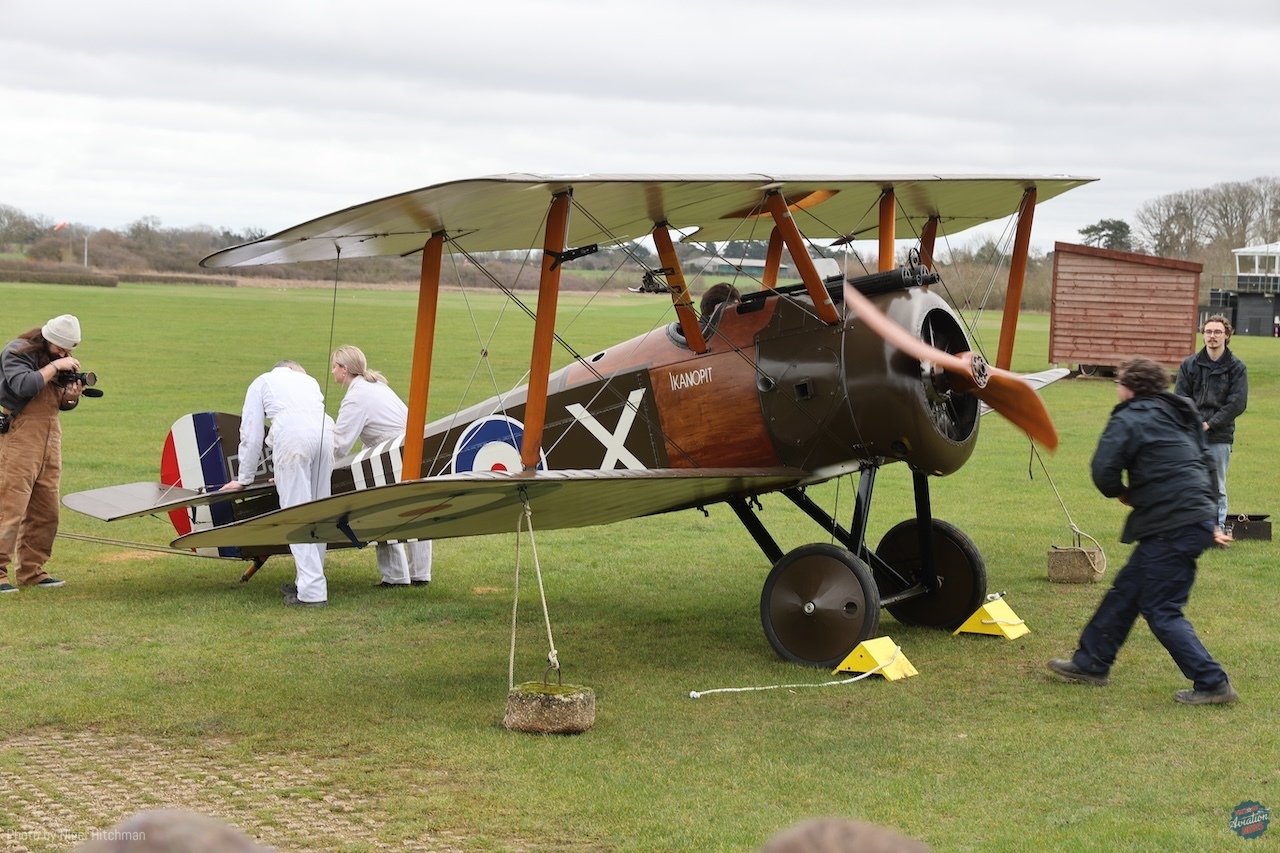
The Sopwith Camel replica G-BZSC was built by the Northern Aeroplane Workshops for Shuttleworth to original drawings and equipped with a 130hp Clerget rotary engine. It had its first flight in 2017 and was displayed regularly until 2022, when engine issues grounded it. With the engine overhauled, it has now been successfully ground run, as demonstrated today, and will be test flown when the weather improves and the runways have dried out.
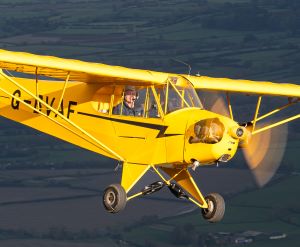
The first aircraft to see in the workshops is the Bristol M1C G-BMJW, another Northern Aeroplane Workshops replica built to original drawings and powered by a 110hp Le Rhône rotary engine. It first flew in 2000 and is now in for its annual inspection.
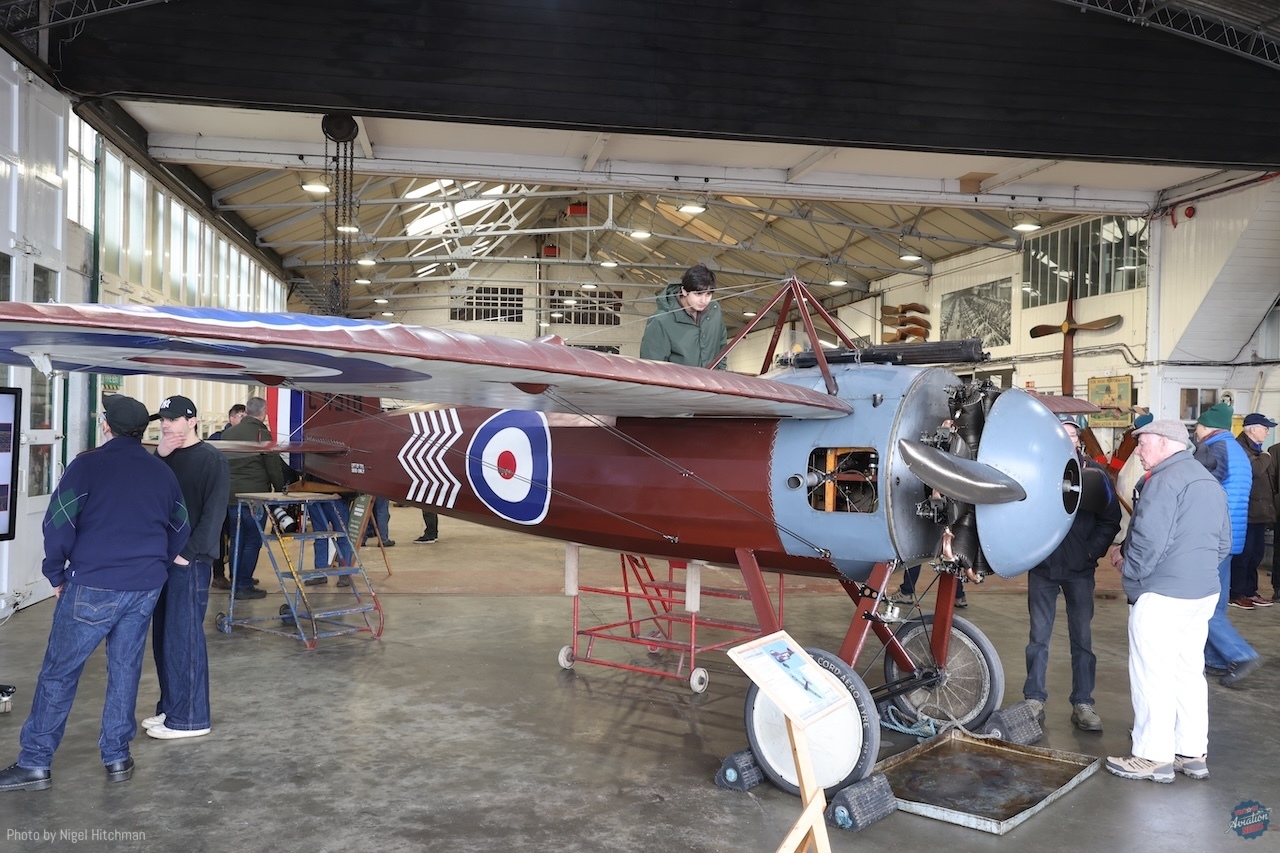
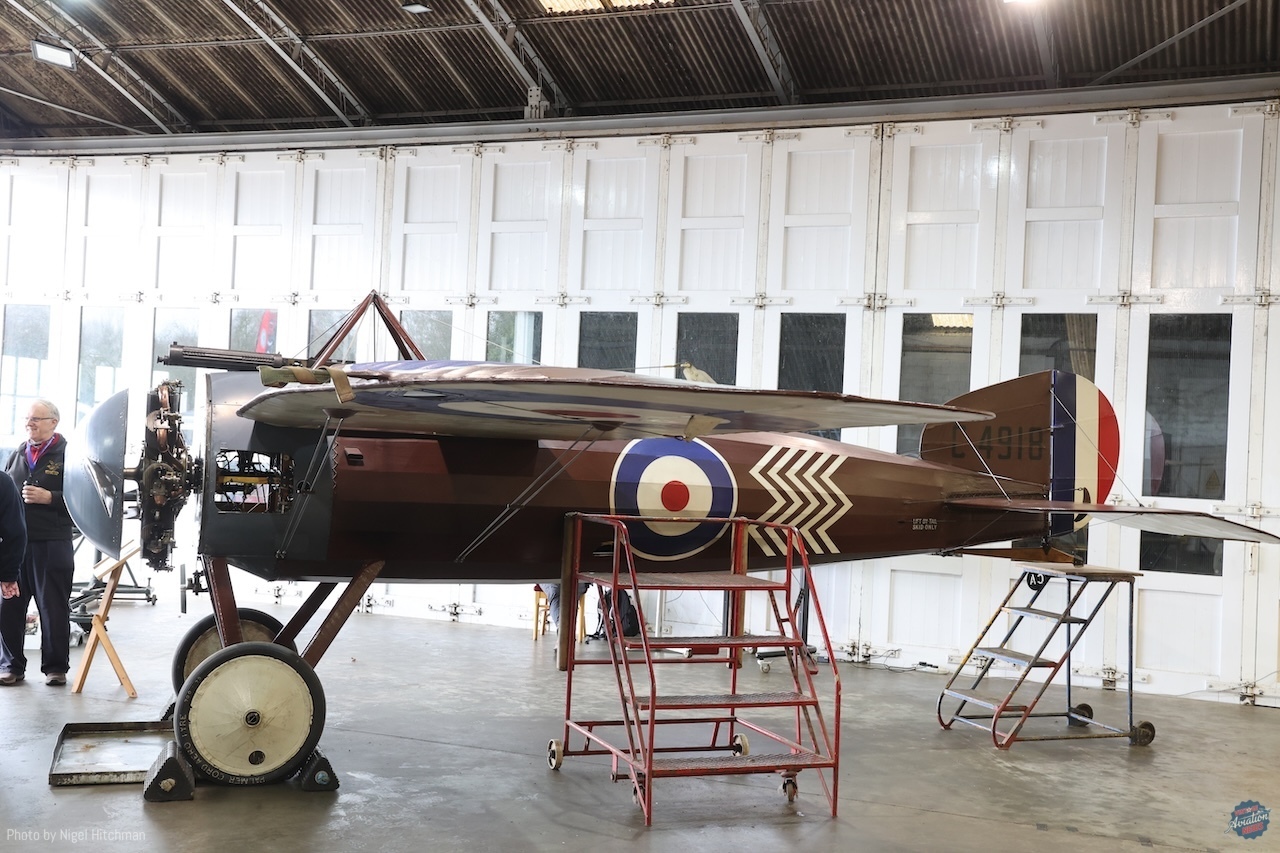
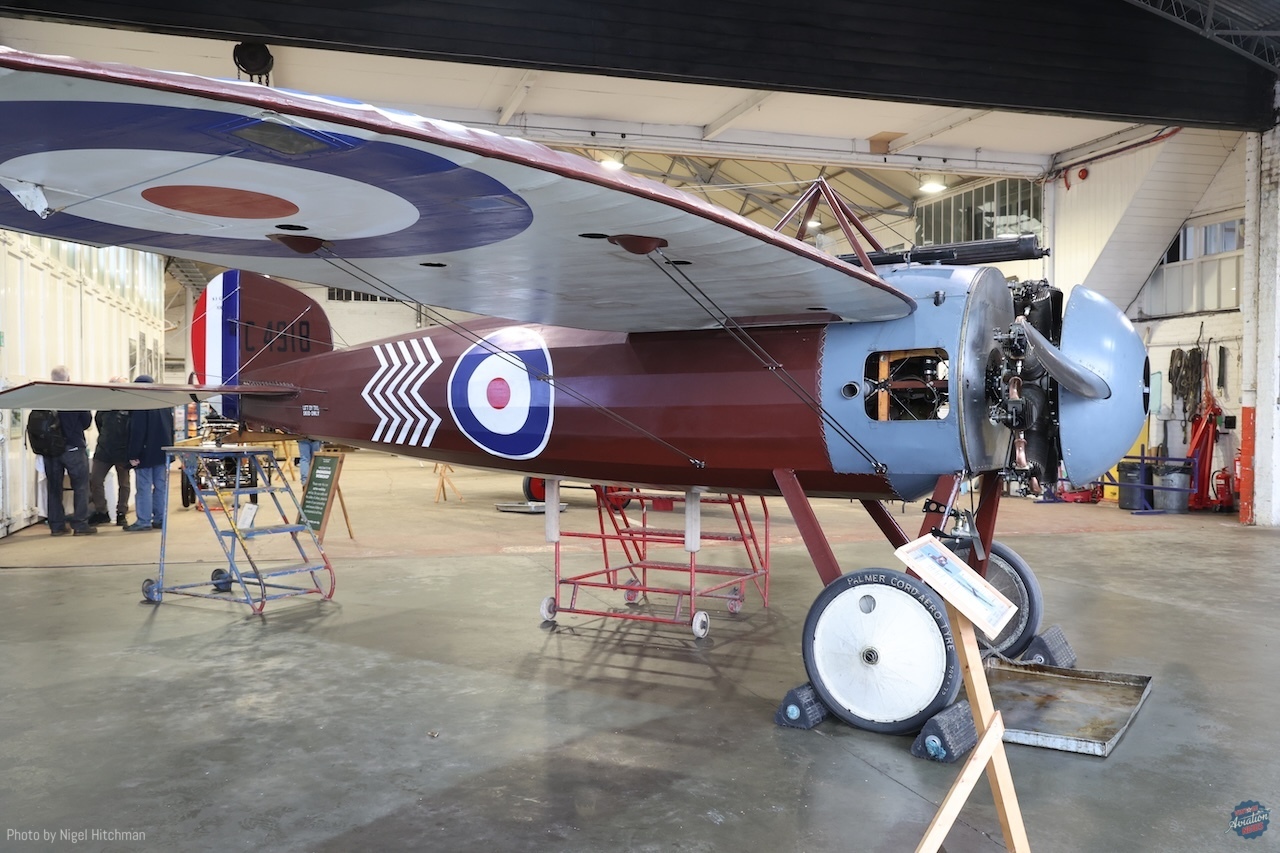
photos Bristol M1C
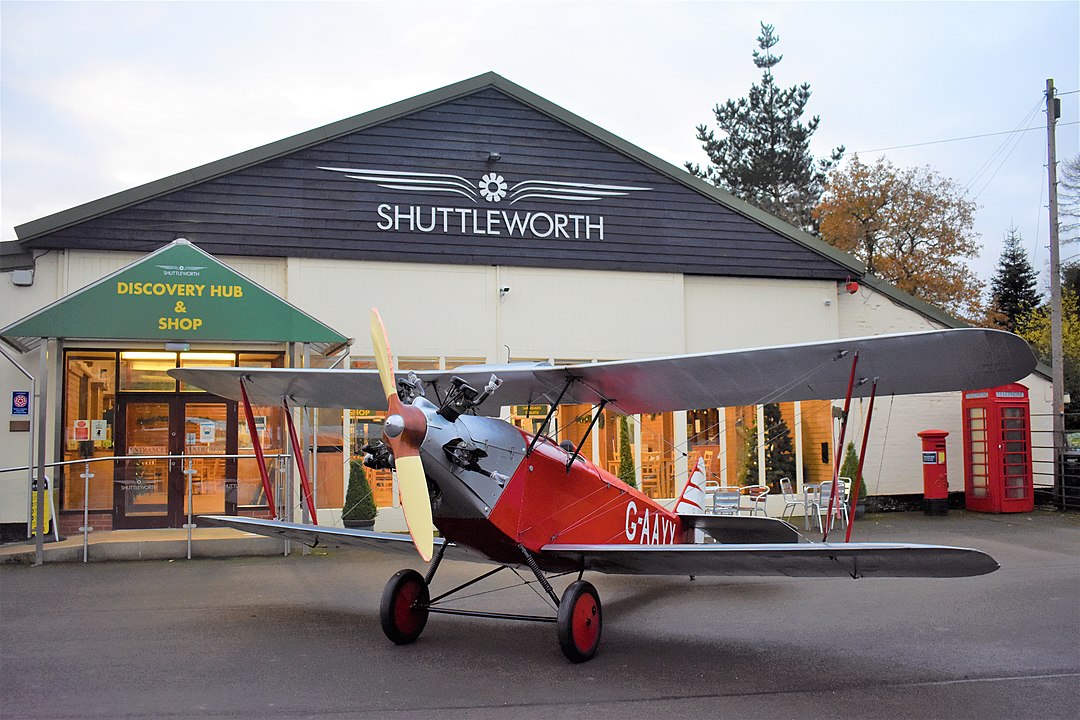
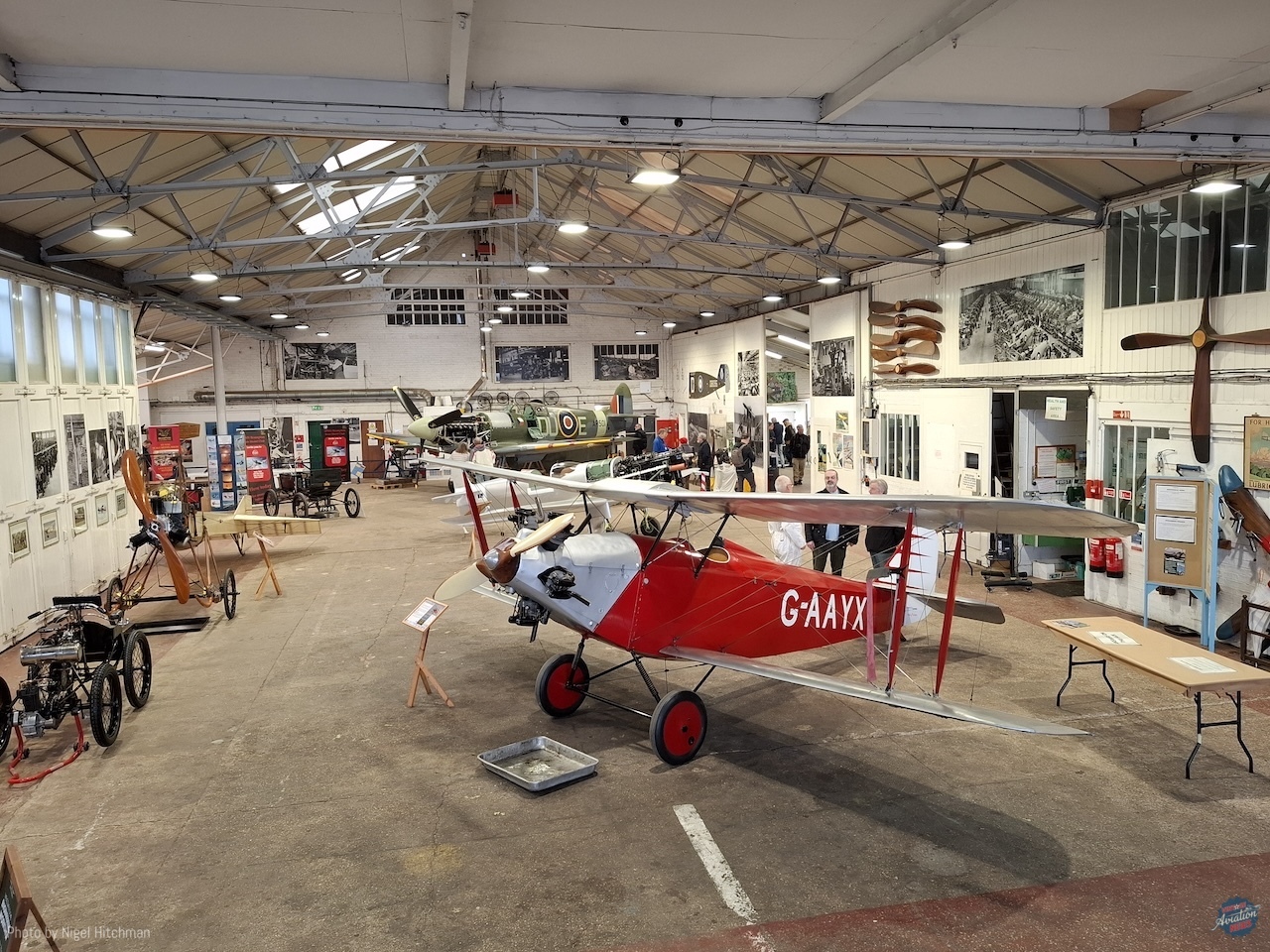
The Southern Martlet G-AAYX is also in for its annual inspection. This is a significant aircraft in that the Martlet was the first aircraft designed and produced by F.G. Miles, who formed Southern Aircraft in 1926. Martlets were based on a redesigned Avro Baby, and the prototype first flew in 1929 with an 85hp ABC Hornet flat-four. G-AAYX was the second production aircraft, built with a 105hp Armstrong Siddeley Genet Major, which it retains today.
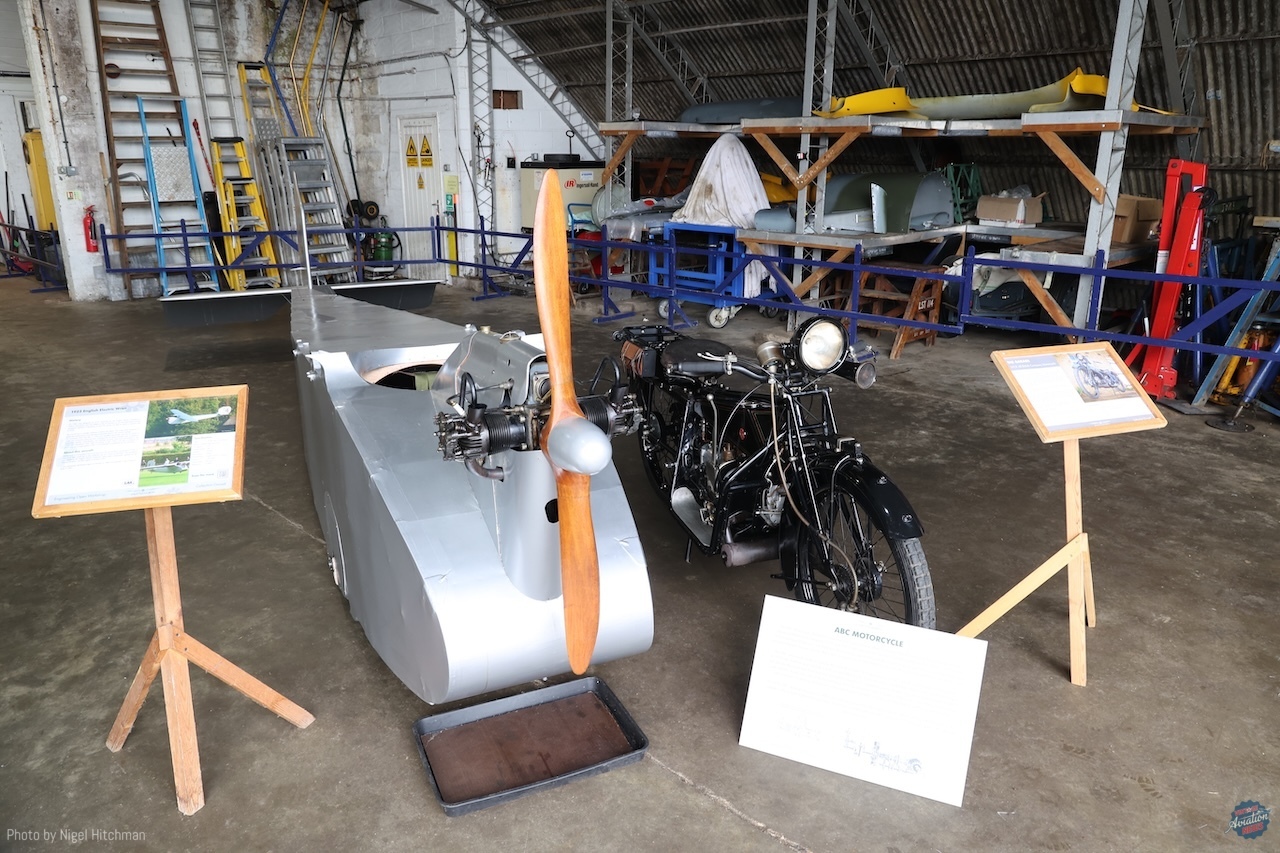
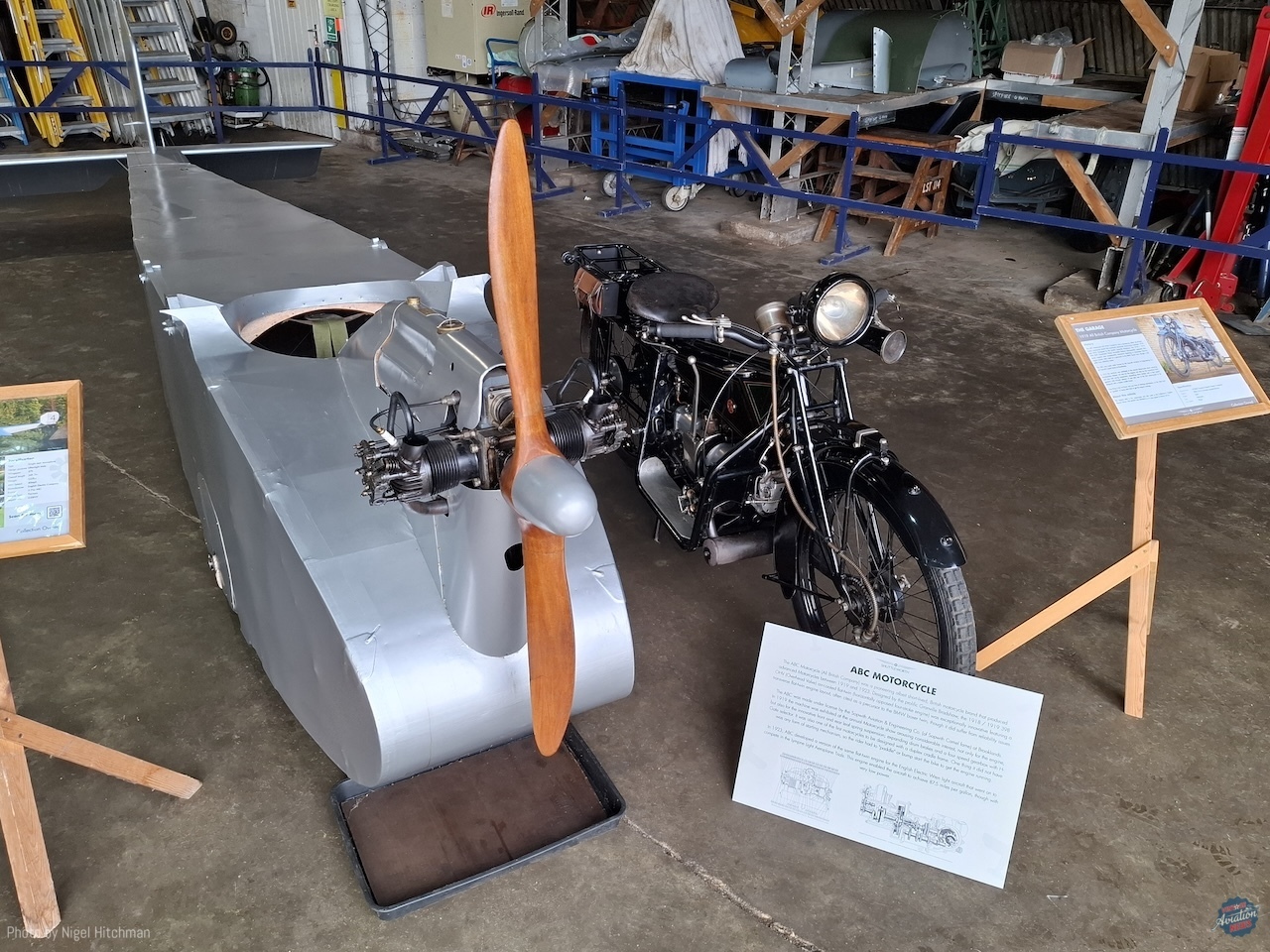
The fabulous English Electric Wren G-EBNV has been a real favourite in recent years since it was restored, with a lot of excess weight — mostly layers of paint — removed and its ABC 398 engine overhauled. This has enabled it to be flown in figures of eight around the airfield on calm evenings, in contrast to the bungee-launched hops it used to perform. It has had some repairs over the winter, and the fuselage was displayed together with an ABC (All British Company) motorcycle featuring the ABC 398 engine. Designed by Granville Bradshaw in 1918/19, the 398cc OHV (overhead valve), air-cooled, horizontally opposed flat-twin four-stroke engine was exceptionally innovative and was even taken up by BMW for its motorcycle engine design. There is, of course, further aviation connection, as the ABC 398 and the motorcycle were built under licence by the Sopwith Aviation Company at Brooklands, although development problems cost them a great deal of money. In 1923, the engine was fitted to the English Electric Wren for the Lympne trials.
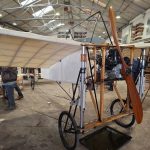
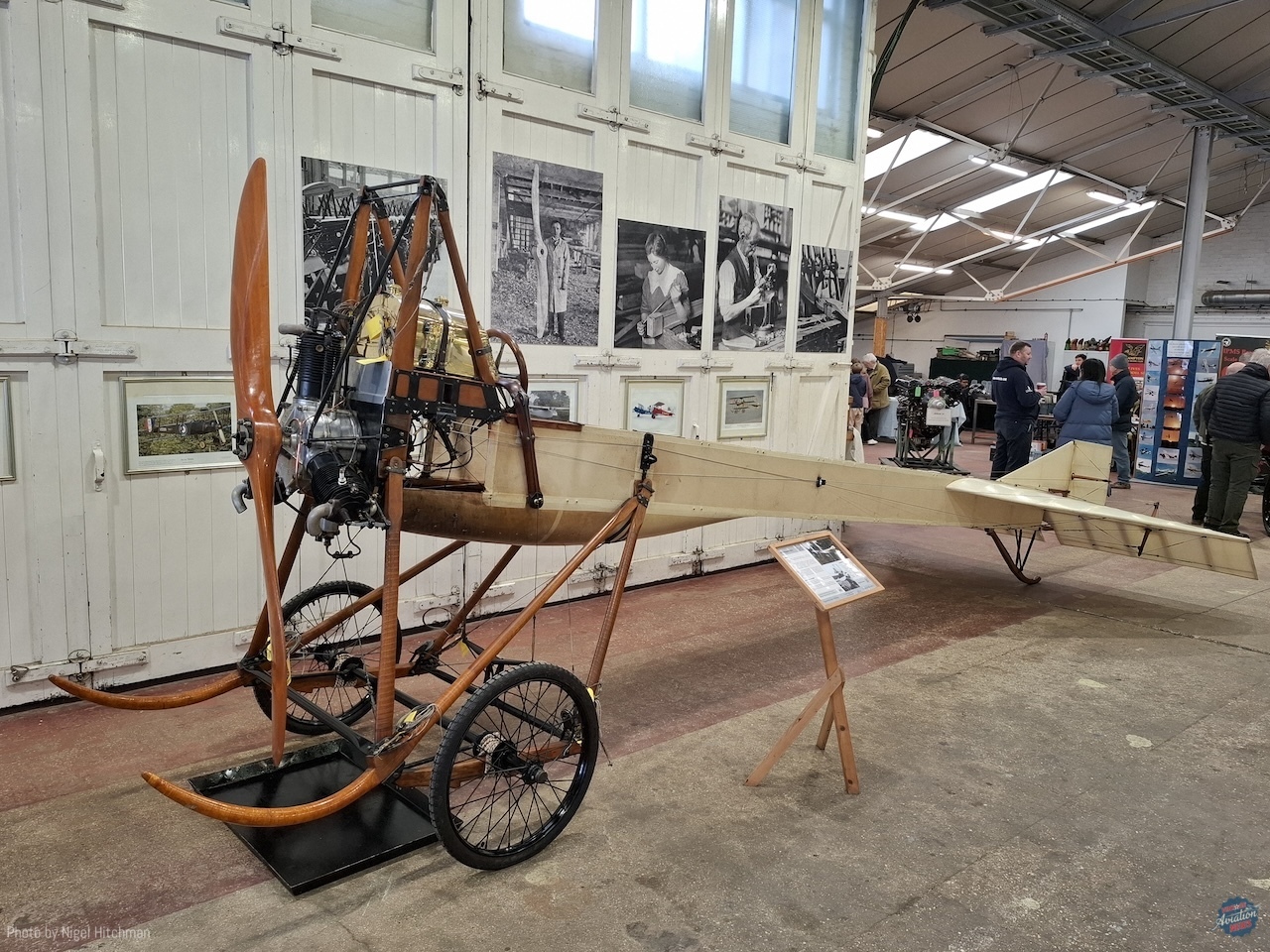
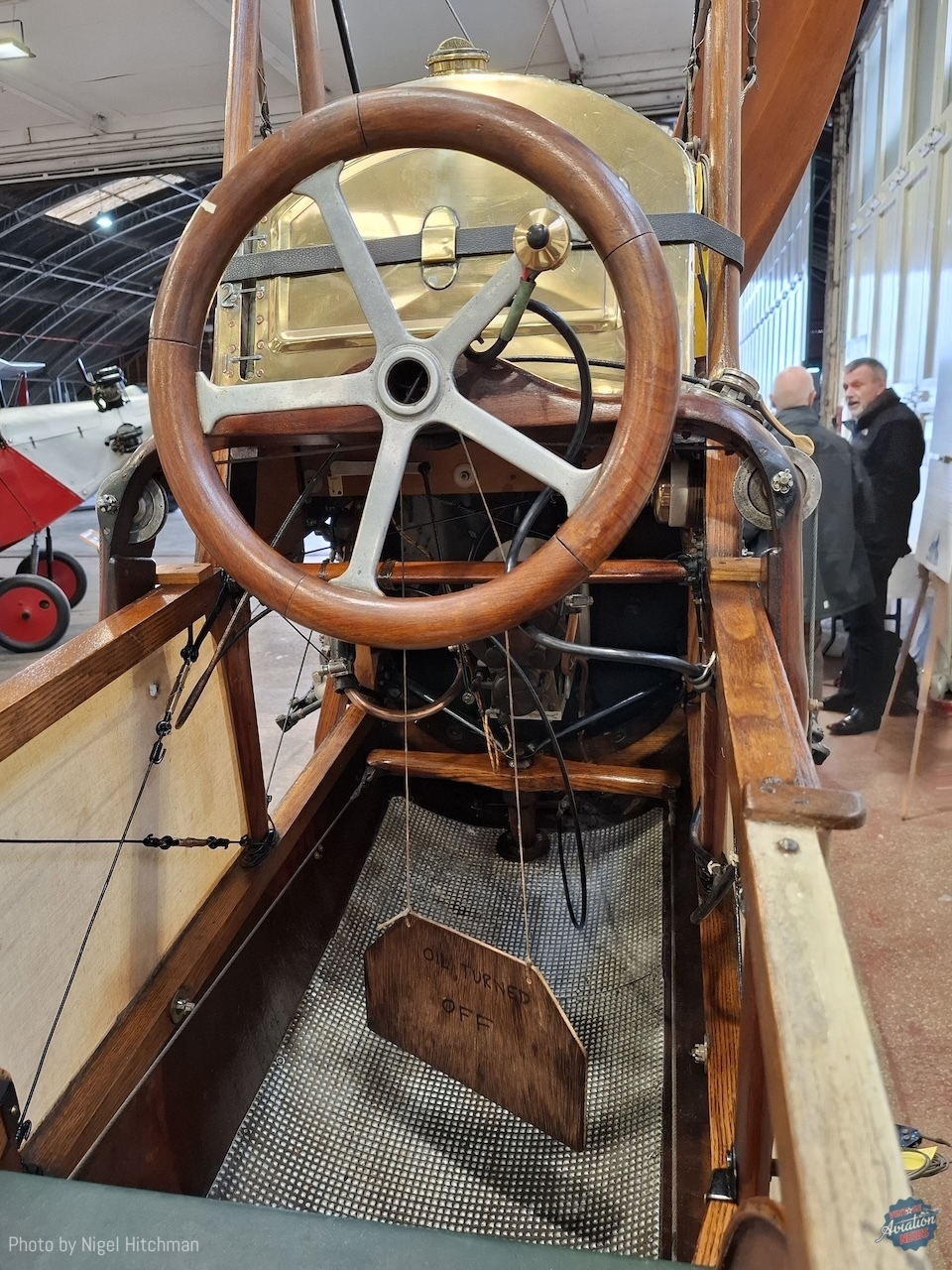
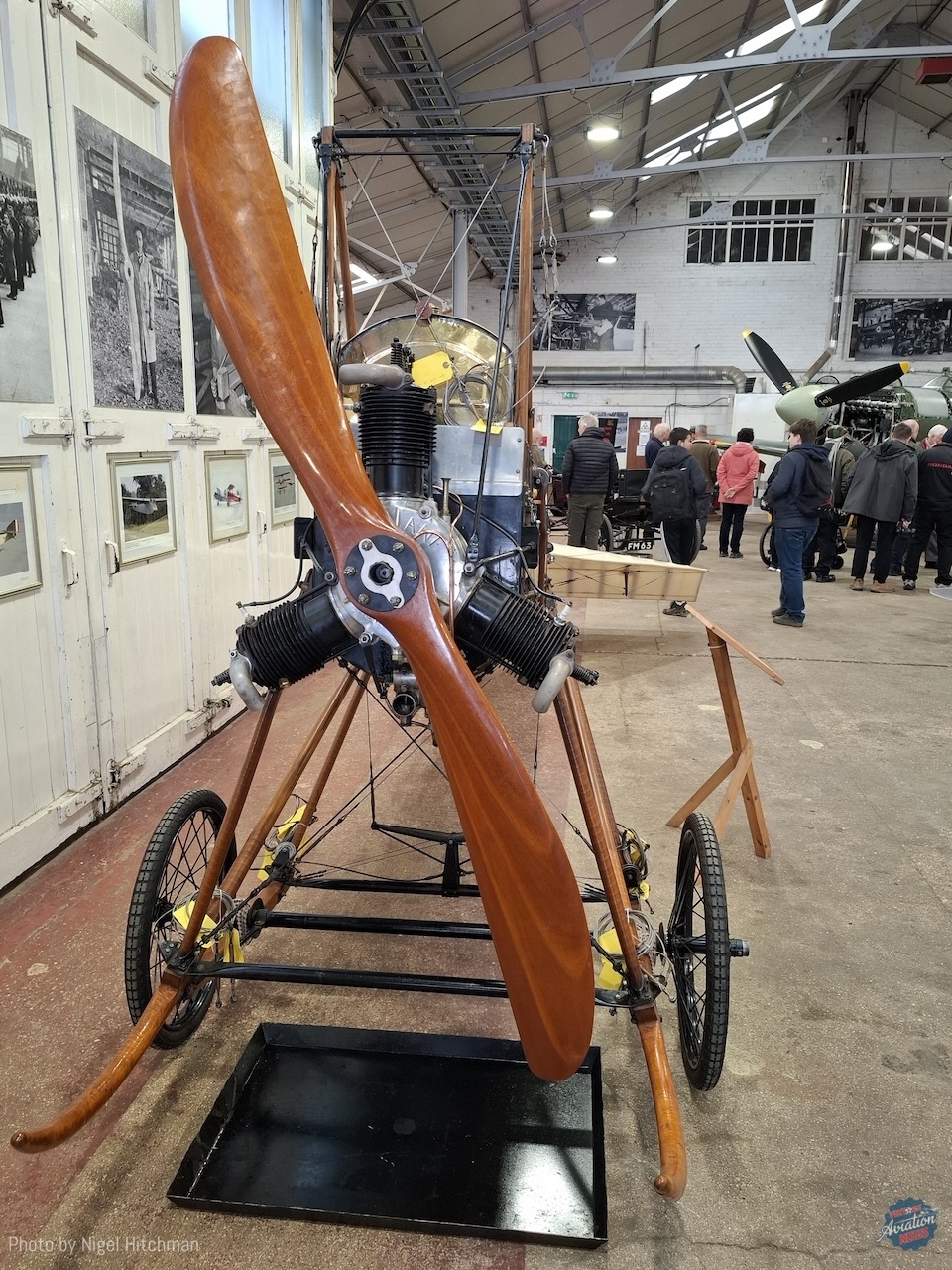
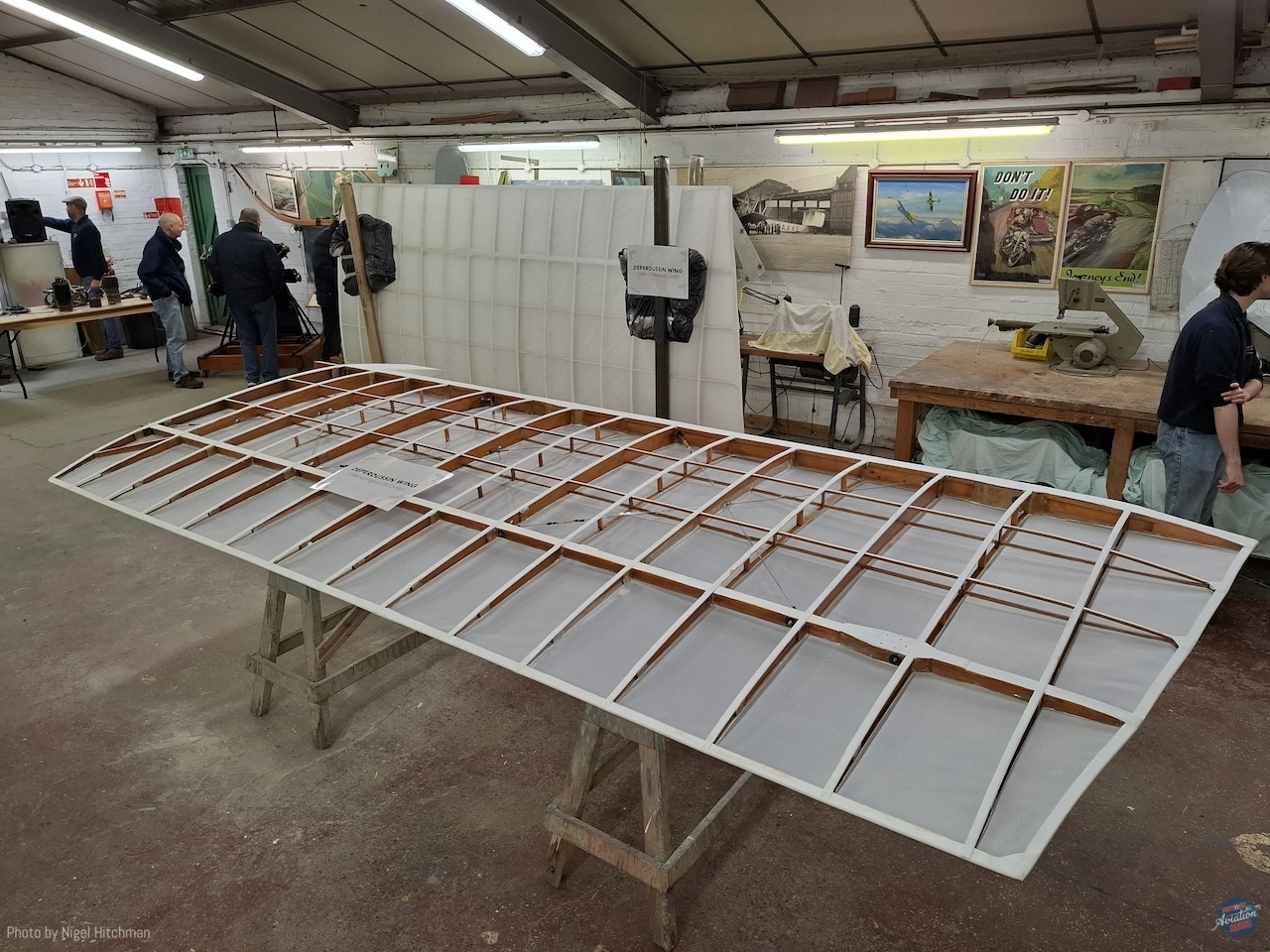
The 1910 Deperdussin Monoplane G-AANH, powered by an Anzani Y-type engine, is one of those aircraft that just hops down the runway at displays when the wind is calm, although it performs better than the 1909 Blériot. It is currently having its wings re-covered, as the 25-year-old unpainted fabric is showing signs of UV deterioration. The structure underneath appears to be in excellent condition. It is painted with white “dope-proof” paint to stop the fabric sticking to the ribs, which can cause damage when it needs to be removed; it is, however, rib-stitched in place.
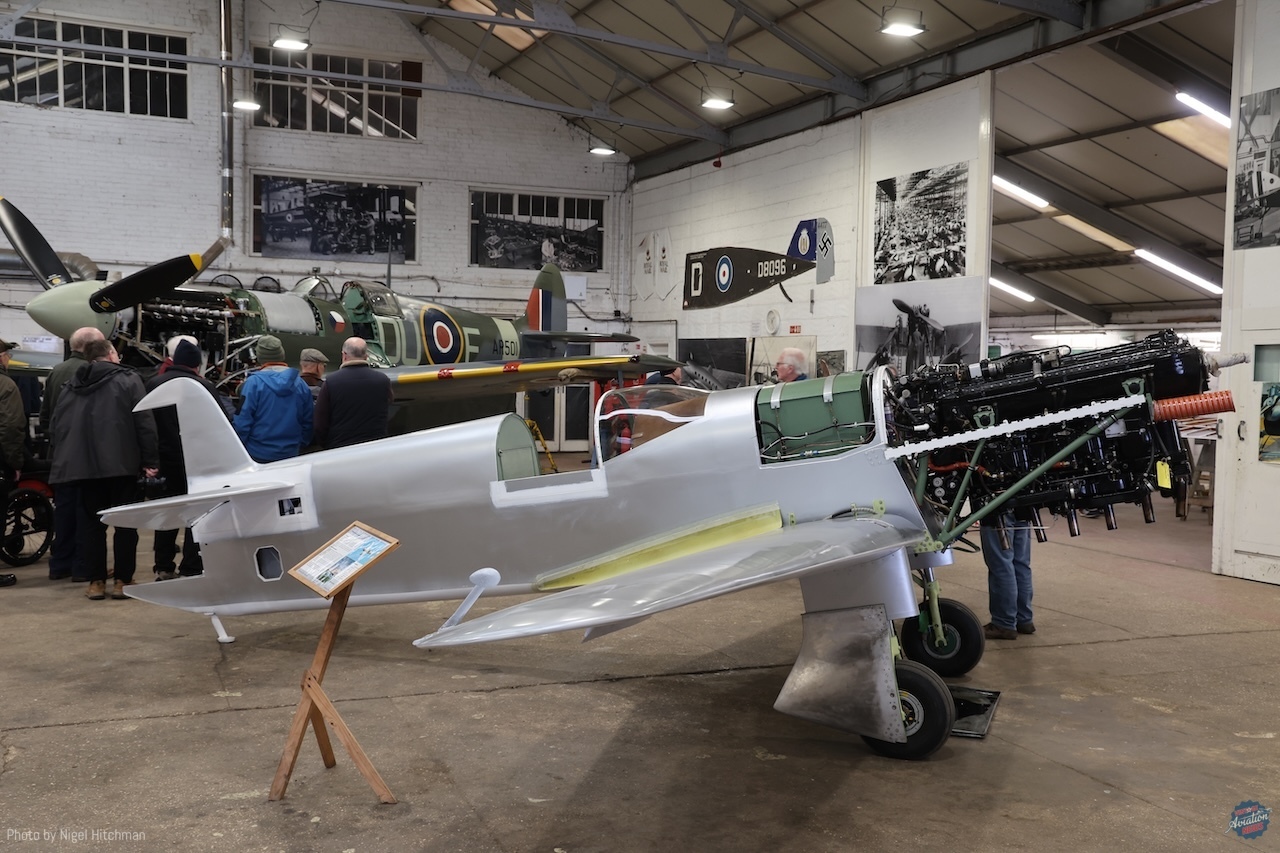
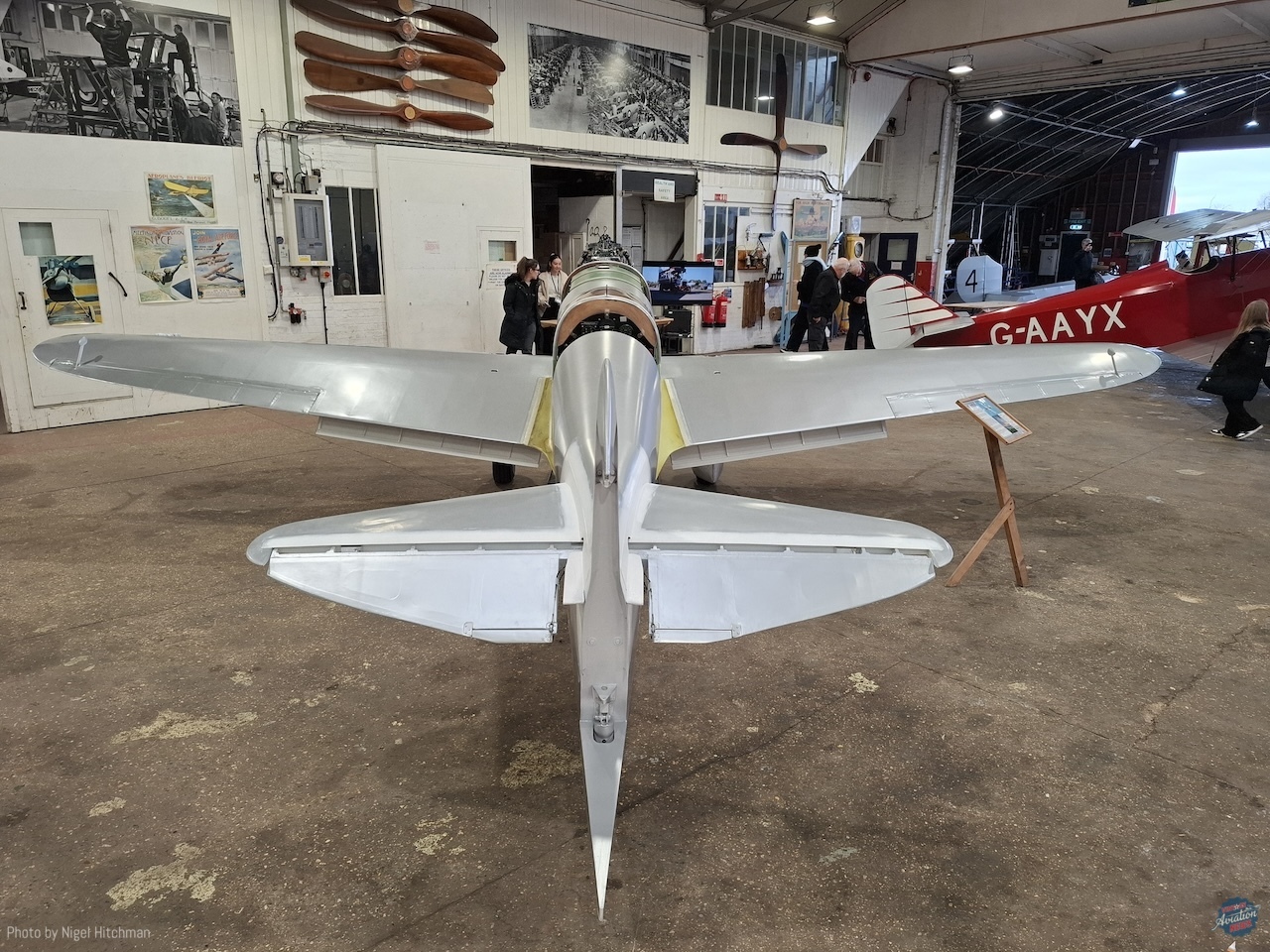
The restoration of the famous record-breaking Percival Mew Gull G-AEXF is almost complete, with a few fairings to be fitted and the top surfaces still to be painted white; the underside is already finished. It was taken out of service during 2024 after a heavy landing that required an in-depth inspection and complete re-covering.
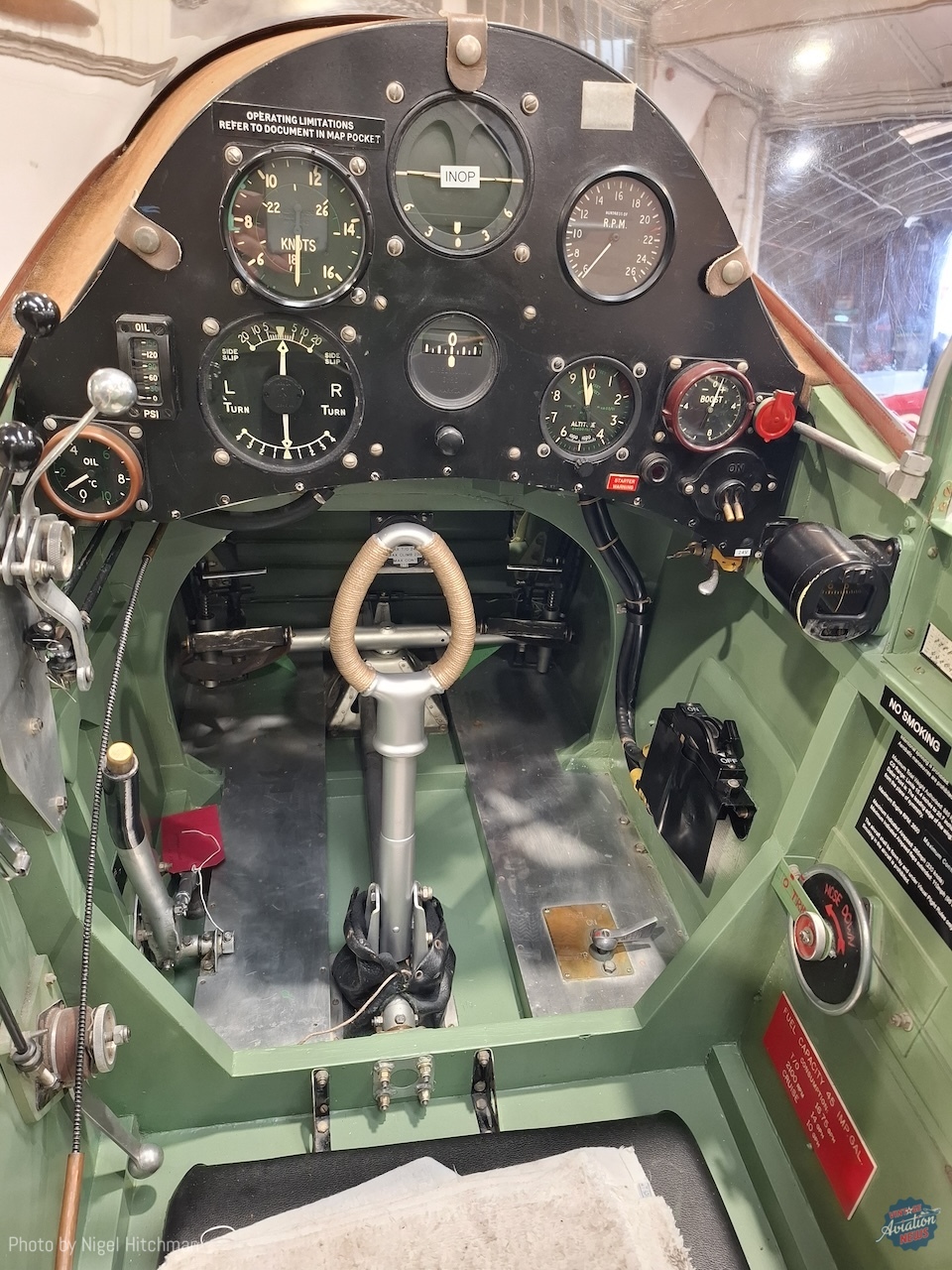
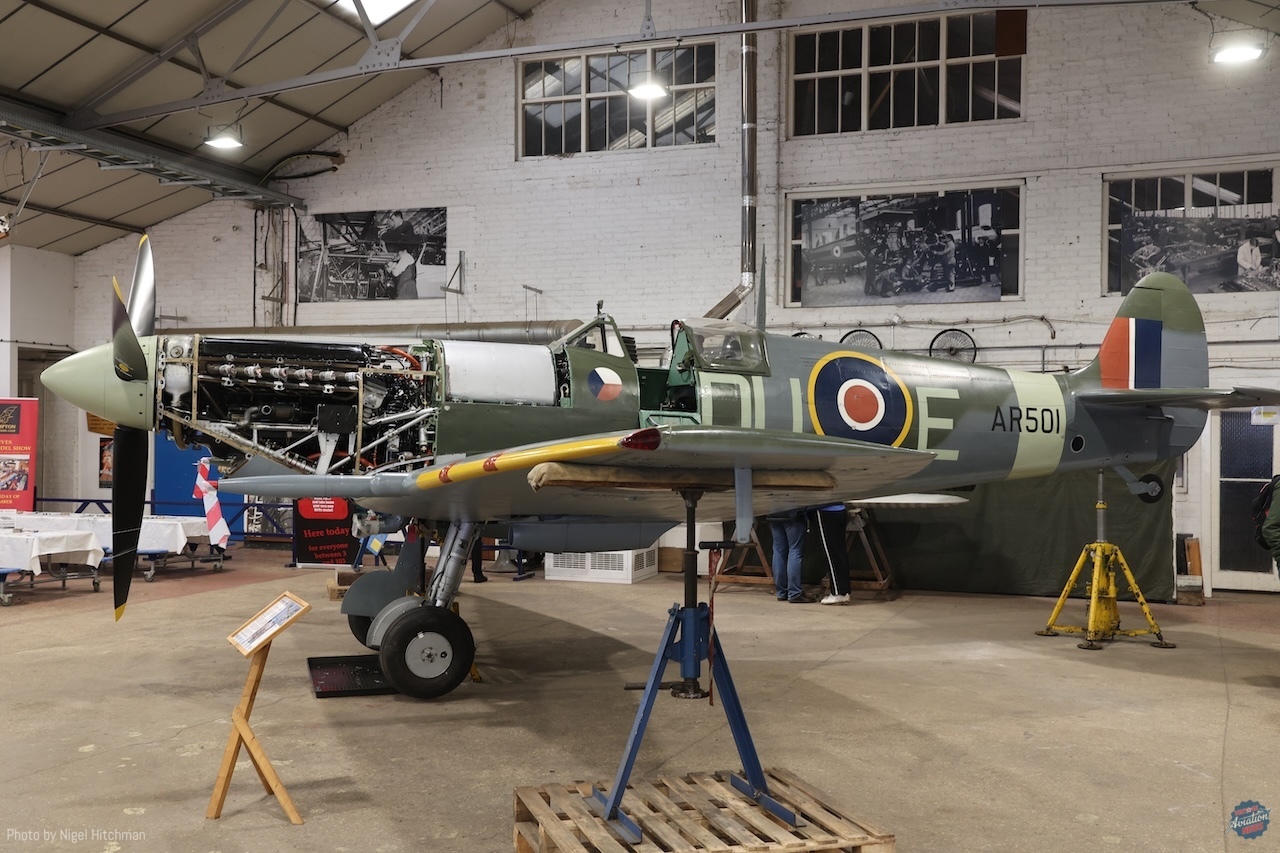
The Spitfire Vc G-AWII/AR501 has been in the workshop for an extended inspection, including the removal of both landing gear legs for scheduled checks. It is now almost fully reassembled and ready to leave the workshop.
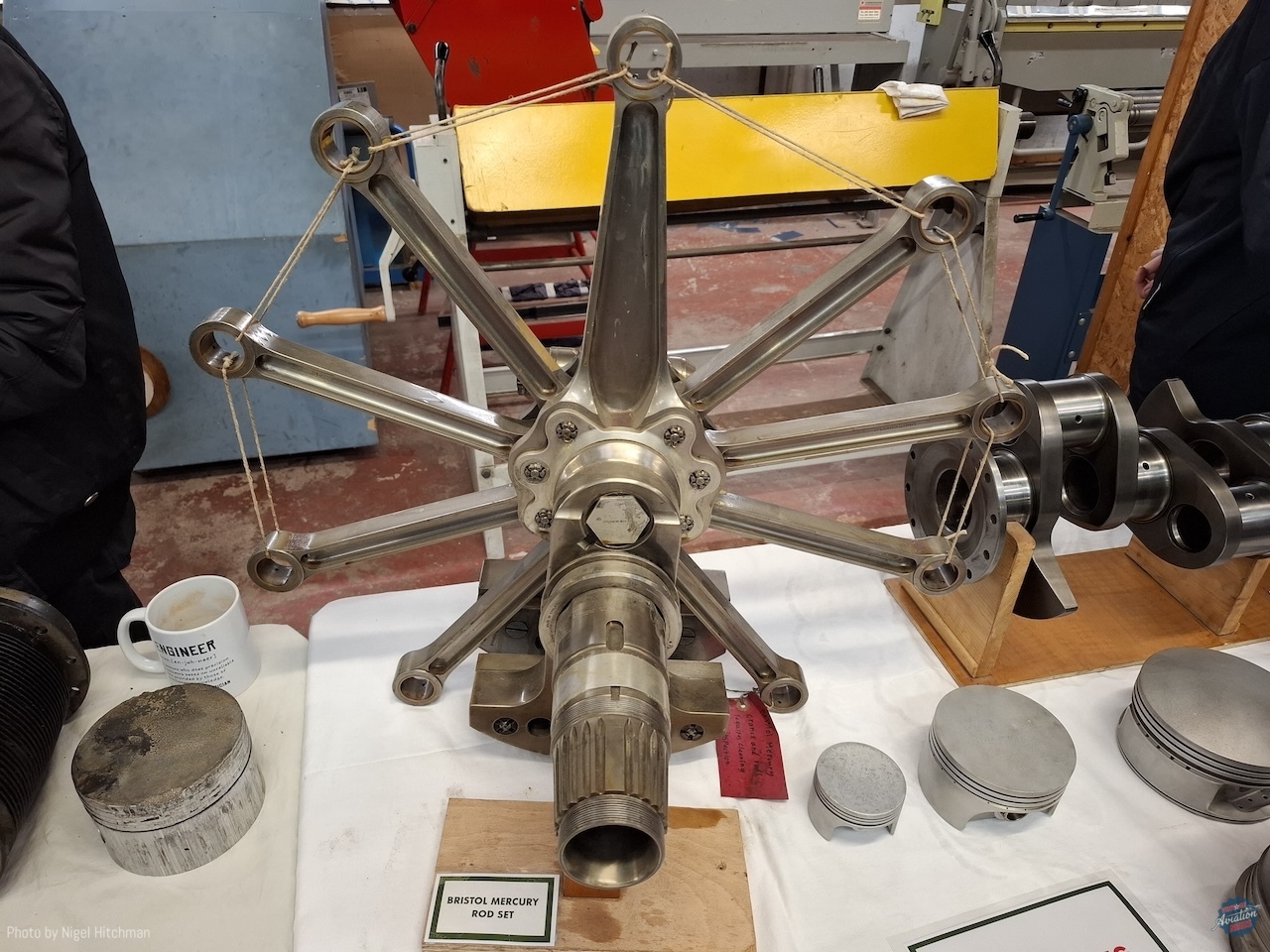
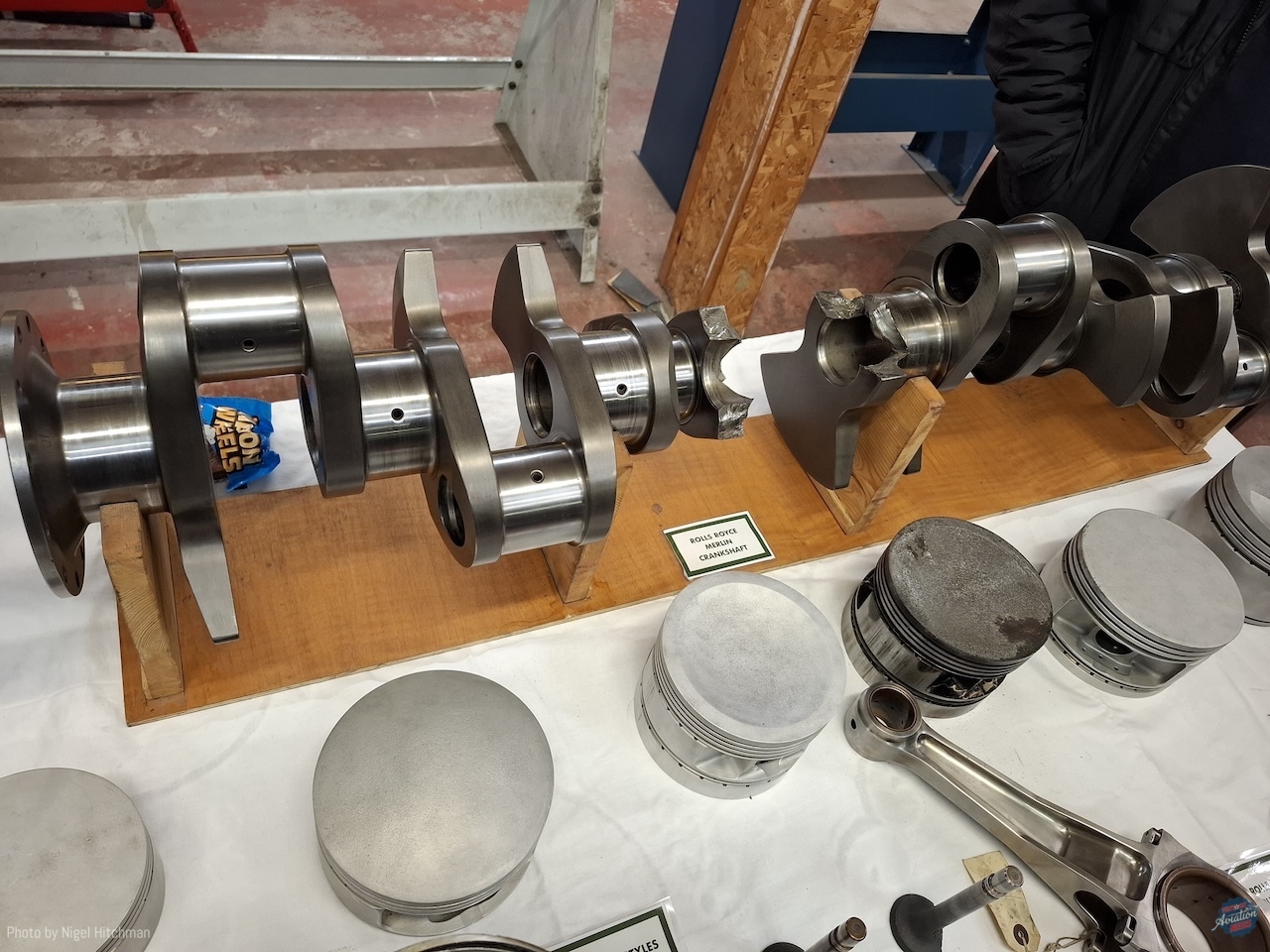
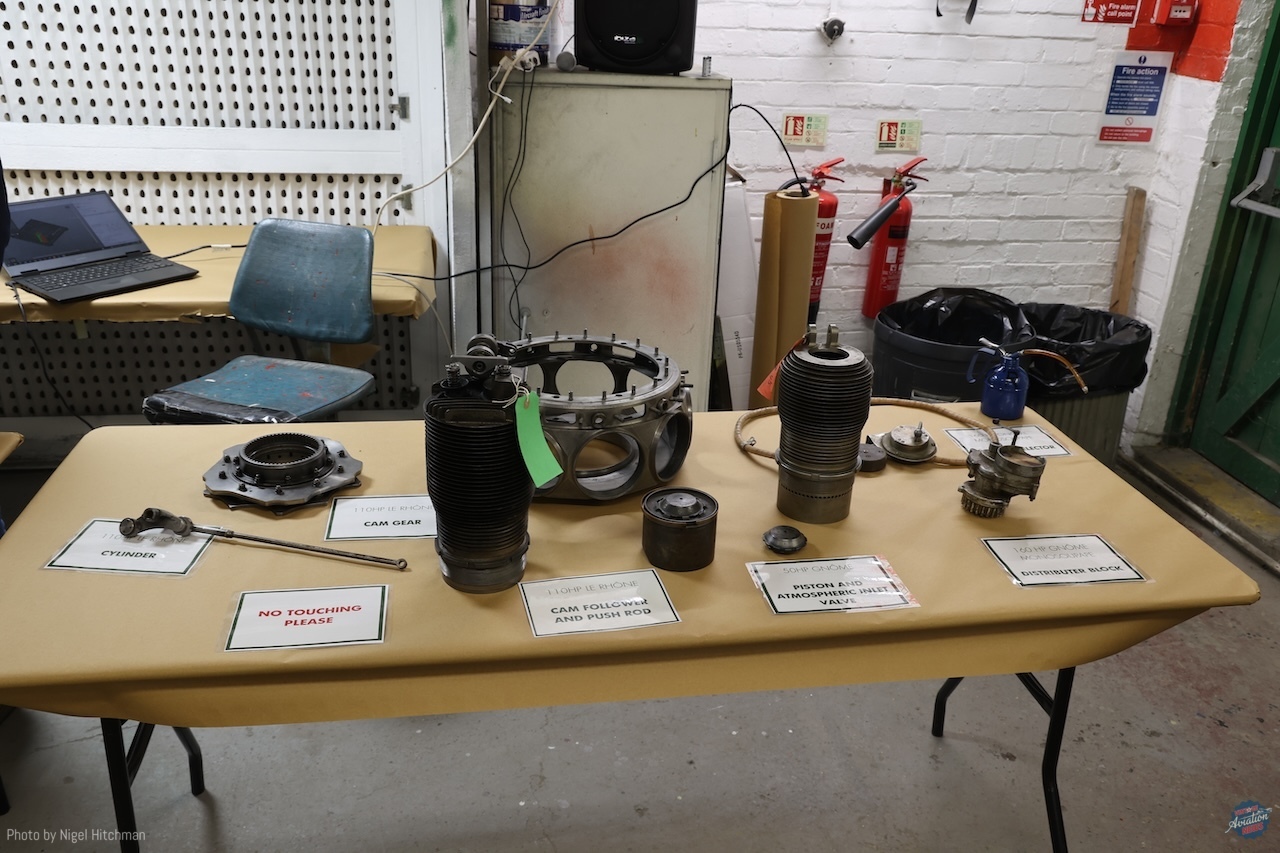
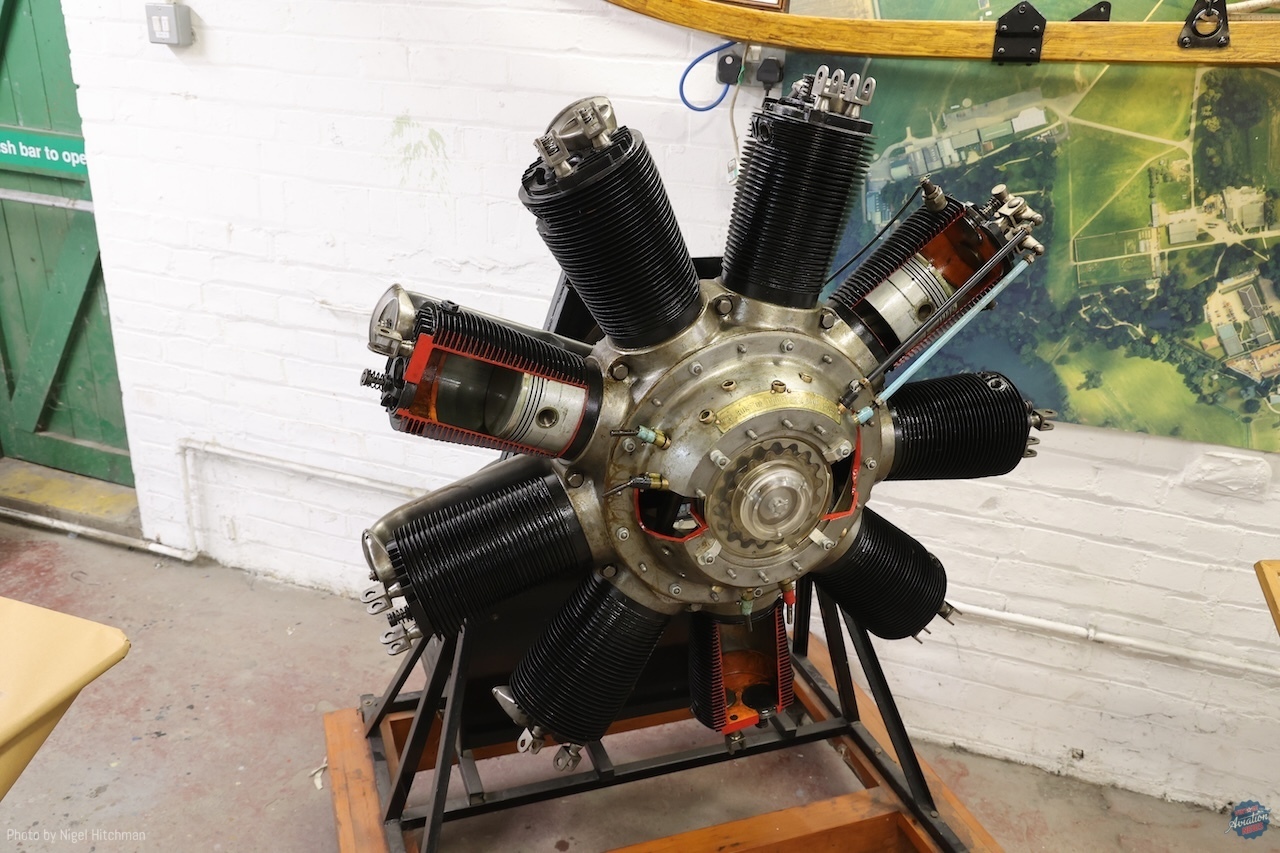
There were various other displays around the workshop, including a working cutaway rotary engine and various rotary engine parts so visitors could see how it works. Another table featured items in the midst of fabric covering. Elsewhere were metalworking demonstrations, children’s model building, and another interesting table displaying parts of Rolls-Royce Merlin engines and a Bristol Mercury, as fitted to the Gladiator and Lysander.
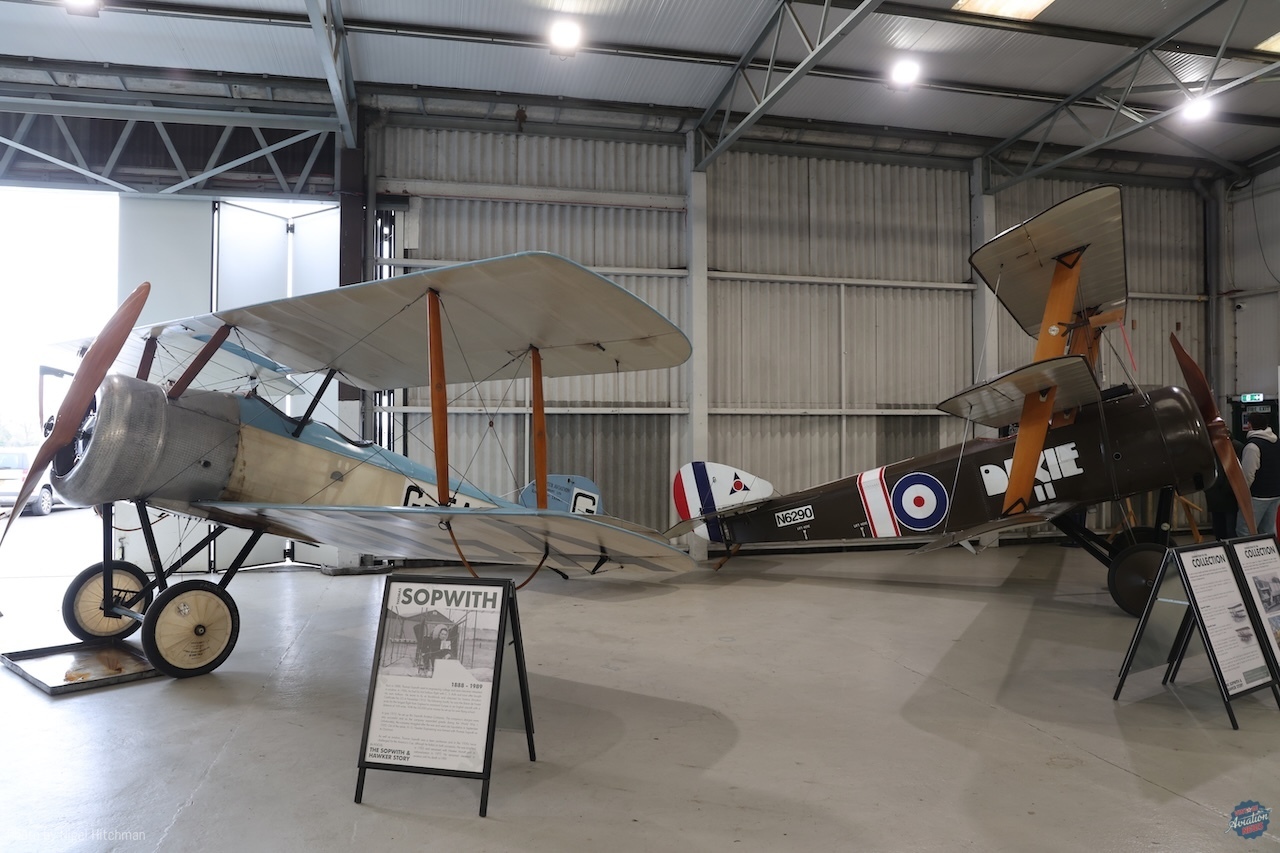
Hangar 4 contained the Sopwith and Hawker exhibition, which will remain until 12 April. Sopwith was formed in 1912 and grew to produce 16,000 aircraft during the First World War, with a workforce reaching 6,000. This was soon reduced after the Armistice, and Sopwith then undertook a costly venture producing ABC motorcycles under licence, as mentioned earlier. With no further military aircraft orders, the company went into voluntary liquidation in 1920, paying off its debts and selling its assets. Sopwith, along with his chief test pilot Harry Hawker and others, immediately formed H.G. Hawker Aircraft, buying some of Sopwith Aircraft’s assets and starting again. Sopwith remained Chairman of Hawker until his retirement; sadly, Harry Hawker died in an aircraft crash in 1921.
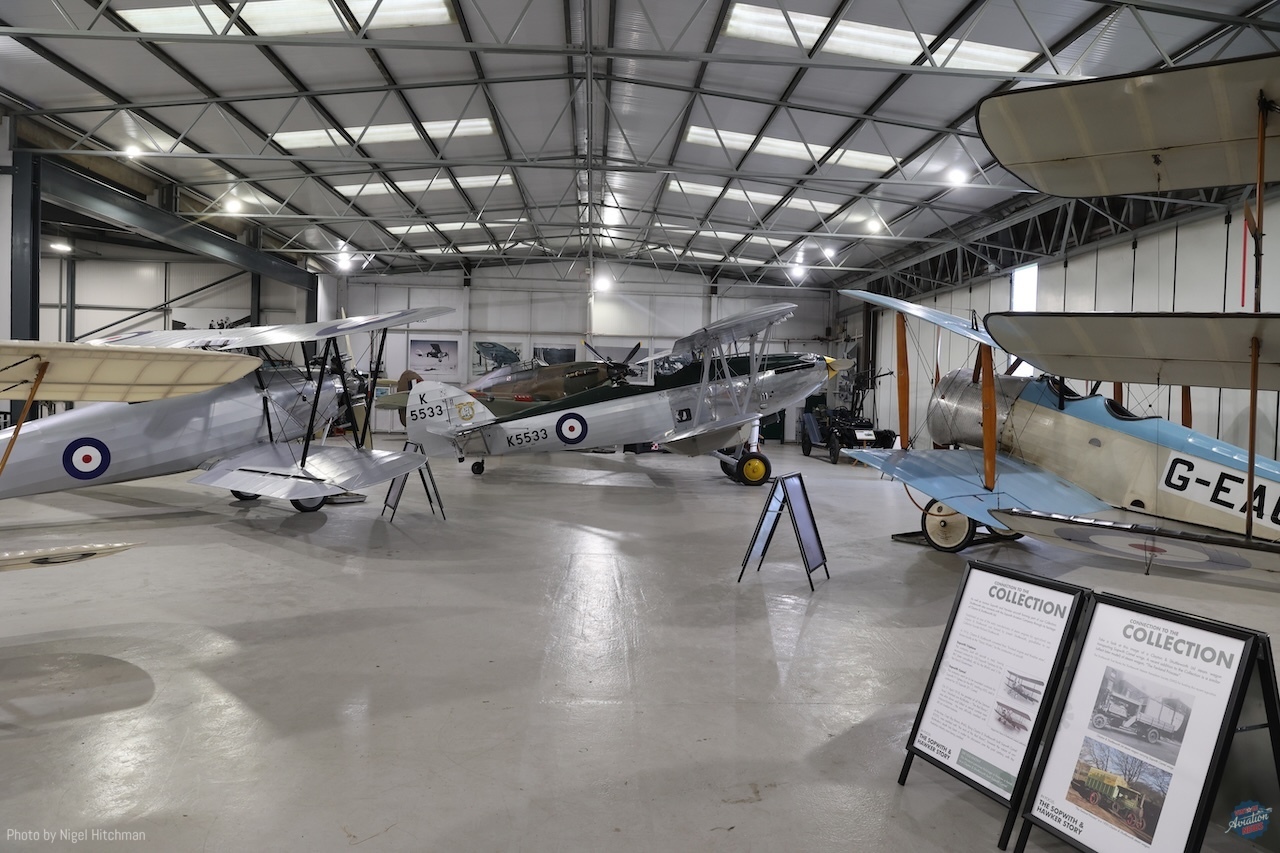
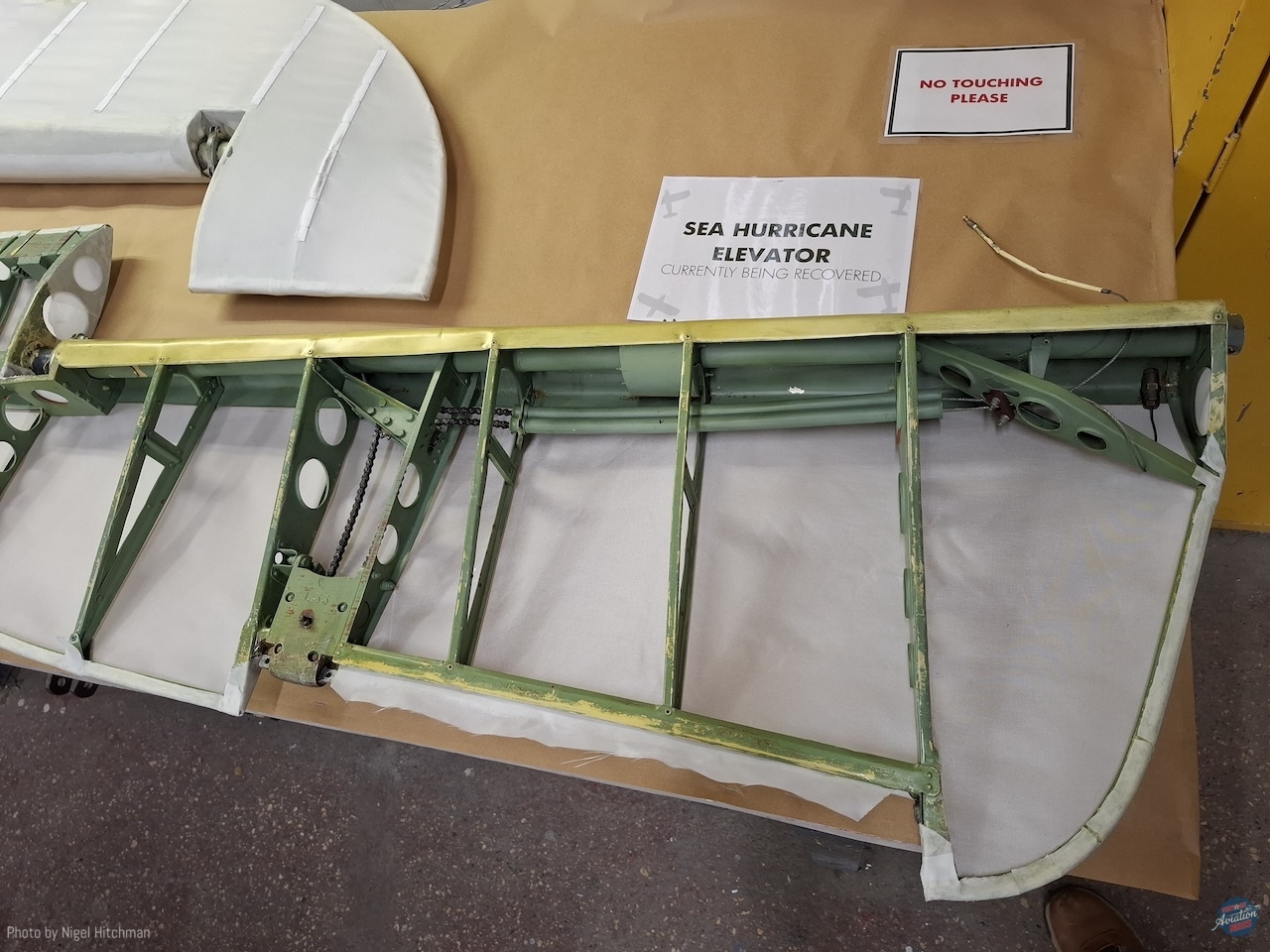
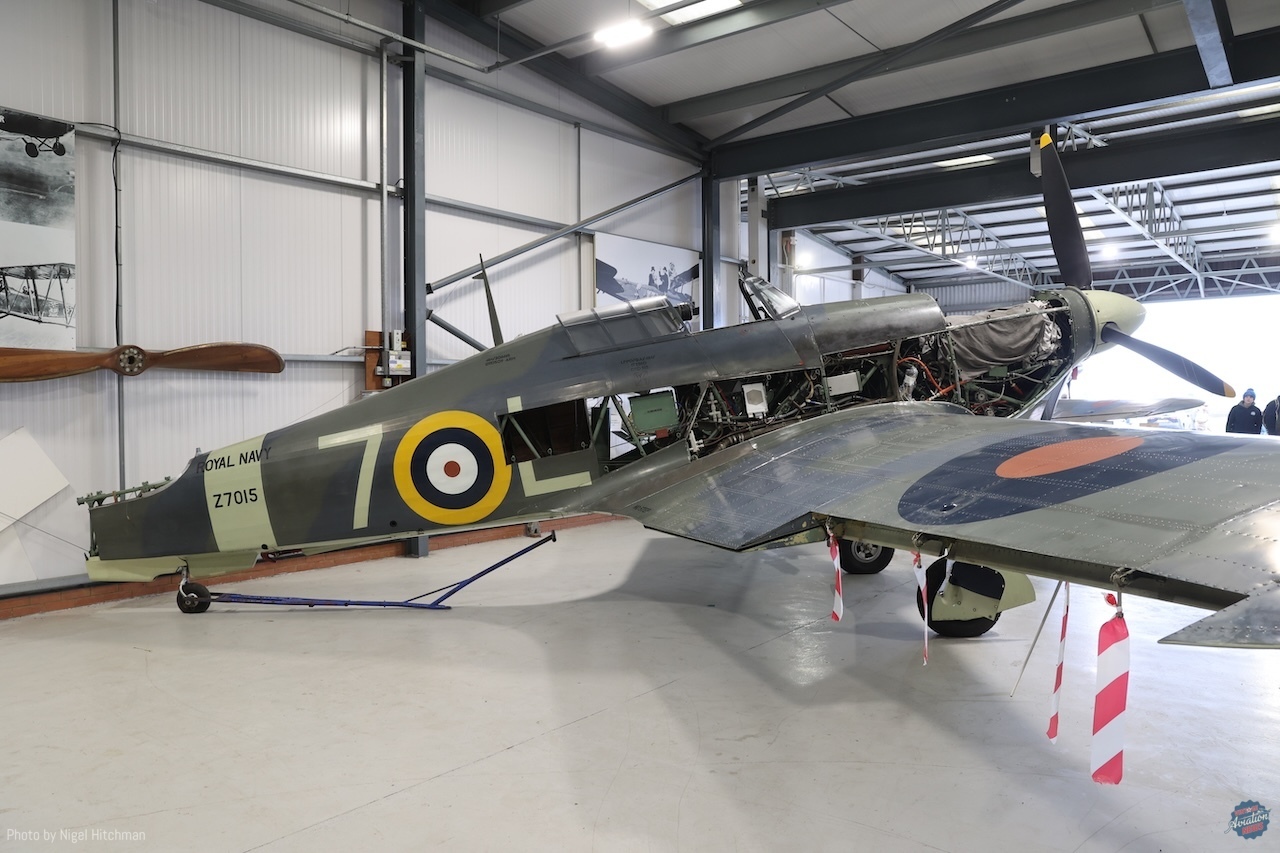
Hawker continued where Sopwith had left off, producing mostly military aircraft, including the famous line of biplane fighters such as the Hawker Hind, Fury and Nimrod. These were followed by the monoplane Hurricane and later the Typhoon, Tempest and Sea Fury, before the company moved on to jets. The exhibition includes the Sopwith Camel, which today was out on the airfield for engine runs, as well as the Sopwith Dove and Triplane. From the Hawker stable there is the 1924 Hawker Cygnet, the first design by Sydney Camm. Also displayed are the 1928 Hawker Tomtit, the Hind and two Hurricanes: the Shuttleworth Collection’s Sea Hurricane, currently grounded with an internal coolant leak now being fixed, with the opportunity taken to remove and re-cover all the flying surfaces — hence the complete tailplane and ailerons being removed.
The other Hurricane is G-HURI/P2954, owned by the Historic Aircraft Collection and recently moved from Duxford. This aircraft operates as the Polish Heritage Flight, and there is hope to fly it to Poland this summer. The Historic Aircraft Collection also owns the Hawker Nimrod II G-BURZ/K3661, currently on overhaul at Audley End and expected to fly again for the first time since 2019 this summer before moving to Old Warden. Their Hawker Fury G-CBZP/K5674 is currently at Duxford awaiting engine overhaul and may also move to Old Warden, although it is also for sale.
Of course, in addition to all this, the rest of the hangars were open, with plenty of vehicle displays too. The fabulous Shuttleworth Collection is open every day (except for a week around Christmas), and there are several fantastic airshows each year where many of the Collection’s aircraft can be seen flying, alongside guest aircraft. The first airshow of 2026 is on May 10. For more information about the Shuttleworth Collection, visit https://www.shuttleworth.org/