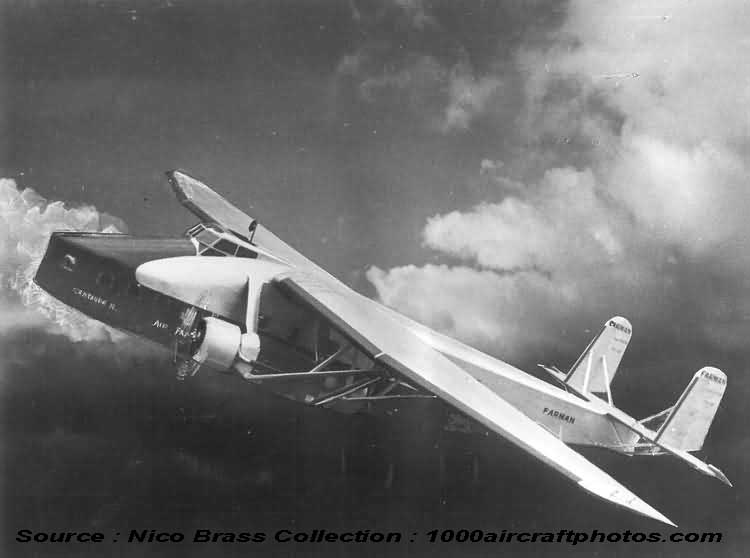
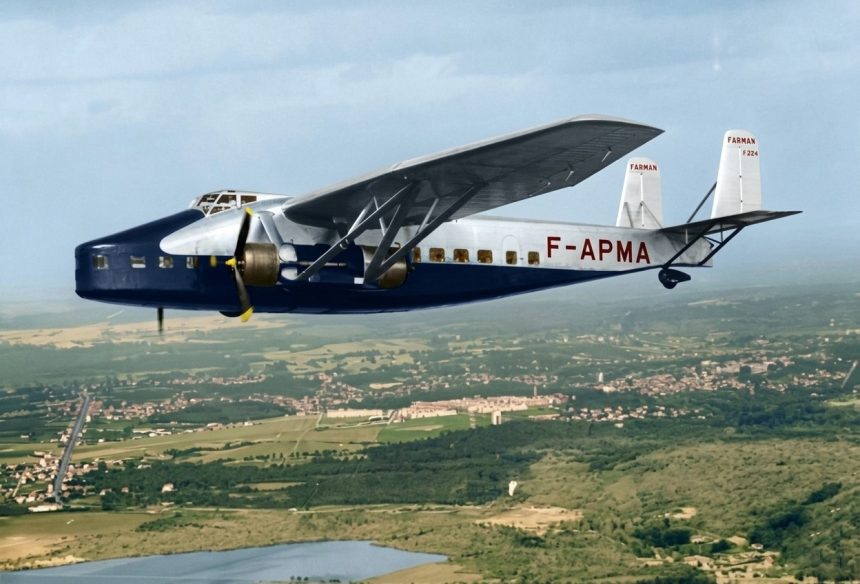


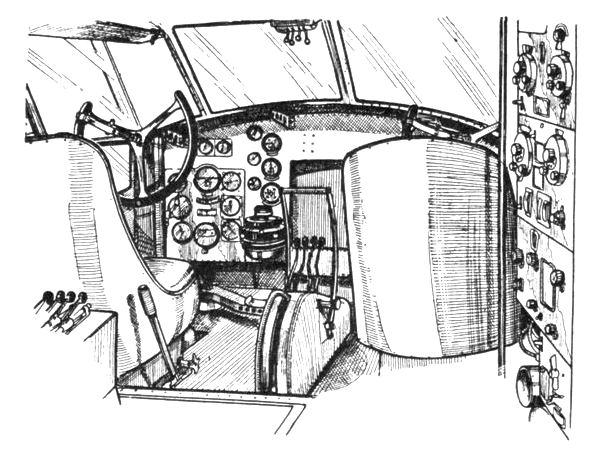
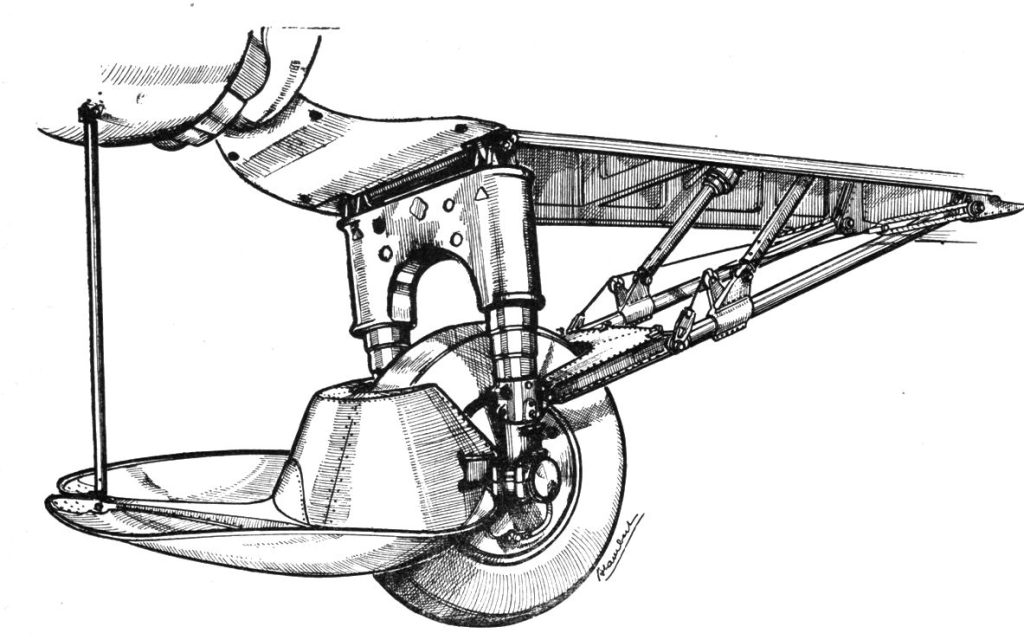
During the mid-1930s, Air France was looking for a four-engine passenger transport aircraft capable of providing Paris-London and Paris-Marseille connections. French aircraft company Farman Aviation Works, which was working on its F.220 bomber series, responded with an F.220 variant, calling it F.224. In 1936, Air France placed an order to build six Farman F.224s. The company built two prototypes by the end of 1936. The aircraft used the wings of the F.222 variant, which had dihedral at the wingtips and were supported by Z-struts, along with semi-retractable landing gear. The aircraft had a long fuselage of nearly 77 feet, twin vertical fins, and was powered by four supercharged Gnome-Rhône 14Kdr engines, each producing 800 horsepower. The aircraft’s wingspan was 118 feet with a wing area of 2,002 square feet. The aircraft was 76.7 feet long and 17 feet high, with a maximum takeoff weight of 35,870 lb. It was built to carry 40 passengers and had a maximum speed of 193 mph. The aircraft could climb 13,120 feet in 8 minutes and had a service ceiling of 16,080 feet with a range of 746 miles. The cabin had several passenger rooms, which were separated by toilets, a bar, and luggage compartments. The crew included a pilot, a mechanic, and a radio navigator.
Birth of F.224
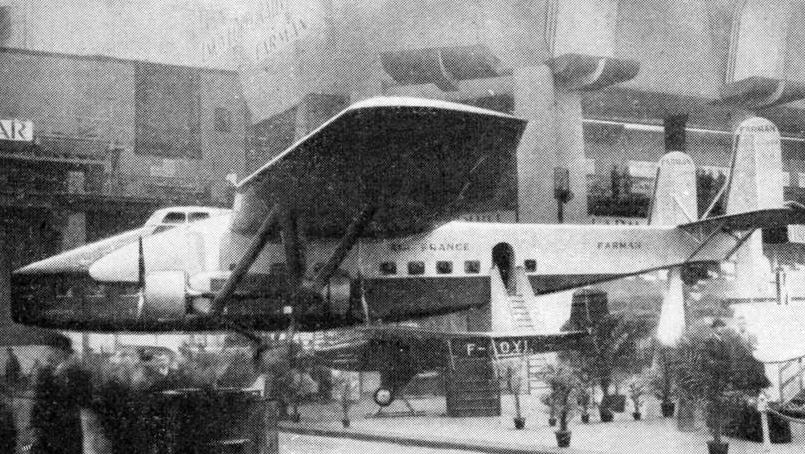
The F.224 flew for the first time on January 2, 1937. It performed well, but even if one out of four engines failed, the aircraft would have started losing altitude. In addition, takeoff and landing required a considerable length of runway. To fix this problem, Farman replaced the aircraft engines with more powerful Gnôme Rhône 14N1, which produced 950 horsepower each. But the aircraft still did not receive airworthiness certification, and Air France canceled the order. The six aircraft were then transferred to the French Air Force as F.224TT for the troop transport role, while the Air Force’s order for ten Dewoitine D.339TT transports was fulfilled with eight D.338s for Air France. The French Air Force received F.224TTs in 1938, but soon returned the aircraft to the manufacturer for conversion to a paratroop version for 39 paratroopers. During the modernization, the aircraft were equipped with defensive armament of two light machine guns and a bomb bay with a capacity of 400 kg of bombs. The final version of the F.224 entered service between April and August 1939.
In September, the aircraft were assigned to the GIA 601 and GIA 602 (Air Infantry Groups) and based in Istres. In November 1939, they moved to Calais. These aircraft were part of a plan to transport troops to Holland in case of a German invasion. However, this plan was later canceled. On May 10, 1940, during the German attack, four F.224 TT GIA 601 aircraft were based in Avignon. After the Armistice, the two GIAs, 601 and 602, were disbanded, and the aircraft were grounded due to the flight ban. Several surviving aircraft entered service with the Vichy French Air Force in May and June 1940. One aircraft was crashed on June 12, 1940, with its record stating, “The airplane departed Vélizy-Villacoublay Airbase on a flight to Bourges, carrying seven crew members and various equipment. A few minutes after departure, it was shot down by the pilot of a German fighter and crashed into a field, bursting into flames. Four occupants were injured, and three were killed.”
Final Use
The aircraft’s final use was recorded in 1942. F.224s served in North Africa with GT1/15 before being destroyed in Rabat by Allied aircraft supporting the landing of Anglo-American troops on November 8, 1942. At least one aircraft was destroyed in North Africa in November 1942 during Operation Torch. While there is no update on all six aircraft or on their whereabouts by the end of the war, some sources suggest that none survived World War II. Powered by four high-power engines of its time, a transport aircraft with an unusual bomber look, the F.224 was a victim of the war. After the war, with a shortage of funds and as technology improved, the F.224 idea was never revisited. Known as a flying “club car,” modern civil aviation also never adopted a true luxury approach, as in F.224, to maintain economics. In the Grounded Dreams series, the F.224 is a strong reminder of how World War II killed some good aviation ideas or made them look obsolete by the end of the war. As unusual as it looks, the aircraft follows the journey of other Grounded Dreams aircraft, whose story can be read HERE.