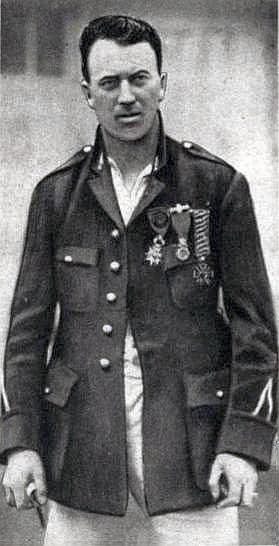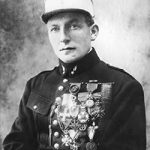
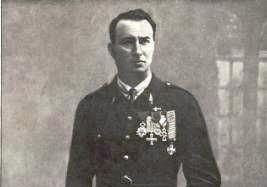

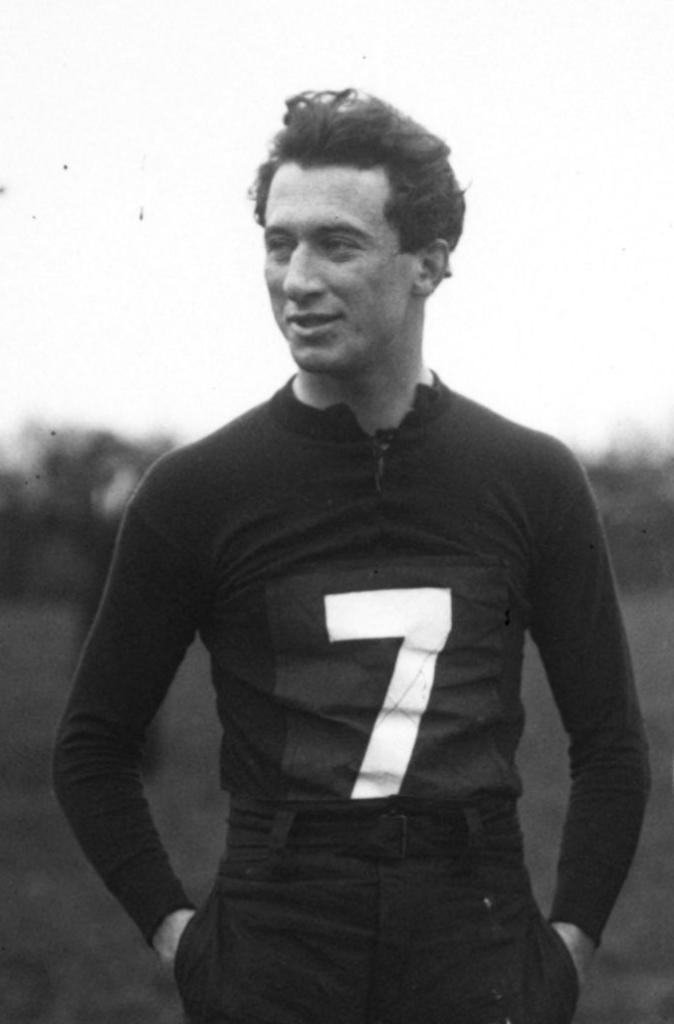
During World War I, many aces were interested in sports before they flew aircraft. But only a few represented their country or captained their sports teams. One among them was Maurice Boyau. Before becoming a fighter pilot, he played rugby at a high level, earning six international caps, four in 1912 and two in 1913, as captain of the French rugby team. Born on May 8, 1888, in Mustapha, Algeria, Boyau served in the infantry before the war. Until late 1915, he served as a driver before requesting a transfer to the French Air Service. Obtaining a Pilot’s Brevet on November 28, 1915, he served as an instructor at Buc before being posted to Squadron N77 in September 1916. He initially flew a Nieuport fighter in the war. On December 20, 1916, Boyau was promoted to the rank of sergeant. On March 16, 1917, he scored his first victory against an Aviatik aircraft. But there were not many German fighter aircraft flying in the area he was serving, so he requested to drop bombs behind enemy lines from his plane. After his request was approved, he flew to the Marimbois aerodrome near Thiaucourt-Regniéville, descended to roughly 220–250 meters, and bombed the enemy hangars, causing severe damage to hangars and fuel reserves. His mission later earned him the following citation: “On March 16, 1917, [Boyau] shot down a German aircraft within enemy lines. On March 23, [he] descended to within 250 meters of enemy aircraft hangars and bombed them with complete success.”
Ace Journey of Maurice Boyau
On June 1, 1917, Squadron N77 was re-equipped with more efficient SPAD aircraft, and its name was changed to Squadron Spa77. In June, with the new aircraft, he shot down four targets, including three balloons and a Scout aircraft. With this, he became an ace in June. Due to his aerial victories, he was awarded a Military Medal on June 27, 1917, with a citation, “Pursuit pilot of audacious bravery. Three times cited in orders, and has to his credit an aircraft and a balloon. On June 5, 1917, he destroyed another balloon. Forced to land in enemy territory, he repaired his plane and flew back over the lines at 200 meters altitude, under fire of enemy machine guns.” By the end of September 1917, Maurice Boyau achieved his first ten aerial victories, including six from observation balloons. On October 1, 1917, he shot down a German two-seater north of Champenoux, his eleventh victory, and was appointed temporary second lieutenant on October 6. By the end of 1917, he was the top French ace in the specialty of hunting observation balloons. In the spring of 1918, Boyau equipped his SPAD XIII with Le Prieur air-to-air rockets to shoot down balloons. With this missile, he continued to achieve several victories in the summer of 1918, including four in June, nine in July, and three in August. Between September 14 and 16, 1918, he shot down his last four balloons and brought his number of confirmed victories to 35, including 21 balloons and 14 enemy aircraft, making him the 5th among all French aces of the Great War.
Final Battle
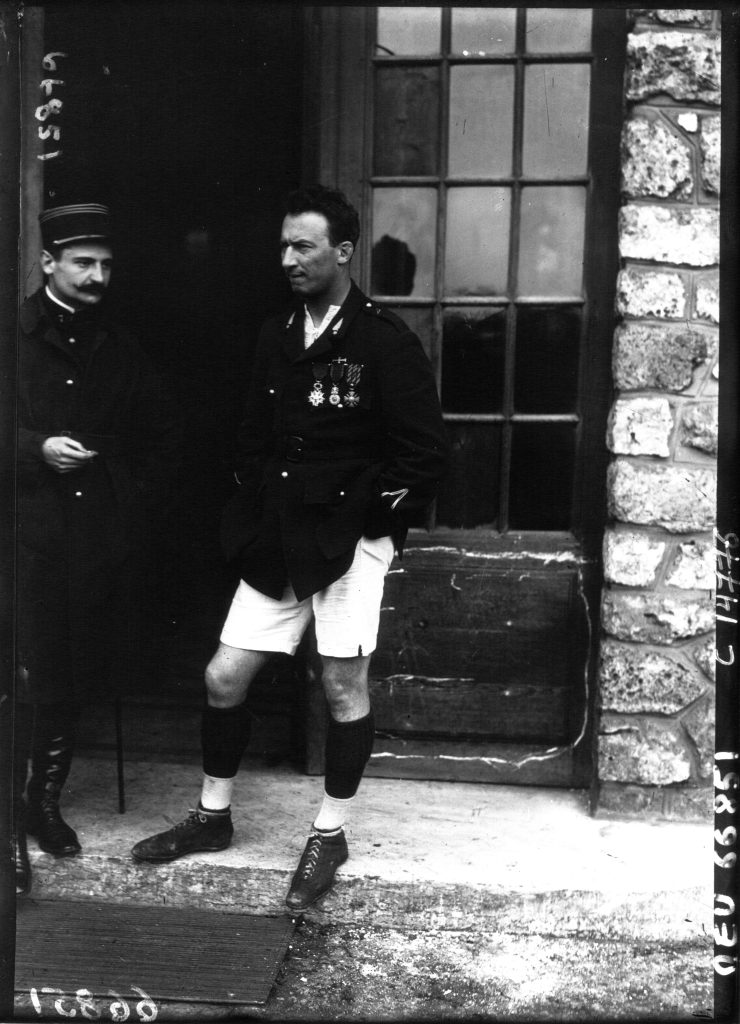
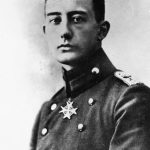
On September 16, 1918, during an aerial battle over Mars-la-Tour, Maurice Boyau disappeared. The exact causes of his death remain uncertain, and the German artillery fire may have also downed Boyau, but the Germans attributed that his aircraft was shot down by ace Georg von Hantelmann of Jasta 15. Neither his aircraft nor his body was ever recovered. On October 23, 1918, he was awarded the Legion of Honour, with the following citation: “A pilot of incomparable bravery whose marvelous physical qualities are put into action by the most beautiful soul and the highest will. A magnificent officer, animated by an admirable spirit of sacrifice, he performs, each day with the same smiling simplicity, a new feat, surpassing the previous one. He has excelled in all branches of aviation: reconnaissance, photography in single-seaters, low-altitude bombing, attacks on ground troops, and quickly ranked among the top fighter pilots.” A stadium of his former club in Dax, France, was renamed after him and still carries his name, the Stade Maurice Boyau. In the Aces series, Maurice Boyau stands out as the one who began his life as one of the greatest international players of the time and ended it as one of the greatest flying aces. He demonstrated bravery, a will to fight, and great flying skills throughout his tenure, as did other aces whose stories are available to read HERE.