








(Image credit: VAN)
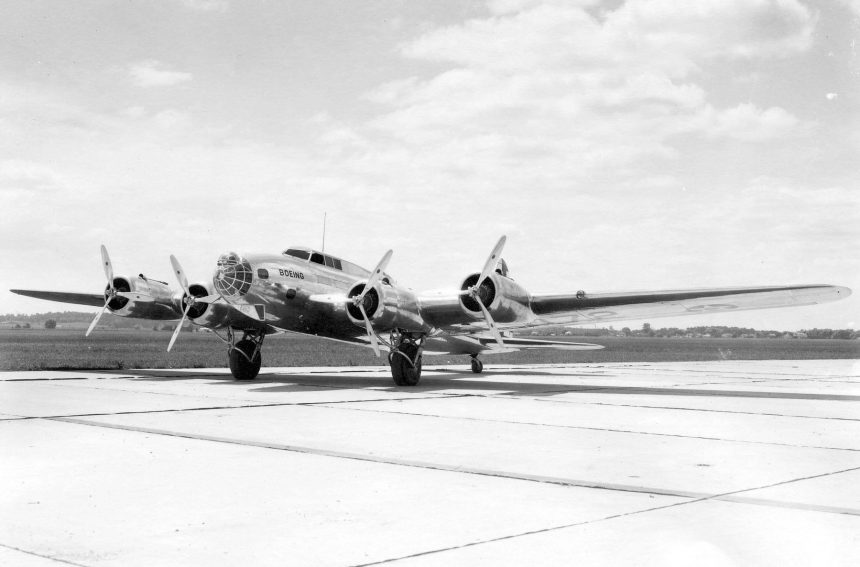
On this day in aviation history, 90 years ago—July 28, 1935—the Boeing Model 299 took to the skies for the first time. Known internally as the XB-17, this prototype was the direct predecessor of the iconic B-17 Flying Fortress, which would go on to play a pivotal role in securing Allied air superiority during World War II. Though the Model 299 differed slightly in appearance from the later production models, its overall form and capabilities laid the foundation for the legendary bomber.
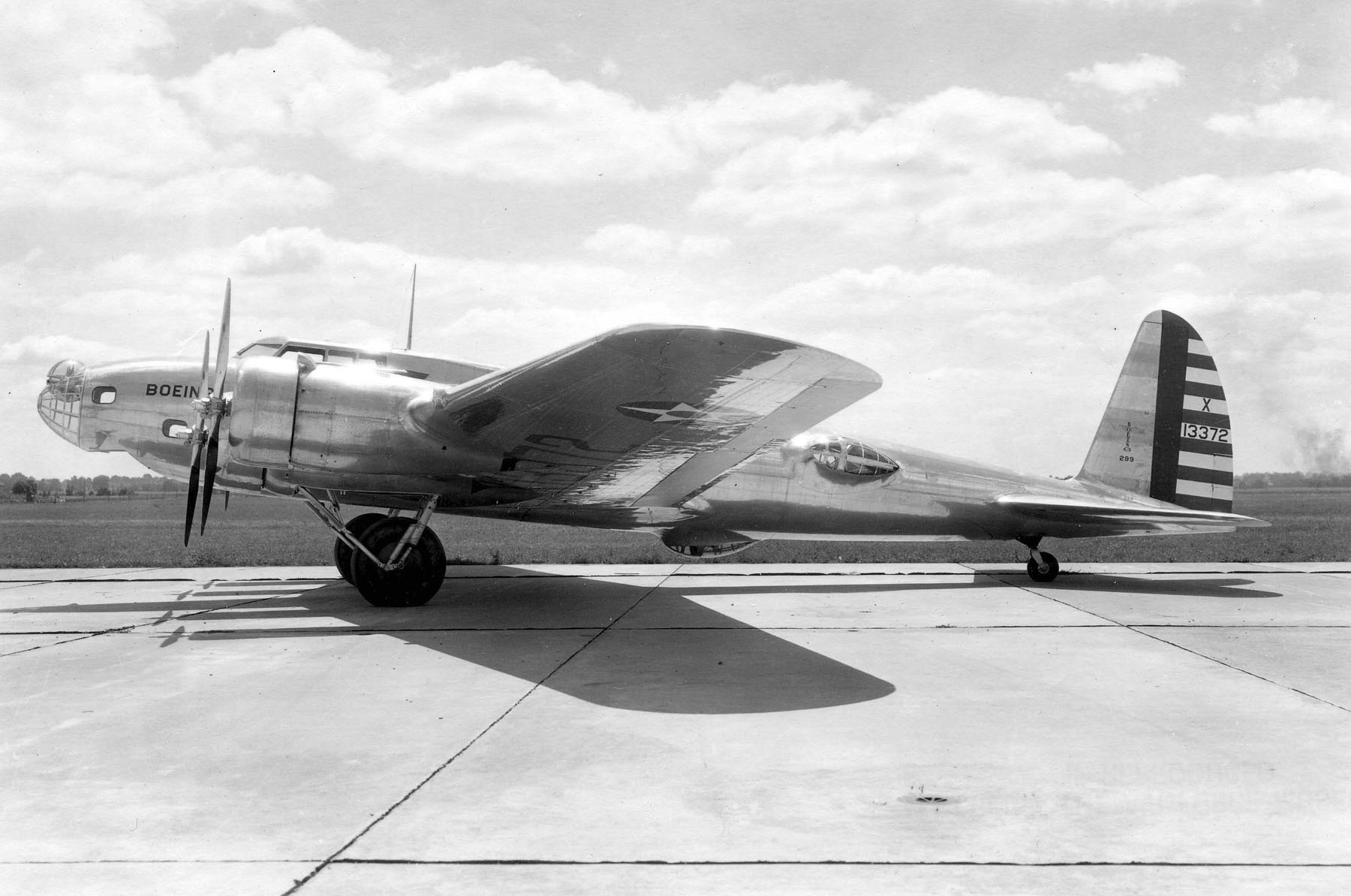
The maiden flight took place at Boeing Field in Seattle, Washington. Chief Test Pilot Leslie “Les” Tower and Boeing engineer Louis Waite were at the controls of aircraft number X13372 for a flight that lasted approximately 90 minutes. Afterward, Tower remarked, “It handles just like a little ship—a little bigger, of course.” The XB-17 immediately impressed as a well-balanced and pilot-friendly aircraft. Boeing designed the Model 299 in response to a 1934 U.S. Army Air Corps requirement for a long-range bomber capable of carrying a 2,000-pound bomb load over 2,000 miles at speeds exceeding 200 miles per hour. Design work began in June 1934, and final assembly started just two months later, on August 16. Initially designated the B-299, the aircraft was later redesignated as the XB-17.
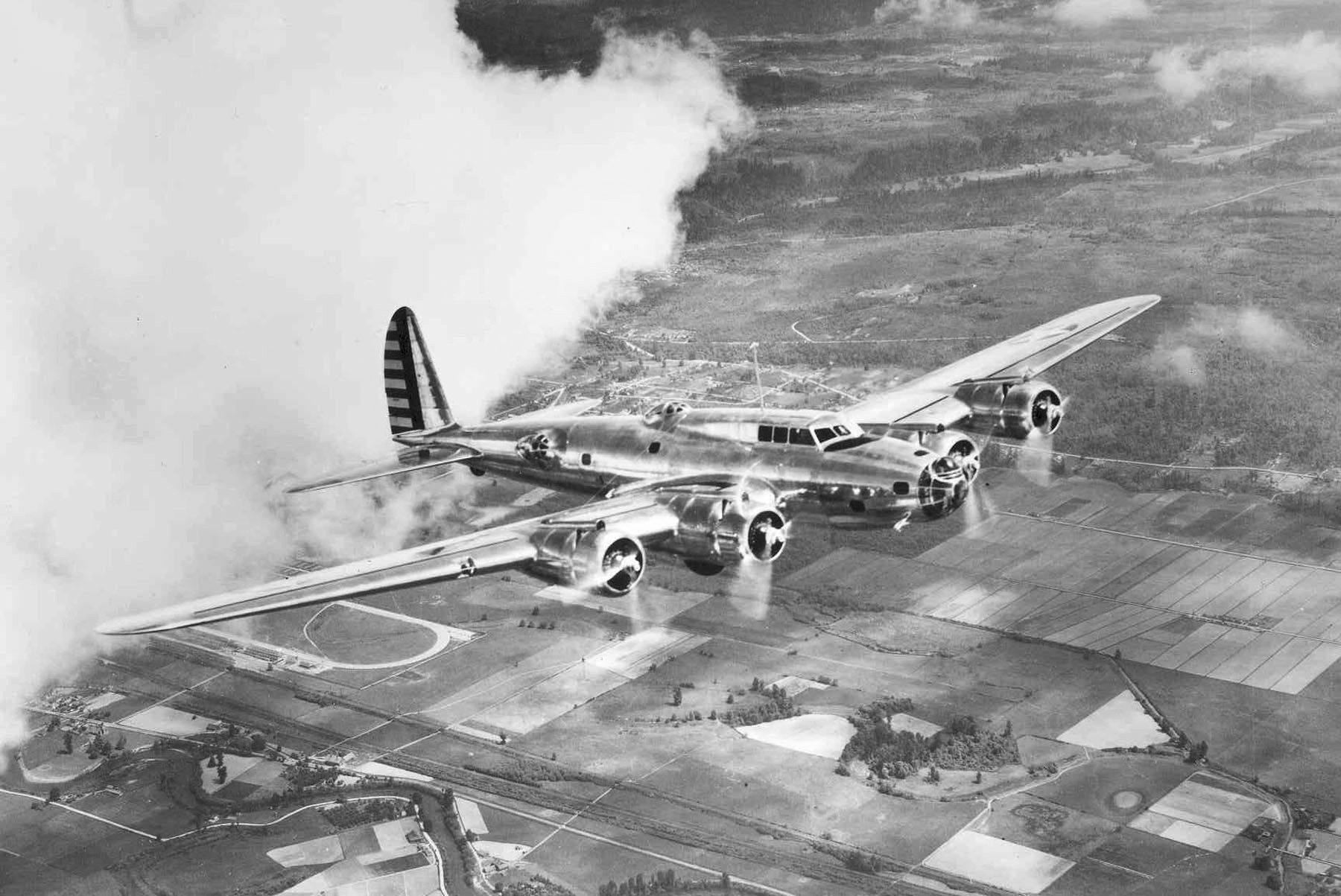
The XB-17 featured a wingspan of 103 feet and measured 68 feet, 9 inches in length. It had an empty weight of 21,657 pounds and a maximum gross weight of 38,053 pounds. The aircraft was powered by four Pratt & Whitney Hornet S1E-G nine-cylinder radial engines, each producing 750 horsepower. During test flights, the prototype demonstrated a cruising speed of 204 mph and a top speed of 236 mph. Its service ceiling reached 24,620 feet, with a maximum range of 3,101 miles—or 2,040 miles while carrying a 2,573-pound bomb load.
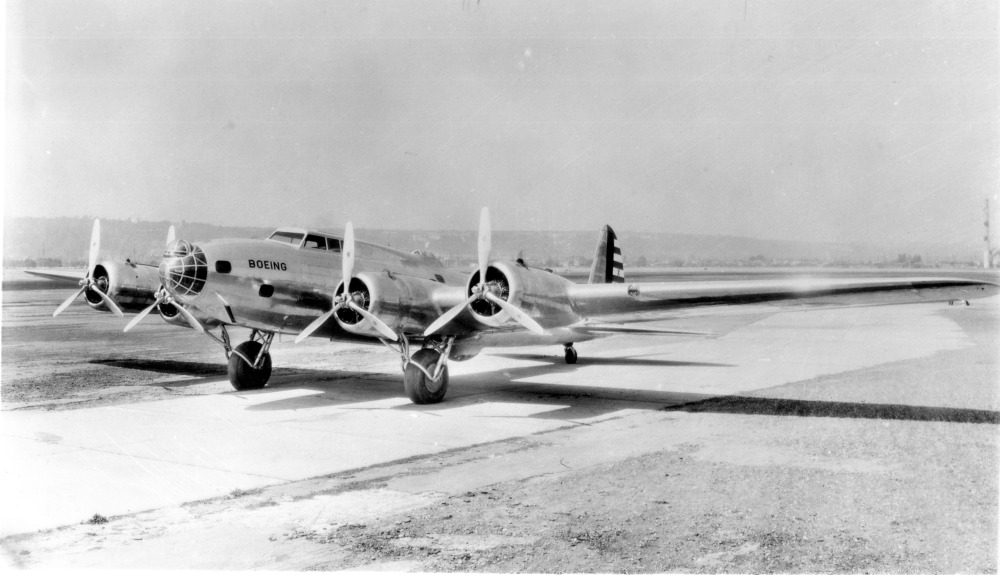
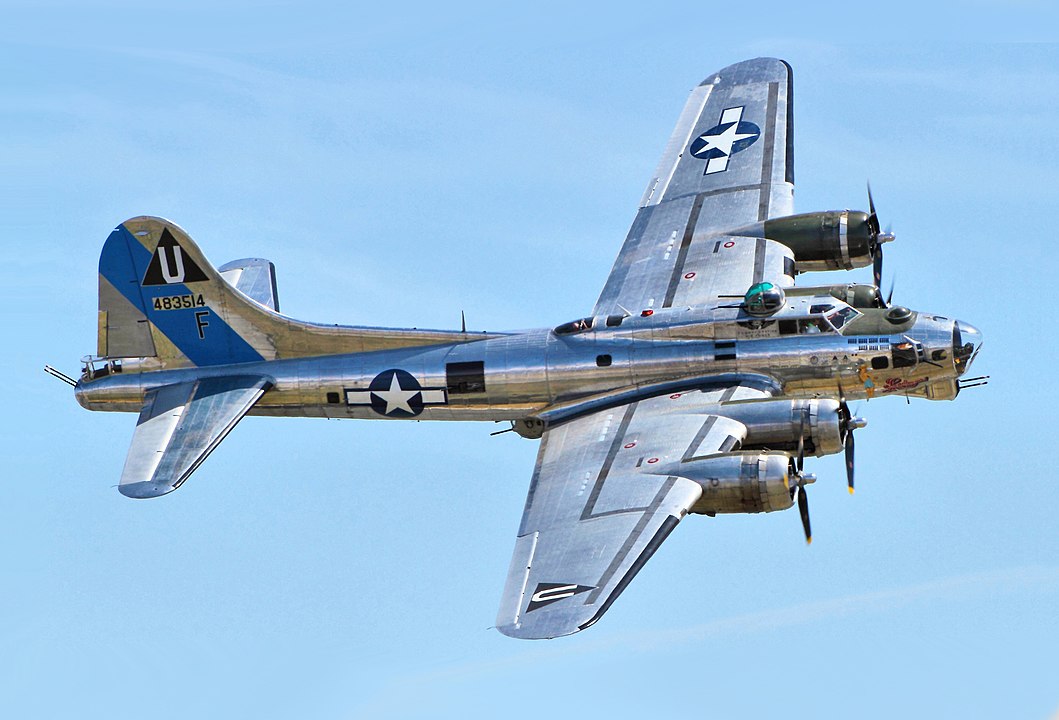
The Boeing Model 299’s successful flight and subsequent testing marked the beginning of a new era in strategic bombing. It ultimately evolved into the B-17 Flying Fortress, one of the most iconic and effective bombers of World War II. Today, many surviving B-17s can be found on static display, while a few continue to fly thanks to ongoing restoration efforts. Enthusiasts remain hopeful that more examples will soon return to the skies, honoring the legacy of this historic aircraft for future generations.







The Model 299 crashed at Wright Field before it was officially handed over to the Air Corps, so the designation of XB-17 was never assigned to the aircraft, brcause, at the time of the crash, it was still owned by Boeing.
With the roll out of the Model 299, the War Dept envisioned a DEFENSIVE aircraft in line with the government’s tilt toward neutrality and isolationism. It envisioned a force of large aircraft which could defend U.S. shores as a complement to our U.S. Navy’s dreadnaught battleships and battle cruisers meeting an enemy naval force far outside of our territorial shores, along with the U.S. Navy’s aircraft carriers. As war clouds began to form over western Europe in the later 1930s, thinking began to evolve in assisting the Western Allies should Germany launch an act of war. By then, serious thought were given to the evolving designs of the Y1B-17 and the later B-17B would eventually enter the European war defending the British Isles. As the design evolved into the B-17C and the B-17D, Japanese Empire hostilities were emerging in the Western Pacific. The B-17E model looked to be a fully outfitted OFENSIVE weapon with more defensive armament and a newly designed dorsal tail to include a defensive tail gunner position, as well as numerous other improvements to the design. The Fortress was ready to engage in war.