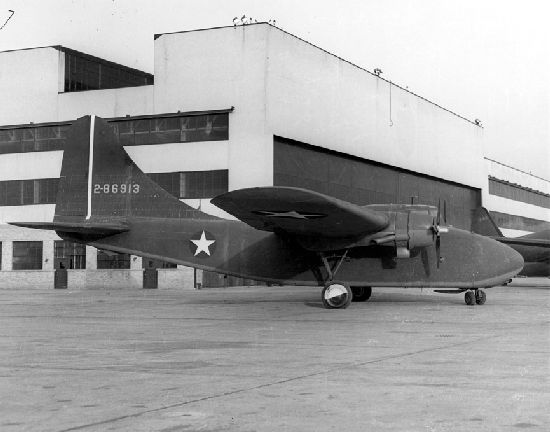
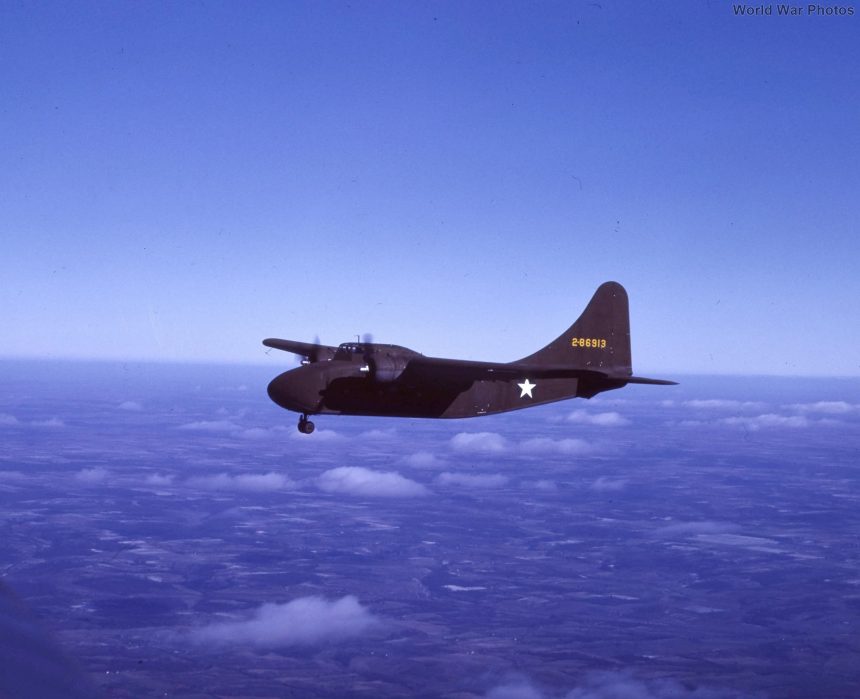

On this day in aviation history, 83 years ago (May 3, 1943), the first flight of the Curtiss-Wright C-76 Caravan took place. Known internally to Curtiss as the CW-27, the Caravan was a medium transport aircraft of all-wood construction. The C-76 was developed with the intent to produce the aircraft if war materials became scarce, namely, light alloys. Development of the C-76 began in 1941, after Curtiss-Wright was approached by the US Army Air Forces about constructing an all-wood transport. The proposed transport would be required to have performance specifications equal to or greater than those of the Douglas C-47 Skytrain.
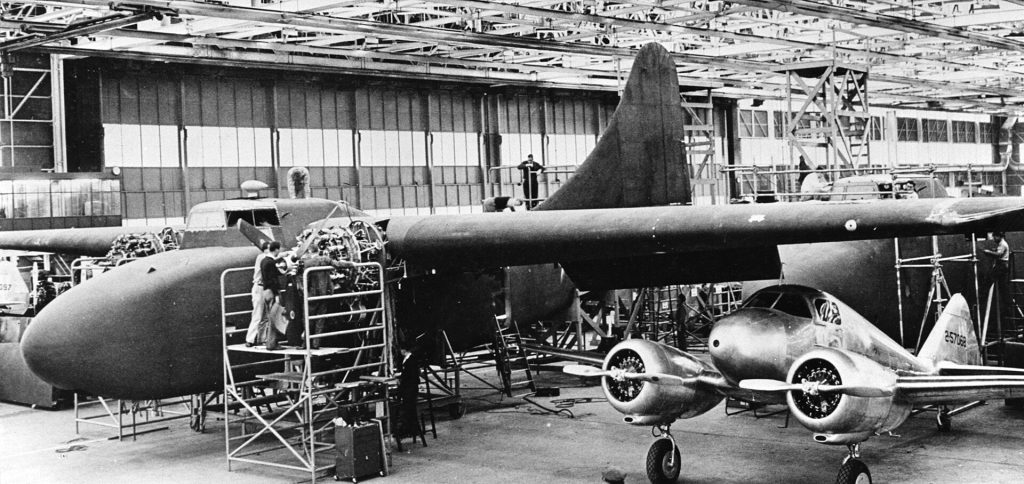
Curtiss-Wright’s chief designer, George A. Page, Jr., set to work on the wooden transport. The resulting CW-27 design was a high-wing, twin-engine cargo transport aircraft built of plywood. The CW-27 featured tricycle landing gear, a departure from the conventional layout of the Douglas C-47 and Curtiss’ own C-46 Commando. Two 1,200-horsepower Pratt & Whitney R-1830-92 Twin Wasp 14-cylinder radial engines power the CW-27. The aircraft was flown by a crew of three and had a capacity for 45 troops (or payload). The Caravan’s nose section swung out to the right, enabling the loading of jeeps or small artillery pieces.
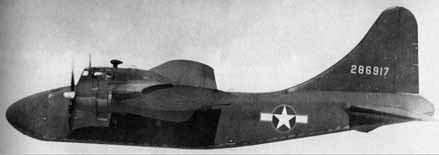
A contract for 11 YC-76 preproduction aircraft was signed by the USAAF, soon followed by a subsequent order for five C-76 production aircraft (and nine modified YC-76As). Flight testing revealed the C-76 to be woefully underpowered. Cruising speed was only 160 mph, while service ceiling was 22,600 feet, and maximum range was 750 miles. The aircraft was very heavy, and this low power-to-weight ratio led to severe vibrations in the airframe, leading to an accident during testing. By the time the C-76 was flying, it was already obsolete when compared to its contemporaries. Furthermore, the need to plan for the conservation of light alloys was no longer a concern. On October 1, 1945, Air Technical Service Command issued an order to purge the aircraft from USAAF inventory. A total of 25 C-76 airframes were built — 11 prototypes, 5 production C-76s, and 9 revised YC-76As.