






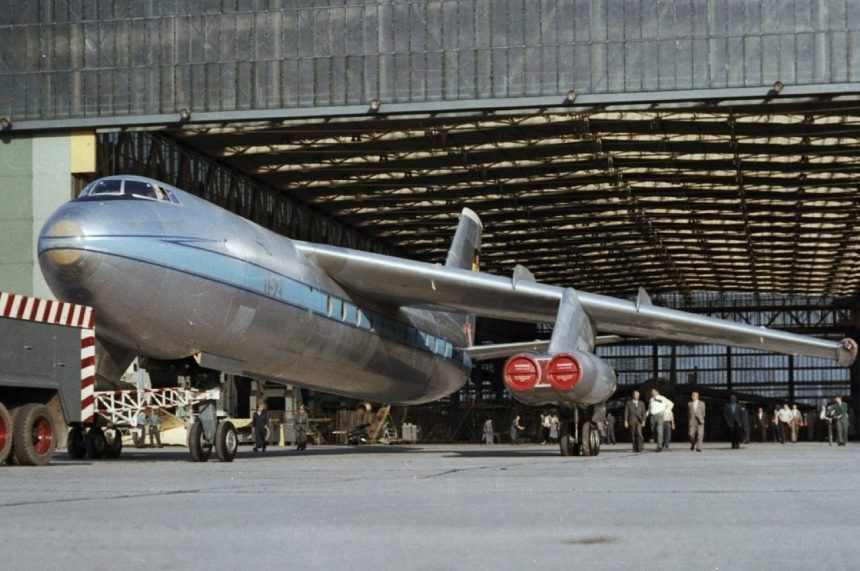


Underpowered, clunky, odd, and dangerous: any of these adjectives could be used to describe the Baade 152, the aircraft that was designed to be the pride of East Germany’s burgeoning civil aviation industry but that would ultimately become one of the great fiascos of civil aviation in the 1960s. The story of the Baade 152 begins in 1945 with German engineer Brunolf Baade. Like many aerospace specialists from the former Third Reich, Baade was captured by Soviet forces and soon required to offer his expertise to Soviet aviation projects. By the late 1940s, he had risen to the position of Chief Designer of the Moscow-based OKB-1 (Experimental Design Bureau), where Brunolf oversaw the development of several experimental aircraft, including the OKB-1 “150”. A slim, advanced bomber, the aircraft was plagued by fragility, evidenced by countless mechanical problems that grounded the project after only a handful of flights.
Furthermore, added to this scenario the chaotic Soviet bureaucratic system, coupled with a clear preference by that country’s armed forces for designs produced by ‘home-grew’ engineers (such as those emerging from the workshops of Tupolev, Mikoyan, and others), gradually undermined all efforts by Baade and other German engineers to bring the aircraft up to a minimally acceptable operational standard. With the OKB-1 ‘150’ put on indefinite hold by the Soviet authorities by mid-1953, Baade and his team faced the bleak prospect of being sidelined in the great aeronautical race unfolding in the early 1950s. But just when all seemed lost, the Soviet government threw Baade a lifeline: he received approval from the Soviet military to convert the original ‘150’ into a jet-powered airliner, to be built entirely in the German Democratic Republic (GDR). Baade and his followers, eager to return to their homeland and hopeful of bringing their country into the jet age, did not hesitate: thus was born the first (and only) civil jet manufactured in East Germany.
The Pride of GDR
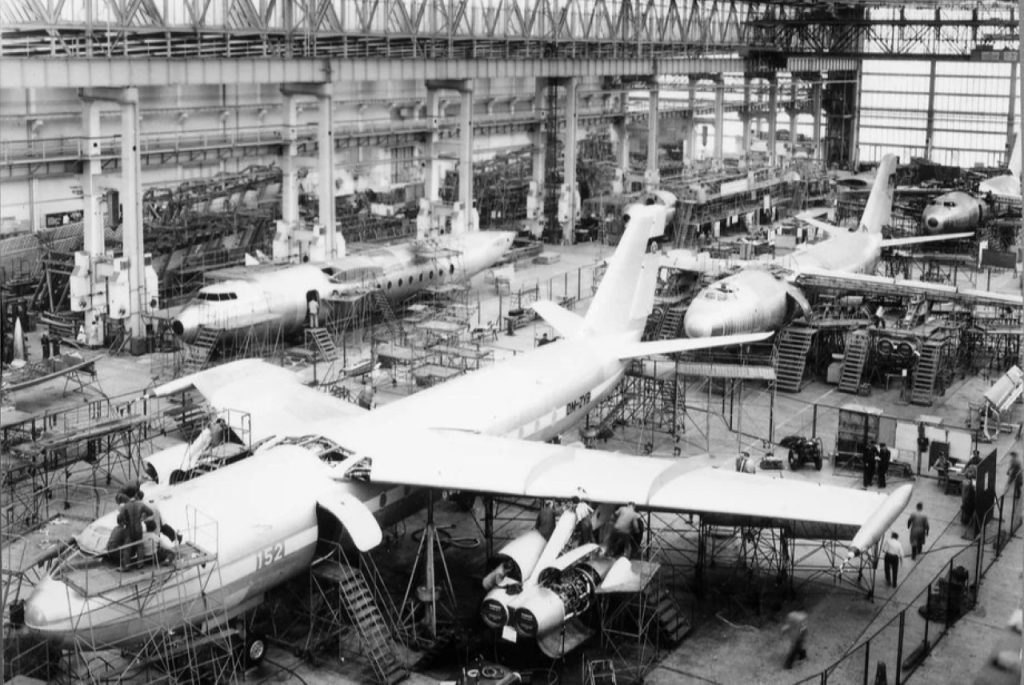
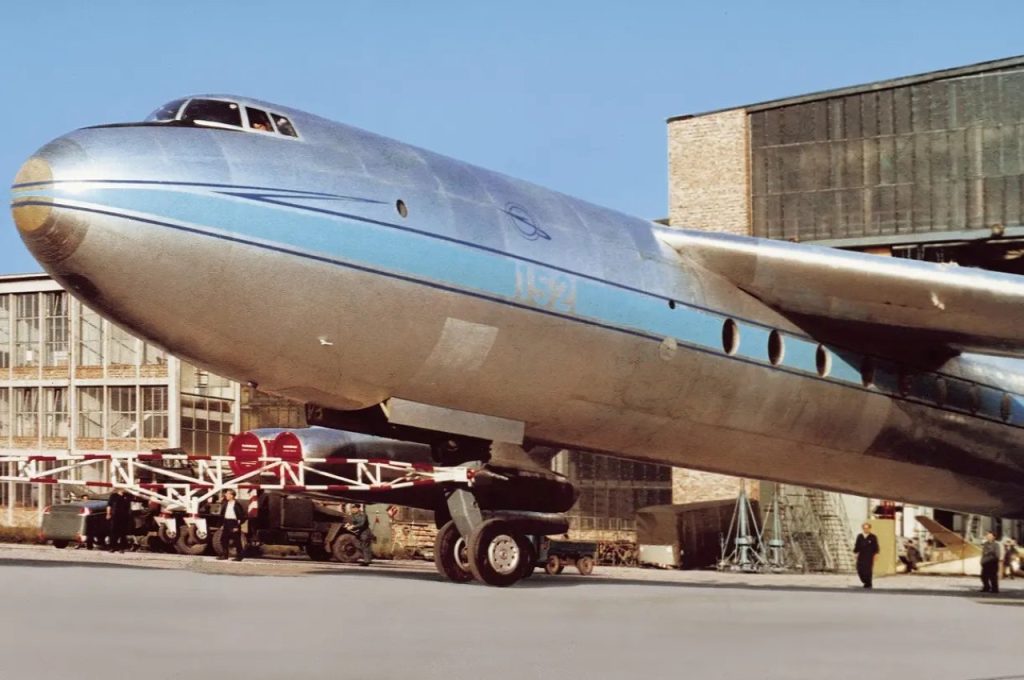
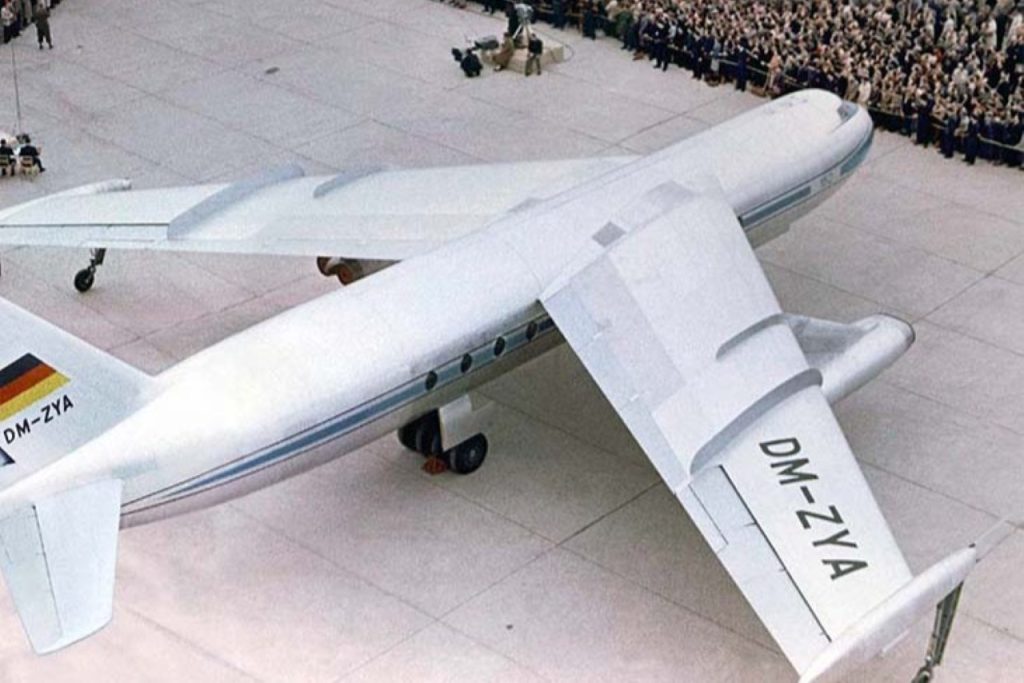
The aircraft was to be built in Dresden, in the brand-new installations of Volkseigener Betrieb (VEB). In the beginning, the project seemed to go in the right direction, with VEB opting not to jump straight into the development and building of the proposed jet; first, the company secured a deal to license-produce the Ilyushin Il-14, a twin-engine multi-purpose plane that was, by the time, widely used by Warsaw Pact airlines. The know-how acquired in the construction of this machine served as a stepping stone towards Baade’s more complex design, which was to push VEB’s resources to the limit. But this careful step-by-step method was soon to be supplemented by a more rushed approach proposed by Baade and his team, which had its sights set on the attractive ‘prize’ of making a reliable jet-airliner in West Germany. The enthusiasm of Baade and his engineers was contagious, with VEB soon engaged in an all-stakes effort: the company didn’t proceed with the standard practice of building first one or two demonstrators – they actually opened up the entire assembly line, with the intent of commencing serial production even before confirming the project capabilities through flight testing! In hindsight, Baade’s design, which was simply an adaptation of an already problematic project, seemed like a poor choice for leading the GDR aircraft industry out of the wilderness. However, no one seemed to realize this, and after various delays, the Baade 152 V-1 was finally presented to the public on April 30, 1958. With its 31.4-meter bare aluminum fuselage, which could be configured to carry 40 to 60 passengers, depending on the desired density, the plane certainly had a commanding presence. But away from public and official eyes, the reality was that the plane was still a long way from being airworthy. It would take an additional seven months of development and testing before the aircraft was ready for its first flight.
A History of Disaster and Failure
Two years behind schedule, the Baade 152 flew for the first time in December 1958. With a crew of four – pilot Willi Lehmann, co-pilot Kurt Bemme, and flight engineers George Eismann and Paul Heerling – the plane landed safely in VEB’s installations after a 35-minute flight. On this occasion, the machine was powered by four Soviet-built Tumansky RD-9, which were to be changed by the indigenous Pirna 014 in the expected production series 152. But despite this promising start, disaster struck on the plane’s second flight, which took place on March 4, 1959: the 152 V-1 crashed in a field six kilometers away from Dresden Airport, killing Lehmann and all his crew. According to eyewitness accounts, the aircraft stalled in mid-flight while preparing to perform a flyby over the airfield. Soviet and GDR authorities were quick to blame Lehmann, citing the pilot’s negligence in understanding the aerodynamic characteristics of the 152. But recent investigations into the case suggest that the main culprit in the crash was the Tumansky RD-9 engines, which required as many as 15 seconds to spool up to full power from idle, and it is possible that the aircraft stalled at a high angle of attack during this interval. Such a dramatic event could easily have been the final nail in the coffin of the highly problematic 152 program, but the GDR had invested more than just money in the project; accepting the failure would also mean the defeat of the fledgling dream of an East German aircraft industry. Although the setback dealt a severe blow to the already battered program, Brunolf and his team persevered.
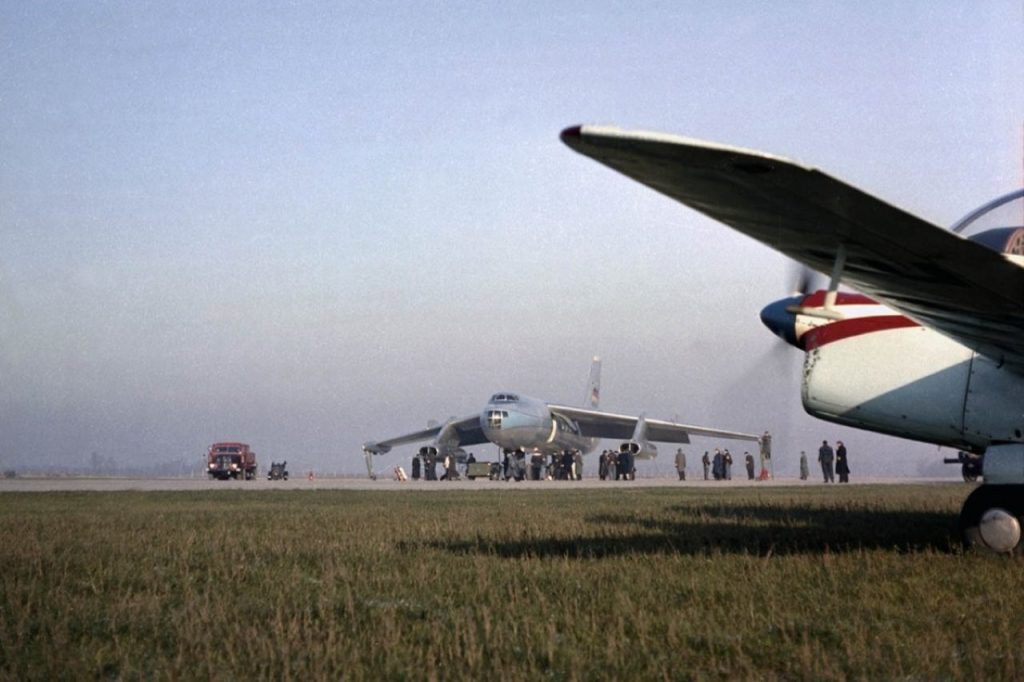
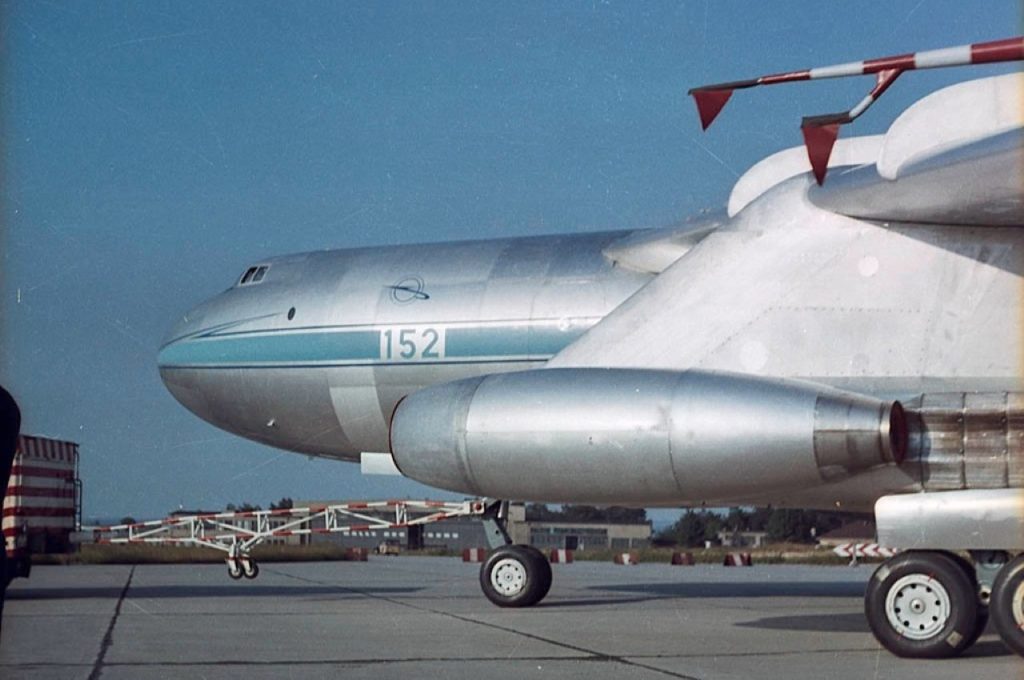
A second prototype (V-2) was limited to ground-based load-bearing capacity tests, while the team focused on developing a revised version of the aircraft, the 152/II series. The new aircraft featured a three-point landing gear, four “Pirna 014” engines, and the removal of the nose glazing, which was now home to a primitive weather radar. The plane’s internal configuration was also changed, with capacity ranging from 48 to 57 or 72 passengers, depending on the configuration. Throughout the fall of 1960, the first Pirna-powered Baade 152/II (V-4) conducted two test flights, while another airframe (V-5) underwent rigorous ground-based testing. What all these tests revealed was that, despite the updates, the aircraft still had serious structural flaws, as well as chronic problems with the fuel system. The situation had reached the point where even the hopeful GDR authorities began to question the project’s viability; by November 1960, the Staatliche Attrappenkommission, the GDR’s bureau responsible for checking the Baade 152 development, finally opted to rescind the plane’s provisional airworthiness certificate.
The Defeat of a Dream
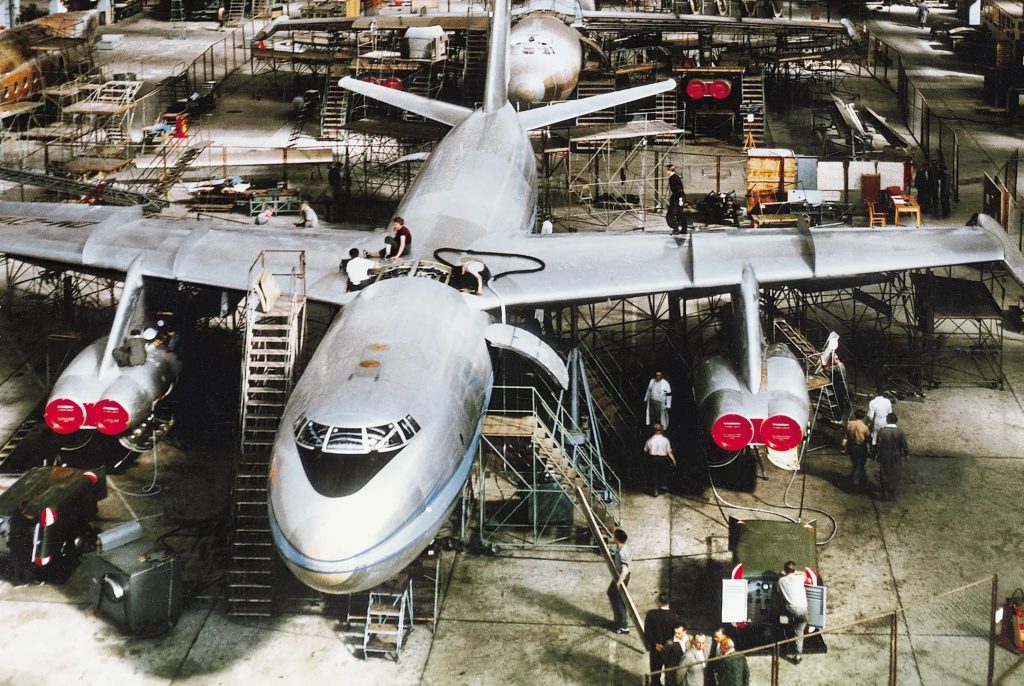
Without authorization to conduct flight tests, the project was finally on death row. But Baade was not willing to give up on his dream without a fight. In partnership with VEB, the designer now chased other investors for the project, particularly by seeking purchase agreements with airlines eager to enter the jet age. Only Deutsche Lufthansa (Interflug) kept its word to Brunolf and the VEB, promising to purchase the first 30 production aircraft. But that was not enough to keep the project economically sustainable, and on February 28, 1961, the GDR’s Politburo formally decided to terminate the project. A few months later, it would be the Pirna production line’s turn to be shut down, erasing the last legacy of the ambitious Baade program. In the end, the Pirna and Baade projects had cost not only Brunolf Baade’s career as an aviation designer but also a small fortune for the GDR and whatever prestige East German civil aviation had. The disaster was so resounding and embarrassing for the country that German and Soviet authorities ordered the destruction of all eleven Baade 152 fuselages already built, with only one model of the aircraft escaping the GDR’s government’s wrath: the 152/II #011, which was partially restored by EADS EFW (Elbe Flugzeugwerke GmbH) and now sits at Verkehrsmuseum in Dresden. Read more Grounded Dreams articles HERE.













An obvious poorly designed copy of the B-52.