
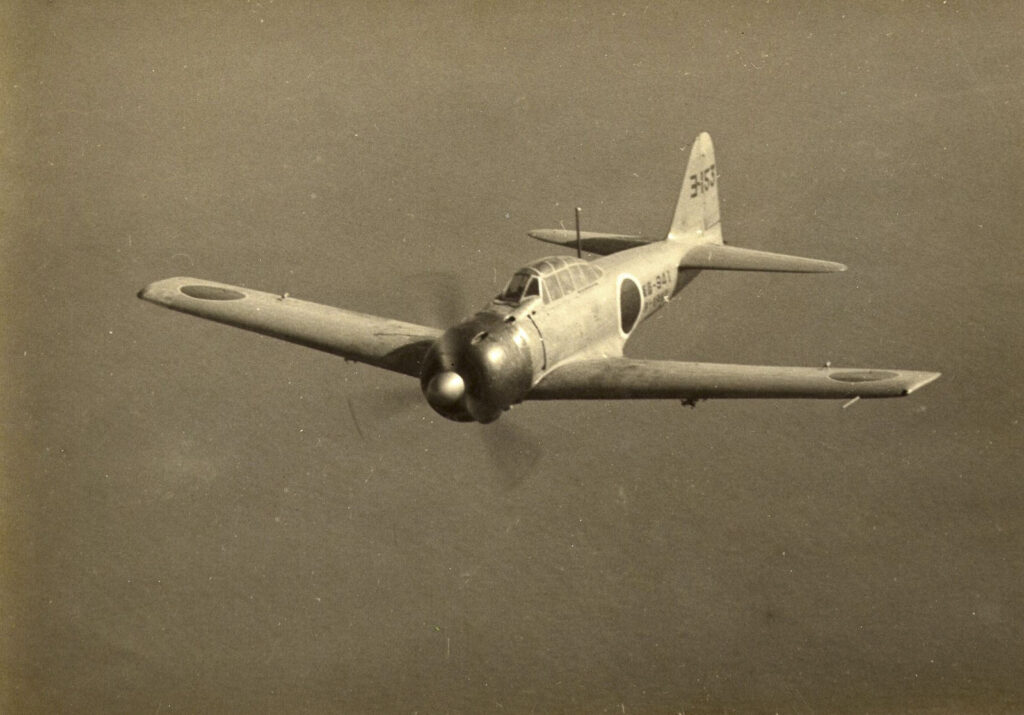
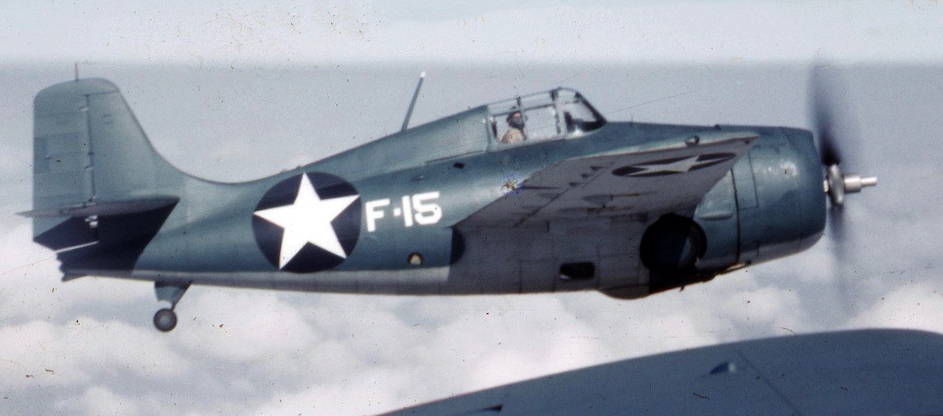
When America entered WWII, its fighter tactics were built around the lessons learned during WWI. Winning in air-to-air combat was thought to be dependent on out-turning your opponent using the maneuverability of your fighter to get into firing position on your opponent’s tail. This held true, to a certain extent: getting on your opponent’s “six o’clock” is still the best way to shoot him down to this day. The Japanese seized upon this in the design of the A6M “Zero” fighter, a lightweight and highly maneuverable fighter. During the early stages of the war in the Pacific, it seemed like a wonder weapon; Allied Curtiss P-40s, Bell P-39s, and Brewster F2A Buffaloes all suffered when their pilots tried to fight turning battles against the Zero. The Navy had similar issues with the F4F Wildcat. It didn’t have the maneuverability of the Zero, and additions like self-sealing fuel tanks, folding wings, and two extra .50-caliber machine guns in the F4F-4, the Wildcat was even less able to turn with the Zero. “It was like flying with your pockets full of cement,” said Tom Cheek, who was a chief machinist flying with VF-2 aboard Hornet in the spring of 1942. Countering the Zero would require new tactics. Experience would gradually reveal that the A6M’s fabric-covered control surfaces ballooned with air at speeds above 295 mph, making it hard to turn the aircraft. That meant fighting the Zero at high speeds was a good recipe for success. It was also discovered that the Zero was fragile – a good burst often started a fatal fire or caused terminal structural damage.
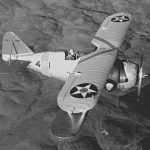
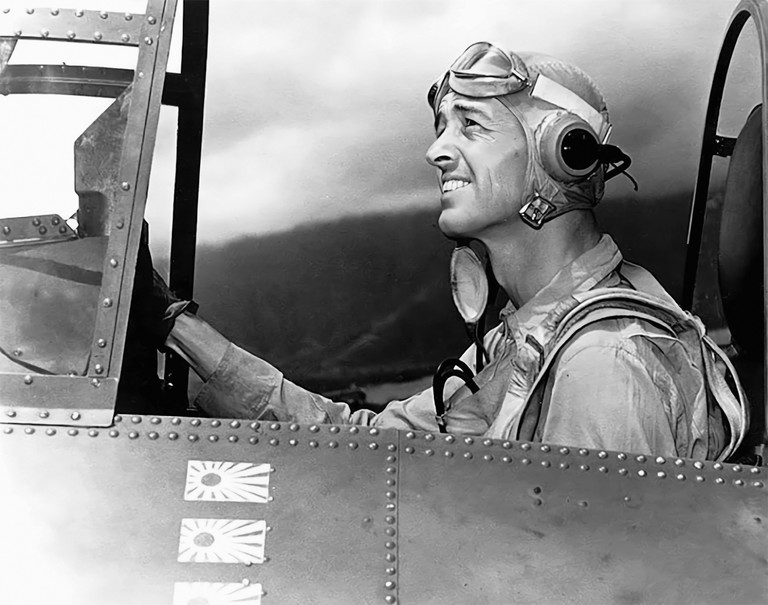
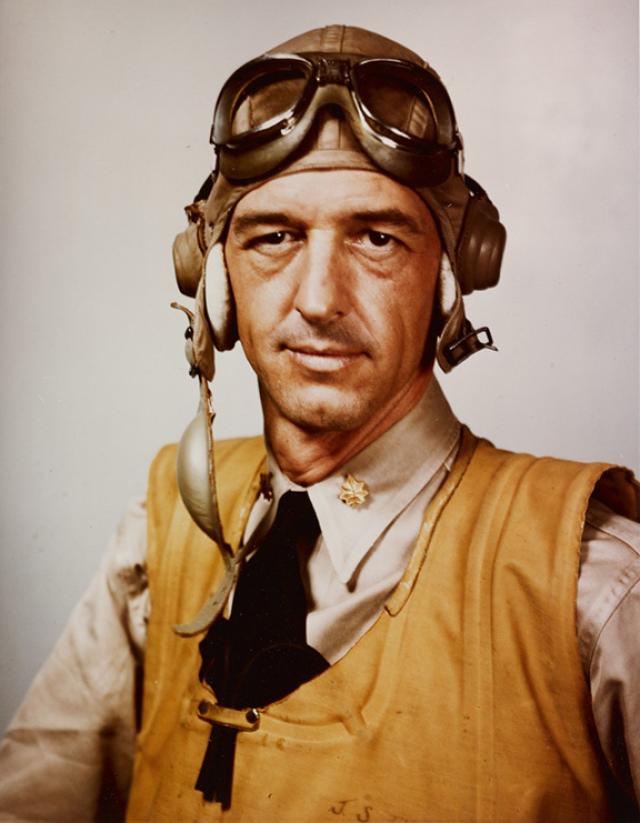
However, in May 1942, that was not yet known. While many clung to pre-war fighter tactics, Jimmie Thach was thinking about new ways to battle the Zero squadrons. He’d been thinking about it since 1941, when the first intelligence on the Zero had been sent to fleet squadrons. Thach was a veteran pilot, having graduated from Annapolis in 1927 and served a tour aboard the battleship USS Mississippi before earning his wings in 1929. As was the Navy way in the 1930s, Thach flew all kinds of planes, serving with fighter, patrol, and scout squadrons, along with time as a test pilot. In 1939, he was assigned to Fighting 3, where he was eminently qualified to solve the problem of the Zero. The traditional defensive tactic for fighters was the Lufbery circle, or a turn entered into by a formation for mutual support. Since the Zero could out-turn the Wildcat, it could get inside the circle and pick apart the defenders.
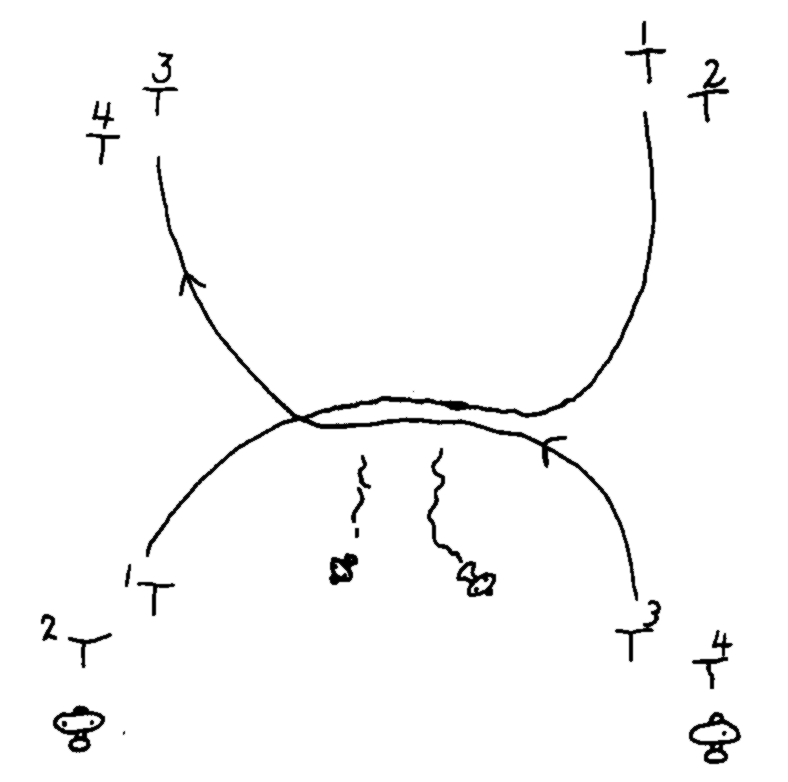
Thach wanted a formation that was defensive, but could also put his fighters on the offense. Using matches to represent airplanes, Thach spent countless hours hunched over a tabletop visualizing different formations and how they would engage one another. One of the first things he identified was the weakness of the three-fighter formation, which had been the global standard for decades and which both the U.S. and Japanese navies still employed. The German Luftwaffe had gone to the “finger four” formation; Thach envisioned teams of two fighter formations, with a greater ability to engage or retreat while providing mutual cover. Ideally, they could fly in two sections for a four-plane flight, but if conditions called for it, a pair could fly independently. With his revised two-plane sections established as the optimal unit, Thach’s matchstick maneuvers led to something he called the “beam defense maneuver.” In it, he positioned the two sections of his four-plane flight abreast of each other at a distance equal to the turning radius of the Wildcat. In the event a Zero jumped on the tail of one section, the two sections would turn toward each other, setting up the second section for a head-on shot at the attackers of the first section. If the attacker turned away, it then had the second section on its tail; if it turned into the second section, it put the Wildcats in position to repeat the maneuver.
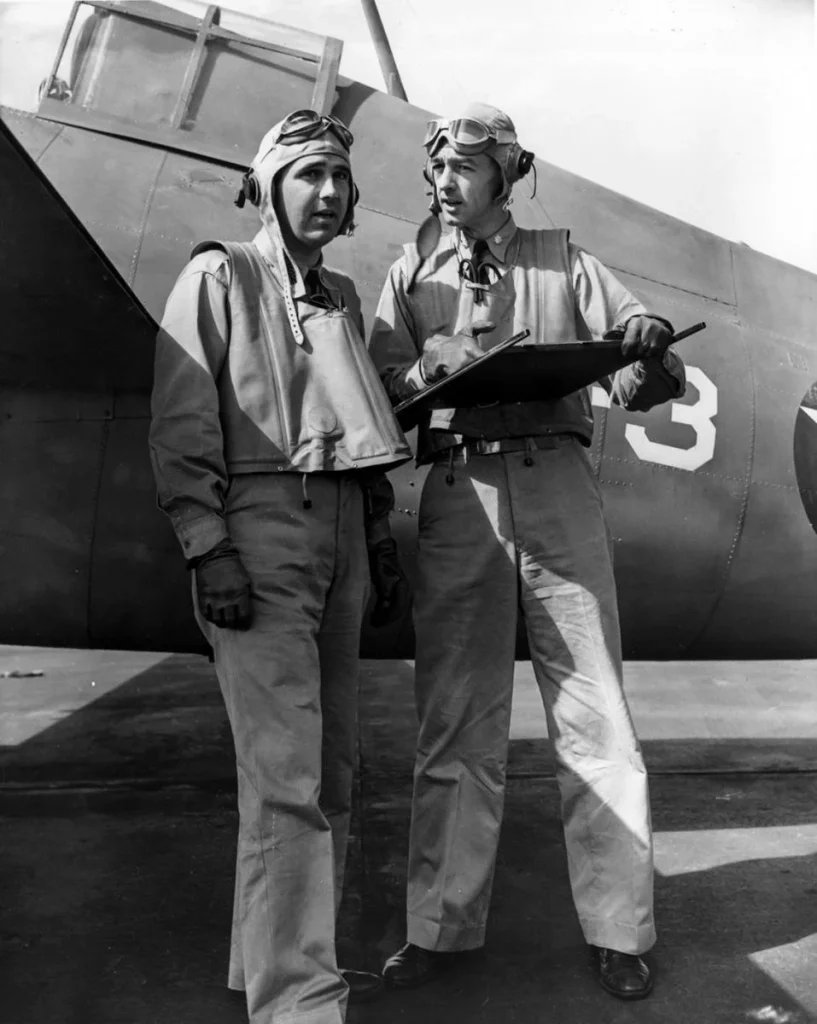
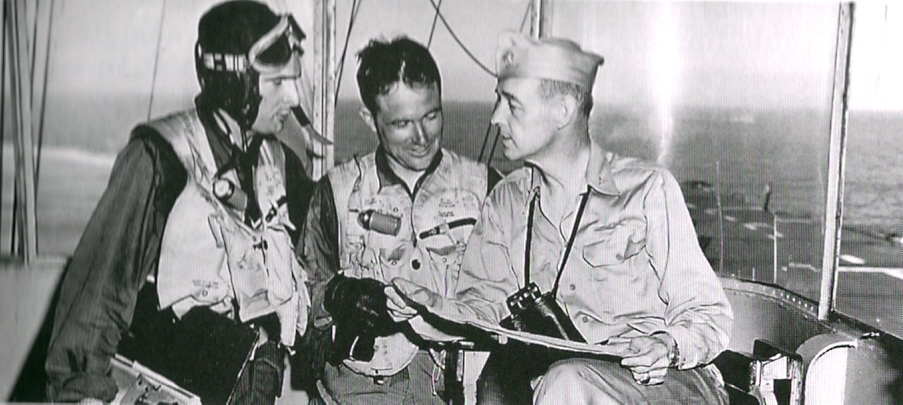
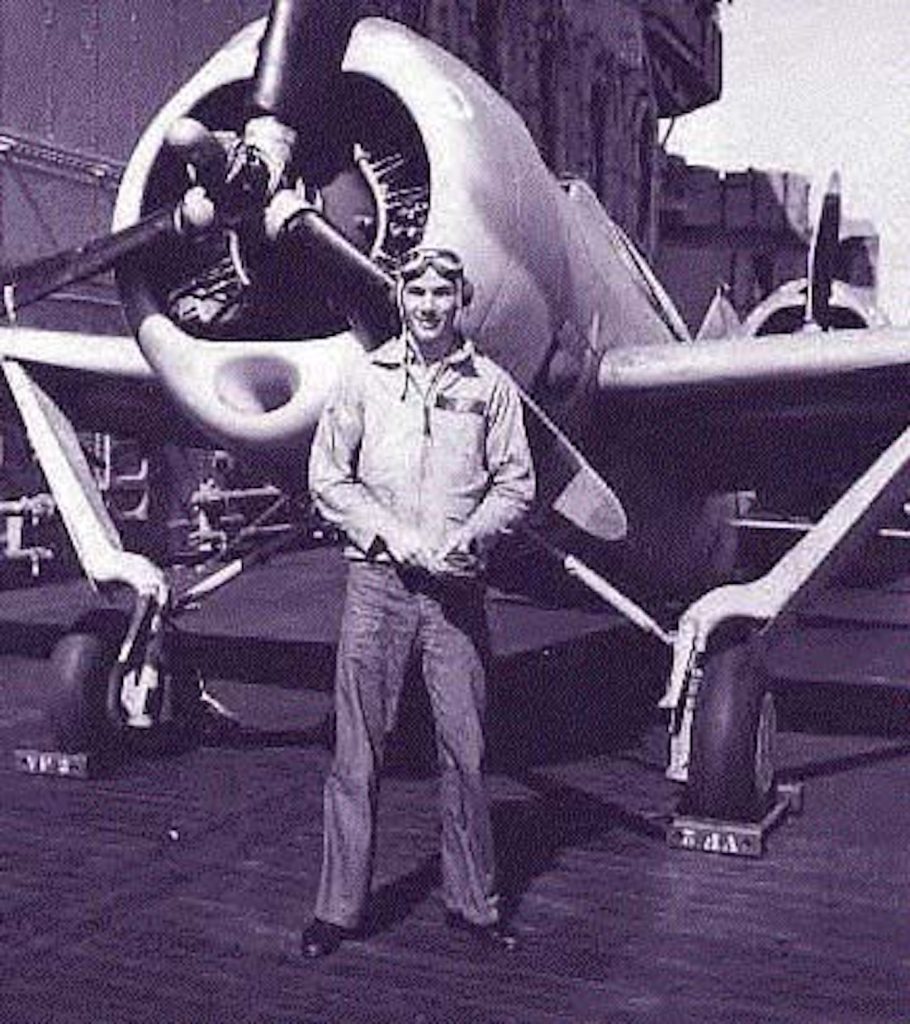
Thach first tried out his tactics with VF-3, with the adversary section led by future Medal of Honor winner Edward “Butch” O’Hare. Try as he might, O’Hare could not set up a shot; he found it disconcerting to line up a target, only to have it swerve away at the last minute and have two other fighters rushing at him head-on. Thach never had a chance to test the maneuver with VF-3; during the raids on Lae and Salamaua on March 10, 1942, no fighters rose to challenge the navy planes. In April, most of VF-3’s pilots were transferred to other units, and Thach, beached in Hawaii, had to build up the squadron nearly from scratch. In early May, Thach took up three of his first new men – Ens. Robert A. M. “Ram” Dibb, MACH Doyle C. Barnes, and MACH Tom Cheek – and taught them the beam defense maneuver. “He explained to us one afternoon, after coming in from a gunnery flight,” said Cheek. “He called Tom and I into the ready tent and, on a blackboard, he showed us what he had in mind. The next day, we went up and tried it. We went up over Kaneohe, and we practiced that weave for a couple of days in between our gunnery stuff.”
After some practice, Thach arranged for two P-36s from the 78th Pursuit Squadron to play the role of Zeros. Again, the attackers couldn’t gain position, and often the Wildcats found themselves in firing position. “These boys came in, and they tried everything they could. The weave was working really well,” said Cheek. “We all landed on the fighter strip at Kaneohe, and one of the Air Force boys said, ‘Y’know, every time I made a run, ah had a damn F4F coming right at me!’ We were the only four that had really worked with it.” The beam defense maneuver, which became known as the “Thach Weave,” found its baptism of fire on June 4, 1942, at the Battle of Midway. Flying from USS Yorktown, Thach hoped to take two flights in the escort of Torpedo Squadron Three, but Admiral Frank Jack Fletcher ordered only a six-plane escort: a full flight, consisting of Thach, Dibb, Lt. Brainerd Macomber, and Ens. Edgar “Red Dog” Bassett, and a partial flight, with Cheek and Ens. Daniel Sheedy.
By the time the Yorktown’s strike reached the Kido Butai (Mobile Fleet) at about 1020 hours, it had been under attack by American aircraft for nearly three hours. No hits had been scored by the B-17 Fortresses, B-26 Marauders, TBF Avengers, SB2U Vindicators, and SBD Dauntlesses yet, but the hornet’s nest had been effectively kicked, and a second wave of defensive fighters had been added to the combat air patrol (CAP) just minutes earlier. Nearing the Japanese fleet, Thach’s flight was bounced, and Bassett’s trailing F4F-4 was hit, slanted toward the water, and burst into flames. Macomber’s plane was stitched by fire as well, but the rugged Wildcat kept flying. With three planes, Thach’s section first fell into a line-abreast formation and started dodging Zeros individually.
Zeros were making attacks every 20 to 30 seconds. Thach’s Wildcats and the Zeros were scissoring back and forth, taking snap shots at each other. One Zero pilot missed a snap shot at Macomber and slowed up to correct his aim; Thach slid in and shot down the A6M2b for his first victory of the battle. Macomber had not been instructed in the weave maneuver, and his radio was out, so Thach called to Dibb and told him to act like a section leader. Dibb slid out wide to the right of the other two Wildcats, and the Zeros quickly pounced on the lone American fighter. Dibb radioed for help and turned back toward his two wingmen; Thach turned into him, and Macomber followed dutifully. Thach dipped under Dibb and bore in on the Zero; the Japanese fighter shed part of its cowling and burst into flames. Dibb swung back into line abreast formation, not knowing what Thach wanted, but it finally dawned on him that the weave required him to move out and to the side. Zeros tried to attack, and were brushed off by the weave; most simply broke off their attacks, while others pressed their attacks and paid for it. Thach destroyed a third Zero when it tried to follow Dibb through the weave, and Dibb claimed one of his own. Even Macomber shot up a Zero, although in frustration, he broke formation to chase the Japanese plane, gaining credit for a probable.
Cheek’s section also tangled with Zeros. “Sheedy was flying wing on me, but when the action started, I was so damn busy I couldn’t look and see where he was until he tried to shoot me down!” Said Cheek. “I had a Zero on my tail that was plastering the hell out of me. Sheedy said he was bouncing around to where I was always in the way. He said he moved out a bit, and he thought he’d try a shot. His fire went right over the top of my cockpit – I could feel the heat of his tracers!” The Zeros then went for the TBD Devastators the Wildcats were escorting. PO3c Teruo Kawamoto made a head-on pass, streaking between the TBDs flown by Cdr. Lance Massey and Machinist Harry Corl. “He fired from so far back that I don’t think the bullets were still on an even plane when they went under the TBDs,” said Cheek. Corl’s gunner, AMM2 Lloyd Childers, had an opportunity to spray the Zero as it went past, but forgot to flip off his safety and missed his chance.
Cheek did not. “When (Kawamoto) pulled up, he swung around,” said Cheek. “He was getting in position to make a run on the starboard flank of the formation. I was at the moment positive that he hadn’t seen me. When he came around to the right spot, I had everything firewalled and pulled up. I got him in just the perfect hit on a low pass. I saw my tracers go right into him, and the engine and what have you, and the plane kind of bucked up a bit and started down, and that’s about the time I stalled out. When those six .50s cut loose, the recoil and, most of all, the muzzle blast, upsets the flow of air across the wing. She started to stall out, and I just let her roll down to the left. I figured I could pivot right around and catch him head-on as he came around and tried to get on my tail. He went by me, and he was burning stem to stern.” Cheek saw Kawamoto in the cockpit; “He was sitting there looking straight ahead. I knew right then that that was a dead man, because if he had been alive, he’d have been looking at me to see what I was going to do.”
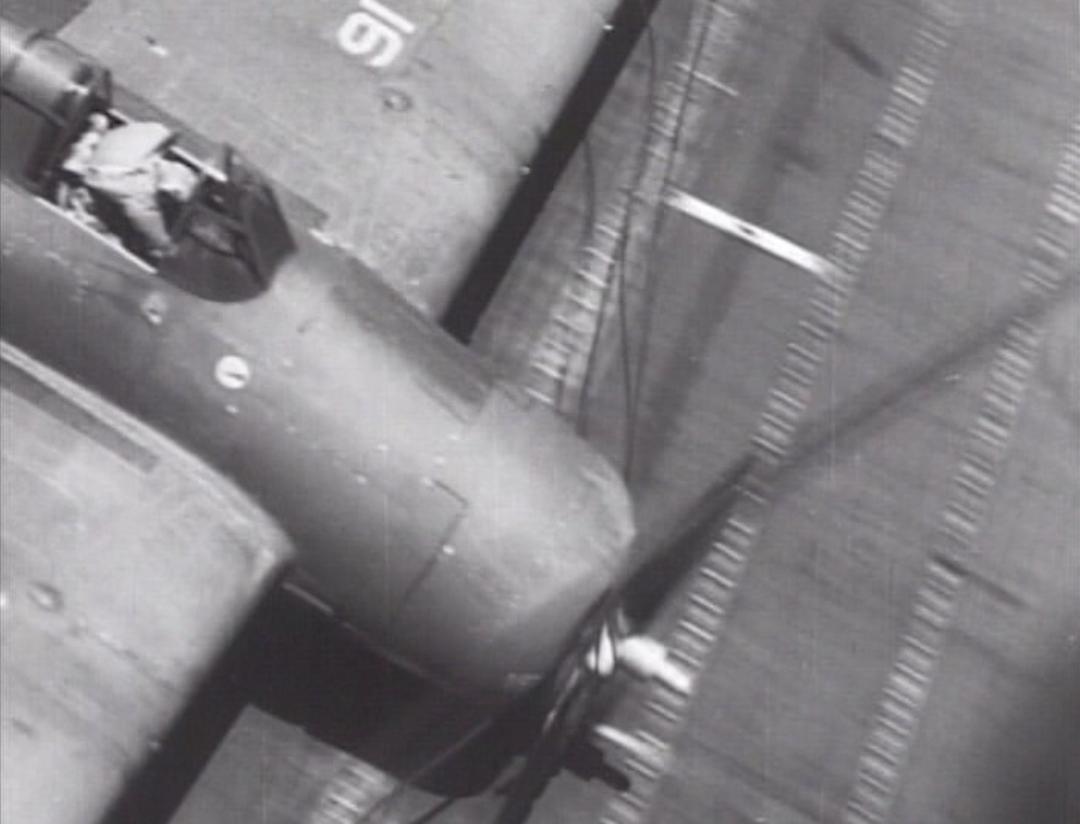
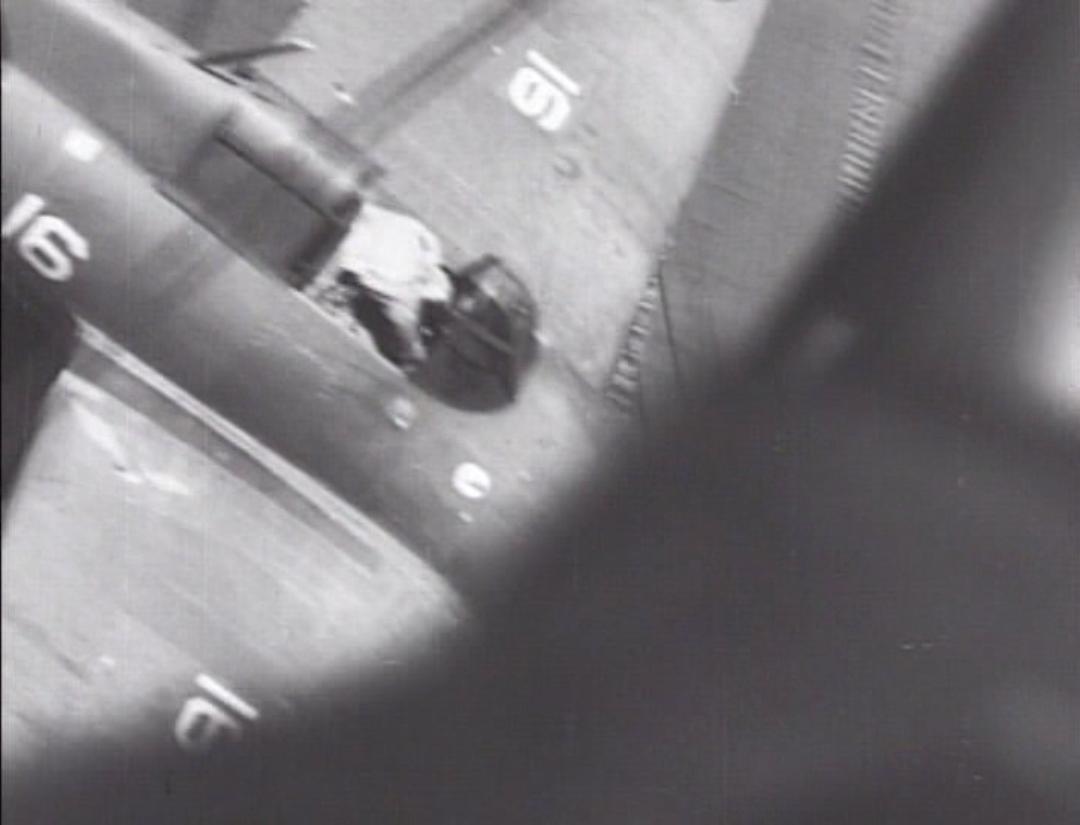
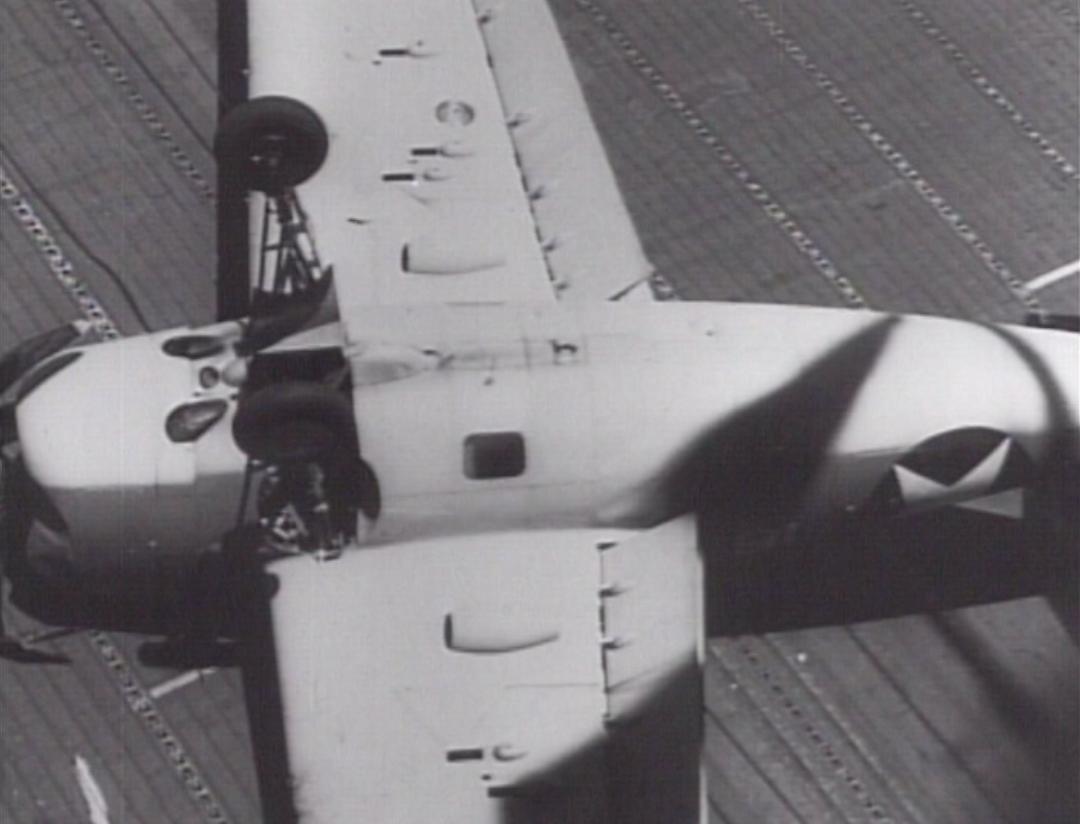
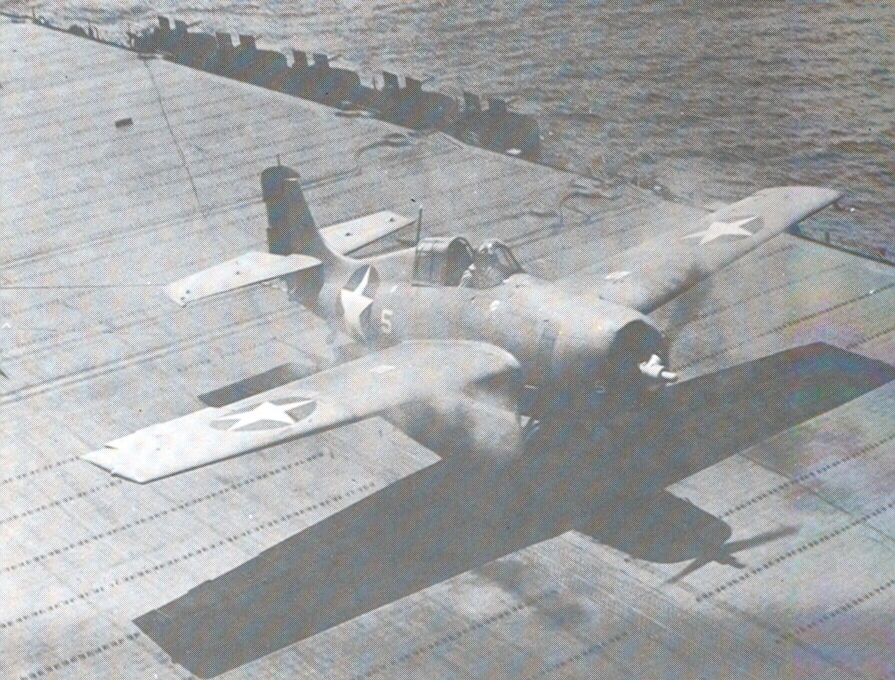
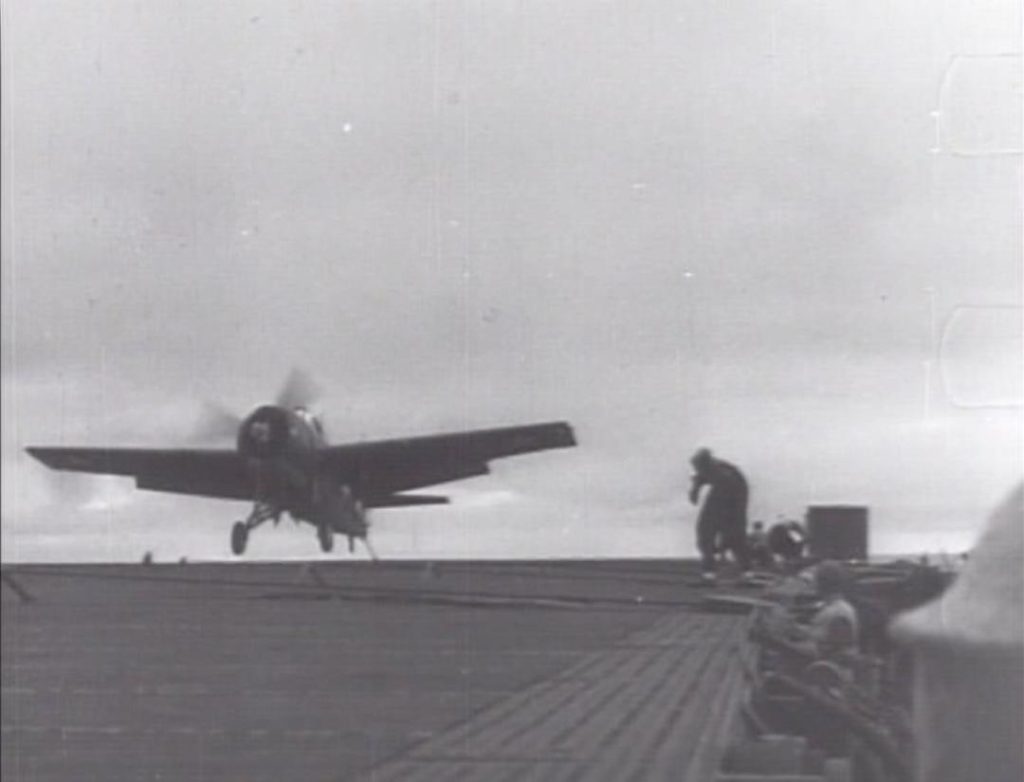
Cheek knocked down one and possibly two more Zeros over the Kido Butai, and was in the unique position of being able to see all three Japanese carriers explode under the bombs of SBDs that morning. Cheek had survived the battle, but he’d face even more peril trying to get home. As he prepared to land back aboard, “I dropped my gear and flipped the handle on the hook release, which is ordinarily on the side of the cockpit and slid forward,” said Cheek. “I flipped the handle of it with my elbow, and it would slide forward, and I would lock it down. This time, when I flipped it, it didn’t slide. I wound up with a hold on it, and my feet braced to push it forward. The engineering chief later told me the track was shot out back there. But Macomber, looking back, he gave me an okay on the hook. I had no idea anything was haywire.” Cheek lined up the deck, took the “cut” from the landing signal officer, and touched down. “I was coming up the deck like a Sunday parade,” said Cheek. “That’s when I saw that I was going to hit the barrier. I didn’t want to go over it, because the day we landed aboard, one of our pilots set down on top of Don (Lovelace, VF-3’s Executive Officer) and killed him. So when I saw I was going to the end of the barrier, I wanted to make damn sure I didn’t go over it. I shoved the stick all the way forward and doubled over in the cockpit as far as I could get.”
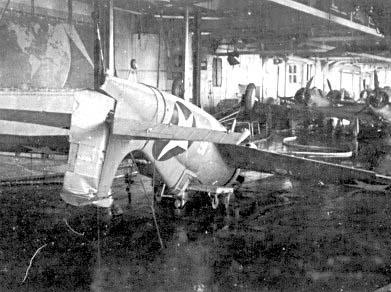
The Wildcat tumbled tail-over-nose and ended up upside down in the barrier. “The next thing I knew, I was right next to the deck, and I couldn’t even see out of the cockpit,” said Cheek. “A guy was trying to look inside, and all I could see was his nose! I yelled at him, ‘Get this S.O.B. off of me!’ I heard him yell, ‘He’s all right!’ About that time, the tail of the plane started up, and I reached down – up, actually, and tripped my seat belt. Somehow, I was also tangled up in the damn barrier wire, too, but I got out from under it.” Cheek would survive two Japanese attacks and abandoned Yorktown later that day. The Thach weave soon became doctrine and served Wildcat pilots well over Guadalcanal and the Solomons, and even later as the faster and more maneuverable Hellcat and Corsair came into fleet service. It would become a standard fighter maneuver, and it was even used by Phantoms in the Vietnam War when confronted by the more nimble MiG-17.