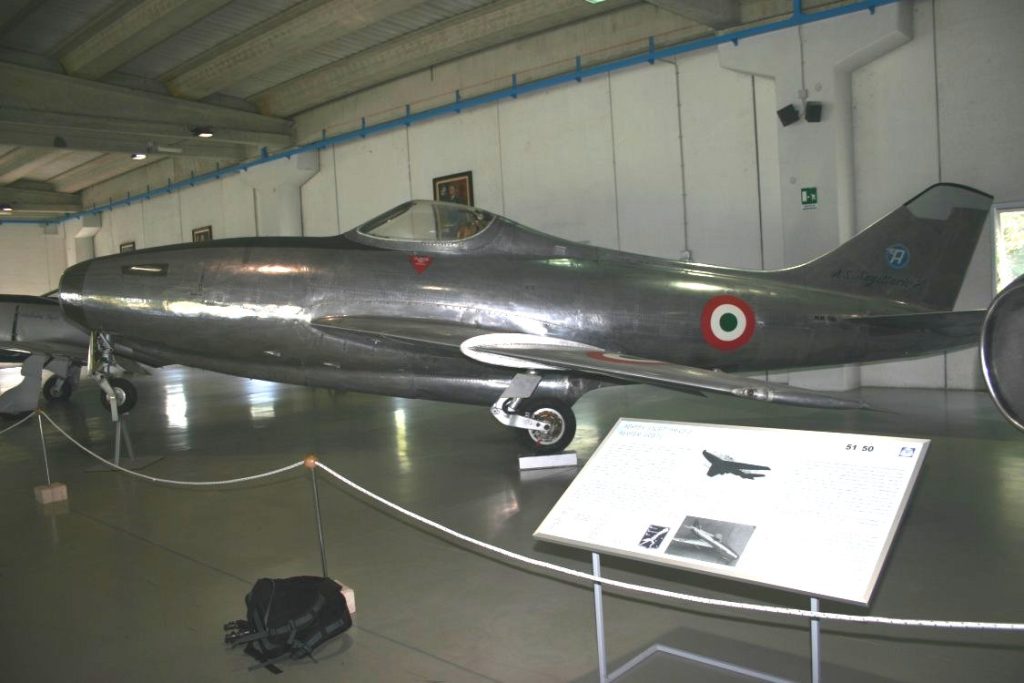
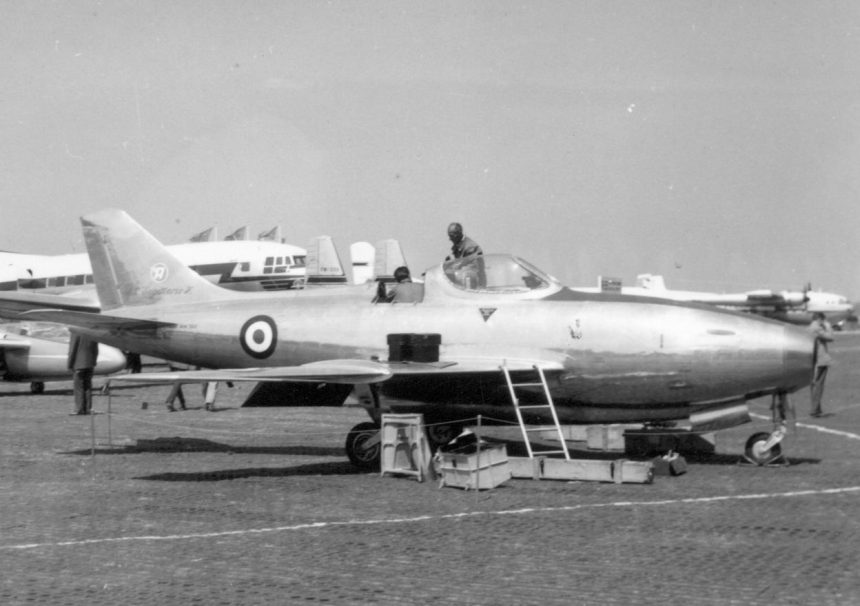


On this day in aviation history, 70 years ago (May 19, 1956), the first flight of the Aerfer Sagittario 2 took place. Italian for Sagittarius, the Sagittario 2 was a light jet fighter prototype developed by native aircraft manufacturer Aerfer. The Sagittario 2 holds the distinction of being the first Italian aircraft to fly at supersonic airspeeds. Development of the light fighter began in December 1953 upon the issuance of NATO Basic Military Requirement 1 (NBMR-1), which was aimed at creating a new light tactical support aircraft for NATO air missions.
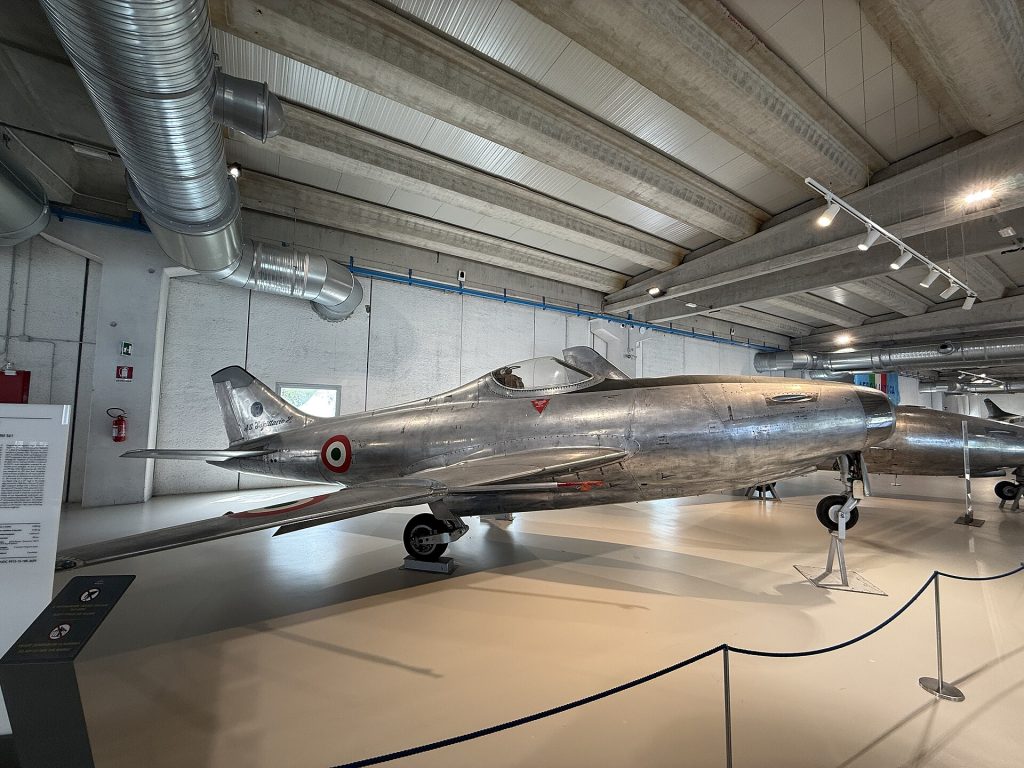
Noted Italian aeronautical engineer Sergio Stefanutti led Aerfer’s design team, which began designing a light fighter in response to NBMR-1 immediately. After Aerfer submitted the design to NATO, the prototype was reviewed but not accepted. NATO preferred other aircraft instead, such as the Breguet Br.1001 Taon, Fiat G.91, and the Dassault Mystère XXVI. Despite being denied by NATO, Aerfer continued to develop the Sagittario 2. Two prototypes were built and test flown. On December 4, 1956, one of the Sagittarios broke the sound barrier. The Italian Air Forces ran an evaluation of the Aerfer light fighter prototype, but no production orders were ever placed. Flight testing of the Sagittario 2 concluded in the late 1950s; however, the airframe and technology fostered were carried over into the development of the Aerfer Ariete, another prototype fighter.
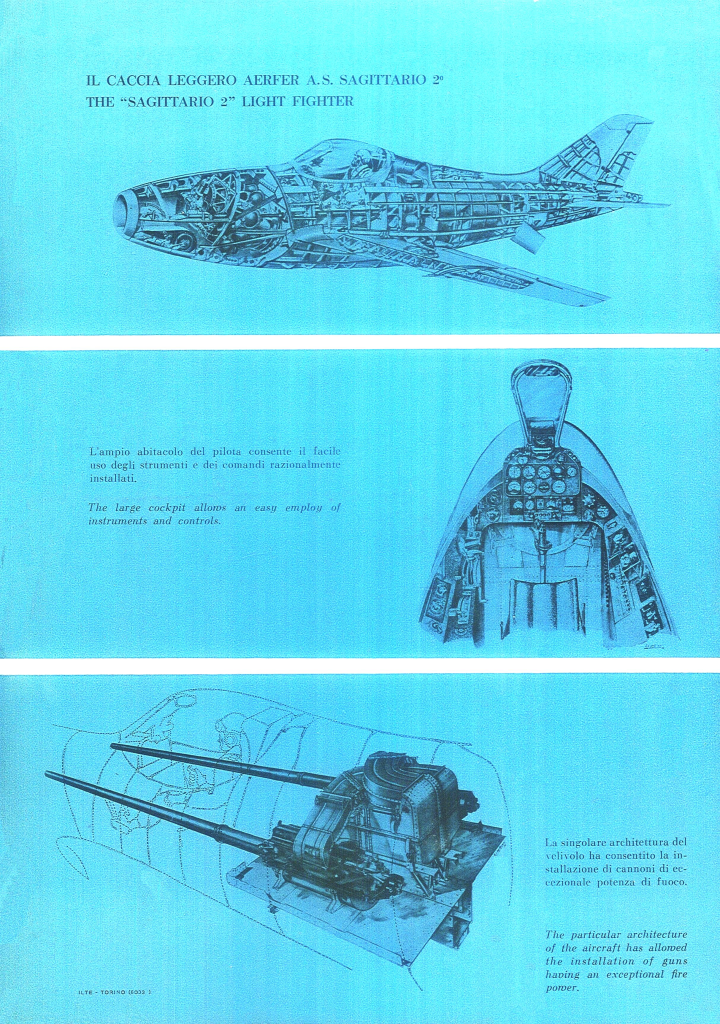
The Aerfer Sagittario 2 was powered by a Rolls-Royce Derwent 9 centrifugal-flow turbojet engine, which provided 3,600 lbf of thrust. Outside of breaking the sound barrier, the maximum speed of the Sagittario 2 was 625 mph. The light fighter prototype had a range of 413 nmi and a service ceiling of 46,000 ft. A thrust of weight ratio of 0.49, and an 8,300 fpm rate of climb allowed the Sagittario 2 to reach 39,000 ft in 10 minutes. Had the Sagittario 2 been selected by NATO for combat duty, the fighter would have been fitted with two 30 mm Hispano-Suiza HSS 825 L/70 cannons and two hardpoints that could be fitted with bombs, rockets, or gun pods.