
In the 1940s, the Hughes Aircraft Company and its owner, Howard Hughes, were developing several aircraft. But instead of helping the US military, these aircraft only added more confusion. Howard Hughes entered the defense market by offering his privately built D-2 aircraft. The D-2 was not initially made for the military, but to fulfill Hughes’s obsession with setting a world record. Howard Hughes wanted to break aviation records, and in the mid-1930s, he hired aeronautical engineer Richard Palmer to build a racing monoplane to achieve a speed record. The aircraft became the H-1B “Racer,” which first flew on August 17, 1935. On September 13, 1935, Howard Hughes set a world landplane speed record with the H-1B, reaching 355 mph. In January 1937, an updated version of the plane completed a flight from Burbank to New York in 7 hours and 28 minutes. In July 1938, Howard Hughes flew a twin-engine Lockheed 14-N2 around the world in 91 hours and 14 minutes. He wanted to break this record again, so he began developing a long-range aircraft, the D-2. However, as WWII began, a shortage of defense engines delayed Hughes’ dream of developing the D-2. To keep the project going and receive engines, Hughes offered the D-2 to the US Army Air Corps as a fighter in December 1939. The Army showed some interest in his project, and in 1940, they informed him they would allow the purchase of two Wright Tornado engines for the D-2. In early 1942, Hughes urged the Army to decide whether to order the D-2. After initial meetings and even procurement discussions, the Army finally decided to opt out of the project because the aircraft lacked fighter maneuverability and the ability to accommodate required military equipment. Around the same time, the US Army Air Force (USAAF) leaders discussed the need for a specialized reconnaissance aircraft for the Pacific theater, where the loss of Chinese bases made many targets in Japan unreachable for most Allied planes. In January 1943, the service started a program to acquire a dedicated long-range reconnaissance aircraft, and preliminary specifications were released in April.
Birth of Hughes XF-11
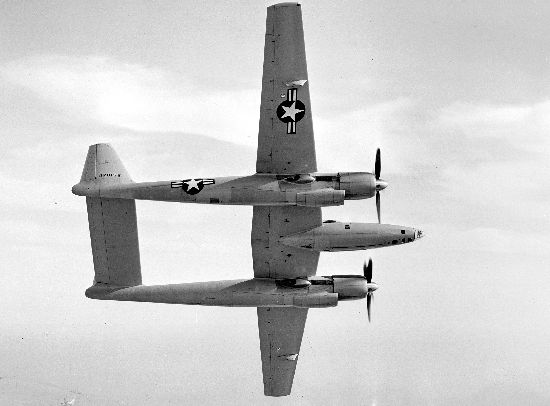
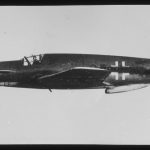
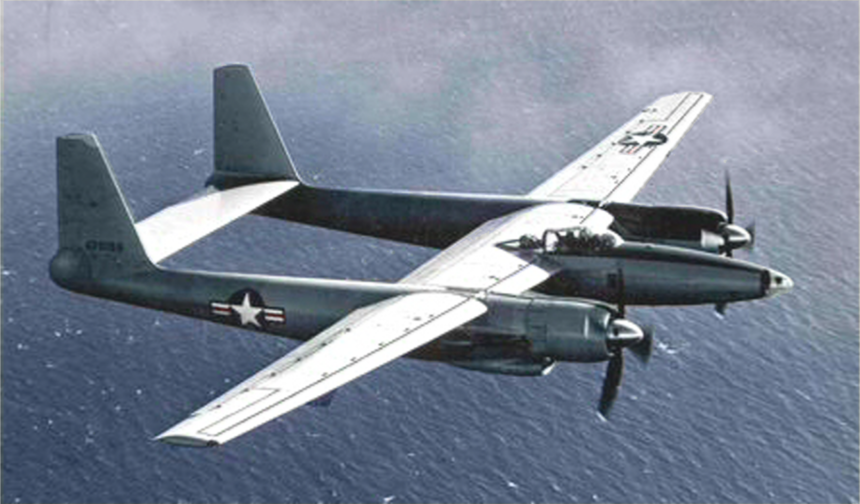
To join the project, Hughes redesigned the D-2 aircraft into the XF-11, a long-range and high-speed reconnaissance plane made entirely of metal. Boeing suggested modifying the B-29, Lockheed proposed a version of the XP-58, and Republic submitted proposals for XF-12. In August 1943, Hughes found out that Colonel Elliott Roosevelt, the president’s son and a reconnaissance commander, would review proposals. During Roosevelt’s visit, Hughes’s publicist treated Roosevelt warmly. After the visit, Roosevelt recommended Hughes’s proposal to General Henry “Hap” Arnold. Arnold then ordered 100 F-11s to be delivered starting in 1944, despite the concerns about Hughes’s ability to produce them. In October 1943, the US government issued a preliminary contract worth $43 million. Howard Hughes contested this, asking for $3.6 to $3.9 million to cover the development of the D-2 aircraft. The USAAF opposed Hughes as the D-2 project had begun without the service’s input. Negotiations took almost ten months, and the final contract was awarded on August 1, 1944. Hughes received $1.6 million in reimbursement. However, since the work on the Hughes XF-11 had not yet begun, the USAAF considered canceling the project. To save the contract, Hughes hired Charles Perrell to run the program with full authority. Perrell found the company to be inefficient and lacking experience. His plan to reorganize met with resistance and, in May 1944, 21 engineers, including the chief engineer Ed West, resigned over changes in the office. When the war in Europe ended in May 1945, the original order for 100 aircraft was reduced to three, including one static test model and two prototypes. The USAAF then decided to lower the priority of the project. With the arrival of engines seven months late in September 1945, Perrell improved production, but Hughes returned and interfered, which led to Perrell’s firing in December. Finally, the first prototype of the aircraft was developed by early 1946. The Hughes XF-11 was an all-metal airplane with two engines and a tricycle landing gear. It had a twin-boom design and a pressurized crew compartment in the center. The plane was equipped with flush-riveted aluminum skin, single-slotted Fowler flaps, mid-chord spoilers for better control at high speeds, and wingtip-mounted ailerons for control at low speeds.
The Design
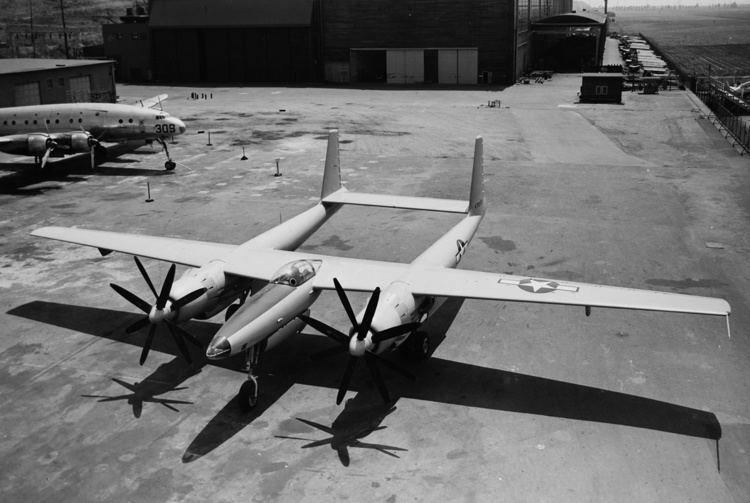
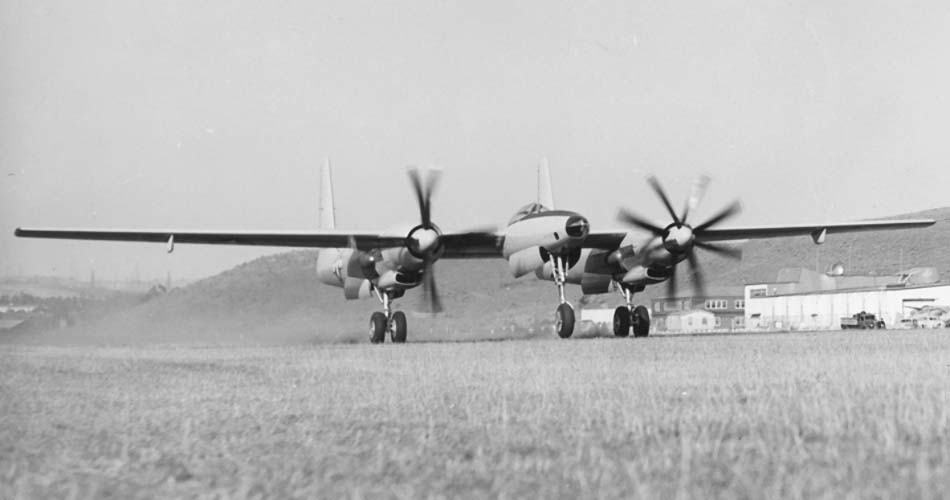
The Hughes XF-11 was designed for a two-person crew with staggered seating. The pilot sat in the front, while the navigator/photographer sat behind and to the right. The navigator could reach the nose to service the cameras, and a photographic technician could use the lower nose compartment. The nose included a Fairchild K-17 camera in a clear cone, along with two other cameras visible through windows. Additionally, two downward-facing Fairchild K-22 cameras were located in the left tail boom. The Hughes XF-11 was 65.3 feet long, with a wingspan of 101.5 feet and a wing area of 983 square feet. The empty weight of the aircraft was 37,100 pounds, the gross weight was 47,500 pounds, and the maximum weight was 58,315 pounds. The aircraft was equipped with two Pratt & Whitney R-4360-31 Wasp Major 28-cylinder air-cooled radial piston engines, each producing 3,000 horsepower. It was equipped with two 8-bladed Hamilton Standard Hydromatic contra-rotating propellers. The maximum speed of the aircraft was 450 mph at 33,000 feet and 295 mph at sea level. The US Army Air Forces (USAAF) conditionally accepted the first prototype on April 5, 1946, even though its electrical and hydraulic systems were not finished. It made a short, low hop on April 24, and the company was waiting for new propellers before starting formal test flights. On July 7, 1946, the aircraft officially took off from Hughes Aircraft’s airfield in Culver City, piloted by Howard Hughes. However, the aircraft crashed on its first flight and was destroyed, leaving Hughes seriously injured. Hughes did not follow the agreed testing plan, which required a 45-minute flight with the landing gear down. He ordered 1,200 US gallons of fuel instead of the 600 US gallons that were specified. Investigators from the USAAF concluded that a loss of hydraulic fluid caused the failure of the pitch-change mechanism for the right rear propeller. The service blamed the crash on pilot error, saying Hughes kept the right engine at full power instead of letting the propeller spin without power. However, Hughes later won a lawsuit against Hamilton Standard for the problem with the contra-rotating blades.
The Cancellation
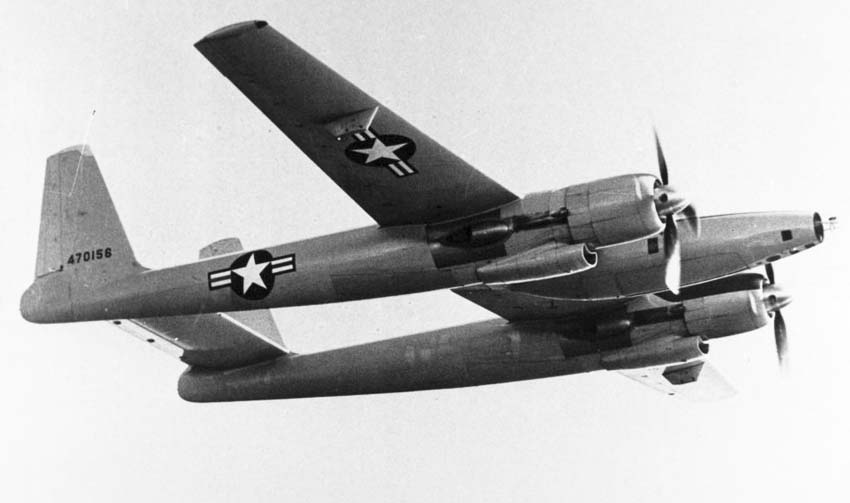
The second prototype was flown by Hughes on April 5, 1947, and it had regular four-bladed propellers. The USAAF initially did not want Hughes to fly the aircraft, but after he spoke to senior officers, the service allowed him to fly it, requiring a $5 million security deposit. The aircraft was transported to Muroc Dry Lake for the flight. The test went smoothly, showing that the Hughes XF-11 was stable and controllable at high speeds, but it had issues with low-speed stability; the ailerons did not work well at low altitudes. When compared to the Republic XF-12, the Hughes XF-11 was found to be more difficult to fly and maintain and was expected to cost twice as much to build. Many onboard systems were unreliable, leading to canceled test flights due to engine or electrical problems. The nose compartment was cramped, making it nearly impossible to service cameras during flight. By that time, the jet engines had arrived as well, and considering all factors, the US Air Force, which was created in September 1947, canceled the project. The Hughes XF-11 program cost the federal government $14,155,235. From 1946 to 1947, the US Senate’s Special Committee Investigating the National Defense Program, known as the Truman Committee, looked into the F-11 and H-4 programs, leading to the well-known Hughes-Roosevelt hearings in August 1947. The committee chairman, Senator Ralph Owen Brewster from Maine, aimed to discredit the Roosevelt family and Howard Hughes. Hughes had secured the controversial XF-11 and H-4 contracts, and he supported legislation that benefited Trans World Airlines, which he controlled, over Pan American World Airways, which Brewster supported. The committee found that a Hughes employee had spent $169,661 entertaining Elliott Roosevelt and other US Army Air Forces officers who oversaw airplane contracts. On August 4, 1947, Meyer and Roosevelt testified before the committee, denying any wrongdoing. Howard Hughes also testified and is generally believed to have successfully addressed the criticism about his company’s handling of the F-11 and H-4 contracts. In the Grounded Dreams series, the Hughes XF-11 was a controversial airplane with good flight characteristics, but it was not handled properly. Read more Grounded Dreams articles HERE.