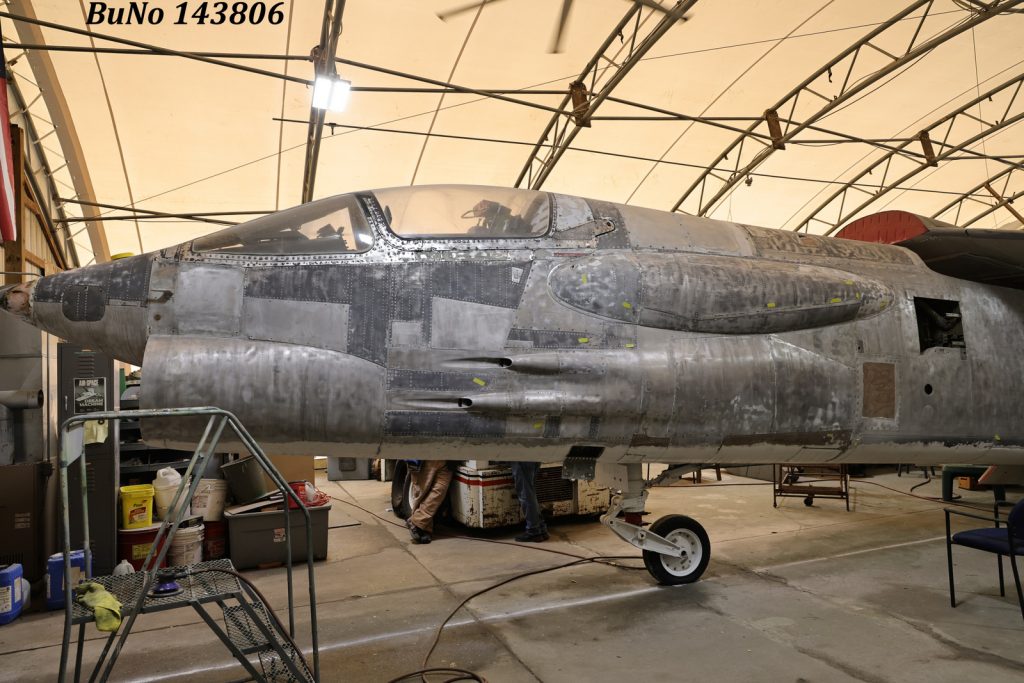

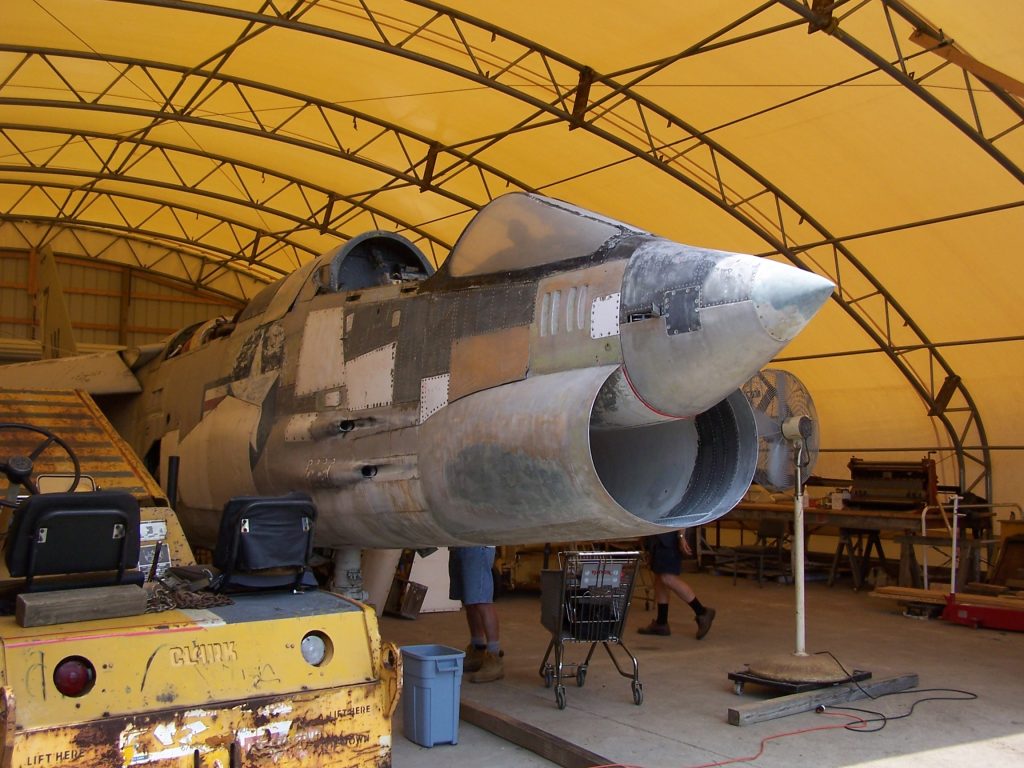
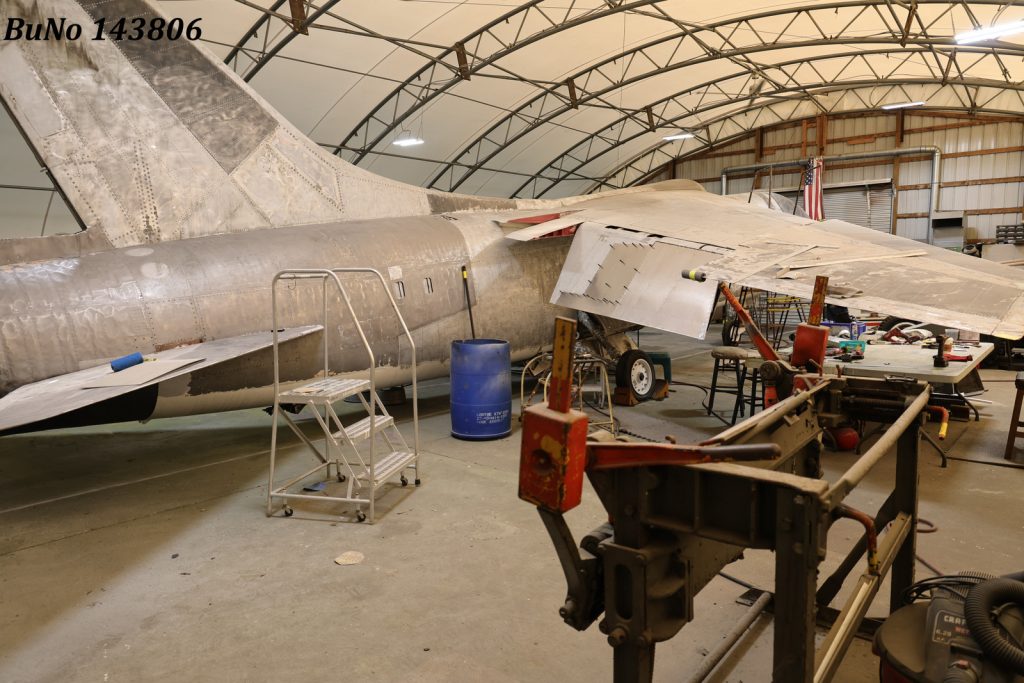
The restoration team at the Harold F. Pitcairn Wings of Freedom Aviation Museum, Horsham, PA, is nearing the final stages of work on a 70-year-old F-8 Crusader, with volunteers expecting the aircraft to be completed this summer. The project has been underway since June 2024 and has already taken at least 1,000 volunteer hours, according to senior fabricator Drew Mansueto of King of Prussia. Mansueto has been involved with restoration work at the museum since early 2019, helping with aircraft construction, shaping, welding, sanding, priming, and painting. “If it were a job, I wouldn’t be here,” Mansueto said. “I enjoy what I’m doing.”
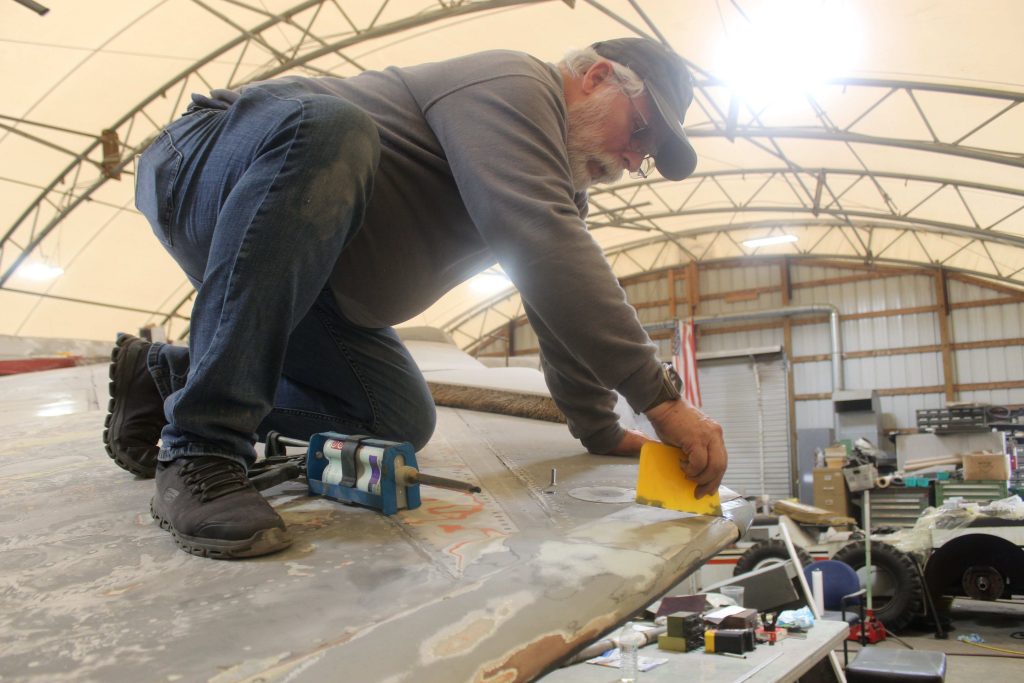
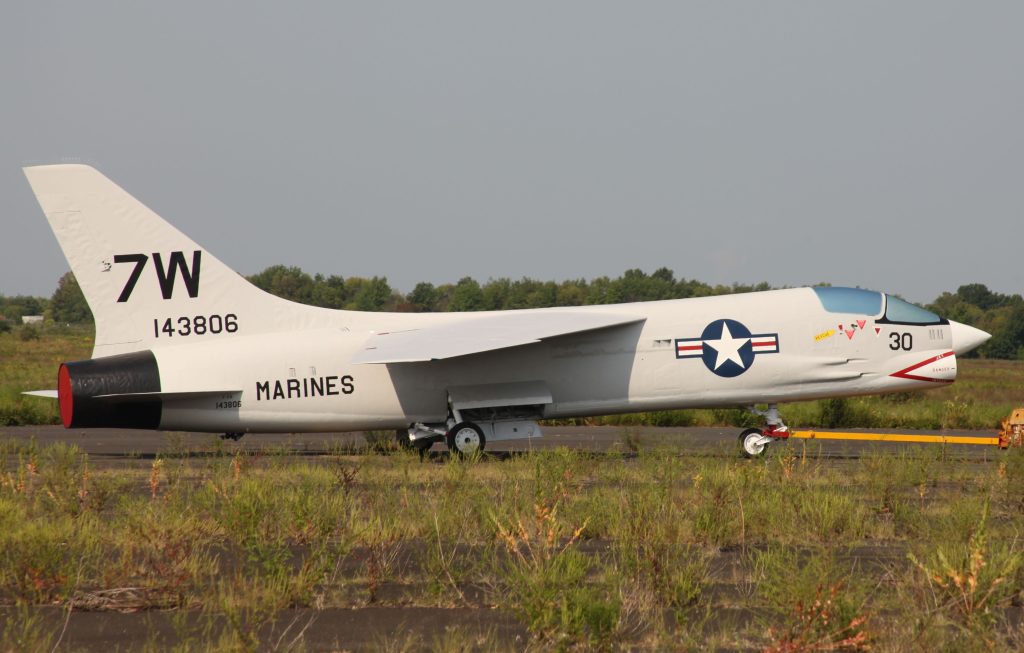
On a recent morning, Mansueto and several volunteers were still working on the aircraft inside the hangar behind the Horsham-based museum. Mansueto was filling small holes on one of the wings, while Tom Rimm of Jamison, who spent 48 years in aviation maintenance, prepared the windows for painting. The restoration crew can include as many as 18 volunteers, depending on the day. Much of the work has focused on returning the aircraft’s markings and finish as close as possible to their original appearance. “The colors have to be right. The spacing of the letters has to be right,” Mansueto said, referring to several blueprints that have guided the effort. “We try to have the insignias and the letters as close to the standards as we can.”
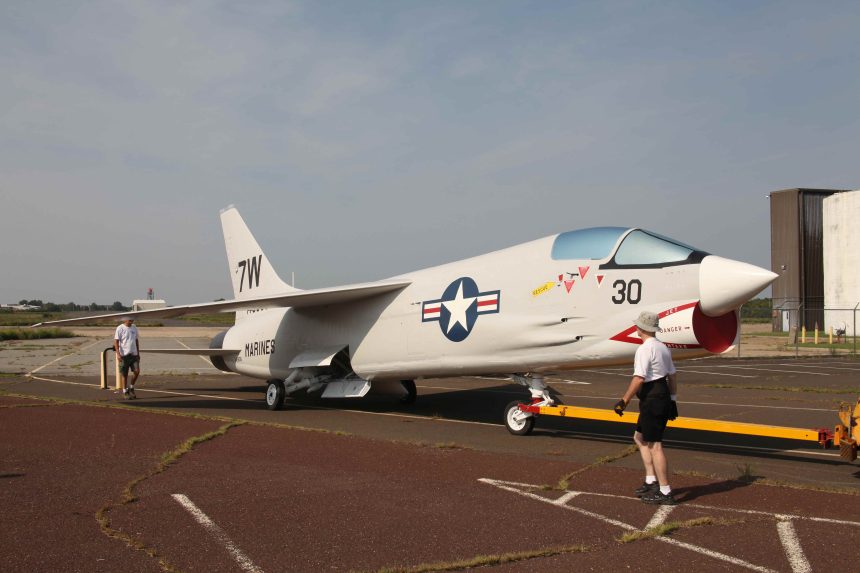
The F-8 Crusader served with the U.S. Navy and Marine Corps from 1957 to 1977. The single-seat fighter could reach a top speed of 1,120 mph at 40,000 feet. The aircraft has a wingspan of 35 feet, two inches, a length of 54 feet, six inches, and a height of 15 feet, nine inches. Because of its size, painting the aircraft is expected to take at least two full eight-hour days, compared with some smaller aircraft that can be painted in a single day. The museum’s Crusader was delivered to the Navy at the former Naval Air Station Joint Reserve Base Willow Grove in December 1957. It logged 2,786 flight hours before being retired and placed on permanent display at the base, which was located next to the museum. Aircraft restoration manager Lee Wintz of Upper Moreland said the F-8 project has cost about $10,000 in supplies. Most aircraft displayed at the museum are on loan from the government, with the museum and its all-volunteer nonprofit organization responsible for maintaining and restoring them.
“It’s not a cheap hobby,” said Wintz, of Upper Moreland, who has been volunteering with the museum for more than a decade. The F-8 work began while the team was also restoring the Marine One helicopter, a project completed last fall after more than 5,000 volunteer hours and thousands of dollars in material costs. For longtime volunteer Bruno Cavallo, 89, this is the second time he has seen the team rebuild the F-8. Cavallo, a former Navy aeronautical engineer, said earlier paint problems allowed moisture to get inside the aircraft, causing corrosion from within. A large part of the work, he said, involves finding practical ways to solve problems as they come up. “We have to be creative in some of the things we do,” Cavallo said. “We have to strip down and rebuild parts from scratch.”
The museum’s restoration team is selective about who works on aircraft. Ideally, volunteers have experience with cars, sheet metal, or aircraft, though those with basic skills and a willingness to return regularly can learn from the more experienced members. Wintz said he started by spending time around the hangar, watching others work and staying out of the way, before eventually moving into hand-painting aircraft. Vietnam veteran Nick Weremeychik of Warrington, a former Army crew chief, has volunteered at the museum for nearly 20 years and helps with a range of restoration tasks. “It’s always different,” he said. “You don’t get bored here.” For more information and to support the Wings of Freedom Aviation Museum, click on this link: wingsoffreedommuseum.org.