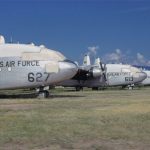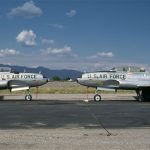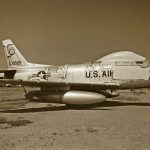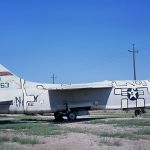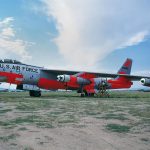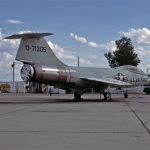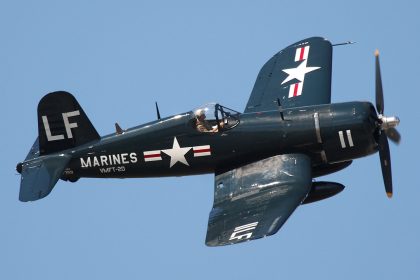
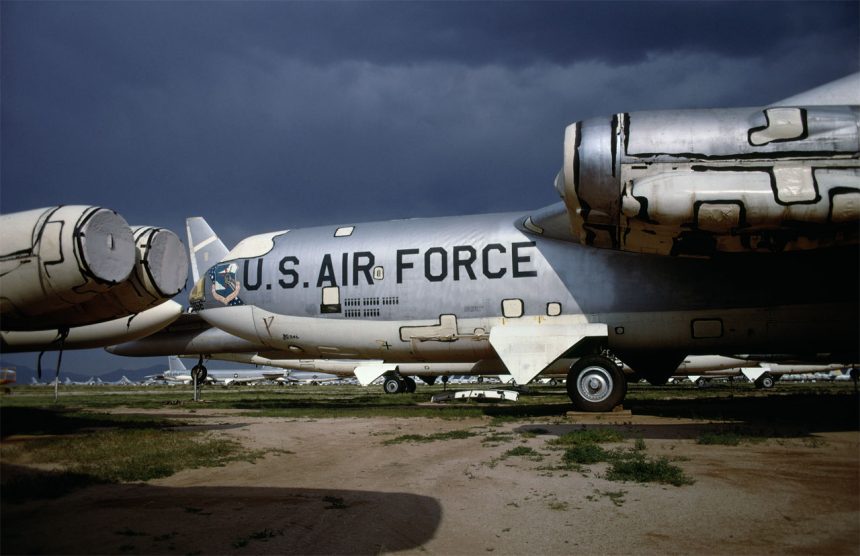

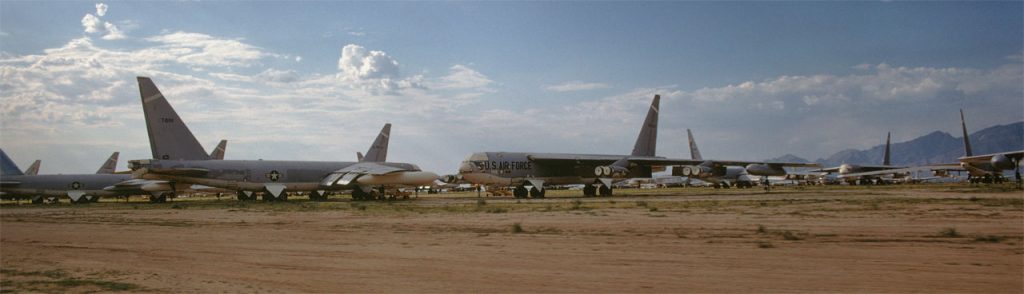
As we continue the Boneyard Files series, which showcases some of the retired aircraft resting at Davis-Monthan Air Force Base in Tucson, Arizona, in the late 1960s, today’s story features the Boeing B-52 Stratofortress through the lens of Neil Aird’s “Monthan Memories” photos. For over 60 years, B-52s have been a core part of the US strategic bomber force. The B-52 can drop or launch a wide range of weapons, including gravity bombs, cluster bombs, precision-guided missiles, and joint direct attack munitions. With modern technology, the B-52 can deliver all types of weapons developed by the military. It is envisioned to remain important for US defense well into the 21st century, and the Air Force plans to operate Boeing B-52 Stratofortress until at least 2050. The B-52A made its first flight in 1954, and the B model started service in 1955. A total of 744 B-52s were built, and the last one, a B-52H, was delivered in October 1962. The first of 102 B-52H models was given to the Strategic Air Command in May 1961.
The B-52H can carry a maximum of 20 air-launched cruise missiles. It can also carry conventional cruise missiles, which were used in various situations starting with Operation Desert Storm in the 1990s and continuing with Operation Inherent Resolve in 2016. The B-52H Stratofortress is 159.4 feet long, 40.8 feet high, with a wingspan of 185 feet. The empty weight of the aircraft is 185,000 pounds, and the maximum takeoff weight is 488,000 pounds. It is powered by eight Pratt & Whitney TF33-P-3/103 turbofan engines, each producing 17,000 pounds of thrust. The B-52H can carry a payload of 70,000 pounds, including bombs, mines, and missiles, and its maximum speed is 650 mph (Mach 0.84). Its range is 8,800 miles, and the service ceiling is 50,000 feet. The Boeing B-52 Stratofortress bomber can also support the US Navy with ocean surveillance and in anti-ship and mine-laying operations. In two hours, two B-52s can monitor 140,000 square miles of ocean surface. The Boeing B-52 Stratofortress showed its usefulness in Operation Desert Storm and again in Operation Allied Force. During Desert Storm, B-52s dropped 40 percent of all the bombs used by coalition forces. The aircraft targeted troop concentrations, fixed installations, and bunkers. In early September 1996, the B-52Hs hit Baghdad communications facilities and power stations with 13 AGM-86C Conventional Air-Launched Cruise Missiles.
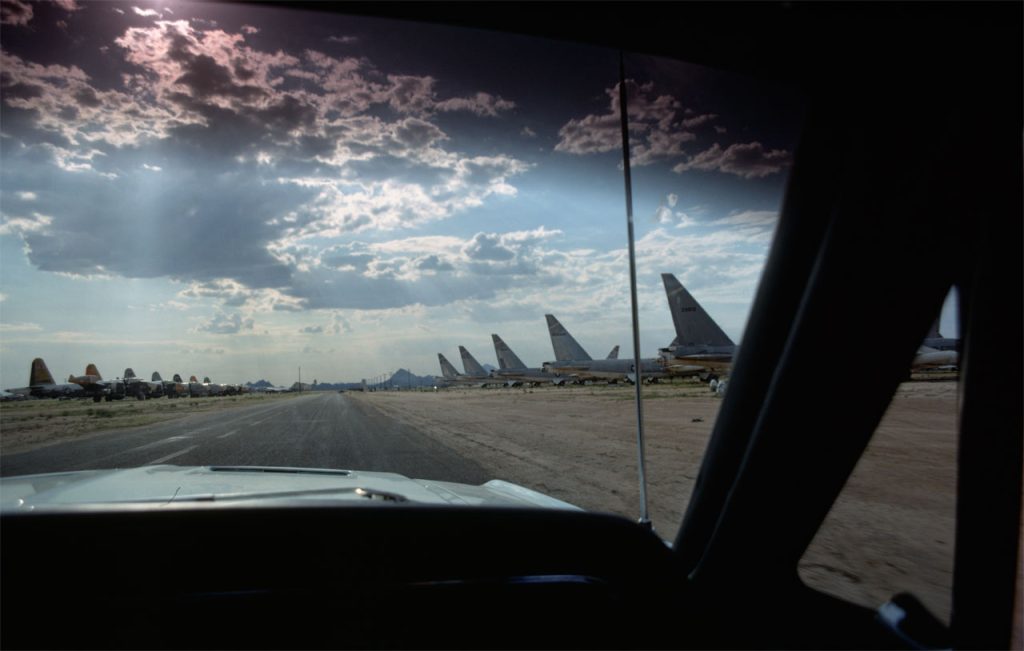
At that time, this was the longest distance flown for a combat mission involving a 34-hour, 16,000-statute-mile round trip from Barksdale Air Force Base, Louisiana. In 2001, the Boeing B-52 Stratofortress participated in Operation Enduring Freedom, flying at high altitudes to provide close air support using precision-guided weapons. During Operation Iraqi Freedom, on March 21, 2003, the B-52 launched about 100 Conventional Air-Launched Cruise Missiles on a night mission. In 2016, the Boeing B-52 Stratofortress returned to the Central Command region for the first time in ten years. B-52s flew around 1,800 combat missions against ISIS in Syria and Iraq, helping to reduce ISIS’s presence in the region. The B-52H model is still in service, in use with the 5th Bomb Wing at Minot Air Force Base and the 2nd Bomb Wing at Barksdale Air Force Base, both under Air Force Global Strike Command. The Boeing B-52 Stratofortress bombers last operated in March 2026 during Operation Epic Fury against Iran. By the late 1960s, early models of the B-52 (A through F) experienced structural problems because of heavy use, especially during conventional bombing in the Vietnam War. The more durable H models were replacing these older models, and some of those retired aircraft were spotted at Davis-Monthan Air Force Base, known as “The Boneyard.” Read more Boneyard Files Articles HERE.