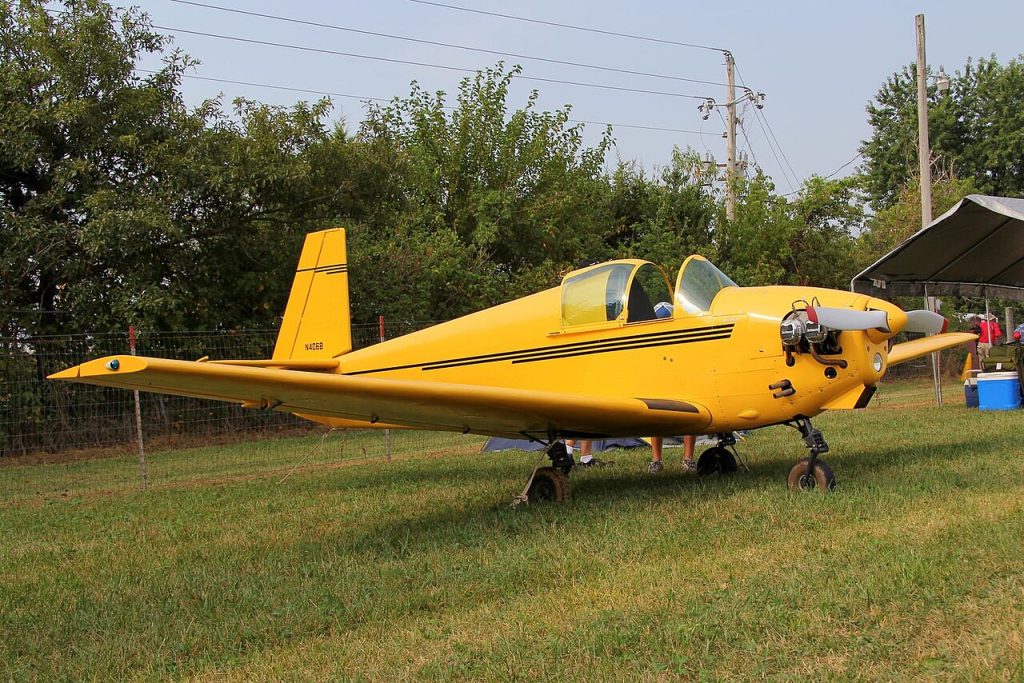
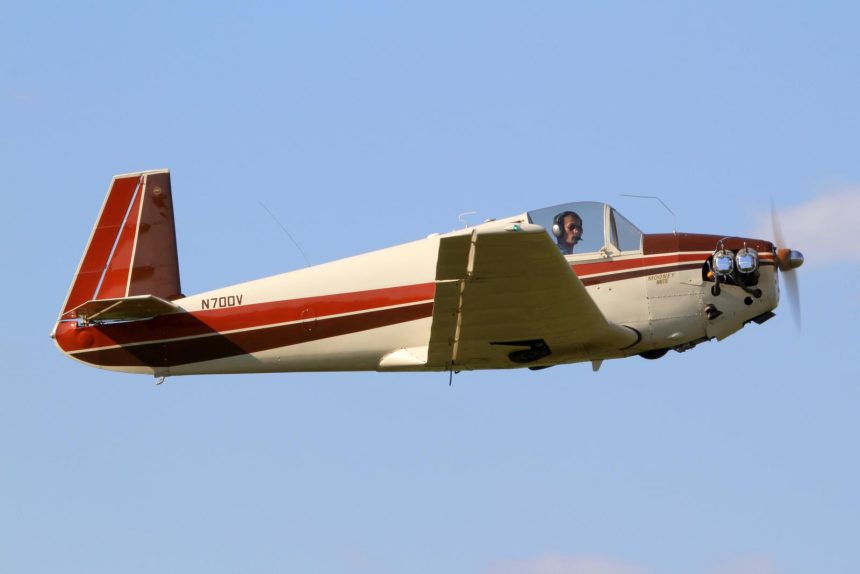


On this day in aviation history, 79 years ago (May 17, 1947), the first flight of the Mooney M-18 Mite took place. The M-18 was a post-WWII general aviation aircraft that was designed by Al Mooney. The aircraft was intended to be marketed towards fighter pilots returning from the war. Mooney’s design was straightforward, yet sleek, representative of the most popular fighters of WWII. The M-18 was a low-wing, single-seat monoplane that featured retractable landing gear.
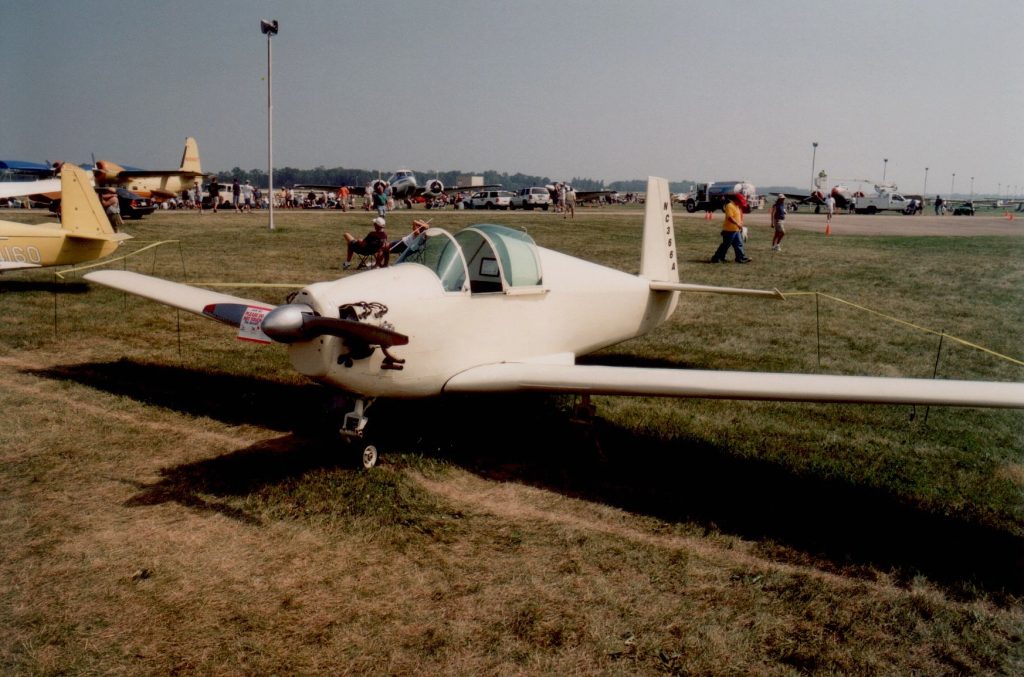
One of the main design goals of Mooney with the M-18 was low operating costs significantly lower than the competition. The Mite was constructed mostly of wood with fabric covering, and a single spruce and plywood “D” wing spar. The wing area aft of the spar was also fabric-covered. Mooney opted to use the NACA 64A215 airfoil on the M-18, the first time it had been used on a civilian aircraft, as all prior applications had been for fighter aircraft. A “safe trim” system was installed on the M-18, which linked the wing flaps to the tail trim and automatically adjusted the horizontal stabilizer when the flaps were deflected. This helped reduce or even eliminate pitch changes when the flaps were lowered.
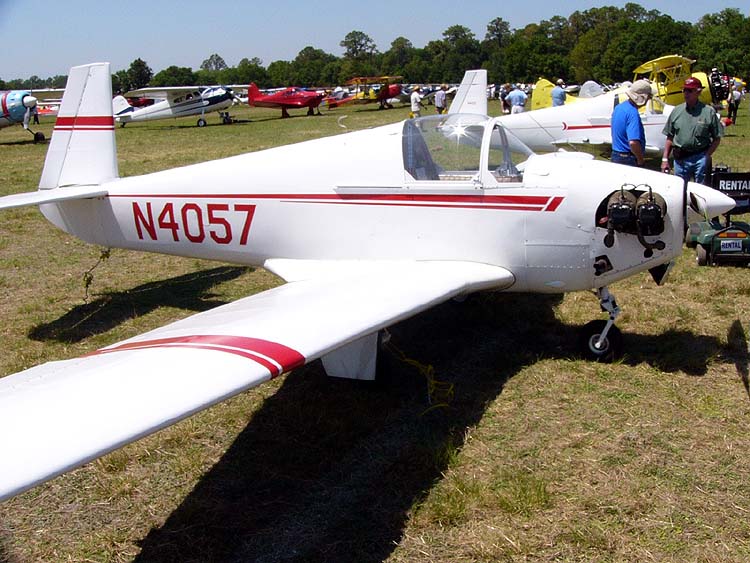
Between 1947 and 1954, Mooney built a total of 283 M-18s of differing variants between factories in Wichita, Kansas, and Kerrville, Texas. Being that the M-18 was single-seat, the market proved to be slim. As a result, Mooney developed the four-seat M-20 and targeted the “family flyer” market. Mooney was losing $1,000 on each M-18 sold, so development of the M-20 became a priority instead. Mooney offered kits for home-built versions of the M-18 in the 1970s. The Mooney M-18C Mite was powered by a 65-horsepower Continental A65 engine, swinging a wooden propeller. The aircraft could cruise at 125 mph and attain a maximum airspeed of 138 mph. Stall speed for the M-18C was 43 mph. The Mite had a range of 382 nautical miles, a service ceiling of 19,400 feet, and a 1,090 feet per minute rate of climb.