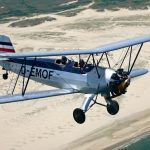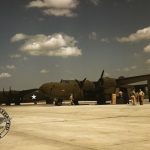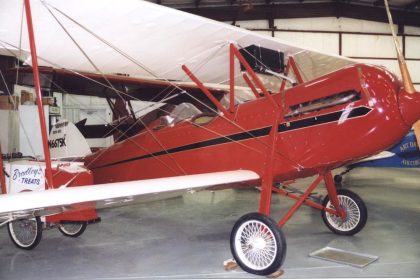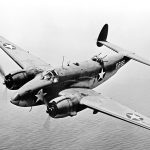


In 1919, business partners Clayton J. “Clayt” Brukner and Elwood “Sam” Junkin met pilots Charles “Charley” William Meyers and George “Buck” Weaver to design a floatplane. Although their first floatplane design failed, they founded the Waco company in 1920. The company became known for dependable, durable planes. These planes were popular with traveling businesspeople, postal services, and explorers. After 1930, Waco started producing closed-cabin biplanes in addition to open-cockpit models. The Waco name was very popular in the US civil aircraft registry between the wars. More Waco aircraft were registered than any other company’s planes. The company produced various types, including open-cockpit biplanes, cabin biplanes, and cabin sesquiplanes, which Waco called Custom Cabins. They also made many experimental types. During WWII, Waco made many military gliders for the RAF and the US Army Air Forces. These gliders were used in airborne operations, especially during the Normandy Invasion and Operation Market Garden. The Waco CG-4 was the most produced glider design. Waco also produced more than 600 UPF-7 open biplanes and 21 VKS-7F cabin biplanes for the Civilian Pilot Training Program, which supported military pilot training. The USAAF also used 42 privately owned aircraft of 16 types as light transports and utility aircraft, under the common designation C-72/UC-72. Waco stopped operating in 1947 after facing challenges like many other general aviation companies.
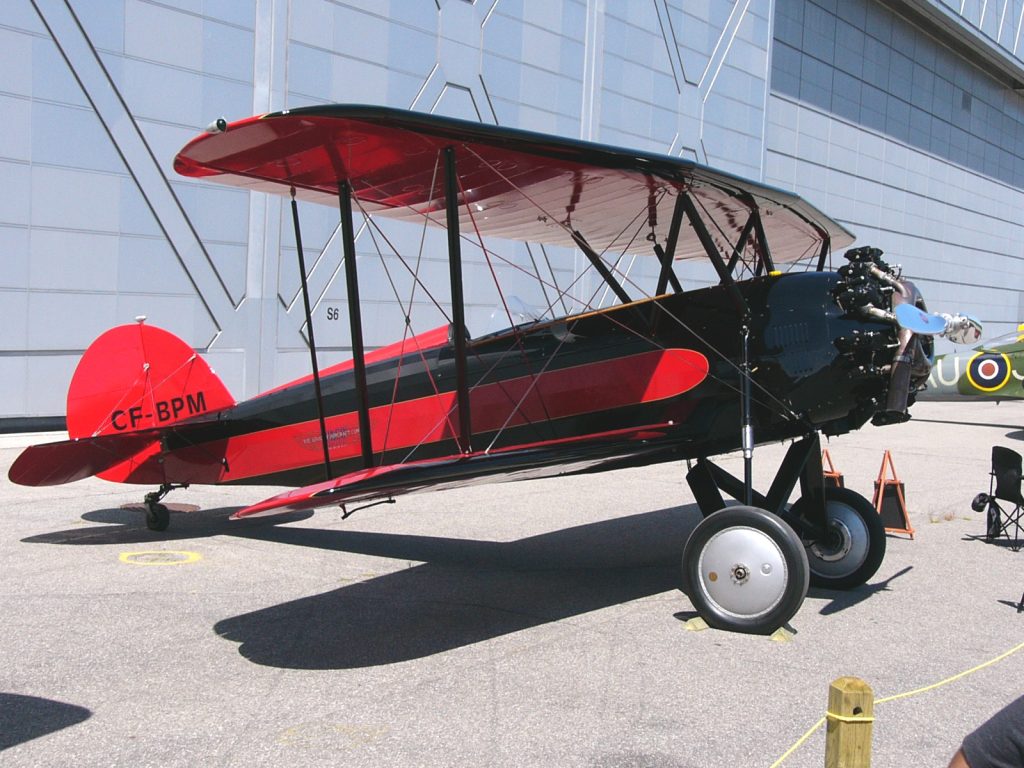
The company expected a post-WWII aviation boom, but it didn’t happen. The last Waco plane used an experimental Franklin engine. However, because other contracts were canceled, the engine became too expensive, leading to the cancellation of the Aristocraft, which depended on it. The Waco brand name returned briefly in the 1960s and early 1970s. The goal was to produce, assemble, and market modern, all-metal light planes from Italy and France in the United States. The project was led by a man named Mr. Berger, and the company was called Waco Aircraft Co., a part of Allied Aero Industries, Inc. It operated from Pottstown-Limerick Airport in Pennsylvania and had dealerships in Connecticut, Georgia, Oklahoma, Texas, California, and Ontario, Canada. The European Waco planes sometimes had Franklin engines instead of the original Lycoming engines, as Mr. Berger was involved with Franklin. Waco Aircraft Company in Syracuse, New York, was to make, or at least assemble, these planes in the US. Only about 65 to 150 of these European planes were sold as Wacos before Mr. Berger’s death ended the program. Many Waco surviving aircraft are still around today. The largest group is at the Historic Aircraft Restoration Museum at Dauster Field in Creve Coeur, near St. Louis, Missouri. In 1986, WACO Classic Aircraft (not related to the original Waco) started producing its WACO Classic YMF. It was a reworked version of Waco’s original design, which had been approved. On April 29, 2026, Waco announced it would cease all manufacturing and aircraft maintenance services.

The original Waco built many types of aircraft in the 1920s and 1930s, starting with open-cockpit biplanes and monoplanes, then moving on to enclosed-cabin aircraft. Early models included the Waco Cootie and Waco 4 through 7. The Waco 9 was the first aircraft the company mass-produced, with 270 units built. The Waco 10 was even more popular, becoming the most-produced aircraft with 1,623 built from 1927 to 1933. It had many versions powered by different engines. Waco also created mailplanes like the JWM and JYM, side-by-side biplanes in the A series, and military planes such as the CHD, JHD, and S3HD. The company developed a large range of Standard and Custom Cabin biplanes and later introduced the N series with nosewheel gear and the E series cabin aircraft called Aristocrat. During WWII, Waco played an important role in military aviation by making gliders. It produced the CG-3, CG-4 Hadrian, CG-13, and CG-15 troop gliders, with the CG-4 being one of the most recognized American assault gliders of the war. Waco also explored powered versions of the CG-4, such as the Northwestern XPG-1 and Ridgefield XPG-2, as well as other transport designs like the Waco YC-62 and C-72. The company’s last aircraft was the Waco Aristocraft, a pusher-type cabin transport powered from the nose, but only one prototype was built. Read more Forgotten Factories articles HERE.