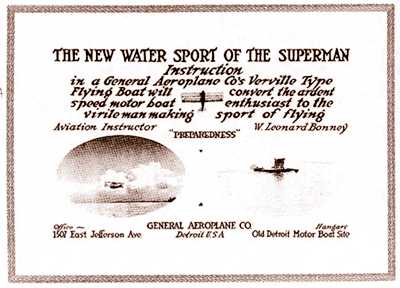
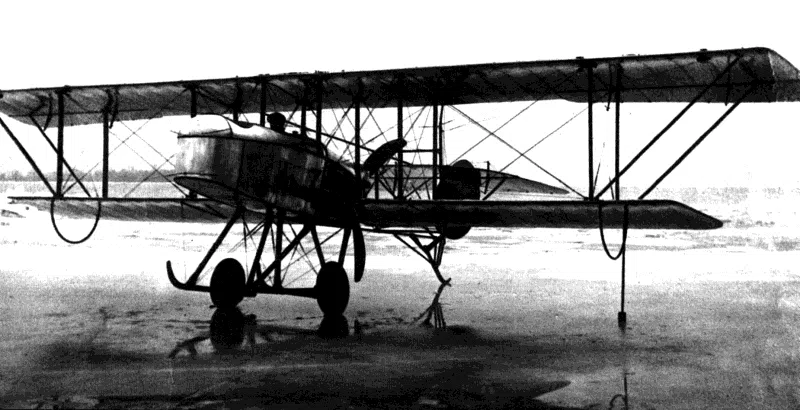

Starting in 1915 as Detroit’s first commercial airplane builder, the General Aeroplane Company built three aircraft and ran a flying school during WWI. The aircraft included the Verville Flying Boat, the Gamma S biplane with floats, and the Gamma L biplane with wheels. All of these planes used pusher propellers. The company’s main figure was 18-year-old Corwin Van Husen. He had support from his guardian, W. Howie Muir, and other prominent members of Detroit and Grosse Pointe society. Major investors included Fred and Russell Alger, who had previously invested in the Wright Company and showcased the Wright aircraft at the Grosse Pointe Country Club four years earlier. Other investors were Herbert B. Book, Frank P. Book, Wm. Hendrie, and Jerome H. Remick.

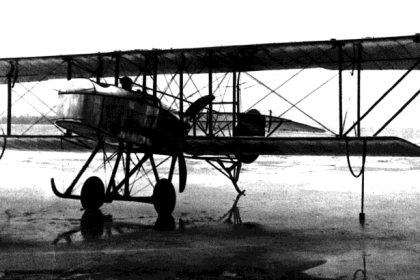
In November 1915, the General Aeroplane Company hired Alfred V. Verville, a 24-year-old airplane designer with experience. He would stay in Detroit, designing airplanes for many years. By December, the company had completed the design for its first airplane, a two-passenger biplane flying boat. The Mayea Boat & Aeroplane Works then began building the hull. The flying boat tested its flight in early 1916 and went on sale nationwide starting in September. The US Navy bought the plane as a trainer, and it was the first airplane built in Detroit sold for a profit. As the US neared entry into WWI, Verville began designing a military airplane called the Gamma. By November 1916, the prototype was ready. It was a “pusher” type plane, which means its engine and propeller were behind the crew. The plane had seaplane floats and was test-flown from its base on the Detroit River.
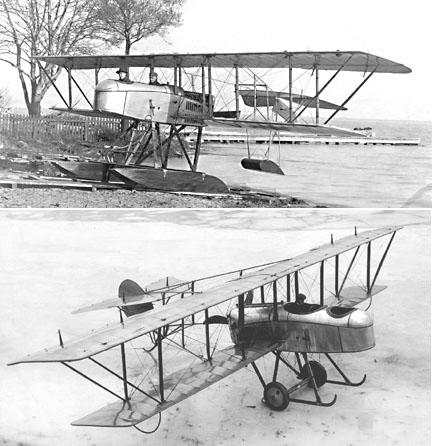
Meanwhile, an industry magazine called Aviation helped promote the Gamma by publishing a two-page article about the new aircraft. For winter, the Gamma was fitted with wheels instead of floats. On its first flight from frozen Lake St. Clair, a gust of wind pushed the Gamma into a snowbank, causing it to crash. The pilot, William Bonney, was unharmed, but the Gamma was destroyed. By late 1918, just months before WWI ended, the company could not secure the large government contracts for airplane production that kept bigger national manufacturers going. As a result, the company quietly dissolved on August 28, 1918. The company designed several aircraft, including the Verville Flying Boat and some seaplanes for the US Navy and experimental purposes. However, it did not have a history of ongoing commercial production or large military contracts. Read more Forgotten Factories articles HERE.