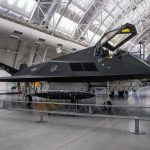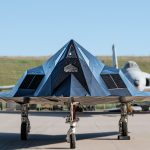
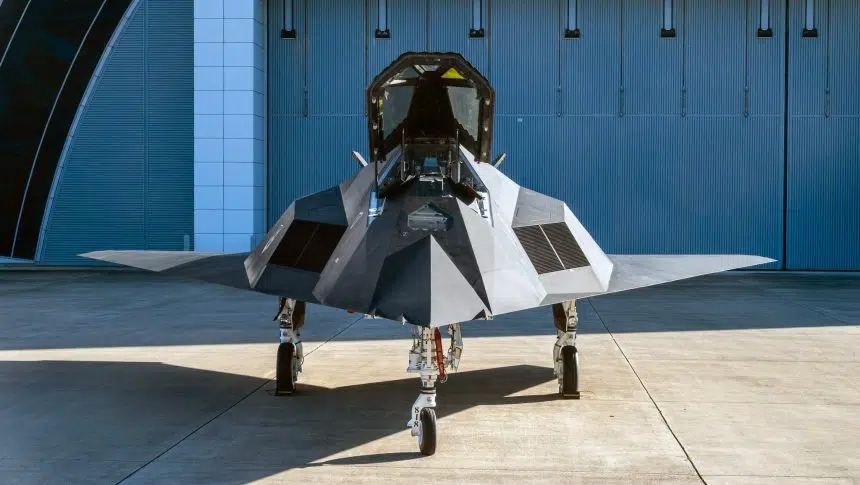

Before visitors could see the F-117A Nighthawk unveiled at the Smithsonian’s Steven F. Udvar-Hazy Center on October 21, the aircraft had to complete an unusual final journey. With its wings removed, the pioneering stealth jet crossed the country inside a C-5M Super Galaxy—a delivery that demanded careful load planning, tight clearances, and an overnight effort by Lockheed Martin Skunk Works mechanics. The operation brought together U.S. Air Force reservists from the 512th Airlift Wing at Dover Air Force Base, Delaware, Lockheed Martin personnel, and the Smithsonian’s National Air and Space Museum. Their work moved the aircraft from Palmdale, California, to Virginia, where it would begin its next chapter as a museum exhibit.

An account and accompanying imagery released by 512th Airlift Wing Public Affairs document the challenges behind the two-day mission. The Nighthawk represented a 29,500-pound load, requiring precise weight distribution and clearances that the Air Force described as being measured in millimeters. Even aboard the enormous Super Galaxy, positioning and securing the disassembled aircraft required close coordination. For Maj. Billy Hafker, a 709th Airlift Squadron instructor pilot and the mission’s aircraft commander, the assignment also carried personal significance. “Growing up in the ’90s and 2000s, I remember thinking of the F-117 as the most unique plane,” Hafker said. “Being able to move it to the Smithsonian to preserve it for future generations is an incredible opportunity, and we’re all honored to do it.”

After arriving in Palmdale, the Dover-based crew began preparing the Nighthawk for loading. Its detached wings went aboard first. Within two hours of landing, loadmasters had maneuvered the wings into the cargo compartment and secured them, leaving space for the fuselage. That initial progress gave way to an unexpected obstacle. According to the Air Force account, a coordination breakdown over the required number of tie-down points delayed loading the fuselage overnight. Before the mission could continue, the team needed suitable attachment points to restrain the aircraft during transport.
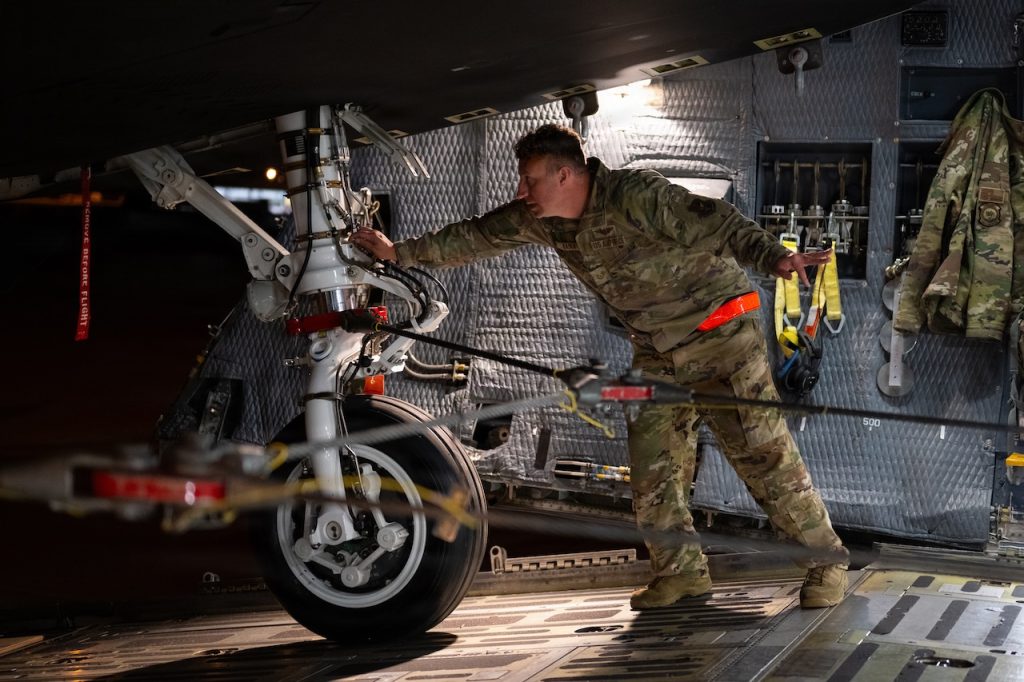

Lockheed Martin Skunk Works mechanics worked through the night to fabricate and install the necessary points. Their work resolved the problem and allowed the crew to complete loading for the flight east. The Nighthawk was delivered to the Smithsonian team on October 6. “It was a little difficult to load in, but we got the job done,” said Senior Airman Lucas Richard, a 709th Airlift Squadron loadmaster. “This is probably one of the coolest pieces of cargo that I’ve ever seen.”


The airlift was only one part of preparing the F-117 for public exhibition. Before departure, Skunk Works personnel had also undertaken the restoration and demilitarization work needed to transfer the former combat aircraft into a museum setting. The project required cooperation between the Air Force, the manufacturer, and the Smithsonian, linking the aircraft’s military service with its preservation. “There are a lot of people who participate in a project like this,” said Jeff Corbets, the Lockheed Martin Skunk Works program manager who led the restoration. “Demilitarization was the most difficult piece, but I think it went really smoothly, all things considered.”

At Dulles International Airport, the process moved into its next phase as loadmasters carefully offloaded the fuselage. Air Force photographs identify eight loadmasters who assisted with the transport, offering a sense of the personnel required to handle this unusual cargo. The Smithsonian’s plans called for reassembly in the Udvar-Hazy Center’s Mary Baker Engen Restoration Hangar before public display. Nicknamed The Overachiever, the aircraft is distinguished by its participation in all four major conflicts in which F-117s flew combat operations: Operation Just Cause, Operation Desert Storm, Operation Allied Force, and Operation Iraqi Freedom.
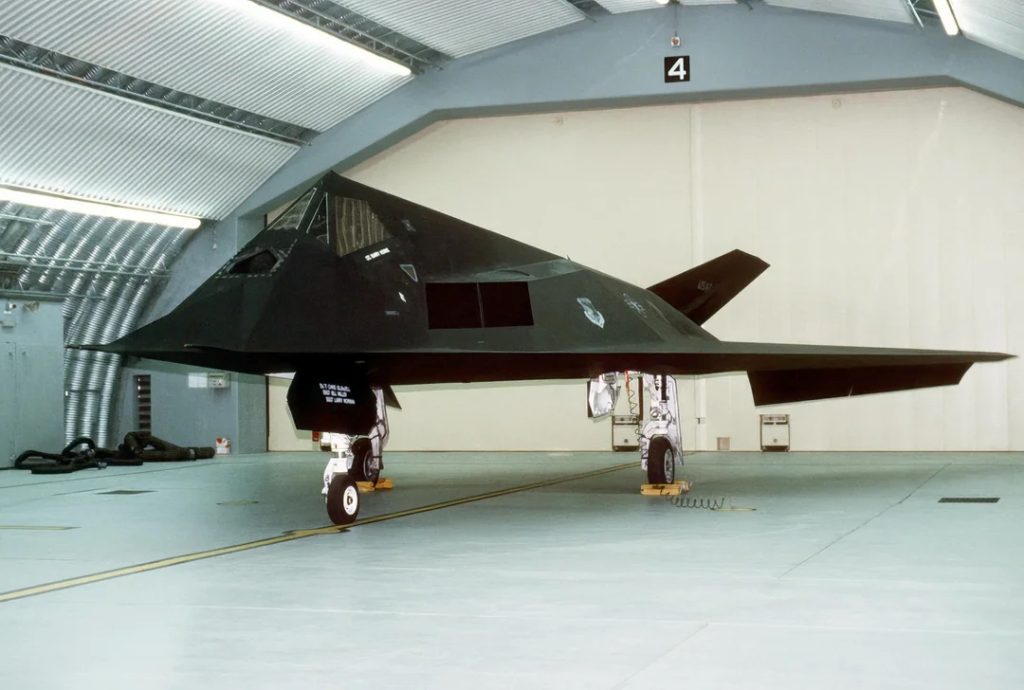
Its arrival on the museum floor gives visitors an opportunity to examine an aircraft that helped establish operational stealth technology. Behind that display stands another story: reservists planning and securing an unconventional load, mechanics solving a problem overnight, and museum specialists preparing a combat veteran for public interpretation. The photographs and video shared by the 512th Airlift Wing bring that work into view, recording the people and practical challenges behind the Nighthawk’s journey to the Smithsonian.
Adapted from reporting by Staff Sgt. Alexis Morris, 512th Airlift Wing Public Affairs, with additional information from the Smithsonian’s National Air and Space Museum. Photographs and video courtesy of the U.S. Air Force; individual creator credits accompany the respective media.