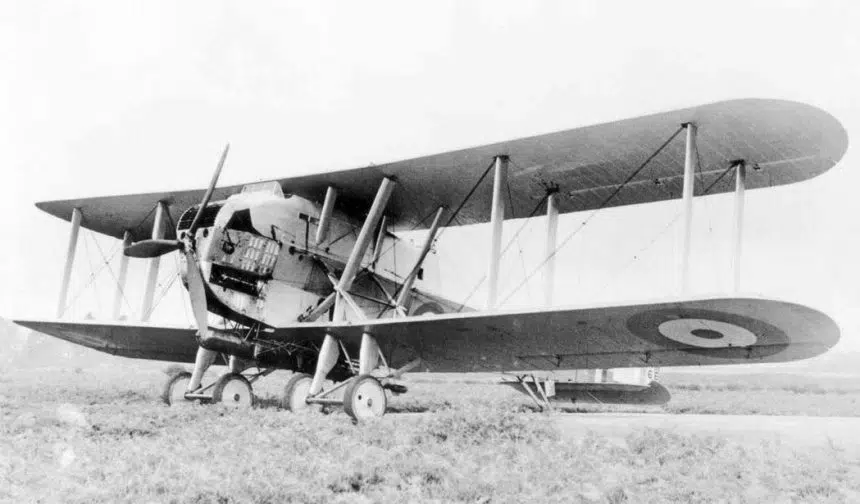

In 1921, the British Air Ministry issued Specification 8/21 for a new long-range torpedo bomber called the Coastal Defense Torpedo Airplane. The aircraft needed to have a range of over 800 miles and carry a full-sized 21-inch naval torpedo, which was expected to sink the most heavily armored warships. Earlier torpedo bombers had used smaller, less effective torpedoes. Blackburn Aircraft’s chief designer, Major F. A. Bumpus, proposed the Blackburn T.4 Cubaroo, a large biplane powered by a 1,000 horsepower Napier Cub X-16 engine. Avro initially submitted a similar design, the Type 556, but later withdrew it and introduced the Avro 557 Ava instead. The Ava was also a large biplane, but it used two 600 horsepower Rolls-Royce Condor V-12 engines. The Blackburn Cubaroo was a large aircraft designed to carry a heavy torpedo weighing over 2,000 lbs over long distances. It was claimed to be the largest single-engine military aircraft ever built, featuring an 88 ft wingspan. The Blackburn Cubaroo was powered by the Napier Cub engine, the most powerful aircraft engine available at that time, which weighed over a ton, not including the radiator.
Design of Blackburn Cubaroo
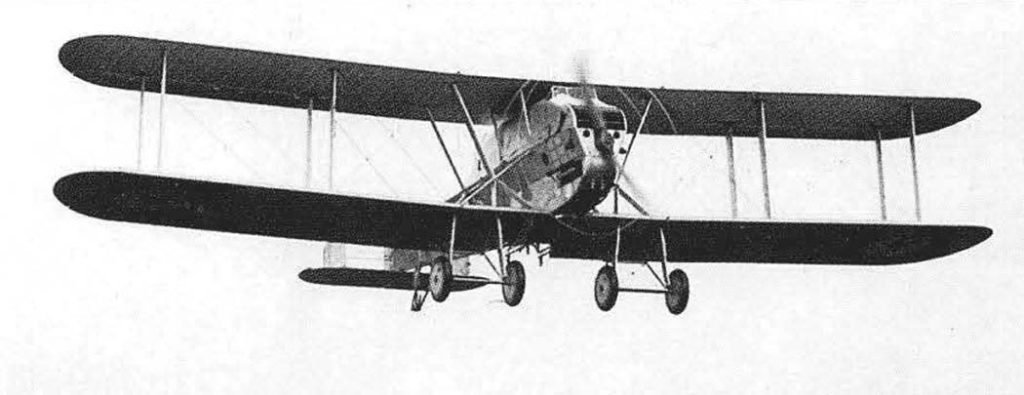
The first version, N166, had a curved radiator at the front, while the second version, N167, had a flat radiator. The Blackburn Cubaroo mainly used a steel tube structure and had a fuselage that was 11 ft deep. The pilot sat in the front with a navigator next to him, positioned over the engine. The rear section of the fuselage was triangular to give gunners a better field of fire from hatches near each lower wing root, allowing them to cover the tail area. Bomb aiming happened through a hatch in the cabin floor, which also had radio equipment and a navigational chart table. A passage led to a ladder that went up to another gunner’s position, which featured a gun ring mounted on top of the fuselage, just behind the wing’s trailing edge. The Cubaroo’s wings had a constant shape, a slight upward angle (dihedral), and rounded tips. Each of the four wings included ailerons, used for turning, running along about half the wing’s length. The tail section of the Blackburn Cubaroo had three rudders, with the two outer ones equipped with small fins. It also had a biplane horizontal stabilizer with a balanced elevator for better control.
The Cancellation
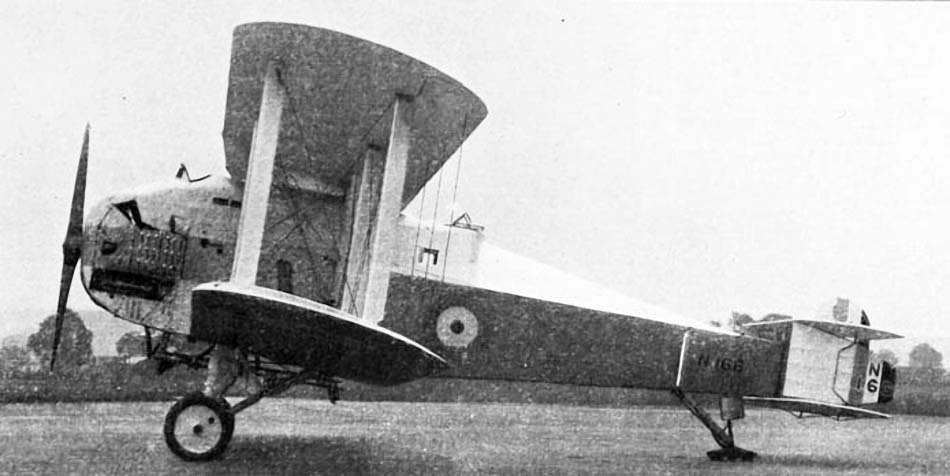
To carry a torpedo, the Blackburn Cubaroo had a special undercarriage attached to the lower wings. This system had two sets of wheels, each 4 feet in diameter. The torpedo or bombs were carried on a support structure located under the fuselage, between the wheels. The first prototype of the aircraft, with the serial number N166, flew in secret during the summer of 1924. It handled well, and the engine performed reliably since the Napier Cub had already been tested in an Avro Aldershot. The prototype was then fitted with a metal, three-blade adjustable-pitch propeller and sent for testing at RAF Martlesham Heath. However, it was damaged beyond repair after its undercarriage collapsed on February 2, 1925. A second prototype flew in 1925, but by that time, the Air Ministry had lost interest in single-engine heavy bombers. The second prototype was then used to test the experimental 1,100 hp Beardmore Simoon diesel engine. In the Grounded Dreams series, the Blackburn Cubaroo was canceled because the British Air Ministry changed its policy to prefer twin-engine designs for the role, leading to a new specification called 16/22. As a result, the type was not put into service. Although plans were created for three different two-engine versions, none were built. Read more Grounded Dreams articles HERE.