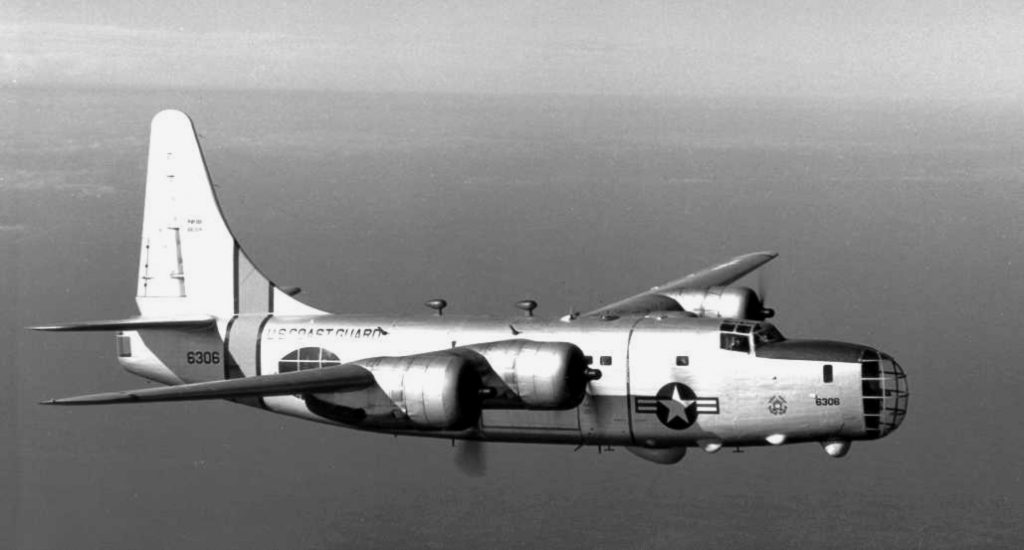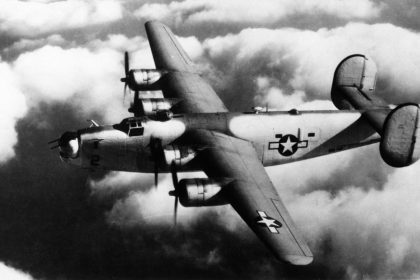
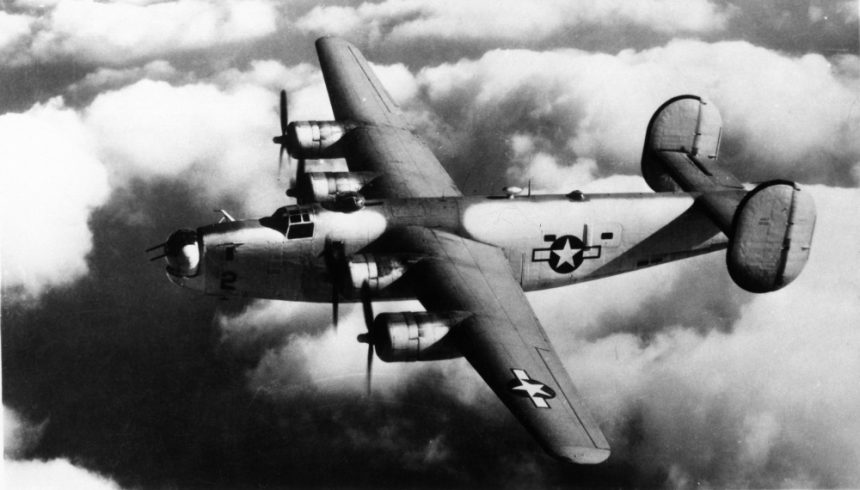

Heavy Patrol Squadron Landplane 1 (VP-HL-1) was a heavy patrol squadron in the US Navy. The squadron was created as Bombing Squadron VB-116 on December 1, 1943, at Naval Auxiliary Air Station Camp Kearney, California, under Fleet Air Wing 14. Although the squadron formed in late 1943, it did not receive its first aircraft until March 1944, when the first Consolidated PB4Y-1 Liberator arrived. The squadron’s early training included ground instruction and flight operations at Camp Kearney and advanced base operations training at Holtville Airport, California. By mid-May, it completed training and started preparing for the trans-Pacific flight from Naval Air Station San Diego to NAS Kaneohe Bay, Hawaii. Under Lieutenant Commander Donald Gumz, the squadron started with 16 aircraft and 18 crews. On May 24, 1944, the advance group left aboard the USS Breton Woods for Pearl Harbor. Beginning on June 2, the aircrews followed in groups of three aircraft. However, one aircraft and its crew, led by Lieutenant Duggan, were lost during the journey to Hawaii due to mechanical failure. At Kaneohe Bay, the squadron began preparing for combat before deploying to the South Pacific. Crews trained in navigation, gunnery, bombing, and aircraft recognition, while also conducting patrols around Hawaii. VB-116 was deployed to Eniwetok from July 7 to August 24, 1944. It started its patrols and sector searches by July 12. The squadron often targeted Japanese positions on Truk and Ponape. It also escorted reconnaissance planes that were flying over Truk.
In the first two weeks of August, VB-116 worked with VB-109 on missions against enemy positions at Truk, Wake Island, and Ponape. From August 17 to 24, the squadron teamed up with VB-102 to conduct special search patrols from Isley and East Fields on Saipan. On August 9, Lieutenant Anderson’s crew and aircraft were lost in a takeoff accident at Eniwetok. Damage to the airstrip then stopped other aircraft from landing there, forcing incoming crews to divert to nearby Engebi. Despite these losses, the squadron continued to increase its operations in the central Pacific. On August 27, VB-116 moved to North Field on Tinian and came under Fleet Air Wing 1’s control. From this base, the Liberators performed long-range sector searches and regularly attacked Japanese shipping. During the Battle of Peleliu, the squadron also supported the invasion task force. The squadron got its nickname, the Blue Raiders, in September 1944 after it attacked Japanese ships near Iwo Jima. On September 1, the Japanese propaganda broadcaster Tokyo Rose described an aircraft flown by Lieutenant Gammell and its crew as a “blue monster of the air, a fire-spitting blue raider.” This broadcast followed an attack in which the aircraft sank two ships and set three others on fire. The description led to the squadron being called the Blue Raiders, a name that became part of its identity. The squadron was officially renamed Patrol Bombing Squadron 116 (VPB-116) on October 1, 1944. On October 12, 1944, Lieutenant William M. Miller and his crew teamed up with another aircraft from VPB-116, piloted by Lieutenant William B. Oliver, to search for survivors from a missing plane led by Lieutenant Stimpson near Iwo Jima.

Japanese fighters attacked the two American bombers, but the crews continued their search before retreating together. During the air battle, Miller and Oliver’s planes shot down six of the eight attacking fighters. Both officers received the Navy Cross for their bravery. But the missing crew and their aircraft were never found. The squadron kept fighting Japanese planes in the months that followed. On November 1, Lieutenant Thompson and his crew shot down a Kawanishi H8K flying boat, known to the Allies as “Emily.” On January 24, 1945, Lieutenant Kirchberg and Lieutenant (junior grade) Rohe’s crew flew a special mission to Iwo Jima. They attacked Japanese shore batteries and shot down a Mitsubishi A6M Zero fighter during this operation. On February 11, the same crew took combat photographer and war correspondent Leif Erickson on a photo mission to Chuuk Lagoon, also known as Truk. For the rest of February, VPB-116 supported Task Force 58, the US Navy’s fast carrier force in the western Pacific. On March 4, the squadron began patrols through Iwo Jima. These missions covered an outbound patrol route of about 1,200 miles to Iwo Jima, followed by another 1,000 miles toward Tinian. On April 1, a three-aircraft detachment moved to the forward base at Iwo Jima, bringing the squadron closer to the areas where it focused its patrols and searches. On April 5, 1945, VPB-116 moved to Peleliu Airfield. From there, it conducted three daytime search missions and one nighttime anti-submarine patrol.

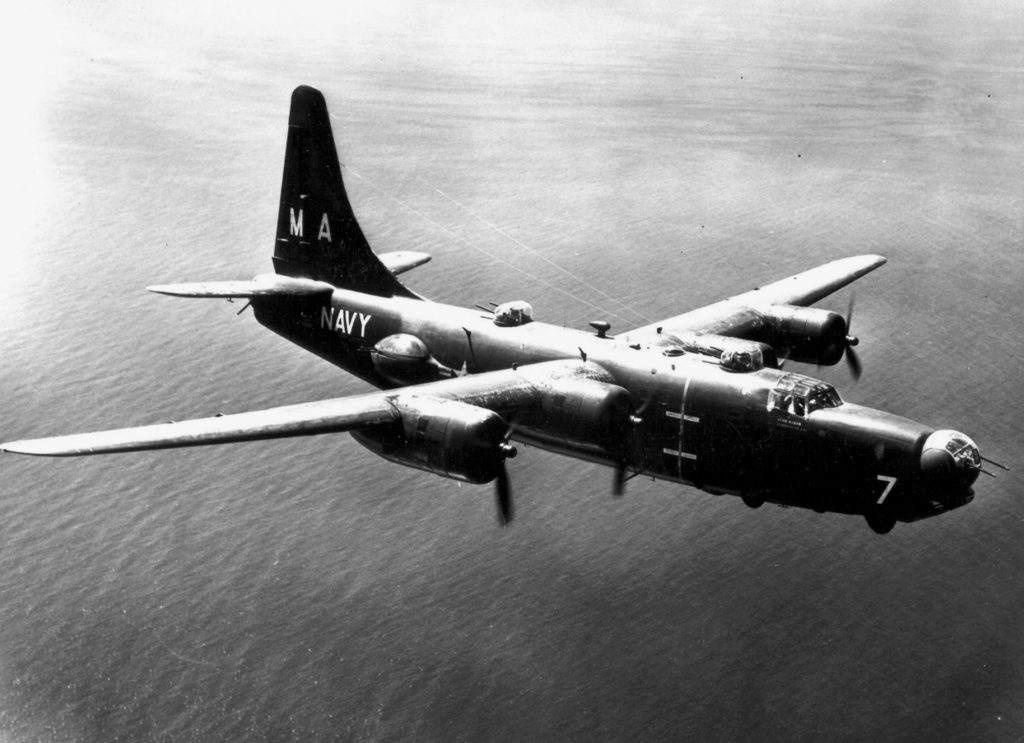
The squadron returned to its previous bases at Tinian and Iwo Jima on April 30, while the Iwo Jima team was expanded as operations and available targets shifted closer to Japan. On May 1, Fleet Air Wing 18 took control of the squadron. In the last months of the war, VPB-116 flew search missions, anti-submarine patrols, and weather flights to support the fleet. The squadron stopped combat missions in September 1945 and mainly focused on weather flights while waiting to return to the United States in October. One unusual event in the squadron’s history took place during the Japanese surrender in August 1945. Historical accounts say that Colonel Charles Tench, who was part of General Douglas MacArthur’s staff, was the first American to step onto Japanese soil. He arrived at Atsugi airfield on August 28. However, the war diary of VPB-116 shows that Lieutenant Commander Walter C. Michaels, the squadron’s commanding officer, actually landed his PB4Y-2 Privateer at Atsugi on August 27, a day earlier. The diary notes that Michaels faced mechanical issues, which he fixed before returning to Iwo Jima the same day. After the war, the squadron made several changes as the Navy reorganized its aviation forces. On May 15, 1946, it became Patrol Squadron VP-116. On November 15, 1946, the unit was renamed Heavy Patrol Squadron Landplane 1. The Navy disbanded Heavy Patrol Squadron Landplane 1 at NAS San Diego on May 22, 1947. Read more Squadron Histories articles HERE.