

Today In Aviation History: First Flight of the Savoia-Marchetti SM.83

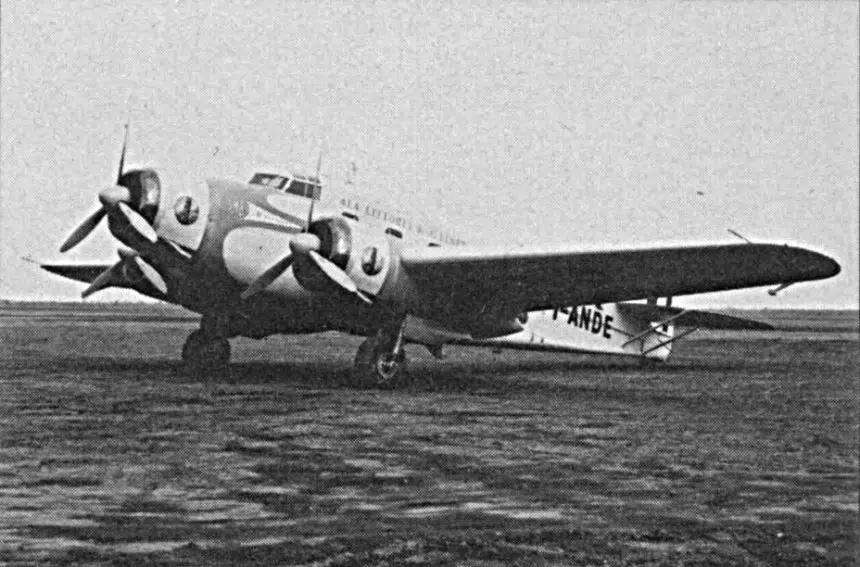
On November 19, 1937, the Savoia-Marchetti SM.83 completed its first flight as a civilian development of the SM.79 bomber. Designed for long-distance commercial routes, the three-engine aircraft featured a streamlined fuselage, improved passenger comfort, and a maximum speed of 276 mph. Although it entered airline service in 1938 with carriers in Italy, Belgium, and Romania, its limited passenger capacity and operating economics restricted production to just 23 examples. Many Italian aircraft were later requisitioned for military transport duties during WWII.

Austin Hancock
Savoia-Marchetti SM.83. (Image credit: Ali italiane/Wikimedia Commons)
AirCorps Restorations
VAN Today in Aviation History Banner
Welcome to VAN’s Today in Aviation History (Image credit: VAN)

On this day in aviation history, 89 years ago (November 19, 1937), the Savoia-Marchetti SM.83 took flight for the first time. Developed in Italy as a three-engine passenger transport, the SM.83 was a civilian adaptation of the successful Savoia-Marchetti SM.79 bomber. The aircraft was designed to provide improved speed and range for commercial airlines operating long-distance routes. Designed by Alessandro Marchetti, the SM.83 retained the SM.79’s basic three-engine configuration but incorporated a streamlined fuselage without the bomber’s distinctive dorsal hump and ventral gun position. Its construction combined a steel-tube fuselage with wooden wings and mixed wood, fabric, and metal covering. The passenger cabin featured heating, sound insulation, and oxygen provisions, although its relatively narrow fuselage limited capacity to approximately four to ten passengers.

1280px italian savoia marchetti sm.81 tri motor in usaaf service 1942
Italian Savoia-Marchetti SM.83T tri-motor airliner in USAAF service – Howard Field, Panama, 1942. (Image credit: United States Air Force/Wikimedia Commons)

The SM.83 entered airline service in 1938, with examples operated by Italian carriers Ala Littoria and LATI, as well as Belgium’s SABENA and Romania’s LARES. Despite its impressive performance, the aircraft proved less economical than larger commercial transports, limiting production to just 23 examples. Following Italy’s entry into WWII, many Italian SM.83s were requisitioned by the Regia Aeronautica for military transport duties. The type remained in service until 1945. The SM.83 measured 53 feet 2 inches in length with a wingspan of 69 feet 7 inches and was powered by three 750-horsepower Alfa Romeo 126 R.C.34 radial engines. It could reach a maximum speed of 276 mph, cruise at approximately 250 mph, and had a standard range of 930 miles, with a service ceiling of 27,600 feet. Its maximum gross weight was approximately 22,708 pounds, with accommodations for three or four crew members and up to ten passengers.


avioane de tip douglas d.c.3 si savoia marchetti 83 din serviciul societatii l.a.r.e.s
Savoia-Marchetti SM.83 and Douglas DC-3 aircraft used by LARES. (Image credit: ion - Enciclopedia României, volumul IV, Asociația Științifică pentru Enciclopedia României, București 1939)
Boschung Global 729x90
Share This Article
Commercial Pilot, CFI, and Museum Entrepreneur, with a subject focus on WWII Aviation. I am dedicated to building flight experience so I can fly WWII Fighters, such as the P-51 Mustang, for museums and airshows, and in the USAF Heritage Flight. I lead and run the Pennington Flight Memorial, to honor local MIA Tuskegee Airman F/O Leland “Sticky” Pennington.
Leave a Comment

Leave a Reply

Your email address will not be published. Required fields are marked *

By submitting a comment, you'll be subscribed to our newsletter for the latest updates. You can unsubscribe anytime.