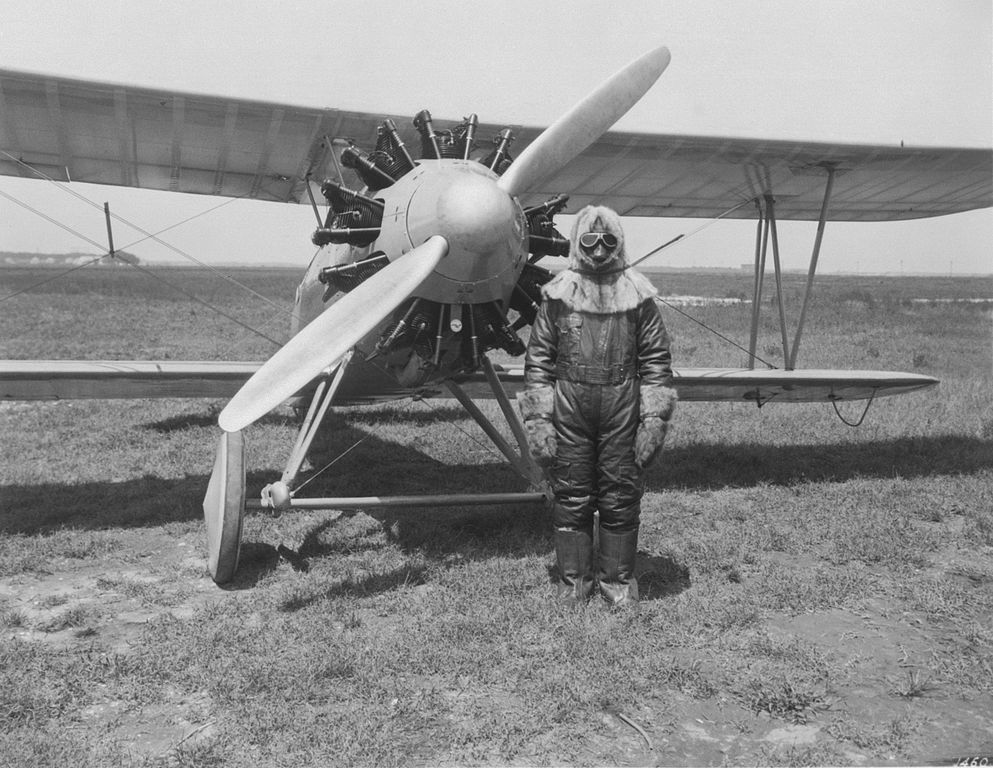
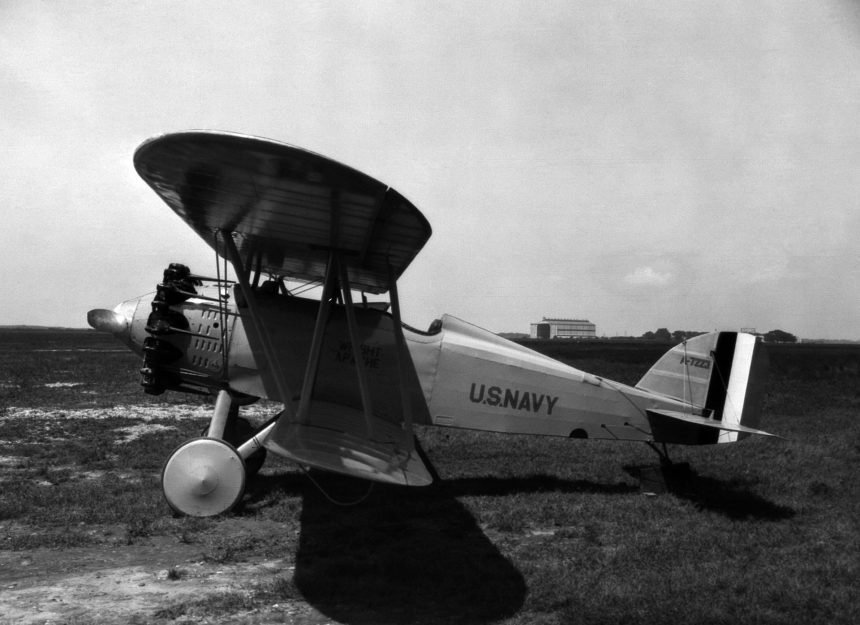

On this day in aviation history, 100 years ago (May 5, 1926), the first flight of the Wright XF3W Apache took place. The XF3W was a racer developed by Wright Aeronautical for the United States Navy. At the time, the Navy had made it clear that they preferred aircraft powered by radial engines, so Wright created the P-1 Simoon in response. To develop the P-1 radial, Wright designed the F3W as a test-bed. The F3W was a single-seat biplane constructed with a steel tube fuselage, wooden wings, and fabric covering. Designed to be a carrier-fighter, the F3W would suffer poor performance under the power of the P-1 Simoon.
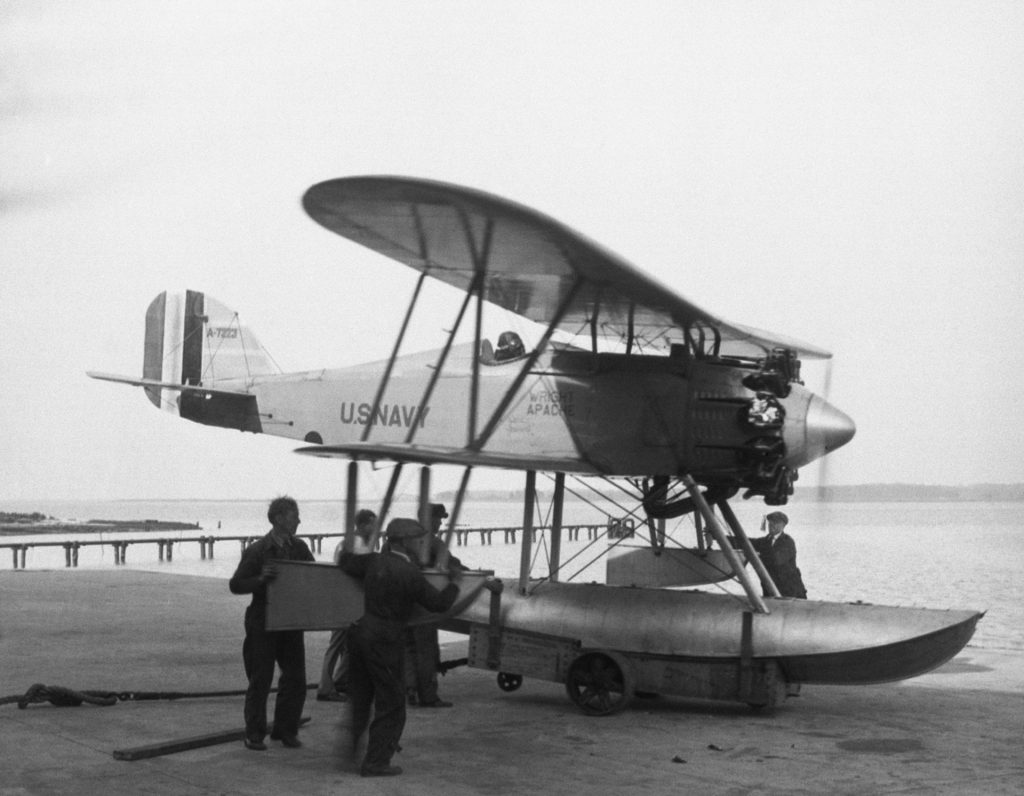
Shortly after the US Navy took delivery of the F3W, the engine was swapped out for a 450-horsepower Pratt & Whitney R-1340 radial. The aircraft’s designation was changed to XF3W, and the first flight with the new R-1340 occurred on 5/5/1926. The Navy continued to use the XF3W as a test-bed until 1930, fitting the aircraft with a float to evaluate the concept of staging floatplanes from battleships. The aircraft broke numerous records while in flight testing. On September 6, 1929, Apollo Soucek set the world altitude record for seaplanes of 38,500 feet while flying the Apache. On April 6, 1930, Soucek would break the landplane altitude record of 43,166 feet. The Wright XF3W Apache was 22 feet 1 inch long, had a wingspan of 27 feet 4 inches, and stood 8 feet 6 inches tall. The Apache had an empty weight of 1,414 pounds and a max gross weight of 2,128 pounds. Maximum attainable airspeed for the XF3W was clocked at 162 mph. Wright only built one XF3W, but the aircraft still made a mark on aviation history.