





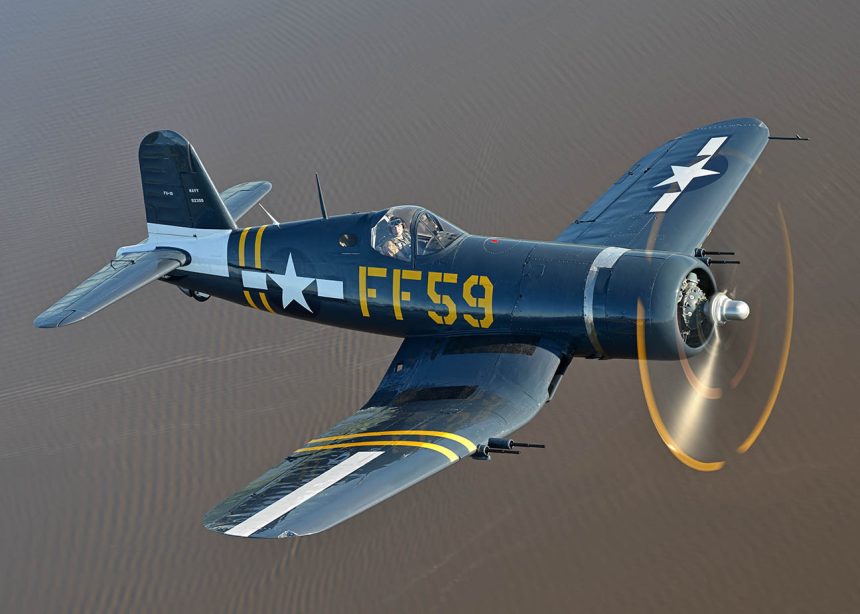

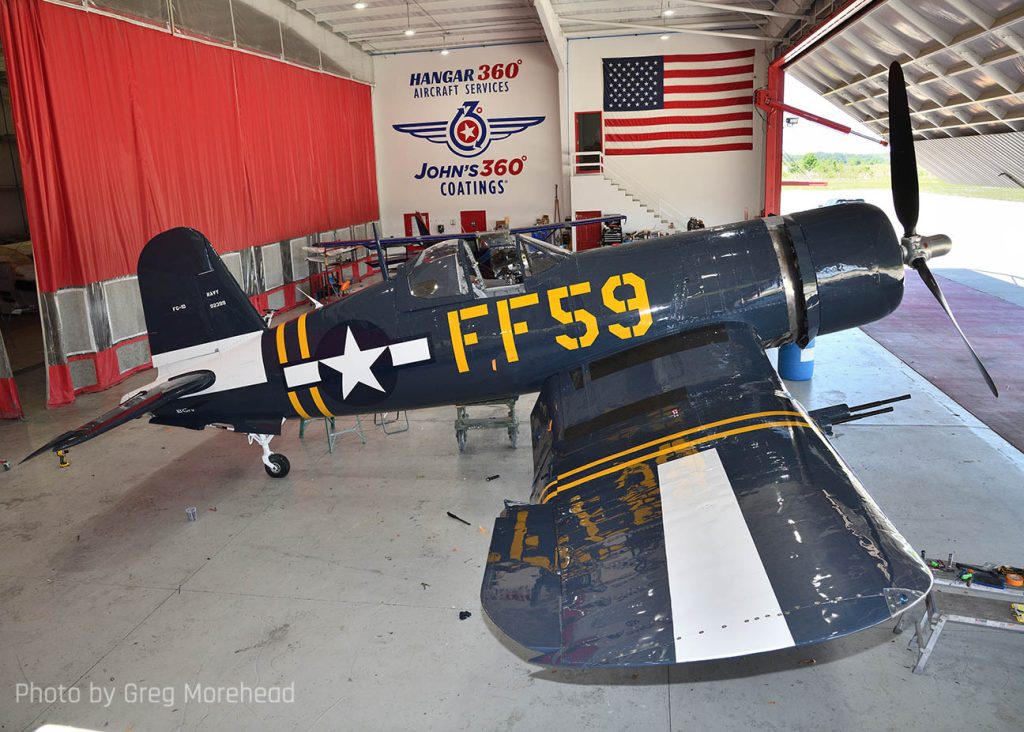
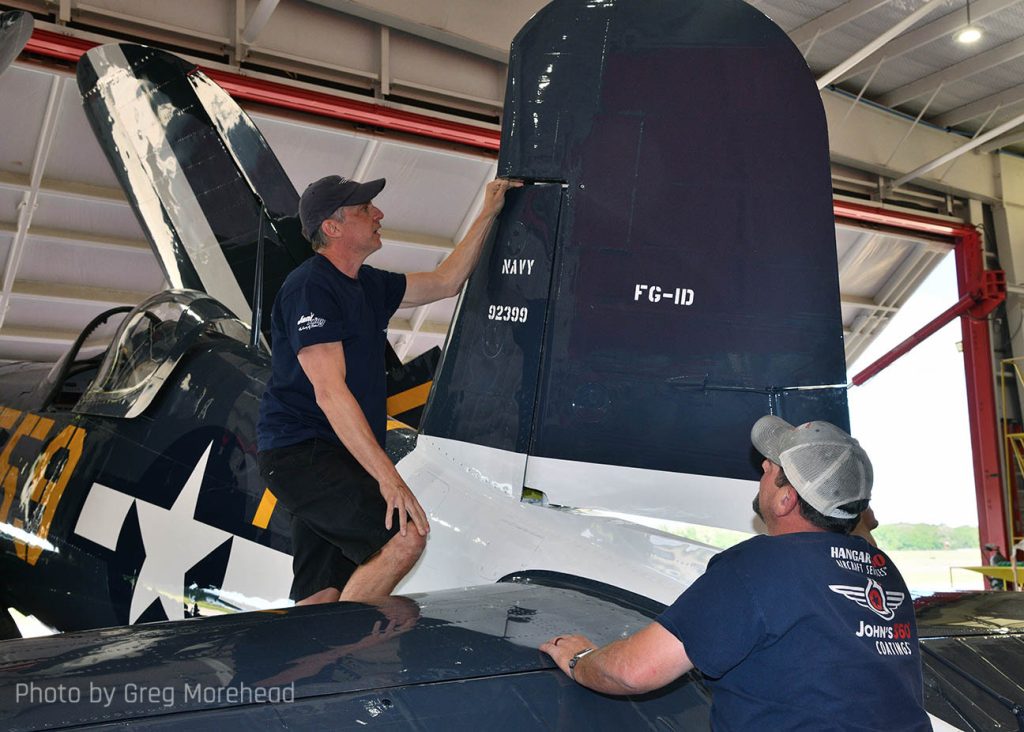
On July 3, 2025, the Cavanaugh Flight Museum unveiled a freshly painted FG-1D Corsair in a tribute livery representing Marine Fighter Squadron VMF-351. The announcement, shared via a striking photo on the museum’s Facebook page, credited Hangar 360 Aircraft Services for the paint restoration, Mark Todd as the pilot, and Greg Morehead for capturing the aircraft in its new colors.
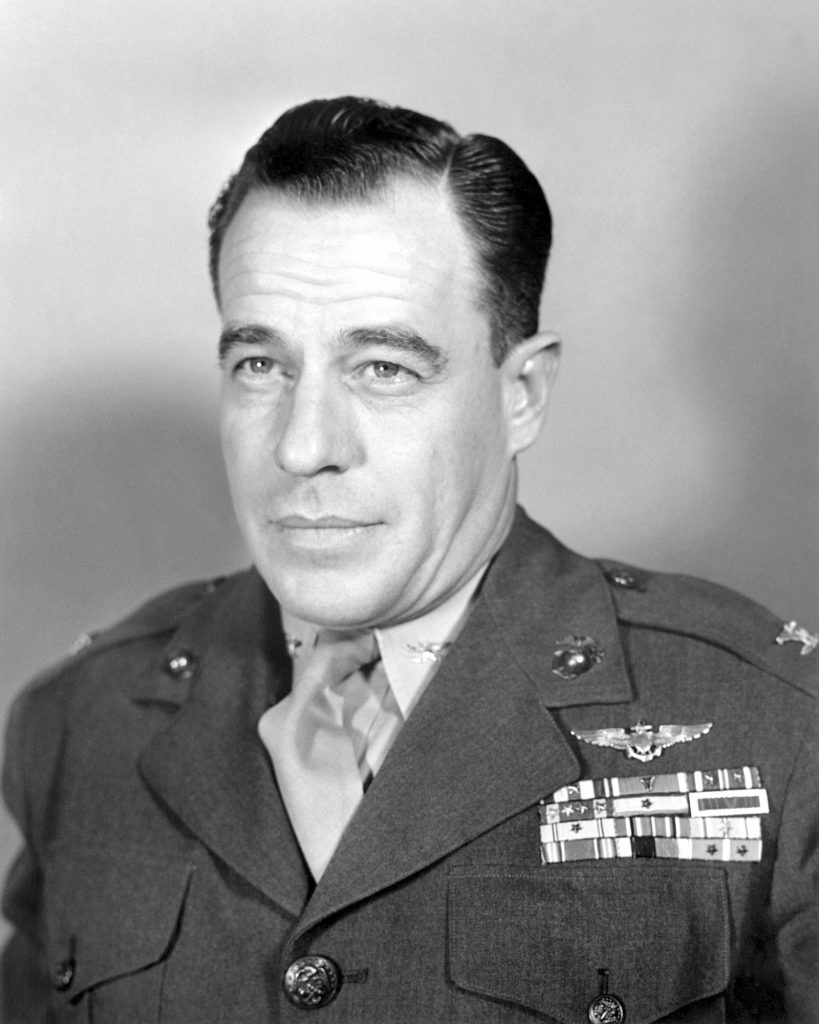
This striking new scheme commemorates the legacy of LtCol Donald K. Yost, USMC, a highly decorated Marine Corps aviator. Yost began his service flying F4F Wildcats with VMF-121 during the pivotal battles of Guadalcanal. By the closing months of World War II, he was flying F4U Corsairs with VMF-351 from the deck of USS Cape Gloucester (CVE-109) in the East China Sea. Over the course of his combat career, Yost achieved eight aerial victories—six in the Wildcat and two in the Corsair. His courage and leadership earned him numerous commendations, including the Distinguished Flying Cross, Silver Star, Legion of Merit, and Air Medal. He continued serving through the Korean War in command and staff positions, eventually retiring in 1959 as a Brigadier General. He passed away in Orlando, Florida, on August 7, 1998.
VMF-351 traces its roots back to March 1, 1943, when it was activated as VMO-351 (Marine Observation Squadron 351) at MCAS Cherry Point, North Carolina. After moving to Bogue Field in 1944, it joined MAG-51 and prepared for Operation Crossbow – Project Danny, a planned strike against German V-1 rocket sites from carrier-based Marine aircraft. Though the mission was ultimately canceled, the squadron transitioned to MCAS Mojave in September 1944.
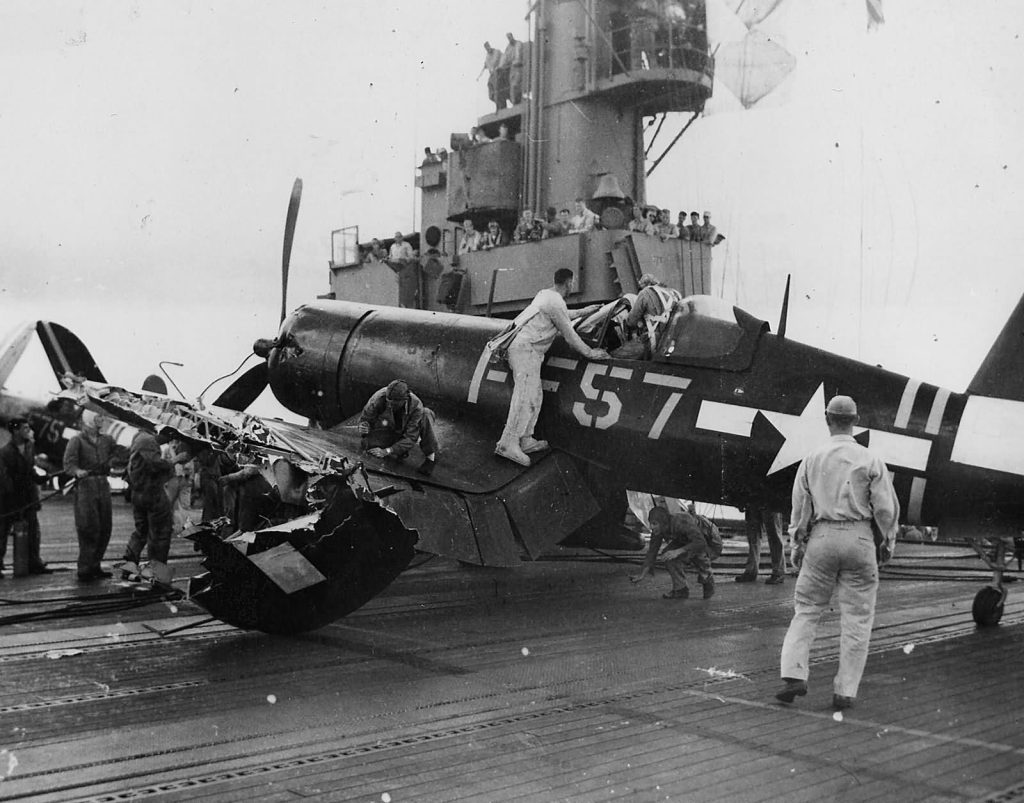
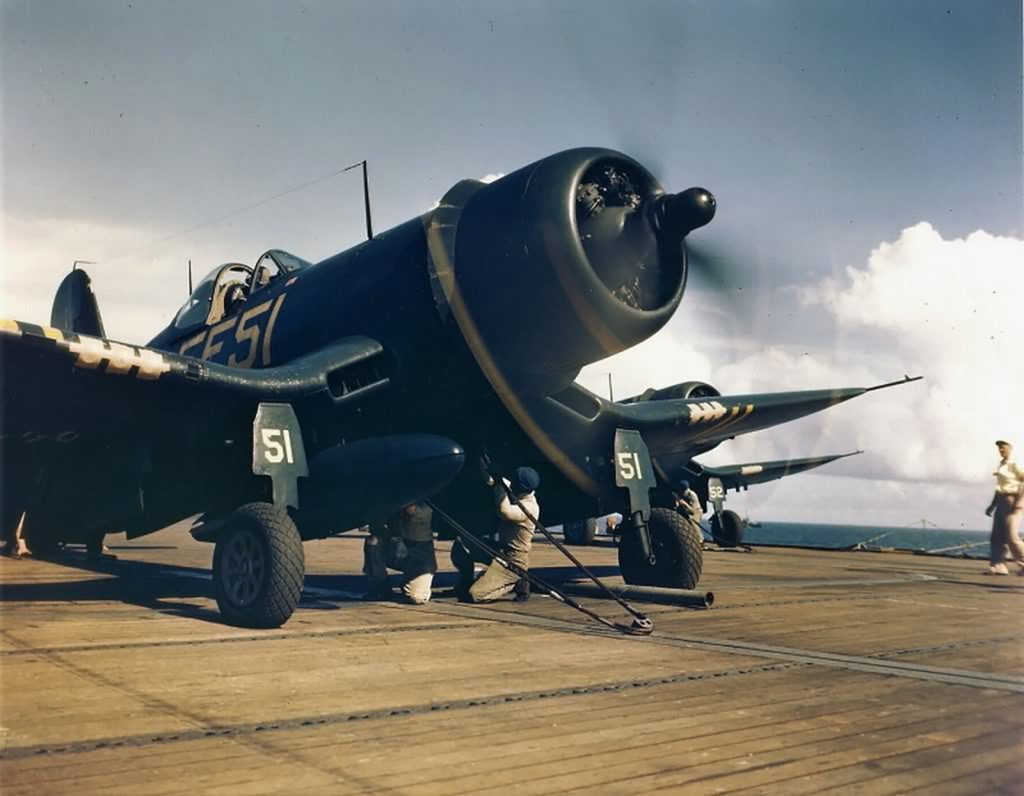
By December 1944, the squadron was performing carrier qualifications aboard the USS Ranger, during which it was briefly designated VMO(CVS)-351. Following this phase, the unit was redesignated as VMF-351 in February 1945 and deployed aboard USS Commencement Bay and later USS Cape Gloucester. During their combat operations in the East China Sea and the Battle of Okinawa, VMF-351 provided air cover for minesweepers and bombing missions. Due to the limited aerial opposition late in the war, the squadron was credited with just three confirmed air-to-air kills. It was deactivated on November 9, 1945, following its return to the United States.
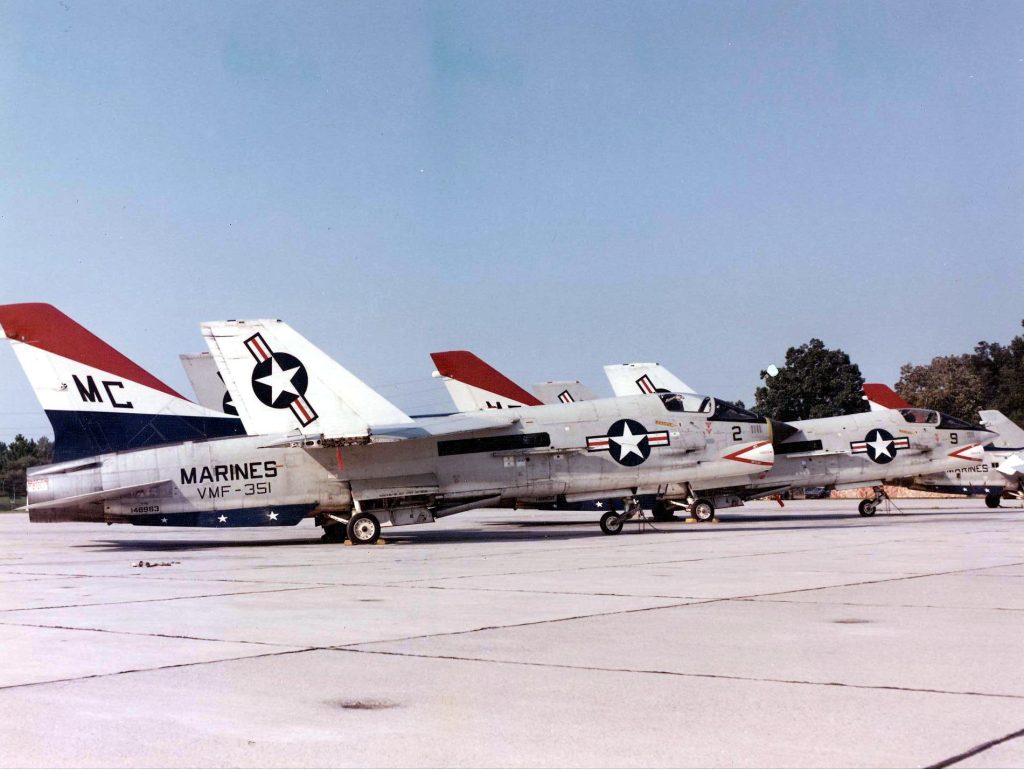
The squadron was reactivated as a Marine Air Reserve unit on July 1, 1946, based at NAS Atlanta, Georgia. During the Korean War, its personnel were reassigned to reinforce active-duty units, reducing the squadron to a skeleton staff. Full operations resumed in July 1951. In 1958, it was reequipped with AD-4 Skyraiders and redesignated VMA-351, before returning to the VMF-351 name with the adoption of the FJ-4 Fury in 1962. The squadron transitioned again in 1965 to the F-8 Crusader, sharing the aircraft with Naval Reserve squadrons VF-672 and VF-673. After becoming an independent unit in 1970, VMF-351 was deactivated on May 22, 1976, amid post-Vietnam drawdowns. Briefly revived in 1977 as VMFA-351 flying the F-4 Phantom, the squadron was finally decommissioned in 1978.
The Cavanaugh Flight Museum’s FG-1D Corsair is one of 120 Corsair IVs originally ordered from Goodyear Aircraft Corporation for the British Royal Navy. However, with the end of World War II approaching, the order was canceled, and the aircraft were redirected to the U.S. Navy. This particular Corsair was officially accepted into service on July 3, 1945, at Norfolk, Virginia. After being reconfigured to U.S. Navy FG-1D specifications, it was assigned to VF-1 at Naval Air Auxiliary Station Cecil Field in Jacksonville, Florida, where it served from October 5, 1946, to June 23, 1947. It was then transferred to the Naval Air Reserve Training Unit (NARTU) in Norfolk, Virginia, serving from June 24 to November 25, 1947, before undergoing overhaul at NAS Jacksonville. From May 2, 1948, to April 5, 1949, it was assigned to Marine Fighter Squadron VMF-451 at NAS Willow Grove, Pennsylvania, and later placed in storage back at NAS Jacksonville. The aircraft resumed service with NARTU at NAS New Orleans from December 10, 1949, to August 6, 1951, followed by another maintenance overhaul at NAS Jacksonville. It was next stationed with NARTU at NAS Grosse Ile, Michigan, from January 8 to March 20, 1952. After undergoing modifications to Marine Corps specifications at MCAS Cherry Point, North Carolina, it was assigned to Marine Air Squadron 31 at MCAS Miami, Florida, from May 14 to December 17, 1952. Its final active-duty posting was with NARTU at NAS Willow Grove from December 18, 1952, to August 18, 1953. The aircraft was then placed in storage at NAS Jacksonville until it was officially stricken from Navy records in January 1957. Before receiving its current VMF-351 tribute livery, the aircraft was painted in the markings of Major Archie Donahue’s Corsair during his time with VMF-112 at Guadalcanal. On May 13, 1943, Donahue famously shot down three Japanese aircraft in one mission, adding to his legacy as one of the Marine Corps’ top fighter aces.
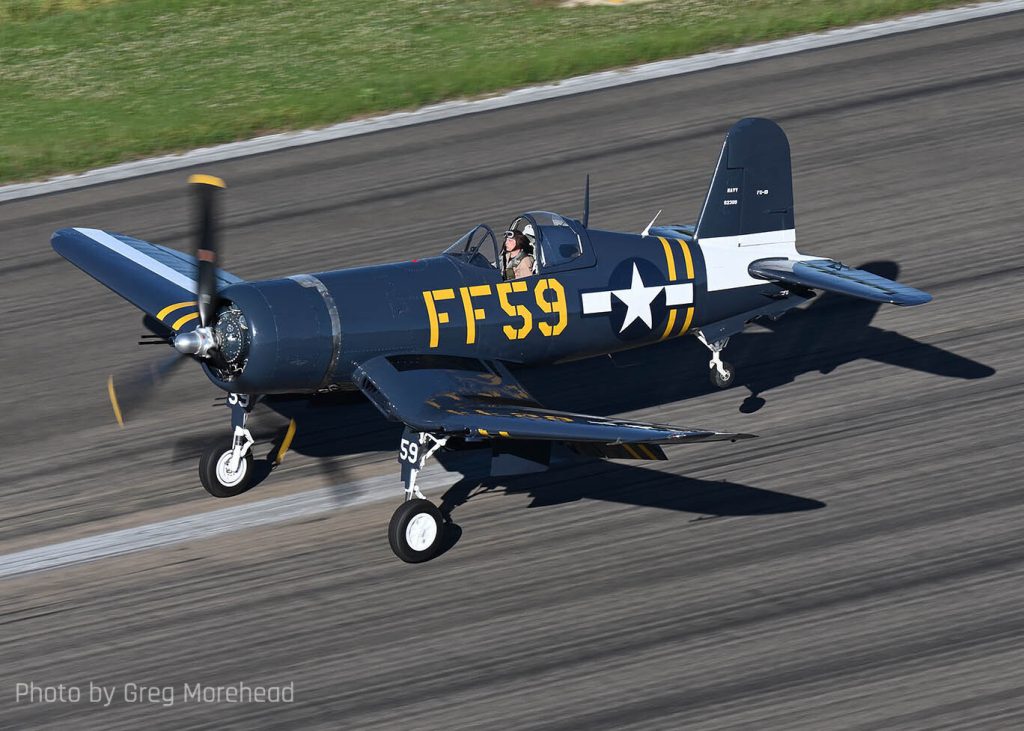
The Cavanaugh Flight Museum officially unveiled the striking new paint scheme during the Thunder Over East Texas Air Show in Athens, Texas, on July 4, 2025. Although pilot Tony Wood was ready to put on a thrilling aerial display, worsening weather forced the show to be delayed, prompting the Corsair to divert to a safe hangar in nearby Tyler. The following day, July 5, the Corsair took center stage at the Commemorative Air Force Warbird Expo held at Tyler Pounds Regional Airport, hosted by the Heritage Aviation Memorial Museum (HAMM), where it wowed spectators with its classic roar and iconic silhouette. Later that afternoon, Tony Wood flew the aircraft in the 20th Annual Thunder Over Cedar Creek Lake Airshow, an event supporting the Cedar Creek Veterans Foundation. Next stop for this beautifully restored warbird: EAA AirVenture 2025 in Oshkosh, Wisconsin.
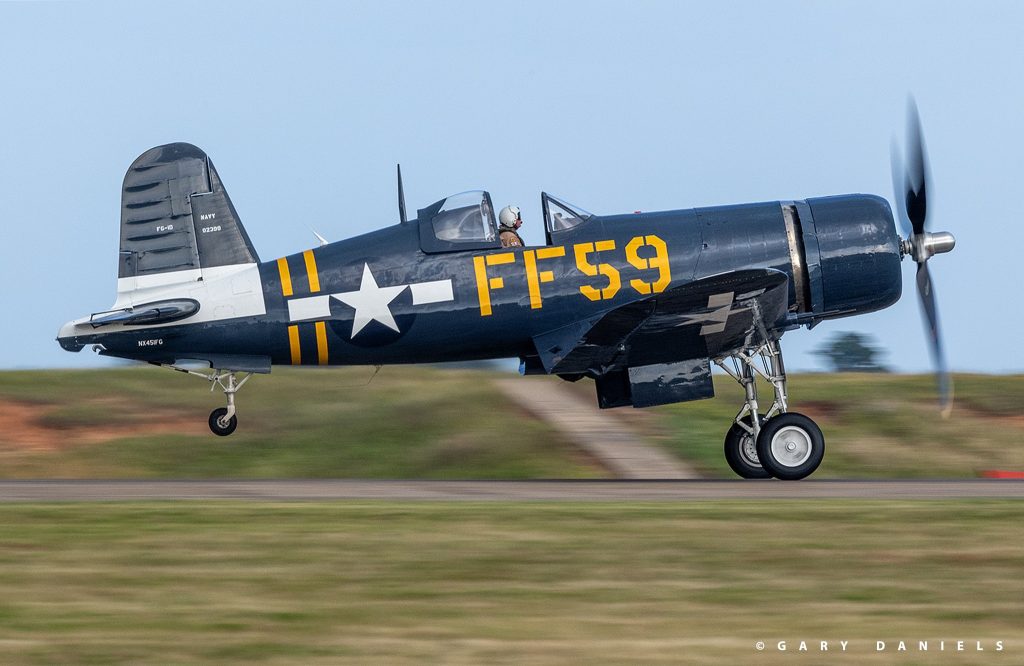
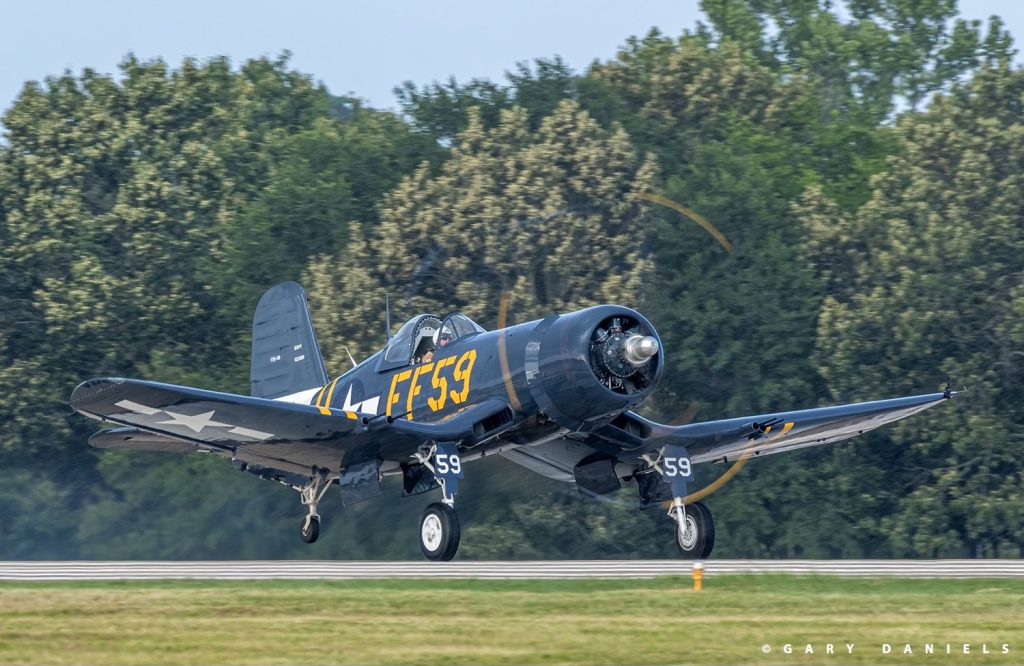
Although the Cavanaugh Flight Museum formally ceased operations at its original Addison, Texas, location on January 1, 2024, the aircraft collection—now partially relocated to North Texas Regional Airport (KGYI)—remains active, with the goal of keeping the aircraft flying and participating in aviation events nationwide. For more information about the Cavanaugh Flight Museum, visit www.cavflight.org
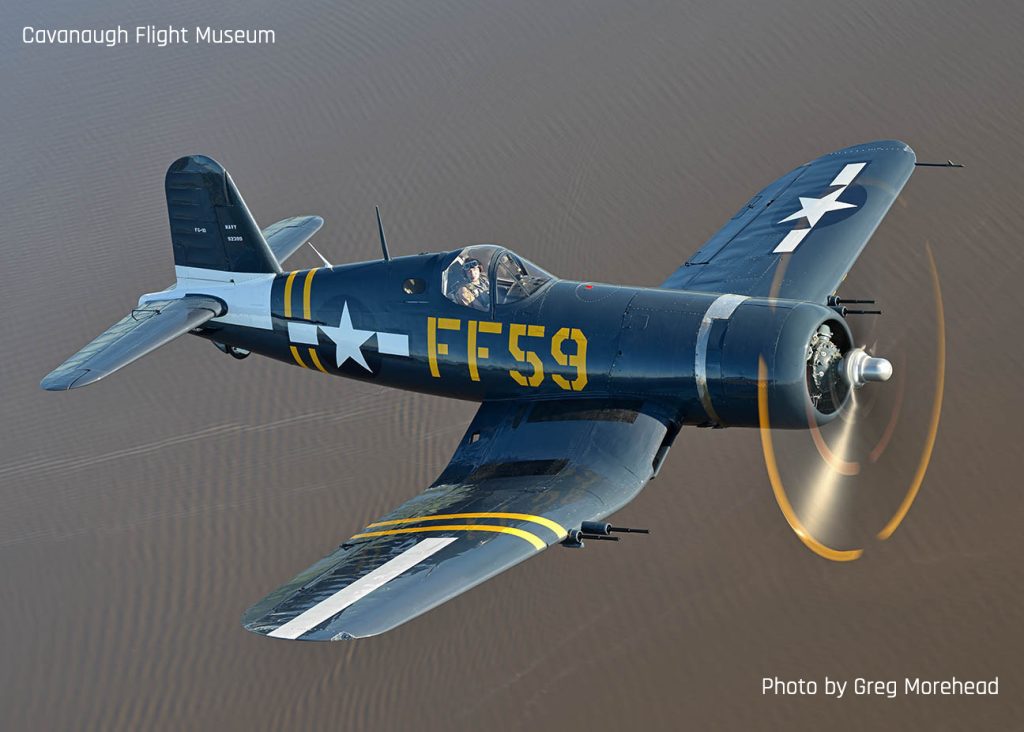






Yes, the Cavanaugh Flight Museum has unveiled a newly painted FG-1D Corsair, honoring U.S. Marine Corps ace Lieutenant Colonel Donald K. Yost.