







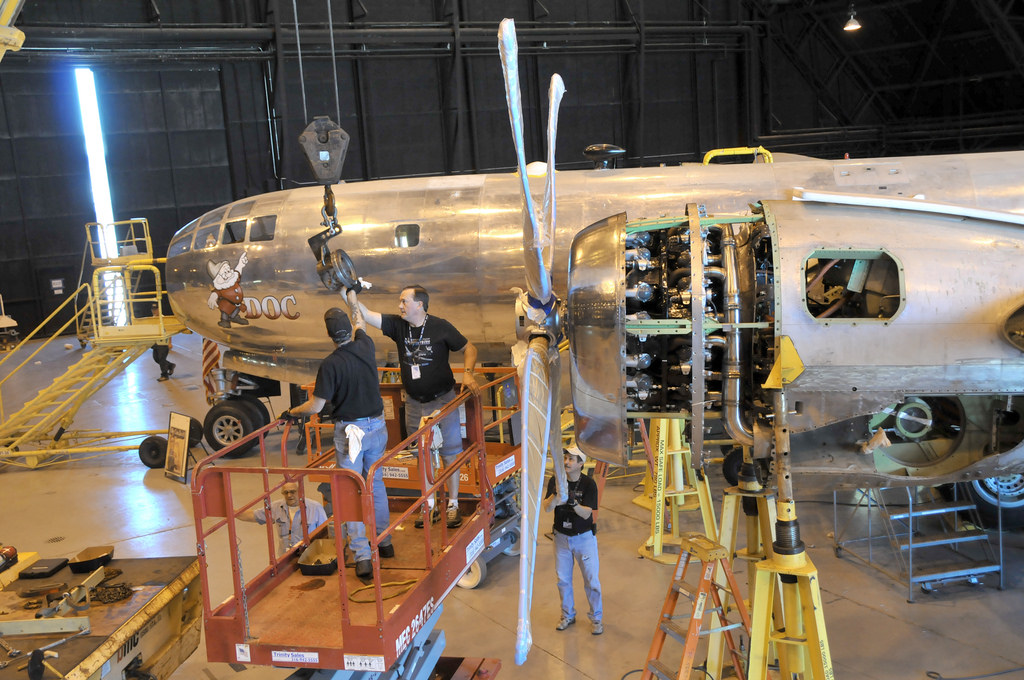
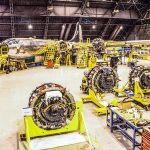
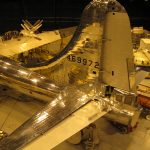
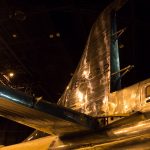
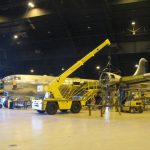
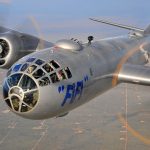
The Boeing B-29 Superfortress known as ‘Doc’ is in the final days of her restoration. There are just a few minor details to finish with the avionics installation, and setting the limits for the flaps and gear doors, but other than that the old girl is ready to go. The restoration team in Wichita, Kansas had hoped to have her flying in 2014, but they ran into delays with the fuel system. Fuel management on a B-29 is extremely complex for a WWII bomber, having many different fuel tanks, hoses and pumps to deal with, to say nothing about the wiring, and valves required. Making sure that all of the components were working properly and, most importantly, that no leaks nor possibility of electrical shorts were on the cards, has been an intense process. The team took the time to ensure all the elements in the system passed their rigorous checks. The only thing delaying the first flight now is apparently cold weather. The engine oil needs to be at least 50F to ensure proper lubrication for engine start, and the team doesn’t have access to portable heaters to do the job. They expect to be able to run the aircraft outside in late March for fueling and engine testing. They will also hold a roll-out ceremony at this point. So many people have poured so much love and care into the old bomber, not to mention dollars, that there is much to celebrate. Taxi tests will follow.
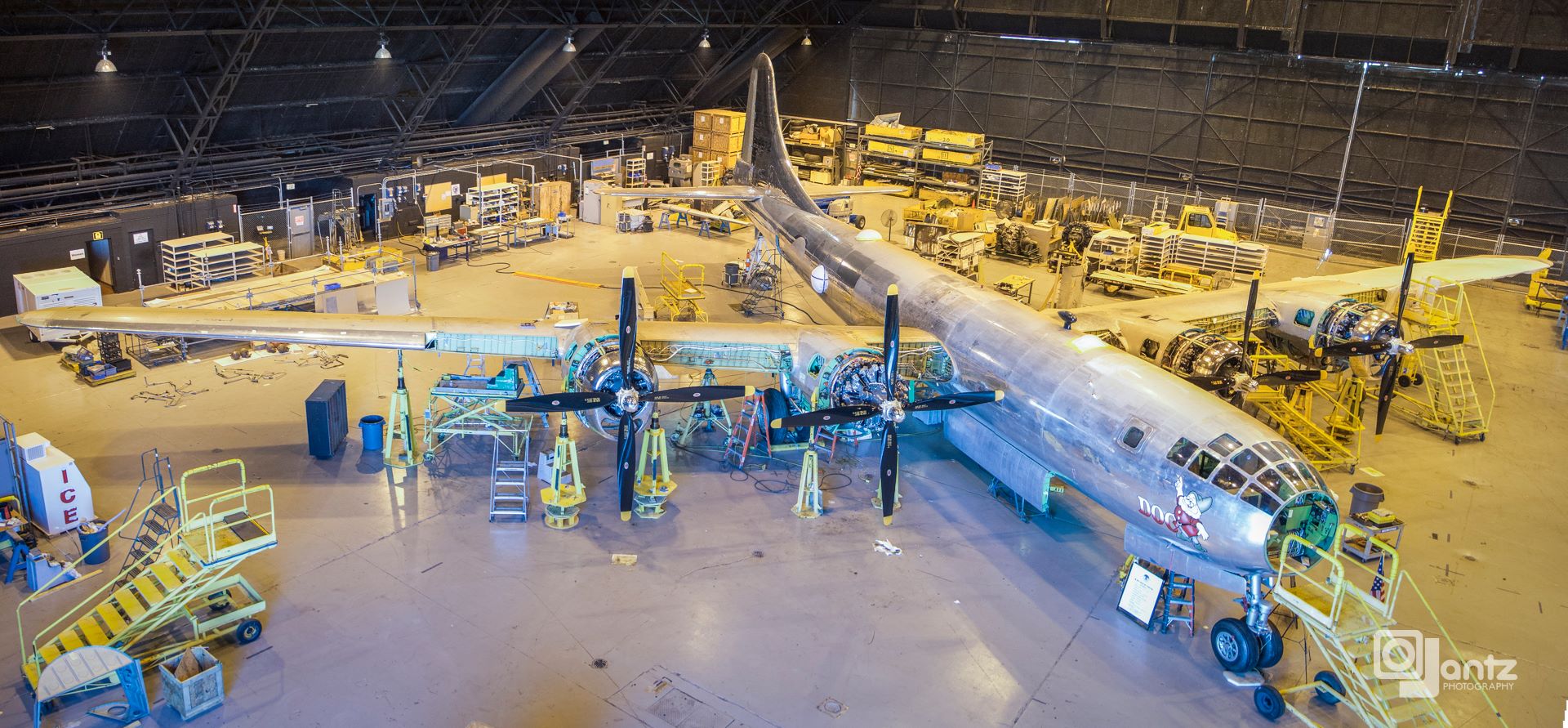
The pilot for the first flight is an FAA-approved B-29 pilot with over 2,000 hours B-29 flight time (in the Commemorative Air Force’s B-29 ‘FIFI’). He is currently assembling his crew for the test flights. When Doc flies sometime in April or May, it will represent a major milestone in the era of warbird restoration, being arguably by far the most complex and thorough aircraft restoration ever undertaken (other than the Avro Vulcan in the UK).
All being well, ‘Doc’ will participate in EAA AirVenture 2015. The EAA hope to fly her in formation with ‘FIFI’, which will make for an awesome sight and sound, and sure to be a huge draw for the public. While ‘Doc’ is expected to keep Wichita, Kansas as her home, the operators are looking for an airfield which offers better access for the public, as well as a crosswind capable runway. The B-29 is difficult to handle in a crosswind, due in part to the lack of nose wheel steering, and this makes having an alternate runway advantageous. Her currently available runways at McConnell AFB both run parallel to one another, which will mean that the B-29 could only fly comfortably on relatively calm days, or when the wind ran mostly in line with the runway. Nearby Wichita Mid-Continent Airport does have angularly offset runways though, making it very attractive as a potential new home for ‘Doc’. The plan would require US$4 to $5Million for building a new hangar of course, but this should be achievable, and would present a much easier way for visitors to see the aircraft or fly in her. Those wishing to contribute to ‘Doc’s’ future should visit Doc’s Friends HERE.






I picked up on the Doc story in the last few months of 2014 and have been excited to hear new information every time WBNews updates on Facebook. As a fellow flat lander from Iowa, it’s exciting to hear that such a large piece of aviation history could be well within weekend road trip distance for my son and I. Thank you so much for sharing their story. Without you guys I may never have known!
Thanks Dan!
Pilot since 1952, enjoy old aircraft.!
My hubby and I are warbird enthusiasts and both are pilots. This will be a great weekend get-a-way to visit this piece of aviation history! How can we get a ride??
Julie, DOC is not airworthy yet. if you want to fly in a B-29 you should check FIFI’s dates -> http://www.airpowersquadron.org/
It truly amazes me that during WWII pilots with absolute minimal to no training would go out to current aircraft, jump in, figure out how to start them and take off. How do I now this, my father was a pilot prior to WWII and at first was a service pilot. His first aircraft to move was a P-47. He had never flown one and had to have a mechanic show him how to start it. During the war he flew anything from P-47 to B-29 in ferry flights around the world while in the Ferry Command, finally ending up flying the Hump in C-46. I am a pilot myself and I can hardly figure out half the aircraft and engines he flew from back then. It is a shame that we never recorded their stories in their own voices of the times when American was the Greatest Nation in the World, which ended when our Politically enabled idiots in Washington DC took over.
Just curious did he ferry the P47s from s factory? and what location?
Mechanic on B-17″s (Eglin, 1949) B-29’s Eglin, Eielson (1949-51) Co-pilot on B-47’s Mt. Home AFB (1957-61) pilot/IP/Stan evaLB-52B,C,D,E,F,G &H 1961-1980. NO ACCIDENTS I like Boeing
It’s great to see how docs restoration is coming along. I’ll be watching for his flyover!
My father flew “Doc” when it was on active duty. Along with the other six, the “Wicked Witch” and “Snow White”. He is almost 85yrs old. We are going to make every effort to have him in Kansas for it first flight. It will be nice to see it take to the skies once more.
I was just looking at the nose art! There were a whole set? Did Disney participate? Are there pictures of them all together? I’d love to see that and hear the stories. My best to you and your father, thanks for posting.
I can find a picture of a Grumpy here, but it’s not a B-29: https://web.archive.org/web/20150404192237/http://www.skylighters.org/disney/
“Grumpy, one of the Seven Dwarfs, totes a 250-lb. bomb on the fuselage of an RNZAF Avenger of 30 Squadron.”
Can’t wait to see Doc flying with Fifi
I am in Newton on business . Where can I see doc?
EX KOREA B29 GUNNER WOULD LOVE TO STAND BY RUNWAY ON FIRST FLIGHT. DOES ANYBODY KNOW WHEN THIS WILL HAPPEN? LIVE IN NO. TEXAS SO A SHORT TRIP TO KANSAS. ALSO I CANNOT FIND OUT WHAT HAPPENED TO OUR AIRCRAFT #462180 AFTER THE WAR. ANY IDEAS? WAS STATIONED AT KADENA, 307thBW 370 BS JAN TO AUG 1952. THANK YOU, BILL
Do Not rush it.
Kee Bird.