
By Randy Malmstrom
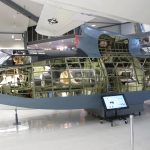
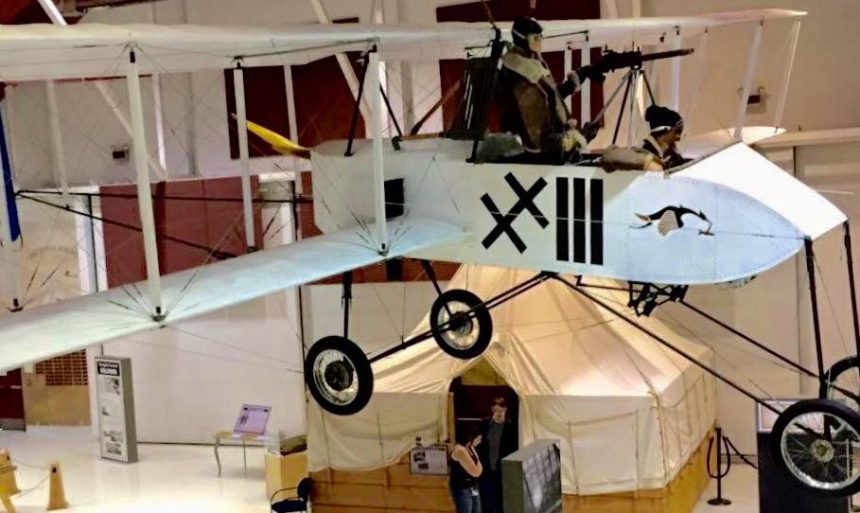
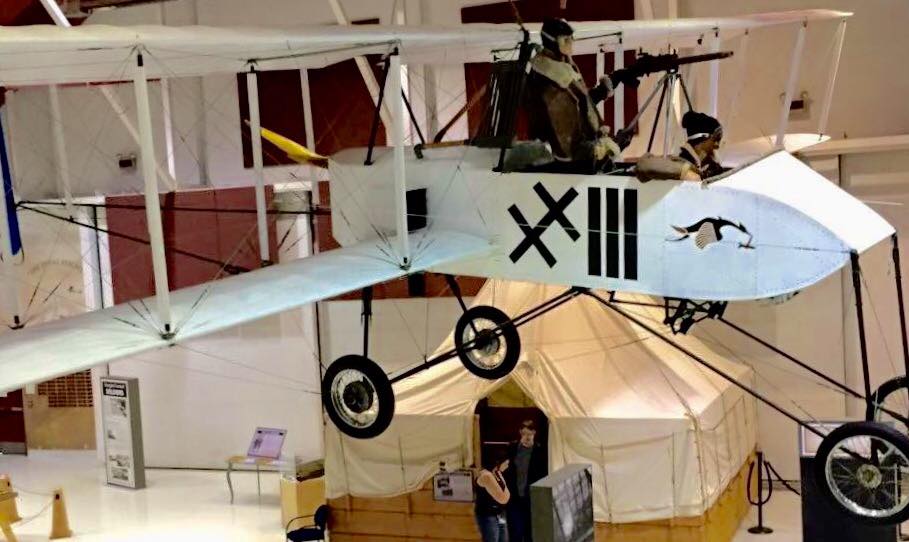
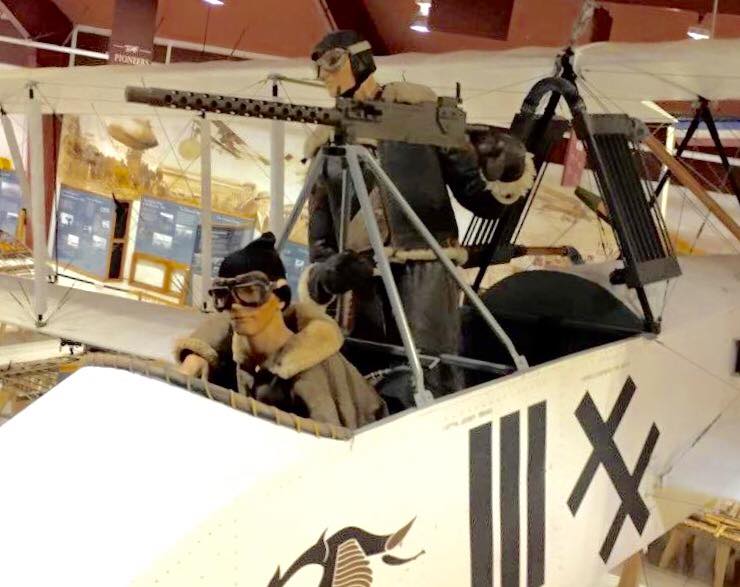
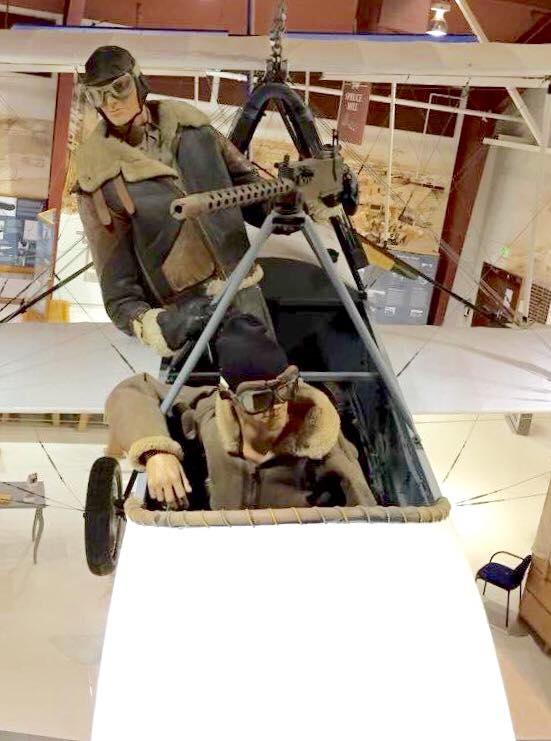
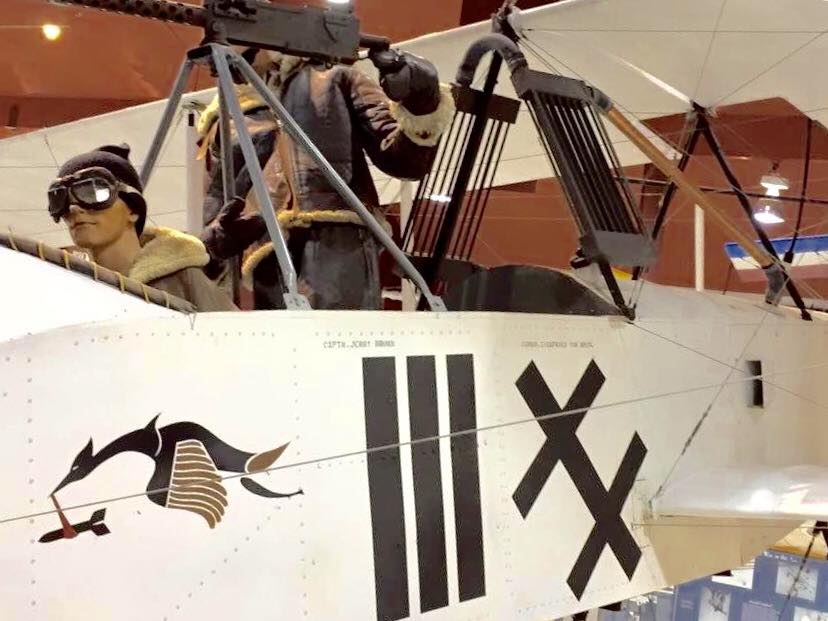
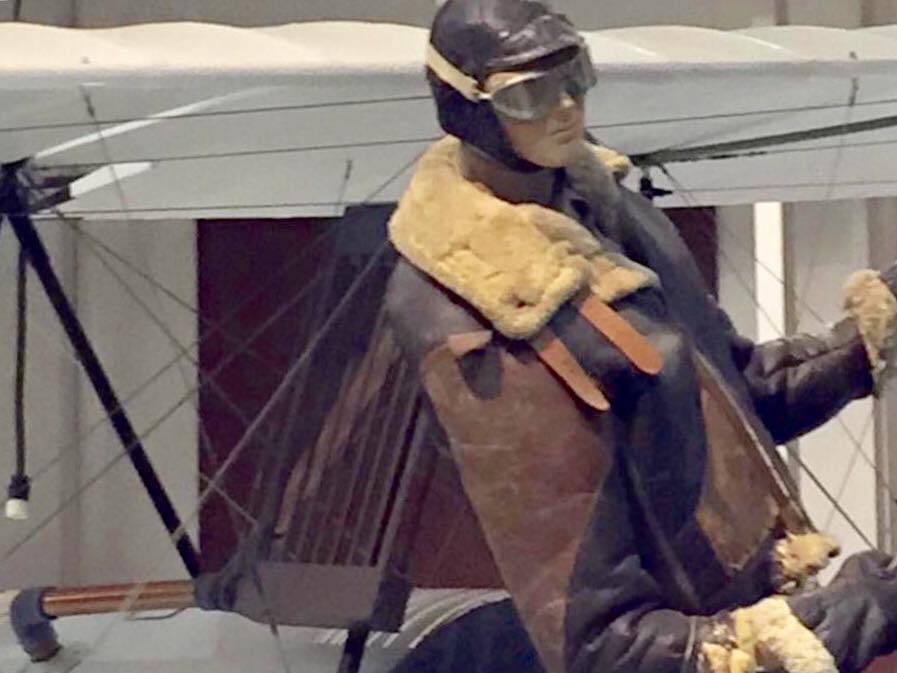
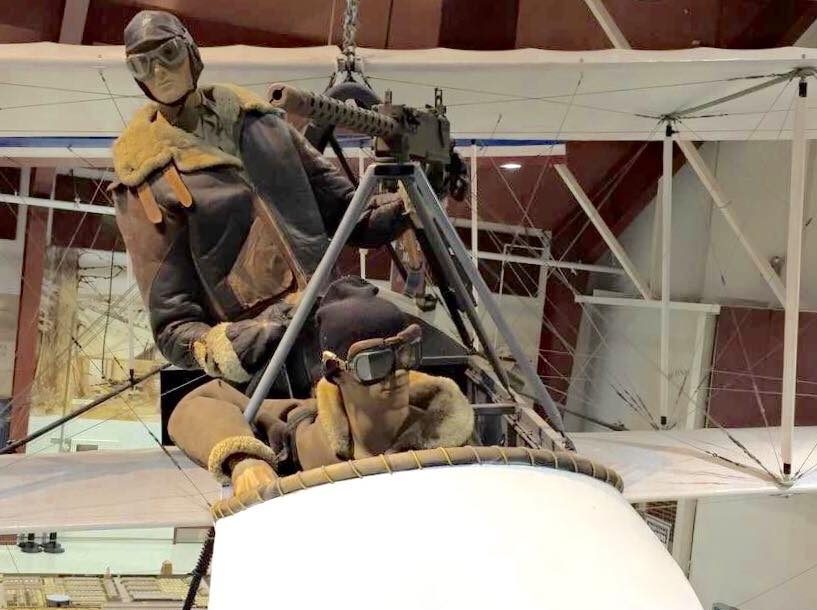
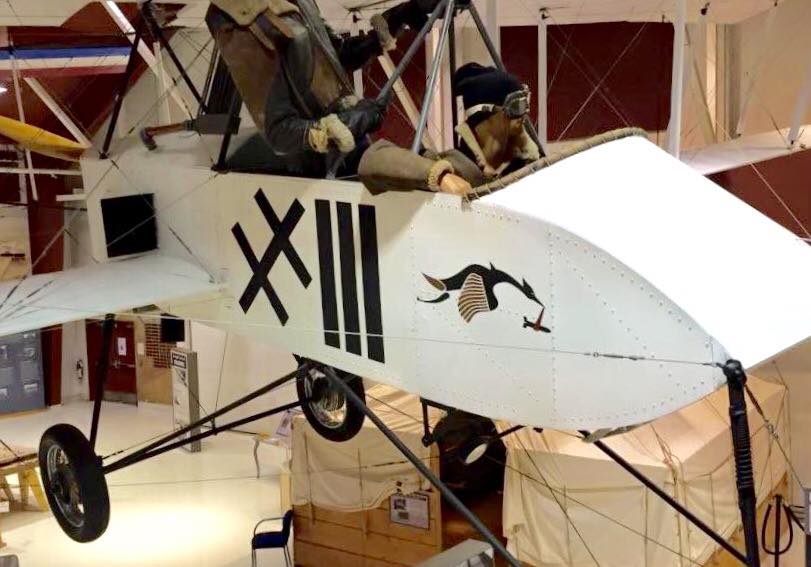
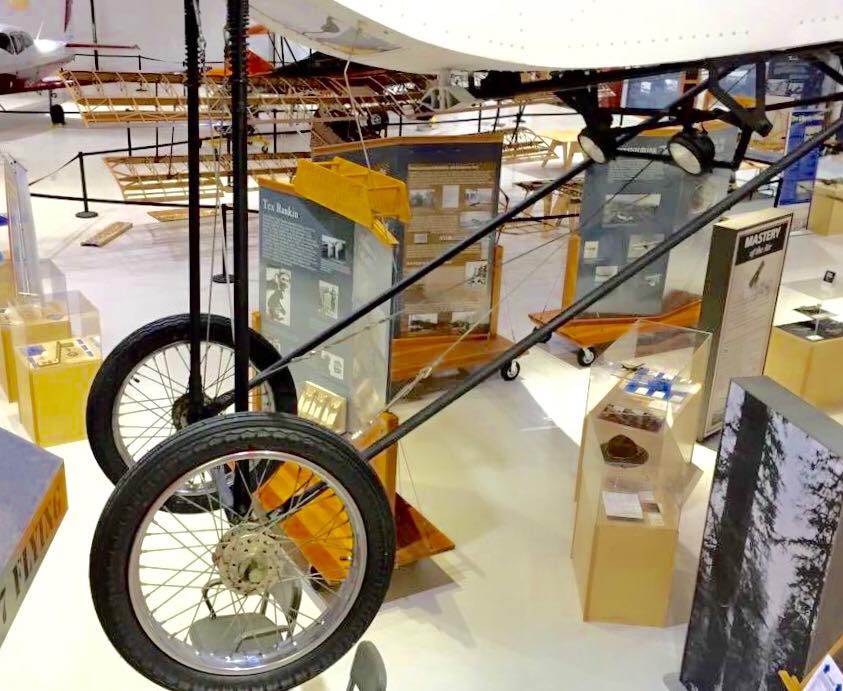
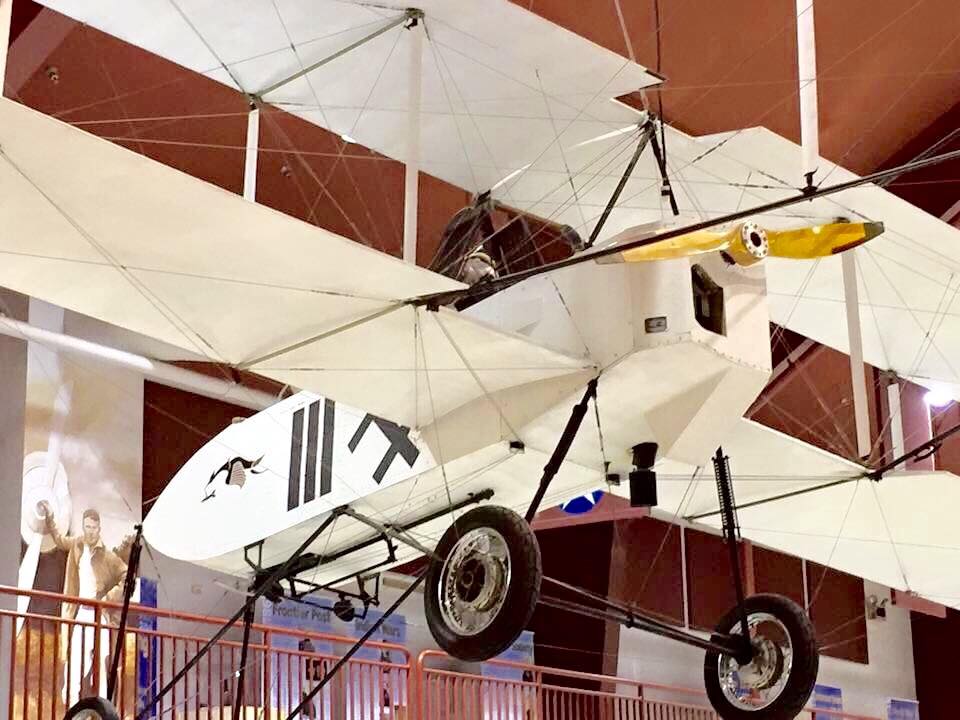
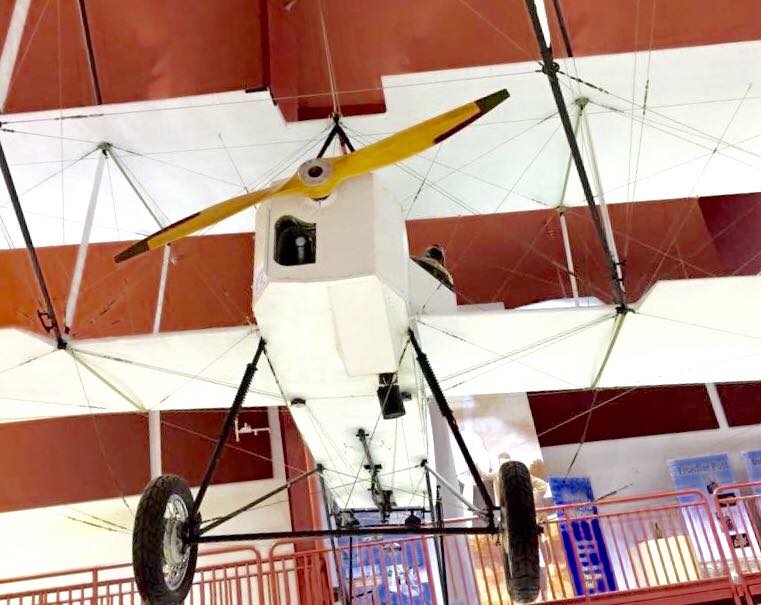
Voisin III replica on display at the Pearson Air Museum in Vancouver, Washington. This particular replica is on static display (although I have seen a photo of it in the air) at Pearson Air Museum, Vancouver, Washington. It is one of only three in the world – the other two being at the U.S. National Air and Space Museum, and the Museum of Air and Space at Le Bourget near Paris. As you can see, there are a few historical inaccuracies in this aircraft: it is not fitted with a Hotchkiss or Lewis gun, a Sakmson M9 radial engine, wheels, nor is the crew dressed in French World War I Armée de l’Air flight suits.
The Voisin III was a pusher two-seat fighter-bomber designed by aircraft designer brothers Gabriel and Charles Voisin. In all, it performed as a reconnaissance, artillery spotting, training, day and night bombing, and ground attack aircraft. In 1905, Gabriel Voisin had formed the first European commercial aircraft company with (the soon-to-be legendary) Louis Blériot. Disputes arose, and Gabriel bought out Blériot in 1906. Brothers Gabriel and Charles Voisin formed the company Appareils d’Aviation Les Frères Voisin and located their factory at 92 Hauts-de-Sein, Rue de la Ferme, Boulogne-Billancourt (Paris). They introduced their first pusher biplane, the Type L, in 1907, and it was flown by a number of European pilots. On January 13, 1908, Henri Farman (who, with his two brothers, later formed Farman Aviation Works) made the first circular one-kilometre flight in a modified Voisin biplane (Voisin-Farman I), winning a 50,000-franc prize.
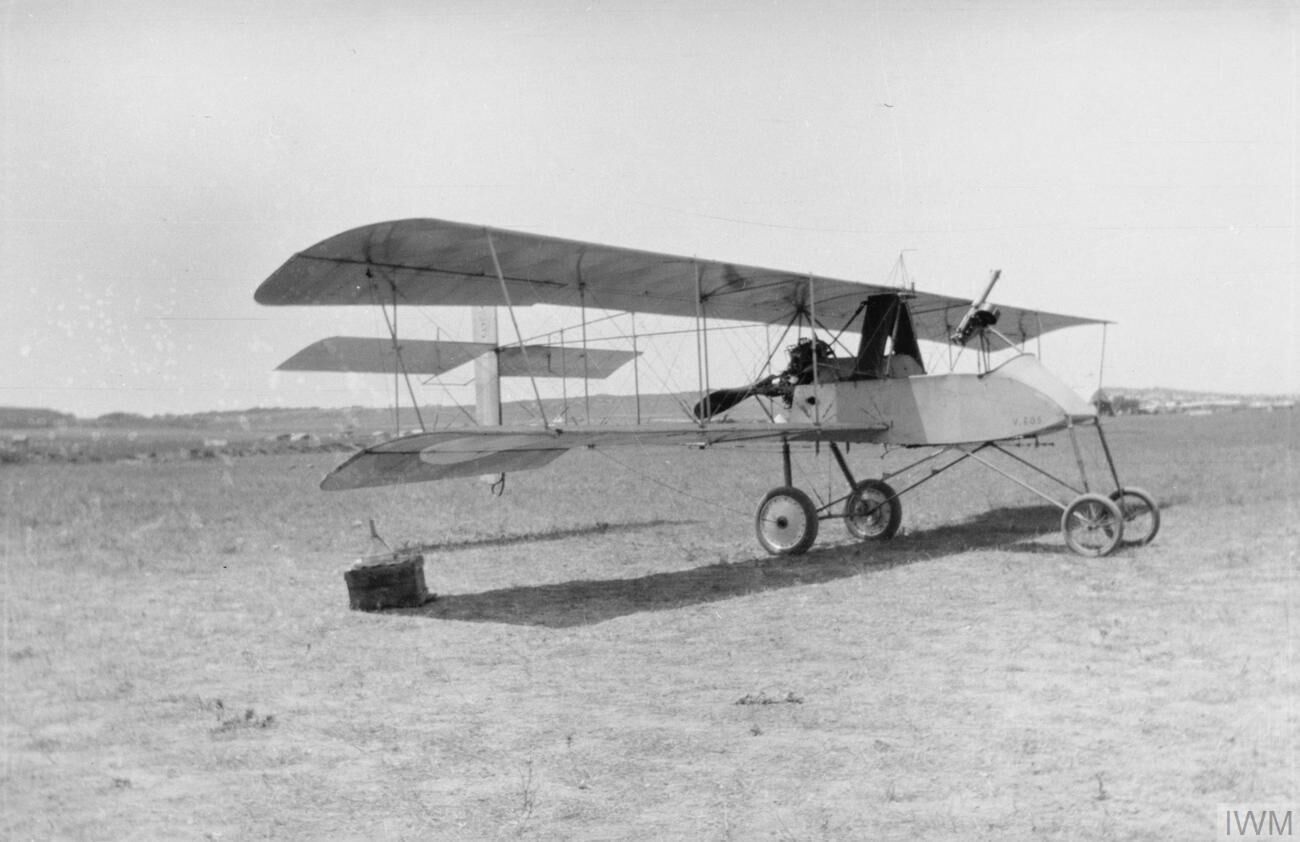
By 1912, the company was then Compagnie Gabriel Voisin and had produced 75 aircraft types and was focusing on military aircraft. They introduced the Voisin I (French military designation Voisin 1912 Type) and presented their design to the French and then the British governments, but they refused to place any orders. At the time, the French General Staff, including General Joseph Joffre and Major Joseph Tulasne (who was appointed Chief of the French Aviation Mission to the United States on October 15, 1917), viewed aviation as a sport. On the other hand, the German military saw aircraft as a great weapon of war, evidenced by the fact that as early as the outbreak of war in August 1914, German artillery fire was being directed (at least in part) by aircraft. When World War I broke out, the French General Staff was convinced that the bulk of the German army was in Alsace, but French aerial spotters discovered the main German force in Belgium. So, following the Allied retreat through Belgium and the First Battle of the Marne, the French government began to realise the importance of aviation in the military, quickly began to develop its aviation corps, and appealed to the Voisins, who then improved their Type L and introduced the Type III (or LA-III). It entered combat in September 1914 and is regarded as one of the first purpose-built bomber/ground attack aircraft, although its first assignments were for reconnaissance and artillery spotting. It was notable for having equipped some of the first dedicated bomber units, and was involved in the May 26, 1915, attack on the poison gas manufacturer Badische Anilin und Soda Fabrik (BASF) at Ludwigshafen, Germany, after the Imperial German Army introduced poison gas in battle. The British soon followed suit and rapidly developed their fledgling air corps.
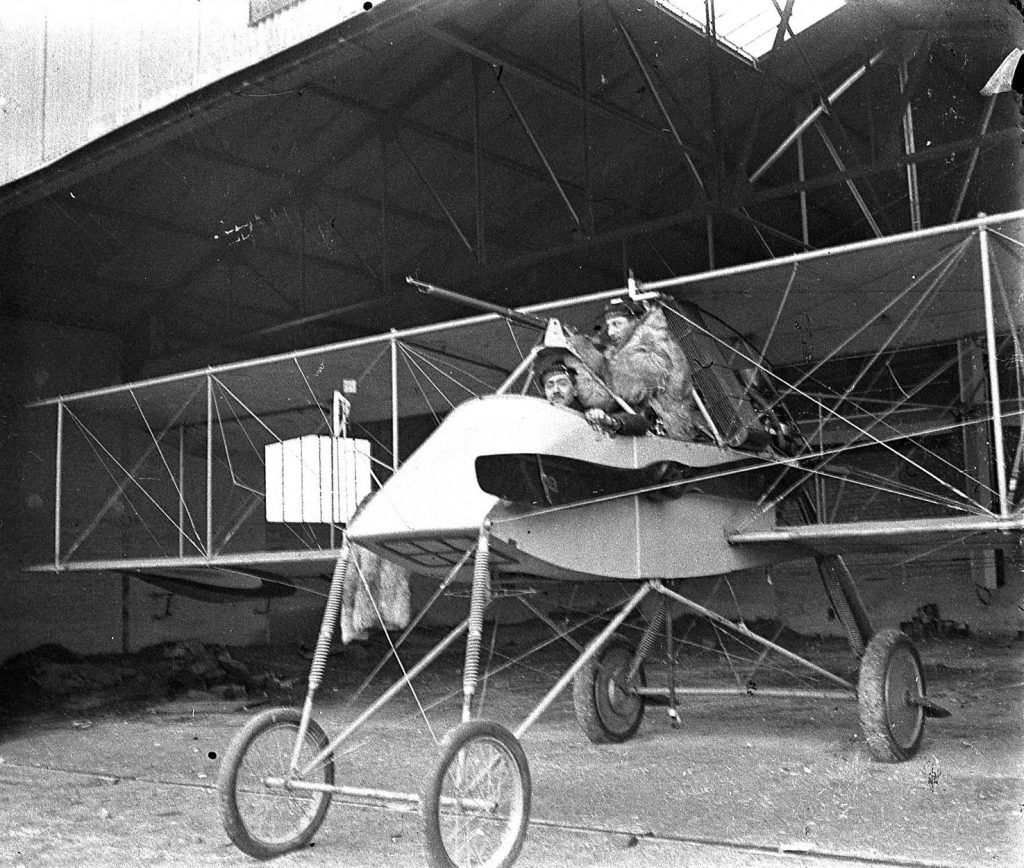
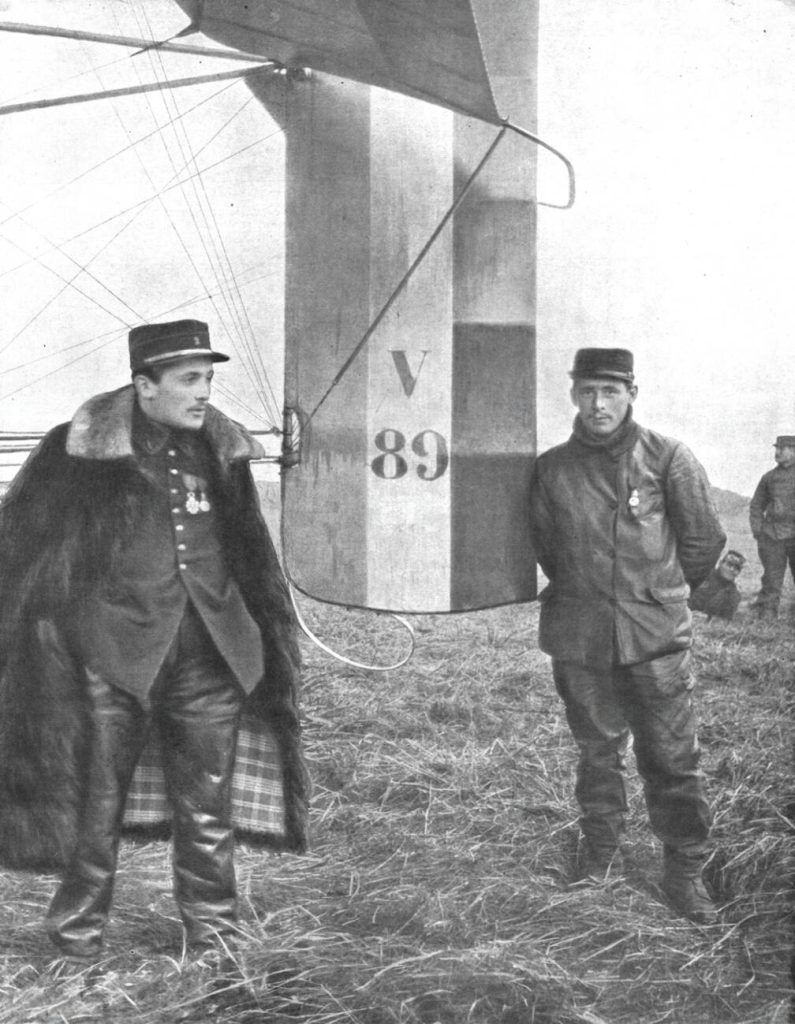
A Voisin III is considered to be the first aircraft to shoot down (not ram) an enemy aircraft in a dogfight. It occurred on October 5, 1914, over Jonchery-sur-Vesle, near Rheims, France. While flying a Voisin III of Escadrille V 24, pilot Sergeant Joseph Frantz and observer/mechanic/gunner Corporal Louis Quénault engaged a German Aviatik B.II at about 3,500 ft. piloted by Feldwebel Wilhelm Schlichting with his observer, Oberleutnant Fritz von Zangen of Feldflieger-Abteilung 18 (FFA 18 or Field Flying Company Unit 18, a tactical reconnaissance unit). The two aircraft exchanged gunfire, Quénault firing from their 8 mm Hotchkiss M1909 machine gun, and the German aircraft fell into a dive and crashed in a swamp near a railway line. Schlichting had been killed by a bullet; von Zangen died in the crash. Frantz (who survived the war, was awarded the Legion of Honour, and died in Paris in 1979) landed the Voisin at the crash scene, and souvenir hunters were already going through the wreckage of the Aviatik. Quénault was awarded the Médaille Militaire. The event was witnessed by many, and the Daily Telegraph (reprinted in Flight magazine on October 16, 1914) reported that “All the French troops on the spot forgot the danger of passing shells and jumped out of the trenches to watch the fight.”
The Voisin III was constructed of steel tubes and canvas (with some wood). Powered by a 120-horsepower Salmson M9 water-cooled engine. It was armed with a flexible .303″ Lewis machine gun or an 8 mm Hotchkiss M1909 machine gun. Its steel tube frame meant it could carry up to 150 kg (330 lbs) of bombs. It was fitted with fixed, quadricycle landing gear. Note the observation window in the nose. Over 850 were produced in France alone, and more were built under license in twelve other countries, including 400 in Russia, 100 in Italy, 50 in Britain, and small numbers in Belgium and Romania. It became an early, standard Allied attack aircraft flown by a number of militaries in World War I, including Belgium, Italy, Romania, the British Commonwealth, Russia (many were then flown by Imperial Russian forces against Bolshevik positions during the Russian Revolution), Serbia, and was the main single-engine Allied bomber in 1915.
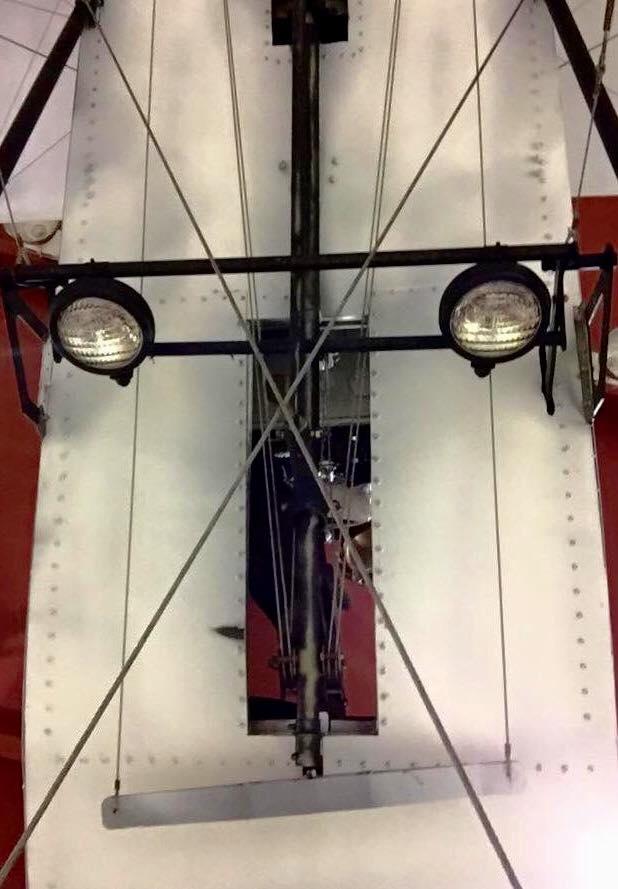
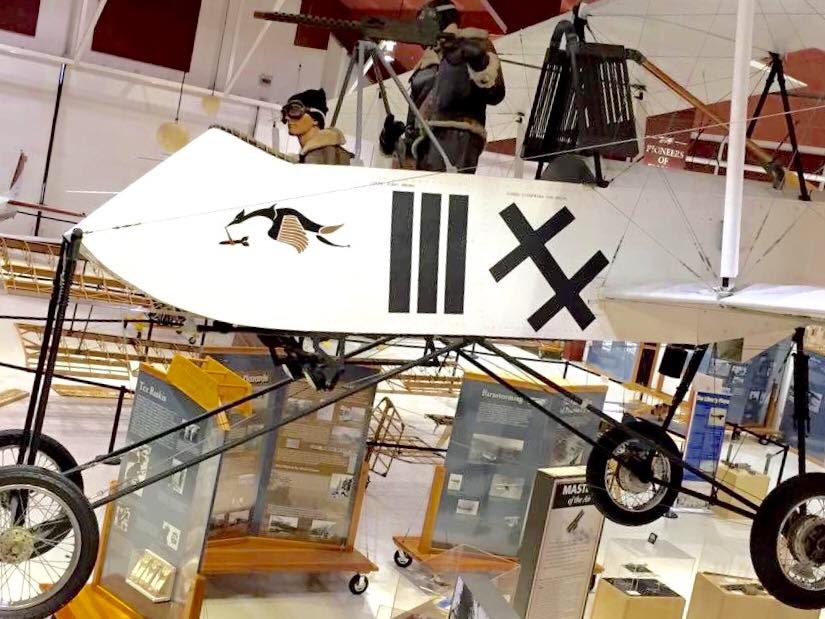
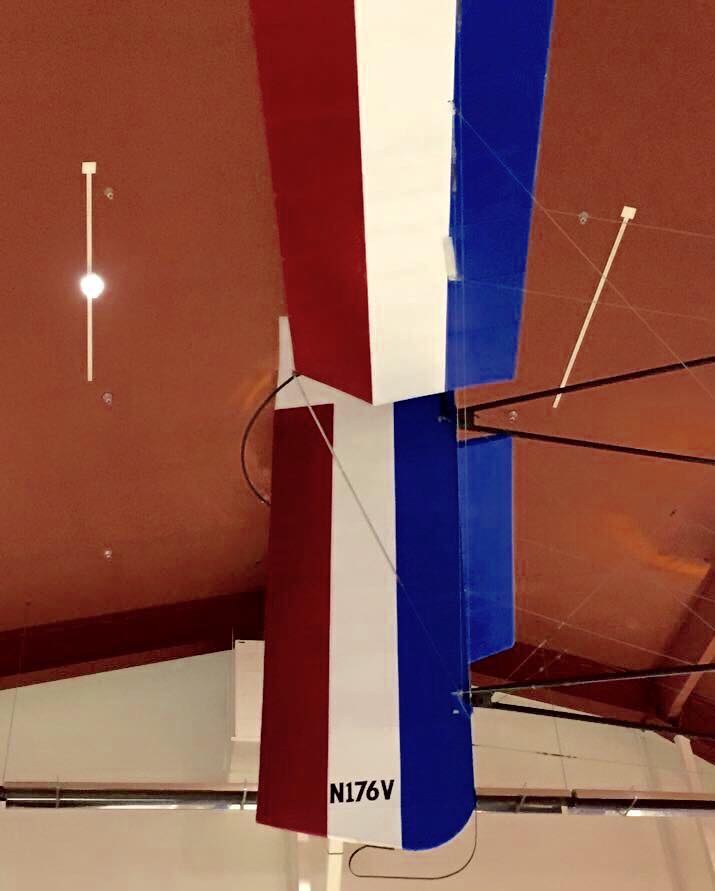
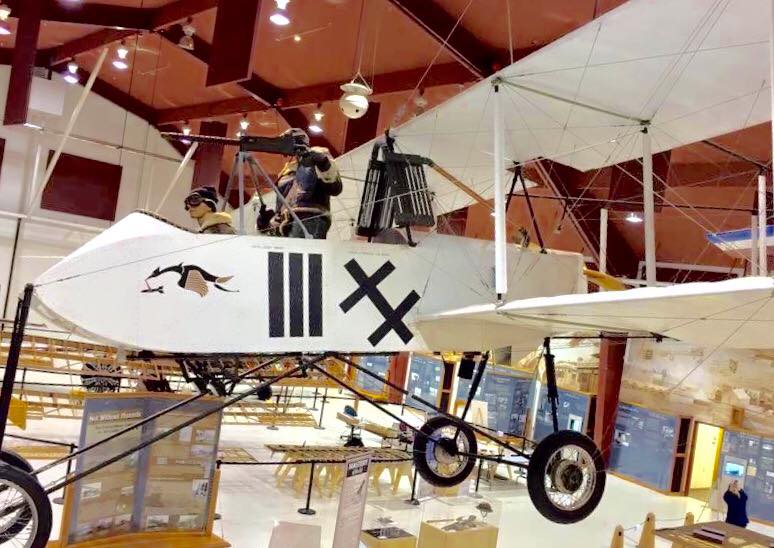
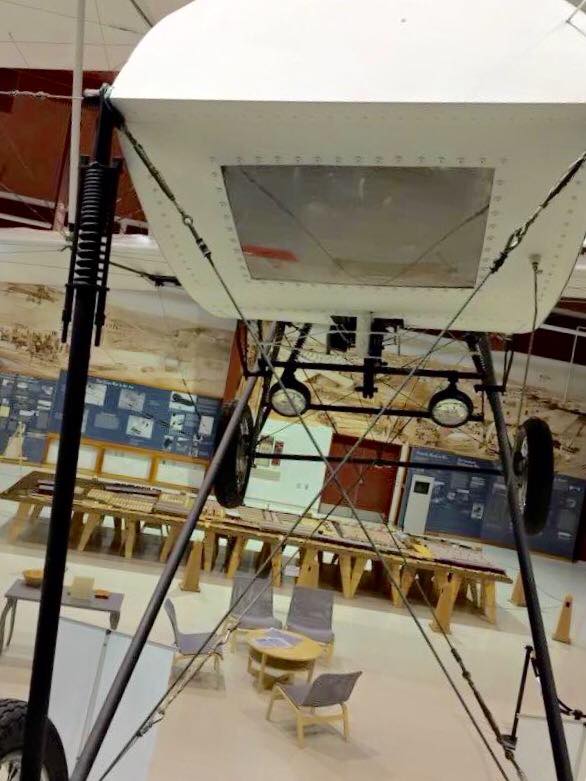
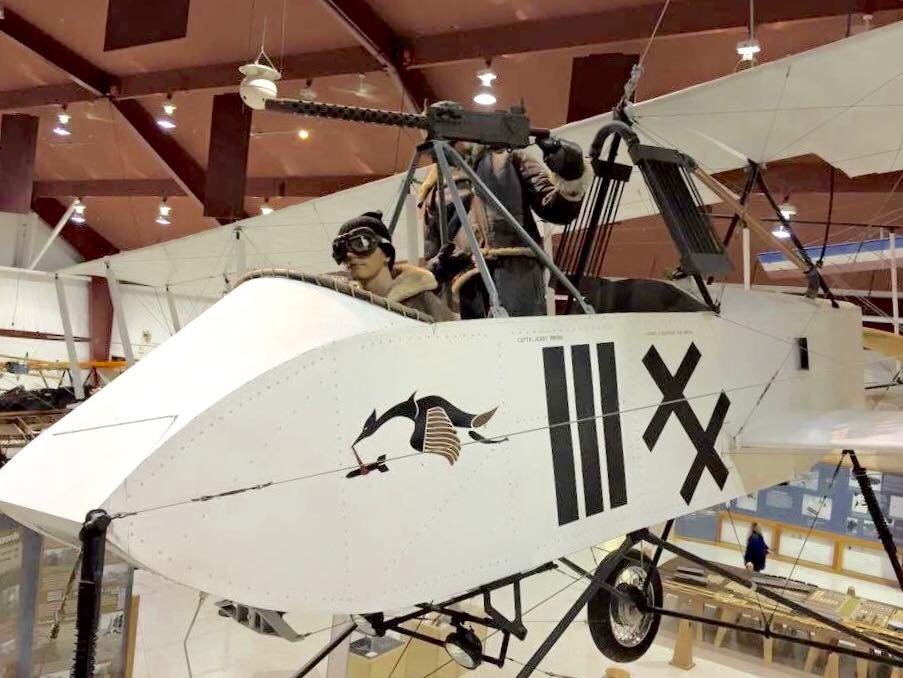
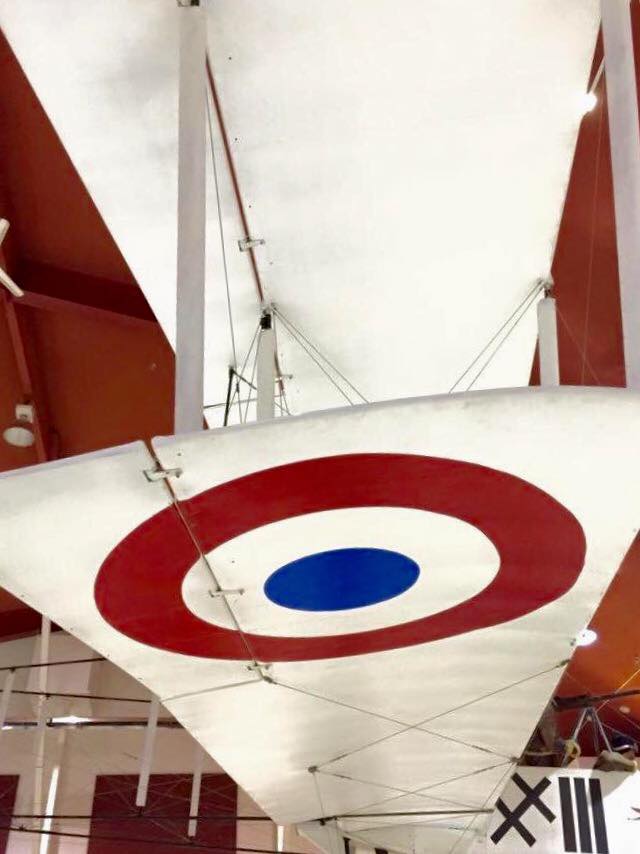
With its pusher design, it was defenseless from rear attack, and new, more sophisticated fighters made it vulnerable. The addition of the Nieuport 11 Bébé (for example) as escort aircraft helped but limited its range. They began leaving active duty with the French and the British forces as early as 1916, and by November 1918, manufacturing and entry into service had ceased entirely, considered obsolete (although continued as a trainer). Throughout World War I, the Voisin company introduced a total of ten types. The Voisin 10 had a more powerful engine in the 280-horsepower Renault 12Fe, which provided increased speed, range, and payload capability. This replica was built from historical drawings and records by Sigfried “Siggy” Bredl and McDonnell Douglas MD-11 Capt. Gerry Brown. It is painted with the insignia of the Escadrille Cigognes or “Les Cigognes” (Stork Squadrons) and the Cross of Lorraine. The stork was a symbol of the province of Alsace. Storks would nest annually in the chimneys of Alsace-Lorraine, which had been in German hands since the end of the Franco-Prussian War in 1871, and the stork and Cross of Lorraine symbolised France’s determination to return and retake those provinces.
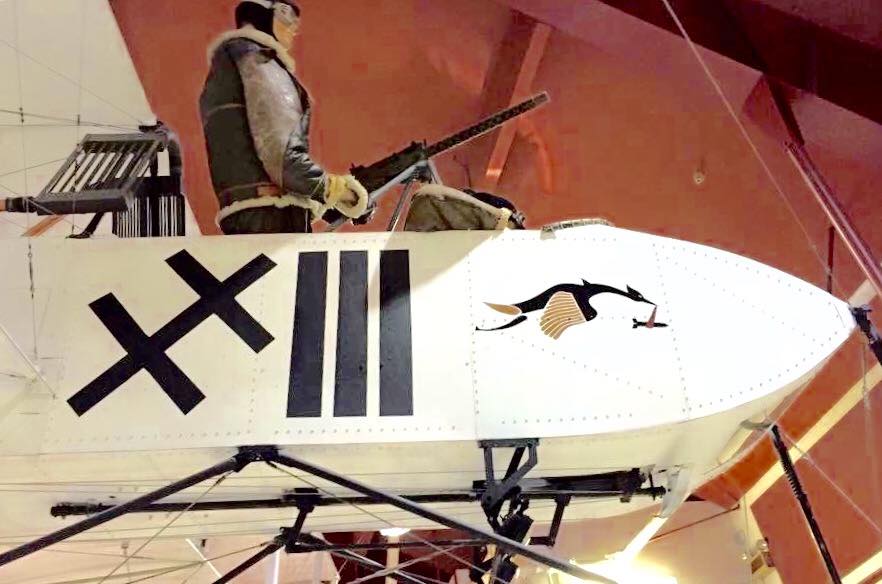
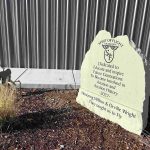
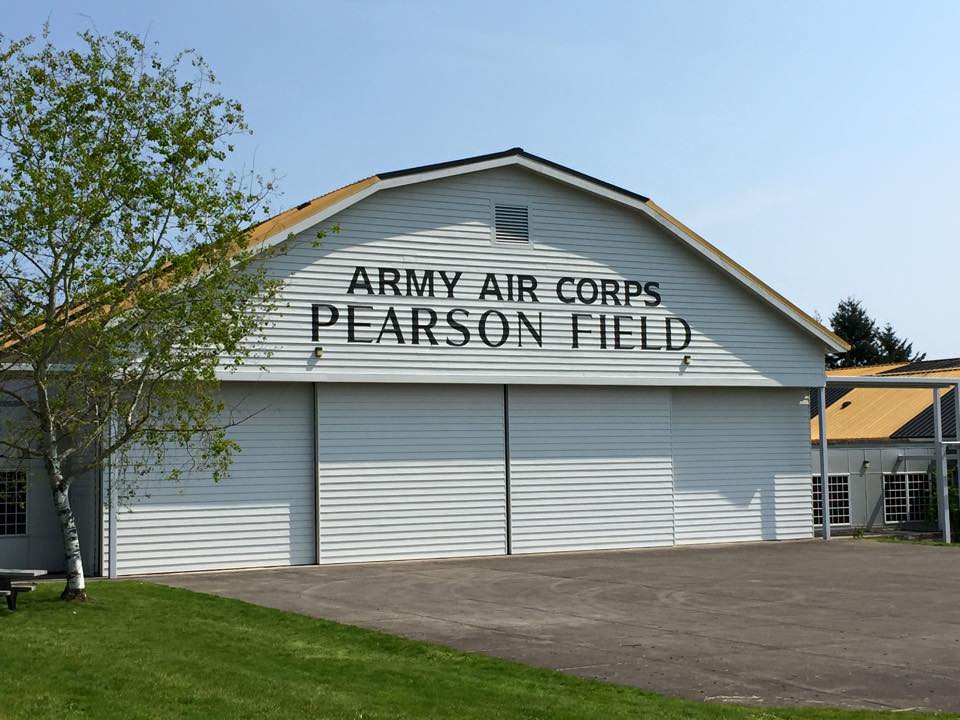
It was Battle Group Capitaine Brocard who suggested the image of a stork for the insignia. As for some historic side notes about this airfield, I share the following. During World War I, the polo field at Pearson Field became the Spruce Production Division’s Spruce Cut-Up Mill, which produced aviation-grade spruce for Curtiss JN-4 and Airco DH-4 (de Havilland D.H.4) aircraft. Also, Soviet pilot Valery Chkalov (a stunt, test and fighter pilot – as of 1924 a member of the Soviet Fighter Air Squadron), co-pilot Georgy Baidukov and navigator Aleksandr Belyakov took off from Moscow in a Tupolev ANT-25 on June 17, 1937 on the first transpolar flight, heading to Oakland, California, but due to a fuel shortage as a result of strong headwinds (and after experiencing the failure of the magnetic compass followed by wing de-icing problems since only the propeller had de-icing capabilities, and shortage of water) cut the flight short at what was then the U.S. Army Air Corps’ Pearson Field, where General George C. Marshall greeted them. The 9,130 kilometres (5,670 miles) trip took 63 hours and 25 minutes. In 1975, a memorial was erected at Pearson Field. After the war, the field initially became known as “Vancouver Barracks Aerodrome”, and in 1925, it was renamed “Pearson Air Field” in honour of Lt. Alexander Pearson. Beginning in 1923, the field was the home to the 321st Observation Squadron, 96th Division. The field was decommissioned after World War II and remains as a municipal airport.
About the author:  Randy Malmstrom grew up in a family steeped in aviation culture. His father, Bob, was still a cadet in training with the USAAF at the end of WWII, but did serve in Germany during the U.S. occupation in the immediate post-war period, where he had the opportunity to fly in a wide variety of types that flew in WWII. After returning to the States, Bob became a multi-engine aircraft sales manager and, as such, flew a wide variety of aircraft; Randy frequently accompanied him on these flights. Furthermore, Randy’s cousin, Einar Axel Malmstrom, flew P-47 Thunderbolts with the 356th FG from RAF Martlesham Heath. He was commanding this unit at the time he was shot down over France on April 24th, 1944, and spent the rest of the war as a prisoner of war. Following his repatriation at war’s end, Einar continued his military service, attaining the rank of Colonel. He was serving as Deputy Wing Commander of the 407th Strategic Fighter Wing at Great Falls AFB, MT, at the time of his death in a T-33 training accident on August 21, 1954. The base was renamed in his honour in October 1955 and continues to serve in the present USAF as home to the 341st Missile Wing. Randy’s innate interest in history in general, and aviation history in particular, plus his educational background and passion for WWII warbirds, led him down his current path of capturing detailed aircraft walk-around photos and in-depth airframe histories, recording a precise description of a particular aircraft in all aspects.