

(Image credit: VAN)
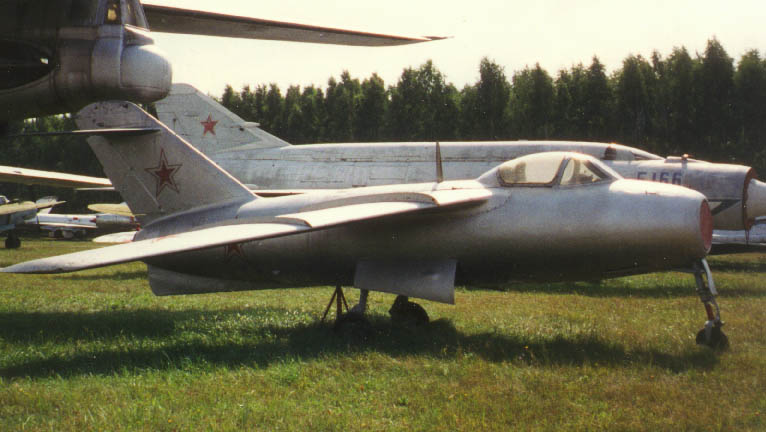
On this day in aviation history, 78 years ago (January 8, 1948), the Lavochkin La-15 took flight for the first time. Known by many names, the La-15 was an early Soviet fighter jet that helped give rise to the Soviets’ highly successful Mikoyan-Gurevich MiG-15 Fagot. Lavochkin/Plant 21 named this early fighter jet the Izdeliye 52, the USAF referred to it as the Type 21, and NATO dubbed the La-15 as the Fantail. Lavochkin had previously found success designing single-engine fighters for the Soviet Union during World War II. In the waning years of the War, Lavochkin began to develop the La-150 single-seat jet fighter in response to the German Me 262 Schwalbe. After the La-152, Lavochkin went on to design the La-160, which was the first Soviet swept-wing fighter to fly (June 1947). From the La-160, Lavochkin developed the La-168, a furtherance of the design that was modified to accept a Soviet engine based on the Rolls-Royce Nene.
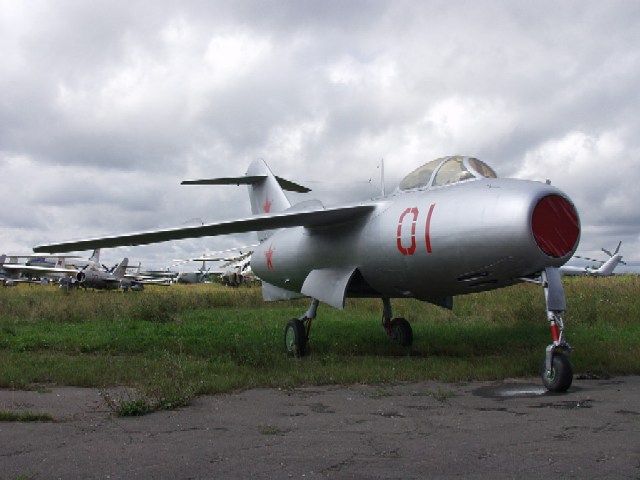
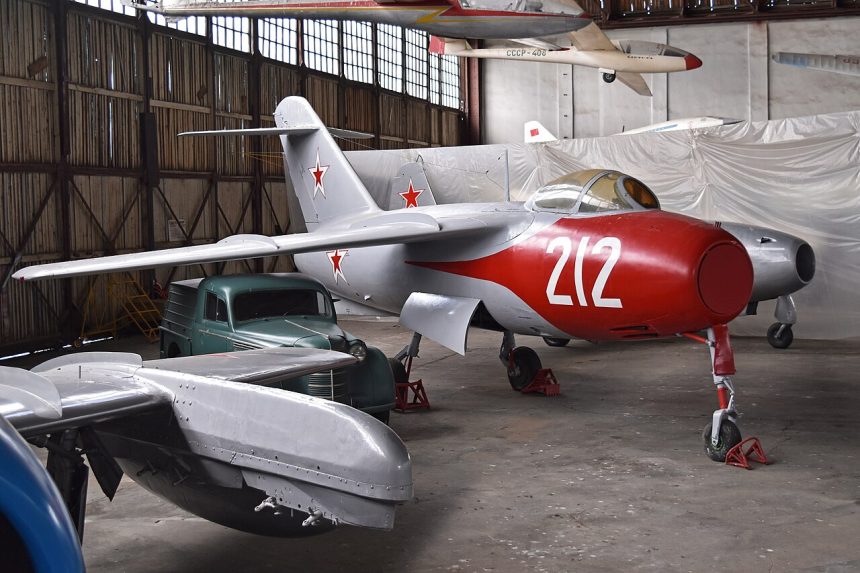
Eventually, the La-15 was born from this lineage of early Soviet fighters, and technology was tested on other experimental jet bombers. The La-15 featured a barrel-shaped fuselage, swept wings that were shoulder-mounted, and a high-mounted stabilizer — resembling a T-tail. Lavochkin’s fighter proved to be a pilot’s dream owing to its reliability and smooth handling. The La-15 featured a pressurized cabin, beneficial to higher altitude operations and pilot comfort. Nevertheless, the Fantail was a complex design, and enthusiasm from Soviet officials was lacking due to the expensive and complicated tooling required for production of the aircraft. The Lavochkin La-15 was powered by a Klimov RD-500 turbojet engine that produced 3,500 pounds of thrust. This Klimov propelled the Fantail to a maximum airspeed of 626 mph. The La-15 had a climb rate of 6,240 feet per minute, could fly within a range of 618 nautical miles, and attain a service ceiling of 44,300 feet. Armament came in the form of three 23 millimeter Nudelman-Suranov NS-23 autocannons, each with 100 rounds. Lavochkin built 235 La-15s up until the aircraft’s retirement in 1953. A sole Fantail survives today and can be seen on display at the Central Air Force Museum in Monino, Russia.