
From an original article written by Jeff Summey
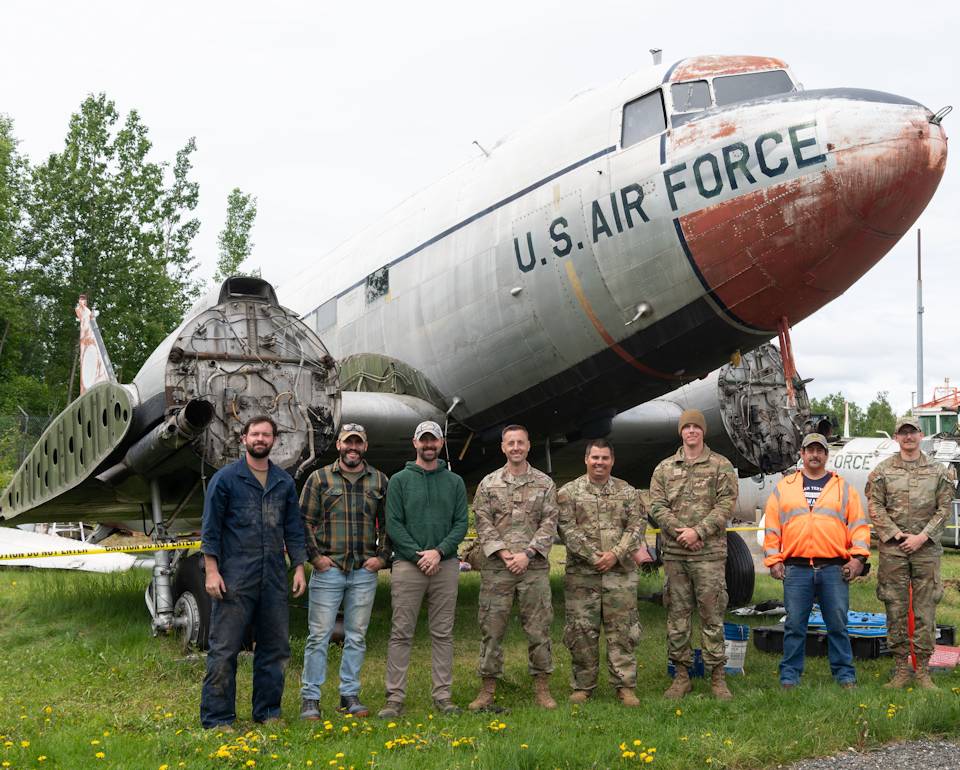
On June 6, 2024—exactly 80 years after D-Day—personnel from Robins Air Force Base, Georgia, dismantled a World War II–veteran Douglas C-47 at the Museum of Alaska Transportation and Industry in Wasilla, Alaska, in preparation for its transport to the Museum of Aviation at Robins AFB. The aircraft, a Douglas C-47A-80-DL Skytrain (serial number 43-15200), participated in some of the most significant combat operations of the European Theater during World War II. The Museum of Aviation is now undertaking a long-term restoration of the aircraft for public display, with the goal of returning it to the appearance it carried during these historic wartime missions.
Background
Delivered to the U.S. Army Air Forces in February 1944, C-47A 43-15200 was ferried to England and assigned to the Ninth Air Force, IX Troop Carrier Command. Its first combat assignment was with the 441st Troop Carrier Group, 99th Troop Carrier Squadron. During the night of 5–6 June 1944, the aircraft flew in the first wave of Operation OVERLORD, dropping paratroopers of C Company, 1st Battalion, 501st Parachute Infantry Regiment, 101st Airborne Division into Normandy, France. During this historic mission, the aircraft sustained battle damage from enemy ground fire.
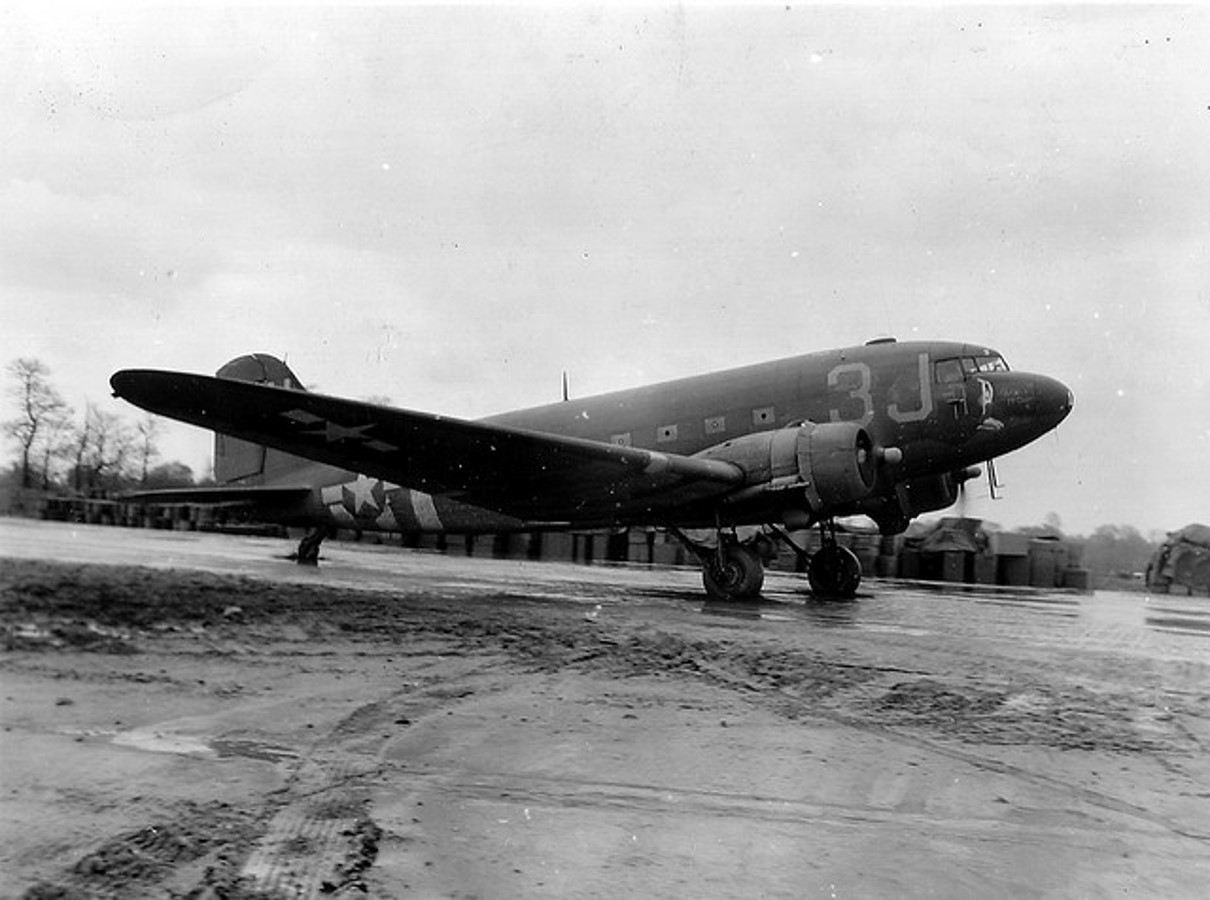
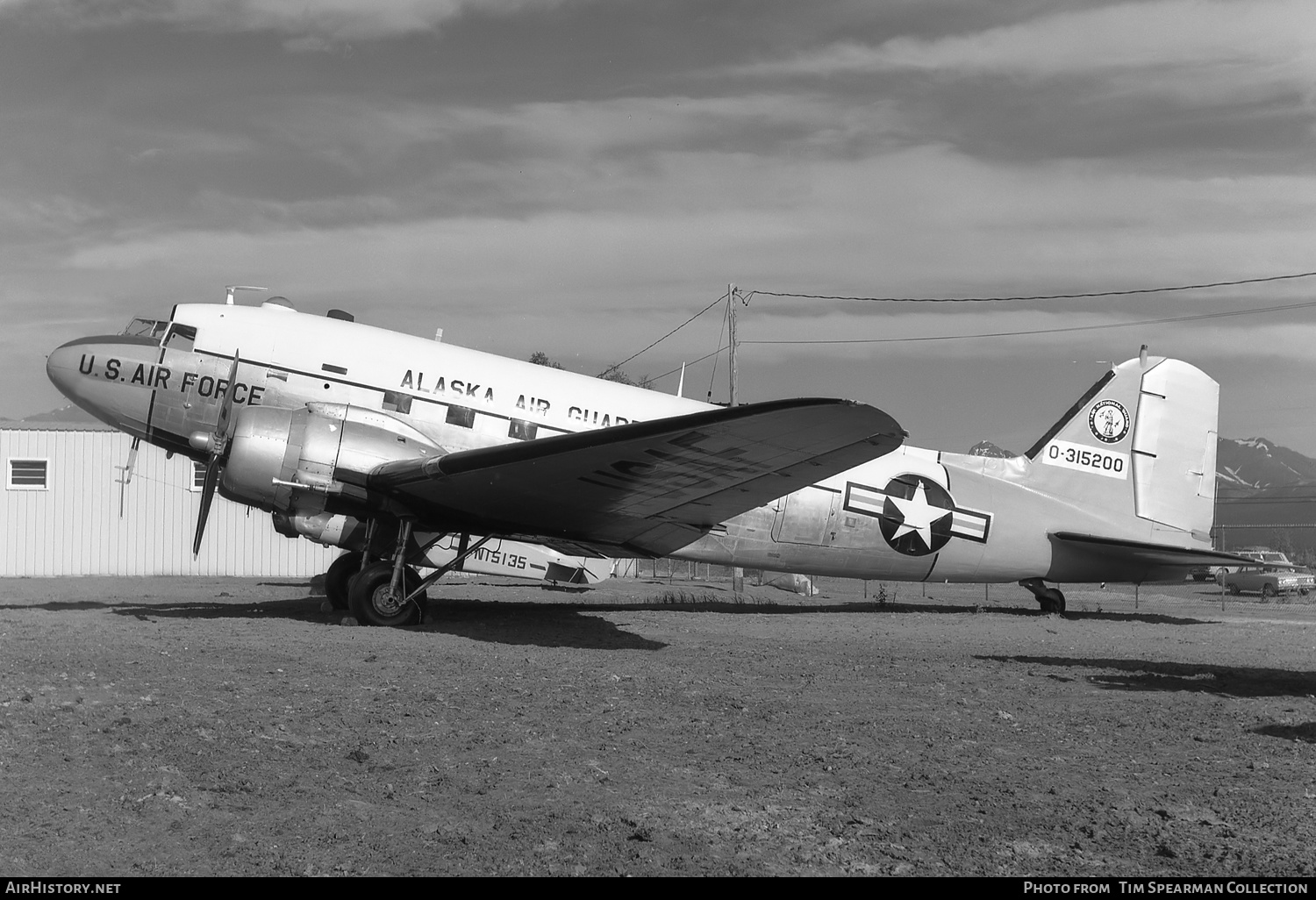
The next major combat operation for 43-15200 occurred on 23 December 1944 during the Battle of the Bulge. The aircraft took part in a daylight aerial resupply mission to the encircled city of Bastogne, Belgium, delivering desperately needed supplies to the surrounded 101st Airborne Division. German ground fire again damaged the aircraft during this mission, and four C-47s were shot down during the operation. There is also anecdotal evidence suggesting that 43-15200 participated in Operation MARKET GARDEN in September 1944—the airborne assault into the Netherlands—as well as Operation VARSITY in March 1945, the largest single airborne assault into Germany during the war. Additional research is ongoing to independently verify the aircraft’s participation in these operations. After returning to the United States following the war, the aircraft served in various roles with the New York and Alaska Air National Guard before being retired from military service in 1960. It eventually became part of the Museum of Alaska Transportation and Industry collection in Wasilla, Alaska, displayed outdoors for several decades as C-47A, tail number 0-315200. The aircraft was relocated to the Museum of Aviation at Robins AFB in July 2024 for restoration and long-term preservation.
Restoration plan
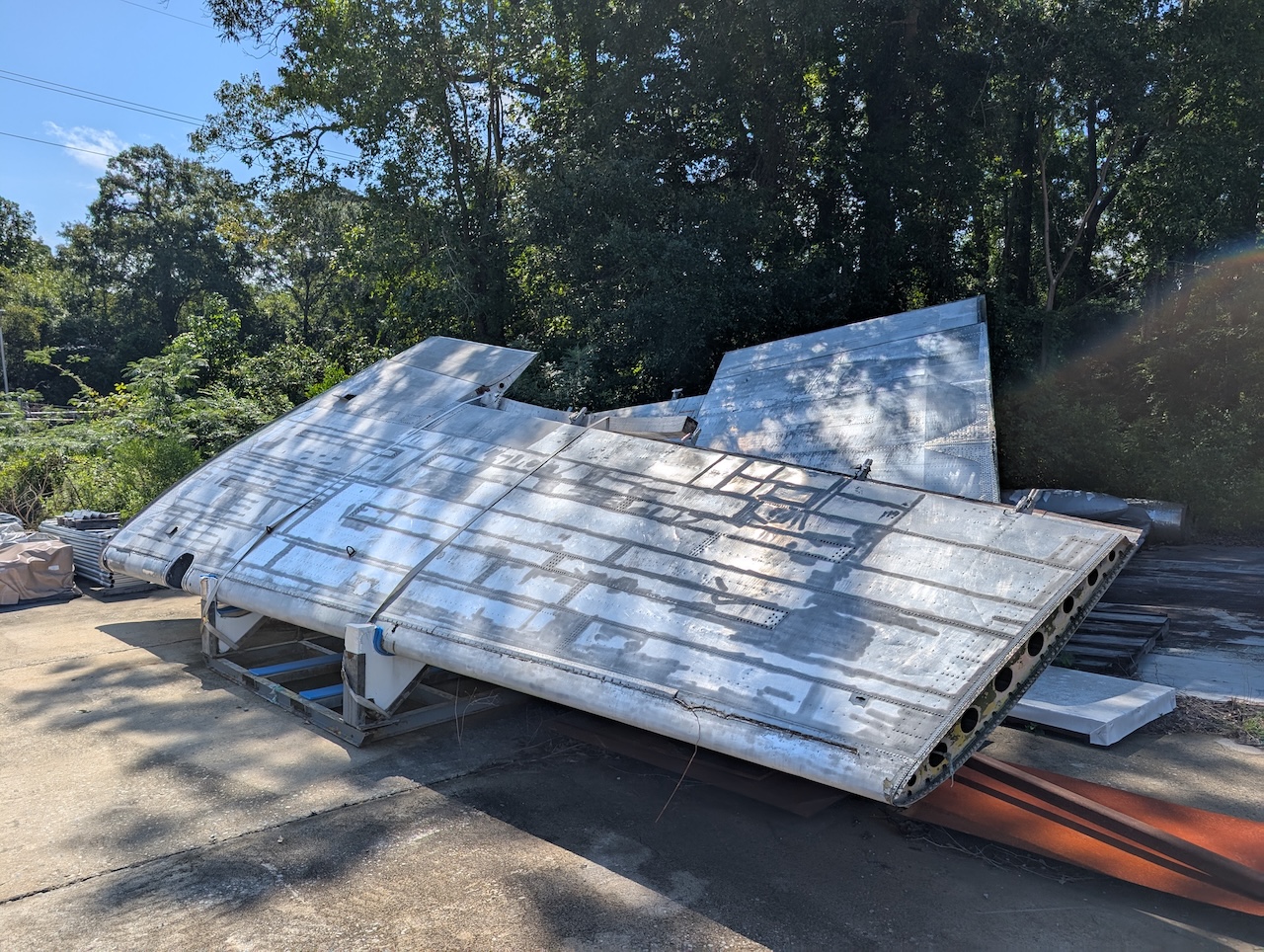
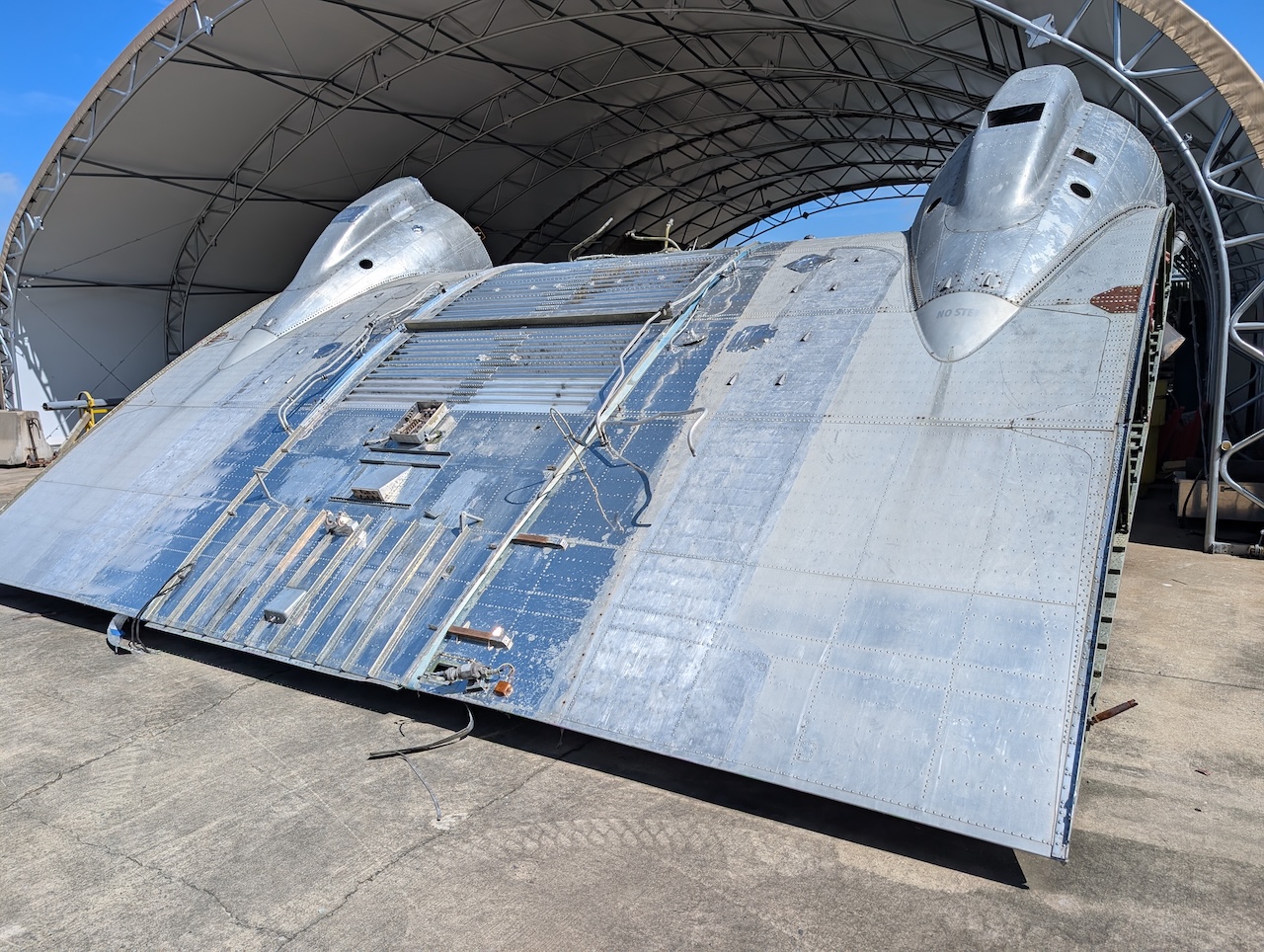
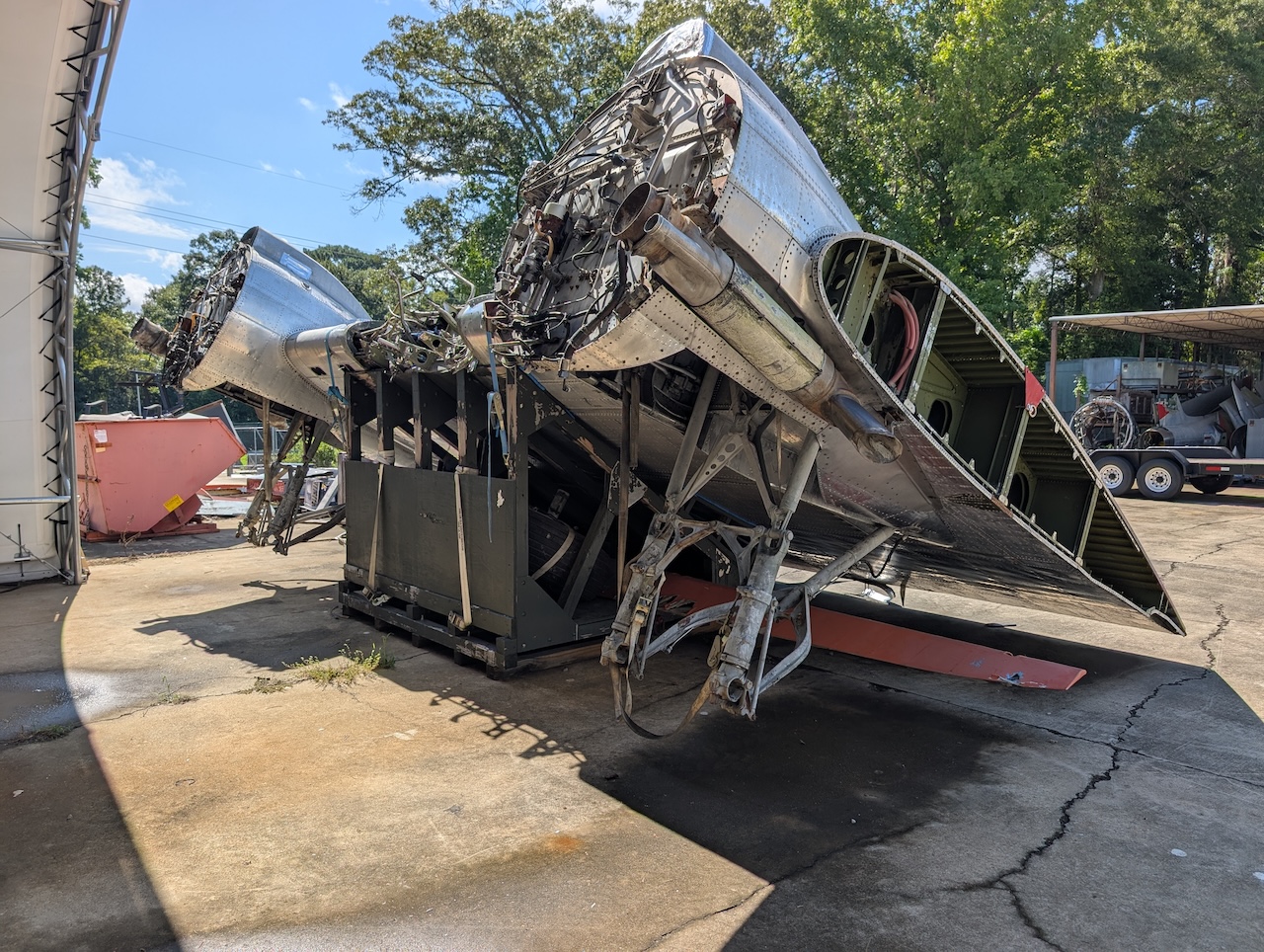
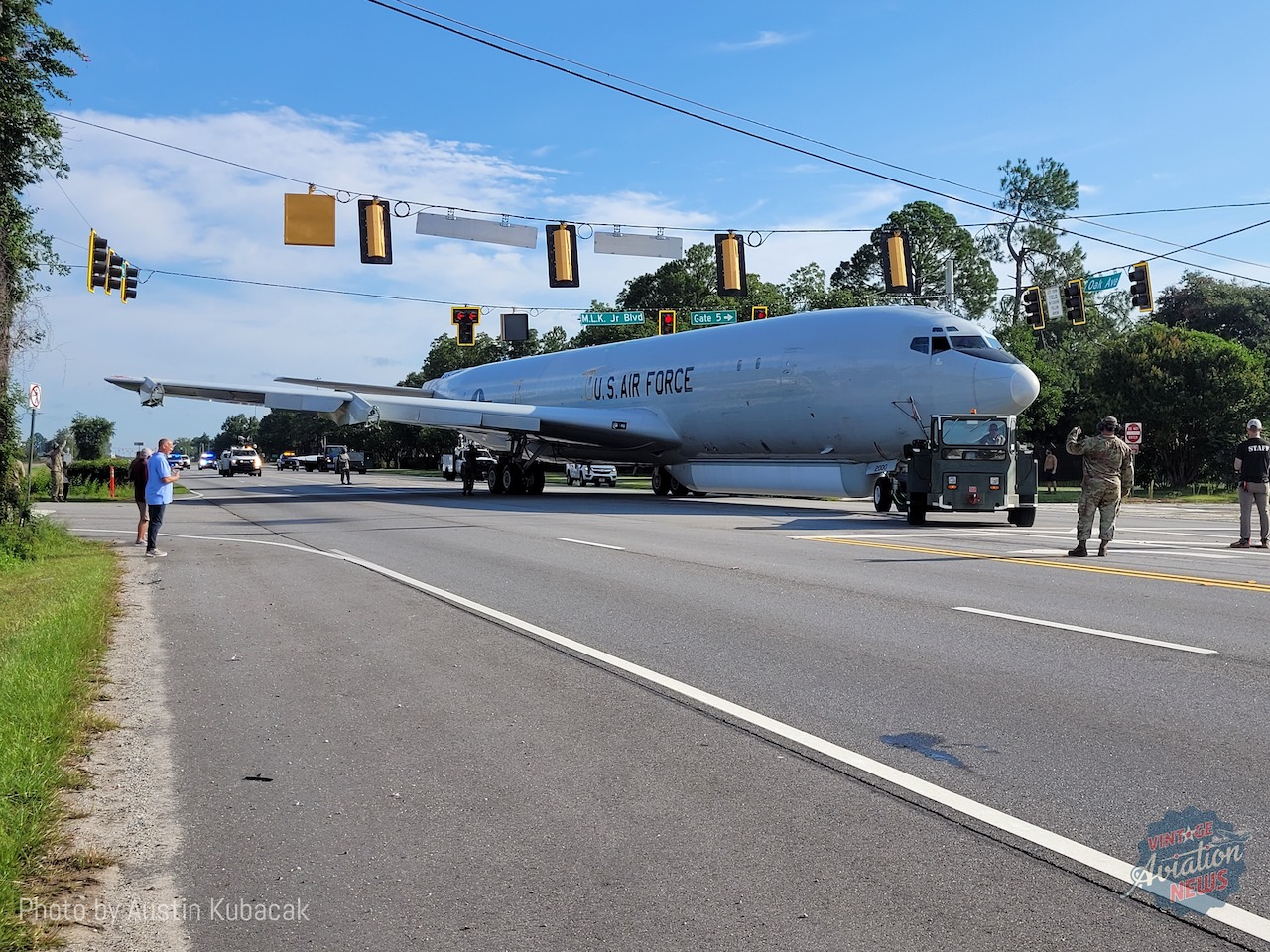
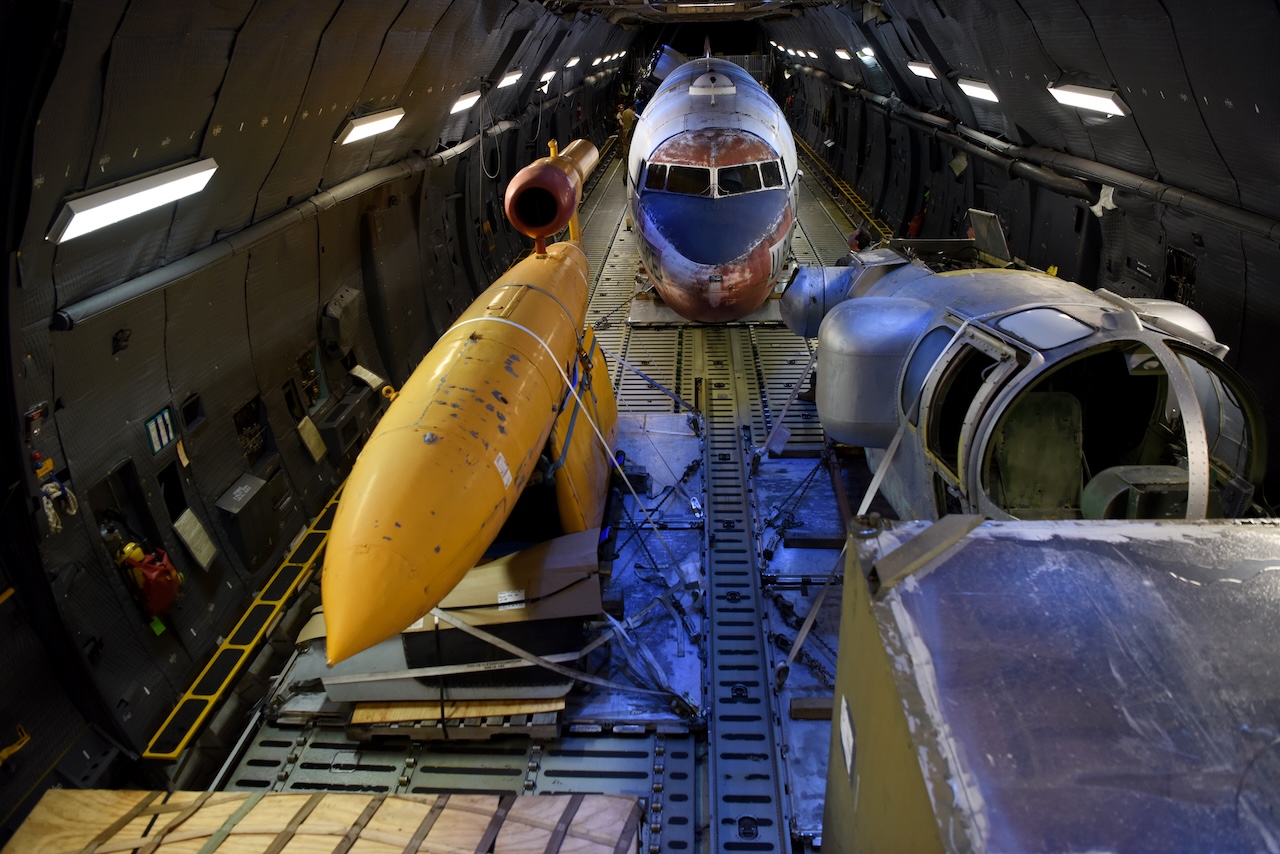
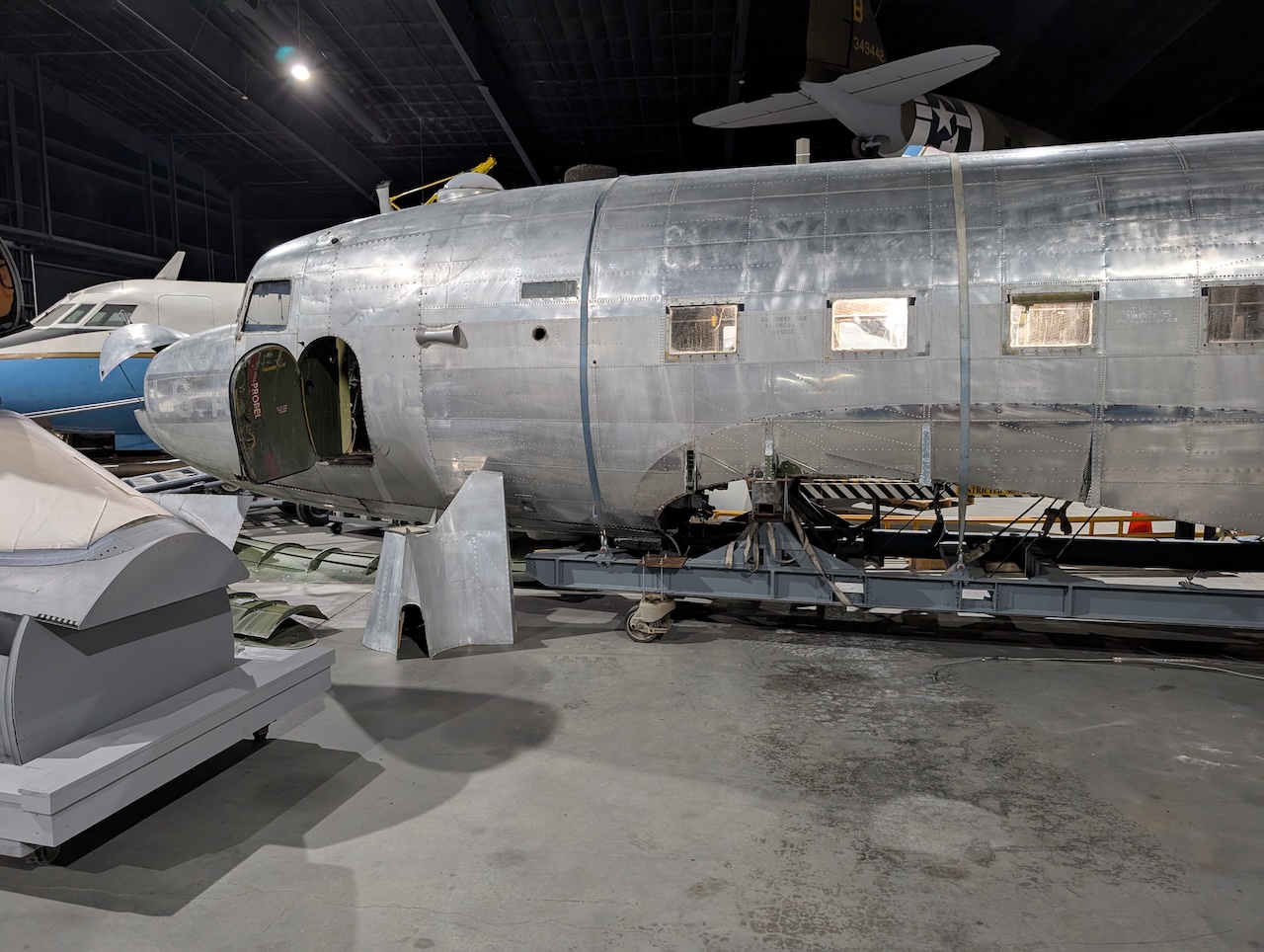
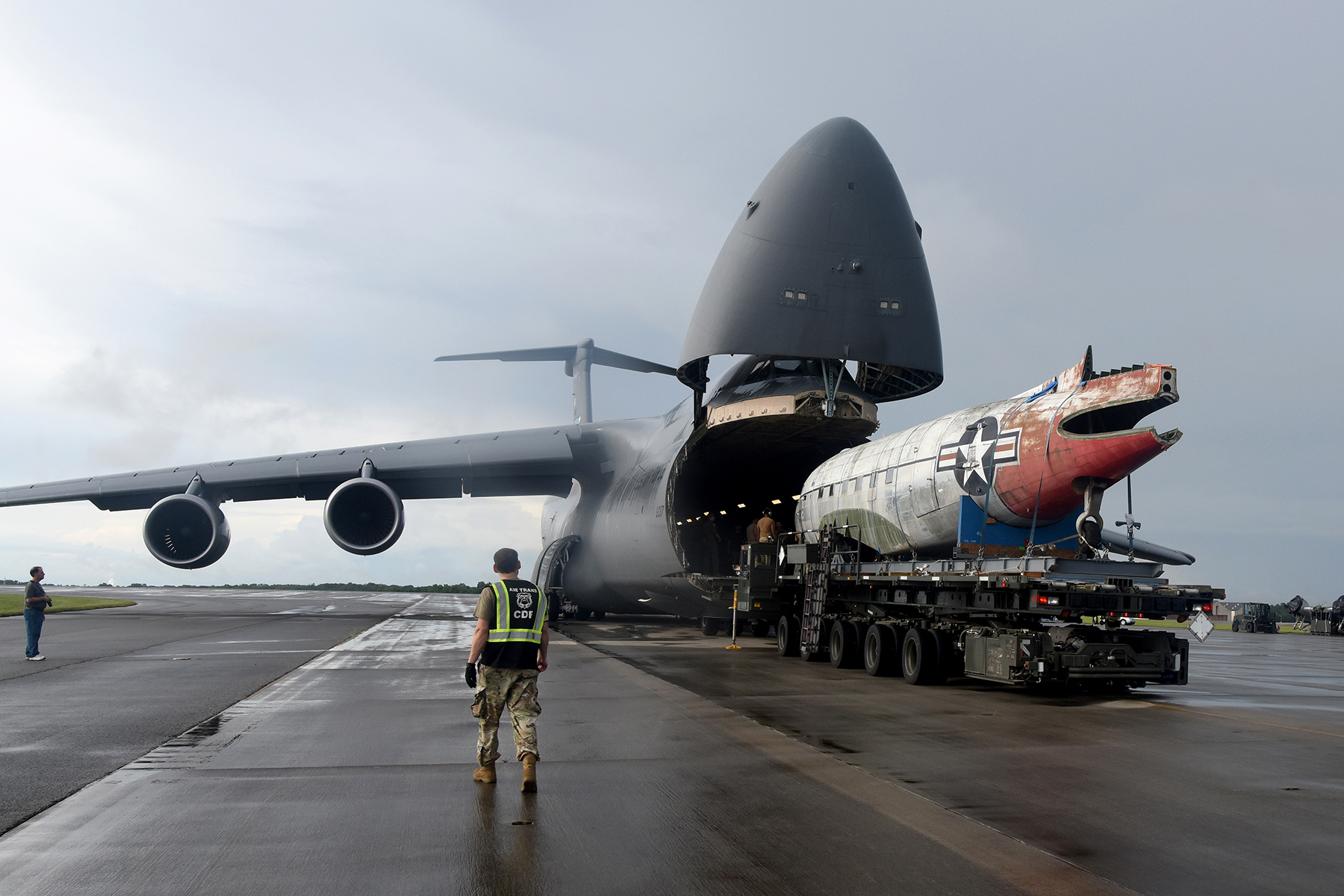
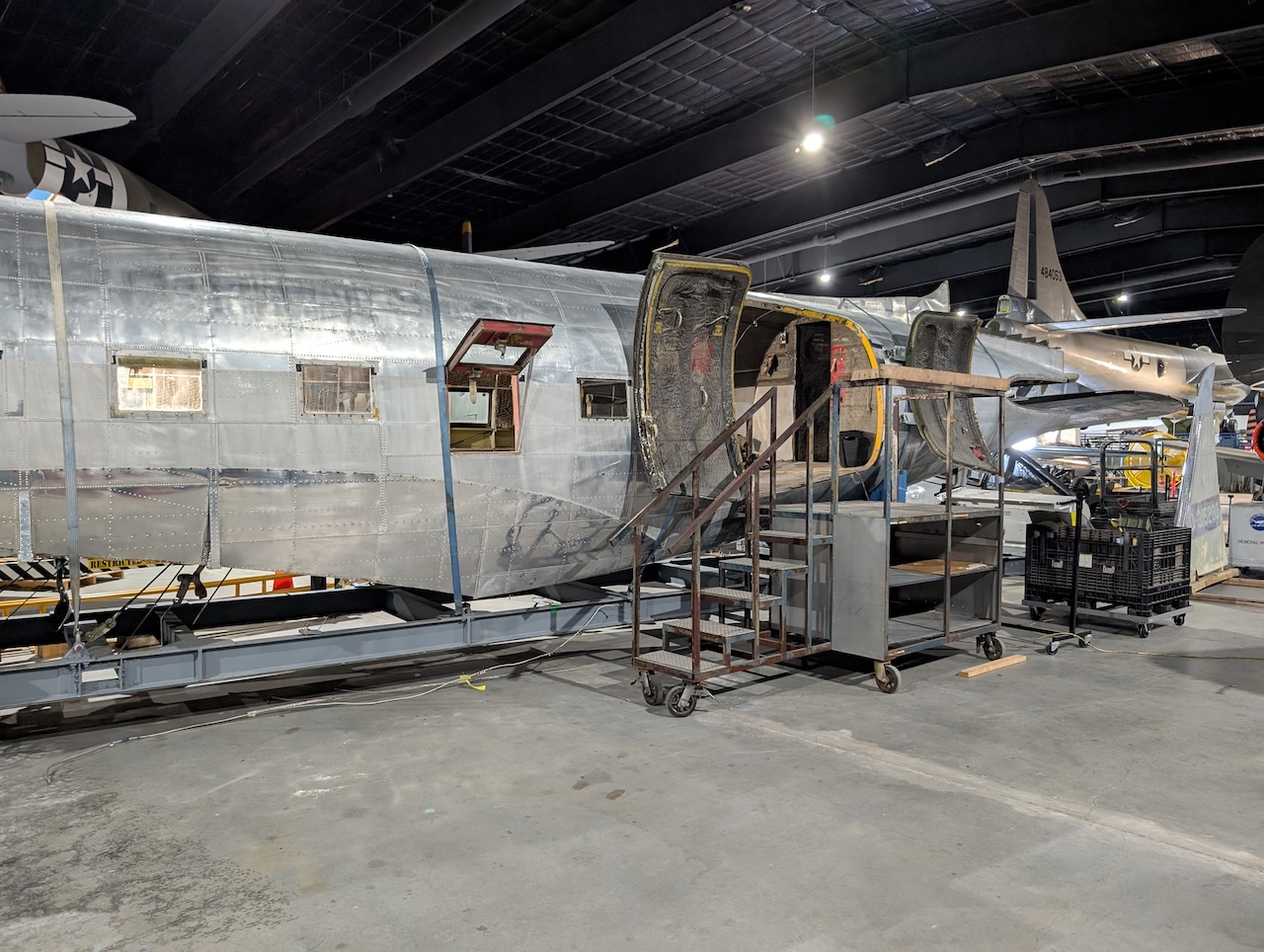
To transport the aircraft from Alaska to Georgia, the C-47 was carefully disassembled in Wasilla. The outer wings, engines, vertical and horizontal stabilizers, control surfaces, and the center wing section were removed from the fuselage. These major components were transported by truck to Joint Base Elmendorf–Richardson near Anchorage, Alaska, where they were loaded aboard a C-5 Galaxy and flown to Robins Air Force Base. Upon arrival in Georgia, the aircraft components were first transferred to the base depaint facility. There, multiple layers of paint were carefully removed using the same processes employed for modern Air Force aircraft undergoing depot-level maintenance. The restoration plan calls for teams of volunteers to work on the major components while they remain disassembled, allowing easier access to internal surfaces. These components will be pressure-washed and then thoroughly inspected for corrosion, damage, or other defects. Identified issues will be documented in a master project plan, allowing repairs and replacements to be scheduled, tracked, and completed systematically.
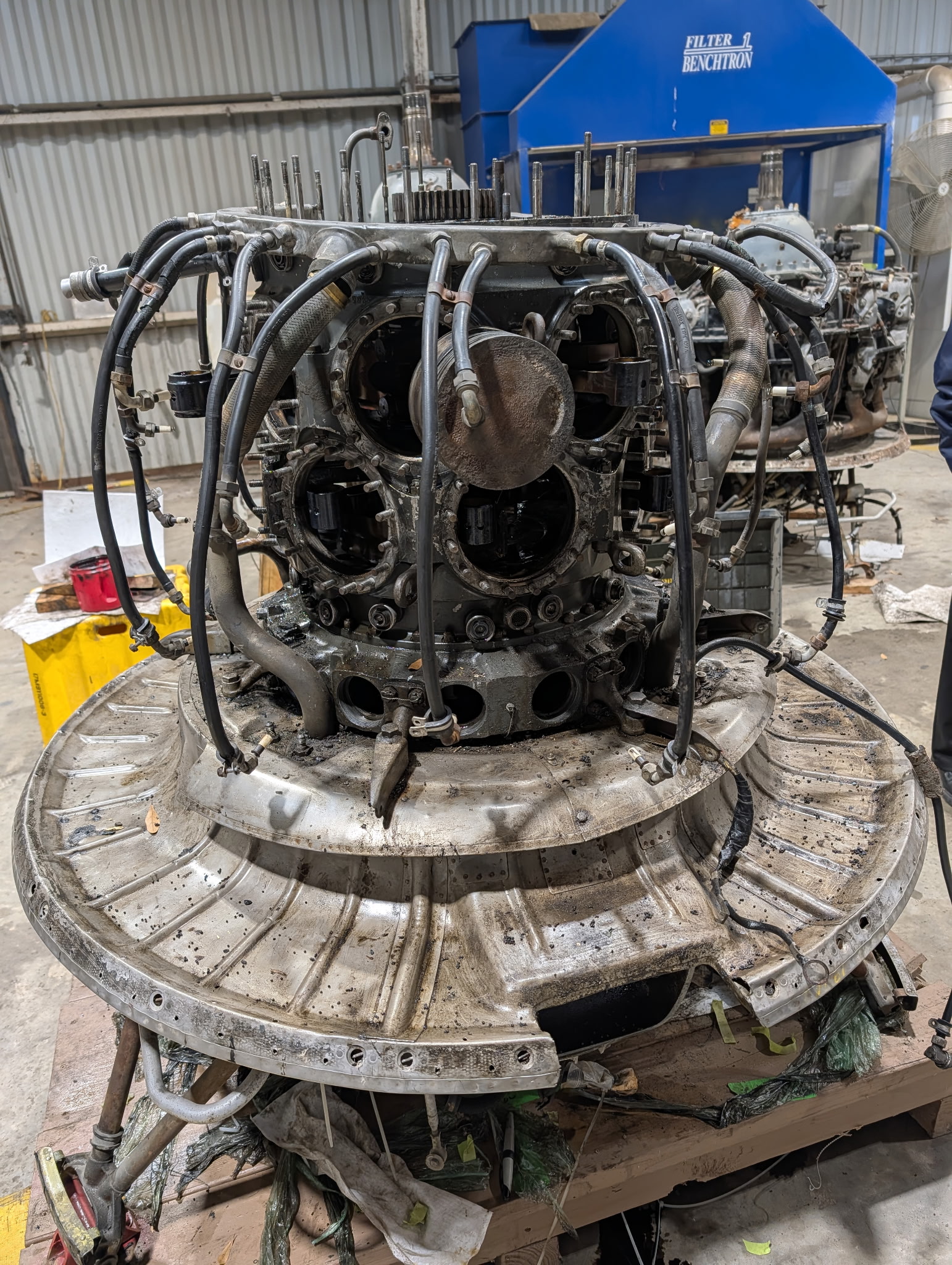
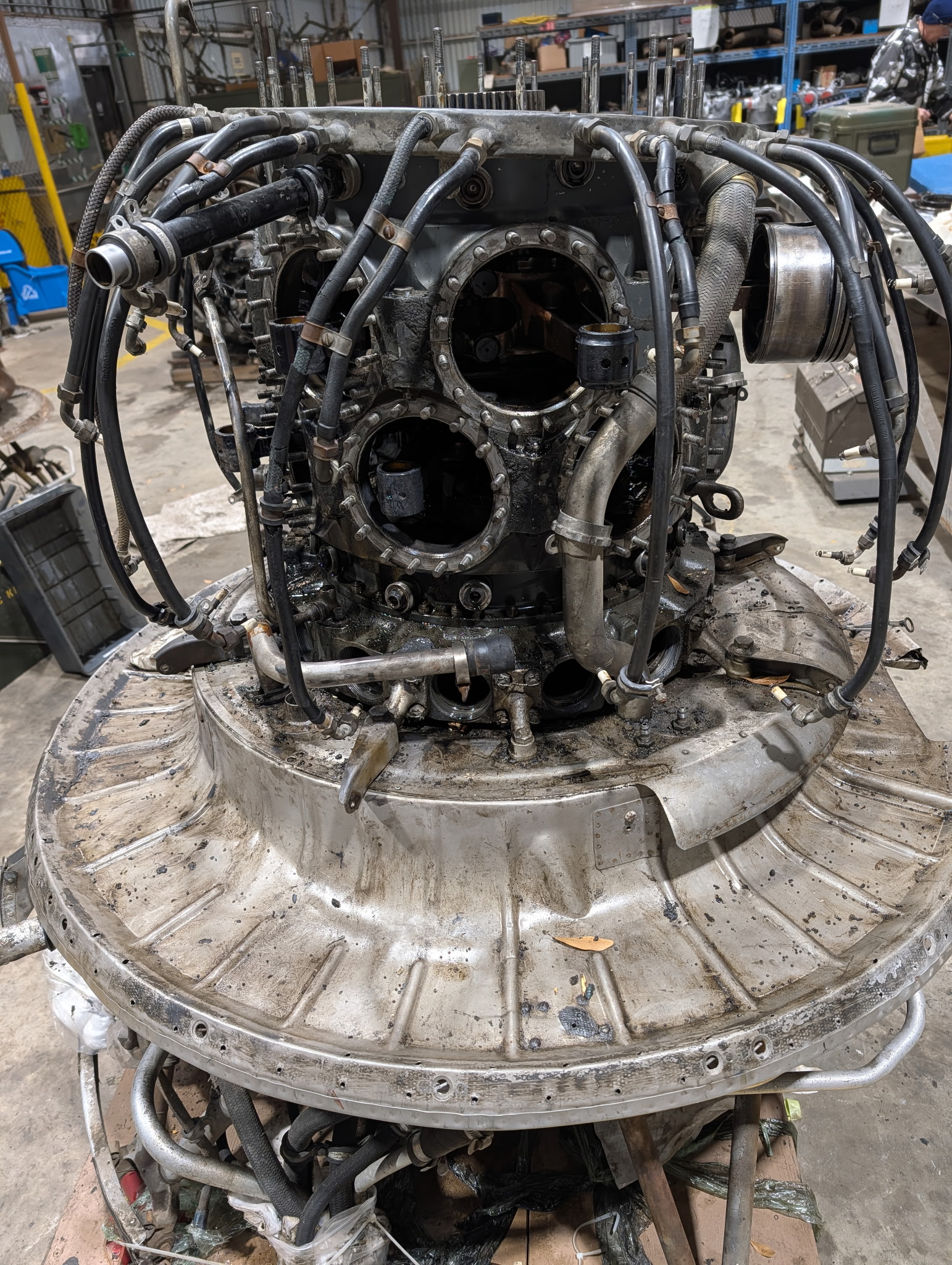
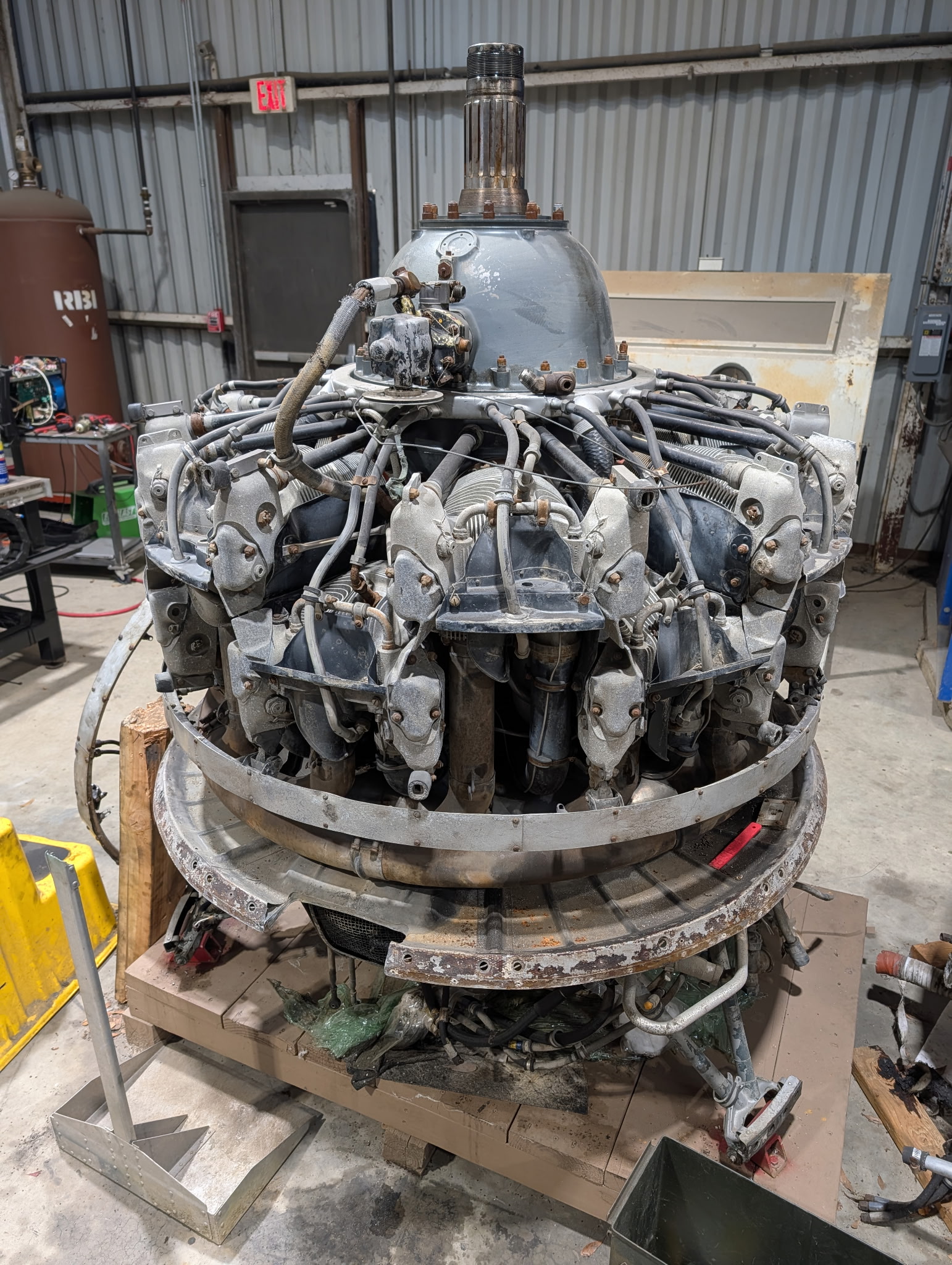
The restoration of the two Pratt & Whitney R-1830 Twin Wasp radial engines represents a significant project in its own right. The engines will be disassembled, with all cylinders removed, cleaned, preserved, and reinstalled. Internal components will be cleaned and preserved so the engines can be reassembled to a condition in which the propellers can be turned by hand, ensuring that internal moving parts are functional and protected with preservative oil. The full scope of engine restoration will not be known until disassembly is well underway, as more than 50 years of outdoor storage can take a severe toll on engine components. Fortunately, the R-1830 remains in use today, and spare parts are still available if required.
Most of the aircraft restoration work will take place in the Scott Hangar, an air-conditioned facility previously used during the museum’s B-17 restoration. The aircraft components are currently visible to the public during this phase. Engine restoration will be conducted in the Fair Restoration Hangar, which contains specialized equipment and is generally not open to public access.
Final aircraft configuration
The Museum of Aviation’s leadership team, including the Director and Curator, is responsible for determining the aircraft’s final configuration for public display. According to Arthur Sullivan, Curator of the Museum of Aviation: “As I mentioned before, we have separated her into the main fuselage, center wing box, and outer wings. These large pieces are mounted on movable fixtures to facilitate restoration efforts. We are still removing components to examine the structure, but so far she is in incredible condition considering how many years she spent outdoors. We owe a great debt to the Museum of Alaska Transportation and Industry, who served as her caretakers for several decades. Our plan is to restore her as she would have appeared in June 1944. Notably, we are finding significant evidence of battle damage and field repairs. We knew from historical research that she was hit on June 6, but the amount of repaired damage we are uncovering has been remarkable.” When completed, the restored C-47 will stand as a powerful, tangible reminder of the aircraft and crews that carried Allied airborne forces into combat during the pivotal moments of World War II. For more information about the Museum of Aviation at Robins AFB, visit www.museumofaviation.org.