
“Vintage Aviation News staff did not write this article; the content comes via our partners who wish to help support our website.”
Historical aircraft collections teach us more than just engineering history. Museums worldwide preserve over 10,000 vintage aircraft from the past century. These machines show how engineers solved problems with limited resources and technology. Students studying aviation can learn valuable lessons from these preserved innovations.
- Researching Aviation History for Academic Work
- The Spitfire’s Elliptical Wing Design
- The DC-3’s Revolutionary Design Approach
- Learning from Wartime Innovation
- Materials Science Through Aviation History
- Navigation and Instrumentation Evolution
- Applying Historical Lessons to Modern Problems
- Manufacturing Techniques and Mass Production
The Wright brothers’ first flight lasted just 12 seconds in 1903. Today’s commercial jets fly for 18 hours non-stop across continents. This incredible progress happened through trial, error, and clever problem-solving. Museums document each breakthrough that made modern aviation possible for everyone.
Researching Aviation History for Academic Work
Studying historical aviation requires diving deep into technical documents and archival materials. Museum collections provide primary sources that textbooks can’t match completely. Students often need help organising complex research from multiple historical periods. Some turn to services that write my research paper when analysing technical innovations across decades. Professional guidance helps structure findings about engineering developments and design evolution. Expert support ensures historical accuracy whilst presenting complex technical information clearly. This assistance lets students focus on understanding the innovations rather than wrestling with presentation.
Combining museum visits with proper research techniques produces stronger academic work. Primary sources from collections add authenticity that secondary sources lack entirely. Historical aircraft tell stories that written records sometimes miss or overlook.
The Spitfire’s Elliptical Wing Design
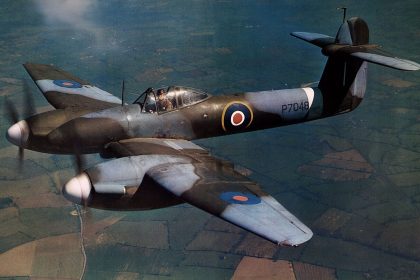
The Supermarine Spitfire changed fighter aircraft design forever during the 1930s. Designer R.J. Mitchell chose an elliptical wing shape for maximum efficiency. This design reduced drag whilst maintaining lift better than conventional wings. The shape proved so effective that it influenced jet fighter designs decades later.
Building the elliptical wing cost more and took longer than standard designs. Mitchell insisted on the complex shape despite manufacturing challenges throughout production. The performance advantages justified the extra effort during the Battle of Britain. Spitfires outmanoeuvred German fighters partly because of this innovative wing geometry.
Museums display original Spitfires showing the manufacturing techniques used back then. Riveting patterns and construction methods reveal how workers built complex curves. Modern engineers still study these preserved aircraft for manufacturing insights today. The lessons apply to composite materials and modern production processes now.
The DC-3’s Revolutionary Design Approach
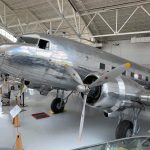
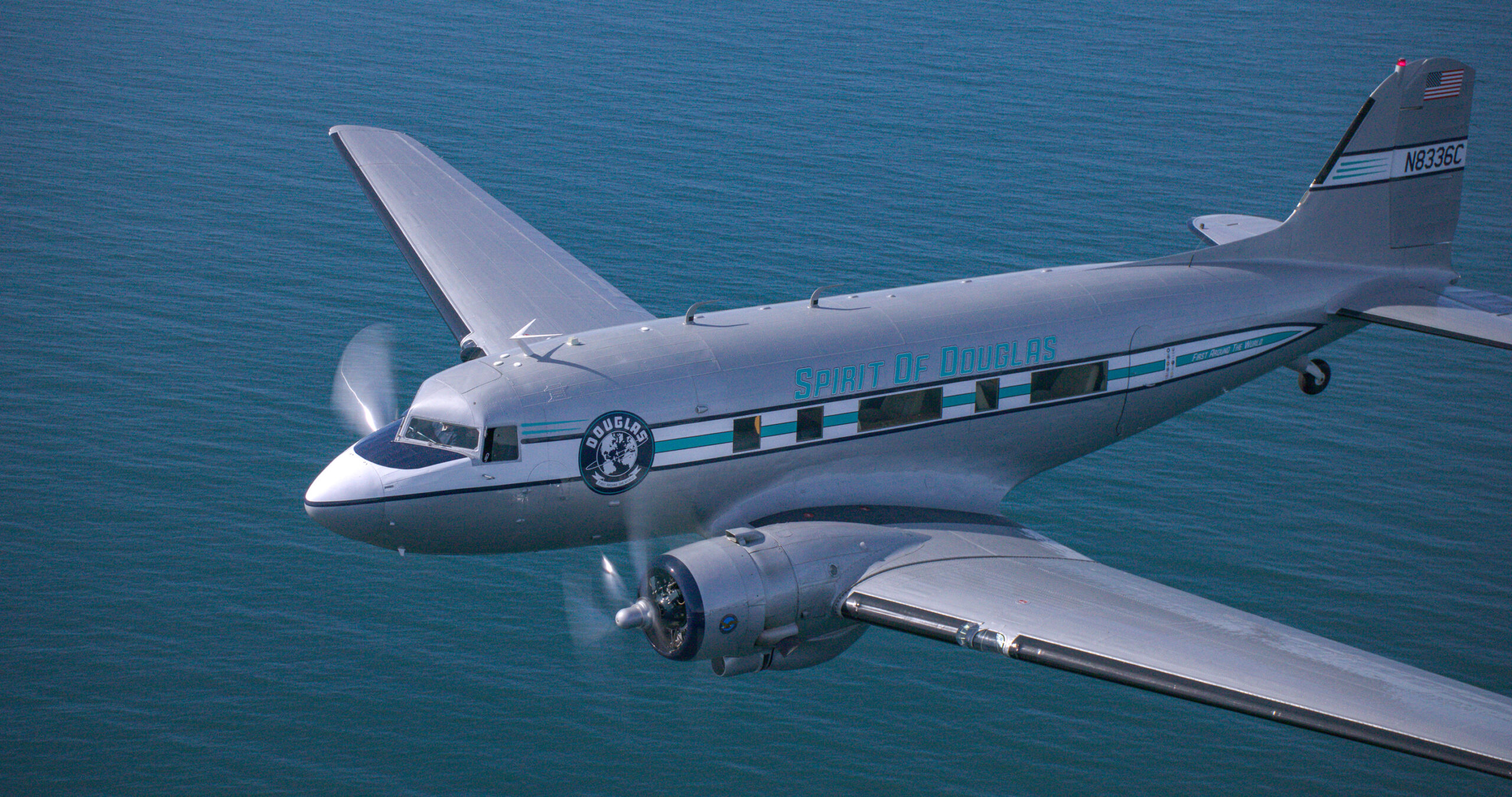
The Douglas DC-3 transformed commercial aviation when it first flew in 1935. This aircraft could carry passengers profitably for the first time ever. Airlines actually made money flying people instead of losing money on routes. Over 16,000 units were built making it the most produced airliner then.
The DC-3 introduced several innovations that seem obvious now but were revolutionary. All-metal construction replaced fabric-covered wings used on earlier planes completely. Retractable landing gear reduced drag significantly during flight, improving efficiency. Variable-pitch propellers let pilots optimize power for different flight phases easily.
Museums preserve DC-3s in flying condition even after 90 years of service. These aircraft still fly at airshows demonstrating their robust design principles. Engineers examine how the airframe handles stress after millions of flight hours. The durability lessons influence modern aircraft certification standards and testing procedures.
Learning from Wartime Innovation
World War II accelerated aviation development faster than any other period. Engineers solved problems in months that might have taken decades otherwise. Pressure to gain advantages pushed creativity and unconventional thinking beyond normal limits. The preserved aircraft from this era show rapid design evolution clearly.
Key innovations from wartime aviation include:
- Jet propulsion developed simultaneously in Britain and Germany changing everything
- Pressurised cabins allowing high-altitude flight above 25,000 feet safely
- Radar integration enabling all-weather operations and night fighting capabilities
- Long-range fuel tanks extending operational radius by thousands of miles
- Improved metallurgy creating stronger airframes with lighter overall weight
The Jet Engine Revolution
Frank Whittle’s jet engine first ran in 1937 but wasn’t used until 1941. His design eliminated propellers entirely using exhaust thrust instead of propulsion. The Gloster Meteor became Britain’s first operational jet fighter in service. Germany’s Messerschmitt Me 262 flew even earlier but entered service later instead.
Museums display cutaway jet engines showing internal components and flow paths. Students can see how air compresses, combusts, and exits producing thrust. The basic principles remain unchanged in modern turbofan engines today. Understanding the original designs helps grasp why modern engines work differently.
Pressurisation Technology
The Boeing 307 Stratoliner introduced cabin pressurisation in 1938 for passengers. Flying above weather and turbulence improved comfort and safety dramatically. The technology required stronger fuselages that could handle pressure differences safely. Military bombers like the B-29 advanced this technology further during wartime.
Preserved aircraft show the heavy reinforcement needed for pressurised cabins back then. Circular fuselage cross-sections distribute pressure loads more evenly than other shapes. Modern airliners still use these fundamental design principles for passenger safety. The weight penalties decreased as materials and manufacturing improved over decades.
Materials Science Through Aviation History
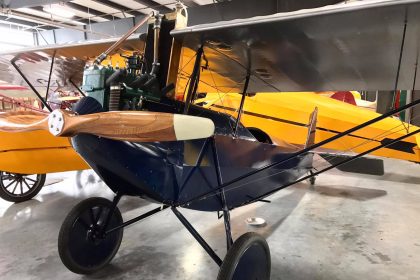
Early aircraft used wood, fabric, and wire for construction, saving weight. The 1920s and 1930s saw gradual transition to aluminium alloys instead. Each material change solved problems whilst creating new challenges for engineers. Museums preserve examples showing this material’s evolution across different eras clearly.
Aluminium offered strength-to-weight ratios impossible with wood construction techniques available. Duralumin alloys developed specifically for aircraft proved revolutionary for the industry. Engineers learned to work with metal fatigue and stress concentration issues. These lessons led to better understanding of structural integrity overall.
Modern composite materials follow the same pattern of solving old problems. Carbon fibre offers even better strength-to-weight ratios than aluminium ever could. Museums now collect early composite aircraft to preserve this latest evolution. Future students will study these just as we examine wooden biplanes today.
Navigation and Instrumentation Evolution
Early pilots navigated by following railways and roads below them visually. The 1920s introduced basic instruments like airspeed indicators and altimeters gradually. World War II brought sophisticated navigation systems including radio direction finding. Each advancement made flying safer and more reliable for everyone involved.
Preserved cockpits show how instrument panels evolved from simple to complex. Steam gauges gave way to electric instruments and eventually digital displays. The transition wasn’t smooth with many false starts and failed technologies. Museums document these dead ends as valuable lessons about what doesn’t work.
Modern glass cockpits owe their existence to decades of incremental improvements. Pilots in the 1930s would find today’s cockpits completely incomprehensible visually. Yet the basic flying principles remain unchanged across all these decades. Understanding this continuity helps students grasp aviation’s fundamental concepts better.
Applying Historical Lessons to Modern Problems
Historical aircraft collections offer more than nostalgia about the past alone. Today advanced imaging technology lets students see and study old mechanisms in new ways, connecting past and present. Each preserved machine represents solutions to real engineering problems that existed. Modern engineers face similar challenges with different materials and technologies available. The problem-solving approaches used historically still apply to contemporary issues regularly.
Students studying these collections gain perspective on innovation across time periods. Understanding why designers made certain choices reveals their thinking process clearly. This historical context improves critical thinking about modern design decisions today. Museums preserve not just aircraft but the knowledge that created them originally.
Manufacturing Techniques and Mass Production
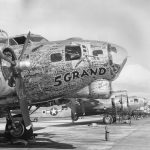
World War II required producing aircraft at unprecedented rates for the war effort. Manufacturers developed assembly line techniques borrowed from automotive industry practices. Riveting became semi-automated whilst tolerances tightened for interchangeable parts everywhere. The B-24 Liberator came off production lines every 63 minutes at peak.
Museums preserve tooling and jigs used in wartime production showing techniques. Students see how workers built complex aircraft without modern computer-aided design. The ingenuity in solving manufacturing problems deserves recognition alongside engineering achievements. Many techniques developed then still influence aerospace manufacturing processes today.