
(Image credit: VAN)
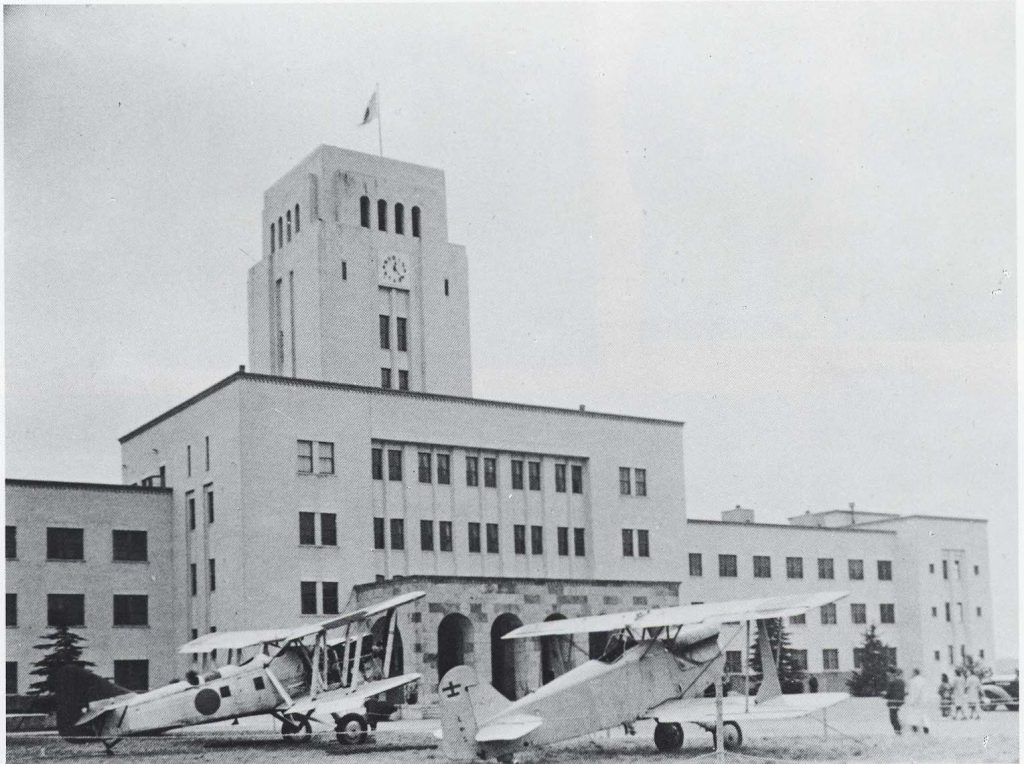
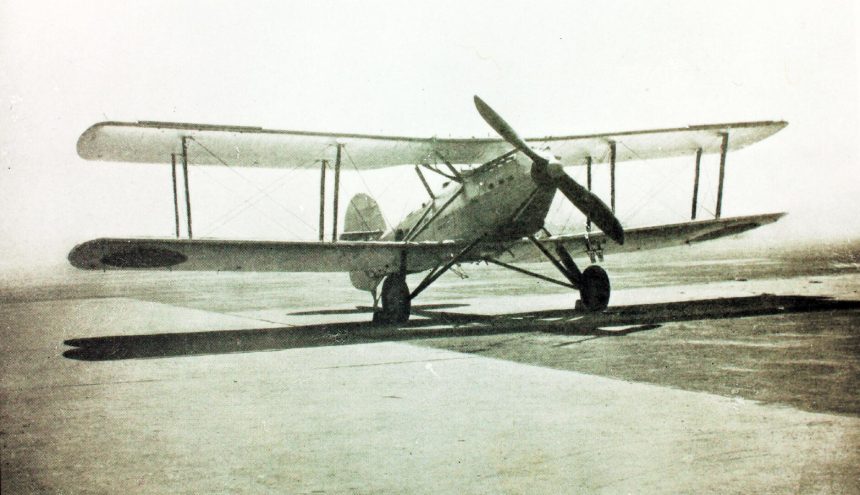
On this day in aviation history, 96 years ago (December 28, 1929), the first flight of the Mitsubishi B2M took place. The B2M was a Japanese carrier-based torpedo bomber, which was originally designed by British aircraft manufacturer Blackburn. Mitsubishi commissioned Blackburn Aircraft in 1929 to design an aircraft that would take part in the Imperial Japanese Navy’s competition for a carrier-based reconnaissance and torpedo bomber to replace the B1M. If the design was successful, Mitsubishi would build Blackburn’s aircraft design under license. Blackburn developed the T.7B, an enlarged variant of their Ripon under development for Britain’s Fleet Air Arm. The T.7B was a biplane that featured three seats, steel-tube construction, and high aspect-ratio wings (fitted with Handley Page slats). While participating in the Imperial Japanese Navy’s competition, the T.7B was known as the 3MR4. This design was declared the winner, and a prototype was sent from Blackburn’s factory in Brough, Yorkshire, to Japan. The first flight would occur shortly after the aircraft’s arrival.
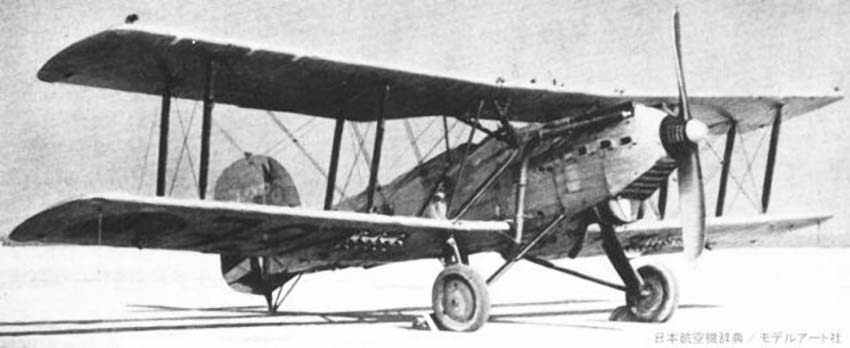
Mitsubishi built three more prototype aircraft before entering service as the Navy Type 89-1 Model 1 Carrier Attack Plane, or Mitsubishi B2M1, in March of 1932. The B2M1 would go on to serve aboard the carriers Akagi, Kaga, and Hōshō. Improvements were made to the aircraft for ease of maintenance, and the B2M1 became known as the B2M2 (or Navy Type 89-2 Carrier Attack Plane). These B2M2s were often used against China during the beginning of the Second Sino-Japanese War in 1937, on both high and low-level bombing attacks. The Mitsubishi B2M1 was powered by a 650-horsepower Hispano-Suiza 12Lbr V-12 water-cooled piston engine. A maximum airspeed of 132 miles per hour was attainable by the B2M1, as was a range of 961 nautical miles and a service ceiling of 14,800 feet. The B2M1 was armed with a forward-firing 7.7 millimeter machine gun and a flexible 7.7 millimeter gun in the rear cockpit. B2M1s could also carry one 1,764-pound torpedo, or the equivalent weight in bombs. Mitsubishi built a total of 206 B2Ms during the aircraft’s production run, although none are known to survive today.