

(Image credit: VAN)
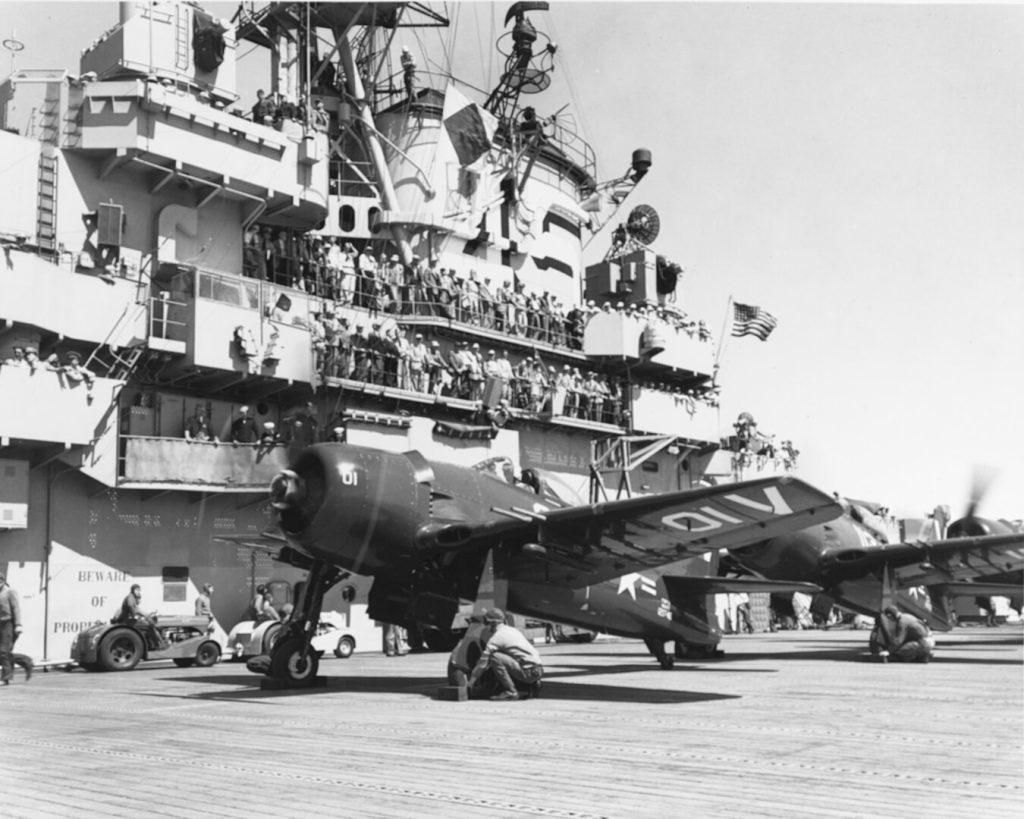
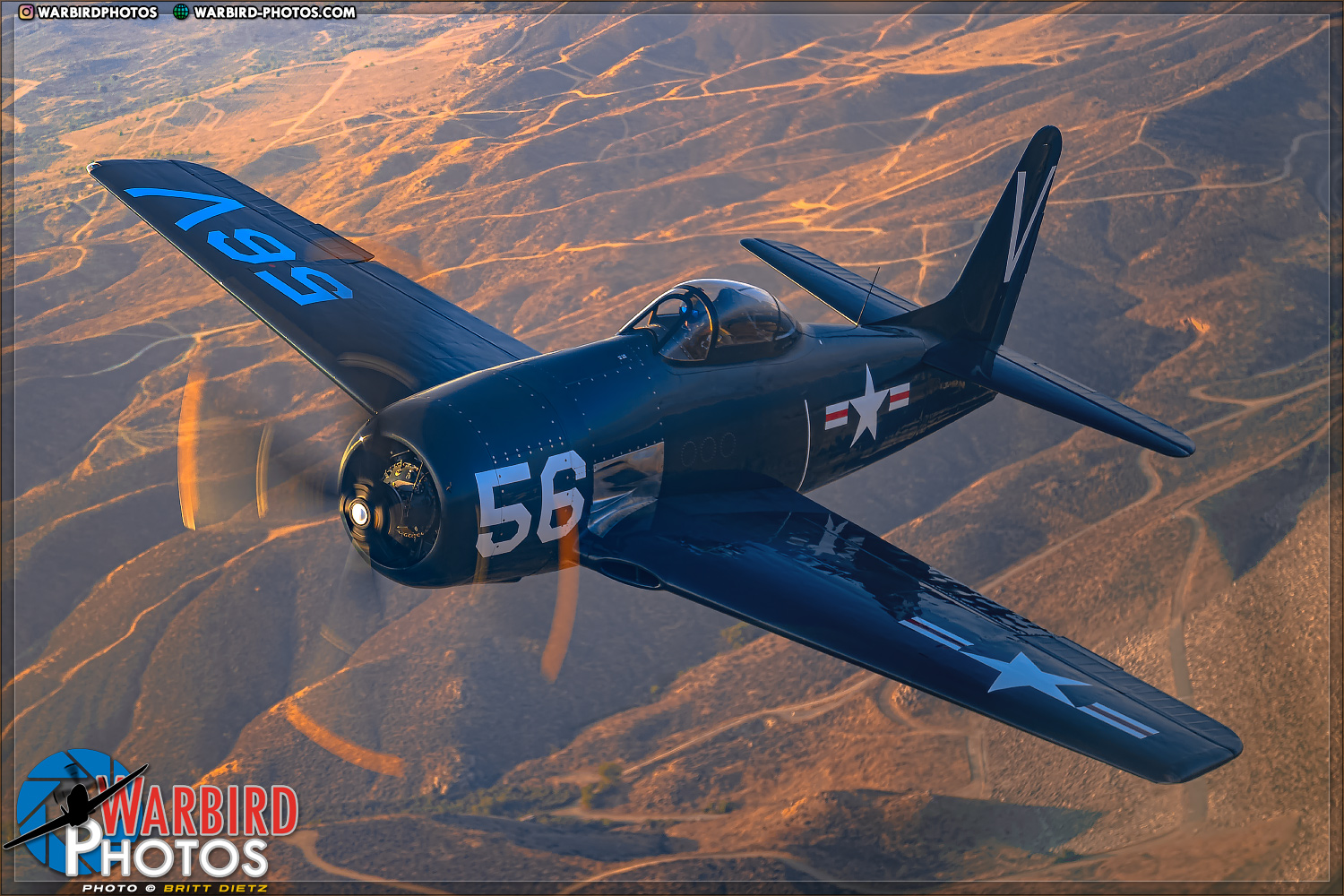
On this day in aviation history, 81 years ago (December 31, 1944), the Grumman F8F Bearcat officially entered service with the United States Navy. The Bearcat was a single-engine carrier-based fighter that was developed and introduced later in the game during World War II. The F8F was conceptualized after a 1942 meeting between Grumman vice president Jake Swirbul and Battle of Midway veteran F4F Wildcat pilots. In this meeting, the Wildcat pilots emphasized that any new fighter should have a superior climb rate. This performance feature became the focus for Grumman’s new fighter.
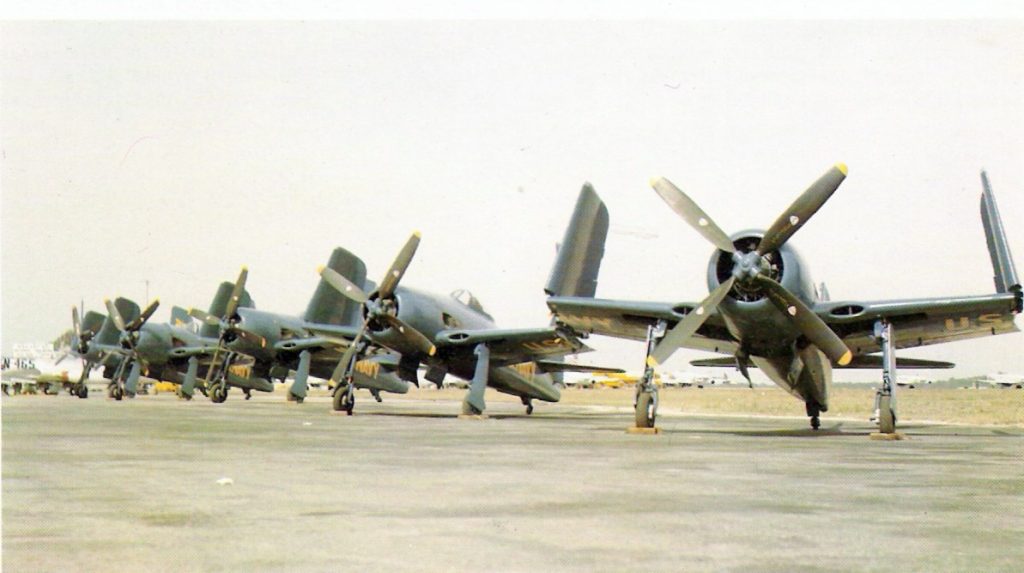
The F8F Bearcat prototype was first ordered in November 1943, and the aircraft made its first flight on August 21, 1944, only nine months later. The first batch of Bearcats was delivered to the US Navy Fighter Squadron 19 (VF-19) in February of 1945. VF-19 was operational by May 21, 1945, but World War II would end before the F8F saw any combat. Post WWII, the Bearcat would become one of the premier US Navy and Marine Corps fighters. Twenty-four fighter squadrons in the Navy flew the Bearcat in the postwar years. The F8F earned the reputation as being one of the best-handling piston fighters ever built, and it could even outperform some jets of the period.
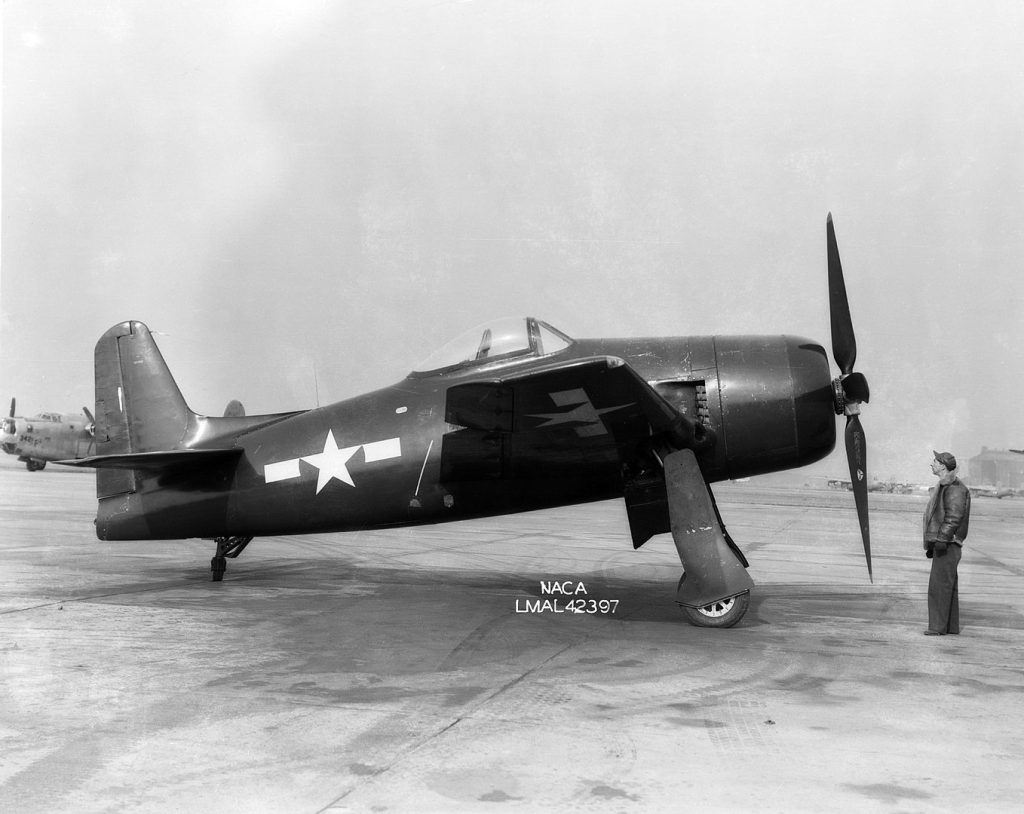
As the Korean War developed, the F8F Bearcat was mostly kept stateside as a trainer. Jets such as the F9F Panther and McDonnell F2H Banshee outperformed the Bearcat and had higher survivability odds in combat. The F8F would see combat while fighting for the French Air Force during the French Indochina War, between 1946 and 1954. Here, F8Fs were used successfully in a ground-attack role. In the civilian world, Grumman Bearcats found fame as air racers and as a favorite on the airshow circuit. A little over a dozen F8Fs still fly today, either in restored military configuration or as modified air racers.
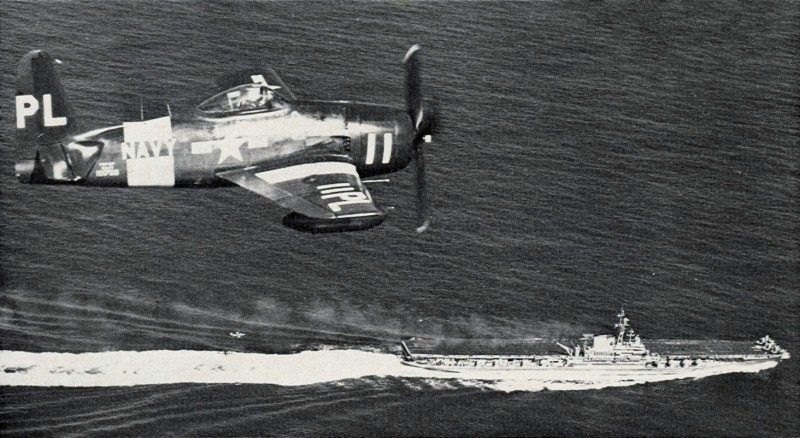
Grumman’s F8F Bearcat was powered by a 2,250-horsepower Pratt & Whitney R-2800-30W Double Wasp radial engine. The R-2800 pulled the F8F to a maximum airspeed of 455 mph and a climb rate of 4,465 feet per minute. The Bearcat had a range of 960 nautical miles and a service ceiling of 40,800 feet. F8Fs were armed with four 20 millimeter AN/M3 cannons, four 5-inch HVAR unguided rockets, and up to 1,000 pounds of bombs. In total, Grumman built 1,265 F8F Bearcats.