
The Battle for the Swamp Ghost and the fight to protect Pacific war wrecks – Originally published in the South Pacific WWII Museum Newsletter, November 2025 – James (Jimmy) Carter. The article was gently edited for our readers.
For more than eighty years, the jungles, reefs, and river flats of the South Pacific have safeguarded the last remnants of the Second World War. Aircraft remain where they fell, slowly sinking into mud or coral, while rusting trucks and bulldozers lie half-consumed by vines. These relics are more than curiosities—they are tangible connections to a conflict that reshaped the Pacific, intimately tied to the land, the communities who live alongside them, and the ancestors who witnessed their arrival.

Across the region, however, these wartime artifacts face a quieter, modern threat: private collectors and salvage operators eager to convert them into highly profitable commodities. Few cases illustrate this tension better than that of the “Swamp Ghost,” a B-17E Flying Fortress that crash-landed in 1942 in Papua New Guinea’s Oro Province.
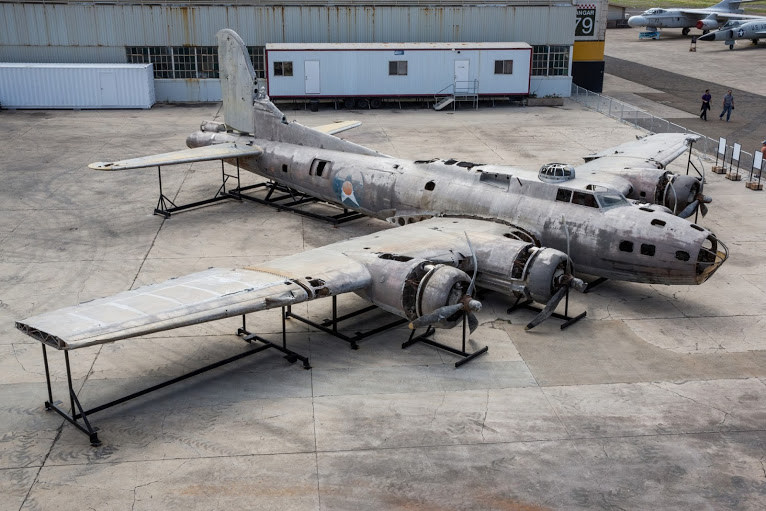
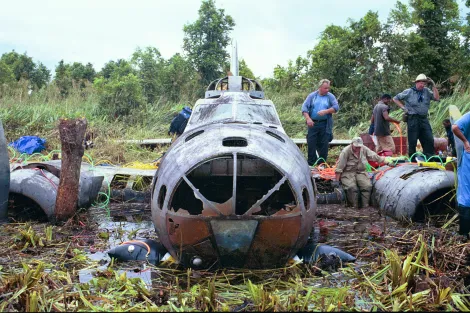
For decades, the aircraft remained untouched, respected by local landowners as both a historical artifact and part of their family narrative. In 2006, however, it was removed without compensation, shipped to the United States, and placed on display in a museum thousands of kilometers from the land where it fell. Today, nearly twenty years later, Papua New Guinea is calling for its return. The struggle surrounding the Swamp Ghost has become a symbol of the broader effort to protect Pacific wartime heritage from disappearing overseas.
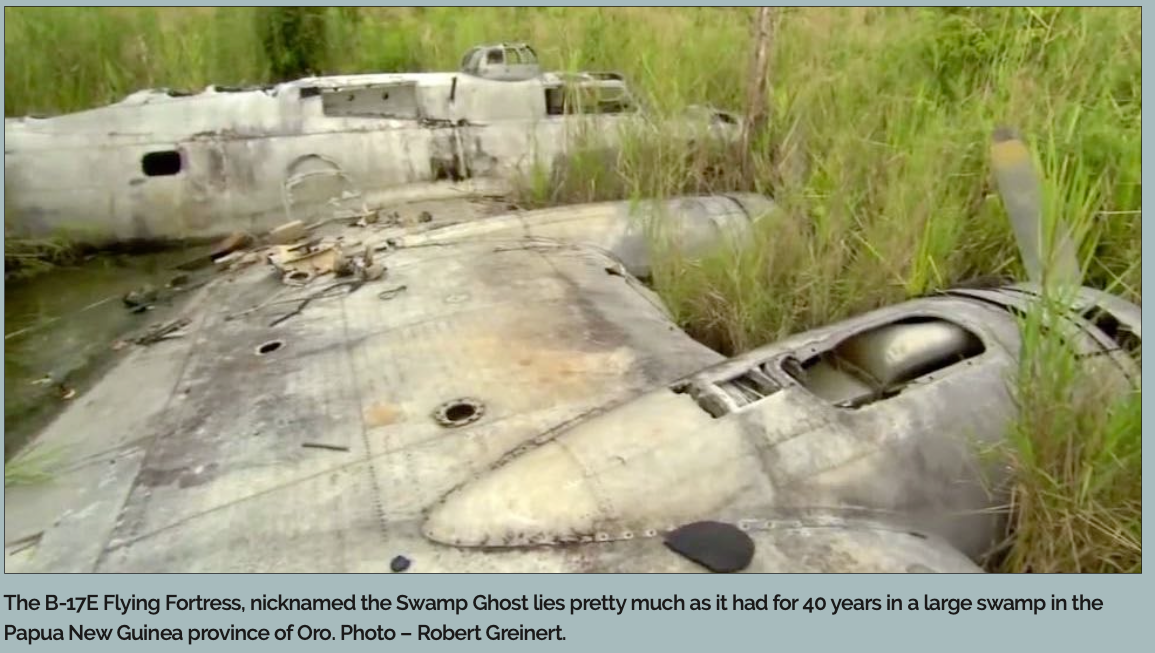
A Fortress Falls
For provisional landowner Ian Jajira, the story of the Swamp Ghost is deeply personal. His grandfather witnessed the bomber’s crash—an enormous, four-engine machine plummeting into the swamp near the Kokoda Track during the height of the war. The sight terrified villagers already living in fear of the conflict arriving at their doorstep. Over time, the wreck became part of local life. Generations of children grew up hearing stories about the American bomber resting quietly in the swamp. Its guns, radios, and instruments remained largely untouched, forming a remarkably preserved time capsule of 1942. In the 1970s, Australian soldiers training nearby gave it the name that would endure: the Swamp Ghost. For many in Oro Province, the aircraft was more than steel and aluminum—it was a historical monument and a component of their cultural landscape.
Collectors Come Calling
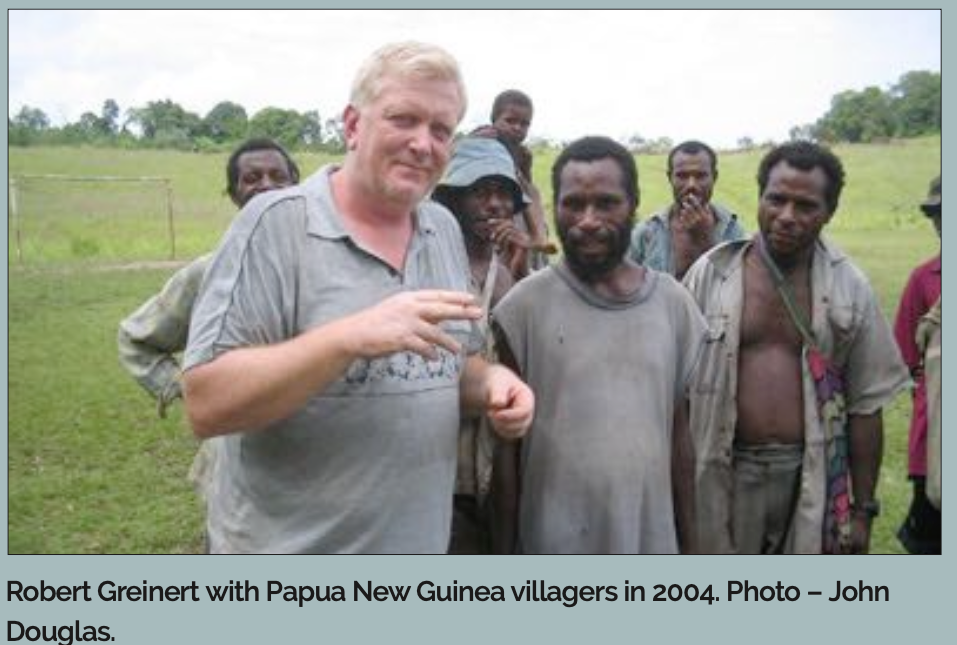
By the 1980s, word of the pristine Flying Fortress had spread beyond Papua New Guinea. To private collectors and warbird restorers, aircraft like the Swamp Ghost were worth millions. An industry emerged, dedicated to locating, salvaging, and exporting wrecks still lying where they fell. One of the most active figures in this trade was Australian salvor Robert Grinert, known to governments and collectors alike for identifying and removing aircraft across the region. A later parliamentary inquiry estimated that he had taken around two dozen aircraft from Papua New Guinea alone.
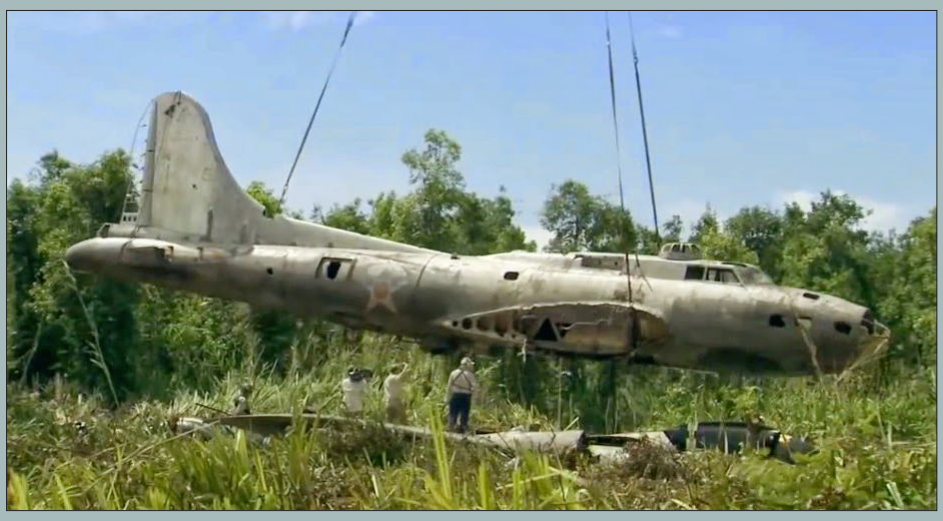
In 2006, Grinert obtained a permit to remove the Swamp Ghost. Local landowners recall that the salvage operation was heavily guarded and closed off. Villagers were kept at a distance, unable to see what was happening until it was too late. Under Papua New Guinea law, wartime wrecks belong jointly to the national government and the landowners on whose property they rest, and both are entitled to compensation if a relic is removed. In this case, landholders say they received no payment. “They promised that funding would be divided among the provincial government and landowners,” Jajira recalls. “Nothing happened.”
A Ghost in a New Home
By the time international media highlighted the story in 2015, the aircraft had been shipped to Hawaii and installed at the Pearl Harbor Aviation Museum. When questioned by Australia’s 60 Minutes, Grinert declined to comment on allegations about his activities in Papua New Guinea, fueling frustration back home. Oro Province Governor Gary Juffa, who served as Commissioner of Customs at the time of the salvage, has been among the most outspoken critics. He recalled the political maneuvering that allowed the export to proceed. Officials argued that Papua New Guinea would receive a replica in exchange, but that promise was never fulfilled. Today, Juffa is lobbying the PNG government and its diplomatic missions to begin the process of returning the aircraft. “That property belongs to Papua New Guinea,” he asserts. “It was taken by an Australian operator who identified these WWII aircraft and then found ways to ship them abroad.”
The Wild West of Pacific Wreck Salvage
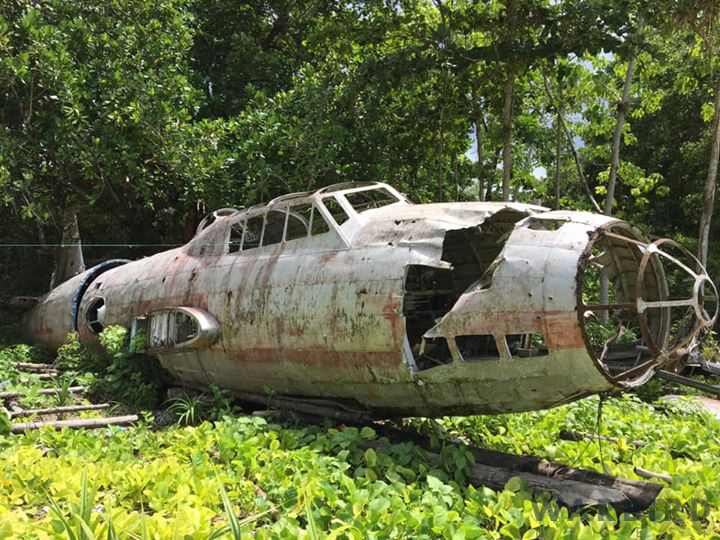
The Pacific’s wartime wrecks sit at the intersection of history, heritage, and profit. Many offer tremendous archaeological value, providing insight into wartime engineering, battlefield events, and human stories. Many also lie close to communities that have lived alongside them for generations. The financial value of these relics, however, attracts predatory attention. Justin Talen of Pacific Wrecks, an organization dedicated to documenting wreck sites and assisting with repatriations, describes the trade bluntly: “There are people all over the world willing to bend and break rules to acquire these aircraft. At any price, they’re worth millions of dollars.” Some salvors operate legally and respectfully, working with governments and landowners. Others skirt or ignore regulations entirely. Pieces vanish, sites are stripped, and once these artifacts leave Pacific soil, they may never return.
Preserving Heritage in Vanuatu
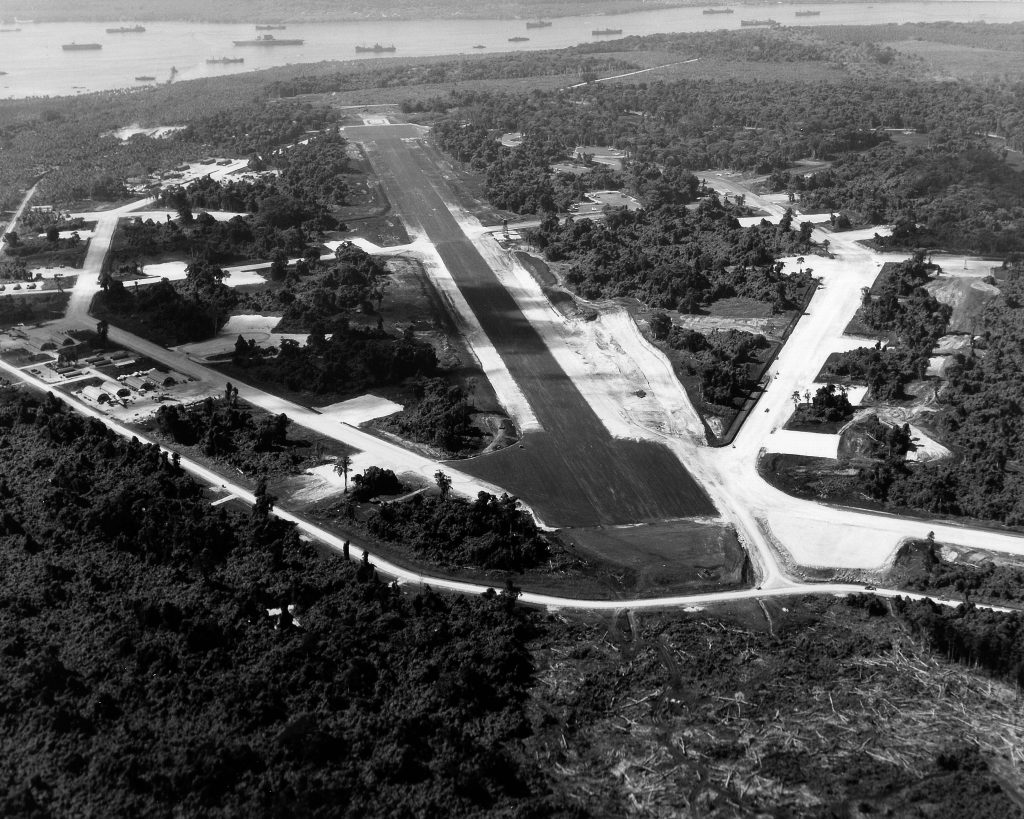
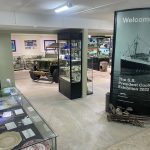
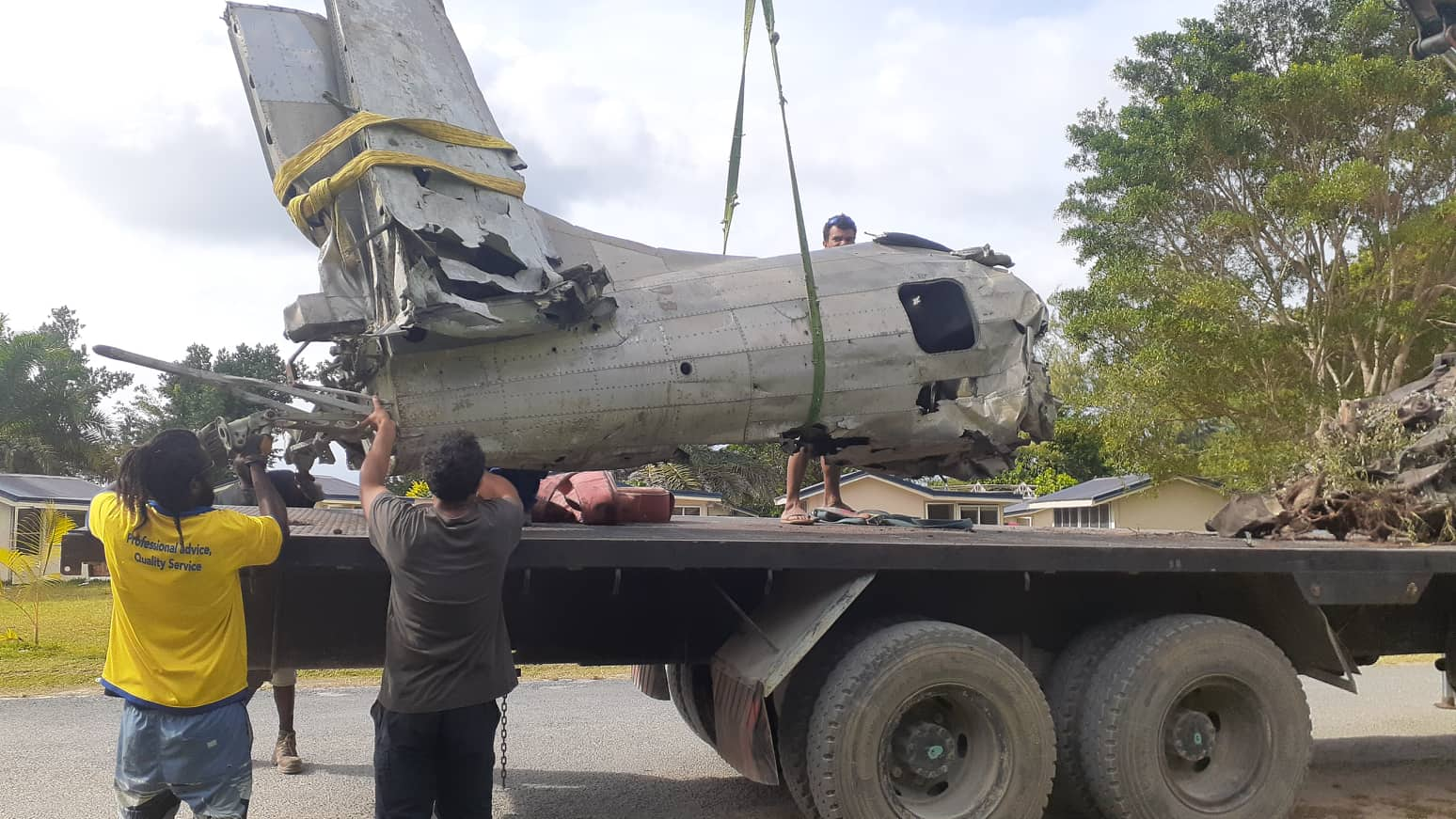
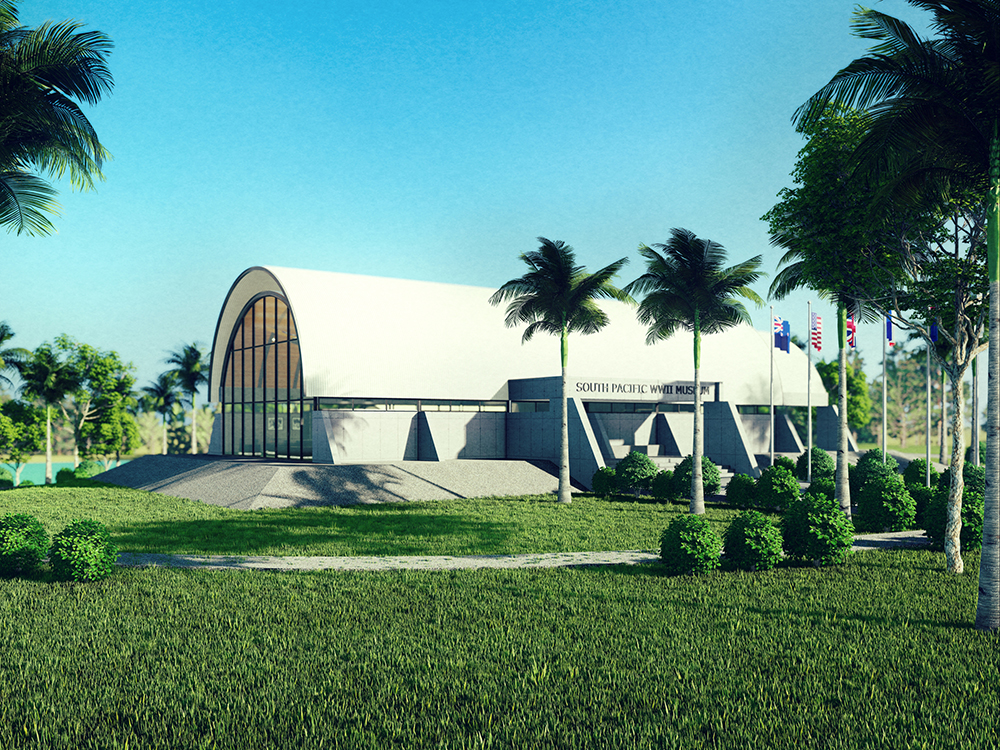
In Vanuatu, the South Pacific WWII Museum has led efforts to document, protect, and share wartime relics. From aircraft wrecks in Santo’s hinterlands to submerged Japanese and American aircraft, the museum has partnered with diving organizations such as Sealark to locate and record submerged wrecks. These efforts go beyond discovery—they safeguard history. Each site tells a story of the pilots, sailors, and soldiers who lived and died in these islands, and of the local communities that witnessed the conflict. By documenting and sometimes recovering fragile artifacts, the museum ensures these memories remain part of Vanuatu’s heritage rather than being sold overseas.

The museum also educates visitors about the significance of these sites, fostering stewardship among locals and tourists alike. Through archival research, oral histories, and collaboration with international experts, the South Pacific WWII Museum demonstrates that responsible conservation is possible, even in a region scattered with wrecks, reefs, and remote jungles.
A Call for Stronger Protections
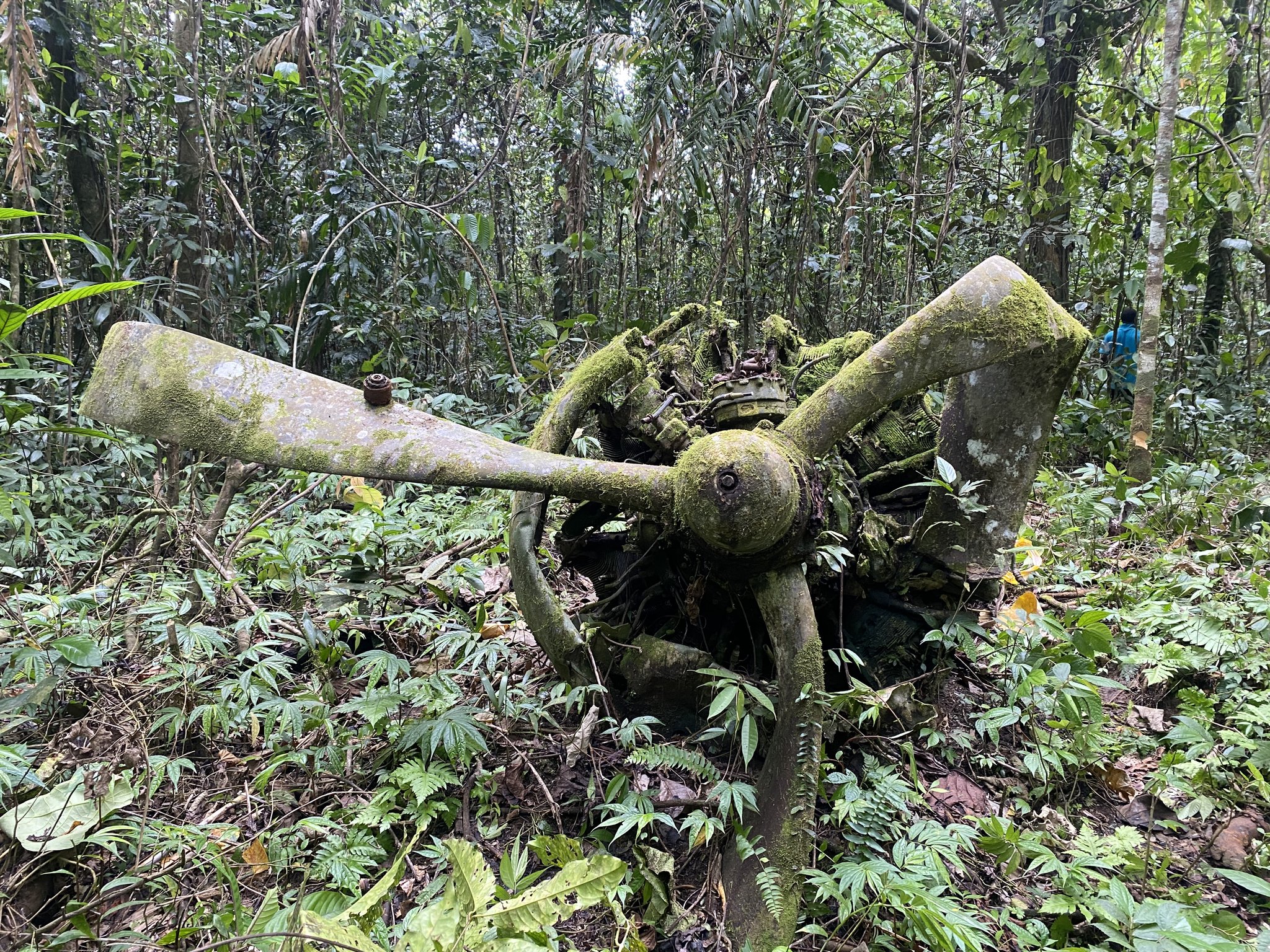
Across the Pacific—including Papua New Guinea, the Solomon Islands, Micronesia, and Vanuatu—the story repeats. As wartime wrecks become rarer, their value rises, placing communities, resource-limited governments, and culturally significant sites at risk. For the South Pacific, the challenge is clear: how to protect wartime heritage from being removed abroad while encouraging responsible conservation, research, and, when appropriate, repatriation. Papua New Guinea’s push to reclaim the Swamp Ghost may set a precedent, raising questions about ownership, cultural connection, consent, and historical justice. Above all, it highlights what communities across the region already understand: these wrecks are not abandoned junk—they are guardians of memory. As Pacific islands continue to balance heritage, tourism, economic needs, and historical responsibility, one fact remains undeniable: the stories of these relics belong to the places and people who have preserved them through time. Organizations like the South Pacific WWII Museum show that with research, care, and collaboration, that memory can endure for generations to come.
Join The Museum
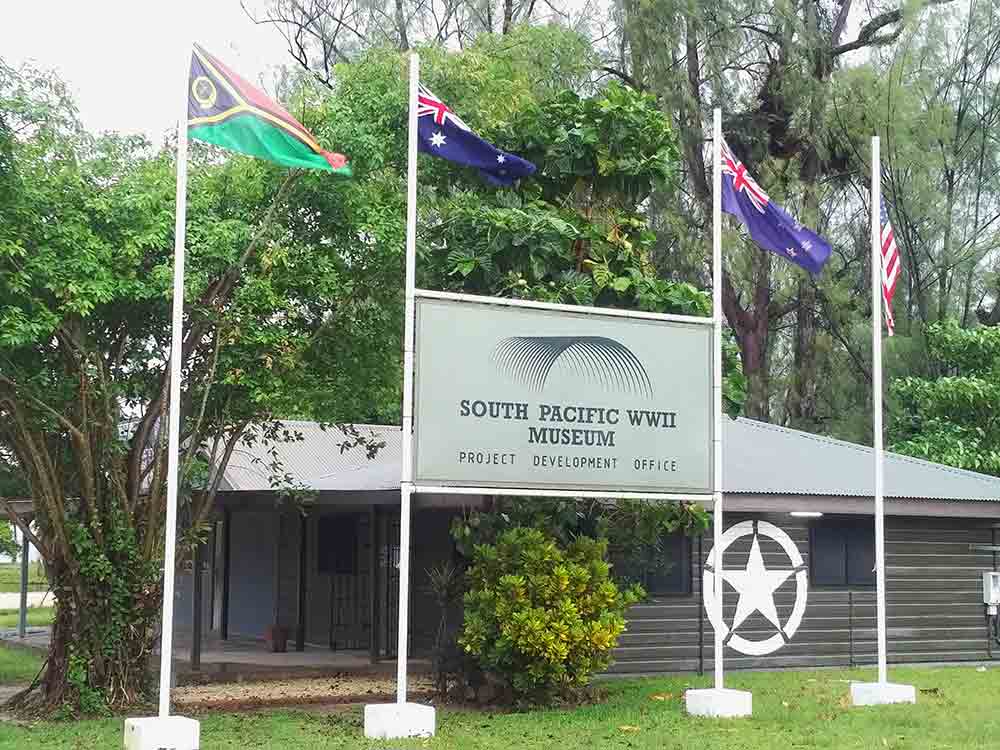
Since Vintage Aviation News first covered the South Pacific World War II Museum in January 2023, the museum has made significant strides in preserving Vanuatu’s wartime history. Over the past two years, it has grown into both an educational hub and a community gathering place, reflecting the region’s rich heritage. This update provides a look at the museum’s progress on Espiritu Santo and its ongoing efforts to honor the past. We invite everyone to visit the museum at Unity Park, Main Street, Luganville, and witness firsthand the evolution of the museum. Open Monday to Friday, they warmly welcome everyone to explore, learn, and share in this incredible journey with them. They are not only creating a museum but a lasting legacy for generations to come. If you’d like to be a part of this, consider donating or sharing your story with them; every bit helps us keep the memories alive. In the coming months, we’ll be bringing you further articles about the history of the island during World War II. Click HERE to donate.
James (Jimmy) Carter has been a passionate supporter of the museum project since 2014, leading its marketing and communications, including social media and the website. With 35 years of experience as a copywriter in Australia’s top advertising agencies, he has worked on a diverse range of clients, including eight years creating award-winning campaigns for the Australian Defence Force. A military history enthusiast with a special interest in warbirds, Jimmy is deeply committed to the museum’s vision. He sees it as a lasting legacy for Espiritu Santo—honouring those who served in the Pacific War and creating a unique destination that will inspire future generations of Ni-Vanuatu.