






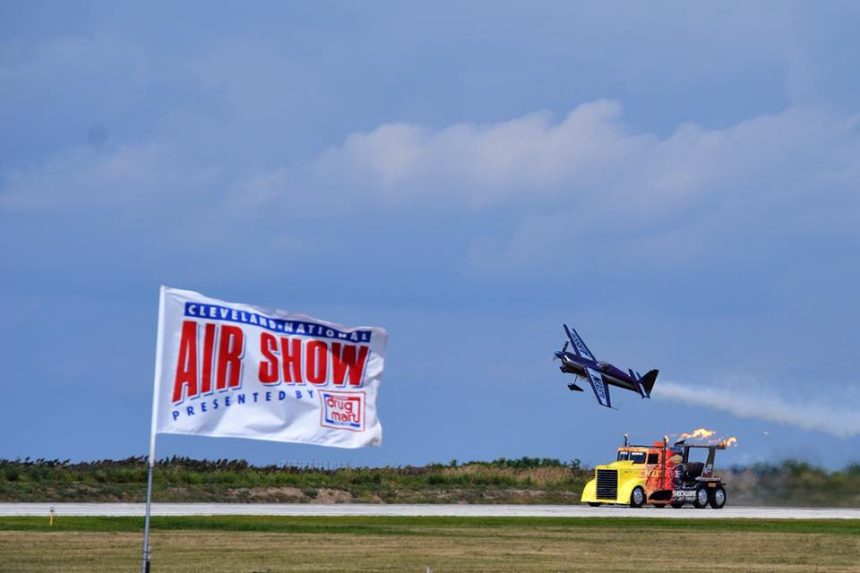

The International Council of Air Shows (ICAS) recently issued a News Advisory and Call to Action regarding the future of the Cleveland National Air Show (CNAS) and Burke Lakefront Airport (BKL). While this type of direct advocacy falls somewhat outside Vintage Aviation’s typical editorial approach, we believe strongly in supporting the airshow community and the values these events represent. The issue at hand is significant—not just for Cleveland, but for the broader aviation world. For more than six decades, the Cleveland National Air Show has been a defining Labor Day weekend tradition, drawing tens of thousands of spectators to the shores of Lake Erie. But today, this iconic event—and the historic Burke Lakefront Airport that makes it possible—faces an uncertain future. At the center of the issue is a proposal by Cleveland Mayor Justin Bibb to close Burke Lakefront Airport as part of his long-term vision for the city. While the proposal includes ideas for redevelopment and public space, those plans remain largely conceptual, lacking concrete financial frameworks and failing to address significant environmental concerns tied to the site’s history as a former landfill. For the organizers of the Cleveland National Air Show, the implications are clear: without Burke Lakefront Airport, the show cannot continue.
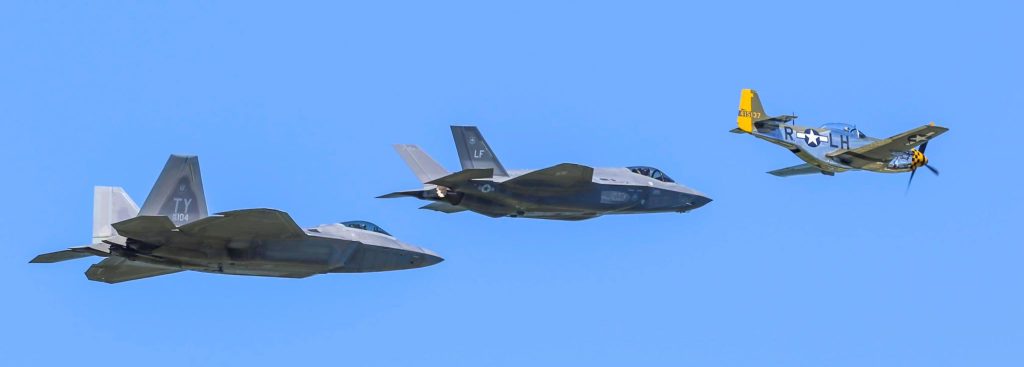
A Legacy at Risk
Since 1964, CNAS has been held annually at Burke Lakefront Airport, becoming one of the premier air shows in North America. Each year, more than 85,000 attendees gather to witness aerial performances, generating an estimated $17.9 million in economic impact and $2.3 million in tax revenue for the city. Burke Lakefront Airport itself is far more than a venue for one weekend event. Operating since 1947, it supports over 40,000 takeoffs and landings annually and contributes approximately $76.6 million to the regional economy. Its downtown waterfront location makes it uniquely suited for both aviation operations and public events like CNAS. Crucially, there is no viable alternative site in the Cleveland area capable of absorbing its traffic or hosting an event of similar scale. Relocation or redesign of the air show is not a practical option. The potential closure of BKL carries consequences beyond Cleveland. Aviation organizations—including ICAS, AOPA, NBAA, GAMA, EAA, and others—have joined forces to oppose the move, recognizing the broader implications. If a major general aviation airport can be closed through political action—resulting in the loss of a long-standing public event—it sets a precedent that could ripple across North America. Other cities may follow suit, placing additional air shows and aviation infrastructure at risk. In this sense, the fight to preserve CNAS and BKL is not just local—it is national.
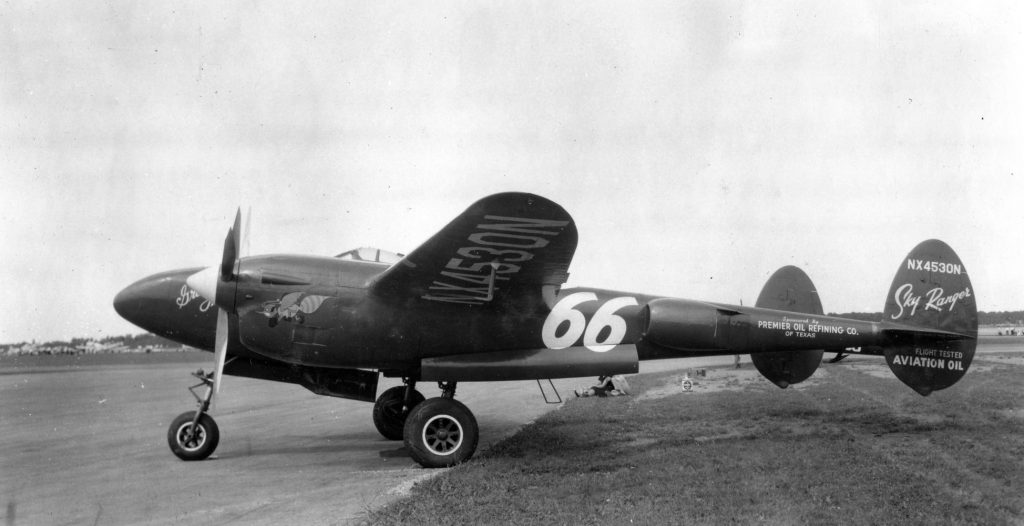
The Power of Public Voice
Recognizing the urgency of the situation, CNAS has launched a public relations campaign to mobilize supporters. But the success of this effort depends on individuals taking action. Advocates are urging the public to contact key officials—including federal representatives, city leaders, and council members—to express support for keeping Burke Lakefront Airport open and preserving the Cleveland National Air Show. It takes only a few minutes, but collective voices can influence policy decisions and ensure that decision-makers understand the value of what is at stake.
More Than an Air Show
The Cleveland National Air Show represents more than entertainment. It is a symbol of aviation heritage, a driver of economic activity, and a source of civic pride. Burke Lakefront Airport is not just infrastructure—it is a critical asset that supports jobs, connectivity, and community identity. Losing either would mean more than the end of a tradition; it would signal a shift in how communities value aviation and public events. The future of CNAS and BKL is not yet decided. Public engagement can still make a difference. By reaching out to elected officials and voicing support, individuals can help protect a cornerstone of Cleveland’s culture and contribute to safeguarding aviation events nationwide. Because when one air show disappears, the impact is felt far beyond a single city—and when one community stands up, others take notice.
| Senator John Husted
304 Russell Senate Office Building Washington, DC 20510 www.husted.senate.gov/contact- Phone: 202-224-3353 |
Senator Bernie Moreno
284 Russell Senate Office Building Washington, DC 20510 www.moreno.senate.gov/share- Phone: 202-224-2315 |
| Mayor Justin Bibb
Cleveland City Hall 601 Lakeside Avenue, Room 227 Cleveland, Ohio 44114 Email: [email protected] Phone: 216-664-2000 |
Councilman Charles Slife
Transportation Committee Chairman Cleveland City Council 601 Lakeside Avenue, Room 220 Cleveland, Ohio 44114 |










Cleveland has been collapsing for over 55 years. The population is down 60% from its height. Two airshows per year and keeping Burke open will not stop the slide. Cleveland must do what any city sitting on a great lake should do. Maximize the benefit of being on a lakefront. And not cut off access to the lake by keeping a little used airport.
We need more access to lake erie on the downtown and Eastside of Cleveland..we only have a few small spot to access the lake…private boat docks take up alot of the area also along with the airport….I’ve been saying it for years…all this lakefront and no access to it…what about all the taxes we pay?
As someone who lives in Cleveland, this is nonsense. Burke is an outdated and useless landing strip good for nothing except parking committee jets that can just as well use the county airport. This is a. Absolute waste of valuable lakefront that should be redeveloped into new neighborhoods and connect the city with the lake.
Also the airshow is an annual annoyance, good riddance.
The land Burke sits on has no higher or better use than its current development as an airport. People who call for the airport’s closure are living a pipe dream. If this land had any development potential at all, a private developer would have put forth a proposal years ago. And to call the land Burke sits on “access” to Lake Erie is to ignore the fact that it sits behind two break-walls that prevent clean lake water from touching the shore, and the nearly fifty foot drop-off prevents any kind of beach construction.
No living creature would willingly swim in this dangerous swill. Have you ever seen anyone fishing there? Or even see pleasure craft dropping anchor except during the air show?
The landfill that Burke sits on contains a 45 acre Super Fund site among its 400 plus acres, most of which are closer to East 55th Street than East 9th. These are not positive selling points. The remaining landfill is unstable, incapable of supporting a structure of any significant size. Ever wonder why Aviation High School was abandoned twenty years ago? The foundation of this one-story building was collapsing due to unstable soil conditions, and that site is located on one of the more stable parts of the landfill. And the closer you get to the lake, the more unstable the land becomes. The nearby buildings built on the same landfill, such as the stadium and the museums, require deep foundations to accommodate their mass, an expense that only very large structures can afford.
Then there’s the sewage problem. Every gallon of waste water produced on the current lakefront must be pumped dozens of feet up into the city sewer system. A large stadium or museum can afford such an expense. Market rate housing or mixed use space cannot. Neither can a park or any other recreational facility one might imagine could be built at Burke.
The airport is said to cost about one million dollars annually for the airlines at Hopkins to subsidize as Burke is an invaluable alternate landing spot for aircraft forced to abort landing at Hopkins, a small but extremely important expense they gladly pay, adding mere pennies to the cost of a plane ticket. Not a single taxpayer dollar goes to subsidize Burke.
The Cleveland Clinic uses Burke to fly organs in for transplant operations. Rerouting that traffic to the Cuyahoga county airport adds crucial minutes to the trip to get those organs where they need to be. For this reason the Clinic is very concerned about Burke’s potential closure. And no one mentions that the County Airport is already busy, and hosts one of greater Cleveland’s fastest growing businesses, FlexJets, the country’s second biggest fractional aviation operator (NetJets, based in Columbus, is the largest). Has anyone asked Ken Ricci, FlexJets founder and CEO, if he wants Burke to close and add 40,000 landings to compete with his fleet?
And let’s not forget who paid for most of the existing infrastructure at Burke, the FAA, who strongly opposes closing Burke and would require tens of millions of grant money to be returned by the city.
The rush to close Burke is a naive stunt designed to appeal to Cleveland’s downtown lakefront access inferiority complex, as if the only lakefront access that counts is that which can be seen from the Terminal Tower. Northeast Ohio has many wonderful places to access the lake that don’t have fifty foot drop-offs, buried Superfund sites, or require expensive foundations and sewage pumps.
There is a proposal to create a lakefront park just off Gordon Park that features a beach and many other water oriented amenities. That plan has great merit, and would likely be scuttled if this Ill-advised boondoggle moves forward. Better our efforts and dreams be focused on that very viable project, which would provide much better access to Lake Erie than the windswept wasteland surrounding Burke.
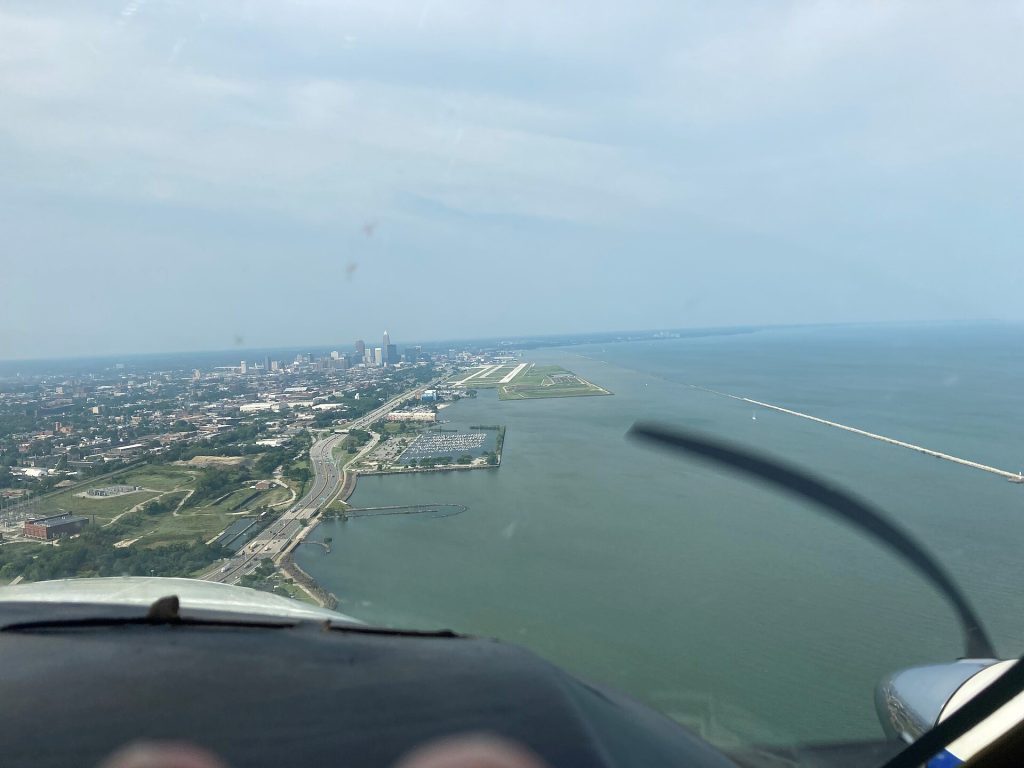
A Long Distance View, from across … ‘The Pond’.
It appears to me that, on Revenue Alone, the Closing of the Airport Makes No Economic Sense – $20 Million from the Air Show & $76 Million Annually from Traffic … Not Peanuts!
Plus the Lakeside situation; London-Heathrow, in 1947, was situated on farming land beyond the Western Edge of London.
Since that Start Year the ‘Greater London Suburban Sprawl’ has crept Inexorably toward it. The Main Approaches for Air Traffic are two: West to East & East to West … I’m on the fringe of North East London and we have almost 24/7 Traffic Starting Landing Approaches for Heathrow , some 40 miles to the Westward.
Given that ‘Greater London’ is some 20 Miles Deep, North to South, and 25 Miles Wide, West to East; it’s always in the back-of-my-mind what would be the result of a large Air Liner, In Trouble and ‘falling short’ on gaining the Runway?
Over the Years there have been several failed proposals to re-locate ‘London Airport’ to the Thames Estuary; due to increased Traffic and Safety Grounds … All falling on several points, the Main Being Cost.
And … ‘Lakeside Access’? From the Photo shown – Do My Eyes Deceive Me? – a long, Lakeside hugging, Multi-Lane Highway … is that to be scrapped?!!!
And, as for Politicians, I would ask the Roman Question: ‘Cui Bono?’