






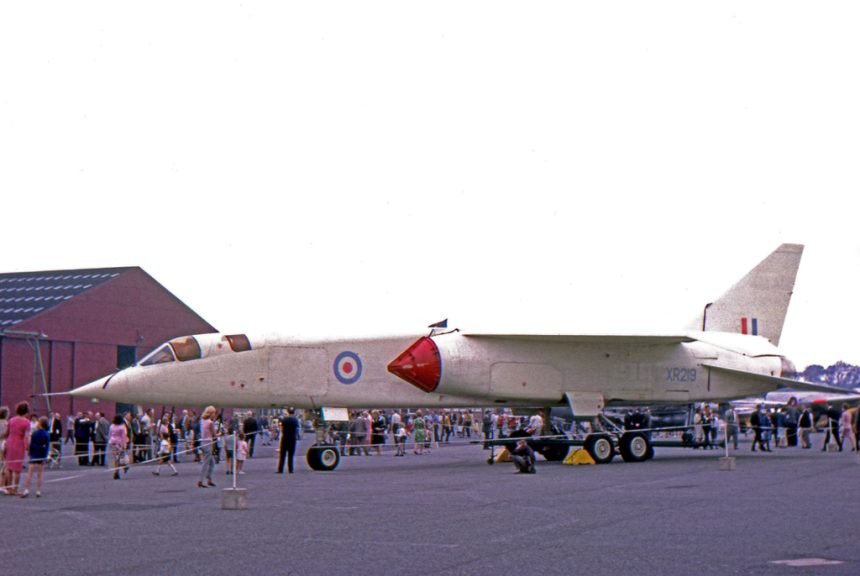

In the 1950s, the British Royal Air Force wanted a high-speed aircraft that could deliver tactical nuclear weapons, attack high-value targets in well-protected frontline areas from low altitudes, conduct stand-off capabilities, photographic imagery, conduct signals intelligence, and aerial reconnaissance. In November 1956, the project for a new low-level tactical strike and reconnaissance aircraft, intended to replace the English Electric Canberra, began under General Operational Requirement 339 (GOR.339). However, the British government only wanted to award the contract to a group of companies, a decision which would later help streamline the industry. Several companies participated in the competition, including Vickers-Armstrongs with the Type 571, Shorts/English Electric with the P.17A, and Blackburn Aircraft with the NA.39. The British Air Ministry selected the Vickers design because it included not only the aircraft design but also a ‘total systems concept’. In January 1959, the Minister announced that Vickers was the winner of the competition, with English Electric as a subcontractor, and the project was designated TSR-2 (Tactical Strike and Reconnaissance, Mach 2). In 1960, under government pressure, several companies, including Bristol Aircraft Company, English Electric Company, Vickers-Armstrongs Limited, and Hunting Aircraft, merged to form the British Aircraft Corporation (BAC) to produce the BAC TSR-2. The remaining major companies, such as de Havilland, Hawker Siddeley, Gloster Aircraft, Armstrong Whitworth, Folland Aircraft, and Blackburn Aircraft, created Hawker Siddeley Aviation Ltd to concentrate on other civil and military contracts.
Design of BAC TSR-2
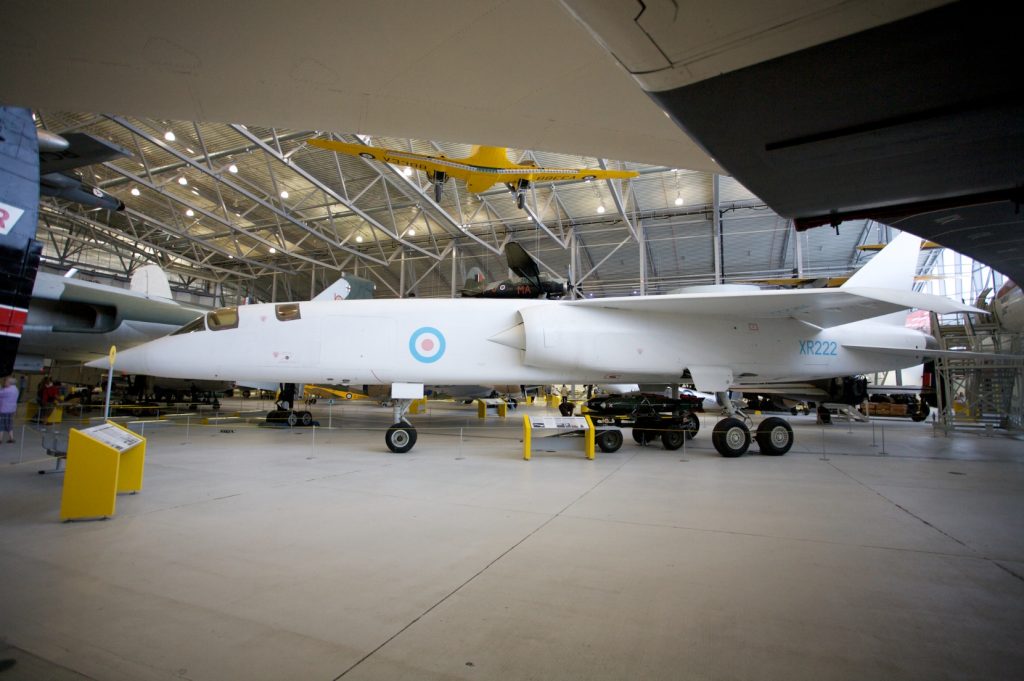
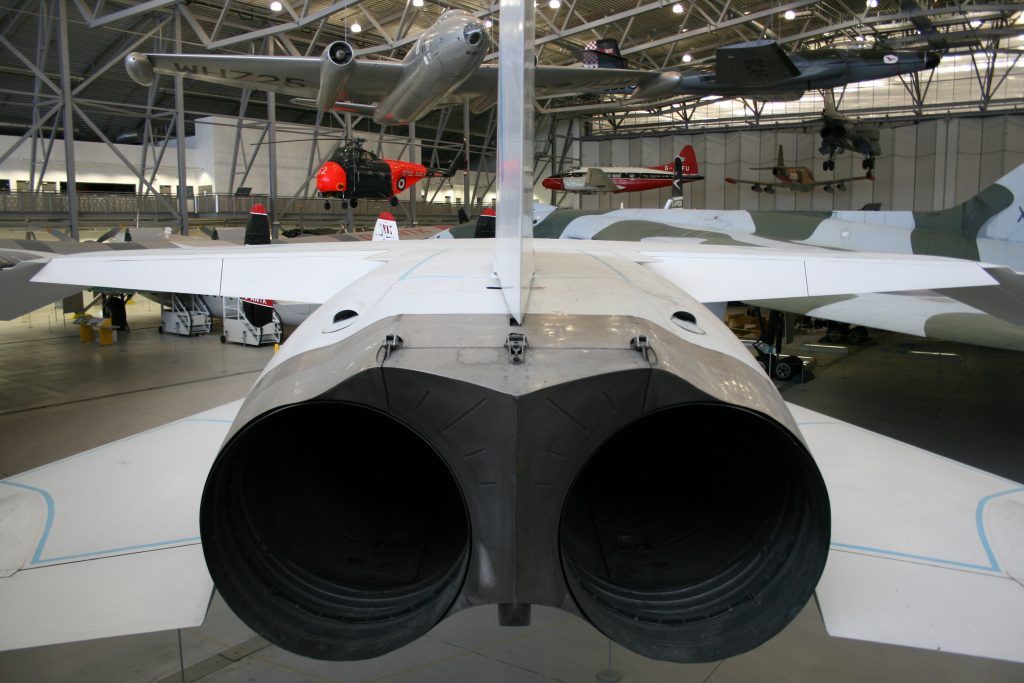
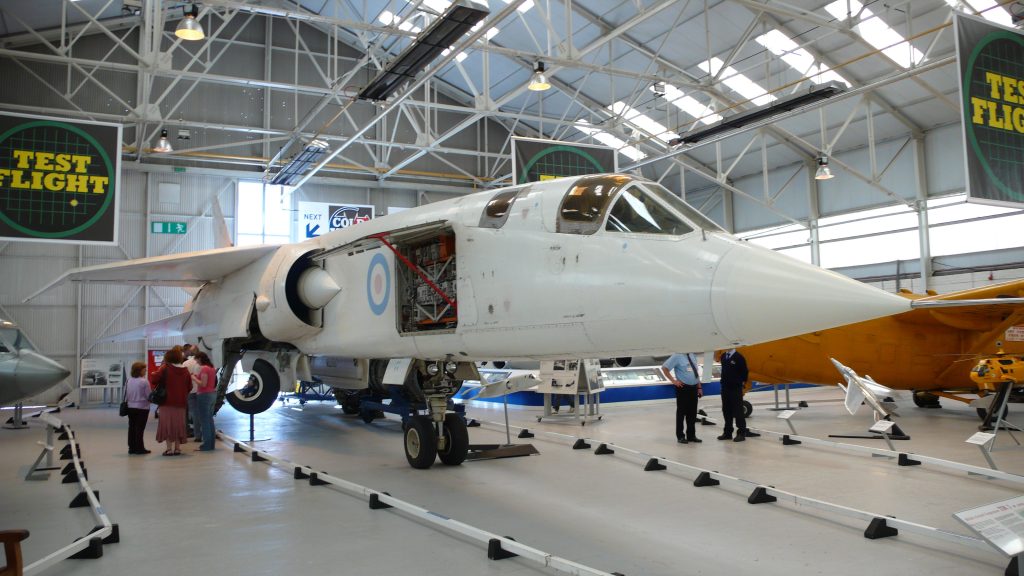
The first prototype of the BAC TSR-2 flew for the first time on September 27, 1964. It was a very long, slim aircraft with a shoulder-mounted delta wing and turned-down wingtips. The main wheels retracted into the body, which helped in developing a very slim wing design. The fin and horizontal tail could move fully and helped control the aircraft in all directions. The ailerons were responsible for both pitch and roll control. The BAC TSR-2 was operated by a crew of two, and it was 89 feet long, 23.9 feet high, with a wingspan of 37.2 feet and a wing area of 702.9 square feet. The empty weight of the aircraft was 54,750 pounds, the gross weight was 79,573 pounds, and the maximum takeoff weight was 103,500 pounds. It was powered by two Bristol Siddeley Olympus Mk. 320 afterburning turbojet engines, each producing 22,000 pounds of dry thrust and 30,610 pounds with afterburner. The maximum speed of the BAC TSR-2 was Mach 2.15 at 40,000 feet and Mach 1.1 at sea level. The combat range of the aircraft was 860 miles, and the service ceiling was 40,000 feet. The aircraft could carry 10,000 pounds of weapons, 6,000 pounds internally, and 4,000 pounds externally. The internal weapons bay was 20 feet (6 meters) long, and initially could hold a Red Beard 15-kiloton nuclear weapon; later options included two OR.1177 300-kiloton nuclear weapons or six high-explosive bombs weighing 1,000 pounds each. The final design for the nuclear role allowed for a load of up to four WE.177 nuclear weapons. During flight tests, the BAC TSR-2 performed well; however, issues with engine development and landing gear retraction delayed the test program. On one test flight, the left main landing gear did not retract properly. While the nose and right main landing gears lowered successfully, the left main landing gear stayed in a partly extended position. The test pilot decided that landing was possible because of the BAC TSR-2’s good low-speed handling. After consultation with the ground engineers, he made a gentle approach with a low sink rate. Upon landing, both landing gear adjusted to the correct position, and the issue was quickly fixed, allowing the test program to proceed.
The Cancellation
However, later, the cost of the program became a political issue. On April 1, 1965, two Cabinet meetings decided to cancel the BAC TSR-2. Officials cited high projected costs, but some believe the decision was also influenced by a plan to procure up to 110 General Dynamics F-111 aircraft from the USA. The cancellation was announced in the Budget Speech on April 6, 1965. The second development aircraft was supposed to have its first flight on the same day. However, an accident during transport kept this from happening. Canceling the BAC TSR-2 led the industry to focus on working together on projects like the military Jaguar and Tornado, as well as the civil projects Concorde and Airbus. Later, the F-111 procurement was also canceled in 1968, citing the cost and belated development timelines. The roles planned for the TSR-2 were taken over by other aircraft, such as the Blackburn Buccaneer and the McDonnell Douglas F-4 Phantom II, the planes that had been considered and dismissed early in the TSR-2 procurement process. But both of them lacked what BAC TSR-2 could do alone. Eventually, a smaller swing-wing aircraft called the Panavia Tornado was developed by a European group and introduced in the 1980s to meet similar needs as the TSR-2. In the Grounded Dreams series, the BAC TSR-2 could have been for Britain what the Lockheed SR-71 Blackbird was for the US. It was fast, iconic, and had everything to be a successful aircraft, but not the political backing. Read more Grounded Dreams articles HERE.

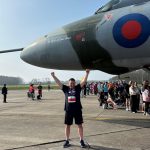







The (then) Labour Minister for Science and Technology – Sir Solly Zuckerman – in Harold Wilson’s Cabinet visited Cranfield and without even bothering to get out of his official car he wound down the window and his words were ” should never have been built, scrap it” at which point he ordered his driver to take him back to London.
So ended the last wholly British fighter aircraft. We can only dream of what might have been ……..
The correct term in English for “afterburner” is reheat and should be used when referring to British aircraft.