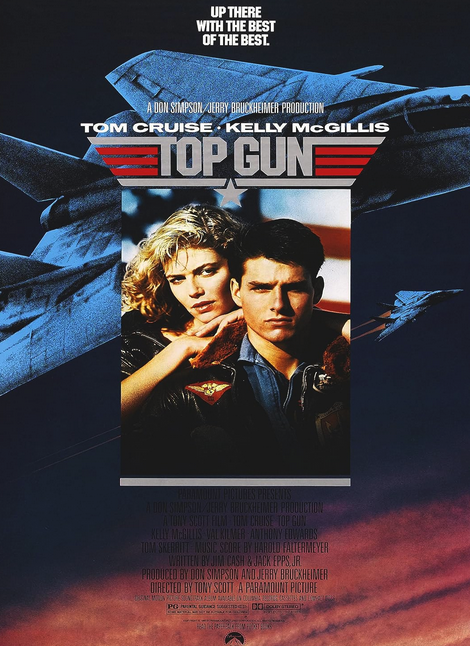

Guess what day it is!? No, it’s not Hump Day, it’s something much bigger. It’s TOP GUN Day! It was on this day in 1986 that the original Paramount production, TOP GUN, hit movie theaters nationwide. Yes, your math is correct; that was forty years ago. Forty….YEARS! To celebrate, Paramount has re-released TOP GUN and TOP GUN: Maverick back into theaters from May 13-21. So, if you haven’t done so, go get your tickets and satisfy your need for speed.
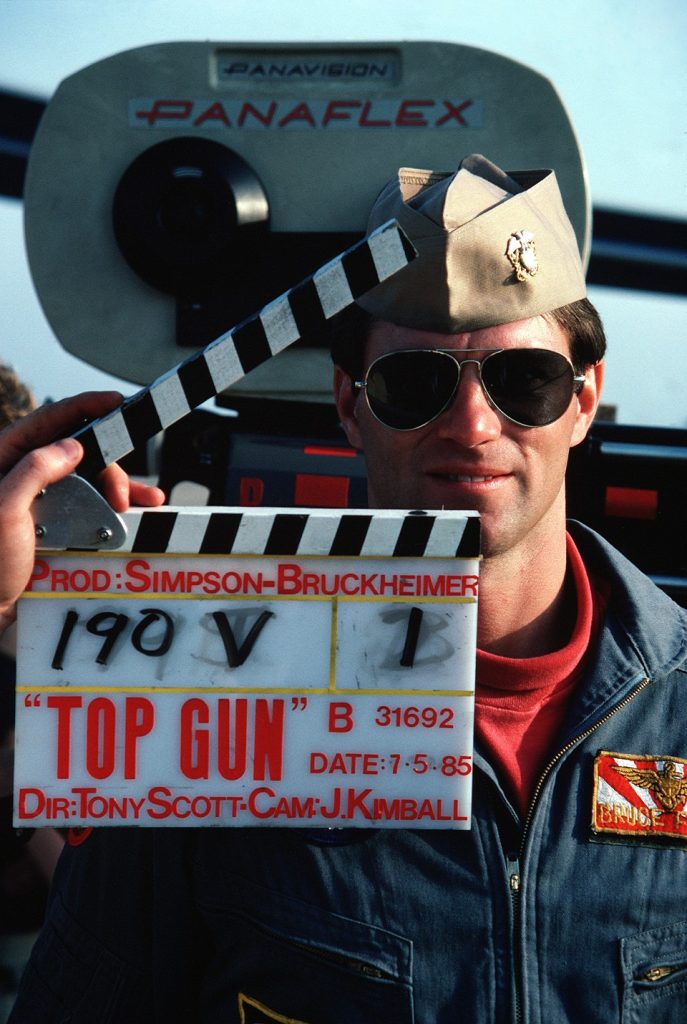
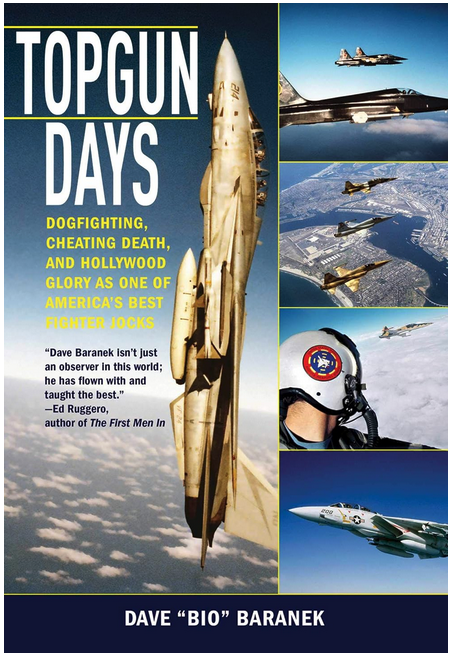
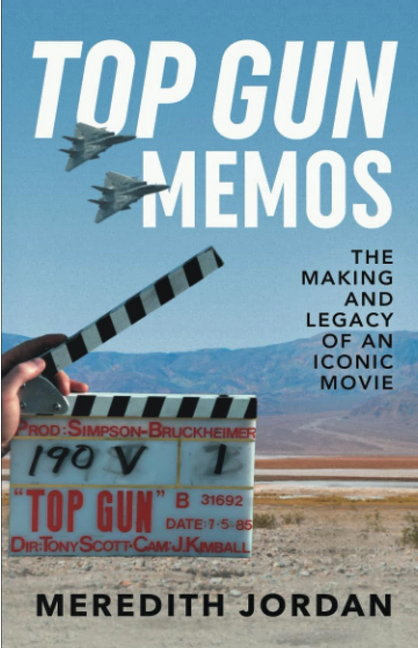
When Vintage Aviation News publisher asked me a month ago if I wanted to write an article about the anniversary of the original TOP GUN, I jumped at the chance without a second thought. When that second thought did occur, I had no idea how to write the story. How do you sum up a movie that had a budget of just $15 million, that became a timeless classic that has transcended generations, in just a few thousand words? Actually, it was not necessarily how, but what? Do I talk about how the original movie was a box office smash that launched Tom Cruise’s career? Was the soundtrack the top-selling soundtrack of 1986? How did Paramount executives convince the Navy that backing the movie would be good for the service, despite what had happened during the production of The Final Countdown six years prior? The storylines could and have filled books, and two of the best are TOPGUN DAYS (2010) by Dave “Bio” Baranek, an F-14 RIO and Top Gun Instructor (read our article HERE) who was a crew member in the MiG-28s during filming, and TOP GUN MEMOS (2022) by Meredith Jordan.
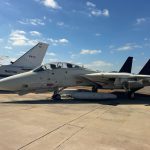
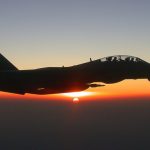
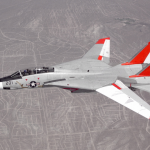
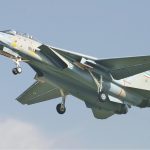
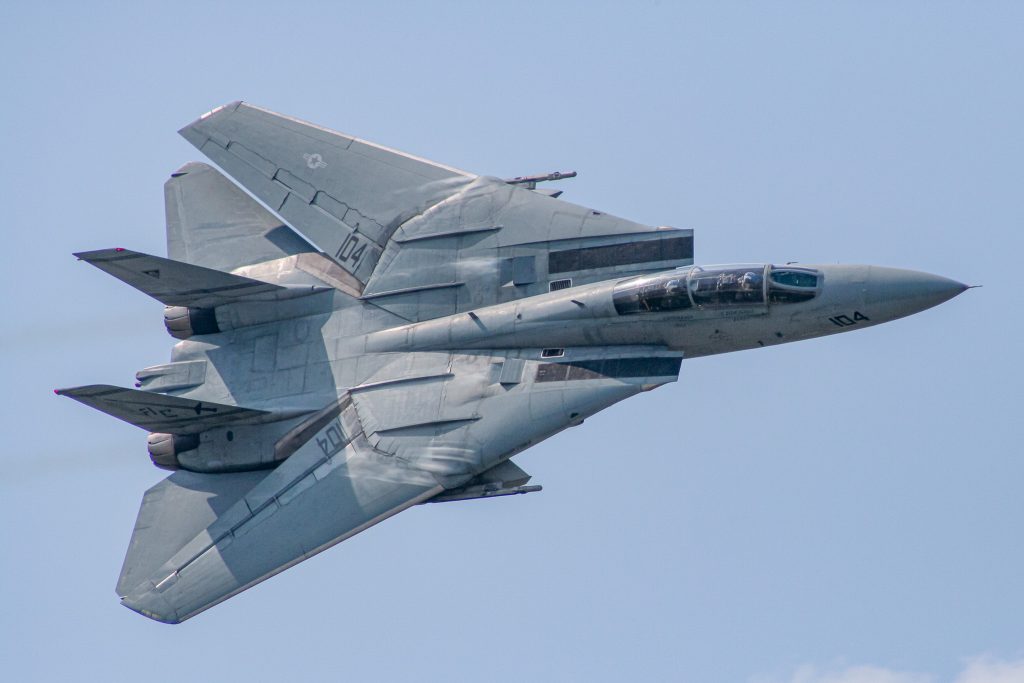
Then on Monday, yeah, just five days ago, I reminded myself this is an aviation website, so I should write about the real stars of the movie- the airplanes, more specifically the F-14 Tomcat. The timing of the movie could not have been better for the F-14 community. It was the mid-1980s, the F-4 was rapidly headed for retirement, and the new F/A-18 was just starting to enter service. The F-14, however, was at its absolute peak, equipping no fewer than 26 active and reserve squadrons.
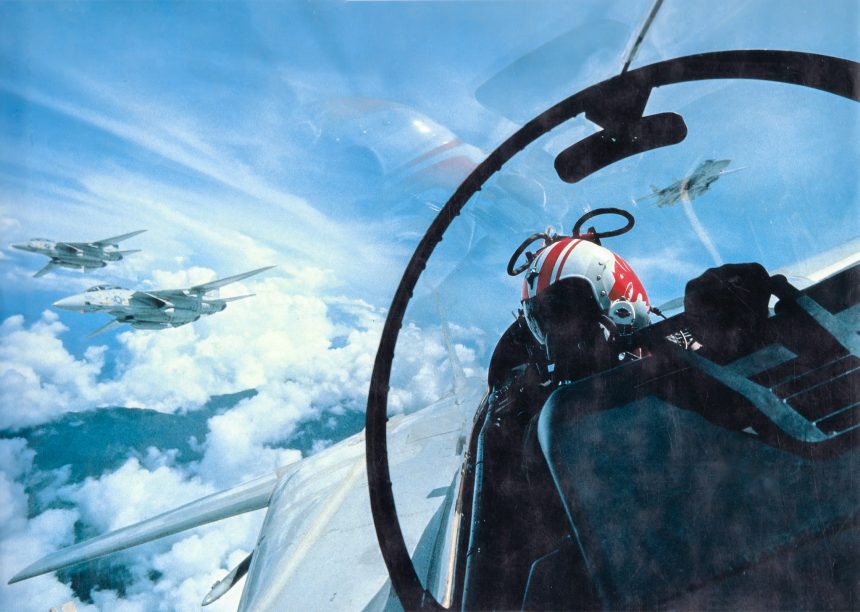
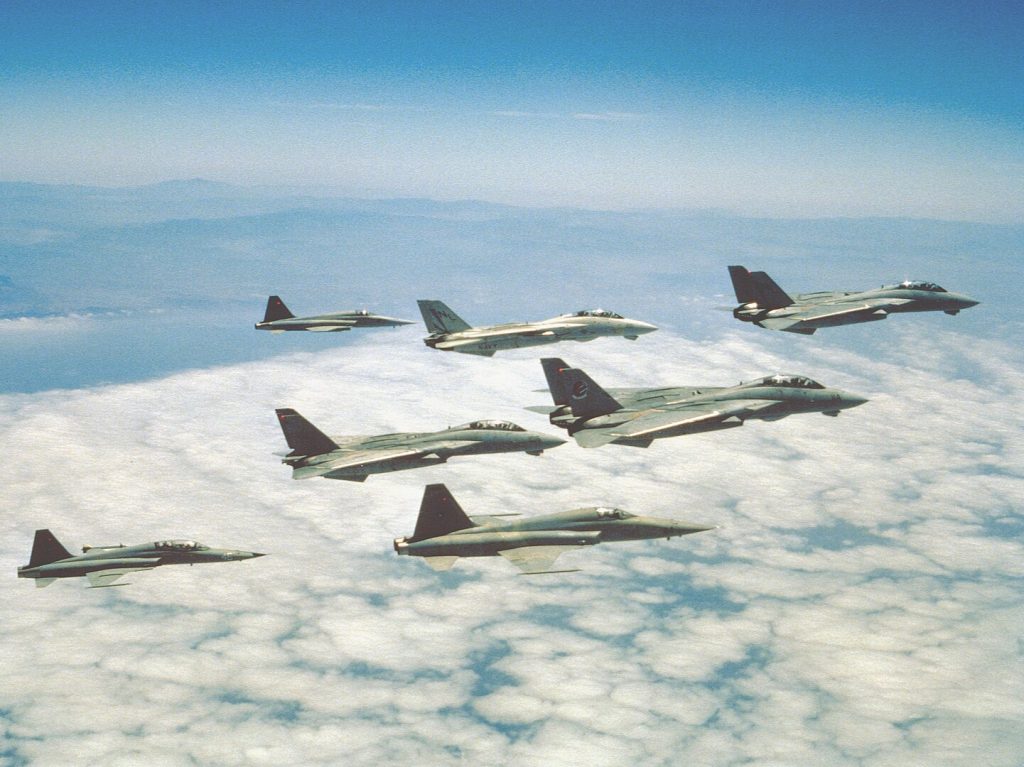
Before we go any further, it is important to revisit the project’s genesis. For that, we have to go back to Los Angeles in the fall of 1983… actually, no, we must go back to the South China Sea in 1981. A division of F-14s from VF-1 Wolfpack was forming up to return to their carrier, USS Ranger (CV-61). The weather was beautiful. Bright blue skies, abundant sunshine, and tall cumulus clouds. The flight leader, Lieutenant Commander (LCDR) CJ “Heater” Heatley, looked over his right shoulder and saw his flight coming in for the join-up. He thought the scene would make a nice photo and reached into the helmet bag by his right hip and pulled out his Nikon F3, adjusted the settings, and put his right arm as far behind his ejection seat as he could and fired off three shots. He put the camera back in the bag, trapped aboard the Ranger, without another thought about the photos he captured.
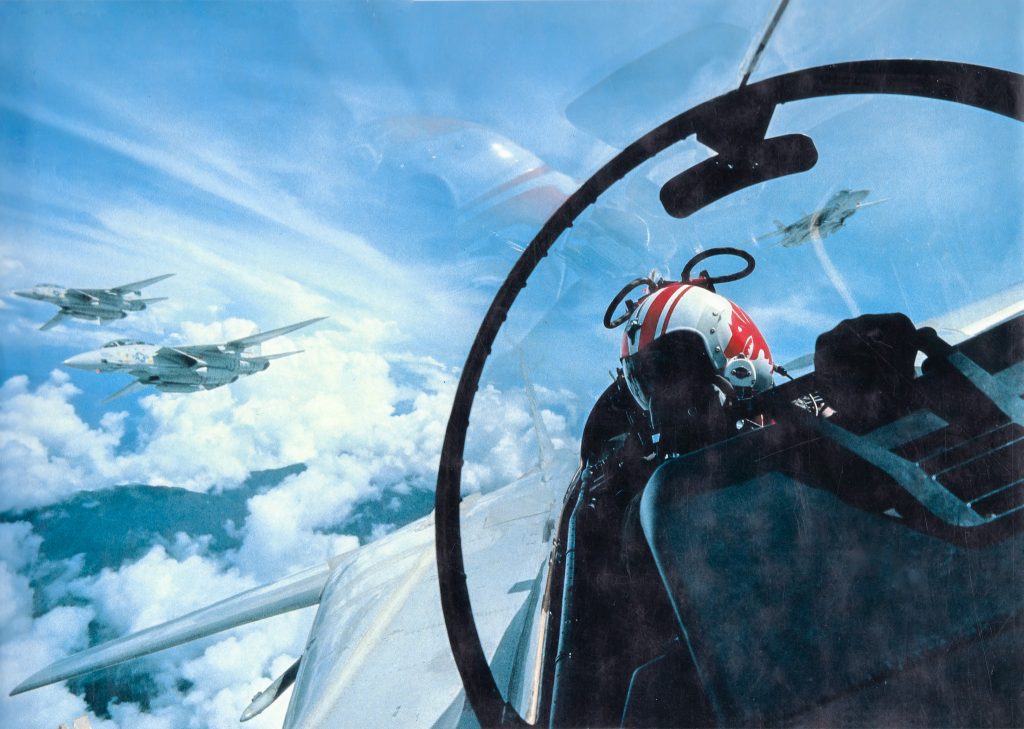
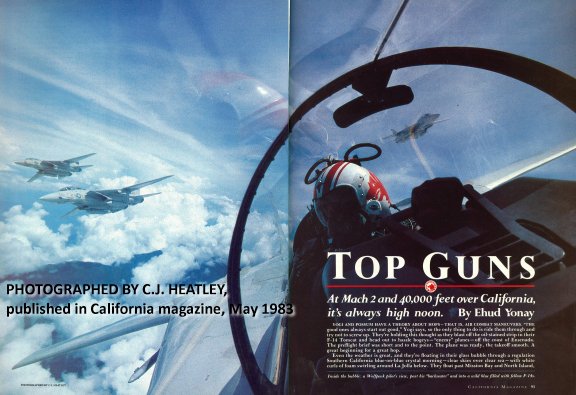
Sometime later, he developed that roll of film and finally got to see whether he captured anything meaningful. He did. In spades. Now, fast forward back to 1983, and we find hot, up-and-coming movie producers Jerry Bruckheimer and Don Simpson in a dentist’s office. Simpson had an appointment, and the pair did everything together. While they waited, Bruckheimer casually leafed through the May 1983 issue of California magazine, and Heater’s photograph over the South China Sea was the opening photo of an article called “TOP GUNS”, by Ehud Yonay. The tag line read like the opening line of a movie trailer, “At Mach 2 and 40,000 feet over California, it’s always high noon.” Bruckheimer flopped the magazine in Simpson’s lap and said, “This is Star Wars on Earth. This is our next movie.”
Over the next couple of years, Bruckheimer and Simpson, along with other Paramount executives, met with Navy officials and eventually secured the Navy’s blessing and cooperation. What followed was months of preparation, casting, etc., and in early 1985, script writers began spending time at Miramar, sitting in on unclassified briefings and lectures given by Top Gun students and instructors. In his book, Lieutenant (Lt) Dave “Bio” Baranek talked about the day Hollywood came to Miramar, “One day several limousines brought the producers, a cinematographer, and other Hollywood people to Miramar to meet with Rear Admiral Tom Cassidy, the two-star in charge of the Navy fighter and E-2 operations on the West Coast. Once he was personally satisfied, Admiral Cassidy called Topgun and found that Otter and Rat (Topgun CO and XO) were just getting out of a couple of jets after a day at Yuma. He told them to come over immediately, and they walked in wearing their bags, which the Hollywood group loved. After the admiral described the idea, Otter looked at Rat and said, ‘You’ve got it, XO.’ Rat would be Topgun’s point man for the project, and they came back to Topgun carrying an early version of the script.”
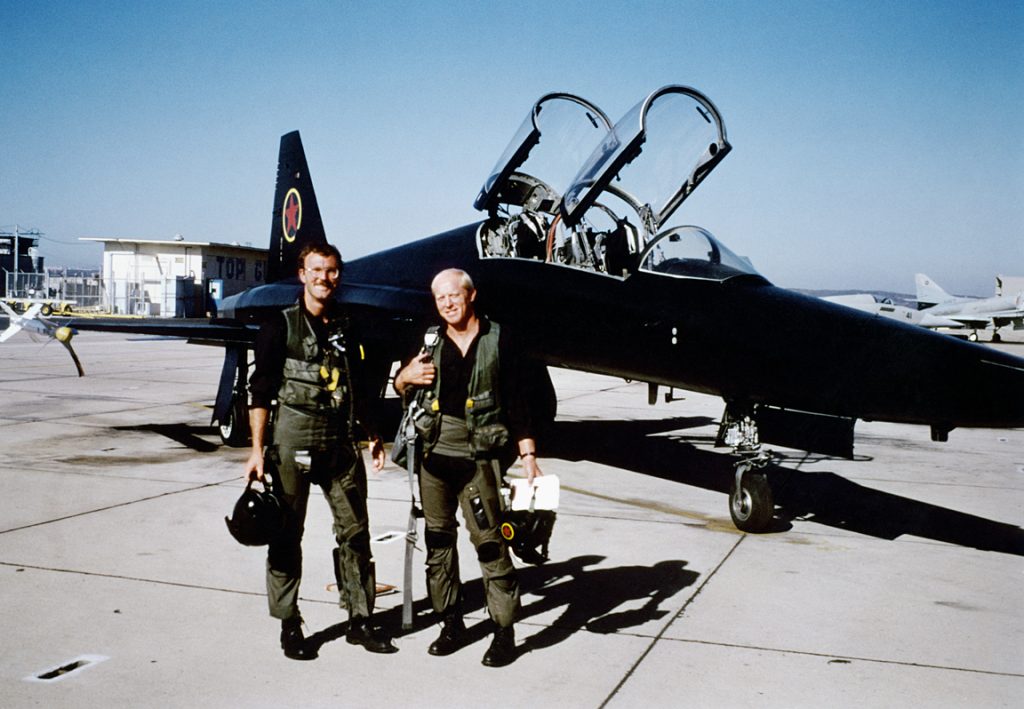
That early version of the script needed considerable editing because the last thing anyone in the Navy wanted, especially those at Top Gun, was for the service or the school to be embarrassed. For instance, originally, Goose died in mid-air, and Maverick was dating an enlisted female. Much to his credit, Rat, on his own time, spent many nights and weekends fixing the problems, and he can be credited with coming up with the flat spin scenario that killed Goose. It was based on an actual event, which had a more positive outcome. The RIO suffered a broken leg.
Production on the movie began at Charlie’s house at 102 North Pacific Street in Oceanside on June 26, 1985. Over the next six weeks, they filmed a variety of other scenes, from buzzing the tower, volleyball, and officers’ club to those aboard USS Ranger and Enterprise, and the helo rescue scene that nearly cost Tom Cruise his life. In the second week of August, production crews arrived at Miramar to begin filming the aerial scenes. The schedule called for a total of thirteen days of shooting, three at Miramar and ten at Fallon.
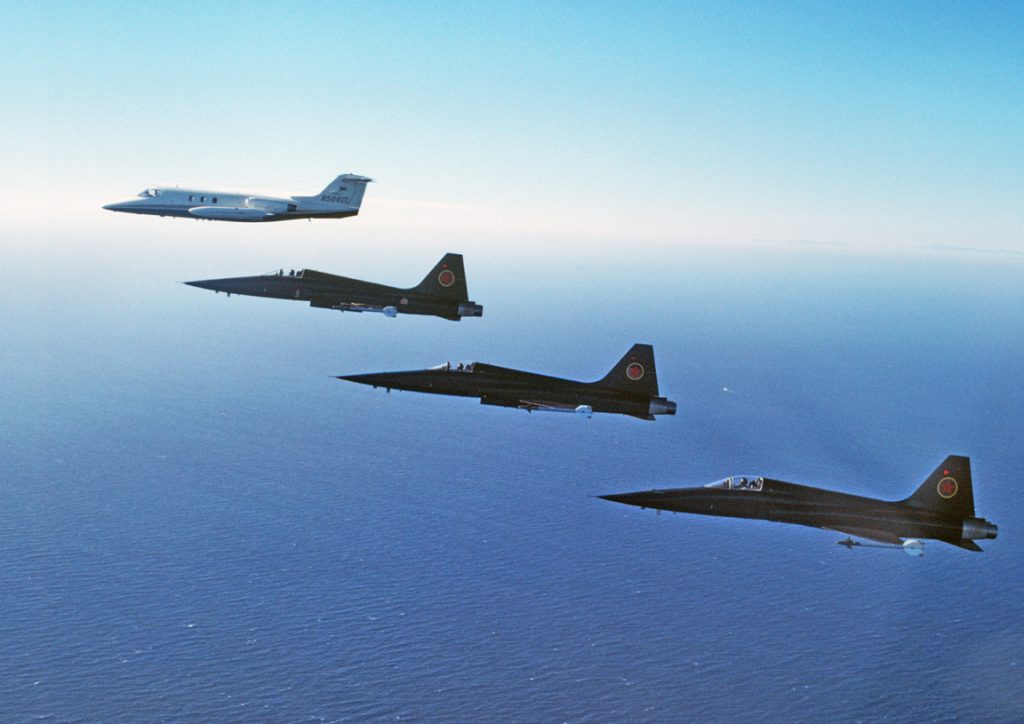
Capturing the scenes that would make TOP GUN the iconic movie it became was not just a matter of setting up cameras and filming the pilots roaring off into the skies. This portion of the film required months of detailed preparation, particularly by aerial coordinators Tom Harmon and Dick Stevens, who acted as the technical consultants and liaisons with Grumman. Harmon’s primary focus was the camera mounts on the F-14s, which required specialized cameras and mounts that had to be able to withstand the airspeeds and G-loads the jets would fly during filming.
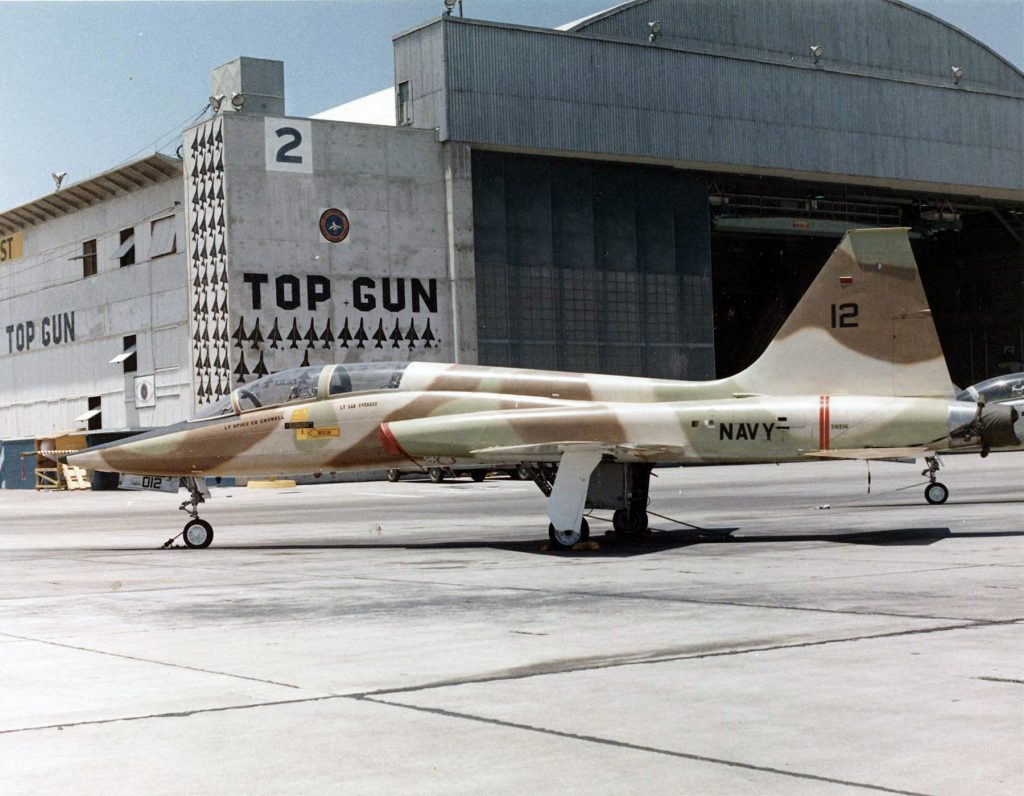
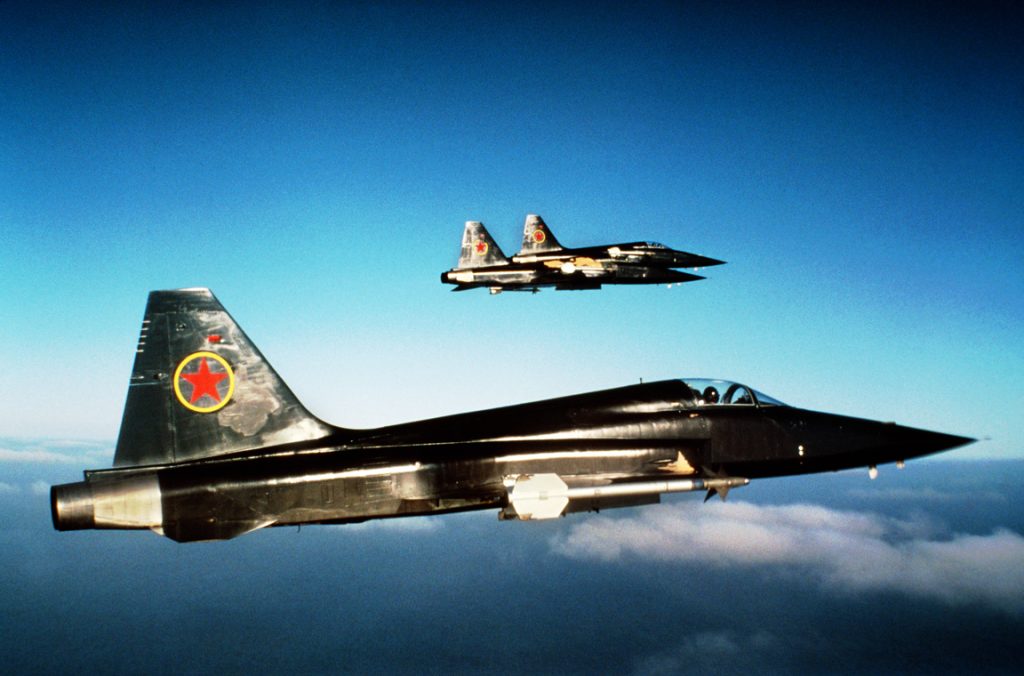
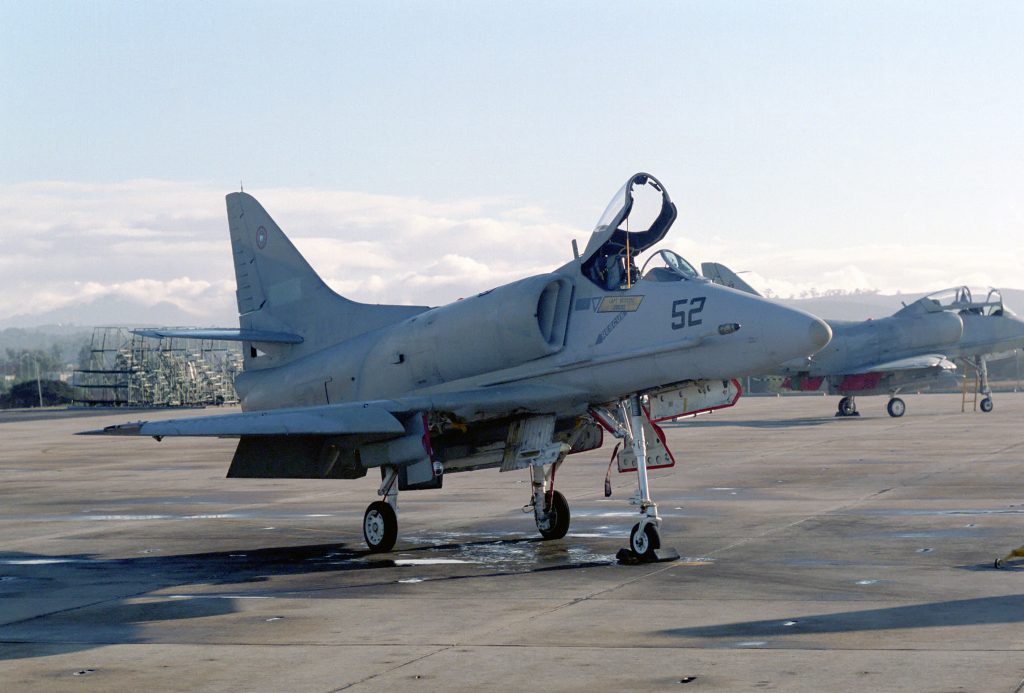
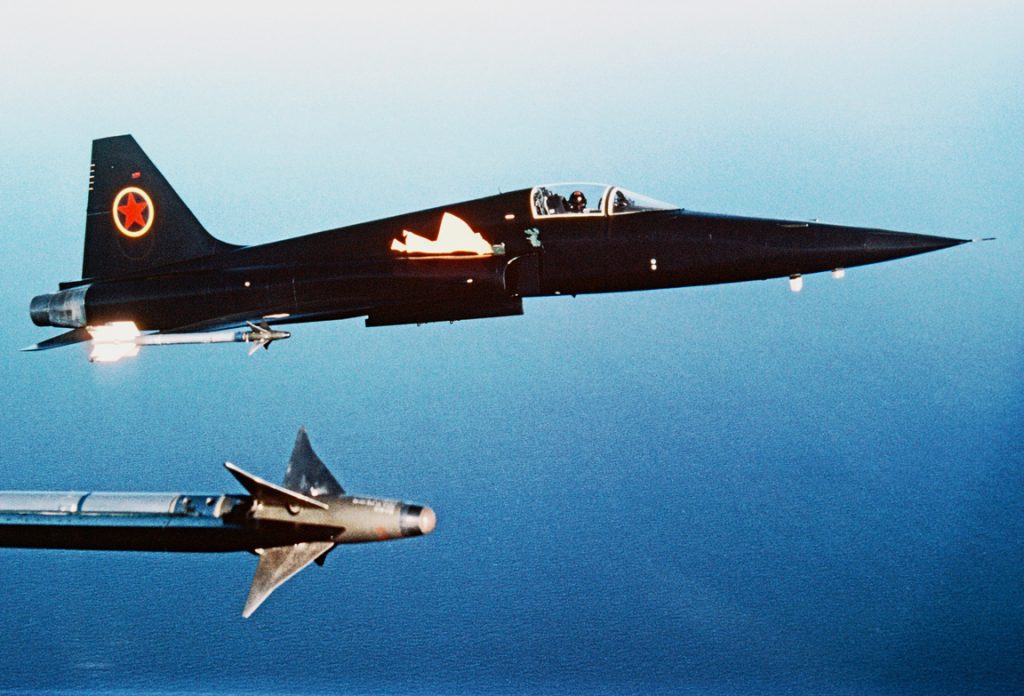
During the thirteen days of shooting the aerial scenes, Tony Scott would not enjoy the same complete authority that he normally enjoyed on a movie set, as Meredith Jordan noted, “The call time on the first day, Aug. 12, was 5:45 a.m. The briefing began promptly at 6 a.m., and it was clear right away how different this would be from the other stages of photography. The actors were gone, and in their places were Navy pilots and RIOs. The stars were the F-14 Tomcats, F-5 Tigers, and A-4 Skyhawks. Scott was inclined to direct them, too, but it became clear at the first briefing that the Navy should be in the pilot seat for these scenes.” It did not take long for great mutual respect to be established between the Navy crews and those from Paramount. They respected and admired each other’s professionalism and attention to detail in their respective crafts. Still, there was quite a bit of give and take when it came to capturing the flying scenes Tony had in mind. He would tell Rat what he wanted, and at times Rat would say that it was not possible for one reason or another. In most cases, a compromise was worked out, and obviously, the end result was spectacular.
In watching the numerous interviews and documentaries that can be found online, it is clear that from the beginning, the plan was to film the actors flying in the F-14s. As we all know now, the in-cockpit “flying” scenes were done by placing the actors in the mockup of an F-14 cockpit. So, what happened with the actors actually flying? Each of the main cast members made an unknown number of flights, but the footage was apparently unusable, and none of them, save for Cruise, enjoyed the experience. During filming at Miramar, John Stockwell (Cougar), in full flight gear and speaking over the din of noise that is ever-present on an active flightline, spoke about what he was tasked to do during his upcoming flight, “Well, we just got a briefing about how I’m supposed to remember to say this line when I’m inverted. This line when I’m being chased and this line…and I’m not sure if I’m going to be able to get any of it right.” During a post-release interview, Tony Scott explained what he saw in the early dailies, “On one of our first flights, one of the actors went up and the first maneuver, the pilot switched the camera on, and you see the actor sitting there and his color starts to change, and his eyes sink back a little bit. The camera went off. Next maneuver, the camera switched on, and all we saw was the top of his helmet. The third maneuver we saw was this hole where his head should have been. The fourth maneuver, his head was back, his mask was off, and he was green.” The actors’ negative reactions to flying in high-performance jets, is almost certainly why Tom Cruise put the actors on TOP GUN: Maverick through a three-month flight training course prior to climbing aboard the F/A-18F Super Hornets.
During the thirteen days of filming, there were dozens of sorties flown, but there were two that were especially significant- one infamous and one incredibly famous. The former took place out in the desert near Fallon on August 17, 1985. Crews had set up on the precipice of a mountain to capture the F-14s head-on while making a series of rolls. On a tower near the cameras, Lt John “Smegs” Semcken was on the radio and had briefed the pilots that he would call the rolls. On one of the passes, one of the pilots performed an extra roll that Smegs did not call and cleared the top of the mountain by less than twenty feet. No one was hurt, but the jet wash trashed the site. Rat was flying when the incident occurred and heard what happened and immediately called, “Knock it off.”
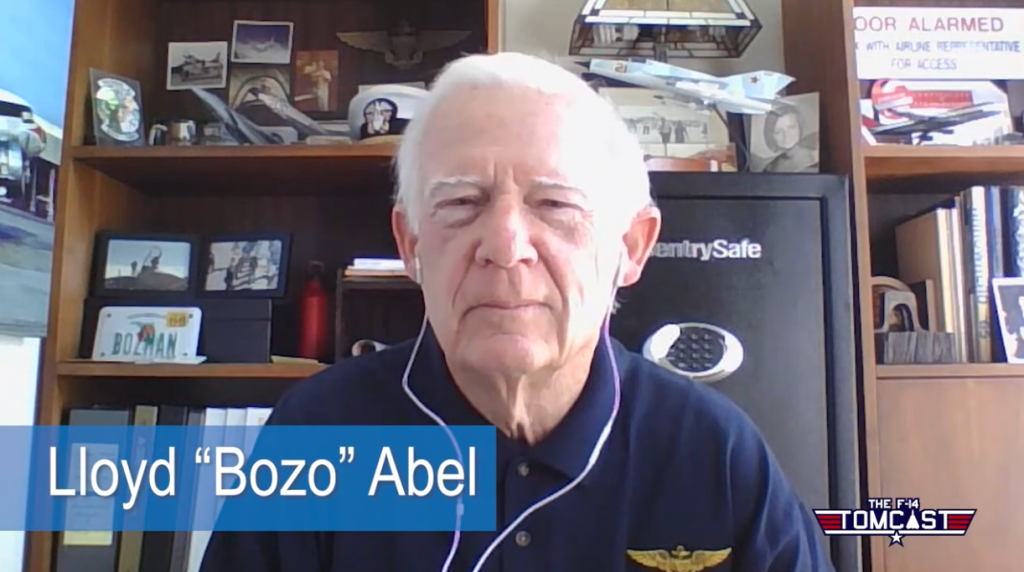
The latter scene, the tower fly-by, has gone down in history as one of the most famous flying scenes ever captured on film. The scene had been meticulously planned and thoroughly cleared by the Navy and the FAA, but selecting the crew to fly was left until the very last minute. The pilot chosen to fly this dynamic and iconic scene was LCDR Lloyd “Bozo” Abel. Actually, Bozo, who was credited as an aerial coordinator, was responsible for selecting, scheduling, and managing the aircraft, particularly the F-14s. He wasn’t really chosen; he got the job because he answered a ringing telephone. Space does not allow for a full account of what happened prior to the flight, but Smegs was on the other end of the line and basically told Bozo to grab his RIO, find a serviceable jet, and fly the scene.
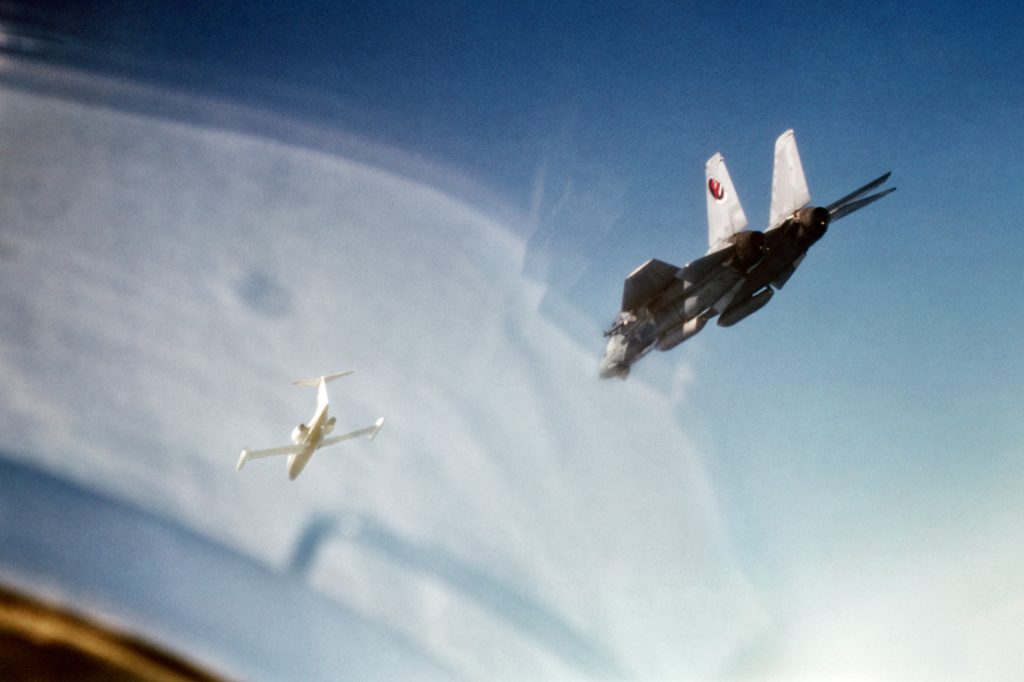
After meeting with Scott in the tower, Bozo and his RIO, Lt Mark “Slick” Schlichter, took off in F-14A BuNo 160685 and made three passes by the tower at Miramar. Much to the chagrin of a certain admiral. It was well-known that the scene was going to be shot that day, so there were people in and around the tower, and surrounding buildings, including Michael Ironside, who was on the roof of a hangar. This was to be a once-in-a-lifetime moment, and people wanted to bear witness. Bozo estimated he got down to around 60 feet, which matches up with Ironside’s statement that the F-14 passed below him as he approached the tower. What many may not be aware of, I wasn’t until this week, that this scene was performed at Miramar and Fallon. A majority of the passes seen in the movie were done at Miramar, but the split-second stationary shot filmed from the base of the tower was captured at Fallon. After the flight, Bozo and Slick received a huge round of applause from not only the production crew but also from their fellow fighter pilots. On that day, they were the envy of the F-14 community and remain so to this day. All because Bozo picked up the phone.
Other than a few reshoots, production on the film wrapped up in early October 1985, which was followed by months of post-production work. Naturally, the movie was heavily promoted, and when it was released on 1,000 screens on May 16, 1986, it brought $9.4 million in the first week, impressive but a distant third place behind the $12.4 million for Poltergeist II and $15.6 million for Sylvester Stallone’s Cobra. By the third week, however, due in part to Paramount putting the film on an additional 474 screens, it leaped ahead of Poltergeist II and Cobra to become the highest-grossing film in 1986.
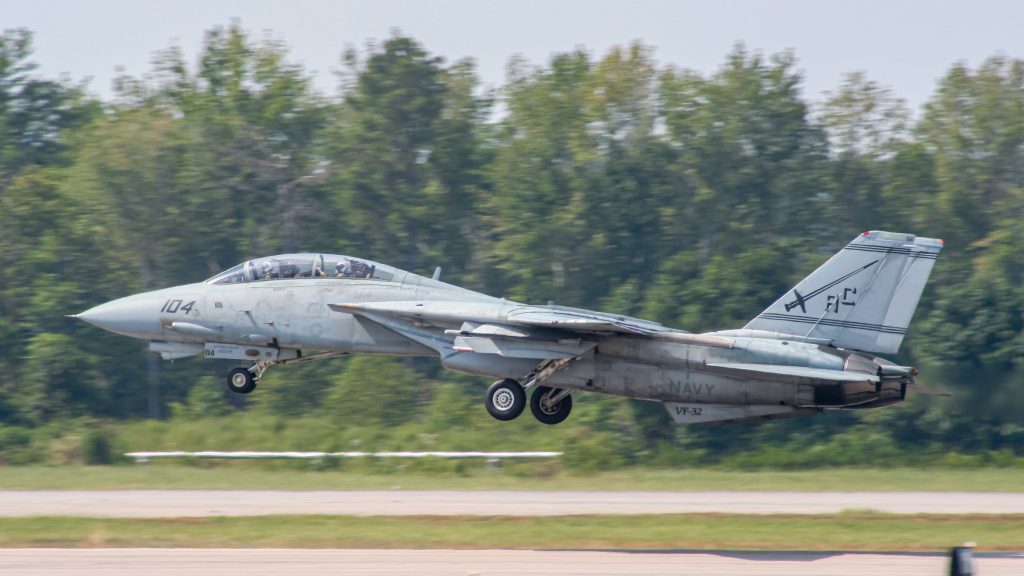
Critics, however, panned the film. The powerful movie critic of the era, Roger Ebert, wrote, “…the good parts are so good, and the bad parts are so relentless.” He also felt there was no chemistry between Tom Cruise and Kelly McGillis. Others called the film, “… second-rate military genre…”, and “…an empty-headed technological marvel.” On the other hand, Producer Don Simpson said at the time, “It’s full-tilt boogie, rock and roll in the sky.” History has long-since proved the critics wrong and Don Simpson oh so right. As mentioned earlier, the F-14 was at its operational peak in the mid-80s, and to aviation enthusiasts and modelers, it was already a rock star, especially after the 1981 “Gulf of Sidra Incident” when a section of F-14s from VF-41 Black Aces shot down a pair of Libyan Su-22 Fitters. To the average non-aviation-minded moviegoer, TOP GUN was their first exposure to the mighty Tomcat. They were enraptured by its sheer size, the swing wings and massive stabilators, not to mention the girth of those Pratt & Whitney TF30 afterburners. Tom Cruise may have been launched to super stardom in the wake of TOP GUN, but it was the sheer weight of the F-14’s presence on-screen that made the film most memorable.
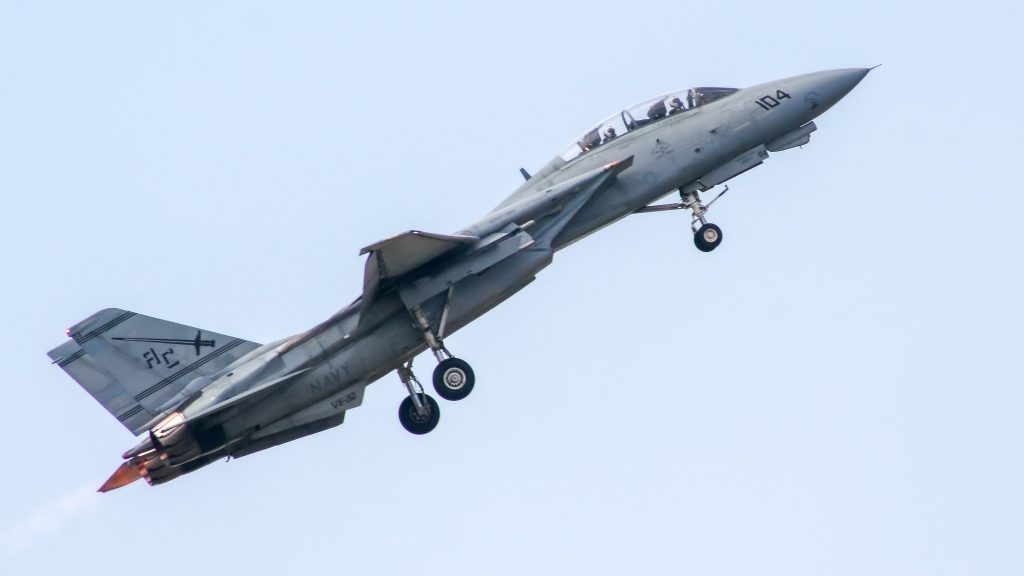
In the years following the film’s release, its continued success can be credited to Paramount’s continued promotion, upgrade, and re-release of the movie. This led to a burgeoning fan base that bought and collected everything connected to the movie, including home movie versions of the film, the soundtrack, model kits, Ray-Ban sunglasses, and the iconic G-1 leather flight jacket. These fans also wanted a sequel. When Cruise signed on to do the film, he told Simpson and Bruckheimer that he wanted to be included in the creative process. As the decades passed and his power in Hollywood grew, Cruise heard the calls for a sequel, and he wanted one as much as the fans. There were conditions, however. He wanted the story to be right, and more importantly, he wanted to put moviegoers in the aircraft with the pilots, and for that to happen, technology had to catch up with his vision. By the late 20-teens, everything aligned, and TOP GUN: Maverick went into production, and when it was finally released in 2022, it was spectacular. It was full-tilt boogie, rock and roll in the sky, captured on IMAX-quality cameras, and it more than paid homage to the original film. The budget was modest. The critics were harsh. But thanks to Tony Scott’s groundbreaking visual imagery, the best-selling soundtrack, and the raw visceral power of the F-14, TOP GUN created legions of fans, inspired countless people to pursue careers in the military and aerospace, and grew into the $2 billion powerhouse it is today. All because Don Simpson had a toothache. All because Heater Heatley took one iconic photo.