
(Image Credit: Bill Mah, Edmonton Journal)
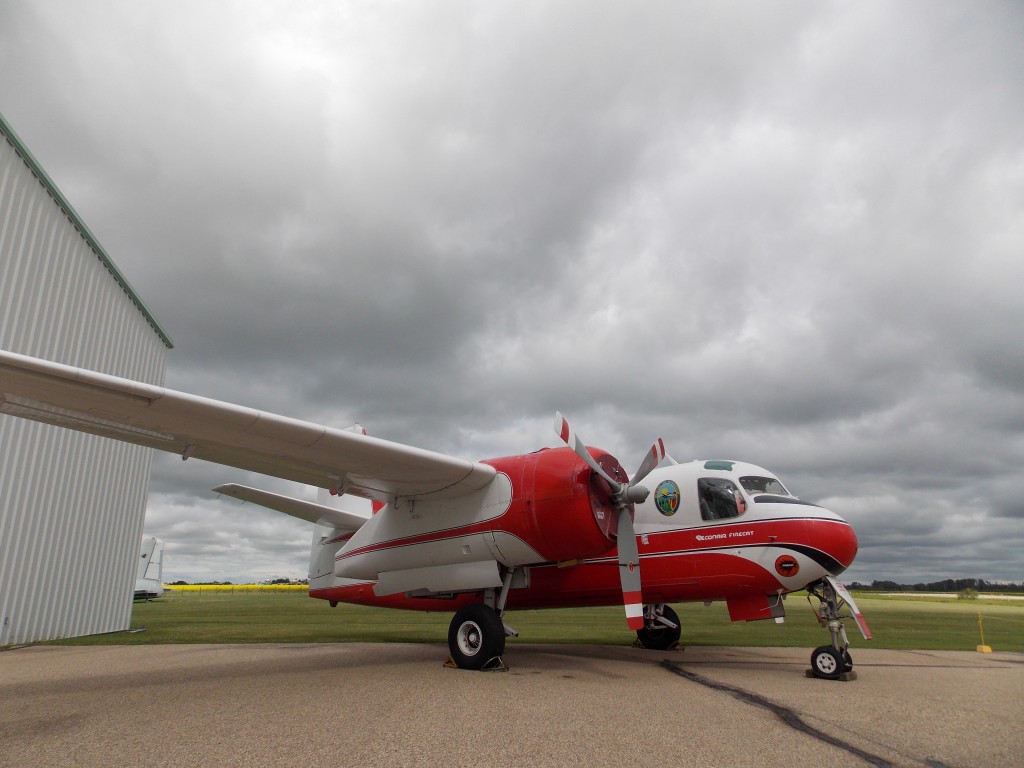
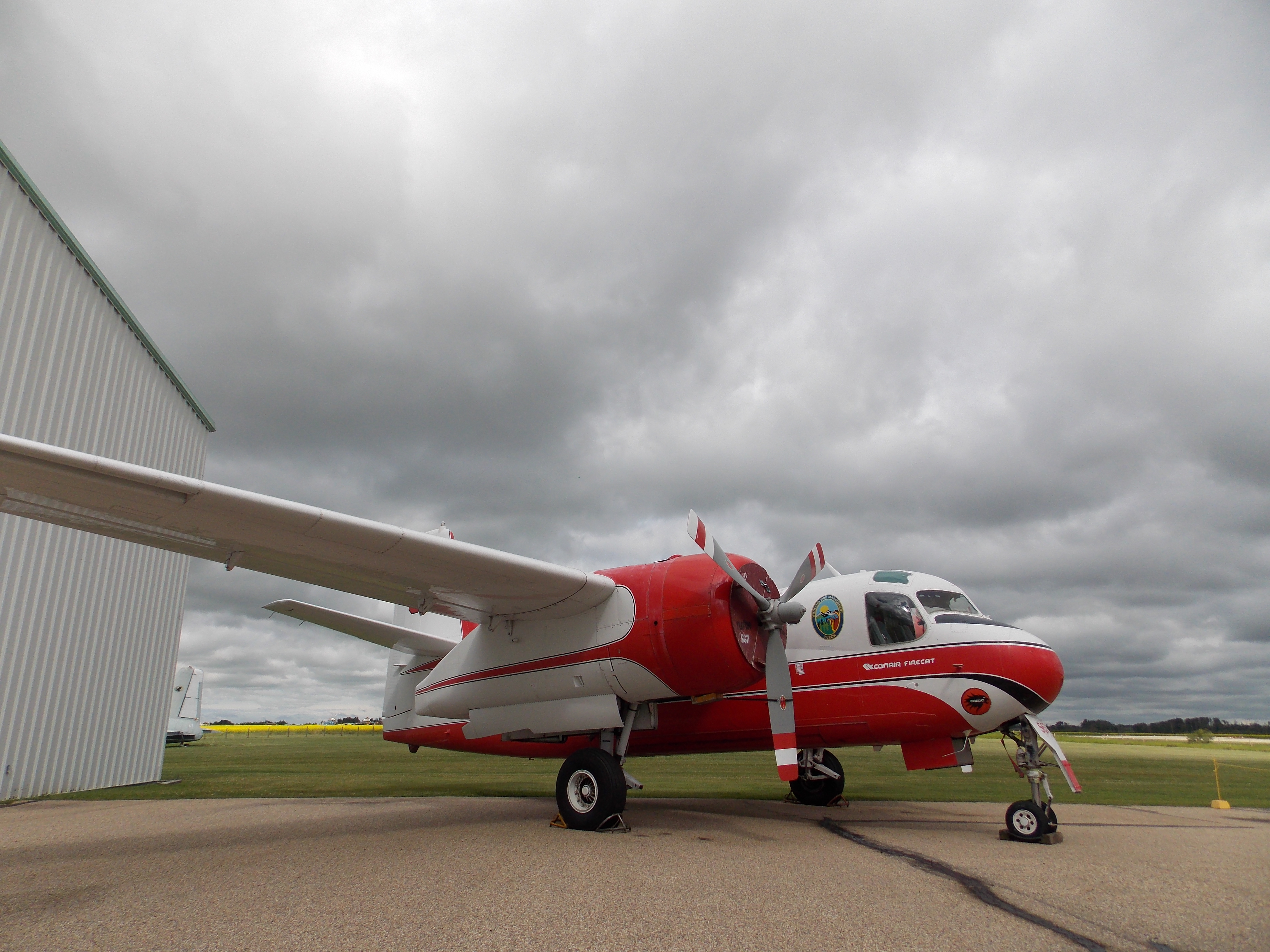
The Trackers were substantially modified for aerial firefighting and were re-designated as Conair Firecats. The modifications included raising the cabin floor by eight inches and fitting a 940 gallon capacity tank for fire retardant in the torpedo bay that was significantly enlarged by the relocation of the cabin floor. All military equipment was removed, and the resultant plane ended up 3,300 pounds lighter than the Tracker on which it was based.
This particular Firecat, registration C-GABC, was the last remaining of its type in active service in the Conair fleet. It had a 29 year career as a fire fighter and was retired last September. It also marks the end of the era of piston-engined aircraft for fire fighting duties at Conair, as they’re replaced by more modern turbine and jet-powered aircraft.