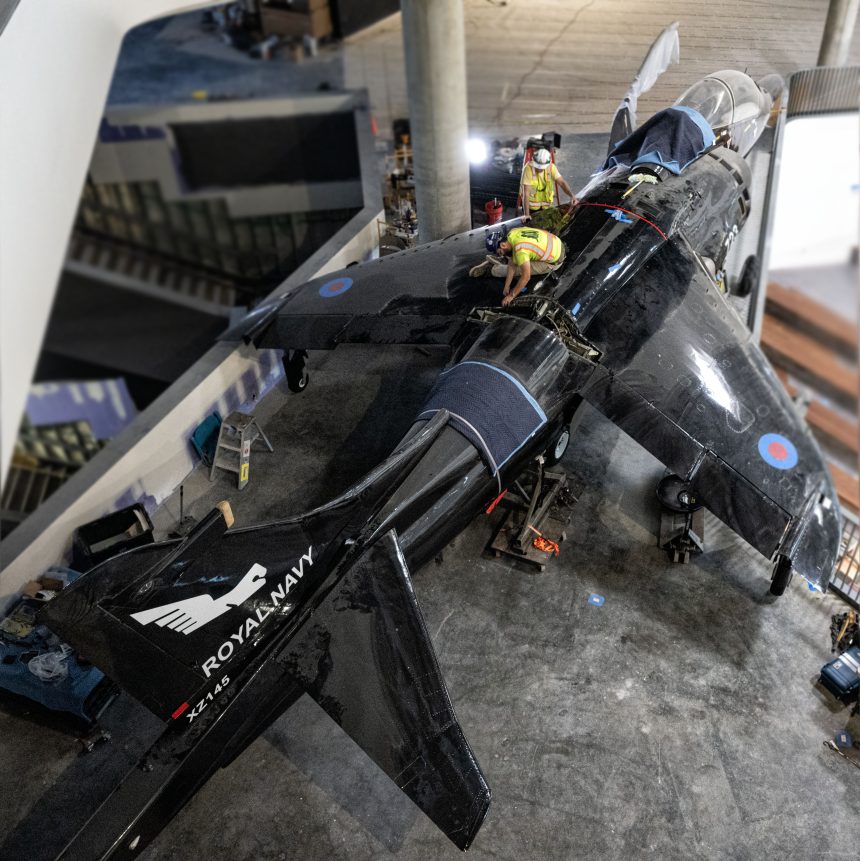

In a major milestone, the California Science Center in Los Angeles has announced that the museum’s Hawker Siddeley Harrier T.4 has just been installed in the Science Center’s new Samuel Oschin Air and Space Center, which already houses the Space Shuttle Endeavour and is set to become the largest aerospace museum in Los Angeles. The collection’s Harrier is also the first aircraft to be installed in what will be the Air and Space Center’s Korean Air Aviation Gallery.
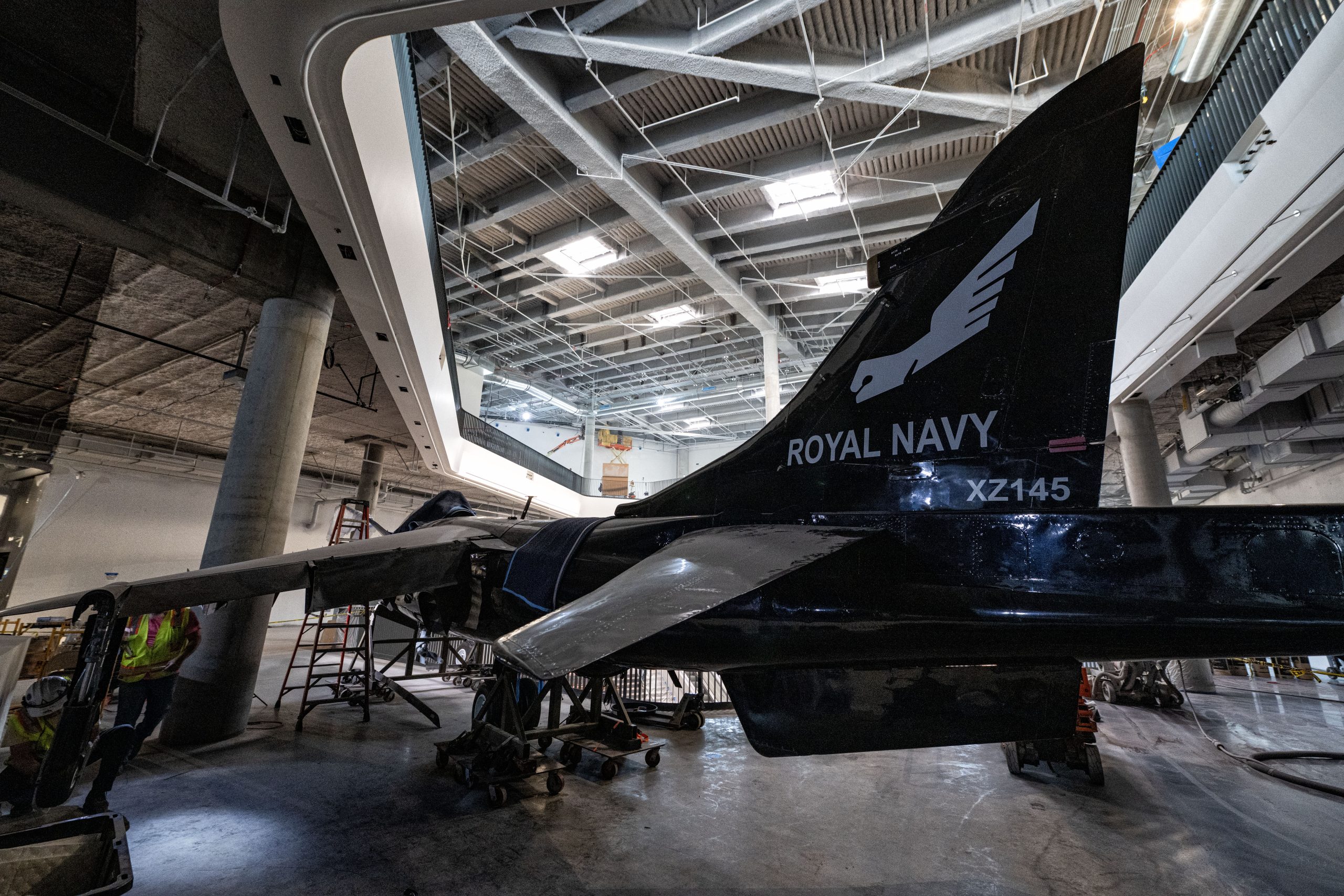
Built as Harrier T.4 construction number 212026 at the Hawker Siddeley factory in Kingston upon Thames, England (on the site where Sopwith Aircraft built aircraft such as the Sopwith Camel in WWI, and where Hawker Aircraft built the Hurricane in WWII), the aircraft was first flown on January 20, 1976, and was officially adopted into service with the Royal Air Force two months later on March 8, 1976 as RAF serial number XZ145. Throughout its operational service life, T.4 XZ145 was used to train new pilots in flying the unique VTOL strike fighter. By 1982, the aircraft was deployed to RAF Germany, the RAF command for all RAF units deployed in West Germany during the Cold War. From 1984 to 1986, XZ145 was assigned to No. 3 Squadron RAF at RAF Gütersloh before returning to England through its transfer to No. 233 Operational Conversion Unit (OCU) at RAF Wittering. By 1995, XZ145 was still at RAF Wittering but was now assigned to No. 20 (Reserve) Squadron.
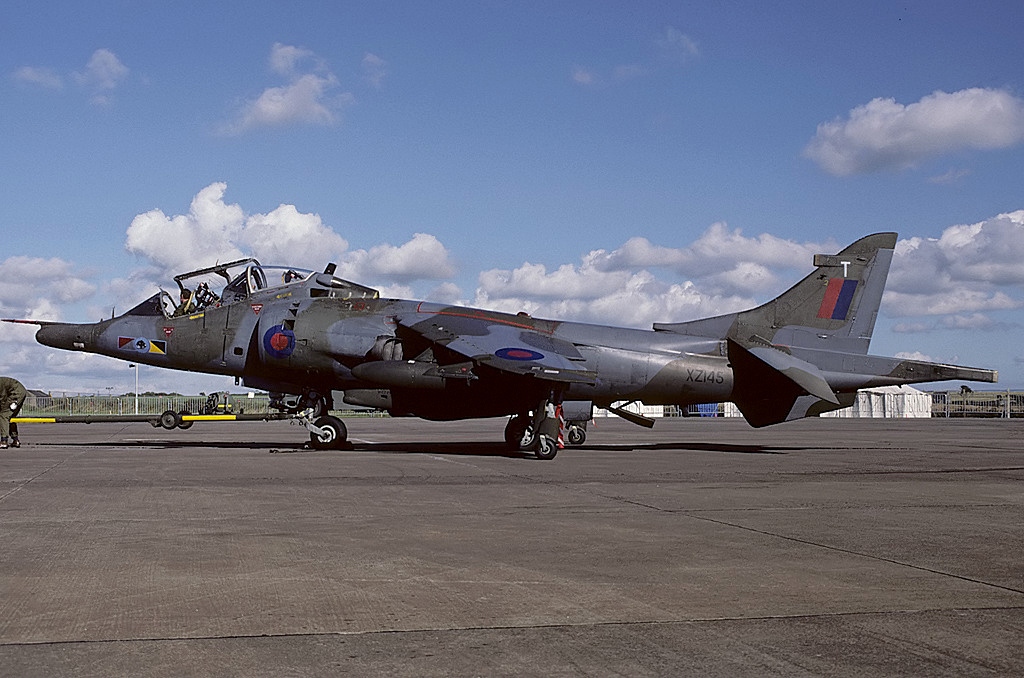
On August 16, 1995, Harrier T.4 XZ145 was placed in storage at RAF Shawbury before being sent to Royal Naval Air Service (RNAS) Culdrose (HMS Seahawk) in Cornwall on May 29, 1997, where it was used as an instructional airframe with the School of Flightdeck Operations. By 2007, the now weathered aircraft was delivered to RNAS Predannack for use at the Royal Navy Fleet Air Arm Fire School. Fortunately, Harrier T.4 XZ145 was spared from the flames when it was purchased by Everett Aero of Sproughton and was refurbished at the former RAF Bentwaters airbase near Ipswich. Everett Aero repainted RAF s/n XZ145 with the serial number of Harrier T.8 s/n ZD993, a former RAF Harrier trainer reassigned to the Royal Navy’s Fleet Air Arm. XZ145 was also painted with the colors and insignias of 899 Naval Air Squadron.
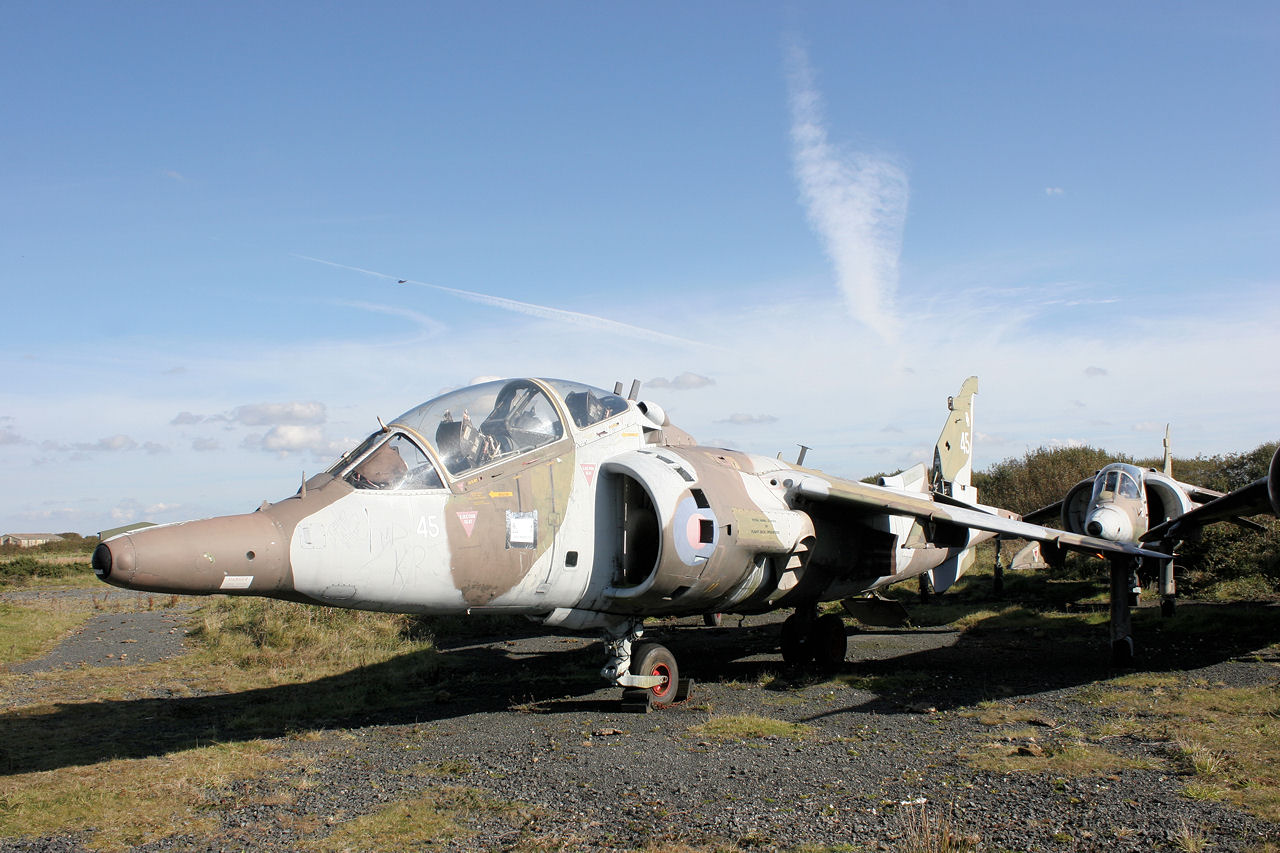
By 2014, Dennis R. Jenkins, a former NASA contractor who worked on getting the Space Shuttles placed on display at the National Air and Space Museum’s Steven F. Udvar-Hazy, Intrepid Museum, Kennedy Space Center, and the California Science Center had become involved in the CSC’s efforts to display the shuttle orbiter Endeavour as a full stack with external fuel tank and Solid Rocket Boosters inside the Samuel Oschin Air and Space Center, was looking for additional aircraft to display inside the new Air and Space Center, and in searching for a VTOL-capable aircraft to place on display, he found Everett Aero’s website offering listings for a number of Harriers stored at Bentwaters. Of these, Harrier T.4 XZ145 was the most affordable for the California Science Center, and Jenkins made a deal with Everett to purchase the Harrier and have it imported to the United States.
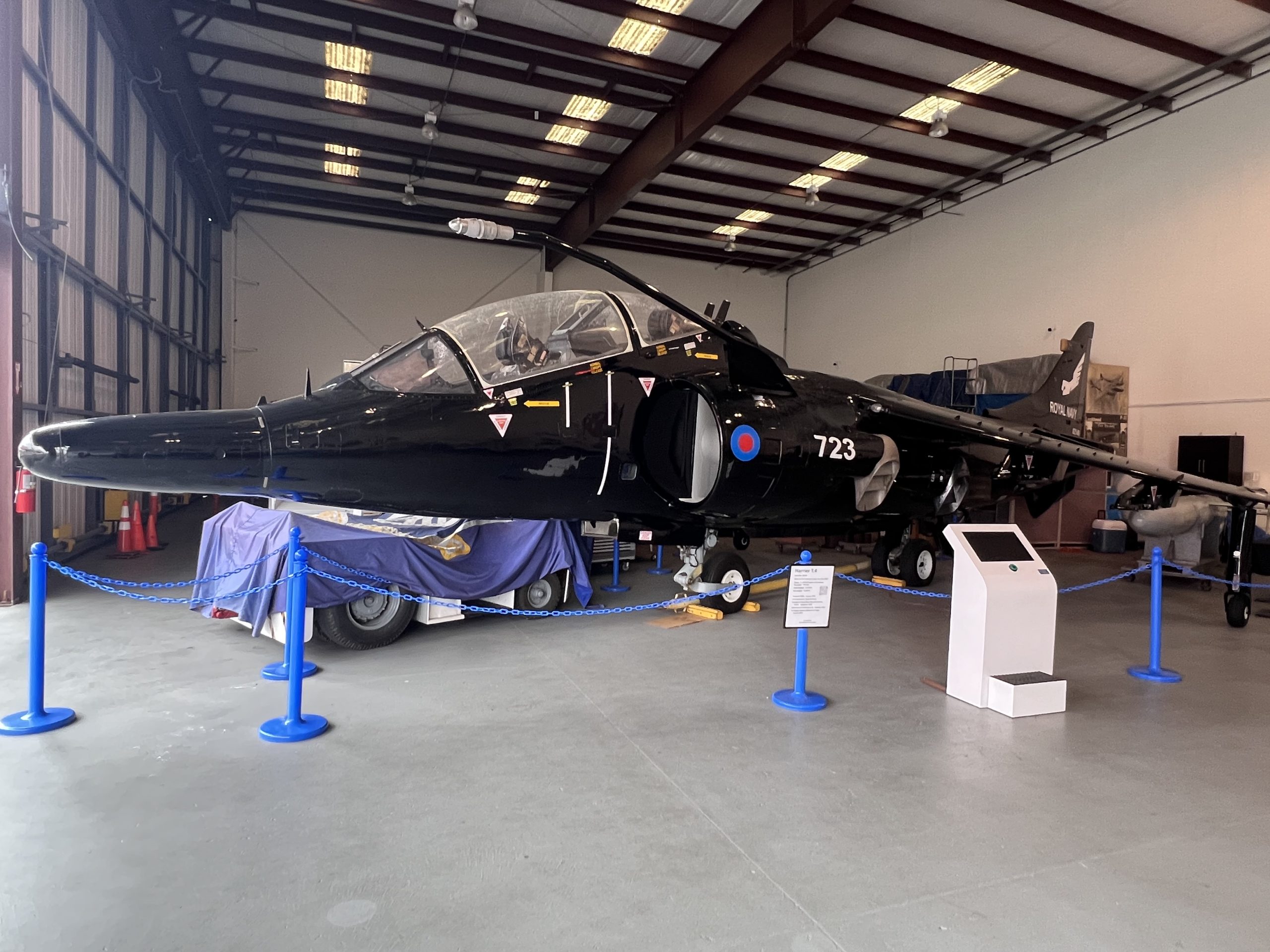
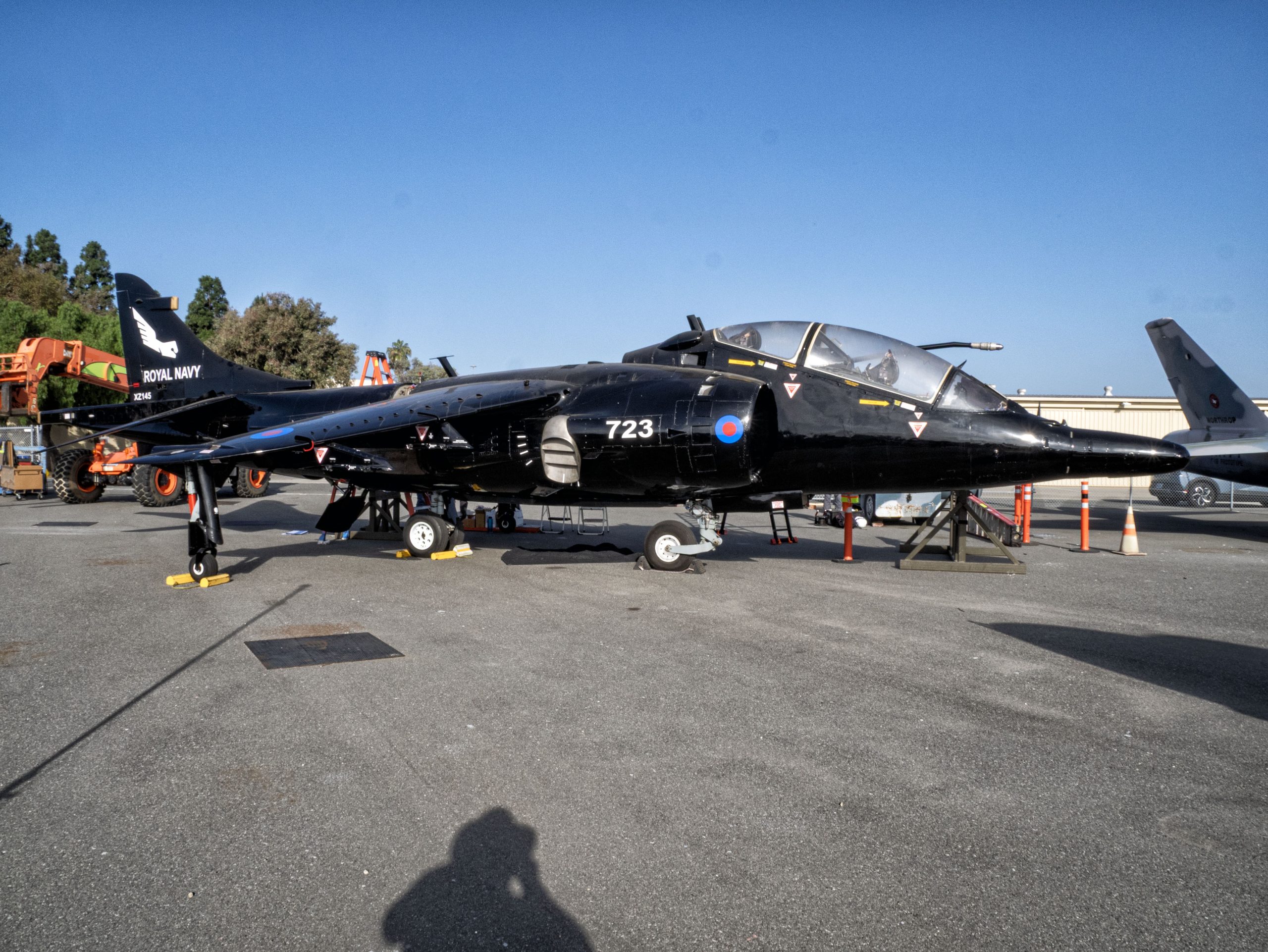
Upon the Harrier’s arrival in California, Jenkins had the original RAF serial number XZ145 painted back on the aircraft but retained the 899 Naval Air Squadron colors. Lacking suitable space at the California Science Center in downtown Los Angeles, Harrier T.4 XZ145 was placed on loan to the Western Museum of Flight at Torrance Airport (Zamperini Field), and on February 21, 2015, the aircraft was officially placed on public display at the WMOF during the museum’s monthly Celebrity Lecture Series presentation. For ten years, Harrier T.4 XZ145 was displayed to the public at the Western Museum of Flight, which also displayed another aircraft on loan from the California Science Center, Northrop T-38A Talon USAF serial number 59-1603, the first production model Talon built, which later flew with NASA as N963NA.
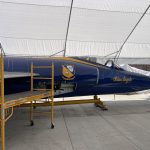
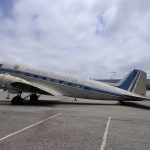
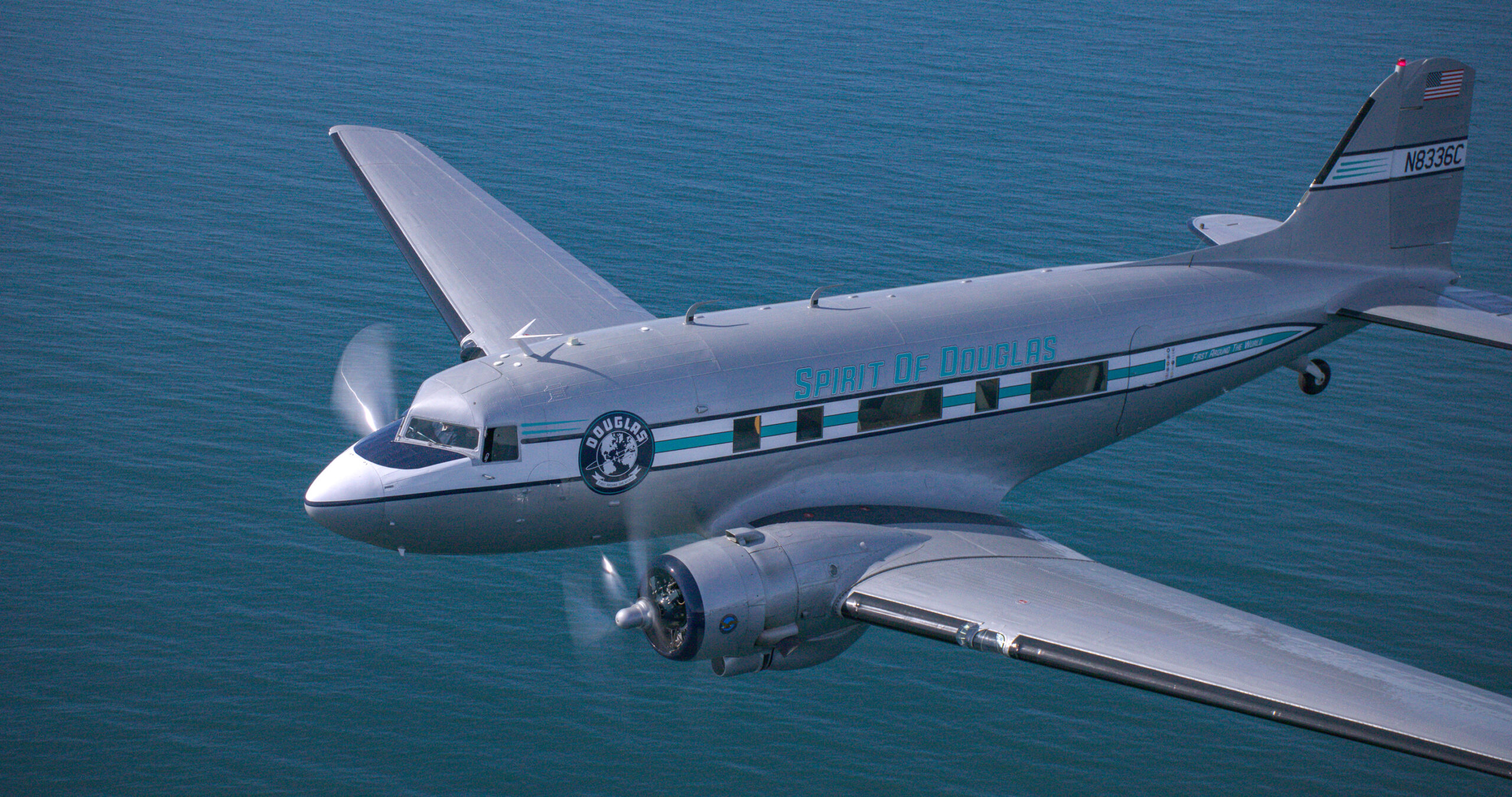
As the Samuel Oschin Air and Space Center has taken shape in recent years, the California Science Center has been preparing to install several aircraft and spacecraft alongside the shuttle Endeavour. With the transfer of T-38A N963NA from Torrance in 2024, along with the arrival of Grumman F11F Tiger Bureau Number 138608 from Florida (covered HERE) and the transfer of Douglas DC-3 N760 from the Flight Path Museum and Learning Center at Los Angeles International Airport (covered HERE), it was now Harrier T.4 XZ145’s turn to be brought to Exposition Park. The Harrier was towed from its hangar at the Western Museum of Flight to the southern end of the airport, where the WMOF displays its Northrop YF-17 Cobra and Northrop YF-23 prototypes. Then, a team of contractors carefully disassembled the Harrier’s wings and tail stabilizers and loaded the aircraft onto truck trailers to be driven 15 miles north to the California Science Center at Exposition Park, just across the street from the University of Southern California (USC).
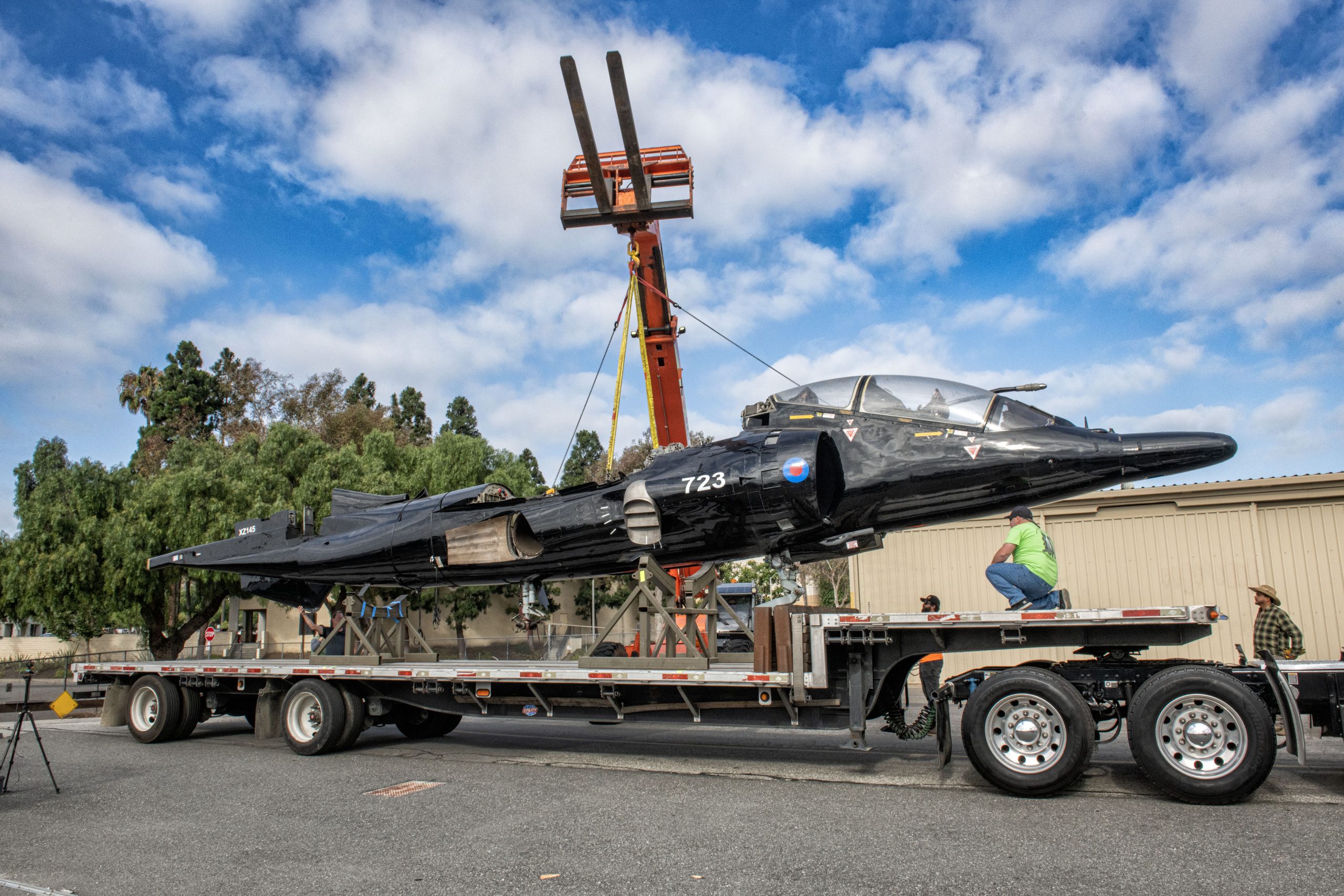
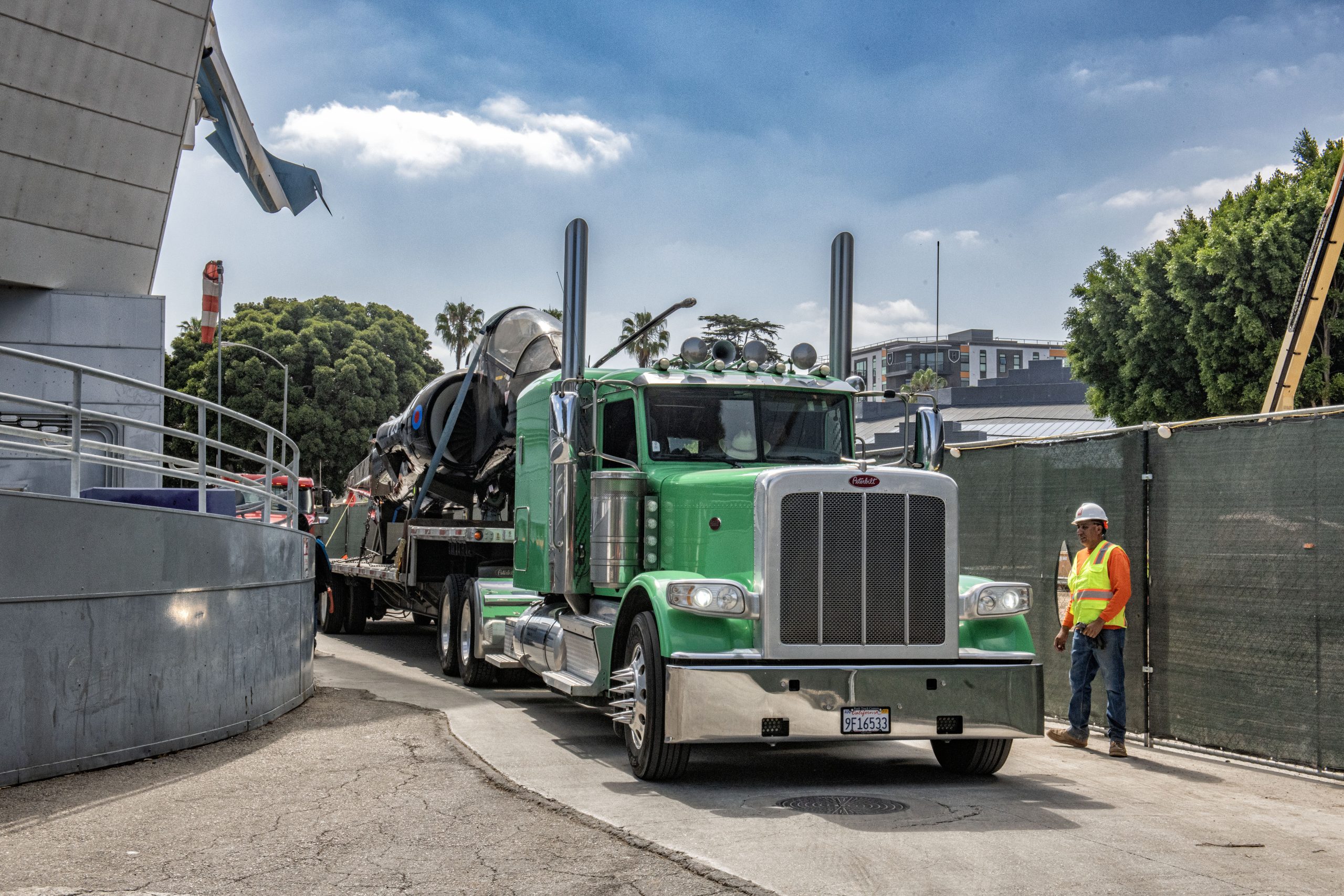
Once the Harrier was in Exposition Park, work began on lifting the disassembled fighter-trainer off the ground and hoisting it through an opening in the Air and Space Center. With that phase complete, the contractors set to work reassembling the Harrier, then rigging the aircraft to be suspended from the building’s ceiling, which is how the museum intends to display the Harrier when the Samuel Oschin Air and Space Center will be officially open to the public.
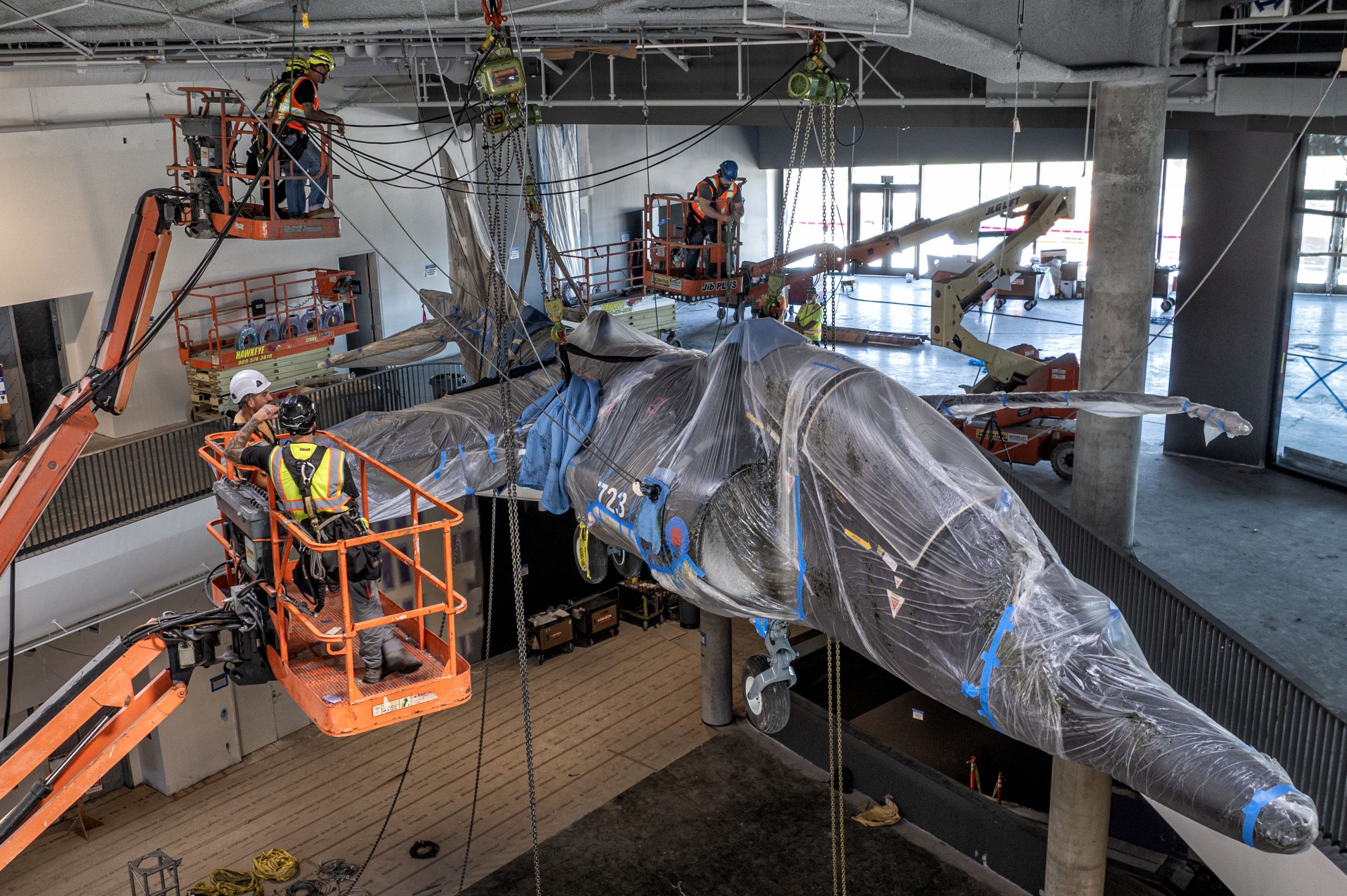
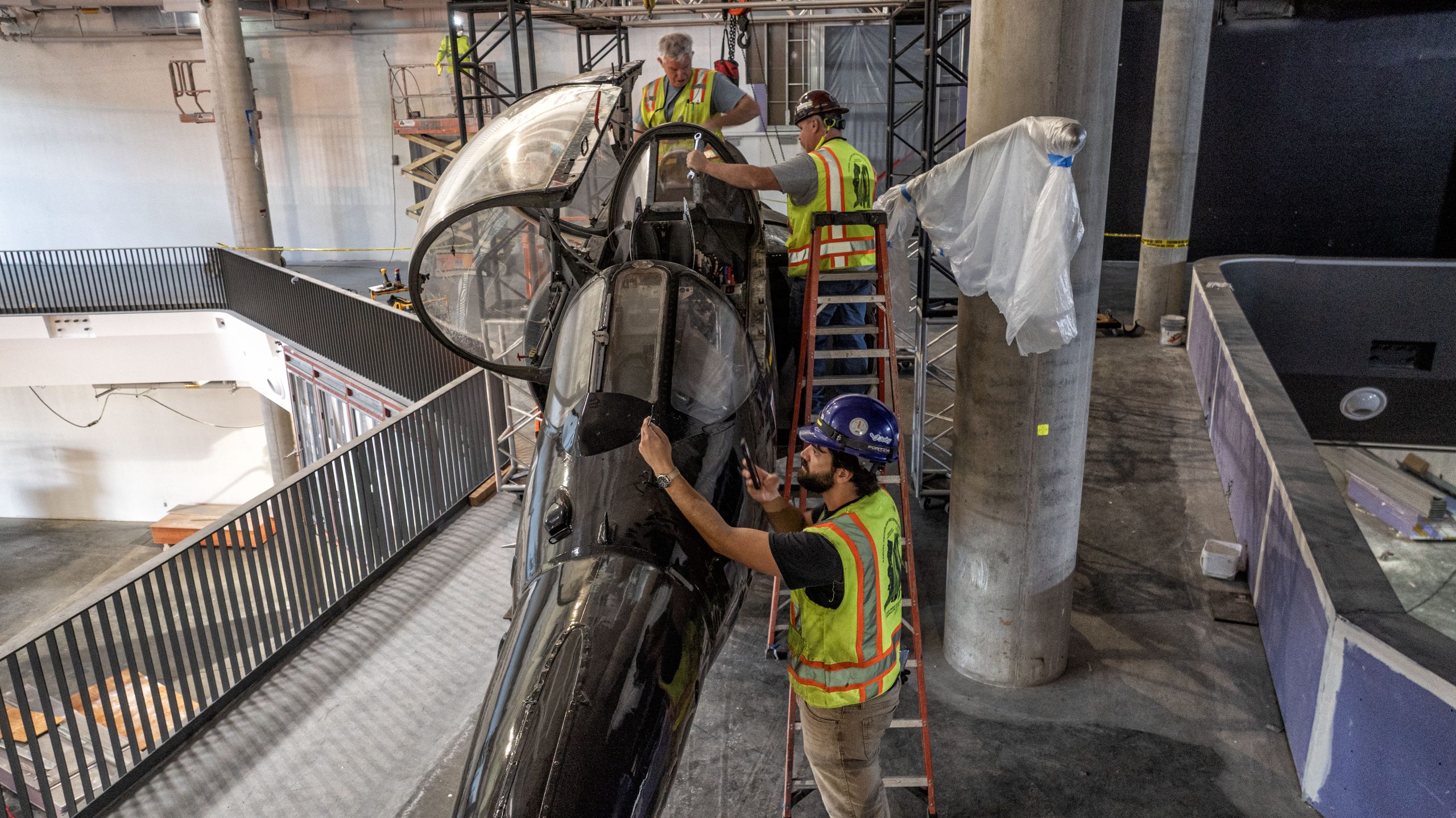
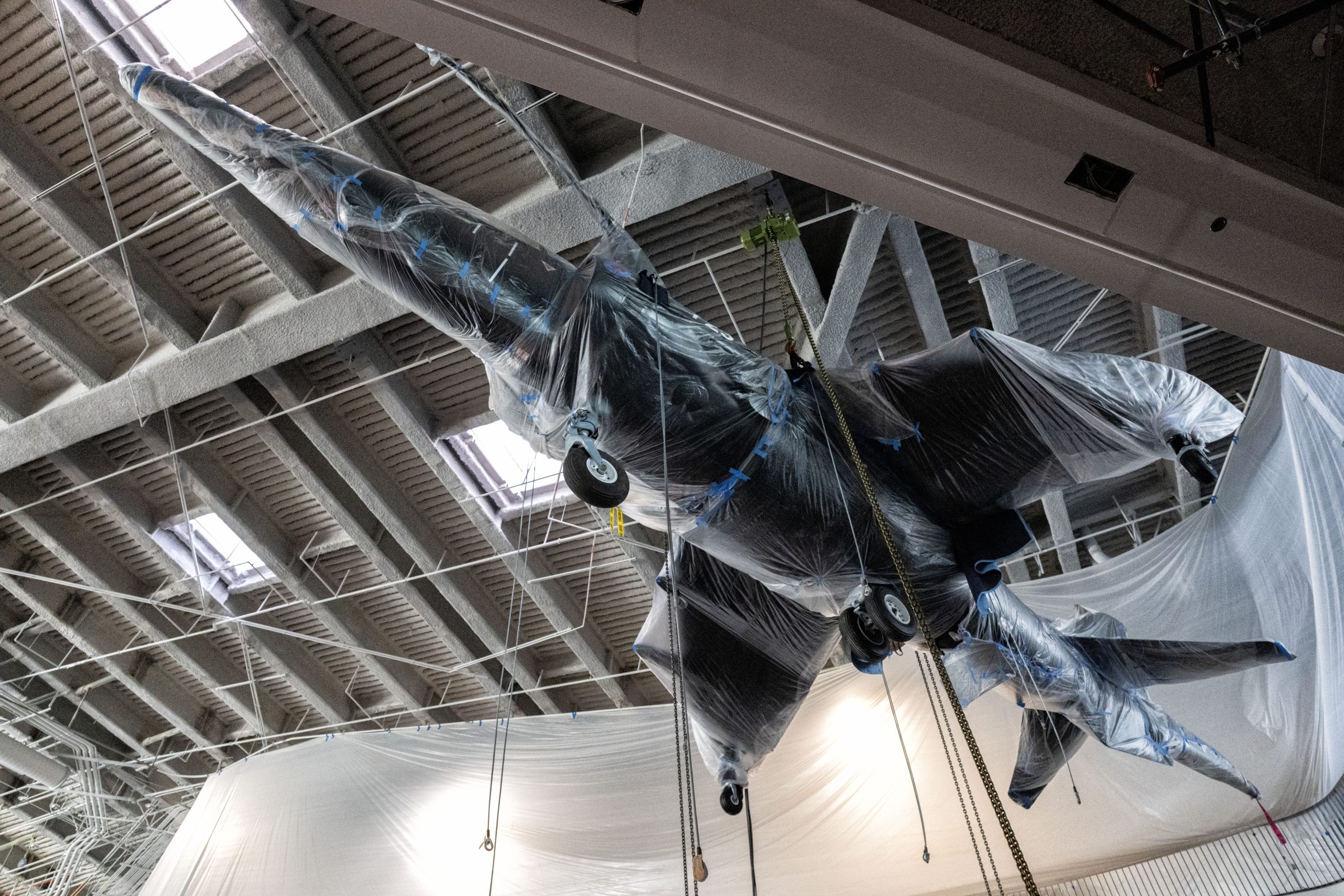
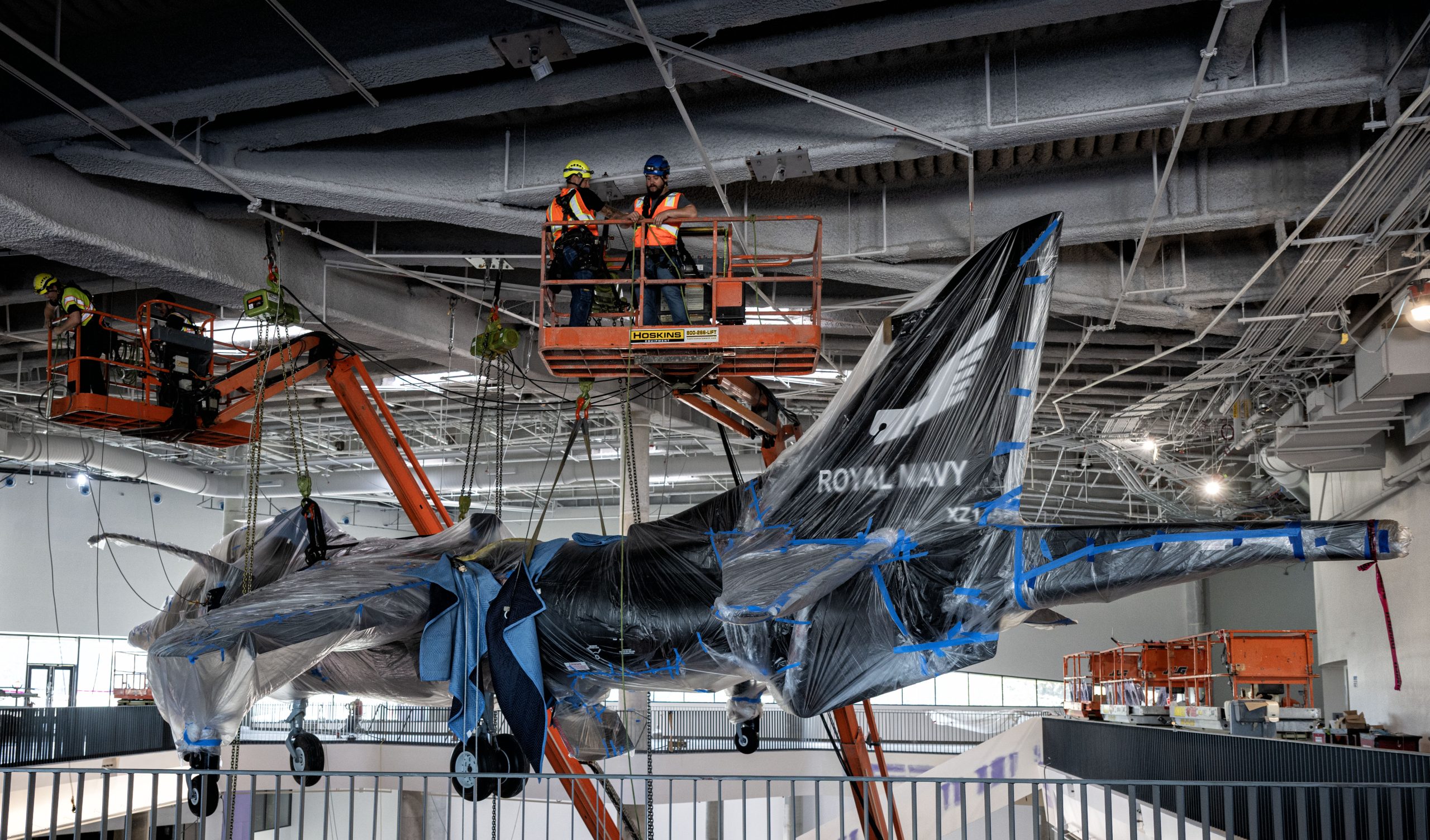
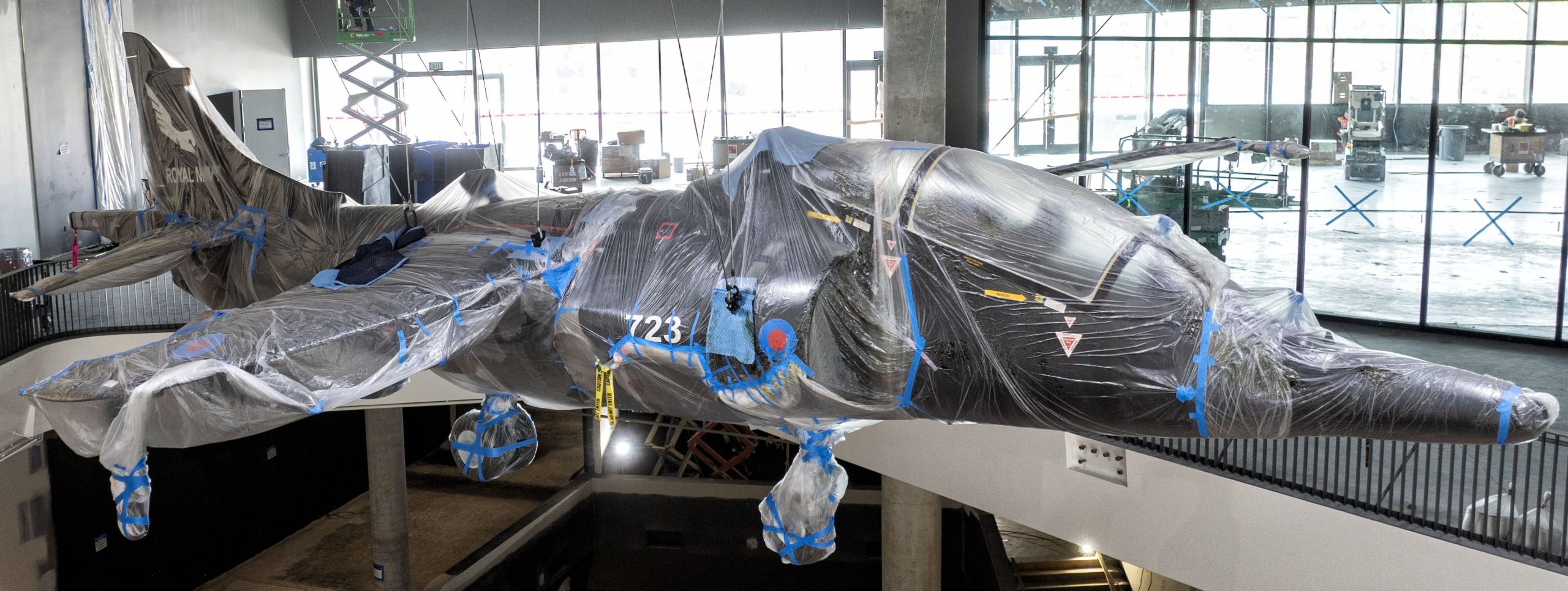
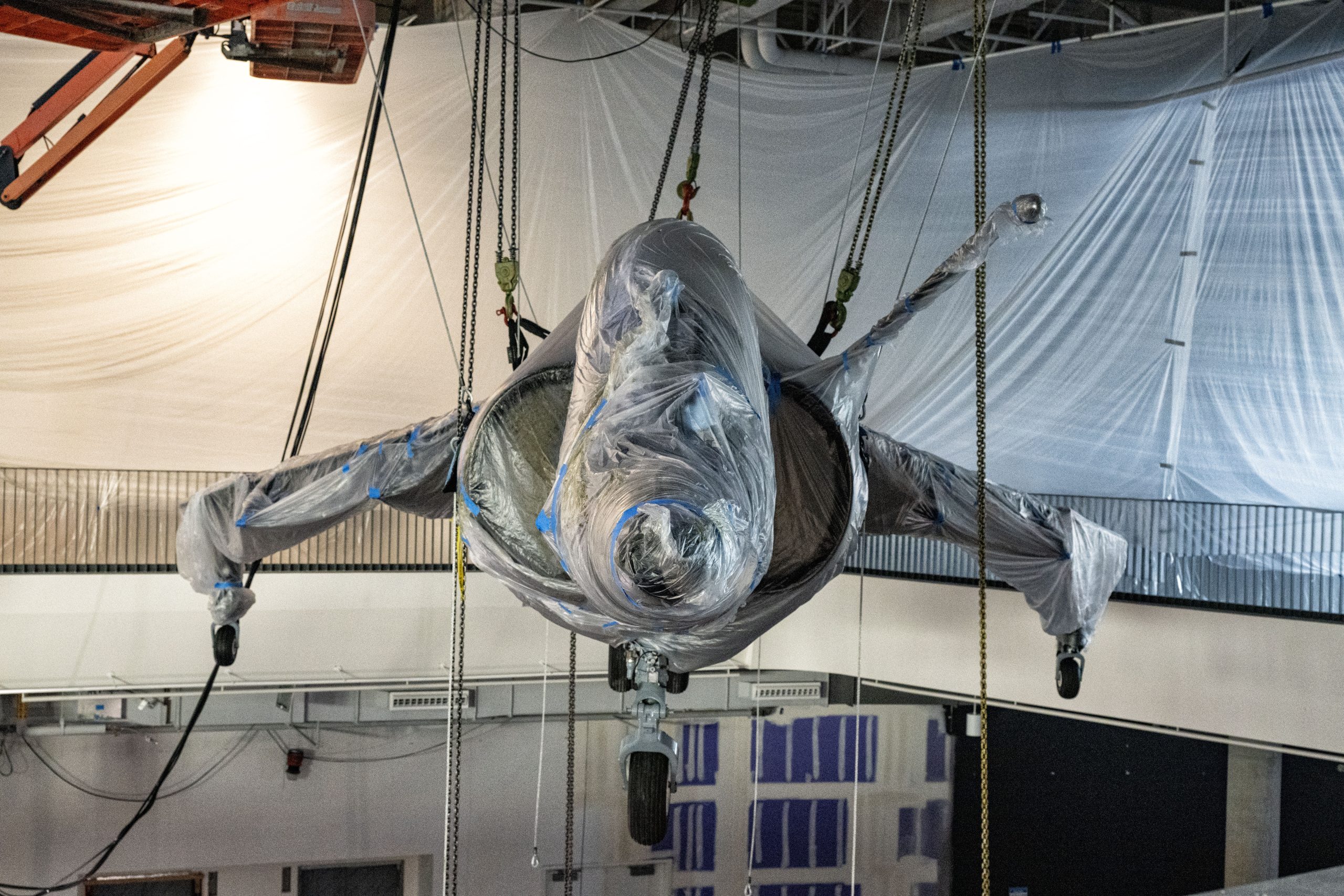
Currently, the California Science Center’s Samuel Oschin Air and Space Center is still under construction, but when completed, the museum will have three galleries in the new building that will be linked to the existing Science Center building. The one in which the Harrier is to be displayed will be the Korean Air Aviation Gallery, which will display around 25 aircraft, including the Harrier, a 1902 Wright Glider replica, a Douglas DC-3, a Grumman F11F Tiger, and others. Next will be the Kent Kresa Space Gallery, which will display items relating to spaceflight, as well as capsules from missions such as Mercury Redstone 2, in which the chimpanzee Ham made a famous suborbital flight on January 31, 1961, Gemini 11, flown by astronauts Charles “Pete” Conrad and Richard “Dick” Gordon in September 1966, the Apollo-Soyuz Command Module, and a SpaceX Dragon capsule. Lastly, the Samuel Oschin Shuttle Gallery will display the shuttle orbiter Endeavour, the last Space Shuttle ever built, along with a fuel tank and solid rocket booster as the only Space Shuttle to be displayed vertically in the “full stack” configuration. Given the scope of the new museum, it will be a most fitting place for Harrier T.4 XZ145 to be assigned on its final mission: to educate and inspire new generations of pilots, aerospace engineers, and enthusiasts alike. For more information, visit the California Science Center’s website HERE.