






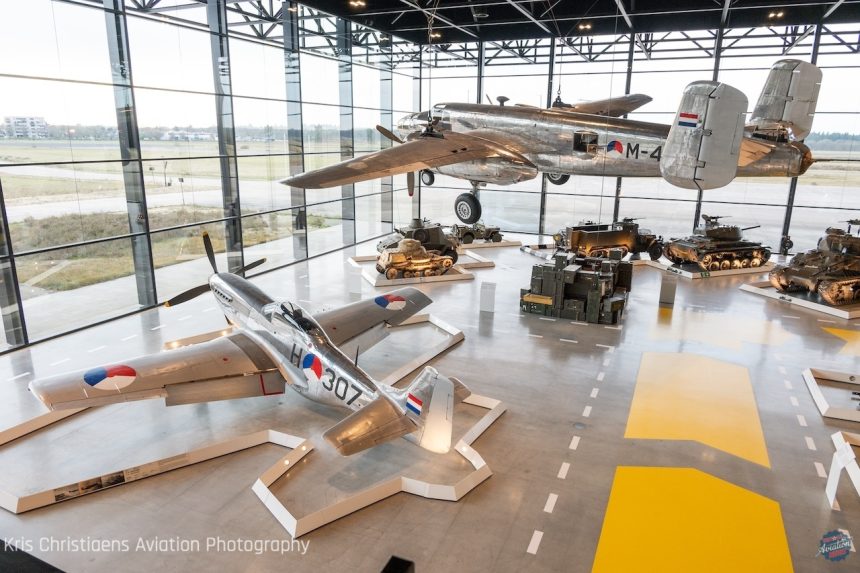

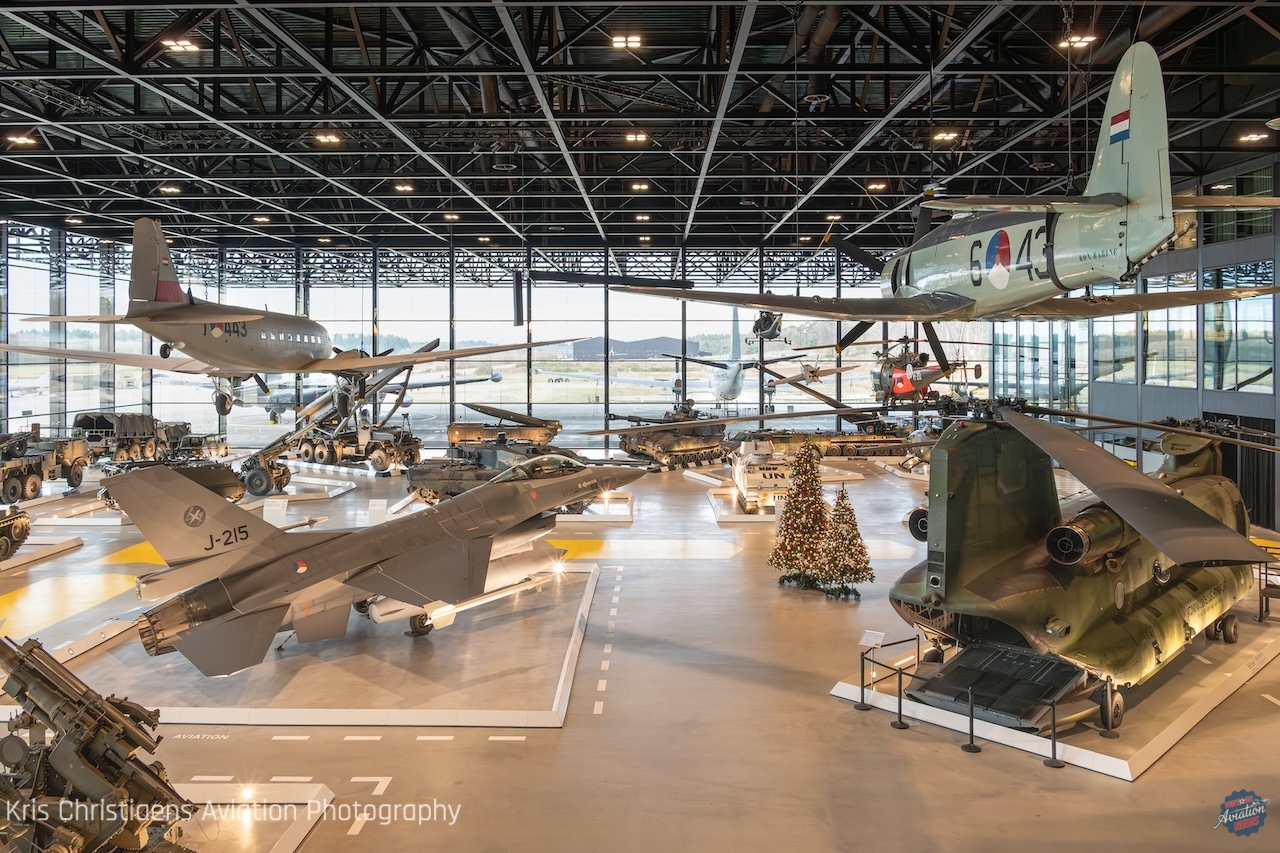
Located on the grounds of the former Soesterberg Air Base, the Nationaal Militair Museum (NMM) has become the Netherlands’ premier destination for exploring the country’s military history and a major attraction for aviation enthusiasts. The museum combines expansive hangar-scale exhibition spaces with more intimate galleries that present the historical context behind the machines on display. The result is an institution that offers both the visual impact of large military hardware and a deeper understanding of how these technologies shaped Dutch and international defence.
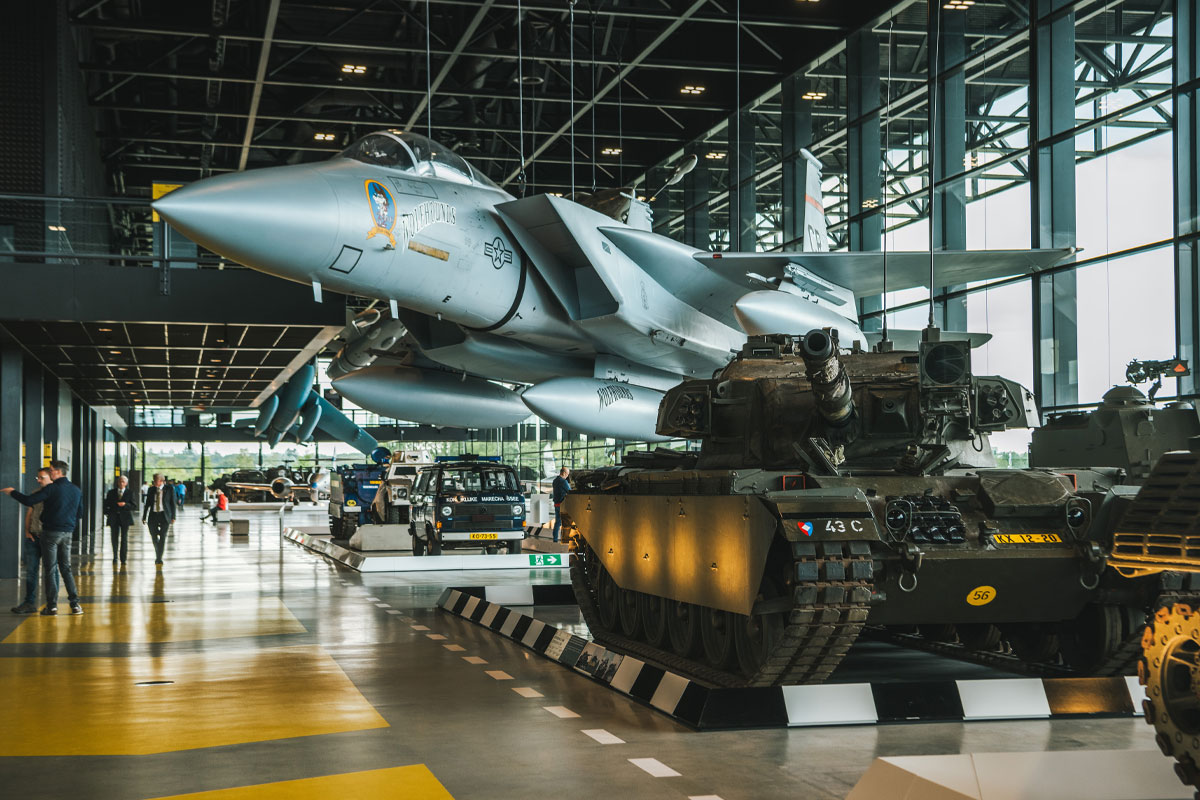
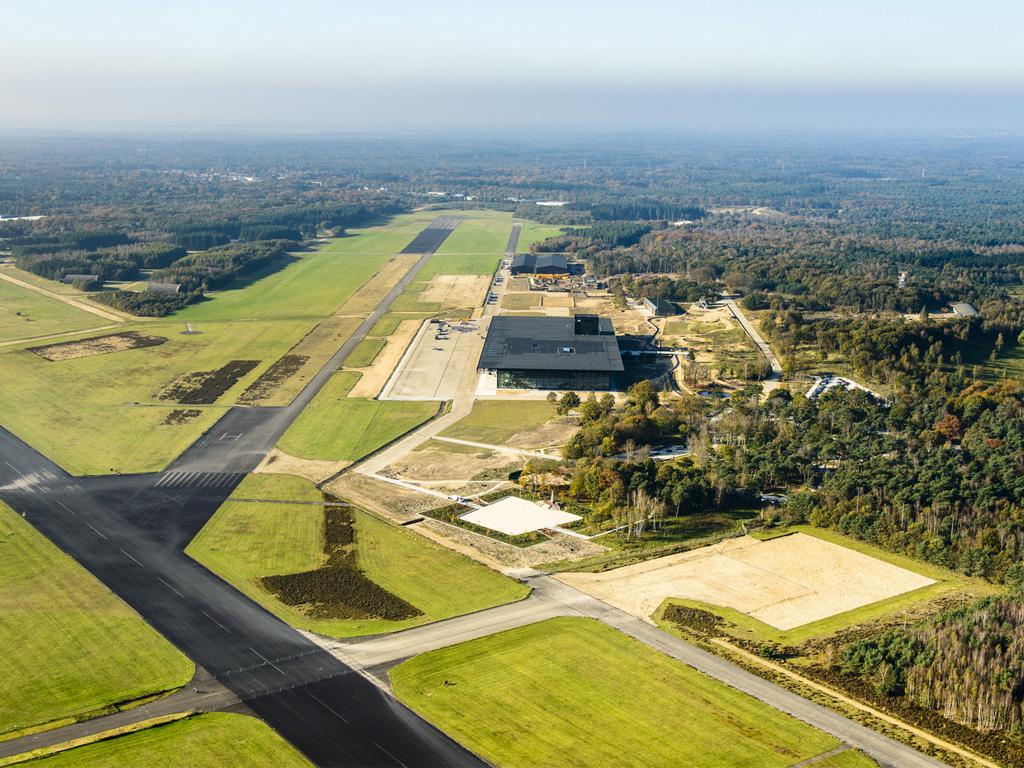
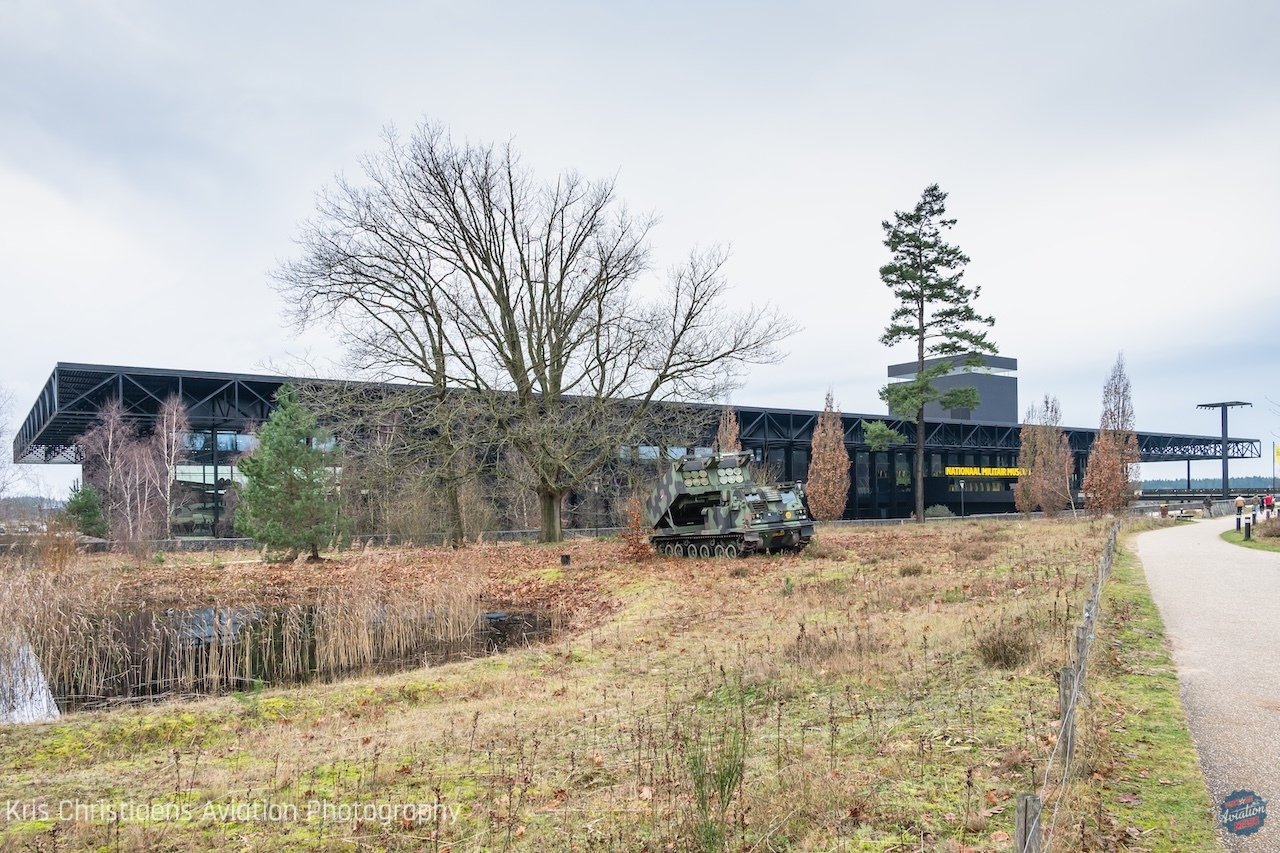
The NMM occupies a 45-hectare site that includes the main exhibition building and extensive outdoor areas. Architecturally, the museum is striking. Its vast steel roof, measuring approximately 110 by 250 metres, creates a column-free interior capable of housing aircraft, helicopters, tanks, and armoured vehicles within a single open space filled with natural light. The building was designed by the Dutch architectural firm Felix Claus Dick van Wageningen Architecten, whose concept centred on a continuous hangar-like interior that reflects the museum’s aviation heritage. The museum officially opened on 11 December 2014, with King Willem-Alexander presiding over the ceremony. Its creation marked the merger of two longstanding institutions: the Legermuseum (Army Museum) and the Militaire Luchtvaart Museum (Military Aviation Museum). Bringing these collections together at Soesterberg created a unified national museum dedicated to the Dutch armed forces.
Public interest was immediate. More than 500,000 visitors passed through the doors during the museum’s first year, briefly making it one of the most visited museums in the Netherlands. Attendance has since stabilized at a consistently strong level. In 2019, the museum welcomed approximately 267,000 visitors, and by late 2023, it celebrated its 300,000th visitor of the year. Annual attendance now regularly approaches or exceeds 300,000, confirming the NMM’s status as a leading cultural institution.
Fighter Jets
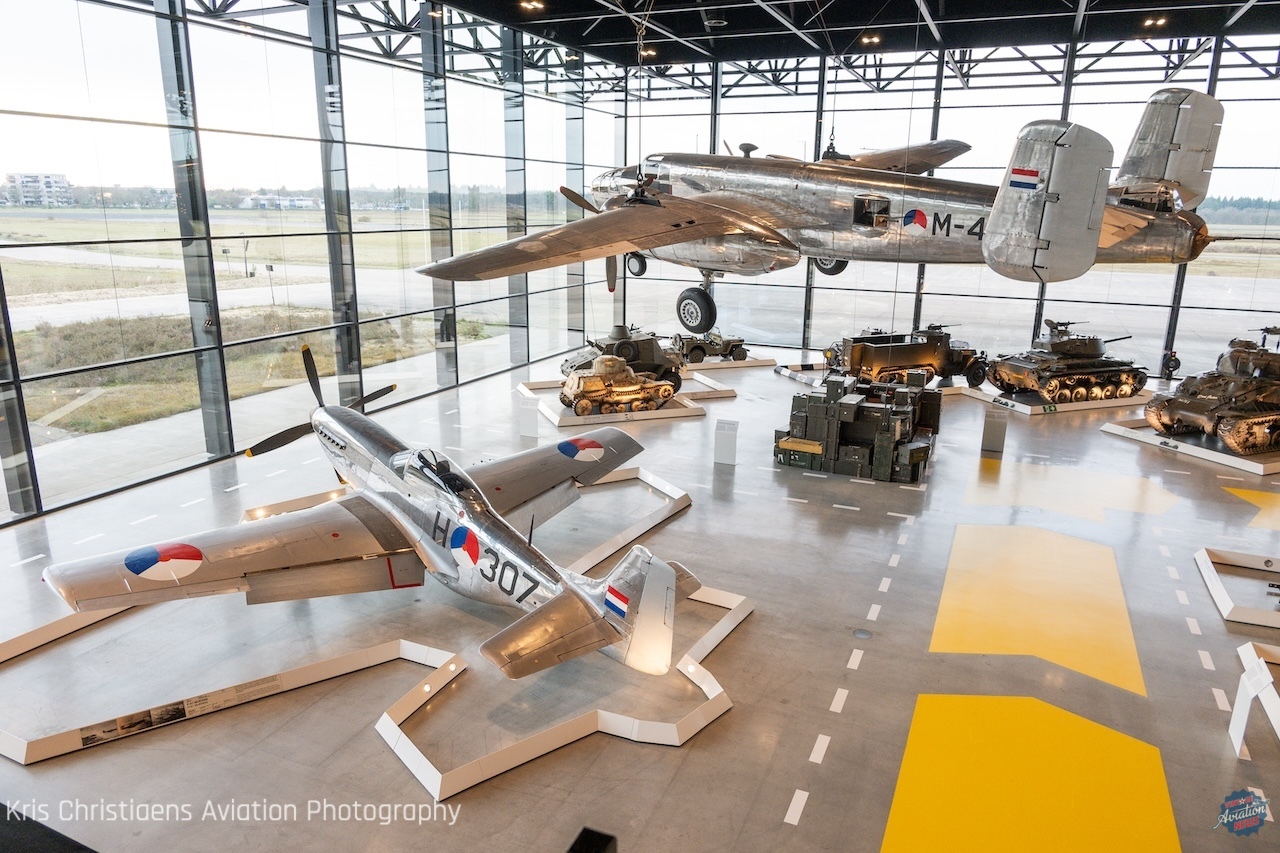
For aviation enthusiasts, the museum’s fighter aircraft collection is one of its major highlights. Displayed across the main hall and surrounding galleries, these aircraft trace the evolution of jet combat from the early post-war years through the Cold War and into the modern multirole era. Many of the aircraft represent types operated by the Royal Netherlands Air Force (RNLAF) or stationed in the Netherlands as part of NATO operations.
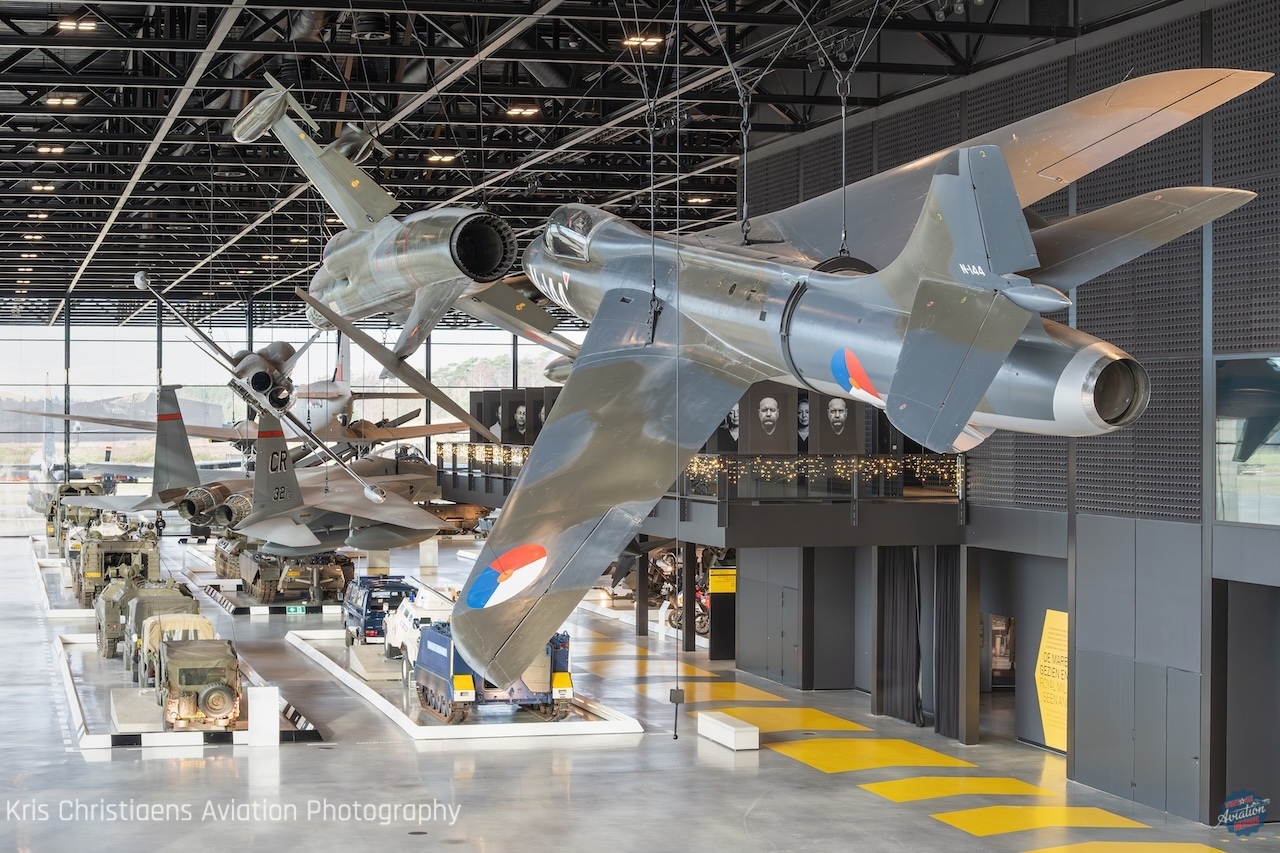
The story begins with the Gloster Meteor, the first operational jet fighter used by the RNLAF. The aircraft represents the transition from piston-engine fighters to jet propulsion in the years following the Second World War. The Republic F-84F Thunderstreak and the reconnaissance variant RF-84F represent the next phase of Cold War air power. Operated extensively by the Netherlands within the NATO alliance, these aircraft were central to low-level strike missions and the tactical nuclear doctrine that shaped NATO strategy during the 1950s and early 1960s.
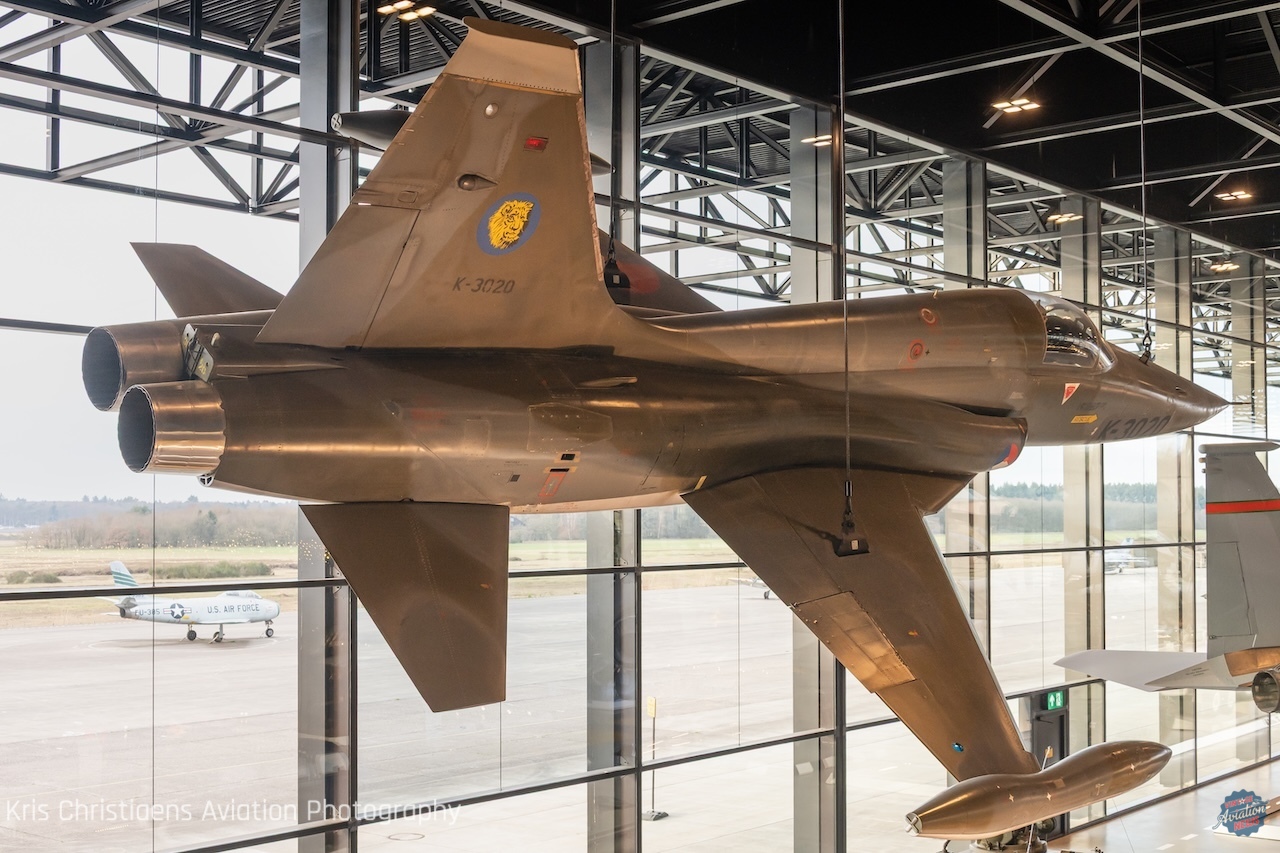
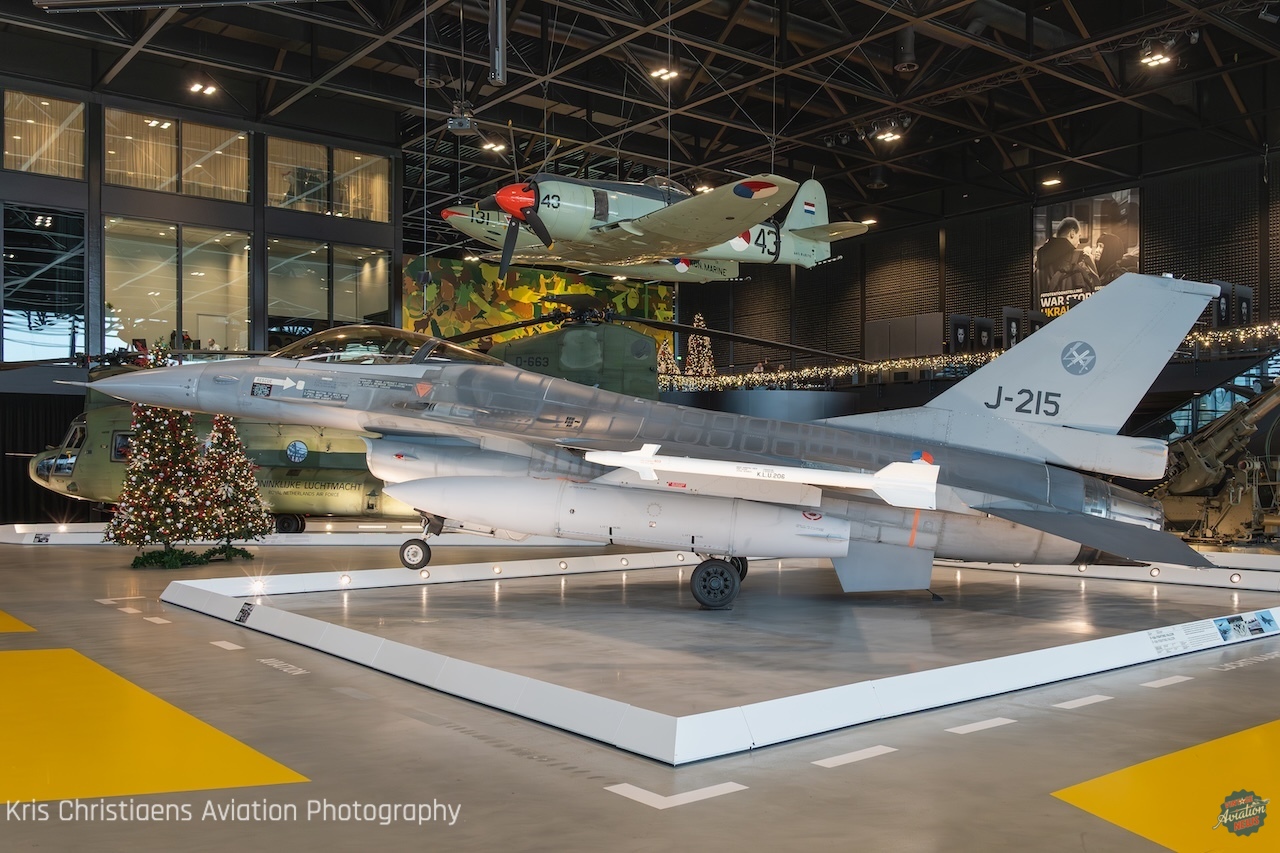
From the later Cold War period comes the Northrop NF-5, a lightweight supersonic fighter that served with the RNLAF from the 1970s. Many Dutch NF-5s were built under licence by Fokker, making the aircraft an important symbol of the Netherlands’ domestic aerospace industry. The General Dynamics F-16 Fighting Falcon represents the modern era of Dutch fighter aviation. For decades the F-16 formed the backbone of the RNLAF fighter fleet, demonstrating how agility, advanced avionics, and multirole capability reshaped air combat operations from the late Cold War into the 21st century. Completing the fighter display is a McDonnell Douglas F-15 Eagle in U.S. Air Force markings. Its presence reflects Soesterberg’s long history as a NATO base that hosted American fighter units, highlighting the close military cooperation between the Netherlands and its allies.
Helicopters
In addition to fixed-wing aircraft, the NMM presents a comprehensive overview of rotary-wing aviation within the Dutch armed forces. One of the earliest helicopters represented is the Sud-Aviation Alouette II, among the first turbine-powered helicopters to serve with Dutch forces. Operated by both the Royal Netherlands Air Force and Army Aviation, the type played an important role in observation, training, and medical evacuation missions.
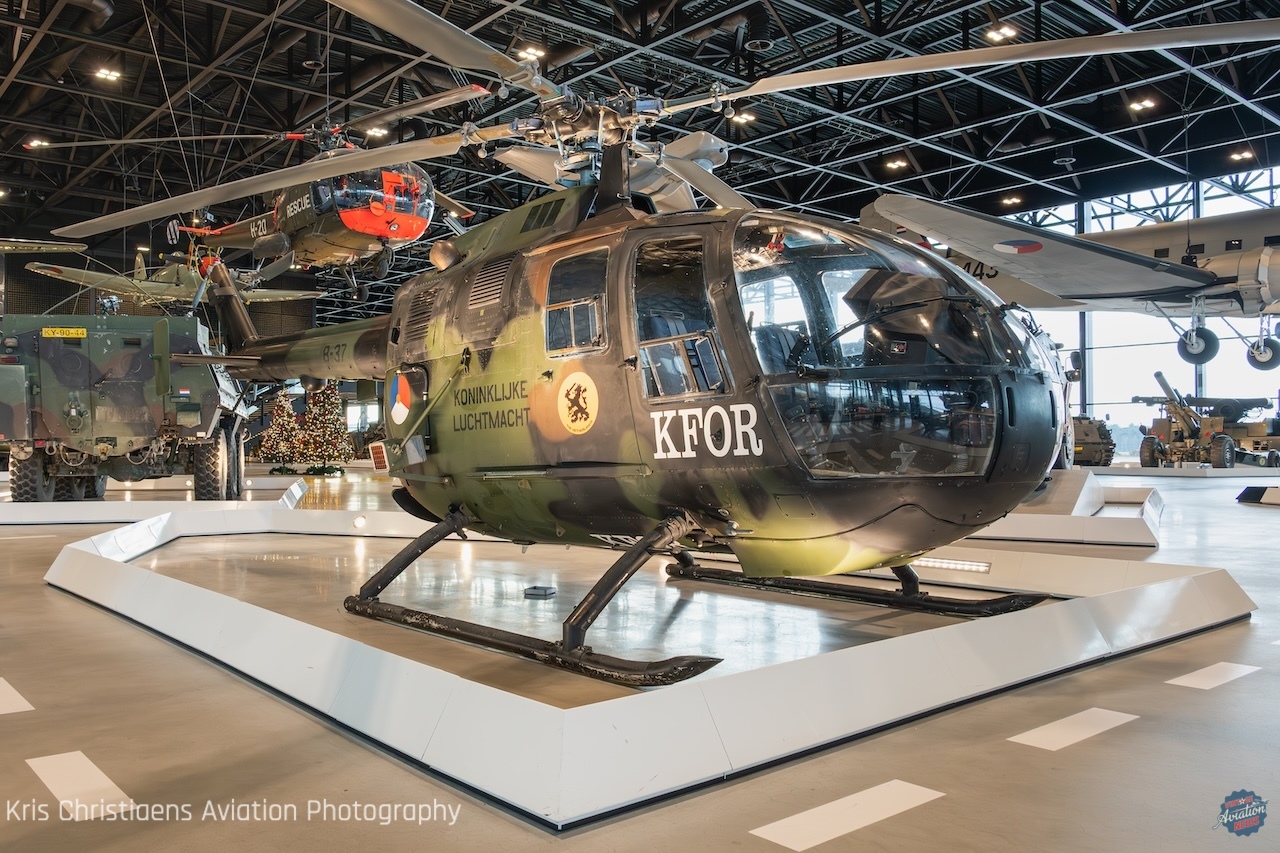
The Alouette III expanded upon these capabilities and became one of the most widely used helicopters in Dutch military service. For decades it served in a variety of roles and remains one of the most recognisable rotorcraft in the country’s aviation history. The Cold War era is represented by the MBB Bo 105, a highly manoeuvrable light helicopter used for reconnaissance and anti-tank missions within NATO’s Central European defence structure.
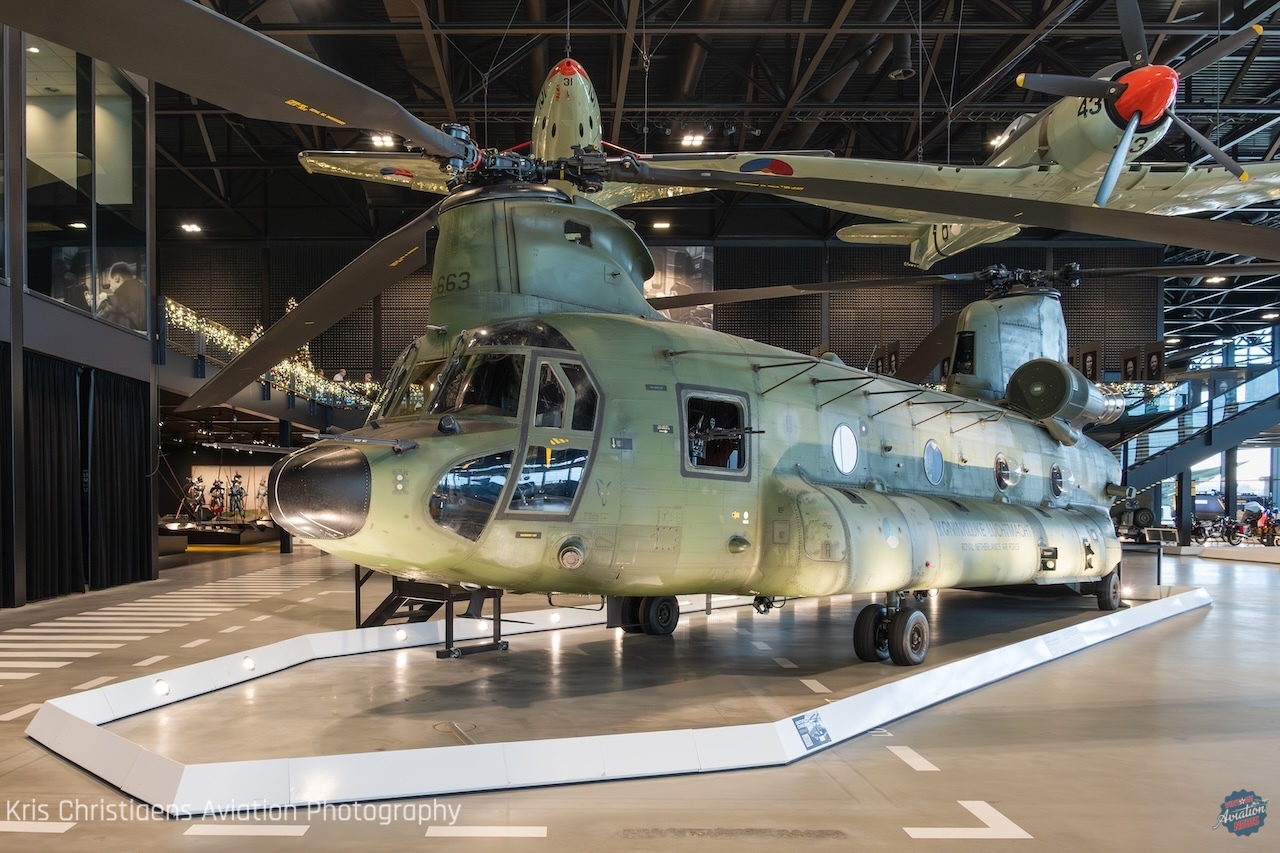
More modern rotary-wing capability is illustrated by the Boeing AH-64 Apache attack helicopter, currently the primary strike helicopter of the Royal Netherlands Air Force. Nearby stands the Boeing CH-47 Chinook, the RNLAF’s heavy-lift helicopter. Its distinctive tandem-rotor configuration and large size make it one of the most visually striking aircraft in the museum and highlight the importance of air mobility and logistics in modern military operations.
Naval Aviation
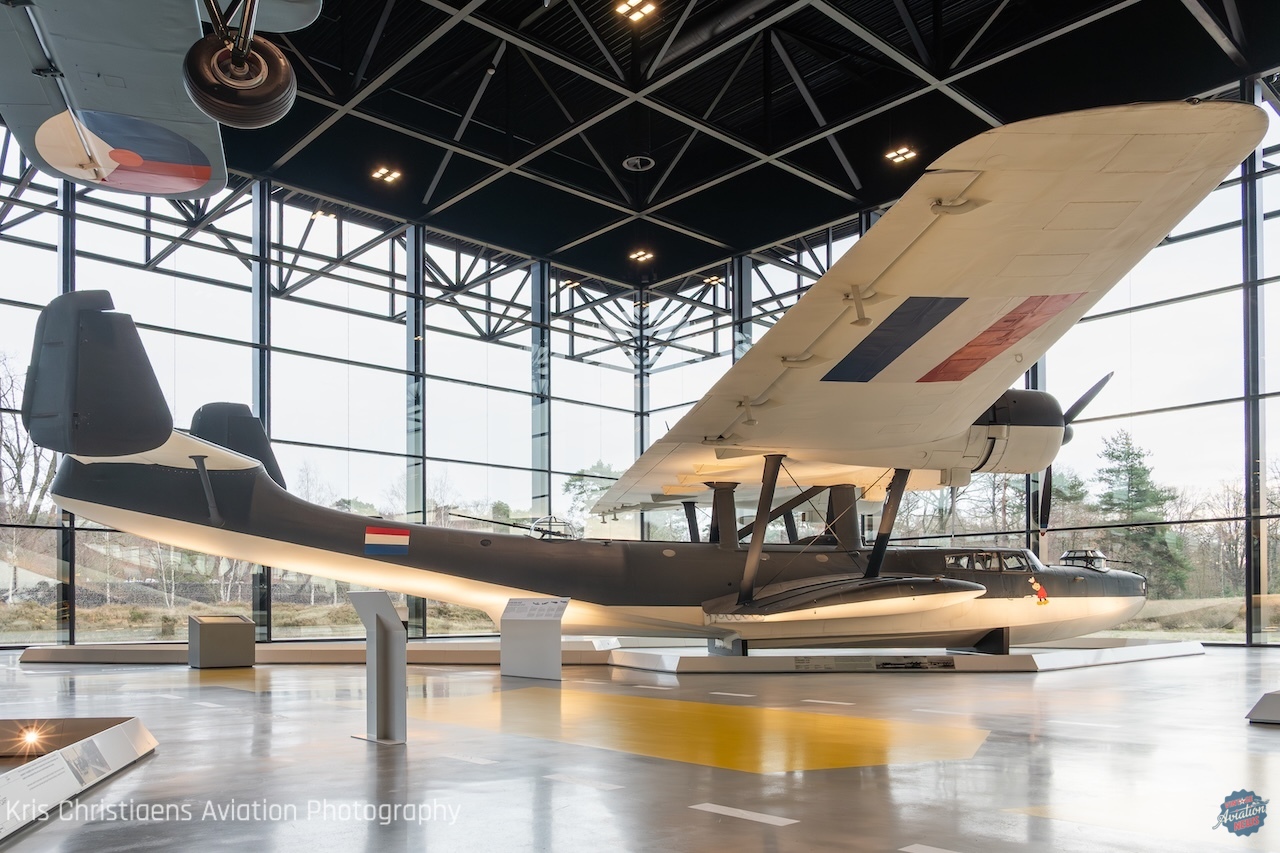
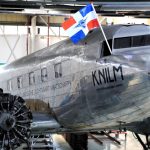
The museum also highlights the contribution of the Royal Netherlands Navy (Koninklijke Marine) to maritime aviation. One of the most historically significant aircraft in the collection is the Dornier Do 24 flying boat. Before and during the Second World War, the Do 24 served extensively in the Dutch East Indies performing maritime patrol and air-sea rescue missions. The aircraft gained a strong reputation for reliability and seaworthiness in demanding operational conditions.
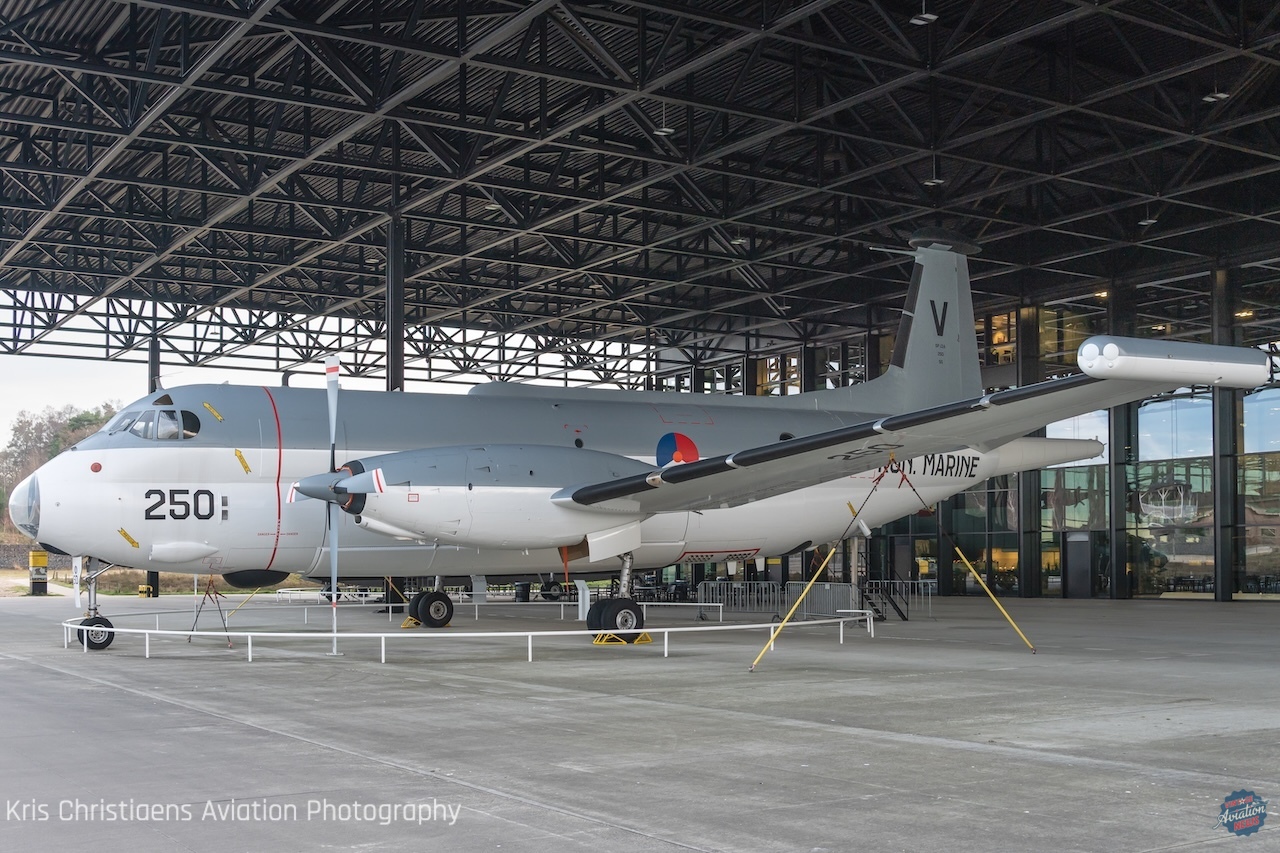
The Cold War period is represented by the Breguet Br.1150 Atlantique maritime patrol aircraft. Operated for decades by the Royal Netherlands Navy, the Atlantique played an important role in NATO maritime defence, conducting anti-submarine warfare patrols and surveillance missions over the North Sea and Atlantic approaches. Shipborne aviation is represented by the Westland Lynx helicopter, a familiar sight aboard Dutch frigates and destroyers. Capable of anti-submarine and anti-surface warfare missions, the Lynx greatly extended the operational reach of naval vessels and became a key element of modern naval operations.
Military Vehicles
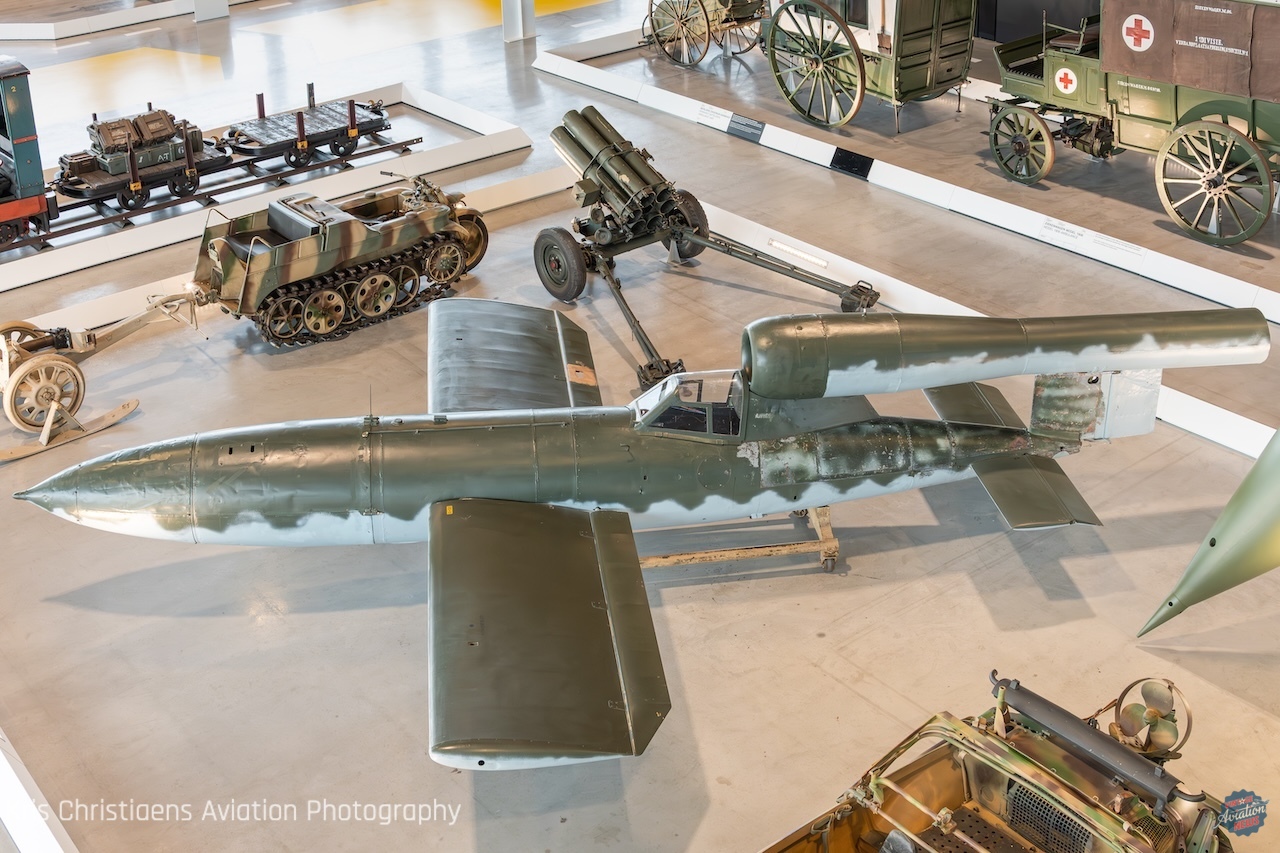
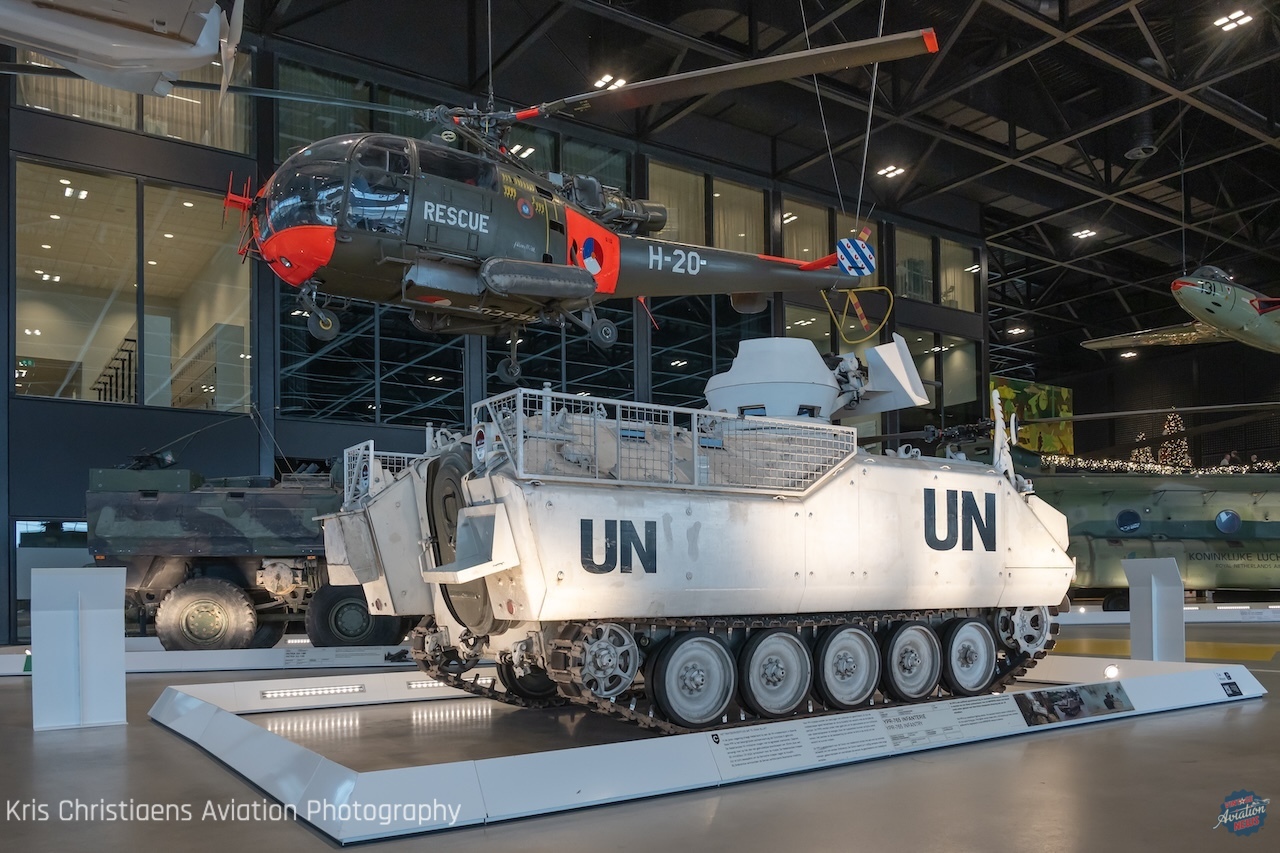
Although aviation is a major attraction, the Nationaal Militair Museum also houses an extensive collection of military vehicles. The displays trace the development of mechanised warfare from early armoured cars to modern combat vehicles used by the Dutch Army. Early exhibits illustrate the experimentation with mobility and protection that characterised the interwar period. The Second World War section presents a range of Allied and Axis vehicles, providing context for the occupation and liberation of the Netherlands.
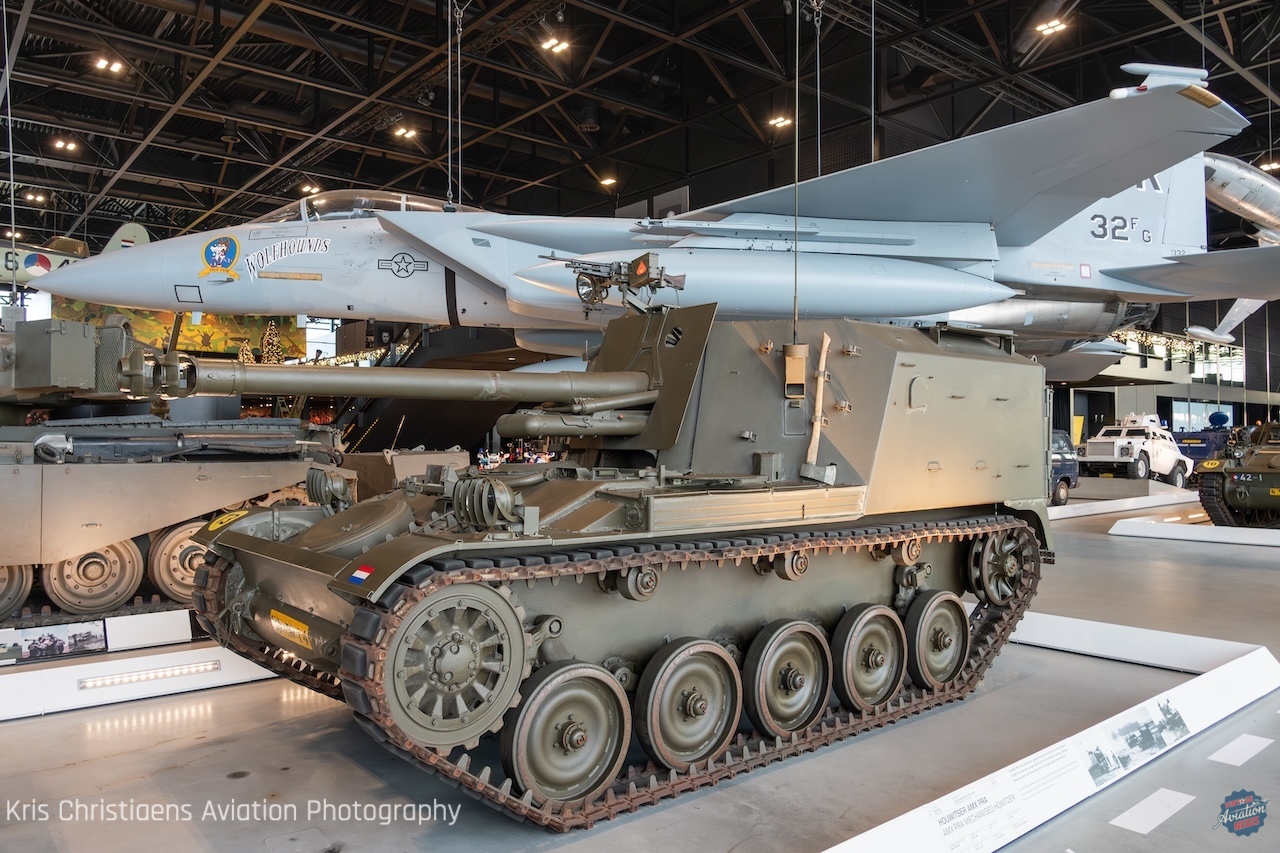
The Cold War galleries showcase tanks, armoured personnel carriers, and reconnaissance vehicles that formed the backbone of the Royal Netherlands Army’s contribution to NATO’s defence of Western Europe. Together, these vehicles illustrate the scale of the alliance’s preparations during one of the most prolonged military stand-offs in modern history. The modern section includes vehicles such as the CV90 infantry fighting vehicle and other contemporary platforms used for logistics, engineering, and combat support. These exhibits demonstrate how modern military vehicles balance mobility, protection, and firepower in today’s operational environments.
Why Visit the Museum
The Nationaal Militair Museum is more than a display of military hardware. It presents the broader relationship between armed forces, technology, and society through clear interpretation, interactive displays, and well-structured exhibitions. The museum manages to present complex technical and historical subjects in a way that is accessible without oversimplifying them. The institution appeals to a wide audience, from aviation enthusiasts and historians to families and school groups. Younger visitors are particularly well served by the museum’s educational design, which combines engaging displays with historical accuracy. Equally important is the location itself. Soesterberg Air Base served as a major military airfield for much of the 20th century and played a significant role in NATO operations during the Cold War. Visiting a military aviation museum on the very airfield where aircraft once operated adds a sense of authenticity that enhances the entire experience.
Practical Tips for Visitors
Because of the museum’s size and the breadth of its collection, visitors should allow sufficient time to explore the exhibits. A typical visit takes two to three hours, although aviation enthusiasts may wish to plan for a longer stay. Not every aircraft or helicopter is always on display, as some items may be temporarily removed for conservation or exhibition rotation. Visitors hoping to see a specific aircraft should check the museum’s website in advance. The museum is surrounded by open areas of the former air base and nearby nature reserves. Weather permitting, exploring the outdoor areas provides a chance to appreciate the historic airfield environment. For photographers, the large windows and expansive roof structure provide soft, natural lighting throughout the main hall. Mid-morning to early afternoon typically offers the most consistent lighting conditions. A wide-angle lens is useful for capturing full aircraft within the large interior spaces, while a standard zoom works well for cockpit and detail shots. More information can be found on the museum’s website: https://www.nmm.nl/en/





Nice article! One correction though. Fokker did produce large amounts of F-16s and F104s for the Dutch Air Force (and other customers as well), but the NF-5s were all built by Canadair in Canada. In 20 so-called ‘High Flights’ these were transferred to The Netherlands upon delivery.