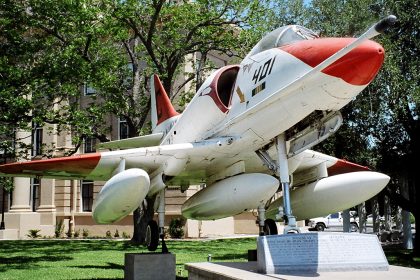
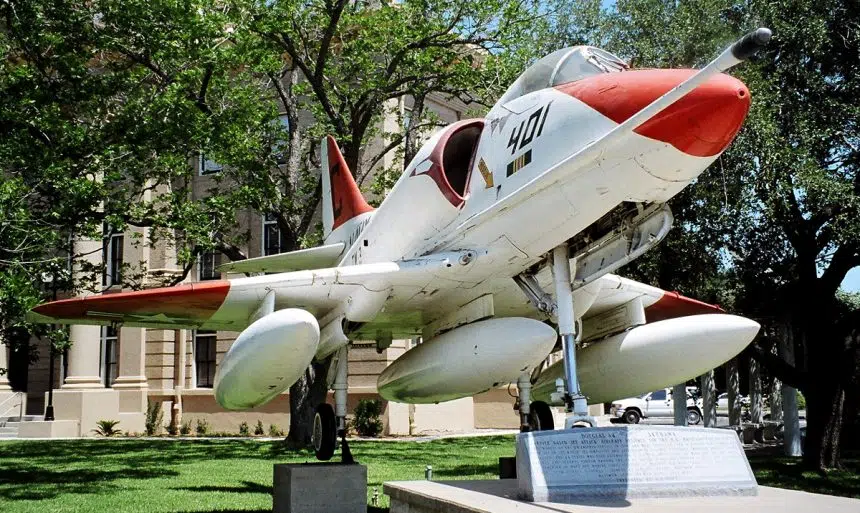

Attack Squadron 873 (VA-873) was a US Navy Reserve attack squadron based at Naval Air Station Alameda in California. The squadron’s early history is poorly documented because few detailed reports existed on Navy Reserve squadrons before the 1970s. What is known is that Attack Squadron 873 was one of several reserve units called into active service during a major Cold War crisis in 1968. The squadron’s insignia was approved by the Chief of Naval Operations on March 16, 1964. It represented California by featuring the Golden Gate Bridge on a white-and-blue background. The design featured five stars, blue waves for San Francisco Bay, and a stylized airplane with a red flame dividing the two halves. This emblem created a strong link to the reserve squadron’s base at Alameda. Attack Squadron 873‘s most important moment happened in January 1968. On January 23, North Korean forces captured the US Navy intelligence ship USS Pueblo, leading to a serious conflict between the United States and North Korea during the Cold War. Four days later, on January 27, President Lyndon B. Johnson ordered the activation of several Navy Reserve aviation squadrons, including VA-873.

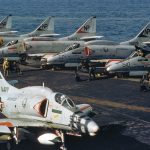
The squadron received the Douglas A-4B Skyhawk aircraft on the same day it was activated. Attack Squadron 873 stayed at NAS Alameda and was assigned to support the Navy’s response to the crisis. Its quick activation showed how the Reserve could provide trained personnel and aircraft to strengthen the active fleet during an international emergency. By May 1968, Attack Squadron 873 had received the upgraded A-4C Skyhawk. The squadron was one of six Navy Air Reserve squadrons called to active duty during the Pueblo crisis. Other reserve fighter and attack units equipped with A-4 Skyhawks and F-8 Crusaders were also activated. VA-873’s active service only lasted a few months. As the crisis calmed down, the squadron was deactivated and returned to reserve status on October 12, 1968. Although Attack Squadron 873’s active service was brief and its earlier history is not well known, it shows how the Navy Reserve operated during the Cold War. The squadron could go from reserve status to active duty during a major international crisis, bringing trained personnel and combat aircraft when needed.