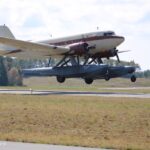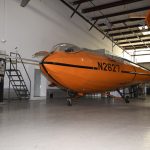


Nearly two years after its last flight, the world’s only flying DC-3 on floats returned to the air on September 7, 2026, completing a series of runway approaches and water landings at Greenville, Maine. The aircraft, Douglas C-53D-DO N130Q, departed Greenville Municipal Airport with veteran DC-3 pilot Eric Zipkin serving as pilot in command. Billy Janus, an experienced DC-3 captain, occupied the right seat, while aircraft co-owner and mechanic Rodney Folsom accompanied the flight crew because of his extensive knowledge of the airplane and its unique systems. Sam Canders, an airline pilot and supporter of the aircraft, followed the flight in a chase plane and assisted with preparations on the ground. Canders is also involved with the nonprofit Maine Center for Classic Aviation, which operates a mobile exhibit featuring the nose section of a C-47 as a tribute to the wartime XC-47C program and the Folsom family’s remarkable amphibious DC-3. “Everyone was very pleased with the flight,” Canders told Vintage Aviation News. “All three guys got out of the aircraft with big smiles on their faces.”
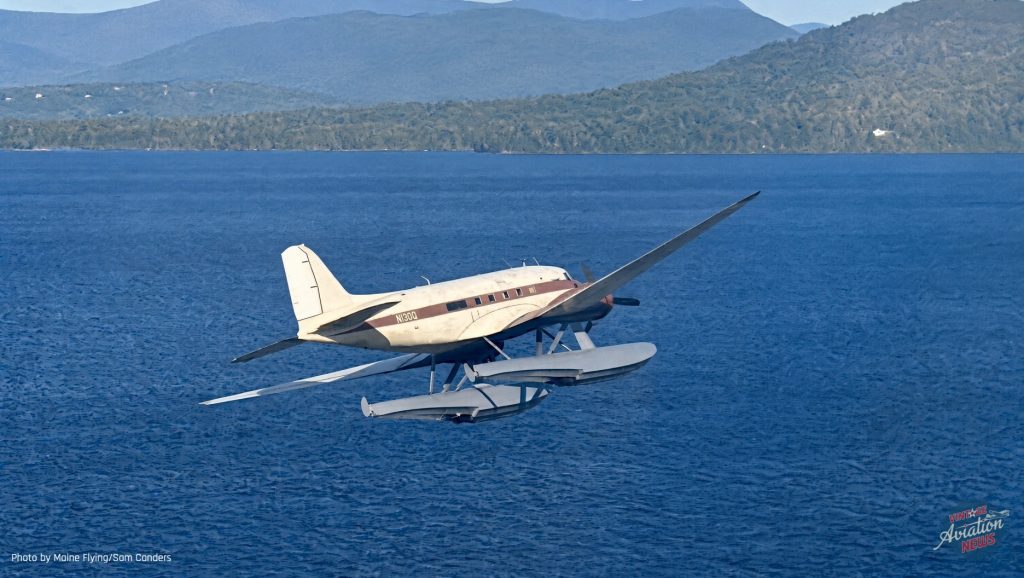
(Image credit: Maine Flying/Sam Canders)

(Image credit: Maine Flying/Sam Canders)
A Careful Return to Flight
Before departure, the crew conducted an extensive engine run-up. An oil leak detected on the No. 2 engine initially required the aircraft to be shut down, but Folsom traced the problem to a loose oil line and corrected it. Once the issue had been resolved, N130Q taxied to Runway 32 and began a deliberately cautious flight program. Zipkin first completed three wide traffic patterns, each concluding with a landing and full-stop taxi back. The crew used each circuit to evaluate the aircraft before proceeding to the next stage of the flight. Satisfied with the DC-3’s performance, the crew departed the airport traffic pattern and headed for Moosehead Lake. There, Zipkin reportedly completed approximately five water landings before flying around the lake and returning to Greenville Municipal Airport. “The aircraft was as comfortable on land as it was on the water,” Canders said. “That airplane was made for that lake.”
Monitoring the Amphibious Systems
Although based on the Douglas DC-3 family, N130Q is unlike any other airworthy example. Its enormous Edo 28000 amphibious floats incorporate retractable landing gear, hydraulically operated nose-wheel doors, and retractable water rudders. The equipment presents operational considerations not found on a conventional DC-3. Ahead of the flight, Folsom placed the aircraft on jacks and conducted landing-gear retraction tests. During the flight, Canders’ principal responsibility from the chase aircraft was to visually confirm that the landing gear had retracted and that the nose-wheel doors had closed correctly before N130Q began its water operations. According to Canders, the system performed without difficulty. “The gear worked flawlessly,” he said. The water rudders also required careful monitoring. Because even a small amount of unwanted rudder deflection could create noticeable yaw, the ground and flight crews communicated to ensure the rudders were properly centered and retracted.
A One-of-a-Kind Douglas
As Vintage Aviation News previously reported, N130Q was built by Douglas Aircraft at Santa Monica, California, in 1943 as C-53D-DO serial number 42-68834. Following its military service, it was converted to DC-3B configuration and operated by Eastern Air Lines as N86562 before passing through several civilian owners. HBF, Inc., a Greenville-based partnership led by Richard B. “Dick” Folsom Sr., acquired the aircraft in 1986. Folsom, a WWII U.S. Army Air Corps veteran and founder of Folsom’s Air Service, hoped to establish Moosehead Airways, connecting travelers from cities including Boston, New York, and Atlantic City with Maine’s Moosehead Lake region. The group acquired one of the last surviving sets of Edo 28000 floats, similar to those developed for the U.S. Army Air Forces’ experimental XC-47C program during WWII. Because the original attachment hardware was unavailable, new components had to be engineered and fabricated. The conversion required approximately four years, and the aircraft made its first flight on floats in 1990.
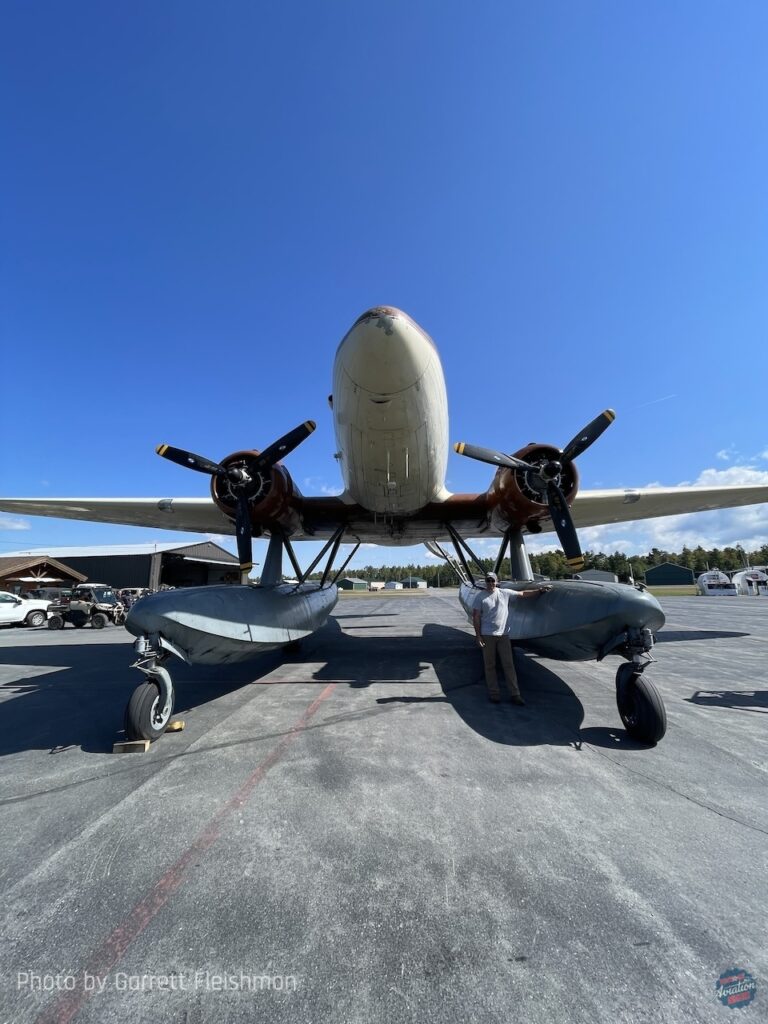
Plans to use the airplane commercially were ultimately curtailed when the Federal Aviation Administration placed it in the Experimental Exhibition category, preventing its proposed use in revenue passenger service. Instead, N130Q appeared at aviation events, including Sun ’n Fun in Lakeland, Florida. Following Dick Folsom’s death in 2002, the aircraft’s flying activity declined. It last flew on floats in 2004 before returning to the air as a landplane in 2010. In September 2024, Zipkin and Garrett Fleishman flew the aircraft on its amphibious floats for the first time in 20 years.


An Uncertain Future
Keeping an aircraft of N130Q’s size and complexity operational requires considerable financial and technical support. That burden has fallen primarily on Rodney Folsom, an airframe and powerplant mechanic with inspection authorization who has carried out much of the recent work. Because the aircraft is operated in the Experimental Exhibition category, it undergoes a condition inspection rather than the inspection program required of a standard-category commercial aircraft. Despite that distinction, maintaining the DC-3’s radial engines, airframe, hydraulic equipment, and one-of-a-kind amphibious installation remains a substantial undertaking.
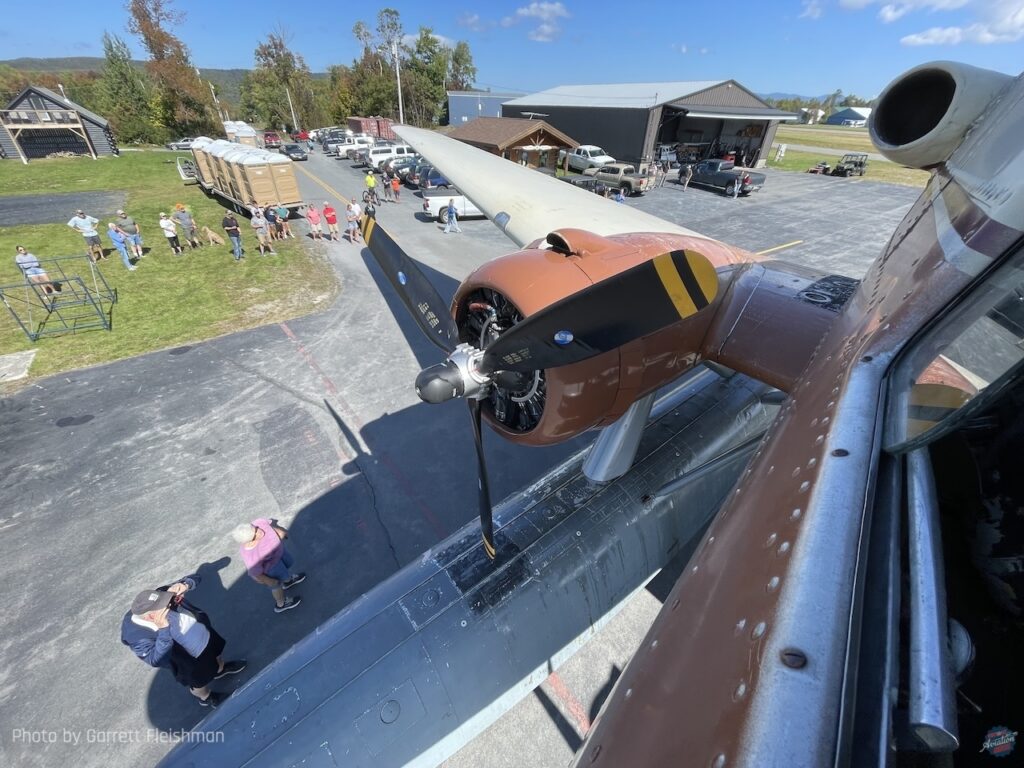
Ownership of the aircraft is currently divided among members of the Folsom and Baedorfer families. Canders said the deaths of several of the original principals, combined with unresolved estate and ownership matters, have complicated efforts to establish a long-term plan for the airplane. The Maine Center for Classic Aviation hopes to help preserve N130Q in Maine and keep it flying in partnership with Folsom. Canders has also earned a DC-3 type rating to help broaden the small pool of qualified pilots available to support the aircraft. Other parties have reportedly expressed interest in purchasing N130Q, and its ultimate future remains uncertain. For Canders, however, the August flight demonstrated that the airplane remains viable and capable rather than simply an aging artifact parked on a ramp.
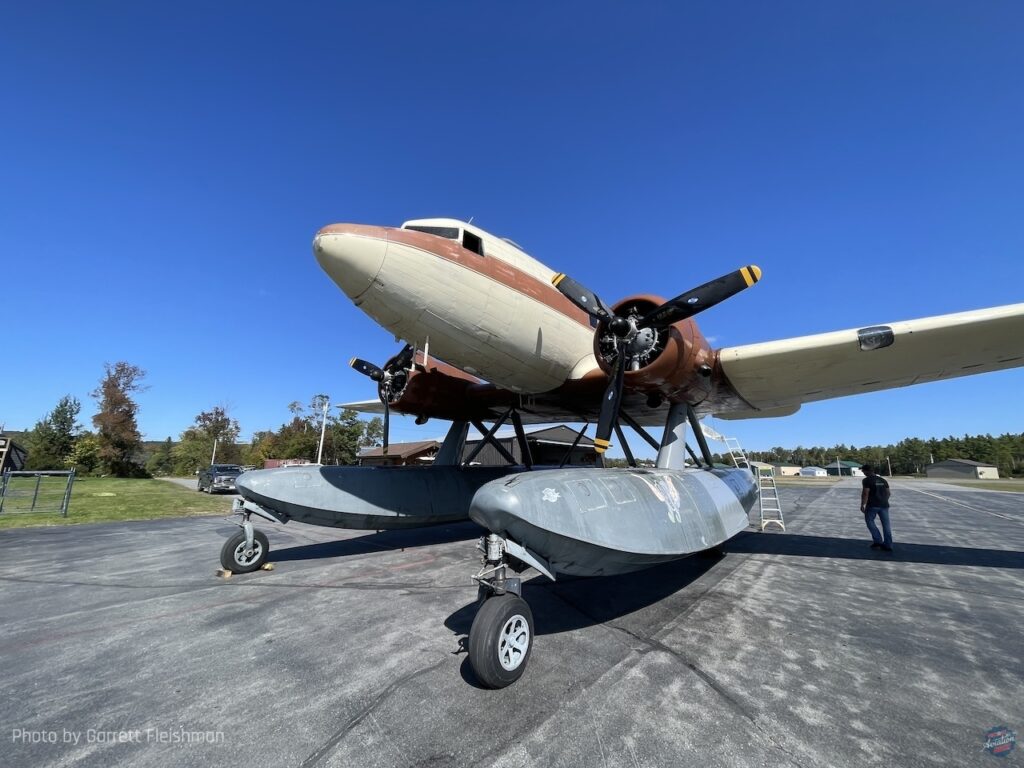
The occasion also carried special meaning for Folsom, whose family has been associated with the aircraft for four decades. “The Rodney Folsom who got off the airplane was a different Rodney Folsom from the one who got on,” Canders recalled. “He looked tired before the flight, but when he stepped out afterward, he was happy and excited to see everything come together.” For one summer day over Greenville and Moosehead Lake, the future could wait. N130Q was once again doing what its creators and caretakers intended—operating from both land and water as the world’s most extraordinary Douglas DC-3.